
Europe
Ex-BND chief August Hanning detained in German espionage inquiry

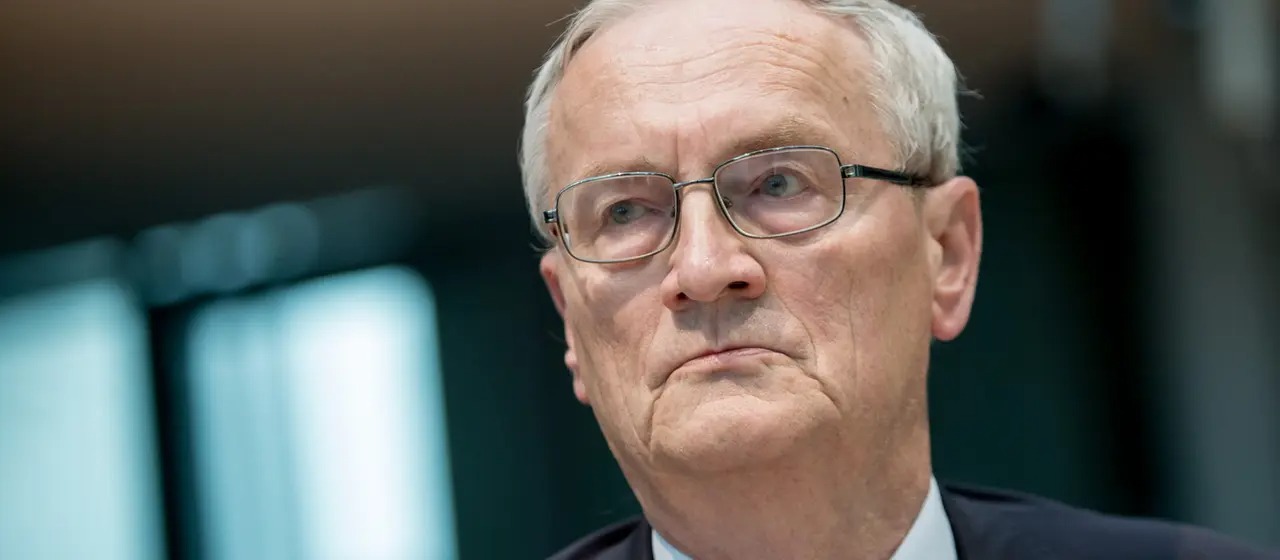
Investigators in Germany have detained the former president of the Federal Intelligence Service (BND), August Hanning.
According to reporting by WDR, NDR, and Süddeutsche Zeitung, an informant allegedly provided him with classified BND documents. Authorities are investigating whether this information reached foreign actors.
The Federal Public Prosecutor’s Office is investigating the former BND chief on suspicion of espionage against the state, disclosing state secrets, attempted high treason, and acting as an intelligence agent.
Another long-serving employee of the agency faces allegations of aiding and abetting attempted high treason as well as aiding and abetting espionage against the state.
According to findings by WDR, NDR, and SZ, investigators from the Federal Criminal Police Office (BKA) detained Hanning early in the morning at his home in Nordwalde, near Münster.
In Bavaria, authorities also detained another former senior BND employee: Manfred D., who was reportedly Hanning’s former head of office and worked at the BND until spring 2026.
D. allegedly supplied Hanning with top-secret information from the agency in exchange for money until at least 2022.
Investigators are examining suspicions that the 80-year-old former BND chief used this information in at least one instance to draft a security analysis for a foreign intelligence service.
According to information obtained by WDR, NDR, and SZ, however, this case does not involve Russia.
In another instance, Hanning allegedly used information obtained from internal BND documents in correspondence with a foreign agent.
According to sources in security circles, Hanning came under investigation following searches conducted at his home and offices in September last year.
At that time, the Hamburg State Criminal Police Office (LKA) was seeking evidence linked to the Block abduction case.
The Hamburg Public Prosecutor’s Office accuses steakhouse heiress Christina Block of ordering the abduction of her two youngest children in late 2023 amid a custody dispute.
According to investigators, August Hanning allegedly played a role in an earlier attempt to abduct the children, an accusation he denies.
According to reports by WDR, NDR, and SZ, LKA officers reviewing material seized from Hanning last year came across an electronic storage device containing critical information.
These reports indicate that the former official had access to top-secret BND documents of recent origin that he should not have been permitted to possess under any circumstances.
Hanning’s tenure at the BND ended in November 2005.
In total, approximately 2,000 documents were allegedly transferred from D. to Hanning. According to the investigation, most of these were briefing materials prepared for the “ND Situation” meeting at the Chancellery, where heads of security agencies exchange information on a weekly basis.
According to the reporting, the documents in question contained highly sensitive material, including reports on the Iranian nuclear programme and the Russian military.
Sources in security circles state that the records also included intelligence received from allied foreign intelligence services.
The leak of such material is considered a worst-case scenario among intelligence services.
Allied intelligence services could lose confidence in the BND and withhold vital intelligence from the agency.
Following an examination of the records, the Hamburg State Criminal Police Office (LKA) handed the seized documents over to federal authorities.
In May 2026, the Federal Public Prosecutor’s Office ultimately launched a classified investigation into Hanning and his alleged informant inside the BND.
The exact period over which classified internal documents were allegedly supplied to Hanning remains unclear. Security sources report that the latest documents found were dated June 2022.
It also remains unclear how the suspected mole inside the BND smuggled this material out of the secure agency. An urgent statement was requested from the BND regarding the matter.
Lawyers representing August Hanning have not responded to a late inquiry concerning the allegations.
For the BND, this marks the second severe incident in only a few years. A former BND department head is currently on trial before the Berlin Court of Appeal, alongside another defendant, on charges of spying for Russia in 2022.
That case involved top-secret information concerning the BND’s cyber operations that had been leaked from the agency.
If the suspicions against Hanning and the second suspect are substantiated, it would represent an intelligence scandal of historic proportions.
Never before in the history of the Federal Republic of Germany has an allegation of high treason involved an official of such seniority.
Throughout his career, August Hanning occupied key positions within Germany’s security architecture for decades.
Prior to serving as BND president, Hanning worked as a security officer at West Germany’s diplomatic mission in East Germany.
Following several postings in the Federal Chancellery, including as coordinator of the federal intelligence services, Hanning, who holds a doctorate in law, assumed leadership of the BND in 1998.
Following his tenure at the intelligence service, Hanning was appointed state secretary at the Federal Ministry of the Interior in late 2005. Four years later, he entered temporary retirement.
In subsequent years, Hanning established himself as an entrepreneur and security consultant.
Until last May, he served on the management team of a controversial security company based in Switzerland.
The firm’s German subsidiary had been temporarily retained in the custody dispute between Christina Block and her former husband.
During this period, Hanning and a business partner, a former LKA officer, apparently resorted to questionable methods: according to the public prosecutor’s office, the two allegedly planned in 2023 to discredit Block’s former husband through unfounded allegations of paedophilia.
Hanning and his alleged accomplice reportedly attempted to plant a hard drive containing images and videos of child sexual abuse material on the father of Block’s children.
The investigation remains ongoing. Hanning had previously denied all allegations in the Block case.






The EU and Canada will strengthen their partnership to address shared security challenges by deepening defence cooperation stretching “from the Arctic to the Black Sea”.
A draft joint statement prepared for a summit to be held in Montreal on 29-30 October addresses all of these matters comprehensively.
“Canada and the EU are strategic partners in taking more responsibility for our common security and defence,” reads the draft EU-Canada Joint Summit Statement obtained by Rapporteur.
The two sides will “accelerate the implementation” of the Security and Defence Partnership and broaden cooperation across international peace and crisis management, sanctions, defence industry, maritime and space security, hybrid threats, and resilience.
The summit follows a significant political push aimed at bolstering EU-Canada ties.
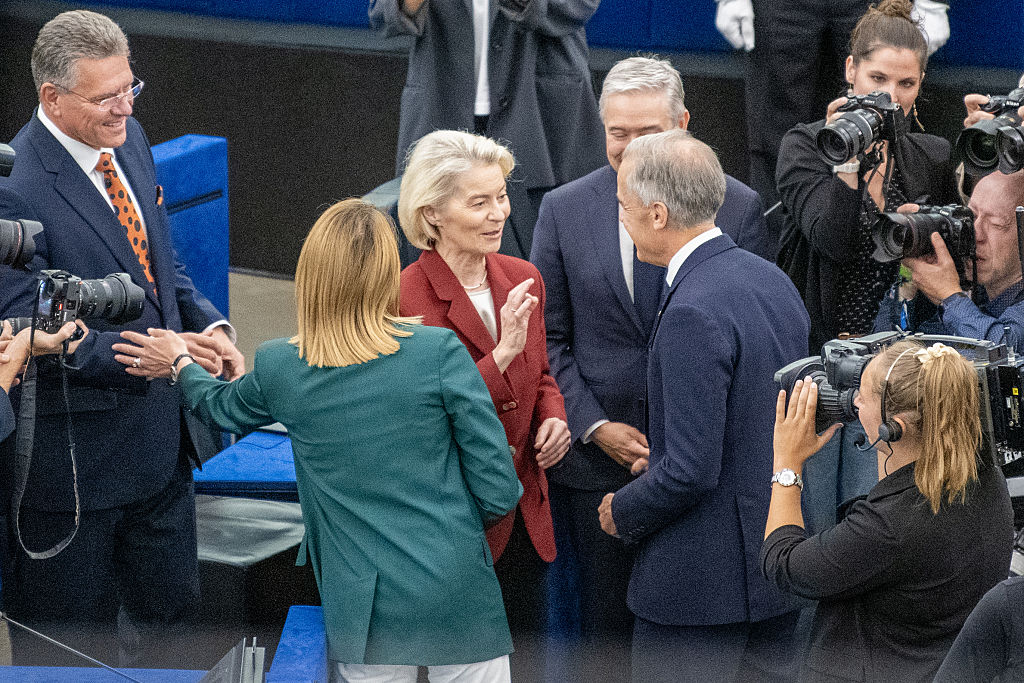
On 16 September, Canadian Prime Minister Mark Carney attended European Commission President Ursula von der Leyen’s State of the European Union address in Strasbourg.
In that speech, von der Leyen suggested making Canada the bloc’s first “associate member”.
The document welcomes Canada’s interest in reinforcing its participation in EU Common Security and Defence Policy (CSDP) missions and operations, as well as Ottawa’s ongoing commitment to European security, “notably on the Eastern Flank from the Arctic region to the Black Sea”.
In the Arctic, both sides plan to reinforce cooperation on “peace, security and resilience”.
The summit statement will also launch “a new, dedicated dialogue on the Arctic, foreign information manipulation and interference, climate security and transport”.
The draft also reaffirms EU and Canadian support for Ukraine’s sovereignty and territorial integrity, pledging continuous military and other assistance to Kyiv alongside increased pressure on Moscow.
According to Article 10, the partnership also turns toward the Middle East. There, the EU and Canada aim to work more closely “to support de-escalation, address humanitarian needs”, and contribute to conditions necessary for lasting peace in Palestine based on a two-state solution.
Defence industry cooperation is another priority. The draft highlights existing cooperation pursued through the EU’s Permanent Structured Cooperation (PESCO), Canada’s participation in capability coalitions, and its inclusion in the Security Action for Europe (SAFE) mechanism.
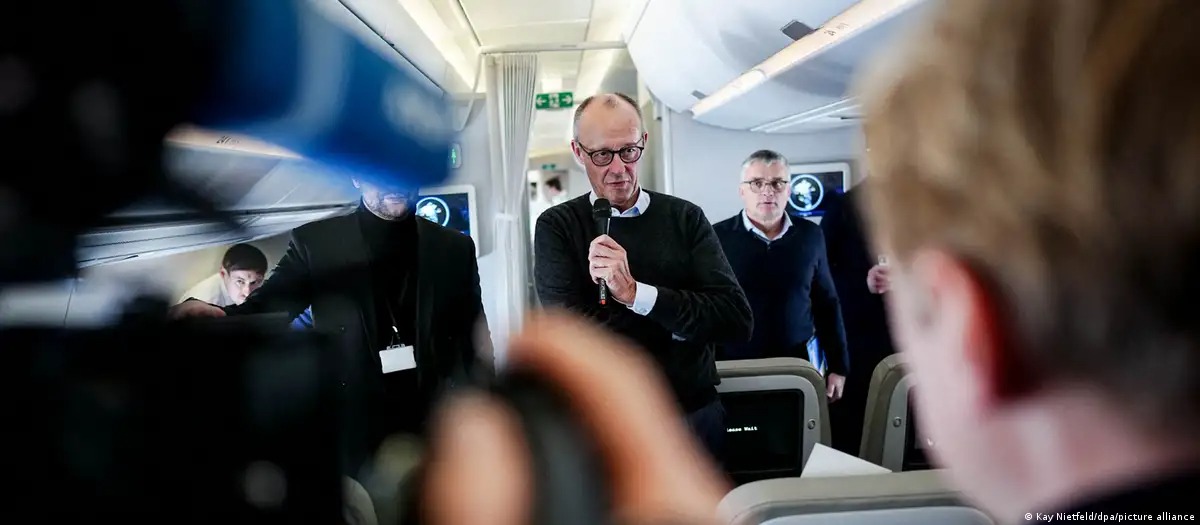
On his third trip to Asia since taking office, Chancellor Friedrich Merz is seeking new markets, particularly for German defence industry companies.
Alongside drone manufacturer Quantum Systems and Airbus Defence & Space, at least two defence industry firms are among the business delegation accompanying the chancellor on his visits to Singapore, Japan, and South Korea starting on Monday.
Merz is generally attempting to broaden sales markets across the region, partly because German exports to China have suffered a sharp decline.
German industry is consequently seeking alternatives at present. While the federal government now intends to open the way for new arms exports, a military exercise in Japan involving around 100 medical personnel from the Bundeswehr is drawing to a close.
Part of the scenario involves an incident causing numerous casualties on the island of Okinawa.
This is a real threat should war break out over Taiwan, located just 600 kilometres away. That distance is not particularly far for US fighter jets stationed on Okinawa.
Germany is systematically expanding its military and defence cooperation with Japan.
Alternatives to exports to China
Chancellor Friedrich Merz’s trip to Singapore, Japan, and South Korea comes at a time when German companies are making intensive efforts to find alternatives to China for their business in Asia.
Wolfgang Niedermark, an executive board member of the Federation of German Industries (BDI) and Asia expert, observed, for example: “In recent years, we may perhaps have relied too much on China, which is naturally our most important industrial partner.”
To explain the search for alternatives, Niedermark cites “geopolitical” reasons, referring to the rivalry between the West and China, alongside “industrial competition” with China.
Chinese companies are now producing many items they previously imported from Germany for a long time, including high-tech products.
As a result, German exports to China, which still stood at around 107 billion euros in 2022, have dropped sharply since then.
In 2025, they recorded a further decline of approximately 9.7%, reaching a value of just over 81 billion euros.
German exporting companies are consequently searching for alternative markets at present, and Asia stands out as a key export destination.
Asian giants also want to reduce dependence on the US
During his first trip to Asia in office in January, Merz sought to strengthen economic ties with India, including expanding exports to that country.
Japan and South Korea are also promising options. While they are the second and third largest markets for German exporters in Asia, they have so far accounted for only a quarter of the value of Germany’s exports to China. This indicates further potential exists.
Japan and South Korea, like Germany, are also attempting to diversify their economic relationships.
Confronted with fierce attacks from the Trump administration, these countries are seeking to establish profitable ties with alternative partners.
On Thursday, Merz will open the biennial German Business Asia-Pacific Conference, which is being held in Seoul this year.
The event will be led by Economy Minister Katherina Reiche and Siemens Chief Executive Roland Busch.
Busch is travelling with a business delegation of about 30 people that previously accompanied Merz to Tokyo and will accompany him to Singapore this time as well.
Singapore is regarded as the commercial and financial centre of the entire rapidly growing Association of Southeast Asian Nations (ASEAN).
German arms industry sets its sights on Asia
At least two defence industry companies are included in the business delegation accompanying Merz: drone maker Quantum Systems and Airbus Defence & Space.
Quantum Systems supplies the German Armed Forces and the Armed Forces of Ukraine, among others, and is now planning broader growth extending into Asia.
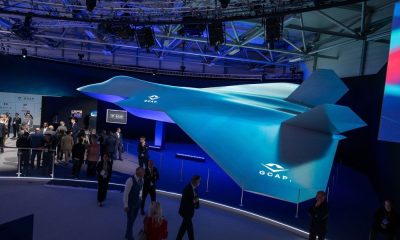
Since the German government withdrew from the French-German FCAS (Future Combat Air System) project, which aims to build a sixth-generation fighter jet, Airbus Defence and Space has been seeking an alternative and is currently considering joining the British-Italian-Japanese GCAP (Global Combat Air Programme) project.
More detailed talks with British company BAE Systems are scheduled to take place this week.
London maintains an open stance towards Germany joining GCAP because it can barely finance this exceptionally expensive project.
However, London, like Japan, is pressing for swift project implementation; the fighter aircraft is envisioned to become operational by 2035.
The German defence industry is not known for implementing its projects quickly.
Airbus also insists on playing a key role in development and production. Shares in GCAP have largely been allocated.
Talks with Japanese project partner Mitsubishi Heavy Industries are expected to take place.
German-US-Japanese exercise on Okinawa
A ten-day military exercise organised by the Japanese armed forces will also conclude on Thursday.
Alongside troops from the US, the Philippines, and New Zealand, the German Armed Forces are taking part in the exercise with around 100 soldiers from their medical unit.
The main venue for the exercise is the Japanese island of Okinawa, situated on the first island chain off the Chinese coast and home to the largest US Air Force base in the Asia-Pacific region.
Okinawa lies approximately 600 kilometres from Taiwan. If conflict breaks out over the island, US troops would probably be expected to intervene from Okinawa. A Chinese attack on the military bases there is also probable.
Exercise Keen Sword, which began last Monday, includes providing initial medical treatment in an incident involving numerous injured personnel, among other elements.
According to the scenario, the Bundeswehr will transport medical supplies and blood products to Okinawa using an Airbus A400M aircraft and subsequently fly the wounded to a suburb of Tokyo.
German medical personnel will take over further treatment of the injured there.
Through this exercise, the Bundeswehr, which is currently preparing primarily for a potential war against Russia, is simultaneously preparing to participate in a large-scale war against the People’s Republic of China.
Relationship between German and Japanese militaries to deepen
Federal Defence Minister Boris Pistorius indirectly confirmed this during his visit to Tokyo in March.
At the time, he was quoted as saying that in addition to focusing on NATO’s eastern flank and “other conflicts, such as in the Middle East,” we must “not lose sight of other regions and the challenges in those regions.”
In this context, cooperation between the German and Japanese armed forces will now become “significantly more intensive.”
As the Defence Ministry indicated at the time, German warships and fighter aircraft were most recently in Japan in 2024 for a port visit and exercises, respectively.
In return, a task force from the Japan Maritime Self-Defense Force was in the Port of Hamburg in 2024.
In 2025, Japanese F-15 fighter jets, based on a US model, visited the German Air Force.
Furthermore, as early as 2024, Germany and Japan signed a “comprehensive logistics agreement.”
In the defence industry, the ministry noted that close cooperation already exists between Airbus Defence & Space and Kawasaki Heavy Industries.
Both companies have collaborated for decades on the construction of H145 multi-role helicopters, which are also used by Bundeswehr special forces.
Pistorius stated at the time that “much more potential” still exists for this cooperation.
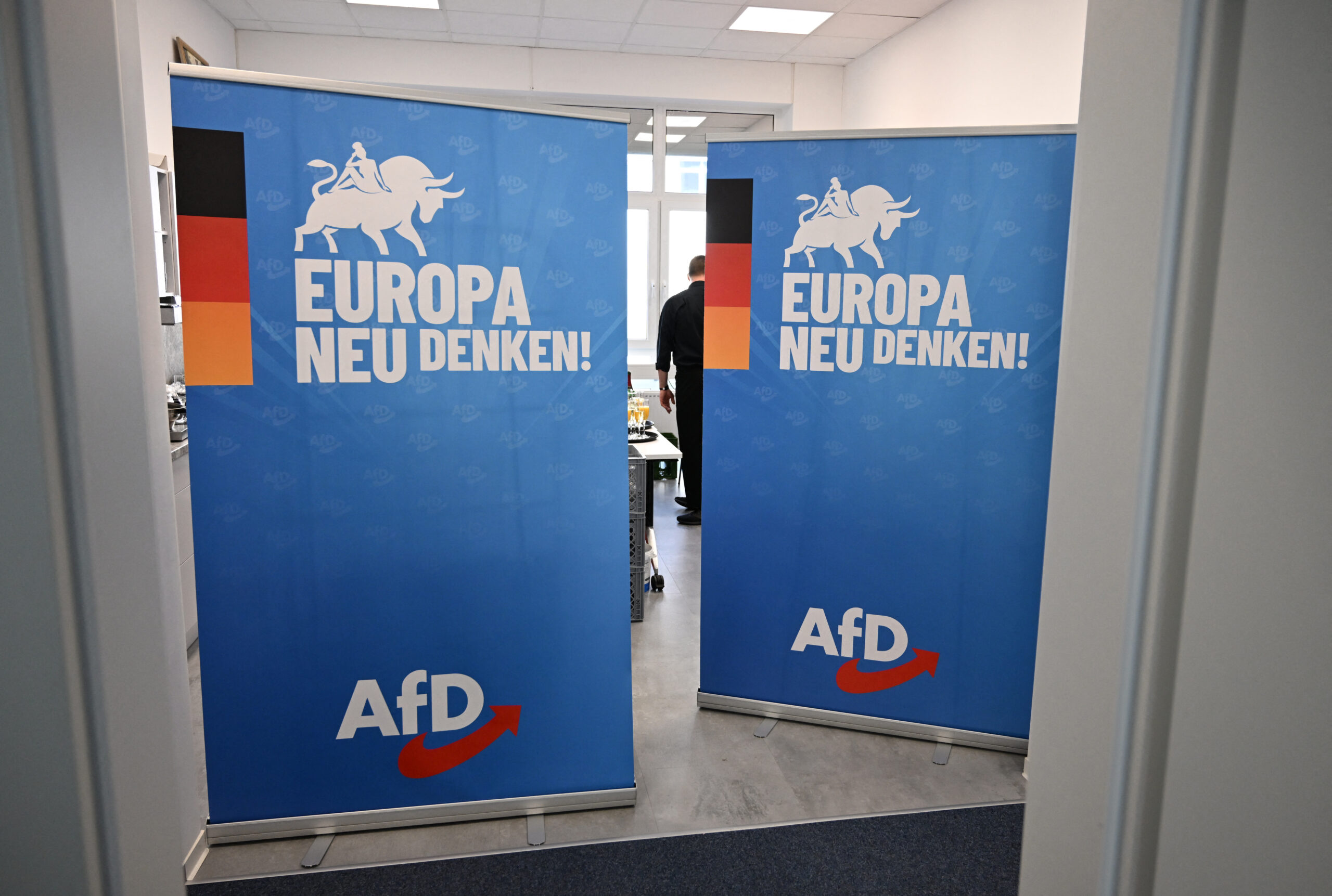
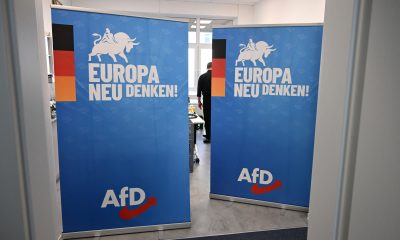
Alternative for Germany (AfD) has published a new strategy paper on Europe, updating its stance on both a possible German exit from the European Union (“Dexit”) and the single market.
In the document, the AfD embraces core demands of German business, advocates for a German-dominated EU attaining global power status, and urges the bloc to focus on measures that reinforce its position amid ongoing international power struggles.
Among the document’s central points are the party’s shift away from the idea of leaving the EU and its explicit commitment to the EU single market, which accounts for the vast majority of German corporate exports.
The AfD also appears to intend to preserve the euro, while insisting on the strict enforcement of the Maastricht criteria to prevent crises without any fiscal transfers to other eurozone countries.
The party relies on a unified EU approach in the development of advanced technologies, such as artificial intelligence, and particularly in the defence sector. In both areas, the EU, essentially led by Germany, must become independent of both China and the US in order to act as a global power.
In other policy domains, the party advocates a large-scale devolution of powers from Brussels back to national capitals.
An identitarian appeal to right-wing conservative and, in some respects, ethno-nationalist ideals is intended to serve as the ideological bond.
AfD echoes German capital: The imperative of the single market
The AfD’s shelving of a potential EU exit and its recognition of the European single market, even from its own perspective, as a central component of European-level cooperation carry major significance.
The single market is viewed as indispensable to the German economy. Although its share of exports no longer matches the record highs reached during the 1990s and 2000s, when it occasionally constituted nearly two thirds of total exports, the single market’s share is rising once again because of slowing exports to the US and China.
This share grew from 54% in 2024 to 56% in 2025, figures that exclude the United Kingdom, which was still factored into data during the 1990s and 2000s.
Brexit indirectly illustrates the benefits the German economy draws from the EU single market: following the UK’s departure from the EU, German exports to Britain declined from 89 billion euros in 2015, the year preceding the Brexit referendum, to approximately 73.5 billion euros.
In periods of global crisis like today, the single market is proving to be a lifeline for Germany’s export sector. It represents something that virtually no entrepreneur would genuinely want to abandon.
Preserving the single market is also among the consistent demands of small and medium-sized enterprises (SMEs), some of which sympathise with the AfD.
The euro’s place in German exports
The situation surrounding the euro is less clear-cut. As reported by German Foreign Policy, citing a 2019 study by the Centre for European Policy (CEP), Germany benefited more from the introduction of the single currency than any other eurozone member. Between 1999 and 2017, the euro yielded Germany a cumulative net benefit of roughly 1.9 trillion euros.
According to the CEP, France sustained a loss of 3.6 trillion euros over the same period due to currency effects, while Italy suffered a shortfall of 4.3 trillion euros.
Even so, the German economy is not existentially reliant on the common currency. This is demonstrated by Poland, Hungary, and the Czech Republic, which consistently rank among Germany’s most important business locations and primary trading partners despite having retained their national currencies.
The fact that the German economy as a whole has relied on the euro so far is also tied to the euro being weaker than a standalone German mark, which has consequently boosted exports.
Against that, particularly during periods of crisis, an economic collapse in even a single country, as seen in Greece from 2009 onwards, can destabilise the entire currency.
Such a scenario could readily recur; for instance, warnings are periodically voiced at present regarding a potentially looming severe financial crisis in heavily indebted France.
The party seeks clear German hegemony in the EU
The AfD states that it currently intends in principle to adhere to the euro.
However, the party demands strict adherence to the Maastricht criteria, specifically the requirements that public debt must not exceed 60% of gross domestic product (GDP) and the budget deficit must remain below 3% of GDP, with those rules to be enforced by compulsion if necessary.
This would entail an austerity drive harsher than the rollback of the welfare state already taking place across Europe.
The AfD wants the European Central Bank (ECB) to concentrate strictly on price stability and abandon all forms of compensatory state financing.
That step would eliminate the EU’s ability to assist crisis-hit countries to underpin the single currency.
The AfD also demands a revision of voting rights within the ECB Governing Council.
These rights are currently distributed unevenly, with smaller states in particular having lost significant influence.
The AfD seeks the allocation to Germany of “voting rights corresponding to its economic weight” in the future, “taking into account its economic and financial standing”.
This would establish clear German dominance inside the Frankfurt am Main-based central bank, particularly in the event of a financial crisis erupting in a eurozone state such as France.
The strategy paper rejects the EU’s current trajectory towards collective borrowing and automatic redistribution, arguing that individual responsibility and liability must be reunited.
The strategy also opposes jointly guaranteed EU bonds and the mutualisation of liabilities under the banking union.
The party’s demands additionally include a requirement to reduce and settle TARGET2 balances within the Eurosystem annually, using safe assets and high-value collateral such as gold or Bitcoin.
No to debt, yes to capital market deregulation
The document opposes the creation of debt-financed funds by Brussels to direct industrial policy, contending that such mechanisms mask the underlying causes of capital flight from Europe.
Rather than channelling funds into “unproductive green financial products”, the document advocates liberalising capital markets so that investment can be steered toward industry and technology.
The paper asserts that Europe’s weakness in global technological and industrial competition stems from a severe deficit in private equity and venture capital.
Instead of centralised spending, the AfD proposes that the EU act merely as an administrative coordinator for intergovernmental investment consortia financed directly and sovereignly by member states.
“Decentralised cryptocurrencies” such as Bitcoin are endorsed as instruments of financial sovereignty, alongside calls to avoid restrictive regulatory frameworks such as MiCA.
MiCA (Markets in Crypto-Assets) is the EU’s comprehensive regulatory framework established to oversee crypto-asset markets.
“Strategic autonomy” for Europe; a leadership role for Germany
In key economic sectors where European countries are threatened by, or already experiencing, dependency on the US and China, the AfD actively advocates a unified EU approach to achieve “strategic autonomy”.
To this end, the party seeks to pool Europe’s technological assets, ranging from space exploration to artificial intelligence models: “Europe must be a centre of excellence that secures its freedom through technological breakthroughs.”
At the same time, the party resolutely urges closer cooperation within the European defence industry.
In critical areas such as unmanned aerial vehicles or military applications of artificial intelligence, it calls for launching the “joint development” of military hardware.
Regarding procurement, the party argues that Europe should primarily rely on defence equipment manufactured within the EU to assemble a “common arsenal of nations”.
Only cooperation, in this view, can secure technological autonomy and the necessary industrial economies of scale.
The AfD expressly rejects only the creation of an EU army. Deciding matters of war and peace must, in its view, remain permanently in the hands of European nation-states.
Call for a return to national sovereignty
In most other policy fields, the AfD demands a sharp curtailment of EU activities and a focus strictly on measures that strengthen the bloc against global power rivalries.
For example, external borders should be closed even more tightly than before against “unwanted migrants” who could tie down resources.
The party states that all redistribution within the EU must be reduced to a minimum and welfare-state measures at the EU level brought to an end.
The AfD’s strategy paper calls for a significant transfer of powers from Brussels back to national capitals.
To that end, it proposes:
Dissolving superfluous EU institutions and Directorates-General, while confining the European Commission to core administrative tasks.
Imposing an expenditure ceiling on the Multiannual Financial Framework.
Introducing a national right of veto whenever EU actions violate the principle of subsidiarity.
Under this framework, the European Commission’s authority would be largely restricted to administrative functions, and Members of the European Parliament would no longer be directly elected, being appointed instead by national parliaments.
Whenever the EU refuses to devolve powers, Berlin should pursue an “opt-out” and work to strengthen nation-states.
Through amendments to Articles 4 and 5 of the Treaty on European Union (TEU), the supremacy of national constitutions should be guaranteed outside core European tasks, while uniform EU law would be preserved in foundational areas such as the single market.
The Court of Justice of the European Union (CJEU) would be replaced by an intergovernmental European Arbitration Court, with authority restricted to adjudicating treaty disputes within its explicitly assigned remit.
The party also calls for permanently incorporating a debt brake and a spending brake into EU treaties, as well as establishing irrevocable opt-out protocols modelled on the Danish and Irish precedents that the Commission could not unilaterally suspend or revoke.
Referring here to a “federation of European nations”, the AfD also favours an ideological alignment rooted in right-wing conservatism and, in part, ethno-nationalism.
According to the party, the continent’s “Christian and Western heritage” must be reinforced and the heterosexual-patriarchal family structure reaffirmed.
The “ultimate goal”, the party states, is “the preservation of the cultural identity of European peoples”.
The AfD designates 2029 as the starting point for implementing its European programme.
Elections for both the German Bundestag and the European Parliament will take place that year, with the AfD hoping to secure a right-wing majority in both assemblies.

Gaza exposes the myth of the “most moral army in the world”

Over 3,000 Palestinians displaced as Israel’s Hebron siege hits day 5

EU and Canada to deepen defence ties from Arctic to Black Sea

Independent candidate Diane Sare decries US complicity in global wars

Merz visits Asia to seek new markets for German defence firms
-
 Diplomacy2 weeks ago
SWP urges backing for Gulf trade routes bypassing Strait of Hormuz
-

 Europe2 weeks ago
LSE study finds post-bailout Greece turned into a cafe economy
-
 America1 week ago
How Elon Musk fuses private empire with state power, Ben Tarnoff explains
-
 Europe1 week ago
AfD leader Weidel calls funding lost Ukraine war a grave mistake
-

 Middle East1 week ago
Egypt delays parliamentary vote on deploying troops to Saudi Arabia
-
 Diplomacy2 weeks ago
IMF warns global economy is nearing the limits of its resilience
-
 Europe1 week ago
EU rejects US proposal to resume Russian gas flows through Ukraine
-
 America1 week ago
At least 47 major US data centre projects halted or cancelled
