
Europe
German-Russian rupture driven by Western crises, analyst Hauke Ritz says

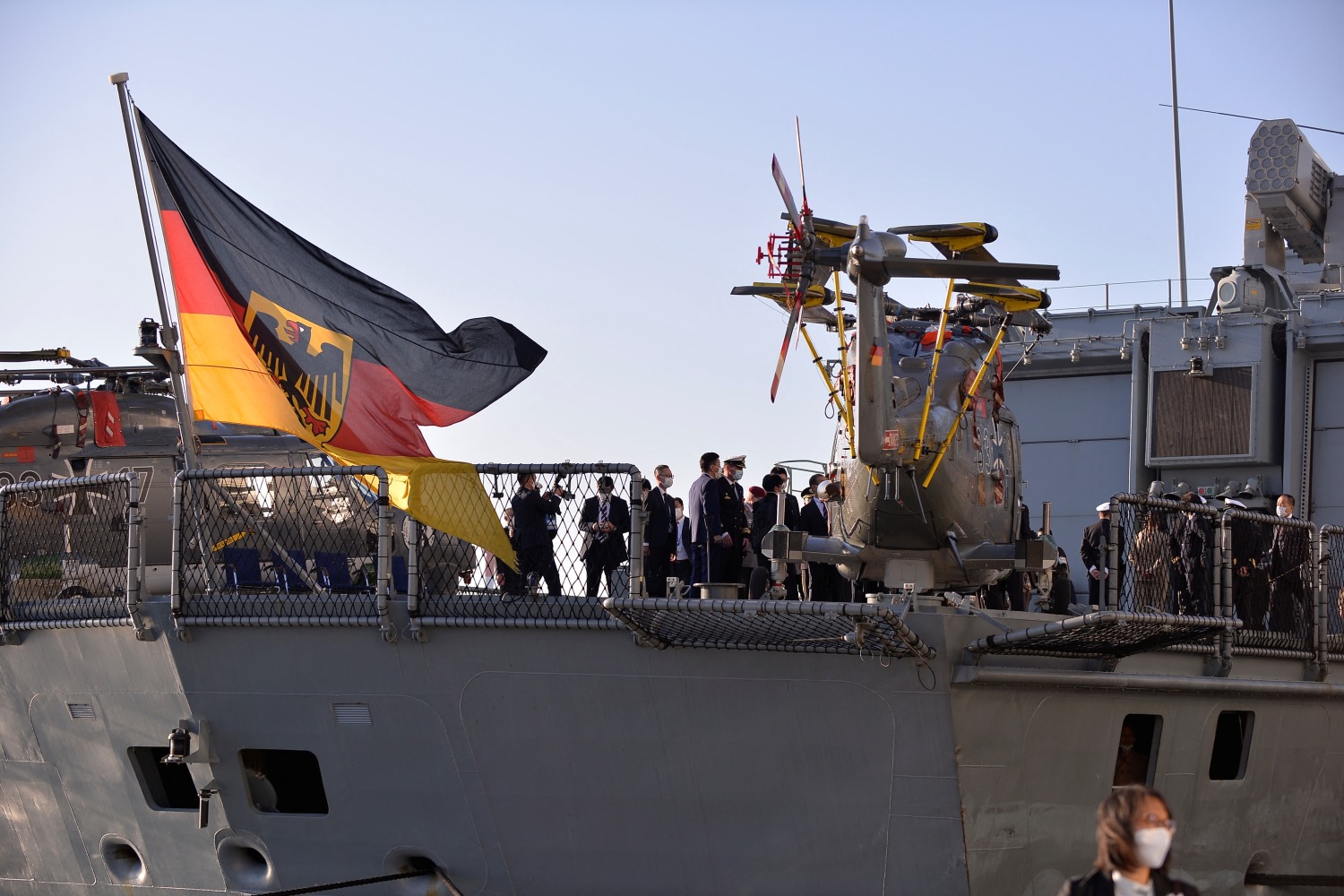
The escalating geopolitical friction between Germany and Russia reflects a fundamental structural departure from decades of established European diplomacy, driven by internal Western political crises and deep-seated historical fissures, according to German political scientist Dr Hauke Ritz.
Speaking on the “Strategic Compass” programme broadcast by the Harici YouTube channel, hosted by international relations scholar Professor Hasan Ünal, Dr Ritz provided an extensive critique of Berlin’s foreign policy trajectory, the economic fallout of decoupling from Eurasia, and the domestic cultural polarization between the eastern and western halves of reunited Germany.
The broadcast opened with Professor Ünal recalling previous predictions made by Dr Ritz regarding the geopolitical direction of Europe and the risk of confrontation between Berlin and Moscow. Professor Ünal noted: “Last time we were together you pointed out that with Merz coming to power, German-Russia relations would be likely to hit a point of inflection, a turning point because Merz was somebody foolishly anti-Russian in an inexplicable way. And he kept saying in his election campaign that he would be giving Ukraine long-range German-made missiles and things. And you also pointed out that with this happening, the Russians would be trespassing the Russian red line. And one way or the other, the Russians are going to respond to this and they are going to respond in a big way perhaps, regardless of whether NATO would actually get into action or not.”
Evaluating the contemporary escalation under the leadership of Friedrich Merz, Dr Ritz situated the current posture within modern German diplomatic history, tracing the origins of post-war rapprochement to the late 1960s.
“This Germany is different”
“It is true when Merz came to power, when he already was striving for the election, it became clear that he would be more anti-Russian than Chancellor Scholz and Chancellor Merkel,” Ritz said.
To contextualize this shift, Ritz underscored the long-term transformation of post-war West German political identity: “The East Germans of course had after the Second World War from the beginning good relations to Russia, naturally to the Soviet Union at that time. But in West Germany under Adenauer, a lot of Nazis were still in power. People who should serve prison time had served as secretary in the ministries and so on. But when Willy Brandt came to power in the late 1960s, German self-understanding and policy changed.”
Ritz recounted that Brandt’s historic gesture in Poland became the cornerstone of a transformed national consensus: “From there on time started also in West Germany where people, where the officials of the government started to look more critical on the Nazi time. And famous is when Willy Brandt fell on his knees in Warsaw saying basically sorry or tried to excuse his country for the crimes Nazi Germany committed in Poland. And this policy of detente was continued by Helmut Schmidt. Maybe not in the same intensity, but still continued. And it was also continued by Helmut Kohl. And Chancellor Schroeder, who lost his power in the year 2005, was the last chancellor who was standing in this tradition which was established by Willy Brandt.”
According to Ritz, those 35 years under four successive chancellors established a reliable geopolitical framework: “These four chancellors which ruled Germany for 35 years, a quite long time, established this new image of a Germany that has learned from its past, that looked critically on its Nazi heritage and tried to have good relations to the former enemy, especially to the Soviet Union and later on Russia. And Schroeder, for example, pushed forward the building of the Nord Stream pipeline which later was blown up a few years ago. Under this tradition the Russians were willing to trust Germany again. After the brutal experience of the Second World War with 27 million lost people, they said, ‘Okay, this Germany is different. This Germany reminds us of the Germany we know for centuries. We are willing to once again establish very good relations with Germany.’ And they even put our country in the first place of their foreign policy.”
Ritz noted that Moscow prioritized Berlin over other capitals: “We were the country number one to which they were referring. That is why the Nord Stream pipeline was built to Germany and not to another country. Of course, a similar pipeline was also built to Türkiye, the South Stream pipeline. But the German-Russian relations were special.”
“The foundation was laid for the later confrontation”
This traditional diplomatic path was incrementally dismantled under former Chancellor Angela Merkel, Ritz explained. Although her early posture appeared ambiguous, her governance ultimately steered Berlin away from the Brandt-Schroeder consensus.
“These very good relations established by Willy Brandt, lasting to Gerhard Schroeder, were interrupted under Angela Merkel,” Ritz stated. “It became not clear at the beginning, the first year it was an unclear course, but finally it became clear that she was committed to the United States.”
Detailing her background, Ritz observed: “Angela Merkel is from East Germany. Normally people from East Germany are excluded from political power or even from influence in universities, in any institution. But she became chancellor because she over-adapted to the West German mindset. It was a kind of over-identification. So she was the perfect East German for the West Germans. And she totally identified with the United States. When she was asked what was the most memorable experience after the fall of the Berlin Wall, she basically said the best experience was to visit the United States.”
Ritz observed that while Merkel voiced caution regarding NATO enlargement at the 2008 Bucharest summit, “only for one day, later on, she totally committed to the United States.”
“It was under her rule when the coverage of Russia in the German newspapers really became bad. A kind of information warfare started to catch up in 2007, 2008, and it intensified over the years,” Ritz noted. “Nevertheless, under her rule also the second line of the Nord Stream pipeline was built. But this was a kind of double policy. Today it appears like a kind of deception because the Russians said, ‘Okay, the German media are anti-Russian, but still they are building the second line of the Nord Stream pipeline. Maybe German economic interests will in the long run prevail.’ But basically under her rule, the foundation was laid for the later confrontation.”
Ritz pointed out that Merkel’s administration backed the February 2014 political upheaval in Kyiv, disregarding alternative diplomatic paths: “Also she supported the Maidan coup in 2014. The foreign minister at the time, Steinmeier, brokered a deal which could have prevented a coup d’etat and would have brought the Western candidate to power over a longer period of several months, so that it would still be a constitutional process within the Ukrainian constitution. Despite the fact that he and his French and Polish colleagues had brokered this deal on the 20th or 21st of February 2014, the coup happened the day after, on the 22nd of February. And Steinmeier forgot his own agreement. He did not refer to it. And so he showed that he was convenient with the coup.”
Ritz recalled Merkel’s later public admissions regarding the Minsk agreements: “Later, Merkel admitted in an interview that the Minsk 2 agreement, which was confirmed by the UN Security Council, was just to give Ukraine more time to build up. It meant to build up their army to make them stronger. So we already see that the tradition of a policy of detente and good relations to Russia was changed under Angela Merkel.”
“The Ukraine war is the most important topic of his rule”
Addressing the tenure of Olaf Scholz, Ritz stated that although Scholz possessed roots in the historic peace movement of the Social Democrats, institutional pressures dictated his choices: “When Scholz came to power, he was also in his youth committed to the peace movement. He was a Social Democrat who pushed forward this policy of detente for many decades. But nevertheless, under the pressure of the media, under the pressure of the whole environment in Germany which has become very anti-Russian, he gave up and supported Ukraine.”
Scholz, however, maintained a single red line: “The only thing he did not want to do was to send the Taurus missile to Ukraine. This is one of the most sophisticated missiles in all of the Western world and all of NATO because it can basically fly through a window. It is so exact that you can make precision strikes with it. It can avoid radar detection. It is far more sophisticated than the SCALP and the ATACMS missiles. And Scholz hesitated. He did everything for Ukraine, but this one last step he did not want to do.”
When Friedrich Merz campaigned for office, his rhetoric diverged markedly: “When Merz tried to become elected chancellor, he said already during the election campaign that he would provide the Taurus missile to Ukraine. And when he finally was in power, he did not do it. Maybe some military experts told him this could cause a world war immediately, because it could be interpreted as a decapitation strike when this missile starts to fly. So he did not send them finally to Ukraine, but he did a lot of other things. He said that Germany would now support the building of Ukrainian missiles in Ukraine. Officially it would be a Ukrainian missile, but inside would be a lot of German technology.”
Ritz emphasized the single-minded focus of Merz’s governance: “What we also realized watching Chancellor Merz over some time is that the Ukraine war is the most important topic of his rule. He is more interested in Ukraine and supporting Ukraine than supporting, for example, the German economy, improving relations to other countries like France, and so forth. He is totally committed to Ukraine. And his anti-Russian statements are quite harsh. He sometimes made comments about Russia which were so harsh that I do not want to repeat them here.”
“Russophobia is used to stabilize the political tension”
Analyzing the diplomatic confrontation between European powers and Moscow, Ritz drew attention to the broader geopolitical maneuvers involving Britain and recent alleged security incidents within Germany: “In recent times the tension between Britain and Russia became acute, and the Russians even withdrew embassy personnel from Great Britain, which could be interpreted as the kind of measure you take if war is really on the horizon. And now suddenly, after this enormous tension between Britain and Russia, the tensions between Germany and Russia are rising.”
Ritz outlined three possible interpretations behind this sudden friction: “One interpretation Putin himself has put forward is that the internal political situation of Mr Merz is so bad that he just wants to put the attention to another place to be seen as a strong man. The other interpretation would be that Germany acts this way to pull away the tension between Russia and Great Britain and put this tension on Germany itself. The third interpretation would be that the Americans have an interest in this and advocated this.”
Ritz asserted that Berlin rarely acts unilaterally: “German policy is not sovereign policy. It usually does not act alone. If Germany does something, there is a kind of understanding with other NATO allies, especially with Great Britain and the United States. I think that these rising tensions are to some extent agreed on between those countries.”
Commenting on the alleged sabotage incident at Leipzig, Ritz remarked: “The incident itself, the so-called Leipzig incident, is to some extent laughable. There was a drone that had some explosive on it. The explosive was not made in Russia; it was made in the Czech Republic. And the drone did not explode, even when some worker was kicking it with his foot. If the Russians really were behind it, the drone would have exploded and there would have been damage. It does not really look professional. Maybe it was designed not to explode, but this is speculation. For me it just looks suspicious.”
Contrasting this event with NATO operations, Ritz stated: “If you remember what Germany and other NATO states have already done in reference to Russia: France and Britain sent long-range missiles to Ukraine and supported the launch of those missiles toward the Russian hinterland, destroying factories and other important infrastructure. You could say that these actions of Britain and France were much more severe than a drone that did not explode. Germany participated to some extent in these actions. We sent a lot of weapons to Ukraine ourselves. When I visited and talked to people in Russia about the war, I heard stories that they intercepted voices of German-speaking soldiers in Ukraine itself. All those ugly memories are quite fresh in their minds.”
Ritz suggested that internal electoral dynamics in eastern Germany could explain the media amplification: “Maybe it has to do with the election that is today happening in the province of Saxony-Anhalt. Maybe this incident was promoted and blown up by the media because of this election to portray Russia as the enemy and claim we have been attacked. In Germany, for more than a year now, we have had the message in our media that we have to be ready for war with Russia in 2029 or 2030, because then Russia will attack us. The Russians understand the opposite: they understand that NATO wants to attack them because NATO wants to be ready for war at that time.”
According to Ritz, the ideological posture serves a domestic function across the West: “Russophobia has become the backbone not only for Mr Macron, Mr Merz, the British Prime Minister, and Meloni, but it has also become the backbone for the European Union, which is in a deep crisis itself, and to some extent the political system in the United States. Russophobia is used to stabilize the political tension within Western countries.”
“War between Germany and Russia was unthinkable”
Intervening in the discussion, Professor Ünal pointed out that public sentiment across Germany appears increasingly detached from the anti-Russian narrative propagated by the political establishment: “Despite the fact that there is a big difference in terms of political culture and approach to Russia between West Germany and East Germany, the German people in general do not seem to buy this Russophobia so much, because the AfD seems to be leading in the polls in a big way now. And they keep saying that they are going to make peace with Russia, buy cheap Russian energy, and restore trade after Germany lost a huge market in Russia. The two economies were interdependent. What was done at the beginning of the Ukraine war was not in favor of Germany. Since Merz came to power, the German economy has not been doing well; Germany is de-industrializing.”
Responding to Professor Ünal’s analysis, Dr Ritz explained that the cultural and historical foundations uniting Germany and Russia run much deeper than contemporary political rhetoric: “Between the time of Peter the Great to the time of Bismarck, a time frame of approximately 200 years, Russia and Germany were aligned. There was a kind of alliance. Germany at that time was not a unified state; it was a composition of several small kingdoms and aristocracies. But the Russians had relationships with the most important of them. Every Russian tsar during this time frame married a German princess. If you do this over generations, the royal family in Russia became genetically basically German, and culturally to a large extent. Catherine II was a German princess, and her husband grew up in Germany with German as his mother tongue.”
Ritz detailed the extensive societal exchanges of that era: “During these 200 years, hundreds of thousands of Germans migrated to Russia, improved their farming, brought modern technology, and helped build up the Academy of Sciences. In every Russian cabinet there was a German minister; three or four times there were German chancellors. Germans worked in the Russian army, and many became members of the aristocracy. Due to the marriage policy, Russian money supported German classicism in Weimar, where Goethe, Schiller, and many other German artists and philosophers lived. War between Germany and Russia was unthinkable. It was different with France, with whom we always had tensions. But in the east, Russia was our friend. This was also the famous policy of Otto von Bismarck, who set up the League of the Three Emperors after the unification of Germany because he did not want a two-front war.”
The historical rupture occurred with the advent of nationalist doctrines: “Then came the time of nationalism. The Russians became more nationalist with pan-Slavic ideologies, and the Germans became more nationalistic after reunification under Bismarck. During this age of nationalism the alliance broke apart. A lot of Russians thought they could replace the alliance with Germany with Britain and France. It was a bad mistake. Immediately after the First World War, French and British troops intervened in the Russian revolution. That alliance did not come from the heart.”
Ritz emphasized the profound cultural affinity: “The relations between Germany and Russia were always supported by culture. The Russians adopted a lot of German culture; till today there are several hundred German words in the Russian language. There is a natural understanding between Germans and Russians. We match each other; we immediately understand each other. It is not the same with the French. Russia and Germany are like two magnets pulled together. But there are periods when we were made enemies.”
The catastrophe of the 20th century deepened this duality: “One reason was the rise of Nazi ideology in Germany, which was directed against communism and Bolshevism. Because Russia was seen as the center of communism, the Nazis were totally focused on the Soviet Union as an enemy. Then came the Second World War. After such a war, where every family lost somebody, people process it differently. There are German families like mine who remember this war and try to find a way toward a peace policy. But there may also be other families who harbor some understanding of revenge. Those elements who still see Russia as an enemy were suppressed for a long time, from Willy Brandt to Gerhard Schroeder. But now they are suddenly back in public debate. Some leading figures in today’s politics have this animosity toward Russia, which is a great shock for us.”
Ritz categorized contemporary German society into three distinct segments: “One quarter of Germans are from East Germany, holding a different attitude. Then 5% of our population are Russian-Germans who returned after reunification, many of whom retain bilingual households and consume Russian media. Then there are intellectuals who remember the detente of Willy Brandt and Helmut Schmidt. At least one-third of German society likes Russia. A second third is undecided and confused by propaganda and conflicting memories. And there is perhaps one-third that has fully adopted anti-Russian propaganda.”
“The economic model of this engine has been broken”
Examining the structural crisis within the European Union, Ritz outlined how geopolitical decisions destroyed the European economic core: “Germany was the motor of the economic processes in the European Union. Together with the Netherlands, Austria, and Northern Italy, this forms the banana-shaped realm where most economic activity takes place. The economic model of this engine has been broken. It was based on cheap Russian gas, access to the Russian market and Soviet successor states, access to the Chinese market, and low defense expenditures.”
The current economic landscape presents the exact inverse: “Now all of this is gone. Suddenly we have huge expenditures on defense. We no longer have cheap Russian gas. We lost access to the 200-million-strong market of Russia and its allies. And we are losing access to the Chinese market because the Chinese economy is producing machinery and cars themselves. Germany and the whole European Union are in a severe economic crisis.”
Ritz criticized the prevailing elite assumption that this crisis could be resolved through military escalation: “Some European politicians imagine all this can be overcome if Russia gives up, pays reparations, and is defeated. But it is clear Russia will not be defeated. The assumption that the West is stronger than Russia, Iran, and other rising powers has been proven wrong. East Germans are the first to discover that the only way out of this economic crisis is to have peaceful relations with Russia and other rising powers like China, Iran, India, and Türkiye.”
Ritz condemned the return to geopolitical confrontation: “The time of imperialism, pushing an economy through military spending and conquering resources through war, is an absolutely outdated model. The 21st century cannot allow it. It is a huge strategic mistake that parts of the German elite, along with Britain and the United States, chose this path. This failed policy has created a situation where Russia, China, Iran, India, and in the future Türkiye, form one massive bloc.”
“The East Germans are today the avant-garde”
Turning to domestic politics, Ritz characterized eastern Germany as a pioneering force against prevailing Atlanticist policies: “The East Germans are today the avant-garde in Germany. They are the first to understand that an alternative model exists, and they vote for it. The AfD is a conservative party, but the people voting for it are not necessarily conservative. Some traditionally voted for left-wing parties, but vote AfD because no viable left alternative exists. If they want to protest against NATO policy, they have only this option.”
Ritz observed internal divides within the opposition: “The AfD is split between its western and eastern wings. West German members want a conservatism aligned with Trump and connected to America. East German members seek European independence and normalized relations with Russia. Because East Germans lived under two distinct systems, they can compare realities better than West Germans, who have only known the Western system. East Germans also recognize parallels between the German Democratic Republic’s suppression of free speech and the censorship taking place today.”
Ritz lamented the fragmentation of political alternatives: “The Sahra Wagenknecht movement attempted to establish an alternative, but faced organizational missteps. Even if they recover, they poll around 5%, while the AfD in East Germany stands near 40%, as seen in the Saxony-Anhalt elections.”
Ritz attributed this divergent consciousness to the post-1945 Allied occupation policies: “When the Soviets and the Americans arrived after the defeat of the Nazis, they held fundamentally different views on the origins of Nazism. For the Soviets, Nazi ideology stemmed from the ruling elites; they sought to replace the elites while supporting German humanist culture, literature, and the Enlightenment. The Americans, by contrast, believed the whole of German culture had produced Nazism. They argued that Hegel’s philosophy, Kant, German romanticism, and Martin Luther led directly to Hitler. They concluded that German culture was totalitarian and required comprehensive re-education through American pragmatism and positivism.”
This post-war conditioning deeply affected West German identity: “This policy led to an attitude where many West Germans became alienated from their own cultural heritage, fearful that identifying with Goethe or classic literature would mark them as right-wing. They replaced it with American pop culture and consumerism. Because West Germans represent three-quarters of the population, they continue to dominate the political process, the judiciary, and the universities, acting as subordinates within the American empire. Following reunification, East German academics and administrators were purged and replaced by West Germans.”
Ritz concluded that this hegemony is beginning to fracture: “East Germans are organizing their own pushback. Media projects like the Berliner Zeitung and the Ostdeutsche Zeitung are providing platforms for alternative perspectives. Many West Germans are beginning to realize that the Atlanticist narrative is failing and that their assumptions about the Ukraine conflict and Germany’s economic trajectory were profoundly mistaken.”
Wrapping up the discussion, Professor Ünal observed that as Washington’s global dominance contracts, European states will inevitably have to regain their independent footing: “As the United States’ influence across the world is waning, the US influence over all these countries is also being gradually cleaned up. A great country like Germany is going to get on its own feet as German Germany again. It will be a long process, but we are going to watch and understand these developments.”


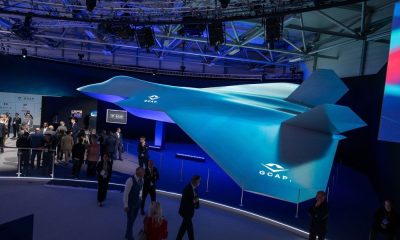




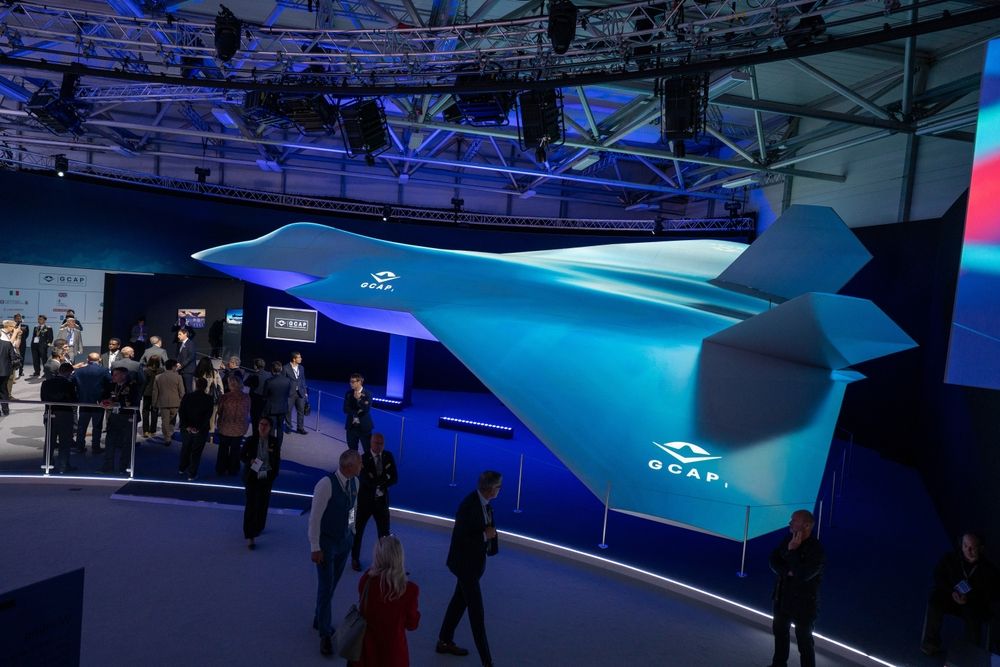
German Defence Ministry officials have advised Berlin to form a new fighter jet partnership with Sweden and Spain rather than join an existing UK-led consortium.
Internal ministry assessment notes obtained by Politico state that a trilateral arrangement among Germany, Sweden, and Spain represents a “more advantageous and promising” approach than joining the Global Combat Air Programme (GCAP) run by the UK, Italy, and Japan.
The proposal outlined in the document does not yet represent a final government decision, nor does it contain any indication that German Defence Minister Boris Pistorius has approved the recommendation.
The advice was drafted after Germany’s flagship project with France to build a next-generation fighter jet collapsed in June following years of industrial infighting.
Initiated in 2017 and later joined by Spain, the Future Combat Air System (FCAS) was conceived as a showcase initiative for European defence cooperation. The partnership aimed to develop an aircraft to replace Germany’s Eurofighter fleet starting in 2040.
However, the initiative foundered on disputes over operational control and workshare between France-based Dassault and Germany-based Airbus Defence and Space. Following unsuccessful rescue attempts at the political level, Berlin withdrew from the joint fighter project this year.
UK Prime Minister Andy Burnham raised the prospect of Germany joining GCAP during an 8 October meeting in Berlin with Friedrich Merz. The two leaders agreed that officials should continue discussions.
For Berlin, the choice carries implications that reach far beyond which model its air force will fly. The decision will determine who controls future military technology, which countries secure production contracts, and whether a new European partnership can avoid the frictions that dismantled FCAS.
Ministry assessment keeps distance from UK-partnered GCAP project
The ministry assessment listed several reservations regarding the GCAP project. The report argued that the existing programme focuses on operations beyond Germany’s capability requirements, whereas Berlin needs an aircraft better suited for missions over continental Europe.
The document also noted that German manufacturers would struggle to secure a significant share of development and production work within an already established partnership.
Invoking past experiences with the Eurofighter programme, which was developed in the 1990s and entered service in the early 2000s, the document took direct aim at British defence contractor BAE Systems.
The German Defence Ministry assessment accused BAE Systems of prioritizing exports over the development interests of Germany and Italy, warning that British dominance would prove incompatible with an equal partnership.
By contrast, the document stated that the military requirements of Germany, Sweden, and Spain align closely and that their starting positions are well balanced.
The assessment proposed an industrial partnership between aerospace giant Airbus and Sweden’s Saab, while recommending that the Saab-manufactured Gripen E fighter jet serve as a technological stepping stone until the new aircraft is developed.
The German Defence Ministry declined to comment on the matter. A separate ministry note, however, recorded British efforts to integrate Germany into GCAP as an observer or participant, asking German officials to examine potential industrial roles and military requirements.
An Airbus spokesperson said the company was “generally open to cooperation”, provided that German and Spanish industry secured a “substantial and equal role” across development, production, and operational phases.
“Purely political decisions without an industrial foundation remain insufficient,” the spokesperson said, urging authorities in Berlin and Madrid to clarify the path forward swiftly.
In an interview published in Handelsblatt on Monday, Airbus defence chief Michael Schollhorn pointed to ties with Saab, noting that the two companies have always worked well together.
A Saab spokesperson also indicated that the company is receptive to broad defence cooperation, including in fighter aircraft.
Emphasizing that large-scale collaborative projects are handled at the political level and that participation decisions rest with the respective governments, the spokesperson said: “All questions regarding potential Swedish participation should be directed to the Swedish government. Saab stands ready, as always, to support Sweden’s future fighter aircraft requirements.”
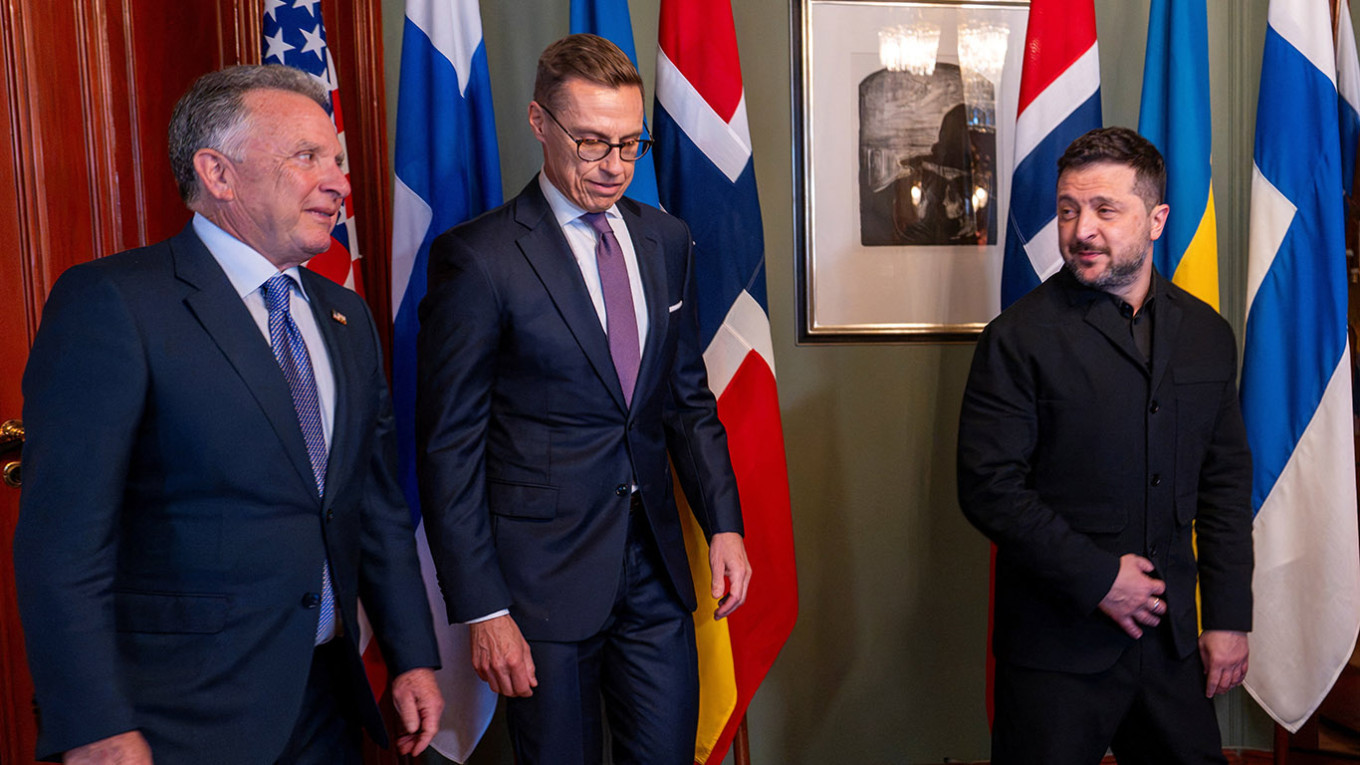
The European Union has returned to the idea of appointing an envoy to hold talks on Ukraine with Russian President Vladimir Putin.
According to sources familiar with the matter who spoke to Politico, this search gained fresh momentum following a visit to Russia by Steve Witkoff, the US special envoy.
During his trip, Witkoff proposed to Putin that Russia, the US, and Ukraine hold trilateral talks.
European countries, meanwhile, fear that Washington could accept terms unfavourable to Kyiv in negotiations that exclude them.
Sources speaking to Politico said the names being discussed for the envoy role include European Commission President Ursula von der Leyen, European Council President António Costa, and EU High Representative for Foreign Affairs and Security Policy Kaja Kallas.
Some European diplomats believe Finnish President Alexander Stubb may be the most suitable candidate for the post.
Stubb’s good relations with Trump and Finland’s experience in dealing with Russia are cited among the factors setting him apart.
An unnamed EU diplomat described Stubb as the only European politician so far to have demonstrated senior-level leadership.
Another group of diplomats argues that Costa should lead the talks. European leaders asked Costa during last week’s EU summit in Brussels whether the time had come to speak with Putin.
Politico’s source recounted that exchange: “Costa said no, saying he would not speak to Putin right now. But if we want to play a role in the negotiations, Costa still needs to initiate dialogue with Putin.”
According to an assessment by another source, the European Council president could serve as a more neutral mediator than von der Leyen or Kallas, who are seen as overly focused on supporting Ukraine.
“Three or four people cannot go there with each of us speaking on behalf of the European Union,” one of the sources told the publication. “Ultimately, the choice of who represents the EU must be based on maximum efficiency, not on a personal power struggle or someone’s narcissistic ambitions.”
Politico previously reported in January that the EU was considering appointing a special representative for Ukraine negotiations. At the time, the initiative drew support from several European leaders, including French President Emmanuel Macron and Italian Prime Minister Giorgia Meloni.
Putin said he was ready to negotiate with European countries, but asserted that Europe had “no peace agenda” and stood “on the side of war”.
The Russian leader also named former German chancellor Gerhard Schröder as Moscow’s preferred negotiator from Europe.
Kallas ruled out such an appointment, noting that Schröder was “a lobbyist for Russian state companies” and would sit “on both sides of the negotiating table”.
Stubb details obstacles to talks and Oslo diplomatic drive
Finnish President Alexander Stubb said the principal obstacle to ending the war between Russia and Ukraine was the territorial issue.
Stubb took part in talks in Oslo with US envoy Steve Witkoff, who subsequently travelled to Saint Petersburg to meet Vladimir Putin.
As reported by the newspaper Helsingin Sanomat, Stubb stated that advancing the peace process required either bilateral talks between Russia and Ukraine or trilateral negotiations involving the US.
The Finnish president listed the other major items to be addressed within a settlement as US security guarantees for Ukraine and the construction of a new European security architecture after the war ends.
Without stating it outright, Stubb implied that the core issue within this framework was Ukraine’s NATO membership. The Finnish leader pointed to monitoring the ceasefire, establishing the line of contact, ensuring energy and food security, and exchanging prisoners as practical tasks.
Stubb also detailed the talks held in Oslo on 20 October, which included Witkoff, Ukrainian President Volodymyr Zelenskyy, and Norwegian Prime Minister Jonas Gahr Støre.
The discussions, which spanned approximately eight hours across various formats, had three objectives: to lower tensions in public discourse, to convey European and Ukrainian proposals to the US envoy before his visit to Russia, and to determine the next steps toward a peaceful settlement. Stubb announced that these goals had been achieved.
Moscow ready to resume trilateral talks in November
Witkoff met Putin in Saint Petersburg on Wednesday.
Following the meeting, Russian presidential aide Yuriy Ushakov announced that Moscow was prepared to resume trilateral negotiations with the US and Ukraine during the first half of November.
Ushakov also said that the EU and NATO had begun to “take a more serious approach” to Kremlin proposals on Ukraine, adding that “matters” were moving toward an end to the conflict.
Witkoff described the meeting as “constructive”.
Sources told Bloomberg in September that Putin continued to insist the Donetsk region must come fully under Russian control, expressing confidence that the territory would be captured within the next six months.
Putin previously set conditions for ending the war, demanding that Ukraine abandon plans to join NATO, maintain a neutral and non-nuclear status, and that anti-Russian sanctions be lifted.
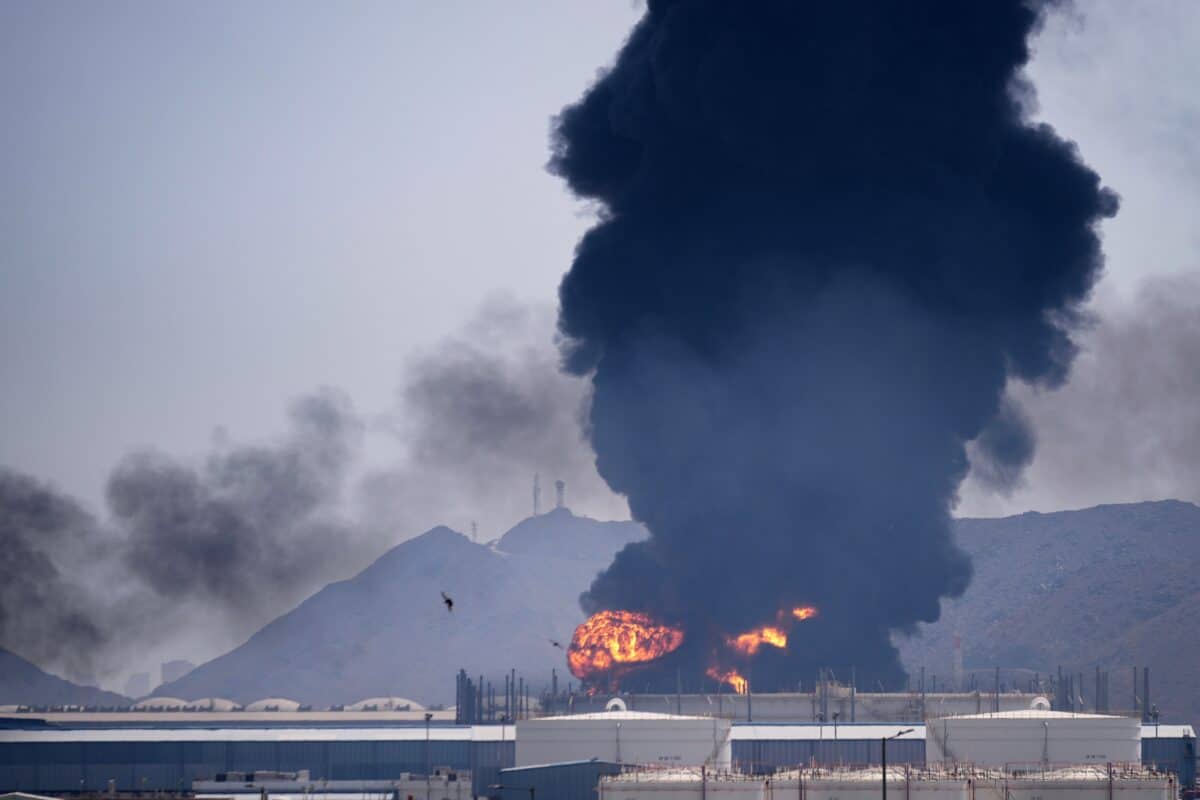
A comprehensive military operation planned by the Israeli military for 10 October did not take place because US President Donald Trump chose to avoid a broad conflict before the 3 November congressional midterm elections.
Preparations had been made on the orders of Prime Minister Benjamin Netanyahu for an aerial bombardment meant to last several days, according to a report by the Financial Times citing sources familiar with the matter.
The list of targets included nuclear facilities and locations associated with the Iranian leadership, along with power stations and other civilian infrastructure sites.
The planned strikes were projected to exceed the joint operation launched by the US and Israel in February in terms of intensity.
White House Deputy Press Secretary Anna Kelly told the newspaper: “The United States is not going to strike Iran at any point before the midterms.”
Kelly argued that the administration in Tehran was in distress both economically and militarily, adding that the blockade imposed on Iranian ports and US efforts to secure oil shipments through the Strait of Hormuz were producing results.
Speaking to the newspaper, one source addressed the possibility of strikes resuming in the coming weeks, saying: “There’s either going to be a deal or a strike.”
The same source reported that Washington aims for a comprehensive settlement that resolves the conflict over both the Strait of Hormuz and the nuclear programme, although it remained unclear whether the US would have participated directly in the cancelled operation.
Another source said the preparations for the operation might have served as leverage to pressure Tehran in negotiations, adding that the final decision on any new military step rests with the US president.
Hegseth reviews updated target list in Israel
An Israeli official said US Secretary of War Pete Hegseth visited Israel on 19 October to meet with Netanyahu and senior representatives.
Another source stated that the Israeli side presented an updated target list to its American counterparts, compiled with fresh intelligence and incorporating civilian infrastructure sites that had not been struck earlier this year.
The Pentagon did not respond to questions regarding the meetings, while Netanyahu’s office and the Israeli military declined to comment.
Despite the postponement of the operation, Trump and Netanyahu continued to issue military warnings to Iran in public.
In a video released on 19 October, Netanyahu addressed Trump, saying: “Donald, you said we need to finish this, and we will finish it together.” Speaking on speakerphone, Trump responded: “You’re a great warrior, and we’re going to prove it very soon.”
These engagements between the leaders coincide with critical election cycles in both countries.
Parliamentary elections in Israel are scheduled for 27 October, one week before the vote in the US.
Most public opinion polls in the country show the opposition bloc holding a narrow lead over Netanyahu’s coalition, though neither side commands a clear majority.
Axios, a US-based news outlet, previously reported that the Pentagon instructed military planners to finalize strike plans against Iran, though the directive specified no date and Trump had not reached a final decision.
On 15 October, CNN reported on plans to use the GBU-43/B munition, known as the “mother of all bombs”, against Iranian nuclear facilities, with US officials who spoke to the broadcaster expressing scepticism about the weapon’s ability to destroy deep bunkers.
While Tehran announced that it remains open to a diplomatic solution, it declared that any potential operation would draw a fierce response.
Iranian Foreign Minister Abbas Araghchi stressed that if its adversaries chose military conflict, the response would be “much harsher than before”.
Following the joint operation launched by the US and Israel on 28 February, Iran retaliated by striking targets across the region and restricting maritime passage through the Strait of Hormuz.
Although the parties reached an agreement in June covering a ceasefire and negotiations to lift the blockade in the strait, reciprocal strikes between the US and Iran have not ceased.

German officials urge fighter jet alliance with Sweden and Spain

US wealthy demolish multimillion-dollar mansions for land

US and Israel weigh Iran strikes after midterm vote, reports say

Pentagon plans covert spy ring for economic war on China, report says

EU reopens debate on naming envoy for Ukraine talks with Putin
-
 Europe2 weeks ago
Berlin Left Party backs Israel’s right to exist for coalition pact
-
 America2 weeks ago
How will Brazil’s presidential runoff work?
-
 Diplomacy2 weeks ago
The West is preparing for war not with Russia, but with its own people, French analyst Georges Kuzmanovic insists
-
 Russia2 weeks ago
71 EU lawmakers demand closure of Russian Houses in 15 member states
-
 Europe2 weeks ago
MI6 investigates potential leaks after former BND chief is detained
-

 Russia2 weeks ago
US and Russian figures discuss American stake in Nord Stream lines
-

 Russia2 weeks ago
Drone strike shuts down Yandex data centre in Russia’s Ryazan region
-

 America1 week ago
Trump weighs presidential memorandum to cut surging US diesel prices
