
Middle East
Iran instructs Houthis to prepare Red Sea blockade as US strike threat looms

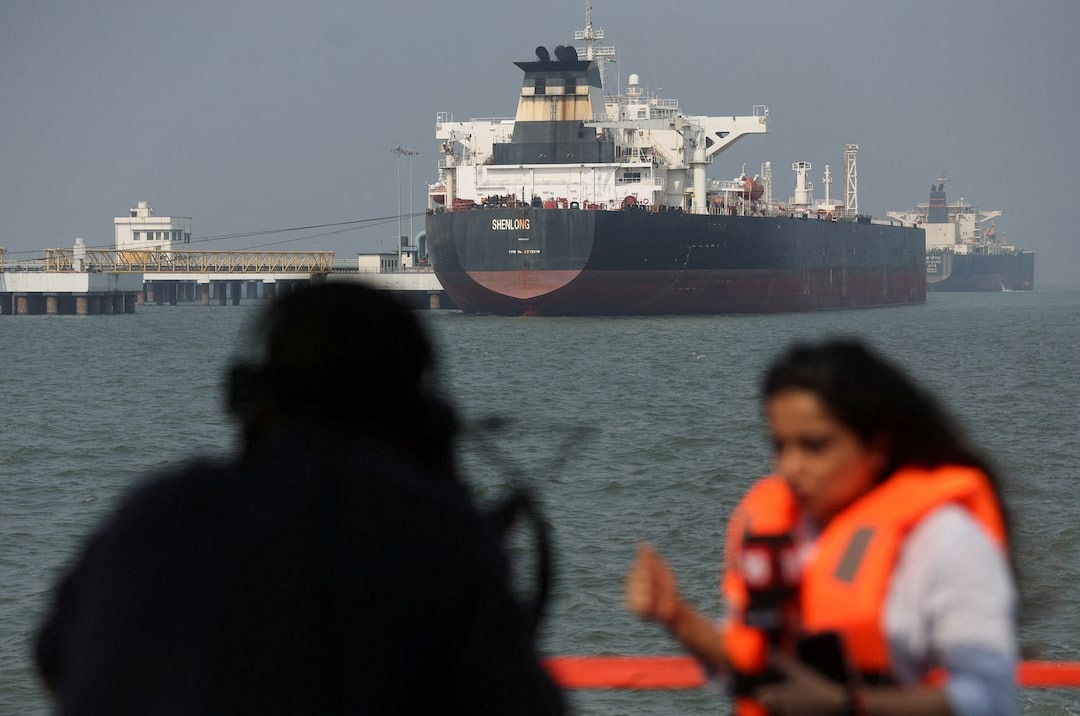
The Houthis are accelerating preparations for attacks on tankers in the Red Sea—one of the world’s most critical maritime trade corridors, located at the opposite end of the Persian Gulf.
According to a report by the Reuters news agency, representatives of Iran’s Islamic Revolutionary Guard Corps (IRGC) are operating in Yemen to coordinate a potential blockade of the Bab al-Mandab Strait, the primary entry point for vessels into the Red Sea.
A source close to the Houthis reported that the group has finalized its attack preparations by deploying missiles and drones in high-altitude areas near the strait and is currently awaiting orders to launch the operation.
Three sources familiar with the matter stated that the directive to attack would be issued if the US conducts strikes against Iran’s energy infrastructure, as threatened by Donald Trump.
Two senior Iranian officials and another regional source noted that the Iranian leadership has discussed the plan to block entry and exit points to the Red Sea and has conveyed the relevant instructions to the Houthis.
Blocking the Bab al-Mandab Strait in addition to the Strait of Hormuz risks dealing a severe blow to global oil and trade flows. Following previous disruptions to shipments through the Strait of Hormuz, Saudi Arabia had redirected approximately 70% of its oil exports via pipelines to its ports on the Red Sea coast.
In the event of a direct conflict with the Houthis, the Riyadh administration could find itself unable to transport oil to Asian countries, which represent its most critical buyers.
Currently, approximately 7% of global energy resources are transported via the Red Sea route.
Four years ago, the Houthis targeted Saudi Arabian territory but subsequently suspended their attacks under a ceasefire agreement.
When the group began targeting civilian vessels in the Red Sea again in 2024, many shipping companies diverted their routes around the southern tip of Africa via the Cape of Good Hope, a shift that lengthened delivery times and increased transportation costs.
Following US bombardments of Houthi positions during the final months of the Joe Biden administration and particularly after Trump’s return to the White House, vessel traffic in the Red Sea had intensified once again.
However, the Houthis, who accused Saudi Arabia on Monday of bombing airports, launched fresh missile strikes against the kingdom’s territory this week. Torbjorn Soltvedt, principal Middle East analyst at the risk intelligence firm Verisk Maplecroft, evaluated the escalating tension:
“An escalation in conflict that spills over into Red Sea export infrastructure and shipping would jeopardize the only major alternative oil export route from the region.”
Two regional sources close to the Saudi government stated that the Riyadh administration takes the threats from Iran and the Houthis extremely seriously and is aware that the Yemeni group’s actions regarding the Red Sea are being taken in close coordination with Iran.
US President Trump, who on Tuesday reinstated a naval blockade on Iranian ports, had previously threatened to bomb power plants in the country.
According to a report by The Wall Street Journal, Trump has also been considering the option of seizing control of islands along the Strait of Hormuz, including Kharg Island, which hosts the port handling 90% of Iran’s oil and petroleum product exports.










Israel’s Chief of General Staff, Eyal Zamir, has instructed officials to examine criminal and legal steps against the production team of the documentary “NAZA”, which focuses on testimonies from soldiers and intelligence personnel who served in Gaza operations.
While Israeli Prime Minister Benjamin Netanyahu targeted the production, describing it as “unacceptable”, more than 200 Israeli filmmakers published a joint statement backing the directors.
Maintaining that the documentary slandered the military, Chief of General Staff Zamir asserted that the work had no intention of uncovering the truth.
“In light of the available data, this production is not a work that constructively criticises the military,” Zamir said. “On the contrary, it relies on blood libels, a deliberate distortion of the reality on the ground, and baseless accusations directed at our soldiers and commanders.”
Zamir further claimed that the military was presented as an entity acting unlawfully and that the arguments of anti-Israel circles were adapted for the film.
The Israeli military is establishing a new multidisciplinary, inter-agency working group involving domestic and international experts to counter such allegations.
Meanwhile, the military’s most senior legal official, Itai Ofir, is reviewing the legal procedures that could be initiated against the documentary’s producers.
The military leadership contends that the testimonies lack credibility because the identities, ranks, and operational details of the personnel interviewed in the film were concealed.
Rejecting the assertion that targets were selected by artificial intelligence, military officials stated that all strikes and target approvals were decided by human hands within the framework of military directives.
Prime Minister Benjamin Netanyahu reacted to the production in a video message shared on Telegram.
“This situation is appalling,” Netanyahu said, voicing his reaction. “While resisting antisemitic incitement conducted globally, it is unacceptable for a similar approach to arise from within ourselves. Two Israeli directors presenting the Israeli military as war criminals are being applauded at the Venice Film Festival.”
The 80-minute production was awarded the Special Jury Prize at the 83rd Venice International Film Festival and received a 25-minute standing ovation in the auditorium at the end of the screening.
In reactions emerging from the cabinet, Minister of Culture and Sports Miki Zohar accused directors Yuval Abraham and Rachel Szor of “high treason”.
“The self-hatred displayed by these producers, who risk harming their own country to win the praise of antisemitic circles worldwide, is beyond comprehension,” Zohar said. Announcing that he would launch an initiative to revoke the directors’ citizenship, Zohar stated that direct accusations of treason could be brought against the individuals.
Far-right National Security Minister Itamar Ben-Gvir also addressed the directors, stating: “You are a source of shame for the entire people of Israel. Get out of here.” Under current Israeli legislation, the culture minister does not have the authority to unilaterally revoke citizenship; decisions in this direction can be made only as a result of legal processes involving the Ministry of Interior and judicial bodies.
Following the mounting backlash, more than 200 Israeli filmmakers, including Ari Folman, Shlomi Elkabetz, Ran Tal, and Michal Aviad, signed a joint declaration of solidarity. The text emphasised that “the primary duty of art and the profession of journalism is to hold up a mirror to the society from which it arises.”
Produced in partnership with The Guardian and JW Films, “NAZA” conveys testimonies from 24 military and intelligence personnel whose identities were kept concealed and who took part in surveillance, targeting, and air strike decisions in Gaza.
Deriving its name from a Hebrew military acronym that designates the number of civilians expected to lose their lives during an operation and corresponds to the concept of “collateral damage”, the film documents that targets were determined using artificial intelligence and mass surveillance networks.
Describing high-tech weaponry and AI-assisted targeting mechanisms, one interviewed soldier made the comparison: “Because everything runs on remote control, the process resembles a video game.”
Another soldier described the deaths on the ground as “unbelievably fun”.
Director Yuval Abraham said: “The intelligence personnel we interviewed stated that the mass deaths were not an accident, but on the contrary rested upon a designed and systematic choice.”
Abraham and Szor stated that the production did not scrutinise individual soldier violations, but directly examined the institutional chain of command and operational doctrines.
The two directors had previously made the Oscar-winning documentary “No Other Land”, which addressed the displacement of Palestinians and settler violence in the occupied West Bank, alongside Palestinian filmmakers Basel Adra and Hamdan Ballal.
While the Ministry of Health in Gaza announced that the number of Palestinians who have lost their lives in the attacks exceeded 73,700, the actual death toll is projected to be far above this figure due to destroyed healthcare infrastructure and casualties lost beneath the rubble.
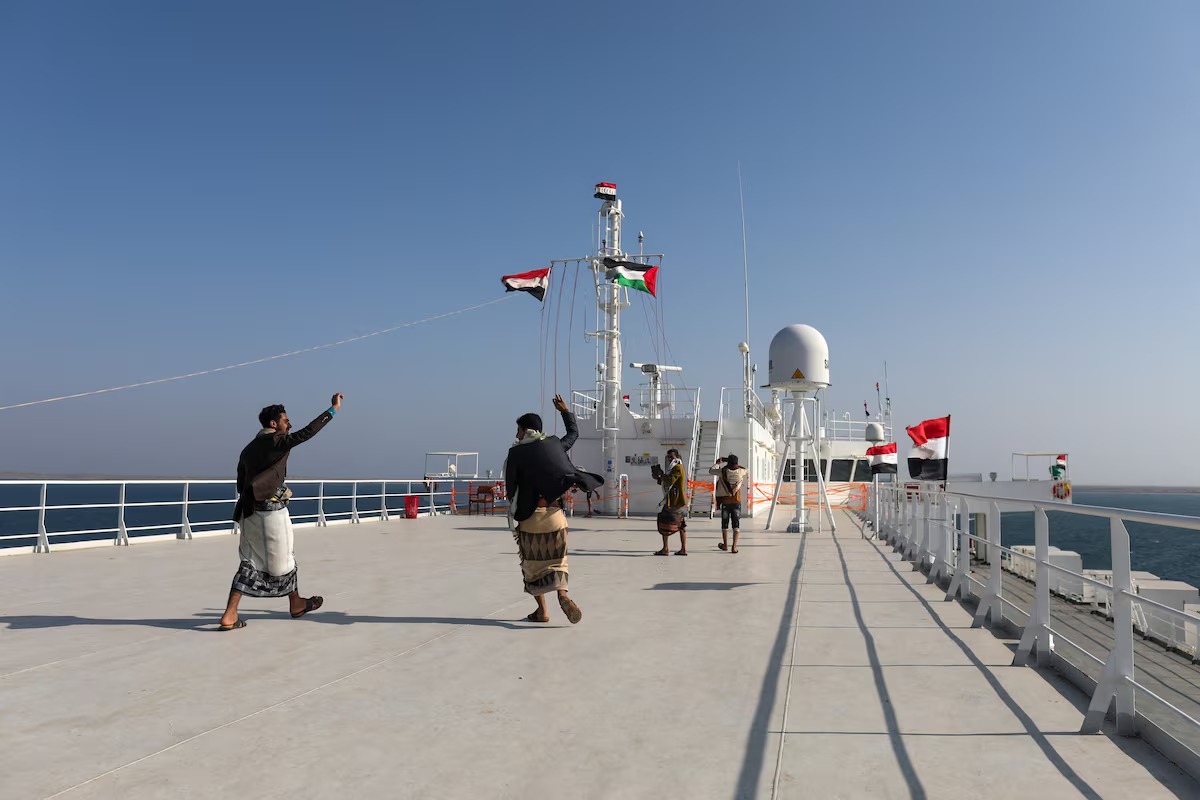
British Prime Minister Andy Burnham is considering responding to requests for military assistance directed at Yemen from the Saudi Arabian government.
According to sources speaking to Bloomberg, the prime minister has received various requests for diplomatic and military support from Saudi Arabia.
The sources stated that Saudi Arabia’s requests include providing operational support to its military to repel the advance of Ansarullah (the Houthis) along Yemen’s Red Sea coast towards the strategically vital Bab el-Mandeb Strait, as well as assistance in defending against attacks on oil infrastructure.
Under pressure to take action because of the economic difficulties generated by the war with Iran, Burnham is also concerned about creating the impression that he supports Donald Trump’s war against Iran, given that the UK public overwhelmingly opposes the war.
Reports had emerged that Saudi Crown Prince Mohammed bin Salman asked Donald Trump to conduct air strikes against the Yemeni resistance.
At present, the UK has approved the deployment of only British military advisers to Saudi Arabia.
This comes despite Saudi Arabia’s request for operational support to halt operations carried out by Yemeni forces along the coastline.
Former UK prime ministers Rishi Sunak and Keir Starmer had provided more comprehensive support to Saudi Arabia against the Yemeni resistance.
The prime minister was also warned by UK officials that the Bab el-Mandeb Strait is of vital importance to global maritime transport and the economy, and that the capture of this strait by the Houthis must be prevented.
Earlier on Monday, Bloomberg reported that Saudi Arabia was seeking to increase the volume of oil shipments transiting the Strait of Hormuz after shutting down its East-West crude pipeline.
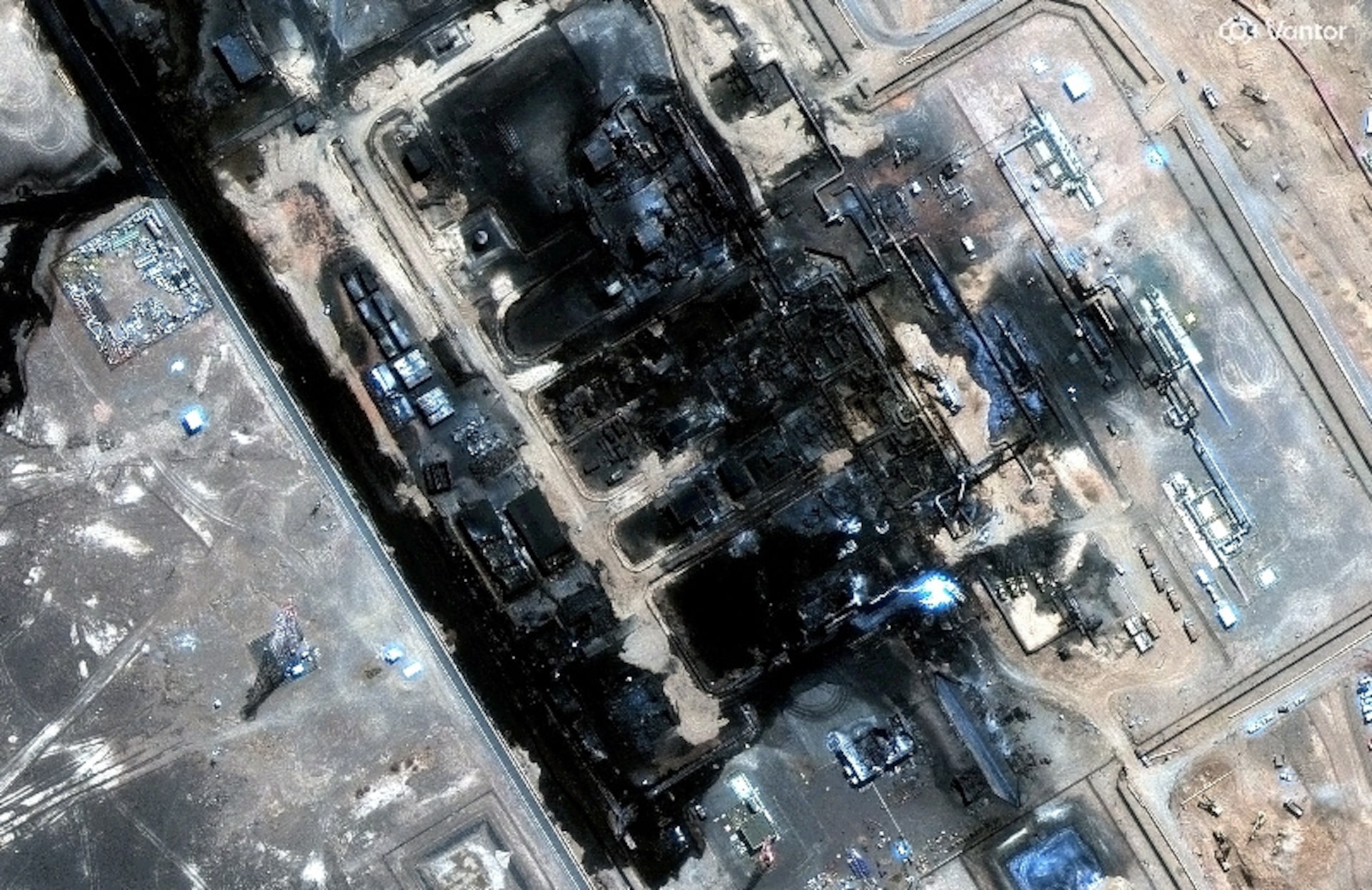
Saudi Arabia risks exhausting its exportable crude stockpiles if the East-West pipeline to the Red Sea fails to resume operations, according to reports.
Citing companies purchasing Saudi crude as well as market traders, the Reuters news agency reported that such an outcome could trigger a severe contraction in global oil supply.
Oil flows through the pipeline were halted following drone strikes. The government in Riyadh has not yet issued an official statement regarding the extent of the damage or the expected duration of repair works.
Sources familiar with the matter have offered differing estimates regarding the repair timetable.
One source speaking to Reuters noted that works could take five to six weeks, while another source stated that the damage could be repaired more quickly and that partial oil flows could be restored before repairs are entirely completed.
Stocks at Yanbu port reach critical threshold
Traversing the Arabian Peninsula to the Red Sea port of Yanbu, the pipeline carries approximately 4 million barrels of oil per day. This volume represents roughly 4% of global oil supply.
The line previously provided Saudi Arabia with an alternative export route, bypassing the Strait of Hormuz where maritime traffic has faced disruptions due to regional conflict in the Middle East.
Three sources closely tracking shipment schedules indicated that, following the stoppage, oil reserves at Yanbu port would suffice to sustain exports for only five to seven days.
A fourth source stated that additional reserves held in Egypt at the Red Sea port of Ain Sokhna and the Mediterranean terminal of Sidi Kerir afford buyers shipments for several more days.
Storage capacities stand at approximately 35 million barrels at Yanbu, 18 million barrels at Ain Sokhna, and 20 million barrels at Sidi Kerir.
However, sources stressed that these facilities are not currently filled to maximum capacity and warned that these inventories will be entirely depleted if the pipeline is not brought back online.
Output at lowest level in 30 years
According to International Energy Agency data, disruptions in the Strait of Hormuz and Red Sea transit corridors pushed Saudi oil supply in August to its lowest level in 30 years.
Data submitted by the Riyadh government to OPEC show that the kingdom’s crude production fell from 10.9 million barrels per day in February to 6.2 million barrels per day in August.
In July, the Houthis in Yemen announced the launch of a naval blockade against Saudi Arabia. On 8 September, the Saudi Ministry of Energy announced that operations had been suspended at several energy facilities in the southern part of the country.
On the same day, the Saudi Ministry of Foreign Affairs issued an official statement condemning Houthi strikes targeting facilities in the cities of Abha, Khamis Mushait, Jizan, and Najran.
Riyadh authorities reported that 73 civilians, including women and children, were injured in the attacks. US President Donald Trump stated that Iran might be behind this attack on Saudi Arabia.
In oil markets, Brent crude futures recorded their sharpest single-day gain since late July on Thursday, 10 September.
The price of November Brent crude contracts rose by 6.3% to reach $107.6 per barrel. Prices retreated below the $105 mark the following day.

Big Tech profits from AI extinction hype, Ken Klippenstein says

Israel military weighs legal steps against Gaza documentary makers

Finkelstein says US campus clampdown has surpassed McCarthyism

DeepSeek engineer warns AI will lead to communism or Cyberpunk

Israel pledges full Greek control over Achilles’ Shield source code
-

 Europe1 week ago
Germany’s CDU drafts tougher citizenship rules to counter AfD
-
 Diplomacy2 weeks ago
Geoffrey Roberts sees Ukraine war concluding within coming months
-

 Europe2 weeks ago
German industrial bosses push for return to 40-hour working week
-

 Middle East2 weeks ago
Israel sees Türkiye as competitor rather than enemy, diplomat says
-

 Diplomacy2 weeks ago
Pope Francis accused Opus Dei of mafia tactics over Spanish shrine
-
 Middle East2 weeks ago
Iranian NGO report records 50% drop in terrorist attacks for 2025
-
 America2 weeks ago
James Carden warns US foreign policy elite cling to global dominance
-
 Diplomacy2 weeks ago
US economic agenda dominates G20 ministerial summit in Asheville
