
Middle East
Iran targets Mossad and Unit 8200 in missile attack on Tel Aviv

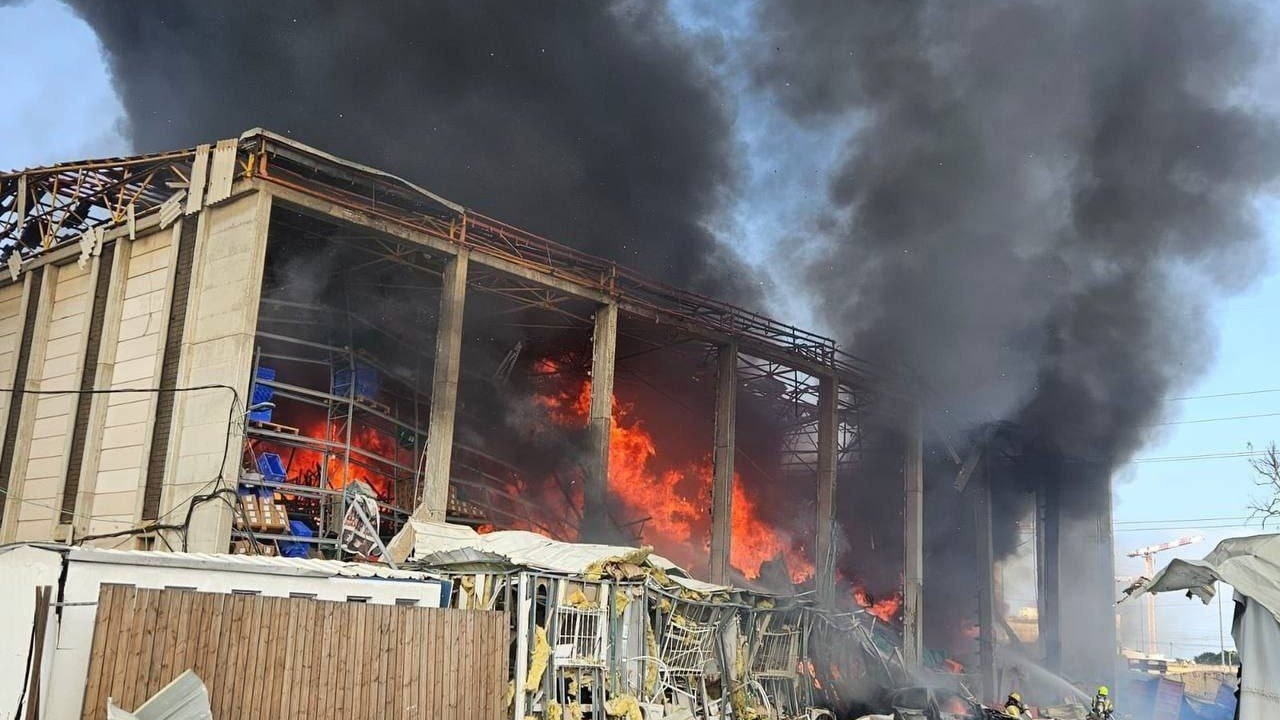
Iran announced it targeted Israeli intelligence centers, including Mossad and Unit 8200, in a ballistic missile attack on the Glilot Base near Tel Aviv.
A statement from the Revolutionary Guards Army noted, “This morning, the Iranian Aerospace Forces, despite highly advanced defense systems, carried out an effective attack on the military intelligence center Aman and the terror operations planning center Mossad, belonging to the Zionist regime; the said center is currently on fire.”
According to Ynet, multiple missiles struck the Herzliya area in the Tel Aviv region, setting a bus on fire and damaging an eight-story building. Videos of the missiles’ impact show large explosions in this area.
The Israeli press reported that military censorship is being enforced on the area in the Glilot region affected by the Iranian missiles, with news and images on the subject being suppressed.
This area houses significant intelligence centers like Mossad and Unit 8200. Some sources indicate that logistics or warehouse facilities belonging to Unit 8200 were targeted. Analysis of satellite and narrow-angle imagery confirms that the missiles landed near Mossad facilities.
The Israeli government has blocked the dissemination of information regarding the damage caused by the Iranian missiles.
Unit 8200, one of Israel’s elite intelligence units, operates under the Israeli Military Intelligence Directorate, Aman. The unit, which specializes in electronic eavesdropping, cyber intelligence, signal interception, data collection, and analysis, is considered the backbone of Israel’s digital espionage operations. According to many commentators, Unit 8200 is Israel’s “cyber warfare brain.”
This morning, Iran announced the start of the ninth phase of “True Promise 3” and declared that its attacks on Israel would intensify.
In retaliation for Israeli strikes on Iran, ballistic missiles launched by Iran have caused unprecedented destruction in Tel Aviv and Haifa, leaving dozens dead and hundreds injured.
In response, Israel continues its air attacks on Iran. More than 224 Iranians, including women and children, have been killed in the Israeli strikes. A thick column of smoke rose following an explosion in Tabriz, northwest of Tehran, this morning.
Last night, the Israeli air force attacked the headquarters of Iranian state television during a live broadcast.









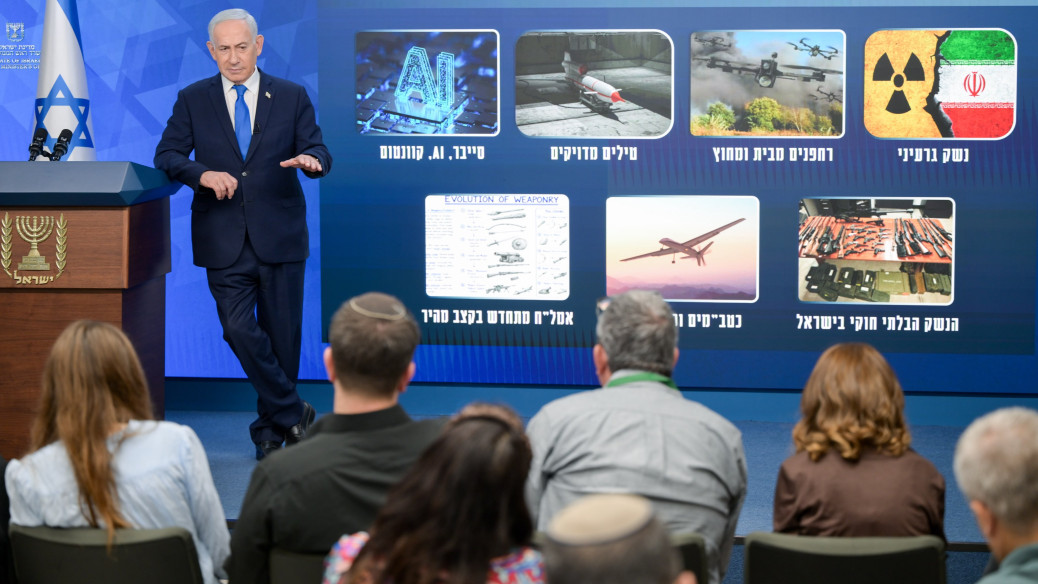
Israeli Prime Minister Benjamin Netanyahu has shared an updated security doctrine with the public ahead of general elections scheduled for 27 October.
Announced by the Prime Minister’s Office on 18 October and shaped with contributions from the National Security Council, the work includes a detailed map classifying Israel’s regional allies, adversaries, and spheres of influence.
The new doctrine aims to eliminate elements defined as threats directly through pre-emptive military interventions rather than containing them, to expand buffer zones, and to establish new regional partnerships.
Al Jazeera points out that this approach has effectively been put into practice during Israel’s recent military operations and strikes against neighbouring countries.
Regional blocs and allies classified on the map
The map presented by Netanyahu classifies not only sovereign states into blocs, but also armed groups, de facto administrations, and territories controlled by various forces.
The terms “alliance” and “friend” used on the map do not imply that formal and binding partnerships have been established with all these entities.
The “Hexagon Alliance” on the Israel-United Arab Emirates (UAE) axis and parties considered “friends” of this bloc are shown in blue and light blue shades.
This group includes Azerbaijan, Greece, southern Cyprus, the Druze in Syria’s As-Suwayda province, eastern Libya under Khalifa Haftar’s control, Ethiopia, Somaliland, Puntland, areas in Yemen held by the UAE-backed former Southern Transitional Council, and territories controlled by the Rapid Support Forces in Sudan.
The “Sunni Diamond Alliance”, formed by Türkiye, Egypt, Pakistan, and Saudi Arabia, alongside peripheral actors, is distinguished by green and light green shades.
This cluster marks Azerbaijan, Syria, Qatar, Kuwait, areas in Yemen controlled by the Saudi-backed Presidential Leadership Council, Eritrea, Sudan, the West Bank, Jordan, the Lebanese government, Northern Cyprus, and Somalia. In Libya, both the Tripoli-based western administration and the Haftar-dominated eastern administration are shown as linked to this bloc.
Iran and the Axis of Resistance are defined in red and pink colours. Hashd al-Shaabi in Iraq, eastern and southern parts of Lebanon where Hezbollah is active, Ansar Allah-controlled areas in Yemen, and Hamas-administered Gaza find a place within this axis. Russia is marked on the map in pink under “friend” status to this bloc.
Orange and yellow markings are also used around NATO members, alliance partners, and actors with friendly relations with Washington. The lines also illustrate the permeability between blocs.
For instance, Azerbaijan is presented with two-toned stripes as a friend of both the Israel-UAE axis and the Türkiye-led bloc, while India stands out as the only actor classified as a “friend” to all parties.
The map in question was reportedly prepared in May by Marc Saxer and Marcus Schneider for the Germany-based Friedrich Ebert Foundation, which has engaged with Israeli governments since 1978.
Pre-election rhetoric of the “indispensable leader”
Netanyahu is facing voters in a bid to retain power amid ongoing corruption proceedings and continued criticism over his management of the 7 October 2023 attacks and subsequent conflicts.
According to Al Jazeera’s analysis, releasing the security doctrine and map on the eve of elections rests on Netanyahu’s strategy of establishing himself as the only capable leader who can protect Israel.
Backed by electoral support from US President Donald Trump, Netanyahu pointed during his presentation to a potential change of administration in the White House.
Arguing that an administration distant or hostile to Israel could take office in Washington within two years, Netanyahu said his country must expand its network of alliances and become an attractive regional partner because of that possibility.
Mohanad Hage Ali, deputy director for research at the Malcolm H. Kerr Carnegie Middle East Center, noted that this presentation, built on rival blocs and security corridors, deepens existential anxieties within society.
According to Hage Ali, this approach reinforces voters’ perceived need for a tough leader, and Netanyahu is attempting to rally support from populations wary of uncertainty through this reassurance.
Fierce backlash from the Israeli opposition
The publication of the document provoked reactions in Israeli domestic politics.
Gadi Eisenkot, leader of the Yashar Party and former chief of general staff, criticised the work as consisting of “two empty pages filled with slogans that have nothing to do with an actual security doctrine”.
Emphasising that the Netanyahu government was responsible for the “gravest failure and disaster in Israel’s history” on 7 October, Eisenkot said subsequent escalating regional clashes had also left every front engulfed in flames.
Eisenkot argued that the document exposes a lingering strategic vacuum, while the prime minister is reviving fears to divert attention from misleading claims in his election pledges.
Yesh Atid leader and former prime minister Yair Lapid also described the text as superficial.
“Even by Netanyahu’s current standards, which are defined by exhaustion and detachment from reality, this document looks as if it was written using a free version of an AI chatbot,” Lapid said.
Lapid added that a text consisting merely of bulleted headings cannot be deemed a doctrine, and that the effort is nothing more than an attempt to cover up the disasters caused by the prime minister.
The buffer zone model
The buffer zone concept featured in the strategy document is based on Israel establishing direct military control over cross-border territories.
Al Jazeera notes that the current occupation conditions in Gaza and southern Lebanon are practical reflections of this policy.
Mohanad Hage Ali warned that a plan based on making military control permanent could bring fresh conflicts and the risk of ethnic cleansing.
Hage Ali also noted that portraying actors such as the Rapid Support Forces in Sudan and Haftar’s forces within the Israel-UAE axis could damage their legitimacy in the Arab world.
Arguing that this choice reflects Netanyahu’s domestic priorities, Hage Ali observed: “What Israelis think becomes more important than the reputation of your allies and the sustainability of these alliances.”
Netanyahu’s proposal for a “hexagon of alliances”, raised at the beginning of the year and covering India, Greece, southern Cyprus, and unspecified Arab, African, and Asian nations, has yet to be formalised.
While international analyses describe the initiative as a diplomatic branding exercise rather than a binding defence pact, observers recall that actors such as India prioritise commercial interests and non-alignment over rigid blocs.
Finally, Hage Ali stated that the presented map will provide propaganda material for the Tehran government and its allies, reinforcing arguments that Israel harbours regional expansion and domination ambitions.
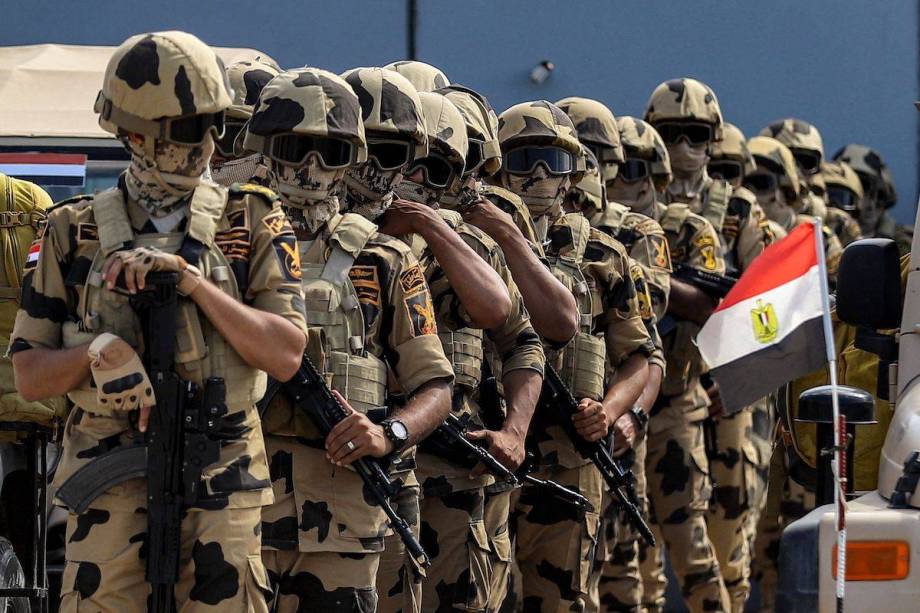
A parliamentary session expected to authorise Egyptian President Abdel Fattah al-Sisi to deploy troops to Saudi Arabia has been postponed.
Debates that began after the Sisi administration declared its readiness to provide military backing to Riyadh were prolonged due to lawmakers’ requests to take the floor and questions regarding the details of the plan.
Speaking to Reuters, two parliamentarians reported that discussions starting on Sunday, 18 October, would continue on Monday. Personally calling for the extraordinary sitting, Sisi intends to contribute to the defence of the allied country should Saudi Arabia make a request.
Requests to speak reach three hundred in closed session
Lawmaker Ibrahim Khulaif and parliament member Maha Abdel Nasser told AFP that the session was extended to allow all deputies to voice their views. Both parliamentarians stated that concrete details regarding the operational format and the content of the military assistance Egypt would provide have not yet been addressed.
According to information cited by the Al-Masry Al-Youm newspaper from parliamentary sources, around 300 parliamentarians asked to speak during the closed-door session to learn the specifics of the military measure and to share their assessments.
Parliament Speaker Hesham Badawi announced that three or more sessions would be held to provide comprehensive explanations and to hear every deputy waiting to speak. According to the report, three lawmakers expressed reservations about the move, arguing that diplomatic channels should be pursued instead of military action.
Defence Council approves move, parliamentary mandate awaited
Prior to the discussions in parliament, the National Defence Council met under Sisi’s chairmanship and approved the provision of “all necessary and possible support” to safeguard Saudi Arabia’s territorial integrity, security, and Islam’s holy sites. This decision does not constitute an immediate troop deployment, as parliamentary authorization is required to complete the legal process.
Lawmaker Mostafa Bakry reported that the council had approved the dispatch of troops to Saudi Arabia as well as the defensive mission these units would execute.
Stressing that Saudi Arabia is regarded as an integral part of Egyptian national security, Bakry assessed that “any threat to its security and stability is a threat to us.”
President Sisi adopted a similar line in a statement on Saturday, saying: “Egypt is ready to take whatever measures Saudi Arabia may request to defend its security and sovereignty.”
Regional tensions and claims of a defence pact
The military preparations in Cairo coincide with renewed activity along the front lines in Yemen and circulating claims that the Mecca Defence Pact among Saudi Arabia, Pakistan, and Türkiye has been activated.
The Islamabad administration rejected claims that Pakistani warplanes had targeted Yemen; however, thousands of Pakistani soldiers are stationed on Saudi territory. Among the claims, it is also alleged that Türkiye has dispatched a significant amount of equipment and personnel for use in operations in Yemen.
The Riyadh government has maintained military operations and a blockade against Yemen for more than a decade. Following an intensification of Saudi air operations in July, the Yemeni Armed Forces escalated their retaliatory missile and drone strikes against Saudi bases, airports, and energy infrastructure.
Yemeni forces down Saudi attack helicopter
The Ansarullah-led Yemeni Armed Forces announced on Sunday that they had downed an AH-6i Saudi attack helicopter near the Najran region using a domestically produced surface-to-air missile, releasing video footage of the incident.
The Saudi-led military coalition confirmed that all crew members aboard the helicopter, which was targeted on grounds of conducting “hostile activity”, had died.
Having previously struck the western Yemeni port city of Hodeidah, Saudi warplanes have carried out more than 2,500 strikes since July, according to figures shared by Yemeni military officials.
Dozens of civilians have been killed in these operations, while the Yemeni Armed Forces continue to target Saudi Arabia’s strategic energy fields and transport hubs using loitering munitions and missiles.
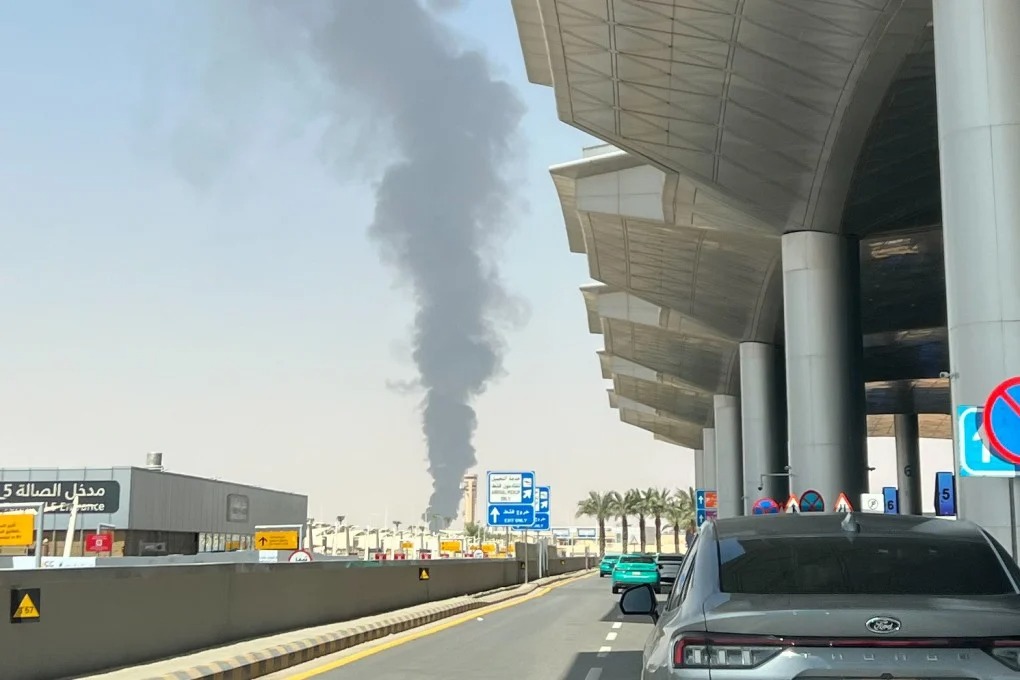
Successful strikes carried out by the Yemeni resistance against King Khalid International Airport in Riyadh have intensified scrutiny over air defence systems.
Stephen Bryen, a former US Deputy Under Secretary of Defence and a prominent expert in security strategy and technology, pointed out in an analysis published on his personal Substack account that it is becoming increasingly evident that even the best existing air defence systems fail to shield critical assets from damage or destruction.
Highlighting that the Yemeni operation employed a coordinated combination of loitering munitions, cruise missiles, and ballistic missiles, the expert noted that the launch sequence unfolded in the order of drones, cruise missiles, and ballistic missiles.
The raid lasted approximately 45 minutes. The most severe destruction occurred at gates 401 to 403, which were struck initially by Quds cruise missiles, each carrying a payload of 150 kg.
According to Bryen, the situation was further compounded when debris from Patriot interceptors crashed into the terminals, causing fires and spreading shrapnel.
Noting that no air raid sirens were sounded and no early warning of the strike was issued, the author stressed that the airport lacked a civil defence system, shelters, or publicized evacuation procedures.
Arguing it was clear that Ansar Allah “aimed to cause mass casualties in order to punish Saudi Arabia for its support of government forces in Yemen”, the author stated that “the Houthi militia had repeatedly issued public warnings regarding their intentions” and had made plain their goal of shutting down the Riyadh airport, even if it was not their sole target.
Bryen continued:
“Despite modern radars and airborne early warning systems, the launches of the unmanned aerial vehicles, cruise missiles, and ballistic missiles went undetected. Saudi Arabia possesses five E-3A AWACS aircraft, two Saab 2000 Erieye AWACS aircraft equipped with modern AESA radars (the E-3A radar being an older pulse-Doppler system), and a series of other dedicated tactical reconnaissance platforms (RE-3A, RE-3B). These systems and coastal radar installations are integrated into a centralized defence network linked to air defence assets such as Patriot, THAAD, and up to 10 batteries of the Korean-made KM-SAM Block-II (Cheongung-II) used for lower-tier air defence against short-range ballistic missiles (SRBMs), cruise missiles, aircraft, and unmanned aerial vehicles (UAVs).”
Pointing out that there are no reports indicating other countries, particularly the US and Israel, detected the Yemeni launches or alerted Saudi Arabia even if they did, the US expert recalled that drone and cruise missile launches are “easily concealed” and wrote that detecting such operations requires high-quality intelligence, typically human intelligence.
“The fact that Saudi Arabia established an initiative named the ‘Mecca Joint Defence Agreement’ … with Pakistan and Türkiye, excluding the US and frustrating Washington’s drive to expand the Abraham Accords to the Kingdom, may have played a role in dampening US interest in assisting the Kingdom with the Houthis and the Yemen issue,” Bryen claimed, arguing that it remains uncertain whether Washington will intervene now.
Emphasising that the Ansar Allah operation was an intensive attack employing new or upgraded technology “originating from Iran and perhaps developed with the support of Russia and China”, the author said:
“The suicide unmanned aerial vehicle used by the Houthis was the Samad-3. The Samad-3 is an extended-range loitering munition powered by a two-stroke, twin-cylinder piston engine (typically identified as a 3W110i B2 or DLE 170 class model) driving a rear-mounted pusher propeller. During long-range operations, such as extended flights exceeding 1,500 to 2,600 km, it generally flies at a lower average cruising speed of 148 to 185 km/h (80 to 100 knots or roughly 92 to 115 mph) to conserve fuel. Western experts do not consider the Samad-3 to be highly accurate, even though the latest variants have been enhanced with more jam-resistant satellite links. Between 30 and 40 Samad drones were deployed in the successive strikes on King Khalid Airport.”
He noted that the Quds cruise missile was more lethal, carried a larger warhead, featured advanced electronics, and was powered by a copy of the commercial Czech PBS TJ100 turbojet engine, pointing out that this copy was manufactured in Iran.
Underlining that the Quds-2 utilizes satellite-assisted navigation (GPS/GNSS) and inertial navigation systems (INS), Bryen said: “As a low-flying cruise missile, it can use terrain masking to evade standard radar coverage and air defence systems. The successful strikes by Quds cruise missiles on Terminals 3 and 4 demonstrate that it possesses effective guidance and anti-jamming electronic systems.”
Saudi officials had asserted that they intercepted a portion of the Burkan ballistic missiles using Patriot systems. According to Bryen, the Burkan missiles were not the elements that inflicted the primary damage on the airport.
Regarding the Burkan ballistic missiles, the author wrote:
“The Burkan is a modernized ballistic missile. Once the boost phase is completed following launch, the warhead separates from the missile body. The high-speed warhead alone is difficult for radar to detect. The Burkan-2H and Burkan-3 feature a separable, triconic (‘baby-bottle’ shaped) warhead inherited from Iran’s Qiam-1 and Shahab-3 designs. The separated warhead lacks active control surfaces, such as grid fins or thrusters, to execute evasive manoeuvres or terminal guidance corrections against interceptors like the MIM-104 Patriot. Nevertheless, the missile body travels along the same trajectory as the warhead, creating discrimination and targeting challenges for systems such as the Patriot.”
The author finds it “striking” that the damage inflicted by the Ansar Allah strike on King Khalid International Airport is roughly equivalent to the Iranian strikes against a series of US and Israeli bases that began with the “Martyr Soleimani” operation hitting Ain al-Asad airbase in Iraq in 2020.
According to Bryen, the takeaway from all this points to “grave intelligence shortcomings, inadequate integration of sensors, including radars.”
Recalling that several of these sensors had been targeted and destroyed by Iran, the author listed those targets: the half-billion-dollar THAAD radar (AN-TPY-2) stationed at Muwaffaq Salti in March 2026, the AN/FPS-132 Block 5 upgraded Early Warning Radar (UEWR) located near Al Khor in northern Qatar supporting US and Qatari ballistic missile tracking efforts, other early warning radars in the UAE, and air defence systems functioning well enough to prevent significant damage.
The author concluded his article by arguing that air defence systems and American base planning must be overhauled entirely:
“The US has focused on refining legacy systems like the Patriot and has introduced some interim systems like NASAMS, but has otherwise neglected developing new air defence solutions. Systems such as THAAD and the Navy’s SM-3 could also play a role, but their utility has remained limited. THAAD was not utilized in the Riyadh strike.
If the Houthi militia and the Iranians can penetrate the air defence networks of the US and its allies, the entire system will require a serious overhaul. Withdrawing from Middle Eastern bases is not a genuine solution; it is merely a short-term temporary fix. Even being pushed out of the United Kingdom should serve as a warning that base defences urgently need to be rethought.”

South Korea pulls part of embassy staff from Ukraine amid POW dispute

Netanyahu unveils security doctrine and regional alliance map

At least 47 major US data centre projects halted or cancelled

EU rejects US proposal to resume Russian gas flows through Ukraine

Serbian prosecutor in Trump Tower inquiry targeted by Israeli spyware
-

 Europe2 weeks ago
France and Germany urge EU market kill switch against trade threats
-
 Europe2 weeks ago
Bill to drop NATO membership goal submitted to Ukrainian parliament
-

 Europe2 weeks ago
Marine Le Pen unveils fiscal programme pledging French budget cuts
-

 America2 weeks ago
How will Brazil’s presidential runoff work?
-

 Europe2 weeks ago
Berlin Left Party backs Israel’s right to exist for coalition pact
-

 Middle East2 weeks ago
CIA report warns Israel faces growing risk of civil conflict
-

 Diplomacy2 weeks ago
The West is preparing for war not with Russia, but with its own people, French analyst Georges Kuzmanovic insists
-

 Europe2 weeks ago
EU seeks Chinese trade signal in Beijing as surplus widens
