
Diplomacy
Nigeria rejects Trump’s ‘Christian persecution’ claims and military threats


A spokesperson for the Nigerian presidency stated that the US cannot unilaterally conduct any military operations in Nigeria over allegations of “Christian persecution.”
According to Daniel Bwala, a spokesperson for Nigerian President Bola Tinubu, Donald Trump’s military threat is based on misleading reports and appears to be part of “Trump’s style of using a forceful stance to compel dialogue.”
Bwala was responding to Trump’s statement on Saturday, in which he instructed the Pentagon to begin planning for potential military action due to alleged persecution of Christians in Nigeria, Africa’s most populous country.
US President Trump reiterated his claims that the government of the West African nation, with a population of 220 million, has failed to stop the persecution of Christians.
Trump wrote on social media, “If the Nigerian government continues to allow the killing of Christians, the US will immediately halt all aid and support to Nigeria and may enter this shameful country ‘with guns blazing’ to completely eliminate the Islamist terrorists committing this horrific persecution.”
Trump’s threat came after he designated Nigeria as a “country of particular concern,” a formal declaration by the US for nations that fail to act against violations of religious freedom.
The threats followed claims by Republican Senator Ted Cruz of the Senate Foreign Relations Committee and some American celebrities who, without evidence, alleged that Christians were being persecuted in Nigeria, with some even suggesting a “Christian genocide.”
Nigerian Christians also react to Trump
Nigeria denies that Christians are being persecuted. According to Bwala, Cruz and Trump are relying on old reports from over a decade ago when the Boko Haram group launched an insurgency with its brutal interpretation of Sharia law.
“When it comes to military operations in Nigeria, that is a matter for the two leaders to agree upon. It is not something you can do unilaterally, especially since this country is a sovereign state and does not support or abet this (crime),” the spokesperson said.
Tinubu also rejected the designation and pledged to work with the US government and foreign partners to “deepen cooperation on protecting communities of all faiths.”
“To characterize Nigeria as a nation of religious intolerance is not a reflection of our national reality,” Tinubu said on X. “Religious freedom and tolerance have been and will always remain one of the core principles of our collective identity.”
Joseph Hayab, former chairman of the Christian Association of Nigeria in Kaduna state, also refuted the claims of Christian persecution.
However, Hayab, who serves as a pastor in a conflict-ridden area, said the government must do more to secure lives in villages affected by the conflicts.
The economic dimension of Nigeria’s “religious war”: Farmers versus herders
The violence, mostly seen in northern Nigeria, is often perpetrated by Boko Haram militants and armed gangs, which officials say are largely composed of former herders who have taken up arms against farming communities following ongoing conflicts, primarily between herders and farmers.
Conflicts between the predominantly Christian farmers and the predominantly Muslim Fulani herders often stem from disputes over access to farmland and water.
The Nigerian military has conducted airstrikes and special operations targeting the hideouts of armed gangs. Tinubu also recently replaced the country’s security chiefs to strengthen these operations.
The US-based Armed Conflict Location & Event Data Project recorded that 20,409 people were killed in 11,862 attacks on civilians in Nigeria between 2020 and last September.
Of these, 385 attacks were identified as targeted incidents where the “victim’s Christian identity was a reported factor,” resulting in 317 deaths.
During the same period, 417 Muslims were killed in 196 attacks.
Nigeria as a focus for conservative commentators
Meanwhile, supporters of Trump’s “Make America Great Again” (MAGA) movement and conservative commentators have been drawing attention to the situation in Nigeria specifically and Africa in general.
For example, Charlie Kirk has chosen to highlight the “persecution of Christians” in Nigeria, despite numerous large-scale crises occurring in Africa.
The evangelical Christian asked in a message shared on social media, “Did you know that in the last 15 years, 125,000 Christians have been killed by Muslims in Nigeria and 19,000 churches have been destroyed? It’s strange that this gets no attention. I wonder why?”
A day before his threats on Saturday, Trump said on Friday that “Christianity faces an existential threat in Nigeria” and that “radical Islamists will be held responsible for this mass slaughter.”
Even talk show host Bill Maher, previously known for his satirical commentary on George W. Bush and Republicans, claimed that the killing of Christians in Nigeria is “much more of a genocide attempt than what is happening in Gaza.”
One of the prominent Christian voices of the Trump administration is 59-year-old Paula White-Cain, who has previously ministered in Nigeria and sought the “support of angels” from Africa and South America to help Trump win the 2020 election.
Following the announcement of a possible US military intervention in Africa, the Florida-based “televangelist” thanked Trump for his “strong stance on the persecution of Christians in Nigeria” and wrote, “It is an honor to stand with you on these critical issues!”
MAGA-supporting evangelical leader Rev. Franklin Graham said he was “so grateful for a president who cares” and wrote, “It is unconscionable that in the last 15 years, nearly 50,000 Christians have been murdered, slaughtered by Islamist extremists in Nigeria.”
Senator and Catholic convert JD Vance also spoke about the “unbelievable persecution” of Christians in Nigeria.







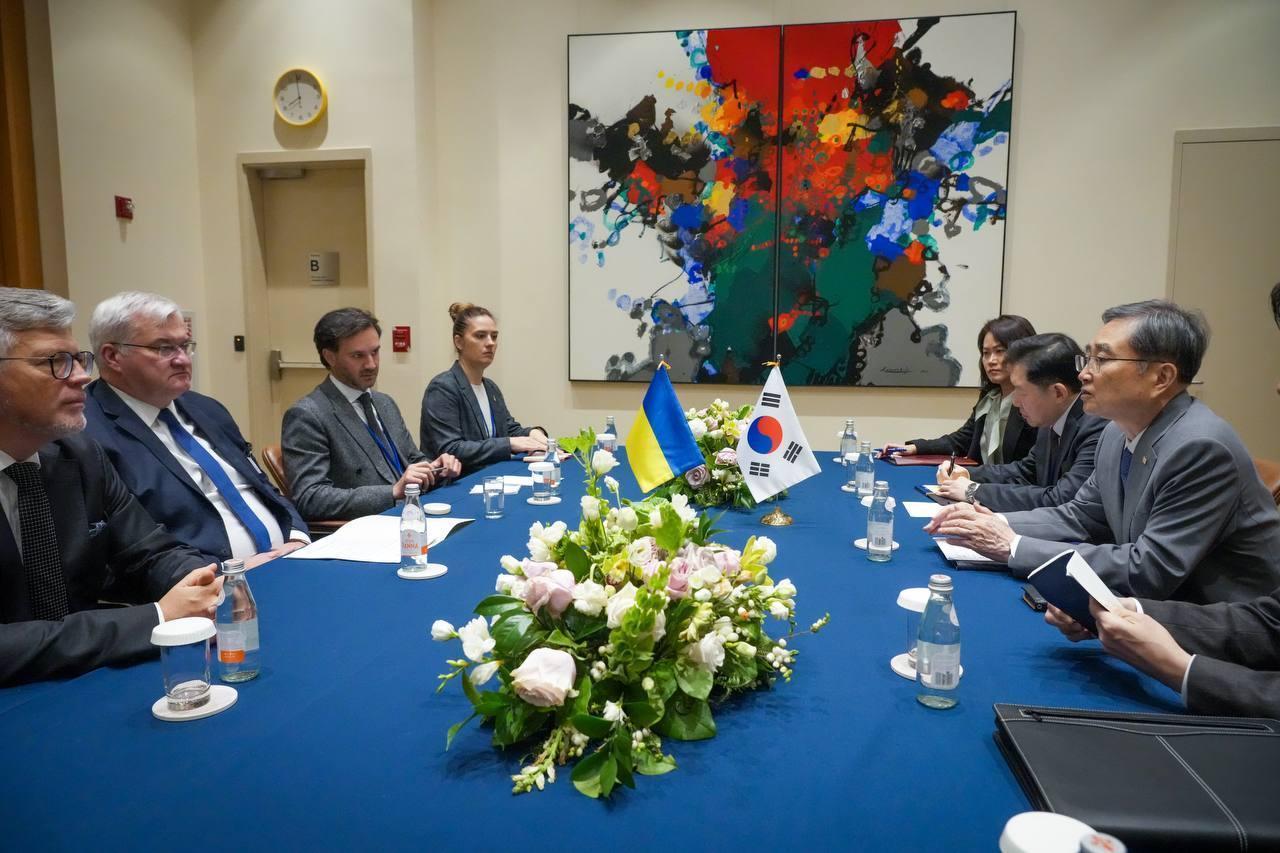
The South Korean government has decided to withdraw part of its embassy staff from Ukraine.
According to the Yonhap news agency, Foreign Ministry spokesman Park Doo-sun cited the Kyiv administration’s failure to take “positive steps” in the dispute that began with the leak of information concerning the handover of North Korean prisoners of war as the justification for the move.
The spokesman also listed the ongoing threat of air strikes, which complicates the safety of diplomats, among the reasons.
Following the withdrawal of part of the personnel, essential diplomatic contacts will continue under the leadership of the charge d’affaires ad interim to Ukraine. All consular staff tasked with protecting South Korean citizens will remain in Ukraine.
Prior to this move, the Seoul administration decided on 8 October to withdraw its ambassador. The Foreign Ministry stated at the time that it was ready to continue consultations with Kyiv to resolve the emerging issues constructively.
Tensions between the two countries began with a speech delivered by Ukrainian President Volodymyr Zelenskyy at the United Nations General Assembly in September.
Zelenskyy announced that two captured soldiers from the North Korean army had been handed over to South Korea.
South Korean President Lee Jae-myung, meanwhile, accused Kyiv of breaching a confidentiality agreement.
Lee said the disclosure of this information endangered the prisoners’ families and stability on the Korean Peninsula.
Seoul expects a public apology
Dmytro Lytvyn, an adviser to the Ukrainian president, denied the existence of a confidentiality agreement.
The South Korean Foreign Ministry summoned Ukrainian Charge d’Affaires Andriy Veshkin on 28 September and issued a note of protest against Lytvyn’s remarks.
President Lee Jae-myung warned in a statement on 2 October that they would take additional measures against Kyiv if Ukrainian authorities did not acknowledge the agreement and make a public apology. Lee stated that Ukraine itself had initially requested that the transfer of the prisoners be kept confidential.
Ukrainian Foreign Ministry spokesman Heorhii Tykhyi said the dispute stemmed from differing interpretations of the confidentiality regime.
Tykhyi noted that Seoul, based on its constitution which recognises the entire Korean Peninsula as its own territory, requested that the prisoners be handed over “like its own citizens”.
Describing the handover as a “gesture of goodwill”, Tykhyi stated that they were conducting closed-door negotiations to resolve differences of opinion.
Ambassador Park Ki-chang returned to Seoul on 10 October. According to a report by The Korea Times newspaper citing the ministry, recalling the ambassador served as a diplomatic protest against the leak of information regarding the prisoners.
The newspaper wrote that South Korea had last taken a similar step in 2008 by withdrawing its ambassador to Japan.
Moscow warned foreign diplomats
On 3 October, the Russian Foreign Ministry reiterated its warning to foreign nationals, including diplomatic mission staff, against remaining in Ukraine.
The ministry recalled its advice to leave Kyiv, citing ongoing strikes against military targets.
The ministry noted that those who failed to heed the warnings would bear responsibility for the potential consequences.
Kremlin spokesman Dmitry Peskov said in a statement on 24 September that they had no information regarding Kyiv handing over two North Korean prisoners of war to Seoul.
Peskov, noting that prisoner matters fall under the authority of the Defence Ministry and intelligence services, said, “Contacts through the special services are continuing.”
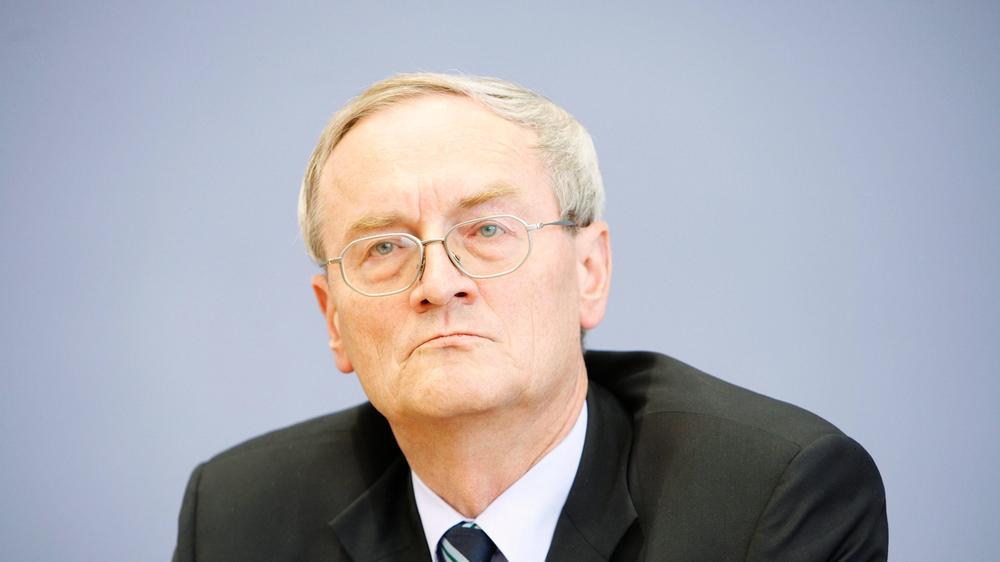
August Hanning, who led Germany’s Federal Intelligence Service (BND) between 1998 and 2005, was arrested on 6 October on allegations that he obtained roughly 2,000 classified agency documents and used them during contacts with intelligence officers from a foreign state.
Accused of high treason and espionage on behalf of a foreign intelligence agency, the former spy chief is alleged to have procured the documents from former BND employee Manfred D.
Prosecutors stated that the leaked records included internal briefing notes presented to senior German officials, though the Berlin government has not yet publicly disclosed which country received the classified data.
According to an exclusive report by Jake Green for The Cradle, seized email exchanges revealed extensive ties between the arrested Hanning and former Mossad director Danny Yatom.
The correspondence shows that the two former intelligence directors built an ongoing network of contacts following their public service, combining commercial ventures, efforts to secure political influence, and intelligence links.
This dynamic has triggered debate that using personal connections and official access for private gain has left Germany’s intelligence apparatus vulnerable.
Intelligence notes for 10,000 euros and campaign proposals
According to the reviewed emails, Hanning told Yatom in a 2018 message that he could prepare an “overall assessment based on information obtained from senior German officials and intelligence agencies” concerning an unidentified candidate.
The former BND head committed to completing the report by 13 July in exchange for 10,000 euros.
Contacts between the two men subsequently expanded to cover domestic political processes in Germany. Ahead of the September 2021 federal election, Yatom asked Hanning to approach leading candidates.
Describing CIY Global as a “political campaign company”, the former Mossad chief noted that he aimed to introduce its capabilities to German politicians, and he mentioned his intention in the same exchange to transfer documents concerning a cybersecurity firm.
Cybersecurity partnership and surveillance operations across Europe
The partnership between Yatom and Hanning reached beyond political lobbying initiatives into the cybersecurity sector.
Hanning reportedly served as a consultant for World Health Energy Holdings, a cybersecurity company linked to Yatom.
Firms of this type, established or managed by former intelligence personnel, provide commercial platforms on the international market for Israeli-origin surveillance, cyber intelligence, and political influence capabilities.
The operational presence of private Israeli-based surveillance technologies across Europe has recently entered judicial records through scandals in Poland, Spain, and Greece.
Polish prosecutors announced on 12 October that data collected under the previous government via Pegasus spyware against political opponents had been transferred out of the country, adding that manufacturer NSO Group maintained access to the technical infrastructure.
In Spain, the 2022 CatalanGate investigation established that at least 65 people, including politicians, lawyers, and civil society representatives, were targeted using Pegasus or Candiru software, with Citizen Lab researchers publishing strong evidence linking the operation to Spanish authorities.
In Greece, the surveillance operation targeting journalist Thanasis Koukakis and Member of the European Parliament Nikos Androulakis was determined to have used Predator software, linked to Intellexa, a company founded by former Israeli intelligence officer Tal Dilian.
In the German espionage investigation, the traffic between Hanning and Yatom involving paid reporting, contacts with electoral candidates, and commercial partnerships does not yet provide conclusive legal evidence regarding the final destination of the roughly 2,000 classified documents.
Nevertheless, the disclosed correspondence gives German investigators a concrete line of inquiry to assess whether classified state secrets reached commercial networks tied to Israeli intelligence.
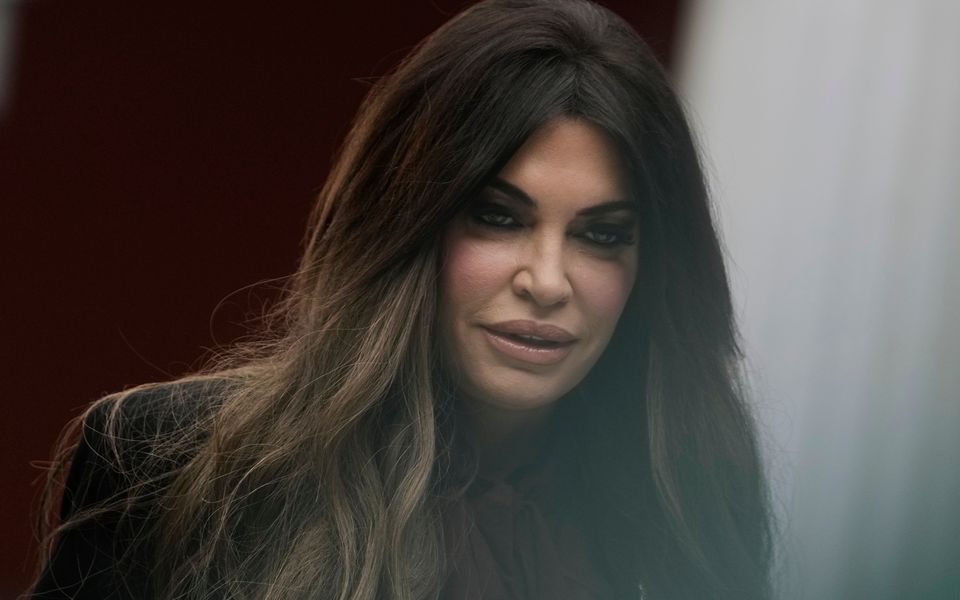
US President Donald Trump has dismissed Kimberly Guilfoyle, the US ambassador in Athens, following serious press reports concerning her conduct.
White House Press Secretary Katie Zacharia told reporters during her first briefing that Guilfoyle had been asked to resign.
“She was doing a good job, but we didn’t like what we read in the press,” Trump said. “She was not a member of my family. I think she dated my son a long time ago.”
In a social media post, Guilfoyle stated: “These claims are unfounded, and I will resolutely defend my name, reputation, and integrity.” She added that she was particularly proud of the embassy’s work.
According to Kathimerini, her removal came as no surprise in Washington. Days of successive disclosures and vigorous exploitation of the matter by Democrats had been inflicting political damage on the White House ahead of the sensitive midterm elections.
The US State Department was instructed not to comment, with crisis management transferred entirely to the White House.
Reports indicate that most of the president’s team swiftly favoured Guilfoyle’s dismissal, while Secretary of State Marco Rubio was reportedly uneasy with the demonstratively warm public welcome she had staged for him.
Democrats on the House Foreign Affairs Committee have called for an investigation.
“Her resignation does not absolve her of responsibility,” the lawmakers wrote, adding: “While American families struggled to make ends meet, she used her position as a Trump administration official to enrich herself.”
Chargé d’Affaires Josh Huck will assume ambassadorial duties until a successor is chosen.
Meanwhile, Guilfoyle’s departure is expected to cause delays in agreements between Greece and the US.
These include the so-called “Rubio package”, comprising approximately $4 billion in arms deals finalised only days before the secretary of state’s arrival.
Several procedural steps still remain before the contracts can be signed.
In Athens, opposition parties are demanding answers. Dimitris Mantzos of PASOK called for a detailed briefing on the agreements reached during Rubio’s visit.

German officials urge fighter jet alliance with Sweden and Spain

US wealthy demolish multimillion-dollar mansions for land

US and Israel weigh Iran strikes after midterm vote, reports say

Pentagon plans covert spy ring for economic war on China, report says

EU reopens debate on naming envoy for Ukraine talks with Putin
-
 America2 weeks ago
How will Brazil’s presidential runoff work?
-
 Europe2 weeks ago
Berlin Left Party backs Israel’s right to exist for coalition pact
-
 Diplomacy2 weeks ago
The West is preparing for war not with Russia, but with its own people, French analyst Georges Kuzmanovic insists
-
 Russia2 weeks ago
71 EU lawmakers demand closure of Russian Houses in 15 member states
-

 Russia2 weeks ago
US and Russian figures discuss American stake in Nord Stream lines
-
 Europe2 weeks ago
MI6 investigates potential leaks after former BND chief is detained
-
 Russia2 weeks ago
Drone strike shuts down Yandex data centre in Russia’s Ryazan region
-

 America1 week ago
Trump weighs presidential memorandum to cut surging US diesel prices
