
Russia
Russian Left Front leader Udaltsov sentenced to 6 years for justifying terrorism


The Second Western District Military Court in Russia has sentenced Sergei Udaltsov, the leader of the Left Front, to six years in a strict-regime penal colony on charges of “justifying terrorism.”
Judge Sergei Brovko found the Russian politician guilty over publications supporting members of a Marxist group in the city of Ufa. The court also banned Udaltsov from managing internet resources for a period of three years.
“I protest this shameful decision”
Following the announcement of the verdict, Udaltsov reacted sharply to the court’s ruling. According to information shared with the RBC news outlet by his lawyer, Dmitry Agranovsky, Udaltsov stated: “I am declaring an indefinite hunger strike to protest this shameful decision. I will go without food for as long as my strength allows.” Udaltsov described the court’s conclusion as “disgraceful.”
Internet posts serve as the basis for the charges
According to the indictment, Udaltsov, acting as the coordinator of the Left Front social movement, published an article on the organization’s website on March 27, 2023, titled How they turned Marxists into terrorists: Ufa activists have been languishing in prison for a year on absurd charges.
The prosecutor stated that Udaltsov shared this material on his own Telegram channel and on the website of the Svobodnaya Pressa media outlet to reach a wider audience.
Additionally, Udaltsov was charged for sharing another article dated May 29, 2023, titled Stop persecuting Communists! Left Front held an action in Moscow to defend political prisoners.
Prosecution had requested a 7-year sentence
During the hearing held on December 25, prosecutor Ekaterina Frolova requested the maximum sentence for the alleged crime: seven years in prison and a five-year ban on social media use.
Lawyer Agranovsky recalled that his client said at the time, “I hope this is an emotional gesture and it does not come to that,” regarding the hunger strike declaration.
“No elements of a crime existed when the verdict was given”
In court, Udaltsov’s lawyer, Agranovsky, emphasized that at the time the posts in question were made, no verdict had yet been reached regarding the “Ufa Five.”
The lawyer described Judge Brovko’s decision in September to issue an indefinite stay of proceedings to wait for information from the Yekaterinburg Central District Military Court as illegal.
Agranovsky noted that numerous linguistic expert reports confirmed Udaltsov’s innocence, stating, “In the final report, experts noted that the politician’s publications contained no expressions approving of violence, destruction, acts considered terrorism, or the ideology of structures recognized as terrorist organizations.”
Another lawyer, Dmitry Repkin, evaluated the court’s move to withdraw for deliberation and announce the verdict on the same day—without informing the defense—as a violation of the politician’s constitutional rights.
Repkin stated that the court violated procedural rules by delivering the verdict in the absence of defense lawyers during a session he could not attend due to illness.
Background of the Ufa Five case
On December 16, a military court in Yekaterinburg found the “Ufa Five” group guilty of “preparing to seize power through violence,” “terrorist training,” “membership in a terrorist organization,” and “preparing for weapons trafficking.”
The group’s founder, physician Alexei Dmitriev, was sentenced to 20 years; Pavel Matisov, who participated in the conflicts in Donbass, received 22 years; retired Yury Yefimov was sentenced to 18 years; volunteer Rinat Burkeev received 16 years; and former Bashkortostan Deputy Dmitry Chuvilin was sentenced to 20 years.
The indictment alleged that the group members planned to forcibly establish Soviet power and bring back a communist regime across Russia, particularly in Bashkortostan, without elections. The defendants denied all charges.
Sergei Udaltsov was arrested in January 2024. The case was initially presided over by military judge Albert Trishkin, but Sergei Brovko took over the duties after a case was opened against Trishkin in July for allegedly wounding a taxi driver with a firearm during a road quarrel.
The prosecutor had requested a three-year suspended sentence for the dismissed judge, Trishkin.
During the trial process, Nina Ostanina and Denis Parfenov, members of parliament from the Communist Party of the Russian Federation (CPRF), testified in Udaltsov’s favor.
The MPs described Udaltsov as an experienced politician without radical views.
Udaltsov had previously been sentenced to 4.5 years in prison in 2014 on charges of organizing mass riots and was released in 2017.
Most recently, the politician was detained in December 2023 for participating in an unauthorized demonstration in Red Square marking the birthday of Joseph Stalin.







Representatives of European nations are ready to renegotiate arms control and military conflict prevention agreements with Russia, according to a Financial Times report citing unnamed European officials.
The US is seeking to include European countries in discussions on a future security architecture.
In this context, Europeans look favourably upon returning to arms control mechanisms, including agreements limiting missile deployment and the restoration of arrangements operating during the Cold War era.
The newspaper cited the Open Skies Treaty, which allowed the US and the Union of Soviet Socialist Republics (USSR) to monitor each other’s military installations, and accords restricting the deployment of specific missile types among potential examples.
Participating states of the Organization for Security and Co-operation in Europe (OSCE) signed the Open Skies Treaty in March 1992.
Signatory states are obliged to permit observation flights by other party nations over their territories using photographic and video surveillance.
Russia withdrew from the treaty in 2021.
Russian authorities emphasized in statements at the time that Russia had done everything possible to preserve the agreement, “despite numerous violations of the Open Skies Treaty by the US, its allies, and dependent states.”
According to information obtained by the newspaper, US President Donald Trump’s administration is seeking Moscow’s consent to organize a multilateral meeting involving European representatives.
A source speaking to the Financial Times noted that the European security architecture is among the main agenda items at the United Arab Emirates (UAE) summit, though Trump will make the final decision regarding the nature of security guarantees the US will offer.
The first day of trilateral negotiations among Russia, the US, and Ukraine concluded on 10 November in Abu Dhabi, the capital of the United Arab Emirates, with the meeting lasting more than four hours.
According to Politico, the parties plan to address territorial matters, including borders and lines of contact, on 11 November during the second day of negotiations.
Sources speaking to the publication stated that resolving the territorial issue and the future security mechanisms of Ukraine and Europe are interconnected and must be discussed in parallel.
“It is obvious that the current system does not work. We need to create something new that will work effectively today,” one source said.
According to Politico and the Financial Times, American negotiators Steve Witkoff and Jared Kushner plan to invite Europeans to join the negotiations after the trilateral meeting concludes.
“We need Europe at the negotiating table,” a source told Politico.
The Financial Times source likewise stressed that European participation is essential to reach an agreement aimed at ending the conflict.
European capitals fear that Moscow and Washington could agree on security guarantees for Ukraine and the continent’s new security architecture without the involvement of European Union (EU) and NATO allies.
Furthermore, the issue of EU participation in talks resolving the conflict in Ukraine has caused differences of opinion between Moscow and European capitals.
Russia previously stated that the EU currently has no place at the negotiating table due to its stance on the conflict.
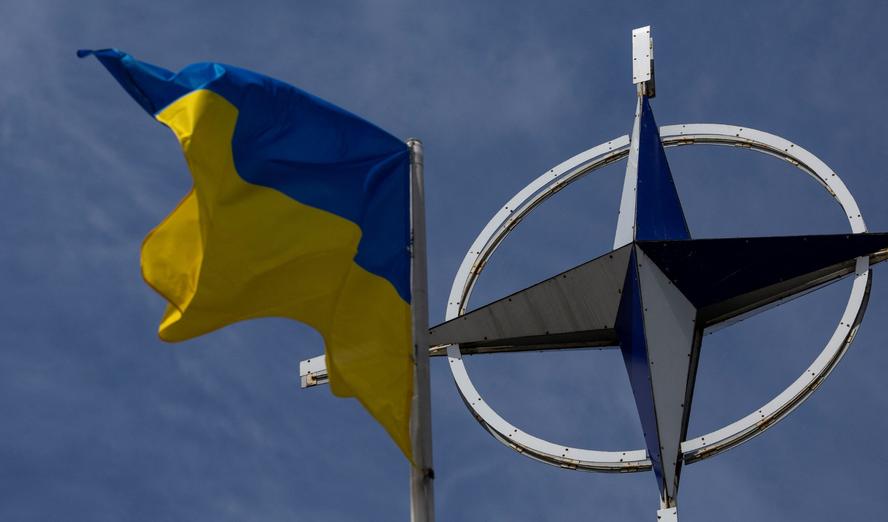
US President Donald Trump’s administration has asked the Russian side whether Moscow objects to granting Ukraine security guarantees akin to NATO’s Article 5 on collective defence, and to having such guarantees provided directly by the alliance itself.
According to a Financial Times report citing a US official, the final decision on the nature of the US security guarantees will be made by US President Donald Trump.
The US official said the White House is seeking Russia’s consent for multilateral negotiations that would also include European representatives.
“At this stage, we firmly believe Europe must be part of the negotiations to end the war,” the official said on the matter.
According to the report, prior to the trilateral talks, Trump’s special envoy Steve Witkoff and his son-in-law Jared Kushner will hold consultations with representatives from Ukraine, the European Union, NATO, Germany, France, the United Kingdom, and Italy.
Rustem Umerov, representing the Ukrainian delegation, also confirmed that Kyiv will hold separate coordination meetings with European partners in Abu Dhabi to align positions and subsequent steps.
The newspaper reported that while European diplomats are sceptical about the prospects of a breakthrough in the Abu Dhabi talks, they consider participation in the diplomatic process essential to support Ukraine and prevent broader European security issues from being addressed without their involvement.
Ukrainian President Volodymyr Zelenskyy stated in late October that talks held in Oslo between Ukraine, EU countries, and US representatives discussed granting Kyiv security guarantees similar to the provisions of NATO’s Article 5 collective defence clause.
In February, Zelenskyy described credible guarantees for Kyiv as the “only real basis” for peace.
The issue of security guarantees will form one of the agenda items at the trilateral negotiations between Russia, the US, and Ukraine, scheduled for 10-11 November in Abu Dhabi.
These contacts mark the first trilateral meeting in roughly nine months, following the previous round held in Geneva in February.
Presidential Aide Vladimir Medinsky will head the Russian delegation at the talks, while the US side will be represented by the president’s special envoys Steve Witkoff and Jared Kushner.
Rustem Umerov will lead the Ukrainian delegation.
Moscow insists that the future security guarantees slated for discussion at the meetings must also cover Russia.
Kremlin spokesman Dmitry Peskov noted that guarantees can only be mutual.
At the beginning of the year, Russian Deputy Foreign Minister Aleksandr Grushko stated that security guarantees for Russia are an essential component in reaching a peace agreement on Ukraine.
“We accept that a peaceful settlement in Ukraine must take Ukraine’s security interests into account, but the key issue is, of course, Russia’s security interests,” Grushko said.
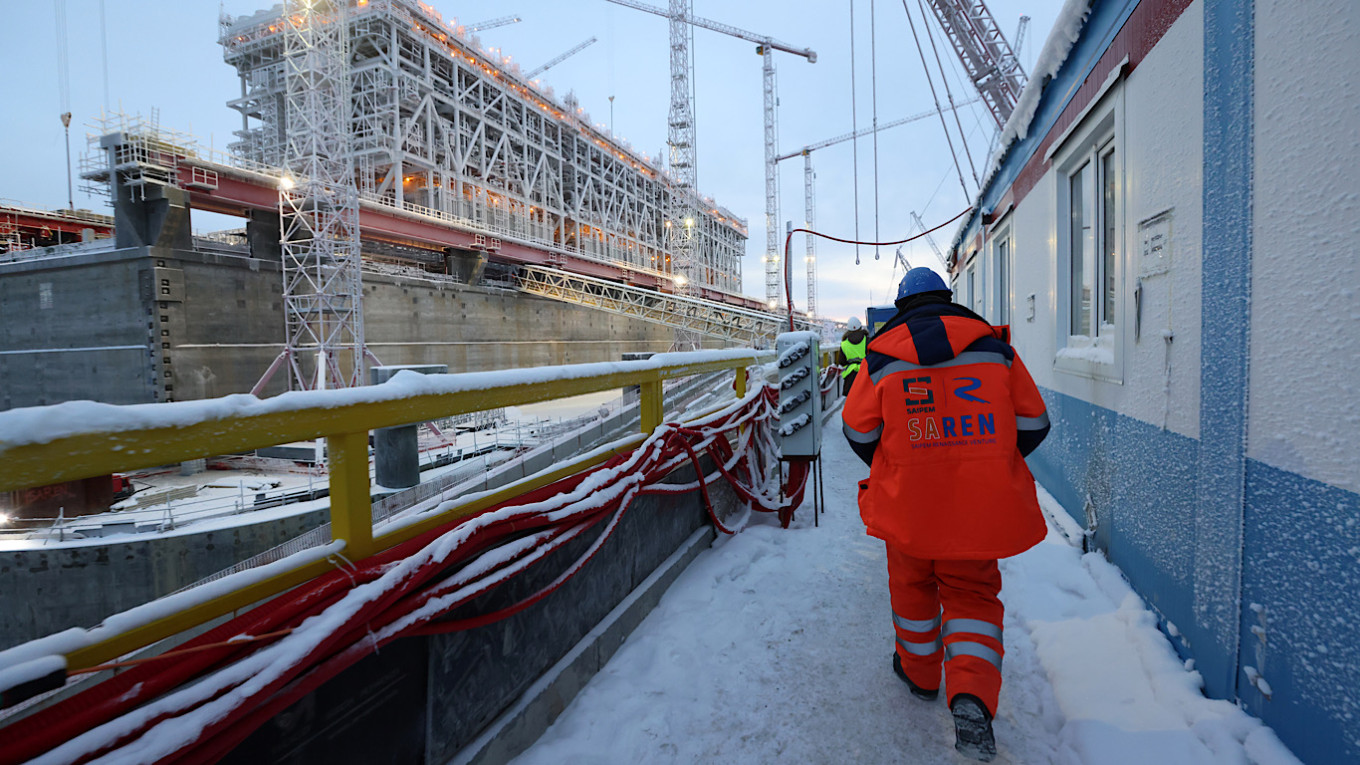
Following a diesel arrangement with the US and the prospect of expanding Russian fertiliser shipments, Moscow is offering Washington joint cooperation in the Arctic.
Russian President Vladimir Putin announced that Moscow is considering the possibility of working together with US partners in the Arctic region.
Speaking at the Gas Exporting Countries Forum (GECF) summit, Putin described the regional situation:
“We are actively working in the Arctic, which I mentioned, with many countries around the world, and we are interested in joint work. Until very recently, our European partners and our Chinese partners were working alongside us at our fields. Now we are considering the possibility of joint work with American partners.”
So, which fields could a partnership between the two countries in the Arctic encompass, and what could Moscow offer Washington in exchange for lifting sanctions on Russian gas? Liquefied natural gas (LNG) projects stand at the heart of the matter.
European companies pulled out of Russian gas projects such as Yamal LNG and Arctic LNG 2 due to sanctions imposed on Russia after 2022.
According to Igor Yushkov, an expert at the Financial University under the Government of the Russian Federation and the National Energy Security Fund (NESF) who spoke to the Vzglyad newspaper, cooperation with Chinese companies moved to a new dimension following the departure of the Europeans.
Two Chinese shareholders, CNPC and CNOOC, are involved in the Arctic LNG 2 project. Initially, both companies froze their participation out of concern over US sanctions targeting the venture.
Mikhail Vakilyan, an expert at the Institute for the Development of Fuel and Energy Complex Technologies, told Vzglyad that Beijing did not alter its policy, but rather that Chinese firms CNPC and CNOOC simply did not want to risk their access to the US dollar.
Yet, a year and a half later, the picture shifted entirely. In the second half of 2025, China began purchasing gas from the sanctioned Arctic LNG 2 facility and dedicated a standalone terminal to the project.
Furthermore, it opened a second terminal this year serving exclusively Russian LNG.
China even resumed module deliveries needed to complete the third train of Arctic LNG 2, despite having halted shipments previously.
Moscow seeks markets and turbines, offering technology for Alaska
Despite all these developments, Russia’s expectations from the US in the Arctic remain clear. Mikhail Vakilyan summarised this requirement:
“Russia needs two things: first, markets; and second, hardware. Lifting sanctions on Arctic LNG 2 and its gas carriers will bring back buyers in Japan, India, and South East Asia, eliminating the discount currently enjoyed by China as the sole customer. As for hardware, the turbines driving the liquefaction compressors at Yamal LNG and Arctic LNG 2 are manufactured by the US company Baker Hughes. Maintenance, spare parts, and modernization for these machines are blocked by US export bans.”
Igor Yushkov viewed the process through the lens of a political and economic trade-off:
“The exact same scheme seen in the diesel agreement is operating here. In exchange for easing anti-Russian sanctions and putting pressure on Ukraine, we are offering the US mutually beneficial projects and broader economic cooperation. We are showing that this cooperation can be versatile across various fields such as diesel, fertilisers, LNG, and similar sectors.”
The tangible offer Russia could present to the US in the LNG sector in exchange for sanctions relief is technological support for an LNG plant to be built in Alaska, referring to the $25 billion Polar LNG project.
Yushkov explained the card held by Russian energy company Novatek:
“Novatek possesses a technological solution applied at Arctic LNG 2 that would also suit the LNG project in Alaska. These are reinforced concrete gravity-based structures carrying liquefaction equipment; essentially floating LNG factories. Novatek has already built two such platforms alongside their equipment and established an offshore super-structure construction centre in Belokamenka. The issue is that both this centre and the Arctic LNG 2 plant itself fell under US sanctions. Therefore, in exchange for lifting sanctions at least on the super-structure construction centre, we could build such a facility for Alaska.”
According to the expert, Russia could cast the reinforced concrete platform at this centre in Belokamenka, install the LNG plant atop it, and tow it to Alaska once completed.
Because building from scratch in the Arctic itself is both costly and creates constraints regarding time and equipment transport, this method offers a much simpler solution.
Nevertheless, Yushkov warned that the plan is not finalised:
“Owing to numerous sanctions-related issues and questions surrounding the project’s economics, it is not certain this scenario will materialize; however, the Americans are still interested in our technologies for Alaska, and Russia is stating it can capitalize on this and deliver it.”
Conversely, Yushkov recalled that Russia remains the primary rival to the US, particularly in the gas sector, and that the US administration has systematically squeezed Russian gas out of the European market in recent years.
According to the expert, helping US LNG capture the market share lost by Russia is hardly a brilliant idea.
Europe’s 2027 ban, China price talks, and rare earth metals
Arctic LNG 2 is not the only Russian project that could benefit from potential cooperation with the US; a new opening could also emerge for Yamal LNG, which is unaffected by US sanctions.
The crux here is not sanctions, but the European Union’s upcoming ban on all Russian LNG shipments starting from 1 January 2027.
Vakilyan explained the approaching risk and a potential solution using figures:
“In the first half of the year, Europe took nearly the entire output of the plant, amounting to 9.89 million tonnes. In two months, these volumes will need a new route and a new buyer; a US trading company appears very well suited for this role.”
Another winner in the equation could be Gazprom, which is conducting negotiations with China for the Power of Baikal pipeline, formerly known as Power of Siberia 2.
Vakilyan said: “Cooperation with the US is Russia’s trump card in price negotiations. China has long negotiated with Gazprom assuming Russian gas has nowhere else to go; an American company in the Arctic would disrupt that calculation.”
Viewed from a wider perspective, Russia and the US share two additional points of contact: oil projects and rare earth metals.
The Vostok Oil project, which awaits the lifting of sanctions on Rosneft, is the first among them.
Vakilyan listed the other areas:
“It is impossible to make headway on the Pobeda shelf, which could not be developed since 2014, without the Americans; that site requires subsea production complexes and drilling services in icy seas, where US companies are strongest. Another issue not apparent at first glance is rare metals. The Trump administration is seeking them across the globe, and Tomtor, one of the largest rare earth metal deposits, lies in the Arctic region of Yakutia.”

IRAM expert Oral Toğa assesses Middle East shifts after US vote

Netanyahu Arab party attack triggers crisis over coalition

Fico accuses Merz of blackmail over threat to veto EU budget

US Senate panel seeks records in Trump-linked crypto investigation

Europe ready for arms and missile control talks with Russia, FT says
-
 Diplomacy1 week ago
Secular dress code dispute exposes deeper Türkiye-Azerbaijan strains
-
 Russia2 weeks ago
US and Russia weigh energy deals and corporate return in peace talks
-

 Europe5 days ago
EU urges citizens to prepare 72-hour survival kits for crises
-
 Middle East2 weeks ago
US warns Gulf allies of possible Iran strikes after midterms
-

 America2 weeks ago
Bolsonaro reportedly leaves Brazil on jet linked to scandal-hit firm
-
 Asia1 week ago
China expands Africa arms sales, displacing France and Western rivals
-
 Diplomacy2 weeks ago
Steinmeier seeks to de-escalate German-Chinese tensions on visit
-
 Europe2 weeks ago
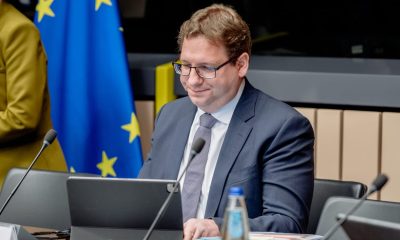
EU prepares Ukraine peace mission to Abu Dhabi led by Björn Seibert
