
Russia
Russia’s first-half budget deficit hits 5.7 trillion rubles as oil revenue shortfalls persist


Russia’s federal budget deficit narrowed to 5.7 trillion rubles, or 2.5% of gross domestic product (GDP), during the January–June period of 2026, according to preliminary budget execution data released by the Ministry of Finance on July 9. This contraction marks the first decline in the fiscal deficit since the beginning of the year. In June, the gap between expenditures and revenues decreased by approximately 5% month-on-month, shrinking by about 279 billion rubles. Despite this marginal improvement, the deficit remains 2.3 trillion rubles higher than the level recorded during the same period last year and stands roughly 50% above the 3.78 trillion ruble target projected for the full year of 2026.
Emil Ablayev, an expert at the Center for Macroeconomic Analysis and Short-Term Forecasting (TsMAKP), told the Vedomosti newspaper that the narrowing of the deficit was driven by the gradual fading of the front-loaded advance spending outlays made at the start of the year.
Budget expenditures rose to 3.56 trillion rubles in June, representing a 17.13% increase. Total spending in the first six months of the year reached 24.35 trillion rubles, up 16.1% compared to the same period last year.
The Ministry of Finance reiterated that the accelerated pace of spending was attributable to the early signing of contracts and advance payments made under specific budget items.
In contrast, budget revenues experienced a more subdued increase compared to expenditures. Total revenues in the first half of the year rose by 5.8% year-on-year to reach 18.6 trillion rubles. In June, however, revenues surged by 25.85% year-on-year to 3.82 trillion rubles.
Non-oil tax revenues accelerate
Ablayev noted that the acceleration of non-oil and gas revenues played a key role in narrowing the budget deficit. The year-on-year growth rate for these revenues rose from just over 12% in the January–May period to 16.3% in the January–June period. Non-oil and gas revenues reached 14.96 trillion rubles in the first half of the year. In June, these revenues increased by 26.75% year-on-year to 3.1 trillion rubles.
According to Natalya Milchakova, Chief Analyst at Freedom Global, this growth was driven by the increase in the VAT rate effective January 1, along with prior hikes in personal income tax for high-income brackets and corporate income taxes. VAT revenues rose by 22.6% to 8.58 trillion rubles in the first six months of the year.
Ablayev pointed out that VAT is the tax category most sensitive to domestic demand, consumption, and imports, indicating that the increase reflects sustained domestic demand.
Ablayev also stated that improvements in tax administration and a reduction in the shadow economy supported this positive trend. He added that due to the strong performance of the ruble in the second quarter of 2025, import-related VAT revenues had a more limited negative impact on a year-on-year basis.
According to experts, the trajectory of non-oil and gas revenues in the second half of the year will depend on a slowdown in consumer demand, import volumes, the ruble exchange rate, and the tax performance of non-oil exporters.
Sergey Klisenko, General Director of the NRA Rating Service, projected that the growth rate of non-oil and gas revenues could slow from the 16% level recorded in the first half to a range of 12% to 14%. However, he noted that this would still be sufficient to meet or even exceed the targets set for 2026.
Oil revenues recovered in June
According to Klisenko, the budget surplus in June stood at approximately 280 billion rubles, largely driven by the strong performance of oil and gas revenues.
These revenues rose roughly 65% above the January–February average. The analyst attributed this increase primarily to the elevated level of Russian oil prices in May.
Oil and gas revenues in June rose by 4.7 billion rubles compared to May, reaching 683.6 billion rubles. However, the cumulative total for the first half of the year remained at 3.66 trillion rubles, representing a 22.7% decline compared to the same period last year.
Ablayev stated that the primary reasons for the first-half decline were a strong ruble, delayed tax collection effects, and the structural composition of the revenues.
Klisenko calculated that while the budget projections assumed an average exchange rate of 92.2 rubles per US dollar, the actual average for the first half of the year remained at 77.2 rubles, depriving the budget of 1.5 trillion to 2 trillion rubles in oil and gas revenues.
Oil and gas prices, which had spiked in the spring due to the conflict between the US and Iran and the subsequent closure of the Strait of Hormuz, declined again during the summer months.
According to Ministry of Economic Development data, the average price of Urals crude was $44.59 per barrel in February, rose to $94.87 in April, fell to $86.52 in May, and dropped to $63.52 in June.
Ablayev noted that oil and gas revenues could show a noticeable improvement in July as additional income tax from the second quarter is reflected in the budget. Nonetheless, he cautioned that year-end performance would depend on oil discount levels, demand for Russian crude, the ruble exchange rate, and developments in the domestic fuel market, adding that rising refinery subsidies and damper payments could limit revenue growth. The expert expects year-end oil and gas revenues to exceed 2025 levels but remain below budget targets.
Experts expect year-end deficit to exceed targets
Ablayev stated that budget execution remains under pressure, with expenditures running significantly higher than last year and the deficit exceeding initial forecasts. He estimated that the year-end deficit could reach 3% to 3.5% of GDP, or approximately 6.5 trillion to 7.5 trillion rubles, which would require deviations from the fiscal rule and increased borrowing.
Rodion Latypov, Chief Economist at VTB Group, projected that the main reasons for exceeding the planned 3.8 trillion ruble deficit would be an estimated 1.5 trillion ruble shortfall in oil and gas revenues due to the strong ruble, alongside potential spending overruns. Excluding potential additional spending increases, Latypov expects the year-end deficit to be around 5 trillion rubles.
Milchakova stated that the budget deficit at the end of the year would most likely remain around 2.5% of GDP, driven primarily by weak oil and gas revenues and anticipated increases in public spending—particularly due to the fuel crisis, refinery subsidies, and damper payments.
Klisenko, meanwhile, estimated that the deficit would reach 2.5% to 3% of GDP, amounting to approximately 6 trillion to 7 trillion rubles.
Ablayev noted that a high budget deficit supports domestic demand, making a rapid slowdown in inflation more difficult, though certain mechanisms, such as damper payments, limit price pressures specifically within the fuel market.
Klisenko remarked that the rise in the budget deficit from 1.6% to 2.5% of GDP is not critical and that its impact on inflation does not exceed 1 percentage point.
Latypov argued that the budget’s impact on the money supply and total nominal demand is more accurately measured by the change in net claims on public administration, rather than the federal budget deficit itself.
He highlighted that this indicator has increased by approximately 3 trillion rubles since the beginning of the year, remaining significantly lower than the accumulated budget deficit.












Russia
Russian government halts diesel exports and slashes tariffs to counter severe seasonal fuel deficit
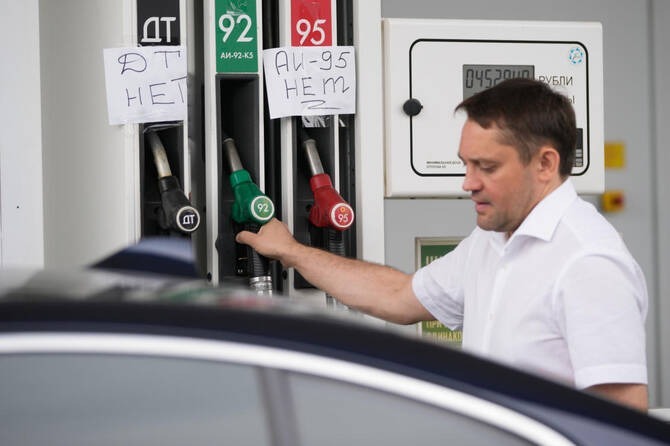
Russian Deputy Prime Minister Alexander Novak reported to President Vladimir Putin during a meeting with government members that while the cabinet has partially stabilized the domestic fuel market, altered logistics caused by refinery attacks and a sharp spike in seasonal demand continue to strain the sector.
Novak stated that attacks on Russia’s fuel and energy infrastructure damaged several oil refineries, leading to a temporary decline in gasoline and diesel production.
The drop in output has necessitated new shipment routes to deliver fuel to end-users, Novak said, adding that current demand is approximately one-third higher than during the same period last year.
The deputy prime minister noted that this situation has increased the burden on filling stations, raising the number of vehicles visiting the stations and leading to longer refueling times.
To balance the market, Novak recalled that the government and oil companies had previously taken a series of steps. Within this scope, gasoline exports were completely banned, and the production capacities of small and medium-sized refineries were utilized. Oil companies also maximized the capacity utilization of operating refineries, shortened maintenance periods, postponed planned maintenance to later dates, and released previously accumulated fuel inventories to the domestic market.
Government also halts diesel exports
Novak announced that the government banned diesel exports on July 8 as an additional measure.
Stating that oil product imports will be increased in July and the production of fuel with lower environmental standards will be expanded, Novak noted that the zero tariff on oil product imports was extended for another year to support imports.
Furthermore, Novak stated that the government reached an agreement with Russian Railways (RJD) to apply discounts on the rail transport of imported fuel. He also recalled that the mandatory exchange sale quota for gasoline was reduced from 15% to 10% and a price ceiling was imposed on the commodity exchange.
To secure the volume of fuel required by independent filling stations, Novak said that these operators have transitioned to direct contracts with oil companies, noting that this practice has been implemented in the Irkutsk Region and the Zabaykal Krai.
According to the information provided by Novak, independent filling stations previously purchased the bulk of their fuel from the commodity exchange or intermediary companies. Out of approximately 29,000 filling stations in Russia, 20,000 belong to independent operators.
Putin backs small refinery proposal
Zabaykal Krai Governor Alexander Osipov, who attended the meeting, proposed the establishment of a network of small-scale oil refineries across Russia.
Putin supported this proposal, stating, “In this area, the participation of small and medium-sized enterprises in the process is also necessary and encouraged. We will work more intensively on this matter.”
The Russian president also said that vertically integrated oil companies must supply products not only to their own stations but also to independent filling stations.
Putin instructed the government to make decisions regarding the subsidization of fuel prices in Crimea and Sevastopol “as quickly as possible.”
According to July 6 data from the Russian Federal State Statistics Service, the price of a liter of AI-92 gasoline in Crimea rose to 123.53 rubles. This figure represents an increase of approximately 50% on a weekly basis. The price of a liter of AI-95 gasoline rose to 170.59 rubles, increasing approximately 1.9 times, while the price of a liter of diesel reached 139.15 rubles, rising approximately 1.6 times.
In Sevastopol, the price of a liter of AI-92 gasoline rose by 8% to 105.47 rubles, the price of a liter of AI-95 gasoline increased by 15% to 148.64 rubles, and the price of a liter of diesel rose by 8.5% to 150.49 rubles.
Across Russia, in the week of June 30 to July 6, the price of a liter of AI-92 gasoline increased by 2% to 70.21 rubles, and the price of a liter of AI-95 gasoline rose by 2% to 76.19 rubles. The price of a liter of diesel reached 87.76 rubles, representing a 3% increase.
Since the beginning of the year, gasoline prices in the country have risen by 14%, while diesel prices have increased by 15%.
At the end of June, local governments in various regions of Russia introduced different restrictions on fuel sales to prevent panic buying.
Putin said on June 28 that there was a fuel deficit in the domestic market, but it was not at a critical level. Holding a meeting on the oil products market on the same day, Putin requested the preparation of additional measures to guarantee the uninterrupted supply of fuel to citizens, businesses, and socially critical institutions.
According to Sergey Tereshkin, General Director of Open Oil Market, the main reason for the spike in fuel demand is concern over potential supply shortages. Tereshkin said that consumers have increased both retail and wholesale purchases out of concern that access to fuel may become more difficult in the coming weeks and months.
Dmitry Kasatkin, Partner at Kasatkin Consulting, stated that the fuel shortage stems from a combination of altered logistics, local supply disruptions, and panic buying driven by high seasonal demand. He noted that demand for gasoline and diesel has increased not only in the retail market but also in the small and medium wholesale market.
According to Kasatkin, banning exports, postponing refinery maintenance, operating existing facilities at higher capacity, and releasing inventories into the market are among the most effective measures to increase domestic supply. However, he emphasized that delivering fuel to regions where the shortage is felt most acutely is also of critical importance.
Kasatkin said that increasing gasoline imports, RJD transport discounts, and production increases at small and medium-sized refineries are also important supporting steps, but their success will remain dependent on resolving logistics issues.
Tereshkin argued that the most critical steps are halting oil product exports and increasing fuel imports. Igor Yushkov from the Financial University under the Government of the Russian Federation assessed that increasing gasoline imports and the production of fuel with lower environmental standards would be the most effective measures.
Mikhail Burmistrov, General Director of Infoline-Analitika, said that RJD can apply discounts on certain routes, which will encourage the transport of additional cargo on the railway network.
However, Burmistrov stated that due to the limited capacity of unloading and loading terminals on the railways, the volume of these shipments should not be overstated, adding that the bulk of imported fuel will be transported by road.
Kasatkin predicts that partial stability could be achieved in the Russian fuel market during July. However, in his view, establishing a permanent balance between supply and demand, easing panic buying, and rebuilding inventories may take until late August or early September. He warned that local fuel shortages could occur in some regions until that date.
According to the analyst, if the measures taken by the government prove effective, price increases at filling stations may slow down in the coming weeks. Conversely, even if the market stabilizes, fuel prices are not expected to return to their former levels.
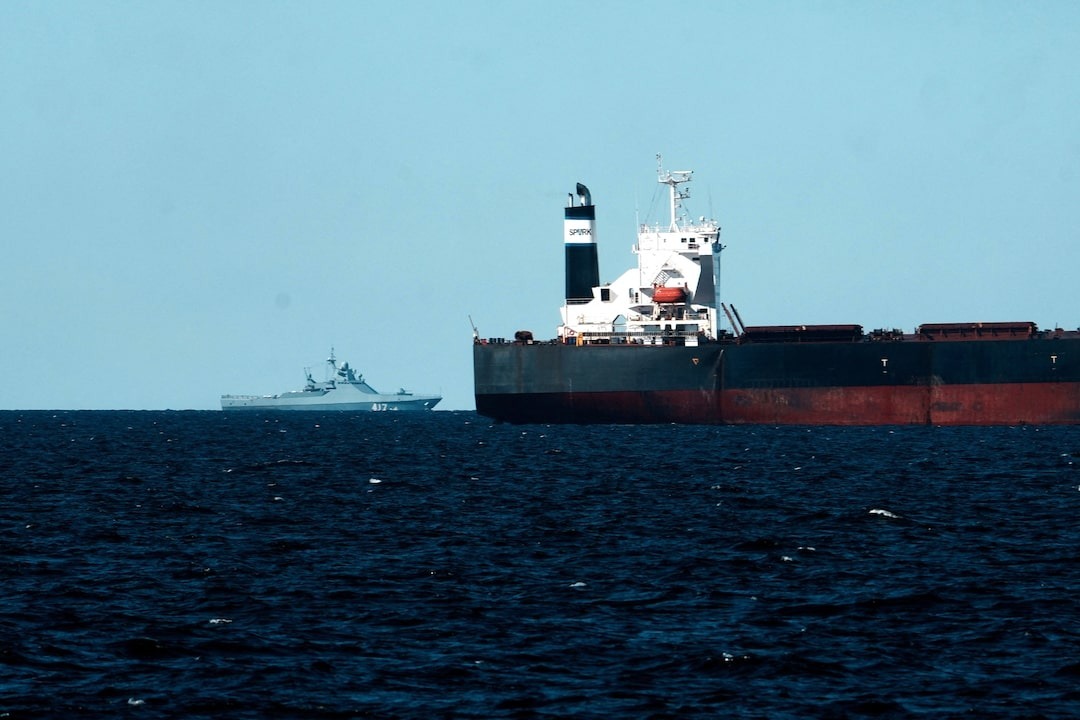
Greek shipping companies have generated at least $3.8 billion in revenue by transporting Russian oil over the past three years, despite G7 efforts to curb Moscow’s energy revenues.
According to calculations conducted by the Financial Times, the primary beneficiary of this trade—which is permitted under a narrow framework within the Western sanctions regime—was Dynacom Tankers, a firm founded by Greek shipowner George Prokopiou.
Dynacom alone generated at least $915 million in revenue from transporting Russian crude oil since July 2023, accounting for approximately one-quarter of the total earnings secured by Greek shipowners.
Olympic Shipping and Management, part of the Onassis Group, ranked second among Greek firms with at least $404 million in revenue, while Athens-based tanker companies Stealth Maritime and Polembros Shipping both surpassed the $200 million threshold.
Sanctions tensions between Athens and Kyiv
The role played by Greek shipowners in shipping Russian oil has caused diplomatic tension between Athens and Kyiv. In 2023, several Greek tanker companies, including Dynacom, were added to Ukraine’s “international sponsors of war” list by a Ukrainian sanctions body. They were later removed following pressure from the Greek government.
The oil trade can be conducted legally as long as the G7 price cap rules are respected. However, pressure to tighten the sanctions regime has intensified in recent months, driven by efforts from the US and the EU to weaken Moscow’s hand ahead of a potential peace agreement with Ukraine.
Renewed efforts by governments to seek new restrictions on Moscow’s energy revenues could halt this Greek trade entirely.
Western governments are emboldened to take stricter measures by the general decline in oil prices over the past three years, which did not spike as feared during the conflict with Iran.
Meanwhile, Moscow is facing internal fuel supply disruptions due to Ukraine targeting its refinery system with long-range unmanned aerial vehicles.
The analysis utilized estimated freight costs compiled by pricing agency Argus Media for major Russian routes starting from June 2023. This data was combined with vessel management information from the International Maritime Organization and tanker movement data from Kpler, a data analytics company.
The calculations cover only the primary routes for which Argus has pricing data. This means the estimated earnings are based on only 389 million barrels transported by Greek tanker companies. An additional 153 million barrels, for which no price estimates were available, were excluded from the calculations.
Greek firms account for eight of the top 20 companies generating the most revenue from Russian shipments since June 2023. The remainder of the list, with the exception of Hong Kong-based Prominent, consists of Russian state-backed shipping companies such as Sovcomflot and Rosnefteflot, alongside their subsidiaries or front companies.
Recognized among the actors with the highest risk tolerance in the industry, Dynacom has been among the most active shipping companies operating in the Strait of Hormuz since conflicts in the Gulf began on February 28.
According to data from maritime and energy analytics firms Windward and Vortexa, Greek companies transported approximately 15% of Russia’s crude oil exports in May.
“There is money to be made there, and nobody else wants to go in and make it,” said Michelle Wiese Bockmann, a maritime intelligence analyst, referring to the Russian shipments carried by Greek vessels.
Shipbrokers familiar with the sector state that traders pay tankers approximately 30% to 40% more to transport Russian crude compared to oil from countries that are not targeted by Western measures.
Difficulties in enforcing the price cap
The G7 price cap on Russian oil was implemented in December 2022 to limit Moscow’s revenues while maintaining oil flows to prevent damage to the global economy.
Since then, Western operators have been permitted to transport or provide services for Russian oil only on the condition that the price remains below the designated price cap per barrel. The current price cap stands at $44.10 per barrel. However, former sanctions officials and lawyers state that enforcement of this cap is highly inadequate.
Shipowners are required to prove that the cargo they carry is below the price cap using a written attestation form.
Stefanos Roulakis, a lawyer representing Greek shipping companies, stated that shipping firms generally have to rely on the declaration of the charterer or the Russian supplier, as shipping groups are not direct parties to the price negotiations of the cargoes they transport.
“In theory this system works, but in practice we see that authorities expect shipowners to assess whether the expected price is below the limit and whether there is a sanctioned party in the supply chain,” Roulakis said.
EU diplomats report that the governments of Greece and the Republic of Cyprus have consistently opposed the price cap in closed-door meetings.
Some firms have stepped back
Despite this, some Greek tanker companies have begun to withdraw from the trade. TMS Tankers and Thenamaris largely halted their transport of Russian oil at the end of 2023, following US announcements that it would impose sanctions on Turkish and UAE-based shipping operators for carrying Russian cargo above the price cap.
According to calculations, Thenamaris earned at least $30 million from Russian shipments, while TMS Tankers generated at least $150 million between July 2023 and the period when it halted its operations.
Lawyers and analysts note that several Greek shipping firms also withdrew from trade with Russia following US sanctions targeting Rosneft and Lukoil in October 2025.
Dynacom maintained that all voyages to Russian ports were conducted in full compliance with applicable legal and sanctions frameworks.
The company argued that the price cap mechanism limits pressure on global energy costs while reducing Russia’s revenues, stating, “Thanks to the contribution of Greek shipping, electricity bills, gasoline costs, and further inflationary pressures have been mitigated.”
Olympic Shipping stated that it complies with EU, UK, and US sanctions, but added that it does not comment on individual commercial activities as a matter of company policy. Stealth Maritime stated that all cargoes it transported complied with relevant sanctions regimes and were audited by US and UK lawyers.
The company expressed concern regarding the safety of seafarers, noting that one of its tankers carrying Russian ammonia was targeted last year in an attack suspected to have originated from Ukraine.
TMS Tankers stated that it is company policy not to comment on commercial matters, while reiterating its commitment to strict adherence to all sanctions.
Svitlana Romanko, director of the Ukraine-based campaign group “Razom We Stand,” which aims to end the Russian oil and gas trade, criticized the situation.
“Russian oil continues to generate billions for the Kremlin because governments have failed to close the obvious loopholes in the system,” Romanko said. “The Greek government has repeatedly prioritized the interests of its own shipping industry over strong sanctions and peace.”

Russia’s seaborne crude oil exports have reached their highest level since the beginning of 2022.
According to tanker tracking data cited by Bloomberg, the sharp increase in shipment volumes has not translated into higher budget revenues, as declining global oil prices have weighed on export earnings.
The data showed that Russia exported an average of 4.13 million barrels of crude per day by sea during the four weeks ending June 28.
In the latest one-week period alone, shipments rose to 32.39 million barrels carried by 43 tankers, compared with 28.79 million barrels transported by 38 vessels the previous week.
Meanwhile, the volume of Russian crude in transit to buyers climbed by about one-third from mid-April to 133 million barrels.
Some of those cargoes were reported to be waiting off the coasts of Egypt and Singapore. According to Bloomberg analysts, this could indicate that finding new buyers for all exported cargoes is becoming increasingly difficult.
Falling prices weigh on revenues
Despite higher shipment volumes, oil export earnings declined. Calculations showed that average weekly export revenue stood at $1.9 billion over the latest four-week period.
That marks the lowest weekly revenue level since March.
The decline was primarily attributed to weaker global oil prices. Russia’s benchmark Urals crude fell to around $62 a barrel, tracking broader declines in international benchmarks.
Crude loaded via the East Siberia-Pacific Ocean (ESPO) pipeline also declined, with prices falling to $74 a barrel.
Progress in negotiations between the United States and Iran has fueled expectations of increased oil supplies from Gulf producers, adding further downward pressure on prices.
Asia remains the leading market
Asia continued to account for the largest share of Russian crude purchases. Average shipments to the region reached 3.98 million barrels per day during the latest four-week period, setting a new record since the beginning of 2022.
Bloomberg said some tankers have yet to declare their final destinations, although a significant share of those cargoes could eventually be routed to India.
Another factor behind the increase in exports is the decline in processing capacity at Russian refineries. Crude that would otherwise have been refined domestically may instead have been redirected to export markets.
Bloomberg had previously reported that seaborne exports remained at elevated levels.
At the time, the agency said higher shipments reflected increased competition in the Indian market as Iranian crude regained market share, together with reduced refinery activity inside Russia. It noted that although physical export volumes had increased, weaker global prices had limited revenue growth.
Global market outlook weakens
According to a Reuters survey published on Tuesday, analysts lowered their oil price forecasts for the first time in five months.
Analysts attributed the revision to easing concerns over supply disruptions following the normalization of shipping through the Strait of Hormuz, expectations that Gulf producers will gradually restore exports, and planned output increases by the OPEC+ alliance.
Weaker-than-expected demand from China is also weighing on the market.
In addition, following the lifting of the US blockade over the Strait of Hormuz, Iran and other Gulf producers have rapidly increased their oil exports.
Sellers of Iranian crude in the Chinese market have also reportedly cut prices in response to rising supply.

EIB to unveil 15 billion euro tech initiative to scale European startups

Germany to purchase US Tomahawk missiles to build own long-range strike capability

France explores Syrian transit routes as alternative oil corridor to bypass Strait of Hormuz

Trump financial disclosures show millions invested in major defense contractors, analysis reveals

US Democrats split over proposed data center moratoriums amid rising energy and climate concerns
-

 Middle East2 weeks ago
Qatar and Saudi Arabia acquire hundreds of millions of dollars in Israeli defense technology, report says
-

 Europe2 weeks ago
Buckingham Palace updates King’s official role to focus on securing faith in multi-faith Britain
-

 Diplomacy2 weeks ago
NATO draft declaration pledges €70 billion to Ukraine ahead of Ankara summit
-

 Interview2 weeks ago
“Capitalism does not require a free social order”
-

 Asia2 weeks ago
South Korea unveils $518 billion plan for new southwestern semiconductor cluster
-

 Europe2 weeks ago
Billionaire Peter Thiel deepens ties with German and Austrian right-wing political elite
-
 Europe2 weeks ago
Europe faces 15-year low in winter gas reserves as June storage targets fall short
-

 America2 weeks ago
US begins development of first new nuclear warhead in four decades for submarine fleet
