
Diplomacy
Schiller Institute conference calls for new global paradigm amid turbulence


The Schiller Institute International Conference, held on May 24-25, 2025, convened a diverse group of international speakers to discuss “A Beautiful Vision for Humanity in Times of Great Turbulence.” Moderated by Dennis Speed of The Schiller Institute, the event aimed to catalyze intense discussion and reevaluation among global citizens, proposing a new security and development architecture to navigate the current tumultuous geopolitical landscape.
The conference began with a musical prelude, followed by an excerpt from a 1982 speech by the late Lyndon LaRouche, co-founder of The Schiller Institute. LaRouche’s historical analysis emphasized the foundational principles of the American republic and its intended role in fostering global progress, a theme that resonated throughout the subsequent discussions.
‘There is no problem human creativity can’t solve’
Helga Zepp-LaRouche, founder of The Schiller Institute, delivered the keynote address, asserting her optimistic view of human potential. “We are the creative species,” she stated, emphasizing that “our creative reason is capable of always finding a solution to any problem on a higher plane.” Zepp-LaRouche called for a new paradigm in international relations, moving beyond geopolitical confrontations.
She critiqued the current global disarray, highlighting the regression into barbarism evident in conflicts like Gaza and the war in Ukraine. Zepp-LaRouche pointed to the self-inflicted economic crises in Europe, stemming from sanctions against Russia and “green ideology,” contrasting this with Germany’s post-World War II reconstruction. “Everything that was built up in Germany out of the rubber fields from the end of the Second World War is now being dismantled,” she lamented.
Zepp-LaRouche traced current tensions back to the post-Cold War era, arguing that the “historic chance of German unification was sabotaged through the geopolitical maneuvers of the neocons.” She cited broken promises regarding NATO expansion, referencing declassified documents and former German Foreign Minister Genscher’s “Tutzing formula,” which assured Gorbachev NATO would not extend eastward. “This was the original sin of the post-Cold War order,” she declared, quoting George Kennan’s 1997 critique of NATO expansion as a “tragic mistake.”
She contrasted the West’s approach with China’s economic success and the Belt and Road Initiative, which has lifted millions out of poverty. “If the US and EU declare China to be a systemic rival, the collective west has lost that race already,” Zepp-LaRouche asserted. She urged a shift from geopolitical confrontation to cooperation, invoking Nicholas of Cusa’s concept of harmonious development where each nation’s interest includes the development of all others. “Let us mobilize, therefore, and issue a passionate appeal for the peaceful transformation to a new epoch in human history,” she concluded, outlining a vision of future progress through fusion energy, space exploration, and global development initiatives like the World Land Bridge and the Oasis Plan.
‘The world is today at a precipice’
H.E. Naledi Pandor, former Minister of International Relations and Cooperation for South Africa, described the current “toxic geopolitical environment” negatively affecting human advancement. She highlighted the rise of right-wing populism and chauvinistic nationalism, stating, “These reversals threaten our four decades of broadly peaceful coexistence.” Pandor called for progressive organizations to unite and restore multipolarity, focusing on global challenges like poverty, underdevelopment, and climate change. She praised South Africa’s efforts in bringing the case of Palestine before the International Court of Justice. “It is tragic that we’ve allowed over 18 months of slaughter of the people of Palestine,” she said, urging robust action to restore sanity and create a safer world. Pandor emphasized the growing importance of BRICS countries in changing the world order and focusing on humanity.
‘This multipolar world order is still to come’
Professor Zhang Weiwei from Fudan University, China, observed that while the world is already multipolar in terms of GDP (with BRICS surpassing G7), the “multipolar world order is still to come.” He characterized Russia as a “revolutionary” force seeking to undermine the unipolar order, China as a “reformer” aiming to improve the existing system, and the US under Trump as an “abandoner” looking backward. Professor Zhang presented three positive case studies from Asia: the “win-win” development model of China and ASEAN, China’s Belt and Road Initiative based on “discussing together, building together, benefiting together,” and China’s successful Green Deal, including the Taklamakan Desert Project, which offers a model for initiatives like the Oasis Plan.
‘The interests of the global humanity of the whole is more important than any country’s national interest’
H.E. Donald Ramotar, Former President of Guyana, condemned the “inhumanity of the international socioeconomic system,” particularly evident in the Gaza conflict, which he termed a “genocide.” He argued that the root of global crises is the attempt by imperialist states to maintain dominance and exploitation. Ramotar highlighted the crippling debt burden on Global South nations and the exploitative practices of transnational corporations. He pointed to BRICS as an alternative path, promoting mutually beneficial international relations. He called for a renewed campaign for nuclear abolition and greater organization among democratic, peace-loving forces.
Ambassador Jack Matlock, former US Ambassador to the Soviet Union, reflected on the end of the Cold War, emphasizing it was achieved through negotiation, not victory. He criticized the subsequent expansion of NATO, driven by Eastern European requests but ultimately transforming a defensive alliance into a potential offensive one. “It was not so much the expansion of NATO… What was really sensitive was putting foreign military bases in these countries,” Matlock stated. He described the war in Ukraine as a “tragedy” that “did not have to happen,” noting that stability requires a Ukrainian government willing to live in peace with Russia without threatening foreign bases.
‘Peace is the restrained tolerance of a post-war status quo’
Ambassador Chas Freeman, former US Assistant Secretary of Defense, critiqued the West’s “forever wars” and “fantasy foreign policy.” He argued that the Ukraine war has devastated Ukraine without weakening Russia and that the West lacks a viable peace plan. “An enemy that is unbowed will predictably insist on terms that serve its interests,” Freeman noted, urging the West to address Russia’s long-standing security concerns to achieve peace in Europe.
Scott Ritter, former USMC Intelligence officer and UN Weapons Inspector, delivered a passionate call for dialogue. “Dialogue was the solution,” he asserted, recounting his experiences with arms control and inspections. Regarding Gaza, Ritter provocatively stated, “We who applaud what Hamas did are as responsible for the genocide as those who provide the bombs, because we facilitate it.” He urged finding common cause even with adversaries to save lives, emphasizing, “The answer is dialogue.”
Ray McGovern, former CIA analyst, invoked Bishop Desmond Tutu: “To remain neutral is to be on the side of the oppressor.” He condemned the genocide in Gaza and urged action, referencing German theologian Albrecht Haushofer’s poignant self-reproach for not speaking out sooner against evil.
Ambassador Dmitry Chumakov, Deputy Permanent Representative of the Russian Federation to the UN, expressed happiness at hearing “people with common sense.” He highlighted the economic turbulence and the refusal of rich countries to help poorer nations, calling for a multipolar world and an end to “wild capitalism.” He noted that BRICS countries now represent 37% of world GDP, surpassing the G7’s 29%.
The conference also featured a video address from Ju Juti, Associate Research Fellow from the Academy of Contemporary China and World Studies, who outlined four major strategic challenges: the peace deficit, development deficit, security deficit, and governance deficit, calling for multilateralism and reform of global governance.
The panel concluded with Helga Zepp-LaRouche reiterating the need for a new global security and development architecture, emphasizing concrete projects like the World Land Bridge and the creation of 3 billion new productive jobs in developing nations as pathways to peace and stability.









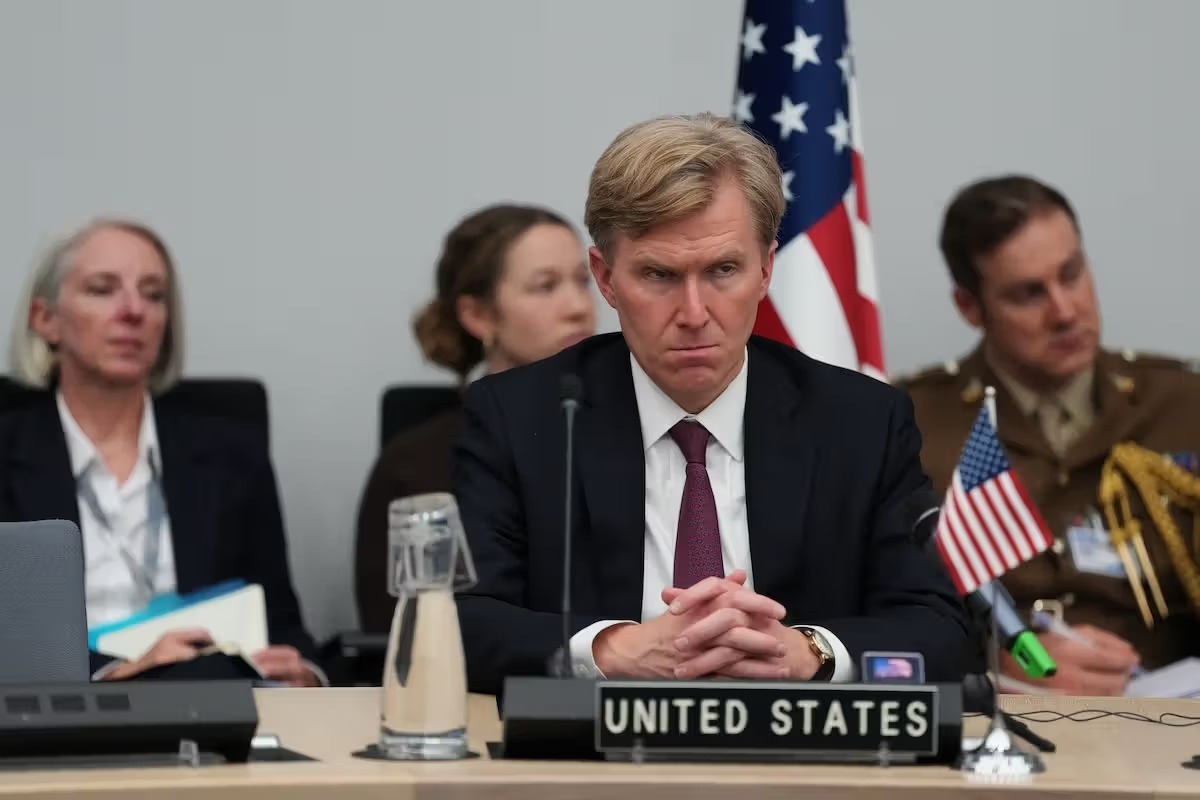
Elbridge Colby, the US deputy undersecretary of defence for policy, left the Ukraine Defence Contact Group (Ramstein format) talks held in Brussels on Tuesday, 17 November, before Ukrainian Defence Minister Yevhen Hmara began his address.
According to a report by the British newspaper The Telegraph, Colby, who authored the current US National Defence Strategy, opposed the tactic of launching strikes deep inside Russia during the talks.
Colby exited the room ahead of the speech by Ukrainian Defence Minister Hmara, who was presenting a report to his counterparts in a closed session. The US side officially explained his departure by citing the need to catch a flight.
Matthew Whitaker, the US permanent representative to NATO, remained at the meeting to represent the country.
German government sources speaking to The Telegraph said they were “concerned” by the statements of the US official, who criticized Ukraine’s deep strikes into Russian territory.
According to the German sources, Colby described the tactic as having “low military value” and as a method that did not “bring the conflict closer” to an end.
Interlocutors speaking to the newspaper expressed concern over the possibility that, following this development, the Donald Trump administration could “take Russia’s side”.
A source who briefed the British newspaper said:
“During the public portion of the Ramstein meeting, Colby said that the US opposed strikes deep into Russian territory and saw no military benefit in them. Most attendees were shocked by these comments.”
Who is Elbridge Colby?
Colby, a Republican politician, has served as deputy undersecretary of defence for policy at the Pentagon since April 2025 and held a similar role during Trump’s first presidential term.
Colby worked at the US Department of State and the Office of the Director of National Intelligence early in his career, and is the grandson of William Colby, who directed the Central Intelligence Agency (CIA) in the 1970s.
The National Defence Strategy released by the Pentagon in January this year, with the 46-year-old Colby as lead author, defined Russia as a “manageable threat”, while projecting that the country maintained “large reserves of military and industrial power” and demonstrated “national resolve”.
The authors of this US strategy placed the responsibility for defending Ukraine and Europe on European partners.
Colby, who identifies the containment of China among the Pentagon’s primary priorities, has long been known to prioritize US competition with that country over the Ukraine and Middle East theatres.
Speaking in March at congressional hearings on the new strategy, Colby argued that the document responded to the principles of “flexible realism”.
The US official said during that hearing:
“This is an attempt to advance and protect the concrete interests of ordinary Americans in a practical and realistic way. At the heart of this strategy, as the document clearly states, lies ‘evaluation, screening and prioritization’.”
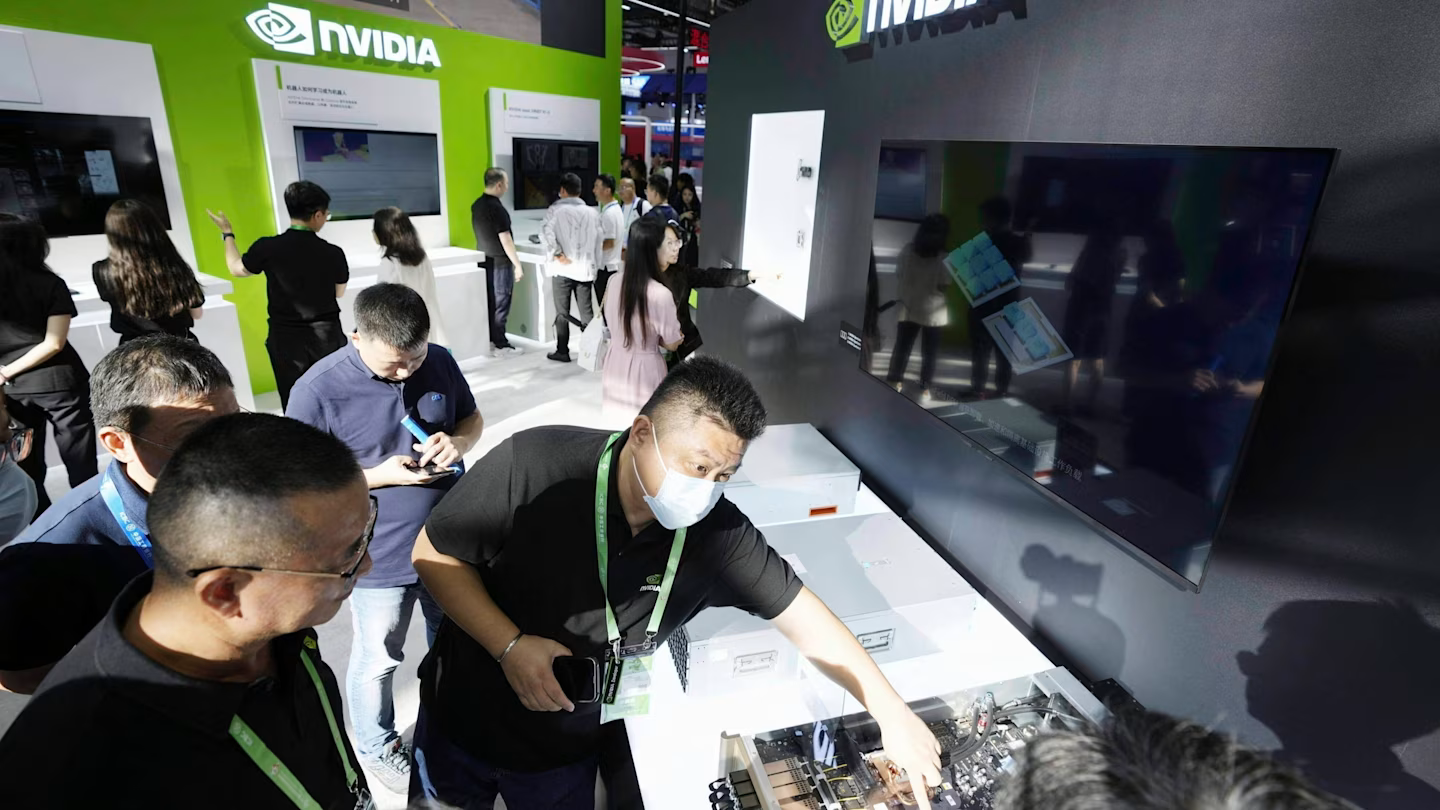
The US government has approved requests by Nvidia and AMD to ship advanced artificial intelligence chips to certain Chinese companies.
According to the Financial Times (FT), these companies include entities that the Pentagon believes are linked to China’s People’s Liberation Army.
Previously classified records published on Thursday by the Republican-majority House Foreign Affairs Committee show that American companies sought permission to ship more than 3.4 million chips to Chinese firms such as Alibaba, Tencent, Baidu, and BYD over a six-month period beginning in December.
The Bureau of Industry and Security (BIS) approved the “export, re-export, or transfer” of 879,868 chips.
During a hearing held to approve the release of the documents, the Republican committee chairman, Brian Mast, said that in Nvidia’s licence applications, “two of the companies listed as being able to install chips in data centres in China are, as far as we know, shell companies.” He added, “Both are fake companies [and] BIS approved the sale of these chips to these firms.”
The disclosure of the documents came as members of Congress pushed for tighter export controls following Jensen Huang’s resignation as Nvidia CEO.
Huang had been in a relationship with Alice Huang, a Singapore-based executive whom American officials determined to be a Chinese spy.
US officials also believe that Alice Huang may have been involved in export control violations by transferring Nvidia’s processors to China.
The Department of Commerce, which houses the BIS, has faced criticism from both Republicans and Democrats over its stance on Nvidia’s sales of advanced AI chips to China.
Commerce Secretary Howard Lutnick has agreed to testify before the Senate Banking Committee, while Huang is expected to be questioned behind closed doors in Congress next month.
Nvidia did not respond to requests for comment. AMD stated that it “complies with applicable US export control laws and regulations and implements rigorous processes to ensure that compliance across its global operations.”
AMD, which dominates the AI chip market alongside Nvidia, has also come under pressure over its ties to China.
On Thursday, its shares fell %7.7 after two reports linked to short seller Hunterbrook warned of risks stemming from the company’s connections to Beijing and “round-tripping”.
In Washington, Gregory Meeks, the ranking Democrat on the House Foreign Affairs Committee, stated that he voted in favour of releasing the files that revealed the approvals granted to Nvidia and AMD, saying that “over the past month, the administration’s handling of chip export controls has put our national security and technological edge at risk.”
Meeks added, “The public has a right to know how these decisions were made, and releasing this information ensures everyone is reviewing the same set of facts.”
In a separate development on Thursday, the California attorney general sent a subpoena to Nvidia seeking information on “whether its advanced chips or confidential information went to China and whether Nvidia misled investors and the public.”a
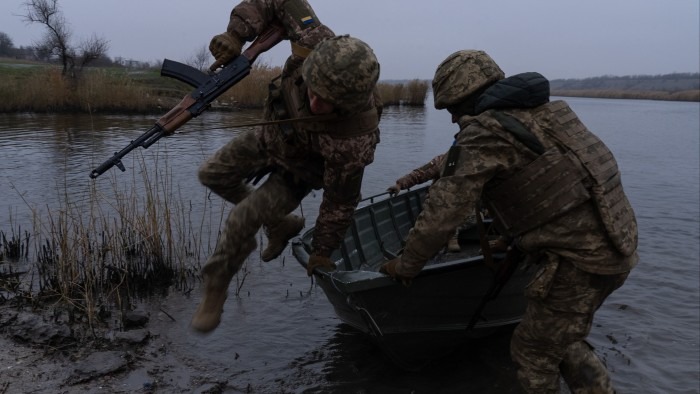
US President Donald Trump’s son-in-law and envoy Jared Kushner has discussed granting Ukraine NATO membership in exchange for territorial concessions during closed-door talks over the past several months, The Wall Street Journal (WSJ) reported, citing sources.
Once considered unworkable, the idea has come up in recent months during various discussions between European officials and Kushner alongside fellow special envoy Steve Witkoff.
Sources said Kushner discussed the possibility with Ukrainian President Volodymyr Zelenskyy and European officials at an airport in Dublin last week.
The issue was also raised last week during at least one meeting in the United Arab Emirates (UAE), where Kushner and Witkoff held talks with Ukrainian, European and Russian representatives.
An unnamed European leader noted that the idea had also been discussed during a telephone call in August.
US put forward two possible scenarios in talks
According to sources, the US presented two possible scenarios in recent discussions.
The first scenario envisages Ukraine giving up Donbas in return for NATO membership.
The second option involves freezing the conflict along the front line and providing Kyiv with security guarantees.
The WSJ reported that it remains unclear how seriously US negotiators are taking the idea or whether President Donald Trump has changed his stance on Ukraine’s NATO membership.
Last year, Trump agreed with US Defence Secretary Pete Hegseth that Ukraine’s membership in the alliance and a return to its pre-2014 borders were “unrealistic”.
European capitals reacted differently
Following talks in Berlin, French President Emmanuel Macron said the time had come to discuss Ukraine’s NATO membership.
According to the newspaper’s sources, although the issue came up during the talks, the German side was reluctant to take it forward.
German Chancellor Friedrich Merz told aides that Ukraine would not join the alliance in his lifetime.
Bloomberg also reported this week that Washington had asked Kyiv whether it was prepared to recognize Donbas as Russian territory in exchange for NATO membership.
Ukrainian leader Zelenskyy, however, insists on a return to the 1991 borders as a condition for negotiations.
Zelenskyy previously said the US had for the first time asked Kyiv about the possibility of NATO membership in exchange for withdrawing from Donbas.
Kremlin rejects freezing the front line
Commenting on Zelenskyy’s remarks, Kremlin spokesman Dmitry Peskov said: “In the interests of the peace process, we maintain our position that disclosing the details of discussions between us and the Americans is inappropriate.”
The Kremlin has repeatedly rejected freezing the conflict along the line of contact.
Russian Foreign Minister Sergey Lavrov said the option did not satisfy Moscow because Europe would still refuse to recognize Russian-controlled territories as part of Russia.
“The West is now proposing the following: stopping where the line of contact is, establishing a ceasefire rather than a long-term peace; moreover, it is being loudly declared that after such a halt or cessation of hostilities, neither Ukraine nor Europe will recognize the territories under Russian control as territory of the Russian Federation in accordance with the Constitution,” Lavrov said.
Russia demands that Ukraine abandon its NATO bid and withdraw its forces from the Donbas, Zaporizhzhia and Kherson regions as conditions for a ceasefire.
Late last year, Russian President Vladimir Putin said that given the pace of Russian advances in Donbas, Moscow’s interest in a Ukrainian military withdrawal from those territories had “dropped to zero”.
In 2024, Putin stated that Moscow and Kyiv had agreed on Ukraine’s independence with NATO membership ruled out, but added that Kyiv had abandoned the neutrality principles in its declaration of independence and enshrined the goal of joining the alliance in its Constitution.

What Did the Trilateral Summit in China Reveal?

The Chinese Approach Behind the Trilateral Summit: It May Pay to Get Familiar with It Sooner Rather Than Later

Colby exits Brussels Ukraine talks before defence minister speaks

US approved exports of 800,000 Nvidia and AMD chips to China

UK looks to Nordic allies to bolster crisis resilience plans
-
 America2 weeks ago
US midterms see 97 young winners as Gen Z representation triples
-
 Europe2 weeks ago
UK and Germany expand military pact with focus on Russian frontier
-
 America2 weeks ago
Nvidia investigates CEO Jensen Huang over link to Chinese spy
-
 America2 weeks ago
US secures 35% stake in Venezuelan firm NABEP under 50-year deal
-
 Europe2 weeks ago
George Szamuely dissects European decline and strategic rifts with US
-

 Opinion2 weeks ago
The Mecca Defence Agreement, the Ottoman Empire, and the facts
-
 Opinion2 weeks ago
Settle, deny, seal: Britain’s formula for colonial torture, from Kenya to Cyprus — 1
-
 America1 week ago
Absent Democrats derail floor vote on Pete Hegseth impeachment
