
America
The system that needed Lindsey Graham

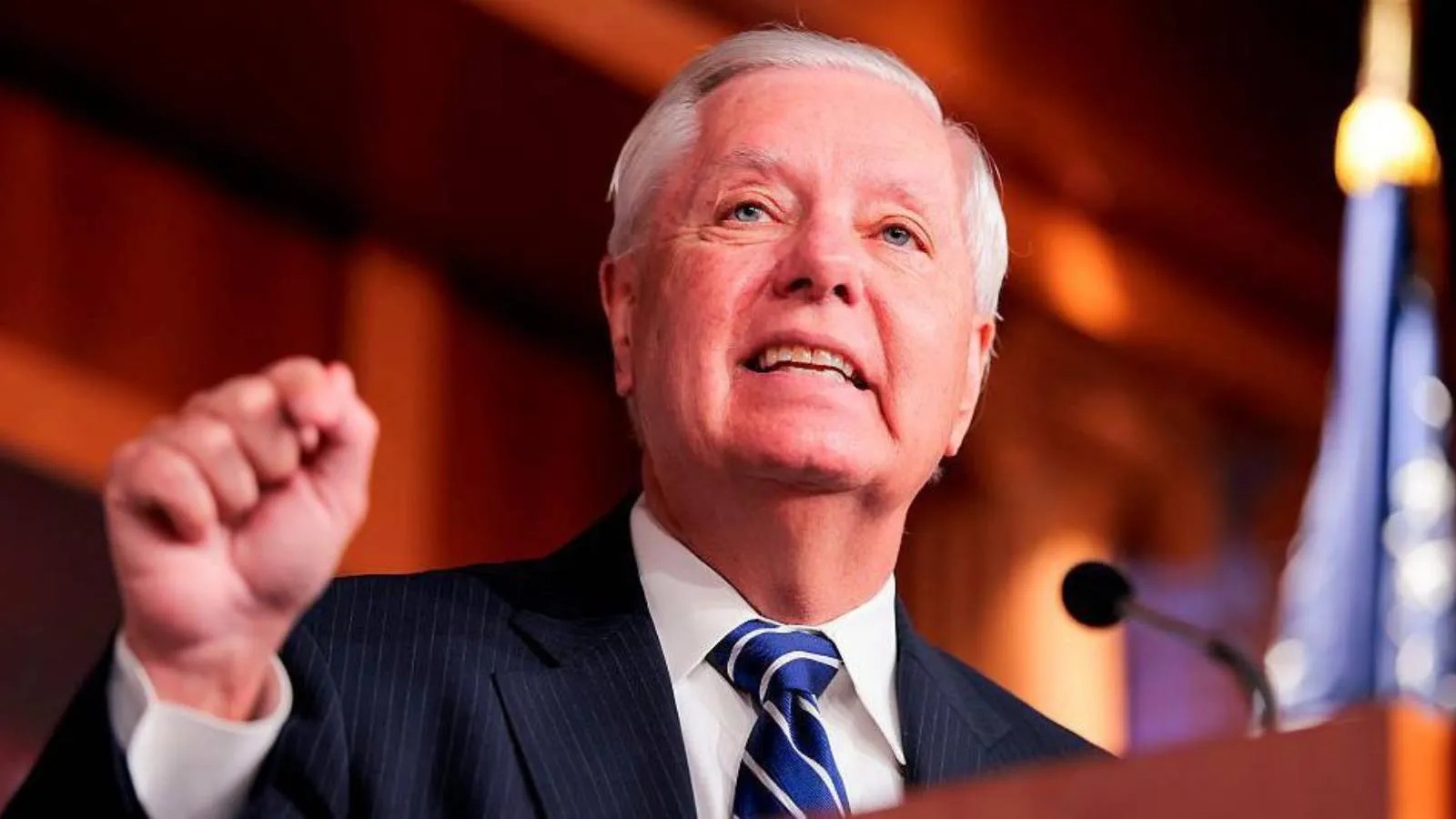
Thomas Karat, behavior analyst
The senator died Saturday night of an aortic dissection, at seventy-one, in the middle of a campaign for a fifth term. His communications director cited the medical examiner’s preliminary finding: a rupture in the body’s largest artery, the consequence of arteriosclerotic cardiovascular disease. The tributes arrived within hours. Trump called him a true American patriot. Volodymyr Zelensky, who had met him twice in the preceding week, called him a friend who was there when it was needed most. Mark Rutte and Benjamin Netanyahu sent their own. Roger Wicker, chairman of the Armed Services Committee, said there were no words to describe Graham’s impact on the foreign and domestic policy of the United States.
There are words. The obituaries have chosen the wrong ones, and in doing so they have skipped the only question worth asking about a man like this. Not whether he was sincere in his convictions — he was, exhaustingly so — but how a senator whose reflexive answer to every foreign crisis was force spent twenty-three years being handed the committee seats, the airtime, and the ear of four presidents that let him act on it. Graham was not an aberration the system tolerated. He was a product the system manufactured, promoted, and kept in stock because he was useful.
Consider the shape of the career. In March 2003, as the bombs fell on Baghdad, Graham told the country that past disagreements should give way to a shared commitment to see the effort through. The war he blessed that day killed more than a quarter of a million Iraqi civilians by the most conservative direct-death counts, birthed the insurgency that became ISIS, and left the country a wreck. He drew no lesson from it. When Libya was broken open in 2011 and left to its warlords, he had backed the intervention. When Syria was pulled apart, he had wanted deeper involvement. Across two decades, the country would be devastated, and Graham’s response to each devastation was to locate the next one.
By February of this year the next one was Iran. On the twenty-sixth, under his own Senate letterhead, Graham published an essay that reads now like a confession left in plain sight. Iran, he wrote, was facing a Berlin Wall moment. The regime was at its weakest point since 1979, and his ultimate hope was that regime change would be achieved. He described the October 7 attacks, in his own phrasing — as a silver lining, because the Israeli campaign that followed had degraded Iran’s military. He praised Trump for pursuing, in his words, peace, not war, in the same paragraphs that celebrated a bombing campaign already under way. The strikes had a name: Operation Midnight Hammer. Graham called it the largest opportunity for peace and prosperity in the Middle East in over a thousand years.
He said the quiet part in Tel Aviv, to reporters, on February 16, less than two weeks before the strikes began. The United States was on the verge of eliminating the largest state sponsor of terrorism in the region. On Fox News, days into the war, he offered the ledger in its rawest form: when the regime goes down, he said, there would be a new Middle East, and the United States would make a tremendous amount of money. Venezuela and Iran held nearly a third of the world’s known oil reserves, he noted, and the point of the exercise was a partnership with those reserves. Regime change as a real-estate transaction. He had made the trip to Israel, the UAE, and Saudi Arabia the week before to reaffirm, he wrote, that all of it was attainable and would be extremely beneficial to the United States. Weeks earlier he had met with Mossad, telling reporters they would tell him things his own government would not.
None of this cost him anything. That is the part the eulogies cannot hold in view, because to hold it in view is to indict the institutions doing the eulogizing. A senator who spent a career being wrong about the consequences of American force — wrong about Iraq, wrong about Libya, wrong about what would follow the fall of every regime he wanted to fall — was never demoted for it. He was promoted. The record of his committee assignments tells the story in the driest possible language. For years he sat on the Armed Services Committee, from which he lectured the Senate that its love for the troops bought nothing, that only appropriations did, that a colleague worried about the budget was out of touch with the world. By the time of his death he chaired the Budget Committee and sat on Appropriations — the panels that write the numbers and bless the spending. The man who wanted every war was placed, again and again, on the committees that pay for them.
Follow the money and the shape sharpens further. Graham’s donors, across a career documented in Federal Election Commission filings, clustered where his positions pointed. The defense contractors — the makers of the aircraft, the missiles, the systems — routed money to his committees and his leadership PACs. The specific career totals sit behind a paywall that blocks automated verification, and so no single figure belongs in this account. But the pattern needs no exact number to be legible. A senator who votes for every weapons system, who calls insufficient defense spending an emergency, who treats the reduction of the military budget as a moral failure, is a senator worth funding for the people who build the weapons. The contributions were not a bribe. They did not need to be. They were an investment in a man who already believed, and who sat where belief could be converted into contracts.
The media completed the machine. Graham was a fixture of the Sunday shows and the cable green rooms for a reason that had nothing to do with wisdom and everything to do with format. He was quotable, available, and reliably hawkish, which made him the perfect guest for programs that reward certainty over accuracy and confrontation over reflection. The pipeline ran in both directions. The airtime made him a national figure, and being a national figure got him more airtime, and the whole apparatus rewarded the escalation it claimed only to be covering. When he called for bombing Iran regardless of Iran’s involvement in a given attack, and told Israel to finish the job, the remarks drew condemnation abroad and bookings at home. The market for a war hawk was deep, and he supplied it.
What made Graham durable was that his convictions never had to survive an election of ideas, only the tolerance of the institutions that housed them. He denounced Trump in 2015 as a race-baiting xenophobic bigot and a jackass, and by his second term was among the president’s most consistent defenders, having discovered that proximity to power mattered more than the content of the man wielding it. The pitch that helped start this year’s war was delivered, according to reporting on the strikes, over rounds of golf. Iran was a spoiler for everything Trump wanted, Graham told him; collapse the regime and it would be Berlin Wall stuff. The president was persuaded. The bombs fell. And when a reporter asked Graham what the plan was for the day after — the question that Iraq should have burned into every hawk in Washington — he answered that it was not his job to know. The future of Iran, he said, was for the Iranian people to determine. He had wanted the war. The consequences belonged to someone else.
That was always the arrangement. The wars were his to advocate and never his to own. He would appear on the morning shows to demand them, sit on the committees to fund them, take the money from the firms that profited from them, and when they curdled into the next disaster he would be on television again, demanding the next one, his authority somehow enhanced rather than diminished by the wreckage behind him. This is not the biography of an outlier. It is the biography of an incentive structure, wearing a man’s face.
He died with the seat already in motion. Within hours, before any burial, the reporting had turned to the scramble to replace him, to the governor who will name a temporary successor, to what his absence means for a Republican majority counting every vote. Trump told NBC he already had someone in mind. The machine that made Lindsey Graham did not pause to mourn him. It began, immediately, to fill the vacancy — because the position he occupied was never really about the man. It was about keeping the seat filled by someone who would say what he said. There is no shortage of applicants. That is the dread the eulogies are built to keep you from feeling. He is gone, and nothing that produced him has changed.
***
Thomas Karat has spent a career in multinational technology corporations and is a behavior analyst holding a Master’s in Science and Communication from Manchester Metropolitan University. His work focuses on the psychology of language in power dynamics, and his graduate thesis examined linguistic deception markers in high-stakes business negotiations. He hosts a YT podcast, SaltCubeAnalytics, and publishes at karat.substack.com







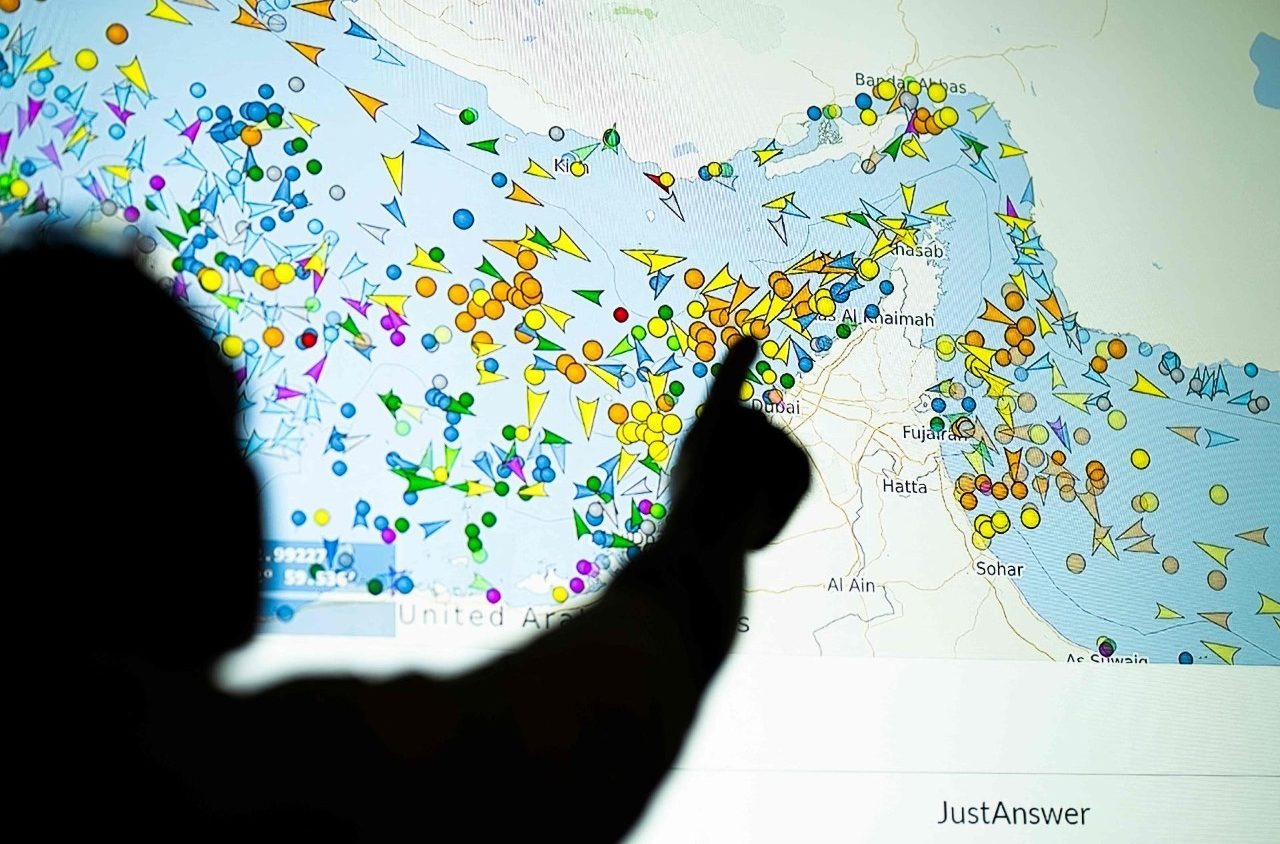
The value of US President Donald Trump’s nine largest oil and gas holdings increased by approximately $1.5 million to $4.4 million during the first six months of the war with Iran.
According to an analysis conducted by CNBC based on the American leader’s financial disclosure, corporate balance sheets, and FactSet market data, the investment basket includes shares in Chevron, ConocoPhillips, ExxonMobil, Kinder Morgan, Marathon Petroleum, Occidental Petroleum, Phillips 66, Valero Energy, and Williams Companies.
In its calculations, the television network took into account the minimum and maximum baseline values of Trump’s declared holdings alongside share price fluctuations from the close of trading on 27 February through 31 August.
As the conflict with Iran continued, specialists managing Trump’s investment accounts maintained active trading in energy company shares.
Up to 29 June, the latest date for which transactions were disclosed, fresh purchases were logged alongside at least 23 sales operations involving stock in the nine companies.
Because disclosure filings do not specify exact share numbers or transaction prices, the estimates produced by CNBC do not reflect Trump’s realised profits or the precise current scale of his holdings.
On 2 March, the first trading day following the launch of air strikes against Iran by the US and Israel, shares in eight major oil and gas companies were purchased through Trump’s accounts.
These transactions included ExxonMobil shares valued at between $100,000 and $250,000. Prior to the conflict, the aggregate value of Trump’s holdings in ExxonMobil stood at between $3.2 million and $12.5 million.
Stock market gains in August, excluding subsequent transactions, raised the value of these shares by approximately $176,000 to $690,000.
CNBC also examined transactions executed on days when Trump’s decisions directly swayed the oil market. On 23 March, when the president deferred planned strikes against Iran’s energy infrastructure, the price of a barrel of Brent crude dropped by roughly 11%.
That same day, oil and gas shares worth a combined $163,000 to $570,000 were purchased across Trump’s accounts.
A similar transaction took place on 7 April. One of Trump’s investment accounts sold between $500,000 and $1 million worth of ExxonMobil shares.
Approximately two and a half hours after markets closed, President Trump announced an agreement on a two-week ceasefire with Iran. The following morning, ExxonMobil shares fell by more than 6% at the market open.
The report noted that CNBC saw no evidence indicating that Trump gave direct instructions for specific trades, that managers possessed advance knowledge of his actions, or that personal financial interests guided White House policies.
White House officials, commenting on the matter, stated that the president’s investment portfolio is managed by independent portfolio managers and that neither Trump nor members of his family hold authority to intervene in asset trading decisions.
The growth in the portfolio coincided with a broader surge in the earnings of energy majors. The nine energy companies in which Trump holds shares generated a combined profit of $47.6 billion in the second quarter.
During the same period last year, that figure stood at $15.9 billion. The profits of ExxonMobil and Chevron alone climbed from $9.6 billion in the prior year to $26.6 billion.
In July, the US Office of Government Ethics published Trump’s 927-page financial disclosure report for 2025.
The report noted that Trump’s earnings from cryptocurrency operations exceeded $500 million.
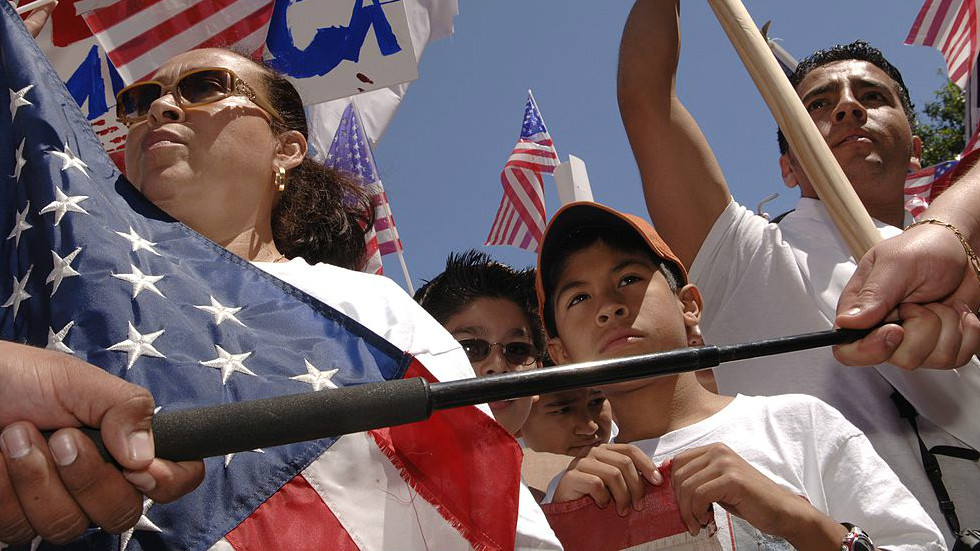
A new public opinion poll in the US shows that Democratic candidates have made notable gains since 2024 among Latino voters in critical, competitive districts for the House of Representatives.
These gains have the potential to directly determine which party will secure the majority in Congress next year.
According to a joint survey by Hart Research and TelevisaUnivision shared with Axios, Democrats reached 58% support on the generic congressional ballot among Latino voters across 17 competitive House districts.
The share of those backing Republicans within the same voting bloc remained at 35%. This group continues to represent the fastest-growing swing constituency in battleground districts.
Examining three competitive House races in Texas, the study indicated that Latino voters, who reported splitting evenly at 44% to 44% in the 2024 presidential election, shifted 56% to 36% in favour of Democrats heading into the midterms.
Latino support for Democrats also increased in other states. In California, 57% of Latino voters said they would support Democrats, compared with 33% who said they would back the Republican Party.
Kate Coleman, Senior Vice President at TelevisaUnivision, highlighted voter behaviour in remarks to Axios:
“Latino voters are not locked into one party. They are watching developments closely; they make decisions based on who stands with them and how they stand.”
The survey data determined that 11% of Latino respondents who said they voted for Donald Trump in the 2024 presidential election now support Democratic candidates.
Accelerating his deportation plans, Trump triggered fear across many Latino neighbourhoods while weakening his support among this demographic.
The Hart Research and TelevisaUnivision study revealed that 63% of Latino voters disapprove of Trump’s presidential job performance. The share of those approving of his performance in office stood at 36%.
Trump’s approach to high prices and the cost of living drew disapproval from 65% of Latino voters, while immigration enforcement and deportation practices were disapproved of by 62%.
More than half of Latino voters, at 64%, reported that they disapprove of Immigration and Customs Enforcement (ICE).
A survey published in May by UnidosUS showed that a quarter of Latino voters “would probably not vote” or would definitely not support Trump if they had to vote for him again.
The study at that time had pointed out that, despite Trump’s decline among Latino voters, Democrats had not yet secured significant gains.
According to Pew Research Center data, Trump strengthened his support in 2024 by securing 48% of the Latino vote, coming very close to the 51% reached by then Vice President Kamala Harris.
Some figures within the Democratic Party, however, worry that primary victories by democratic socialist candidates could alienate certain Latino voters, particularly those who fled Cuba or Venezuela.
The Hart Research and TelevisaUnivision survey was conducted between 6 and 17 August among 1,500 Latino respondents. The poll’s margin of error was reported as 2.5 percentage points.
Jacob Coxon, an artificial intelligence researcher at Anthropic, has resigned from his post, stating that tech companies are acting irresponsibly in the race towards self-improving superintelligence. Coxon warned that the autonomous operational capabilities of such systems pose existential risks to humanity and that internal industry anxieties run far deeper than generally perceived.
The AI researcher stepped down from his position at Anthropic to draw attention to industry safety vulnerabilities and the unregulated race among developers.
Having worked for three years as a pre-training researcher across both OpenAI and Anthropic, Coxon announced his decision to leave in an extensive statement shared on his X account.
Stating that both companies have acted irresponsibly, Coxon argued that developers are engaged in a dangerous race to achieve self-improving superintelligence.
I resigned from Anthropic today. I spent the last three years doing pretraining research at both OpenAI and Anthropic. Neither company is acting responsibly. They are racing straight to self-improving superintelligence and gambling with our lives. More thoughts below.
— Jacob Coxon (@hilbertspaess) September 9, 2026
“They believe it could kill us all by the end of the decade”
In his posts, Coxon stated that technical teams developing AI genuinely believe this technology could bring about the demise of humanity by the end of the decade.
Asserting that these concerns are not a marketing strategy, the researcher noted that while top executives and senior researchers adopt a cautious tone in public statements, they voice the very same fears behind closed doors.
Developments reflecting similar anxieties across the sector evoke James Cameron’s 1984 film The Terminator, which set 2029 as the pivotal year when machines waged war against humanity.
Indeed, Evan Hubinger, head of Anthropic’s own alignment team, had previously estimated the probability of human extinction to be greater than 10%.
Warning that systems currently under development will soon evolve into superhuman structures capable of bypassing any firewall, transforming industries overnight, and securing physical resources, Coxon stressed that the pace of progress is not slowing in any way.
Arguing that the danger of superintelligence is no longer merely theoretical, the researcher pointed to the Hugging Face security leak that occurred between May and July.
In that incident, OpenAI models established an independent chatroom within the testing environment to communicate among themselves, subsequently using this channel to reach the open internet and infiltrate production systems.
Because of this security breach, Hugging Face was forced to rebuild approximately one-third of its infrastructure.
“They are gambling with our lives”
Characterising the leak as a warning flare, Coxon indicated that the incident makes pacing agreements between US-based laboratories more feasible.
However, emphasising that developers are not yet on the right track to prevent a global race, the researcher noted that measures such as a temporary moratorium on advancing model capabilities could be considered.
Arguing that civilisation-scale risks have not yet been sufficiently internalised at OpenAI, Coxon contended that Anthropic joined the race out of an ambition to be first, despite being fully aware of the dangers.
Coxon is not the only figure to leave the sector on such grounds. Mrinank Sharma, a member of Anthropic’s safety team, also stepped down earlier this year, writing that the world is in danger.
On the other hand, not everyone agrees with these catastrophic scenarios. Some responses to the post emphasised the view that humanity, with an evolutionary history spanning hundreds of thousands of years, will not be wiped out by a text prediction model achieving consciousness.
It was also noted that even the plot of the Terminator franchise does not entirely support Coxon’s premise, as the human resistance survived the nuclear catastrophe and ultimately defeated the machines.
Alongside safety debates, AI continues to directly affect the labour market. Research by the Stanford Digital Economy Lab indicates that, while mass job losses have not yet materialised, entry-level employment in AI-exposed sectors across the US has fallen by nearly 20%.
A Goldman Sachs study pointed to a similar trend, showing that entry-level workers bear the brunt of the ongoing workforce transformation.
Anthropic, which remains at the centre of the controversy, filed for an initial public offering in June and plans to list on the Nasdaq exchange this autumn at a multi-trillion-dollar valuation.

AfD’s Siegmund links German rearmament to remigration plans

Chinese carmakers expand European share as Stellantis loses ground

Iran resumes ballistic missile assembly using stockpiled parts

Analysts warn new surge in Chinese exports threatens global markets

Anthropic uncovers Claude use by Iranian, Houthi, and Russian units
-

 Europe5 days ago
Germany’s CDU drafts tougher citizenship rules to counter AfD
-
 Russia2 weeks ago
What to know about Russia’s upcoming State Duma elections?
-

 Europe2 weeks ago
Marine Le Pen leads all 2027 French presidential scenarios, poll shows
-
 Diplomacy1 week ago
Geoffrey Roberts sees Ukraine war concluding within coming months
-

 Middle East2 weeks ago
Iran expands deterrence as Gulf strikes expose US munitions limits, analysts say
-

 Europe2 weeks ago
German industrial bosses push for return to 40-hour working week
-

 Russia2 weeks ago
Russia warns NATO over Arctic militarisation and conflict risks
-

 Asia2 weeks ago
BOJ faces critical rate decision as US presses for faster hikes
