
Europe
UK intelligence oversight in crisis amid budget cuts and rising threats, report finds

The UK Parliament’s Intelligence and Security Committee (ISC) has published its comprehensive annual report, examining the country’s national security architecture and the activities of the intelligence community.
The document, the first report of its kind published since 2023, details the operational challenges and evolving threat perceptions faced by agencies such as MI5, MI6 (SIS), and GCHQ, while presenting striking data on serious shortcomings in oversight mechanisms.
The report stated that at a time when state-sponsored threats, the terror threat, and cyberattacks are simultaneously on the rise, the Committee responsible for overseeing these activities on behalf of Parliament has reached a point where it “cannot fulfill its statutory functions.”
Oversight mechanism in a resource crisis
One of the most notable sections of the report highlights that while the budget and staff numbers of the British Intelligence Community have rapidly increased, the Committee that oversees them has been forced to downsize.
According to the document, while the intelligence agencies’ budget has increased by £3 billion annually compared to 2014, the Committee’s budget has decreased by 23% in real terms over the same period.
Similarly, while MI5, GCHQ, and other security units have doubled their staff numbers, the Committee’s staff has been reduced by 40%.
Committee members emphasized that this is not merely an administrative issue but a direct blow to Parliament’s ability to scrutinize “activities conducted in secret and funded by the public purse.”
The report asserted that the Committee should have an independent office and that the Cabinet Office’s control over Committee staff is “unacceptable.”
The China threat and the “Whole-of-State” approach
The Committee described the threat posed by China to the UK’s national security as “comprehensive and complex.”
The report claimed that Chinese intelligence is “almost certainly the largest intelligence apparatus in the world” and that it targets UK interests in an “aggressive and prolific” manner.
Highlighting Beijing’s use of a “whole-of-state” approach, the report alleged that state-owned enterprises, academic institutions, and even ordinary citizens “can be co-opted into espionage and interference operations.”
The Committee found the British government’s strategy against this threat to be inadequate, stating that the pace of policy development is far too slow compared to the scale of the threat.
The report included the following statement regarding the government’s China policy:
“I welcome the Government’s attempt to respond to our Report. However, to imply, as the Government has, that our findings are out of date is misleading. We have monitored and noted all relevant developments throughout the Report, up to two months before publication. Given the glacial pace at which the Government’s China policy has evolved, this has not been difficult to do.”
The Committee criticized the government’s reluctance to include China in the “Enhanced Tier” of the Foreign Influence Registration Scheme (FIRS) under the new National Security Act.
Details on Russia and Iran
The document also claimed that threats from Russia and Iran remain at a high level, asserting that Russia has “embarked on sabotage campaigns across Europe to destabilize Western support for Ukraine.”
It was noted that in May 2024, the UK expelled the Russian military attaché and removed the diplomatic protection from several Russian-owned properties.
Iran, meanwhile, was alleged to be “continuing its plots to assassinate and kidnap dissidents on UK soil.”
Terror threat at a “serious” level
The terror threat level in the UK was stated to remain at “SUBSTANTIAL.” It was disclosed that MI5 and the police have thwarted 43 late-stage terrorist plots between March 2017 and March 2025.
According to the report, the primary threat in the country continues to be Islamist terrorism, while the threat from Extreme Right-Wing Terrorism (ERWT) also persists.
It was stated that the conflict between Israel and Hamas has had a “galvanizing effect” on extremist groups in the UK, and organizations like Al-Qaeda and ISIS are using the situation for their own propaganda.
The terror threat related to Northern Ireland has been downgraded to “SUBSTANTIAL,” but it was noted that groups like the New IRA maintain their intent to attack and that pressure from security forces must be sustained.
Crisis in meetings with the Prime Minister
The report also documented the breakdown in relations between the Committee and the Prime Minister. It was noted that from its establishment in 1994, the Committee held regular annual meetings with the Prime Minister for 20 years, but the last meeting took place in December 2014. This disconnection, lasting over a decade, was said to have weakened the oversight mechanism.
However, the report mentioned that the new Prime Minister, who took office after the July 2024 general election, has taken steps to change this situation and has requested a meeting with the Committee. The Committee described this initiative as “positive engagement.”
Legislative and authority debates
The Committee stated that it actively participated in the processes for the 2023 National Security Act and the 2024 Investigatory Powers (Amendment) Act. It was emphasized that during the changes to the “Triple Lock” mechanism, the Committee objected to the broad powers proposed by the government regarding the delegation of the Prime Minister’s authority, ensuring that stricter safeguards were added to the law.
Furthermore, it was criticized that the Memorandum of Understanding (MoU) signed under the 2013 Justice and Security Act is outdated.
It was noted that intelligence activities are increasingly being shifted to policy departments (such as the Investment Security Unit), but these units fall outside the Committee’s oversight jurisdiction.
The Committee called on the government to remain committed to its promise of “oversight of the full range of intelligence and security activities.”
“Artificial intelligence has increased the volume and impact of cyberattacks”
The report also touched upon the activities of GCHQ and the National Cyber Security Centre (NCSC), warning that artificial intelligence is being used to increase the volume and impact of cyberattacks.
It was predicted that state-sponsored actors and cybercriminals could use AI tools to launch more sophisticated attacks. Ransomware attacks, in particular, were identified as the most immediate threat to the UK’s critical national infrastructure.
The report also drew attention to the cyber-espionage activities of the China-based “APT31” group targeting British MPs and the Electoral Commission, as well as the “hack-and-leak” operations of the Russia-linked “Star Blizzard” group.
Financial data in the report indicated that the total budget for the British Intelligence Community (MI5, SIS, GCHQ) was approximately £4.9 billion in the 2023-24 fiscal year.







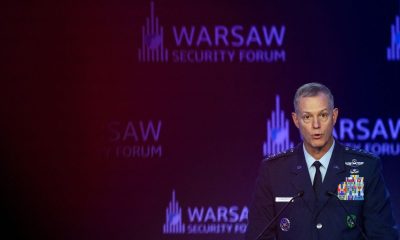

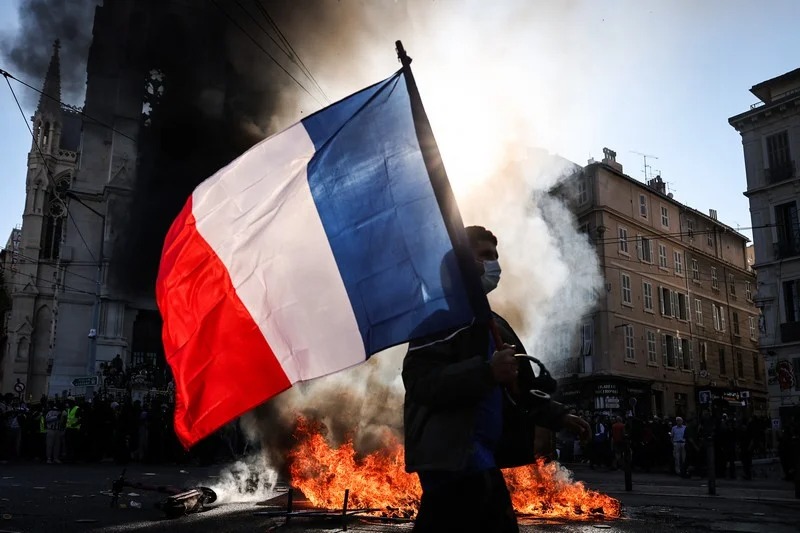
French Interior Minister Laurent Nuñez tendered his resignation amid some of the country’s most violent street unrest in recent years. President Emmanuel Macron rejected the resignation.
According to a statement from the Elysée Palace, Macron made the decision because law enforcement required uninterrupted command under current conditions. Macron instructed Nuñez to roll out new methods on the ground as quickly as possible.
The president also demanded that all necessary measures be taken to ensure transparency regarding the lapses in intelligence and foresight that led to the violence.
How many people were on the streets during Saturday’s protests?
The demonstrations were organised on 17 October over the rising cost of living and discontent with the government’s social policies. According to the Interior Ministry, approximately 550,000 people took part, while trade unions put the figure at 800,000.
Hundreds of thousands marched peacefully on Saturday. However, clashes with law enforcement broke out in Paris, Lyon, Marseille, and other cities, where shops were looted and buildings set on fire.
In Marseille, protesters stormed the city hall. As they forced their way in, they shouted, “This is a revolution, we are taking the Bastille!”, and went on to loot numerous stores.
In Lyon, the office of a tourism company housed in a 19th-century building was vandalised and torched. In Limoges, a 19th-century city hall was set ablaze.
Damage incurred by French businesses is reportedly estimated in the hundreds of millions of euros.
Citing Nuñez reported approximately 1,800 detentions and more than 500 injuries among police officers, gendarmes, and firefighters. Reuters reported that Nuñez stated 2,400 people had been detained nationwide and around 1,000 security personnel injured.
During the demonstrations in Paris, one person suffered a fatal heart attack while being detained.
Macron: We feel anger and shame
In a televised address, Macron said that nothing could justify the events. “There is nothing that can justify, explain, or excuse this. Tonight, we all feel anger and shame,” he said.
In the same speech, he stressed that peaceful demonstrators had legitimate grievances and should not be equated with those resorting to violence. He also noted that the protesters’ voices must be heard and that the government had already begun efforts to address them.
Macron said that legitimate demands must not be conflated with violence, and that violence should not prevent those demands from being heard.
Right demands state of emergency, Macron holds off
Right-wing politicians demanded the declaration of a state of emergency.
Macron declined to do so, stating that the government could allow local authorities to ban protests if necessary to protect public buildings and businesses.
Marine Le Pen, who is expected to run as the candidate for the far-right National Rally in next year’s presidential election, called for restraint. Le Pen said the situation in the country must not be treated as normal.
Meanwhile, Jean-Luc Mélenchon, leader of the far-left France Unbowed, stated that Macron must meet the demands of high school students staging demonstrations.
Macron’s term in office ends in 2027.
Throughout his nearly decade-long presidency, the country has frequently witnessed widespread protests, alongside persistent criticism over economic weakness and mounting public debt.

The European Union will launch a surveillance programme in the Arctic in 2027. The programme forms part of the bloc’s new strategy for the region.
The strategy document was obtained by Bloomberg and will be published this week.
A pilot initiative will extend the EU’s Copernicus and Galileo satellite systems to the Arctic. The systems will be deployed to detect land and maritime threats in the region.
“Arctic Cable Hub” to protect undersea cables
The EU will also establish an “Arctic Cable Hub”. The hub’s mission is to safeguard undersea cables carrying critical digital services. In other regions, such cables have become targets of sabotage attempts linked to Moscow.
The updated strategy reflects the EU’s new security-first stance. This transformation began when Russia launched its military intervention in Ukraine in 2022 and gathered pace with Donald Trump’s return to the US presidency in 2025. By contrast, the previous strategy, drafted in 2021, focused on cooperation, climate action, and indigenous peoples.
The Arctic has become an arena for global influence
Climate change has opened new maritime shipping lanes. The region is drawing the attention of Russia, the US, and China.
The document warns: “Increased Arctic shipping in an inherently harsh and poorly charted environment significantly raises the risks of fatal accidents, severe marine pollution, and hybrid interference.”
Russia and China: Military presence and partnership expanding
The document notes that Russia is “steadily rebuilding” its military presence in the region and using the area to transport fuel subject to sanctions.
It offers a similar assessment of China, noting that Beijing’s ambitions in the European Arctic are growing and its partnership with Russia is deepening.
Trump’s Greenland push shook the alliance
Trump also has his eyes set on the Arctic. Earlier this year, he repeatedly threatened to take control of Greenland, an autonomous territory of EU member Denmark. The move deeply shook the transatlantic alliance.
Trump ultimately backed down, and an agreement was reached that expands the US local military presence.
The document does not criticise the US. The text notes only that “a predictable partnership is central to European and transatlantic security”.
The EU has been reinforcing its regional presence in recent years. European Commission President Ursula von der Leyen has visited Greenland twice since 2024. During those visits, she opened a local EU office and announced a 200 million euro ($225 million) investment.
Under the new strategy, the EU will commit to hosting regular Arctic summits and pursuing co-financed projects with partners across the region.
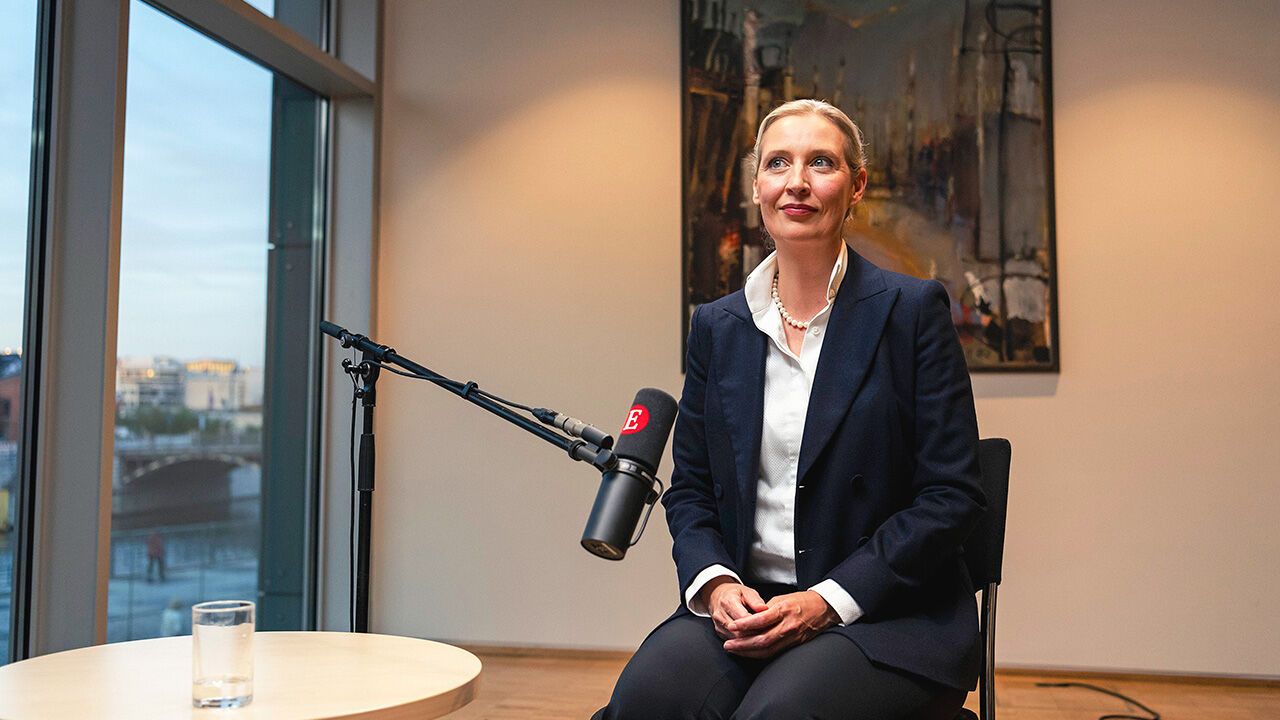
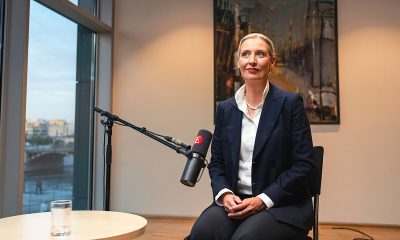
Alice Weidel, co-leader of the Alternative for Germany party and co-chair of its Bundestag parliamentary group, answered questions from Zanny Minton Beddoes, editor-in-chief of the weekly news magazine The Economist.
In the interview, Weidel offered broad evaluations spanning Germany’s energy crisis, the war in Ukraine, the fiscal balances and debt crisis of the European Union, and the country’s asylum and immigration policies.
Openly criticizing the Berlin government’s current foreign and security posture, Weidel stated that Germany is pursuing a policy that does not directly protect its interests, creating a situation that inflicts immense damage on the national economy.
“Foreign policy must serve our national interest”
During the interview, Weidel was asked whether Russia crossing Ukraine’s borders poses a threat to European nations and members of the North Atlantic Treaty Organization.
Stating that framing the issue through a threat dichotomy is incorrect, Weidel said, “I do not think it is a question of whether there is a threat or not. I believe German foreign policy should be judged by the criterion of whether it serves our national interest.”
Saying that the German Federal Government’s current actions have created a grave situation, Weidel remarked, “Acting the way our government is acting right now produces a very damaging outcome for us.”
Addressing the economic curbs in place, Weidel remarked, “I have not even mentioned the sanctions yet. While we implement sanction packages one after another, Donald Trump is talking with Vladimir Putin about more diesel deliveries.”
Pointing out that major powers act pragmatically, Weidel continued, “At the same time, they are also talking about oil and natural gas, aren’t they? We would want the same for Germany.”
Weidel was asked whether it is a legitimate imperative for Germany and other Western European countries to back a democratic country defending itself against overt aggression.
Taking direct aim at Ukraine’s governing structure, Weidel said, “As democratic as it gets. They are no longer holding elections for a new president.”
Referring to the perspective in Washington, Weidel said, “That is precisely why the American president insists on new presidential elections, because he thinks Zelensky is not the right person at the right time.”
When reminded that elections cannot be held in Ukraine due to the state of war and martial law, Weidel criticized how the narrative is constructed and recalled that they had previously condemned Russia’s attack.
Addressing the legal framework at the onset of the conflict, Weidel stated, “When we speak about an aggressor and a non-aggressor, we also criticized Russia’s attack on Ukraine, because Ukraine is a sovereign country. Full stop. There can be no debate about this.”
“Wrong to finance a lost war”
Emphasizing the need to focus on the current impasse dragging the continent down, Weidel stated that the prevailing balance is unsustainable.
“However, we are now in the current status quo. And this status quo is terrible,” Weidel said.
Drawing attention to the scale of devastation, Weidel said, “Not only because of people dying, families losing their sons, the destruction of infrastructure and refineries, and soaring diesel prices. There is an incredibly high security risk for all countries, primarily European nations.”
Saying this trajectory must be halted, Weidel stated, “Therefore, we must put an end to this. This is in our interest, because I am a German politician.”
Noting that she must place Germany’s priorities at the centre, Weidel asked, “I have to evaluate every German foreign policy: Is it in our national interest, or is it not?”
Sharply criticizing Berlin’s current measures, Weidel said, “This prolongation and the measures the German government is currently taking pose an enormous risk to our country.”
Expressing that Ukraine cannot achieve a military victory, Weidel assessed, “We find it wrong, I find it wrong, to continue prolonging and financing a war that is already lost.”
Pointing to the disparity in capacity between the two countries, Weidel stated, “Unfortunately, you can truly say that Ukraine is too small. It is impossible for Ukraine to defeat Russia.”
Weidel summarized the point reached by saying, “So what do we do now? There is a lost war.”
In response to the objection that Russian President Vladimir Putin is not interested in peace and continued to strike Ukrainian cities throughout the winter, Weidel noted that the same question must be directed to the other side.
Touching on the search for evidence to halt the conflict, Weidel said, “Can you show me a single piece of evidence that Vladimir Putin is interested in peace? And can you show me a single piece of evidence that Zelensky is interested in peace?”
When presented with reports that the Ukrainian side is ready for talks on a ceasefire and a halt to strikes on energy infrastructure, Weidel highlighted the financial burden borne by Germany.
Asked whether Germany should cut aid, Weidel replied, “We have already spent more than 100 billion. No other country has spent this much, and we have run heavily into debt.”
Summarizing her political stance in clear terms, Weidel said, “Yes, I put my country’s interests first. Germany comes first.”
Stating that the current conflict poses a direct threat, Weidel remarked, “This war is not in our interest, and it is very, very dangerous for our national security.”
Noting that a security architecture must be built impartially to achieve a lasting compromise, Weidel said, “To reach peace in Ukraine, we must take into account not only Ukraine’s security interests, but also Russia’s security interests.”
Criticizing past Western policies, Weidel assessed, “That was the great mistake made in the past and over the last two decades: failing to recognize Russia’s security concerns.”
“We will definitely have a bond market crisis”
In the interview, it was recalled that Marine Le Pen, parliamentary group leader of the National Rally party leading French opinion polls, wants infrastructure projects financed with European Central Bank resources.
Asked about scenarios regarding Europe’s future leadership structure, Weidel stated that Le Pen acts in line with French interests.
Pointing to the fiscal transfer dynamics within the European Union, Weidel said, “Germany is the main financier of the European Union, and France gets the money. Just like other countries.”
Expressing understanding for Le Pen’s approach, Weidel said, “Of course, from her perspective, I would do the same. She wants to do the best for her country.”
Touching on the vulnerability in France’s fiscal structure, Weidel remarked, “Even while France is already in a massive debt crisis with roof-hitting interest rates, it wants debt forgiveness without compensation.”
Emphasizing market uncertainty, Weidel said, “I do not know what they will do in the capital markets, do they? But Germany is in almost the same situation.”
Drawing attention to Berlin’s debt burden, Weidel observed, “Our public debt is climbing rapidly.”
Weidel responded decisively when asked whether a sovereign bond crisis could emerge in Europe if financial markets price in these statements.
Pointing to potential turmoil, Weidel stated, “Definitely. We will definitely have a bond market crisis.”
Noting that the debt burden is not confined to a few countries, Weidel said, “With such high public debt, this applies not only to France, but also to Italy, Spain, Portugal, and Germany.”
Criticizing the federal government’s new borrowing decisions, Weidel said, “With this new debt programme of Germany, our interest rates on the capital market are already rising. We too are now a debtor country.”
“Syrian and Afghan nationals must return home”
During the interview, concerns felt by millions of people of migrant background living in Germany regarding the policies of the party, described as far right, were raised.
Asked whether Syrian and Afghan asylum seekers with legal status could remain in the country, Weidel responded through existing legislation.
Arguing that the legal grounds have ceased to exist, Weidel stated, “To be honest, our laws, our asylum law clearly states: the moment the reason for coming to our country disappears, they must leave.”
Pointing to Syrians as an example, Weidel said, “Especially for Syrians, since you mentioned them, let us take that example: the justification that they are refugees, asylum seekers here and need protection has now ended.”
Criticizing financial support, Weidel said, “They receive mountains of money from the state here, but that does not matter right now. They must return to their own countries. They need to leave our country.”
Saying that the German administrative apparatus must enforce the rules, Weidel said, “Law enforcement in Germany is very clear.”
Arguing that all Syrians should be sent back, Weidel assessed, “Because the war in Syria has ended, 100% of Syrian citizens must return to their countries.”
Targeting the Federal Government’s Afghanistan policy as well, Weidel said, “Just like the Afghans whom our government virtually decided to bring to our country by plane.”
Sharply criticizing these evacuation decisions, Weidel remarked, “I do not know how you arrive at this unacceptable policy of flying Afghans in from Afghanistan.”
Addressing rising security statistics, Weidel said, “Since the borders were opened in 2015, our crime rates have gone through the roof.”
Pointing to serious crime categories, Weidel said, “Syrians and Afghans constitute the main group for the most serious crimes, such as rape, homicide, and violent offences.”
Saying security measures must be implemented immediately, Weidel stated, “We must send these people back, and detain criminals and extremist religious leaders. We do not want a caliphate in our country.”
Touching on the situation of Ukrainian refugees, Weidel noted that they oppose permanent settlement.
Pointing to a return timetable for people fleeing the war, Weidel said, “I have not even mentioned Ukrainians yet. When this war ends, Ukrainians must also leave our country.”
Giving a figure for the total population that must depart, Weidel said, “In total, this means millions of people; it reaches roughly four to five million, and they must leave our country.”

Macron rejects interior minister’s resignation over violent unrest

EU Arctic strategy targets Russia and China while sparing US

Egypt delays parliamentary vote on deploying troops to Saudi Arabia

AfD leader Weidel calls funding lost Ukraine war a grave mistake

Sally Rooney UK book shipments halted over Palestine Action terror ban
-
 Europe2 weeks ago
Le Pen proposes German-style debt rule to soothe French bond market
-

 America2 weeks ago
US AI spending needs 9% of GDP by 2032 to justify capital boom
-
 Europe2 weeks ago
France and Germany urge EU market kill switch against trade threats
-
 Russia2 weeks ago
US and Russia hold multi-billion-dollar talks on Lukoil foreign assets
-
 Europe2 weeks ago
Bill to drop NATO membership goal submitted to Ukrainian parliament
-
 America2 weeks ago
Flavio Bolsonaro leads Lula as Brazil election heads to run-off
-
 Europe2 weeks ago
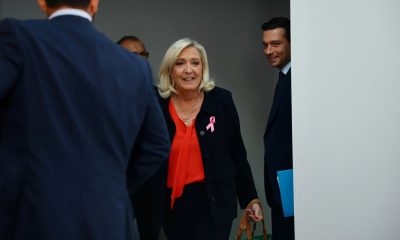
Marine Le Pen unveils fiscal programme pledging French budget cuts
-

 Middle East2 weeks ago
CIA report warns Israel faces growing risk of civil conflict
