
Diplomacy
US strikes fail to break Iran as regional anchors rise, Dr. Moeini says

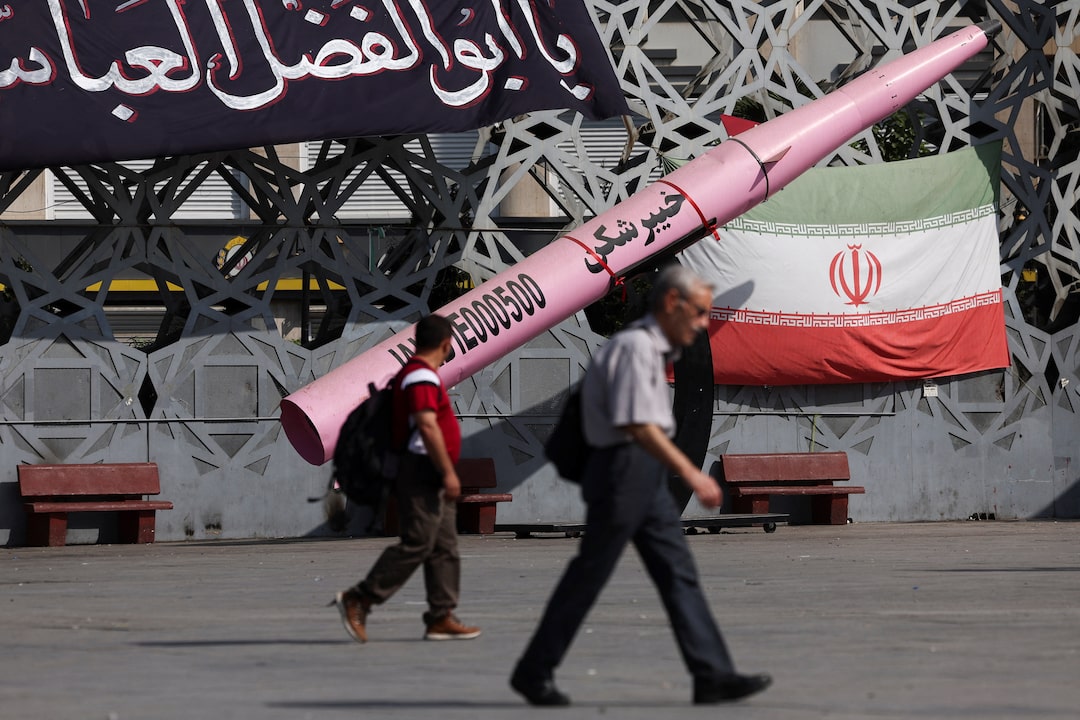
The strategic miscalculations of US military intervention in the Middle East have accelerated the emergence of a post-American regional order anchored by indigenous powers, according to Dr. Arta Moeini, Research Director and Managing Director at the Institute for Peace and Diplomacy (IPD).
In an extensive interview with journalist Sarp Sinan Hacir for the Turkish foreign policy platform Harici, Moeini delivered a comprehensive realist critique of Washington’s ongoing confrontation with Tehran, the destabilising nature of unconditional US support for Israel, and the systemic rise of regional security frameworks such as the Mecca Agreement.
Evaluating the trajectory of US-Iran hostilities following the escalation of the conflict, Moeini stated that Washington faces acute strategic dilemmas largely of its own making.
“Iran has lost its fear of American primacy”
Discussing the operational reality of the military exchange, Moeini highlighted a fundamental psychological turning point across the region.
“Iran was under a lot of pressure before the war started,” Moeini stated, identifying the hostilities as an outgrowth of earlier escalations. “This is first of all a continuation of the 12-Day War. There was a pause and then the real war happened. But Iran had never, despite all the rhetoric and bluster and the kind of cold war that happened since 1979 and the early 80s, engaged itself in a full-on conflict, hot, kinetic war with the United States.”
Moeini argued that the direct clash stripped Washington of its primary psychological leverage: “The fact that that happened and the fact that Iran lived to see another day has meant that it has lost its fear of American primacy and military supremacy. And that in itself is freeing, because for a long time Iran felt bullied and intimidated and just wanted to survive. Now Iran wants to not only survive, but to reset the picture and to begin to start to thrive in its own region.”
With approximately 50,000 US troops stationed across the Middle East, Moeini observed that Tehran is actively pressing Washington to dismantle its forward posture and abandon the strategic architecture established decades ago under the Carter Doctrine.
“After the Iranian revolution happened, the neocons in both the Carter and the Reagan administrations started thinking through how to project American power outside of their traditional allied networks,” Moeini explained. “Iran used to be one of America’s enforcers in the region. Without Iran, it was just not possible. America made preparations in the 80s to have a capability for counter-strikes and power projection, but also a more permanent presence in the Middle East.”
Following the 1991 Gulf War, US basing expanded across the Persian Gulf, leading to prolonged entanglements. Moeini noted: “We ended up with 9/11, then we ended up with endless wars in the Middle East. There is a lot of pressure from inside America for us to withdraw and retrench from a region that is at best secondary to American interests.”
Highlighting US energy independence, Moeini stressed: “We are no longer reliant on the oil and energy that comes from the Persian Gulf. Most of these shipments go to China and Europe anyway. Why should America be the security enforcer? It is better if there is a new balance of power based in the region’s historical conventional powers.”
Addressing policy debates within Washington, Moeini pointed out that figures like Joe Kent, the administration’s former counterterrorism director, have argued that a full US military withdrawal would neutralise Tehran’s primary asymmetric advantage.
“If America basically leaves its bases and decides to leave the Middle East, then Iran really does not have much that it can do,” Moeini observed. “It actually takes away Iranian leverage.”
“America has lost strategically”
Assessing the policy paths available to US President Donald Trump, Moeini outlined four distinct options, asserting that military escalation and economic containment are incapable of delivering US objectives.
“The political context, the political situation, Donald Trump’s own psychology and ego prevent him from just doing this without having a pretext to say, ‘I have accomplished something,'” Moeini noted regarding an unconditioned withdrawal.
Rejecting the calls from neoconservative factions to double down through intensified aerial bombardments or tactical strikes, Moeini remarked: “Somebody said the gloves are coming off, as if the gloves haven’t come off so far. There is really not much else that America can do other than putting troops on the ground and doing a real invasion, and I don’t think that is on the cards either.”
Similarly, Moeini dismissed the prospect of economic warfare collapsing the Iranian state: “The third option is to keep this blockade in place, keep the Iranian economy under a squeeze. This is something they have been saying for 47 years. Iran has already been under weeks and months of a naval blockade, and nothing has happened. This is wishful thinking in Washington.”
Moeini advocated for a fourth option: a tacit, realism-based strategic accommodation.
“You require the two sides through back channels to acknowledge the new reality, which is that America is no longer going to be the dominant power in the Middle East,” Moeini said. “Trillions of dollars and thousands of people have died, and what do we have to show for it? There might be an opportunity to acknowledge this and use it as a moment to recalibrate America’s posture in the world.”
Moeini characterised the resulting dynamic as a potential strategic pivot: “America has had tactical successes, but it definitely has lost strategically. But it might be able to turn that strategic defeat into a grand strategic bargain that actually serves America. I call it a reverse Pyrrhic victory.”
Under such an arrangement, Moeini explained, regional transit would stabilise: “Iran would have a bounded sphere of interest and obligation in the Persian Gulf. The shipments keep going, energy keeps flowing, and there is no threat to the global economy. Countries in the region, especially Türkiye, Saudi Arabia, Pakistan, and Egypt, work with Iran for a new regional arrangement which ultimately will stabilise the region.”
On the nuclear issue, Moeini argued: “US companies could do business with Iran and actually have a sense of monitoring on the nuclear issue if the actual American threat of military action is removed. The Iranians believe they can contain Israel, but they always had an issue with an extra-regional superpower being so active in the region. Removing US military presence disarms Iranian propaganda and removes the source of regional tension.”
Responding to neoconservative assertions that US forward deployment is required to insulate global energy transit and European economies from potential Iranian disruption, Moeini rejected the rationale.
“Before the US aggression and attack, the oil was flowing and the Strait of Hormuz was open,” Moeini stated. “If the result of this military action is that Iran charges a security or environmental fee of 5% to 7% that it shares with Oman, it brings predictability back to the markets. Businesses just want to know what price they have to pay.”
Moeini warned of compounding economic consequences in the absence of a settlement, pointing to market pressures and maritime bottlenecks in the Bab el-Mandeb, the Red Sea, and the Suez Canal: “Scott Bessent has done all he can do to keep oil prices below $100. But if there is no resolution, oil can become much more expensive per barrel—$150, $170, or even higher.”
“The state in Iran will not collapse in 72 hours”
Moeini identified profound intelligence and operational miscalculations at the highest levels of the US administration regarding Iran’s internal durability and state capacity.
“The United States has bombed Iran more than 13,000 times with large bombs of high significance and damage,” Moeini noted. “Yet Iran has withheld. It has established deterrence by punishment through its missile and drone programmes, and deterrence by denial through passive security measures, deep mountain facilities, and defensive resilience.”
“I just do not see a future in which Iran capitulates, surrenders, and comes to the Americans with its tail between its legs,” Moeini stressed. “President Donald Trump willfully ignored US intelligence for Israeli intelligence and promises of an easy victory a la Venezuela. The administration believed that the Iranian state would collapse in 48 to 72 hours. This is insane to say out loud, but it was what they believed, and that is why we are in this mess.”
Drawing historical parallels to other enduring regional entities, Moeini stated: “Iran is an enduring regional power like Türkiye. Putting aside for a second that Türkiye is a NATO member, do you think the United States could topple the Turkish government? Zero chance. Türkiye is a Byzantine, sophisticated, modern state, and Iran is very similar.”
Moeini disclosed that Israeli strategists sought a broader fragmentation of the Iranian state: “The Israelis wanted chaos and the Syrianisation of Iran. With the help of the Pakistanis and the Turks, this did not happen. The borders in the west and east in Baluchistan and Kurdistan were under heavy surveillance and control by Pakistan and Türkiye.”
“Aerial campaigns do nothing to topple regimes,” Moeini added. “The plan was to introduce Mossad-backed Kurdish militias from Erbil, along with the MEK, to take border cities and ignite a civil war. This was a horrible plan. You do not want to destabilise regional anchors like Türkiye, Iran, Egypt, and Saudi Arabia, or nuclear-armed states like Pakistan.”
“The special relationship is at an inflection point”
Addressing the US-Israel strategic relationship, Moeini stated that ties have reached an unsustainable contradiction.
“The relationship is at an inflection point and a breaking point at the same time,” Moeini argued. “We saw the zenith of the special relationship with the war—America actively conducted offensive operations on behalf of another state, as Marco Rubio and other administration figures openly stated. Yet as a result of the war’s failure, we are seeing the nadir of the relationship.”
Moeini observed that domestic fatigue across the American public is accelerating: “The American public is sick and tired of Israel influencing its politics. America is supposed to be the patron, yet the vassal is telling the patron what to do.”
“We are deindustrialising, undercutting healthcare, and borrowing from future generations to fund reckless adventures continents away, whether funding the war in Ukraine or over decades in the Middle East,” Moeini said. “Warmongers like Marc Thiessen do not care where the war is; they just need a war and an enemy.”
Invoking foundational American diplomatic principles, Moeini stated: “A sane country participates in ventures when interests align, and abstains when they diverge. There is no permanent friendship and there should be no permanent enmities. That was the advice of George Washington. Yet we have maintained permanent alliances and unconditional support. Our relations can no longer be dictated by World War II and events from a century ago.”
Citing assessments by Israeli foreign policy analyst Nimrod Novik and writings by Jonathan Touval, Moeini noted: “Israel is weaker today, more militant, and a worse-off society because of America’s unconditional support. The extremism and extrajudicial policies under Benjamin Netanyahu are enabled because they believe they hold an exceptionalist card and that a ‘big daddy’ will always intervene.”
“Countries like Taiwan, Ukraine, and Israel are small in territory and demographics; they will never become regional anchors in the way that Türkiye, Iran, Saudi Arabia, or Egypt are,” Moeini observed.
Reflecting on internal administration politics and the standing of foreign policy realists, Moeini confirmed that while figures like former National Security Advisor Andy Baker resigned for personal reasons rather than being ousted, institutional advisory channels have degraded.
“Realists got the most personnel into the US government than ever before, yet they were not successful in directing policy,” Moeini said. “Donald Trump does not operate through formal government process. The National Security Council is effectively defunct. US intelligence under Tulsi Gabbard at the DNI and the CIA accurately assessed that Iran would be resilient, yet their assessments were bypassed for outside television commentators like Mark Levin.”
Despite current setbacks, Moeini expressed conviction that demographic and political shifts among younger Americans ensure the long-term dominance of realism: “Millennials and Gen Z do not want a Global American Empire. They want internal restoration, reindustrialisation, infrastructure, and fiscal discipline. Institutionalised globalism is dying off. Realism is ascendant.”
“The region has rejected the Abraham Accords”
Turning to regional diplomacy and the trilateral Mecca Agreement signed between Saudi Arabia, Türkiye, and Pakistan, Moeini described the pact as a foundational pillar of an autonomous West Asian security architecture.
“The post-American West Asia is creating new arrangements for security management in full rejection of the Abraham Accords,” Moeini said. “This is an elastic defence pact that represents the nucleus of the ‘ME5’—a concert of five primary regional powers comprising Türkiye, Saudi Arabia, Iran, Pakistan, and Egypt.”
Moeini dismissed comparisons between the Mecca Agreement and Western collective defence structures: “I do not like the comparison to NATO. That is an anachronistic, Anglo-Western framework that presumes a fixed enemy. The Mecca Agreement is not aimed at Iran, nor is it explicitly aimed at Israel. It is an alternative, indigenous security arrangement akin to the 19th-century Concert of Europe under Metternich, designed to manage regional affairs and resist extra-regional military intervention.”
Moeini explained that regional states recognise that outside interference is the primary driver of instability: “All five regional powers want economic stability and growth—whether through Saudi Arabia’s Vision 2030, Turkish strategic initiatives, or Iranian economic restoration. The major regional hubs—the Turkic world, the Iranian plateau, and the Arab sphere—are establishing agency over their own security.”
Moeini concluded by outlining the strategic imperative confronting Israel in a post-unipolar Middle East.
“Israel can never be a regional hegemon,” Moeini stated. “The Abraham Accords represented an Israeli-first, hierarchical construct that the region has rejected. When Donald Trump offered nuclear cooperation to Riyadh conditioned on joining the Abraham Accords, Saudi Arabia responded by signing the Mecca Agreement.”
“Israel faces a clear choice: continue an unsustainable military confrontation, or return to David Ben-Gurion’s periphery doctrine by seeking functional coexistence with regional anchors like Türkiye and Iran,” Moeini concluded. “If Israel chooses integration within regional realities rather than serving as an outpost for extra-regional power projection, even Tehran would move toward tacit accommodation. The future of West Asia belongs to a concert of regional powers.”







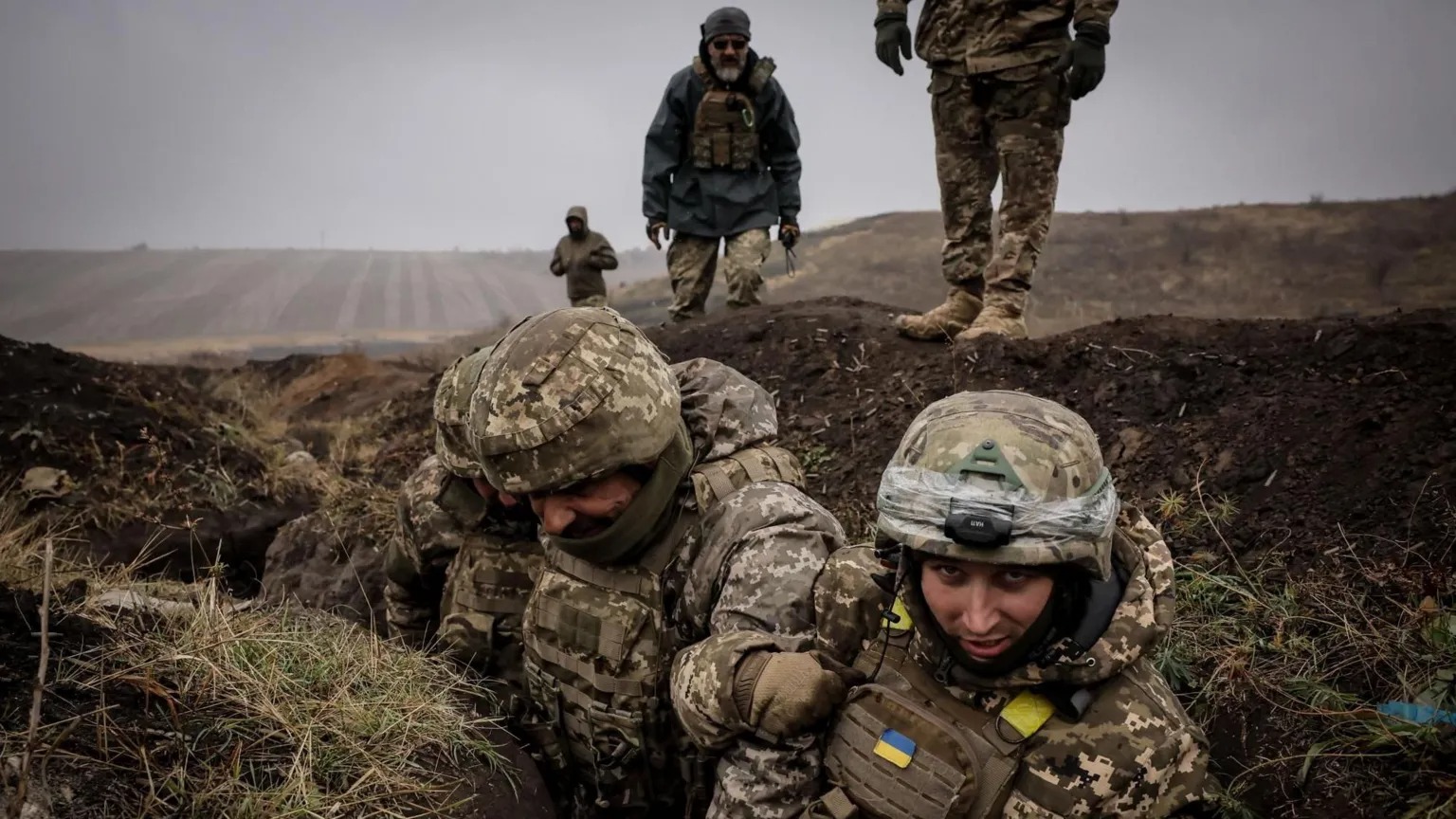
Draft proposals by the US administration to end the war in Ukraine envisage establishing a demilitarised line in the Donbass region, easing sanctions against Moscow, and offering a comprehensive investment package to Kyiv.
According to a report by the British magazine The Economist, citing Ukrainian officials, Washington is working on a broad framework comprising both economic and political points to persuade the parties to reach a settlement.
Under the draft plan reported by the publication, Russia is offered the opportunity to conclude trade agreements with the US, an easing of sanctions, and the normalisation of political relations.
Ukraine, in exchange for relinquishing its goal of NATO membership, is promised direct foreign investment and European Union accession.
The report notes that Ukrainian officials do not possess complete visibility over every detail of the final text on the table, but are closely familiar with its overarching framework.
Nord Stream pipeline and natural gas shipments on the table
The Economist reported that the package designed to persuade the leadership in Moscow also includes items such as the resumption of Russian natural gas sales to the European market and the reactivation of the Nord Stream pipeline.
The magazine also points out that decisions regarding the operation of a pipeline located on European territory do not fall directly under US jurisdiction.
Ukrainian negotiators, meanwhile, are concerned that the Washington delegation may lock in commercial agreements in line with its own economic interests before the fighting formally stops.
Speaking to the magazine, a Ukrainian official summed up the American side’s approach with the words: ‘Why wait and waste time? Time is money.’
Diplomatic contacts intensify at leadership level
Stating that it is ready for talks, the Russian government announced that an agreement had been reached in recent contacts with Washington to launch a trilateral negotiation process that would also include Ukraine.
Russian President Vladimir Putin said: ‘The objective of these negotiations will be to address the issue of ensuring the security of Ukraine and Russia once peace agreements are reached.’
As part of these diplomatic efforts, US President Donald Trump’s special envoy, Steve Witkoff, met Russian leader Putin on 21 October at the Konstantinovsky Palace in St. Petersburg.
Speaking during the portion of the meeting open to the media, Witkoff noted that he had brought documents outlining a pathway to peace and asked Putin to examine these texts.
Kremlin spokesperson Dmitry Peskov announced that the president would evaluate the American proposals.
Noting that concrete ground for a ceasefire had emerged during the St. Petersburg meeting, Witkoff expressed hope for the start of trilateral contacts between Russia, the US, and Ukraine to address technical matters.
Putin thanked Trump for his interest in peace efforts and recounted that the US president had specifically emphasized during their recent telephone calls that the war must end as soon as possible.
Framework prepared in Oslo carried to Moscow
Immediately before his visit to St. Petersburg, Witkoff had attended talks held on 20 October in Oslo, the capital of Norway.
Trump’s son-in-law Jared Kushner joined the meeting remotely due to illness, which was attended by Ukrainian President Volodymyr Zelenskyy, Finnish President Alexander Stubb, and Norwegian Prime Minister Jonas Gahr Store.
According to information provided by Stubb, the parties at the Oslo meeting clarified key security and economic elements that the American envoy would present to Moscow. Air defence systems, energy infrastructure, and partial ceasefire measures were also discussed.
Commenting after the talks in St. Petersburg, Russian presidential aide Yury Ushakov argued that the newly presented approaches did not contain many elements useful for a resolution.
Noting that Witkoff informed Putin about the contacts in Oslo and relayed fresh nuances in the positions of European leaders and the Kyiv government, Ushakov stated that the meeting was thorough and frank, adding that the conflict is ‘moving toward an end.’
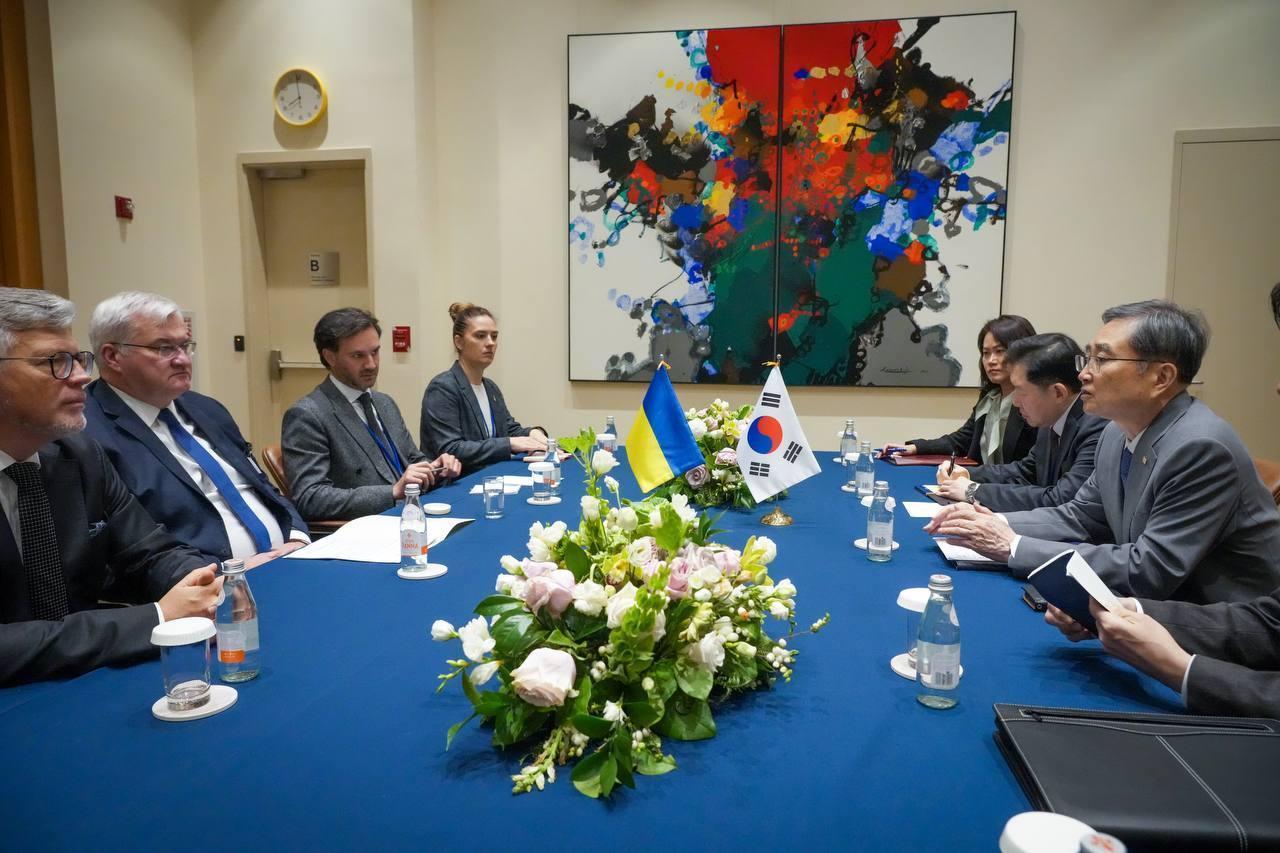
The South Korean government has decided to withdraw part of its embassy staff from Ukraine.
According to the Yonhap news agency, Foreign Ministry spokesman Park Doo-sun cited the Kyiv administration’s failure to take “positive steps” in the dispute that began with the leak of information concerning the handover of North Korean prisoners of war as the justification for the move.
The spokesman also listed the ongoing threat of air strikes, which complicates the safety of diplomats, among the reasons.
Following the withdrawal of part of the personnel, essential diplomatic contacts will continue under the leadership of the charge d’affaires ad interim to Ukraine. All consular staff tasked with protecting South Korean citizens will remain in Ukraine.
Prior to this move, the Seoul administration decided on 8 October to withdraw its ambassador. The Foreign Ministry stated at the time that it was ready to continue consultations with Kyiv to resolve the emerging issues constructively.
Tensions between the two countries began with a speech delivered by Ukrainian President Volodymyr Zelenskyy at the United Nations General Assembly in September.
Zelenskyy announced that two captured soldiers from the North Korean army had been handed over to South Korea.
South Korean President Lee Jae-myung, meanwhile, accused Kyiv of breaching a confidentiality agreement.
Lee said the disclosure of this information endangered the prisoners’ families and stability on the Korean Peninsula.
Seoul expects a public apology
Dmytro Lytvyn, an adviser to the Ukrainian president, denied the existence of a confidentiality agreement.
The South Korean Foreign Ministry summoned Ukrainian Charge d’Affaires Andriy Veshkin on 28 September and issued a note of protest against Lytvyn’s remarks.
President Lee Jae-myung warned in a statement on 2 October that they would take additional measures against Kyiv if Ukrainian authorities did not acknowledge the agreement and make a public apology. Lee stated that Ukraine itself had initially requested that the transfer of the prisoners be kept confidential.
Ukrainian Foreign Ministry spokesman Heorhii Tykhyi said the dispute stemmed from differing interpretations of the confidentiality regime.
Tykhyi noted that Seoul, based on its constitution which recognises the entire Korean Peninsula as its own territory, requested that the prisoners be handed over “like its own citizens”.
Describing the handover as a “gesture of goodwill”, Tykhyi stated that they were conducting closed-door negotiations to resolve differences of opinion.
Ambassador Park Ki-chang returned to Seoul on 10 October. According to a report by The Korea Times newspaper citing the ministry, recalling the ambassador served as a diplomatic protest against the leak of information regarding the prisoners.
The newspaper wrote that South Korea had last taken a similar step in 2008 by withdrawing its ambassador to Japan.
Moscow warned foreign diplomats
On 3 October, the Russian Foreign Ministry reiterated its warning to foreign nationals, including diplomatic mission staff, against remaining in Ukraine.
The ministry recalled its advice to leave Kyiv, citing ongoing strikes against military targets.
The ministry noted that those who failed to heed the warnings would bear responsibility for the potential consequences.
Kremlin spokesman Dmitry Peskov said in a statement on 24 September that they had no information regarding Kyiv handing over two North Korean prisoners of war to Seoul.
Peskov, noting that prisoner matters fall under the authority of the Defence Ministry and intelligence services, said, “Contacts through the special services are continuing.”
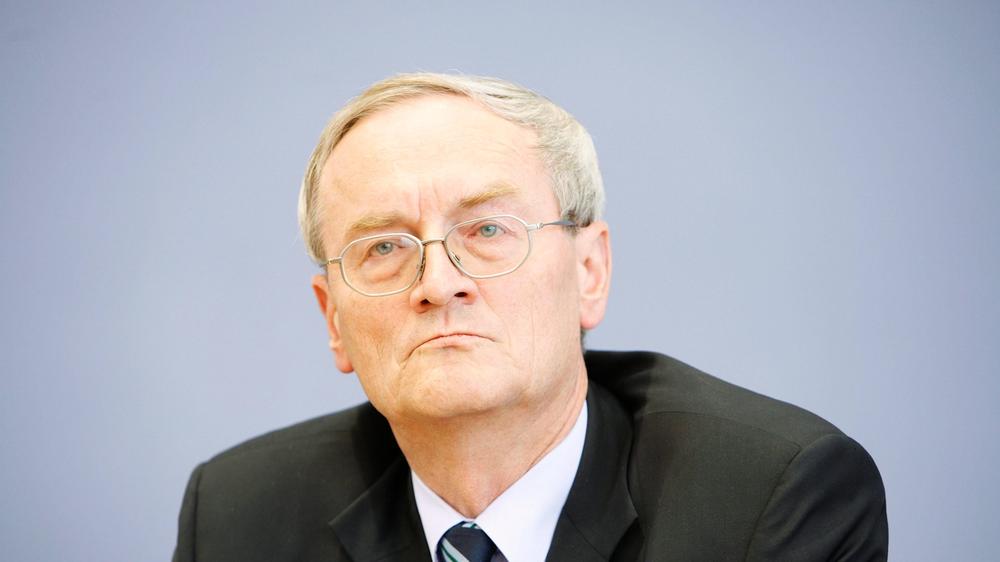
August Hanning, who led Germany’s Federal Intelligence Service (BND) between 1998 and 2005, was arrested on 6 October on allegations that he obtained roughly 2,000 classified agency documents and used them during contacts with intelligence officers from a foreign state.
Accused of high treason and espionage on behalf of a foreign intelligence agency, the former spy chief is alleged to have procured the documents from former BND employee Manfred D.
Prosecutors stated that the leaked records included internal briefing notes presented to senior German officials, though the Berlin government has not yet publicly disclosed which country received the classified data.
According to an exclusive report by Jake Green for The Cradle, seized email exchanges revealed extensive ties between the arrested Hanning and former Mossad director Danny Yatom.
The correspondence shows that the two former intelligence directors built an ongoing network of contacts following their public service, combining commercial ventures, efforts to secure political influence, and intelligence links.
This dynamic has triggered debate that using personal connections and official access for private gain has left Germany’s intelligence apparatus vulnerable.
Intelligence notes for 10,000 euros and campaign proposals
According to the reviewed emails, Hanning told Yatom in a 2018 message that he could prepare an “overall assessment based on information obtained from senior German officials and intelligence agencies” concerning an unidentified candidate.
The former BND head committed to completing the report by 13 July in exchange for 10,000 euros.
Contacts between the two men subsequently expanded to cover domestic political processes in Germany. Ahead of the September 2021 federal election, Yatom asked Hanning to approach leading candidates.
Describing CIY Global as a “political campaign company”, the former Mossad chief noted that he aimed to introduce its capabilities to German politicians, and he mentioned his intention in the same exchange to transfer documents concerning a cybersecurity firm.
Cybersecurity partnership and surveillance operations across Europe
The partnership between Yatom and Hanning reached beyond political lobbying initiatives into the cybersecurity sector.
Hanning reportedly served as a consultant for World Health Energy Holdings, a cybersecurity company linked to Yatom.
Firms of this type, established or managed by former intelligence personnel, provide commercial platforms on the international market for Israeli-origin surveillance, cyber intelligence, and political influence capabilities.
The operational presence of private Israeli-based surveillance technologies across Europe has recently entered judicial records through scandals in Poland, Spain, and Greece.
Polish prosecutors announced on 12 October that data collected under the previous government via Pegasus spyware against political opponents had been transferred out of the country, adding that manufacturer NSO Group maintained access to the technical infrastructure.
In Spain, the 2022 CatalanGate investigation established that at least 65 people, including politicians, lawyers, and civil society representatives, were targeted using Pegasus or Candiru software, with Citizen Lab researchers publishing strong evidence linking the operation to Spanish authorities.
In Greece, the surveillance operation targeting journalist Thanasis Koukakis and Member of the European Parliament Nikos Androulakis was determined to have used Predator software, linked to Intellexa, a company founded by former Israeli intelligence officer Tal Dilian.
In the German espionage investigation, the traffic between Hanning and Yatom involving paid reporting, contacts with electoral candidates, and commercial partnerships does not yet provide conclusive legal evidence regarding the final destination of the roughly 2,000 classified documents.
Nevertheless, the disclosed correspondence gives German investigators a concrete line of inquiry to assess whether classified state secrets reached commercial networks tied to Israeli intelligence.

“The AfD is an expression of internal contradictions within German big capital”

Nokia and ICEYE sign deal to build sovereign Ukraine satellite network

Mélenchon’s “new France” vision triggers fierce cross-party debate

US envoy says Syria interim leader Sharaa seeks Israel normalization

Unauthorised AI agents access customer accounts at major US banks
-

 America2 weeks ago
Trump weighs presidential memorandum to cut surging US diesel prices
-
 Diplomacy2 weeks ago
SWP urges backing for Gulf trade routes bypassing Strait of Hormuz
-
 Diplomacy2 weeks ago
EU and China reach preliminary deal to curb hybrid car imports
-

 Europe2 weeks ago
LSE study finds post-bailout Greece turned into a cafe economy
-

 Russia2 weeks ago
Russia relaxes diesel export curbs after talks with Trump
-
 America6 days ago
How Elon Musk fuses private empire with state power, Ben Tarnoff explains
-
 Europe2 weeks ago
Ireland offers EU budget cuts but Germany rejects proposal as too low
-
 Europe2 weeks ago
Raphaël Glucksmann wins French centre-left presidential primary
