
Diplomacy
Western countries join forces to break China’s grip on critical minerals

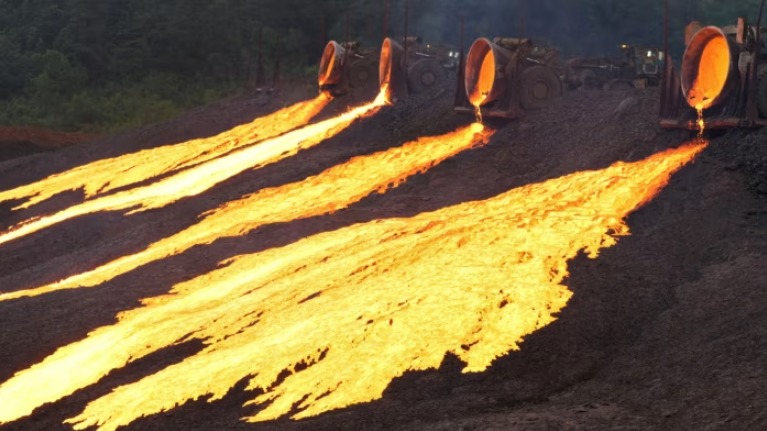
Western countries are directing their development finance and export credit agencies to work with the private sector to support critical mining projects in a bid to break China’s dominance of a sector vital to high-tech industries.
The Financial Times (FT) reports that the Minerals Security Partnership (MSP), a group of 14 countries and the European Commission seeking to increase international cooperation and pledge financial support for a giant nickel project in Tanzania backed by mining monopoly BHP, will unveil a new financing network at an event in New York today (23 September).
MSP member countries are: Australia, Canada, Estonia, Finland, France, Germany, India, Italy, Japan, the Republic of Korea, Norway, Sweden, the United Kingdom, the United States and the European Commission.
In a joint statement to be released during the UN General Assembly, the network will “strengthen cooperation, promote information sharing and co-financing”.
Companies such as BlackRock and Goldman will also attend the meeting
The statement lists 10 critical mining projects that have already received support from MSP partner governments.
The meeting, which will be attended by representatives from BlackRock, Goldman Sachs, Citigroup, Rio Tinto and Anglo American, is part of an effort to encourage private investors and mining companies to invest more in the sector.
Jose Fernandez, US undersecretary of state for economic growth, said another 30 critical mineral mining projects were being evaluated by the MSP at a time when Western governments are racing to secure the raw materials needed to produce everything from electric cars to advanced weapons.
Washington accuses Beijing of ‘overproduction and predatory pricing’
What China is doing is following the monopolist’s playbook to eliminate competition,’ Fernandez claimed, accusing Beijing of ‘overproduction and predatory pricing’ to maintain its grip on the global supply of critical minerals.
We recognise that we cannot solve this problem with one country, we are stronger together,’ Fernandez said in an interview with the FT.
Chinese companies control 90 per cent of the world’s rare earth processing capacity and more than half of the processing capacity for cobalt, nickel and lithium minerals used to make batteries for electric vehicles.
The aim is to wean low-income countries off China
“They’ve had the only game in town; we’re changing that,” said Abigail Hunter, executive director of the SAFE Center for Critical Minerals Strategy, an NGO working with the US State Department to promote investment in the critical minerals supply chain.
The goal is to “provide an alternative to China in terms of financing, especially for low-income countries,” says Hunter.
The US Development Finance Corporation (DFC) will issue a letter of intent to provide debt financing for a mining project in Tanzania that will loosen China’s and Indonesia’s control over the supply of nickel, a key battery component.
The Kabanga nickel project is being developed by Lifezone Metals, an Isle of Man-based company 17 per cent owned by BHP.
The project is a challenge to the Chinese-backed investment that has reshaped the nickel market in Indonesia, giving the country a virtual monopoly and increasing its share of global production to 55 per cent from 16 per cent in 2017.
Call for more space for public-private partnerships
“The DFC declined to say how much it would lend to the project. Our main focus is to ensure that the private sector gets its fair share and has the necessary tools to provide the financing and investment to stimulate growth in this sector,” said DFC chief executive Scott Nathan.
Private investors believe that increased demand for the commodities needed to drive the energy transition will create a profitable and more stable market.
But they say more support and public-private collaboration is needed to attract more capital. Dominic Raab, former UK deputy prime minister and head of global affairs at Appian Capital Advisory, a major investor in critical minerals, said: “Investors wouldn’t look at these businesses if it weren’t for the potential returns, but that’s difficult. The question is whether we can put the needle in ourselves. I think we are starting to put the bones of a plan together, but we don’t have the scale yet and we need to show staying power,” he said.







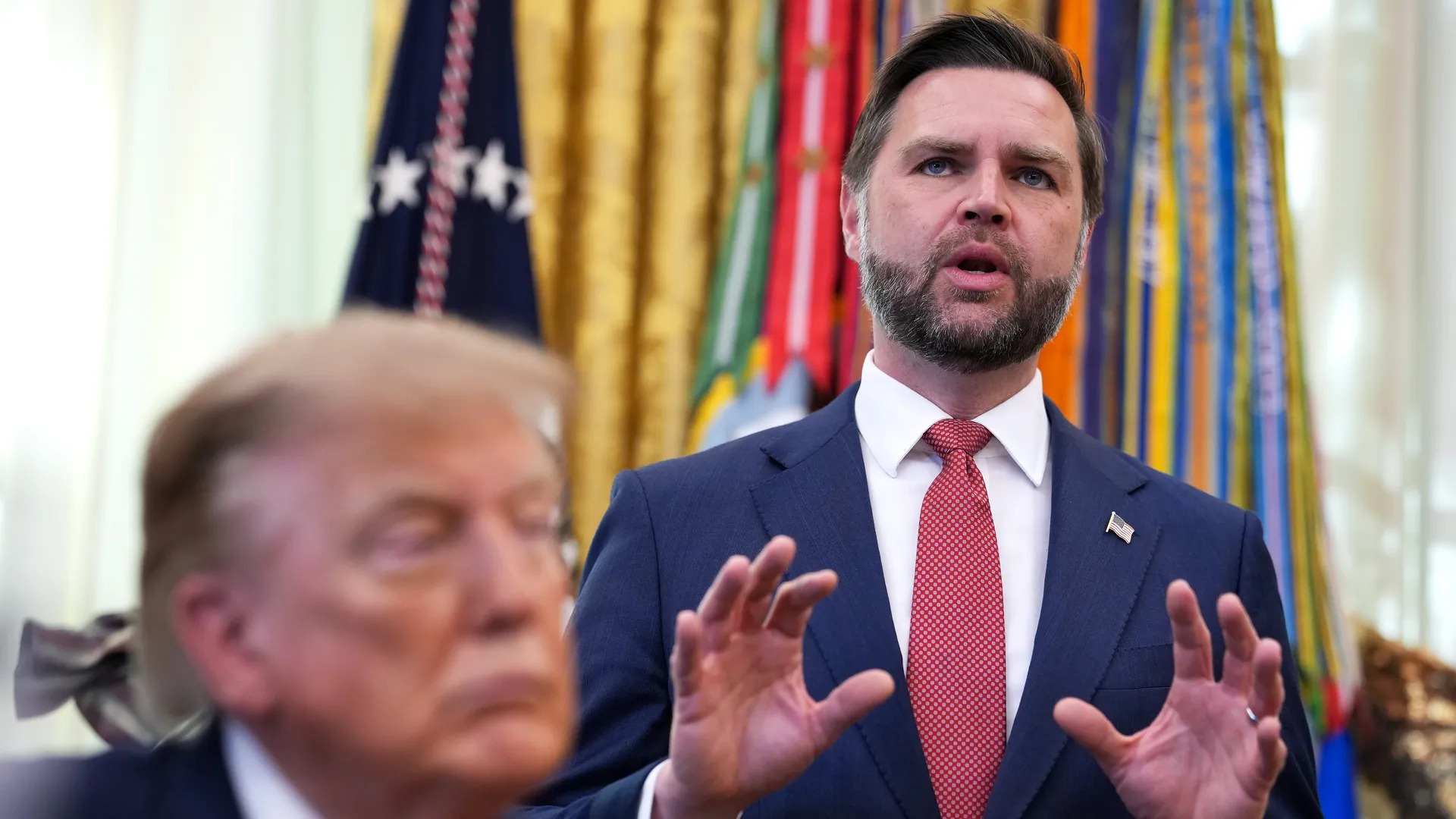
US Vice-President JD Vance has been personally involved over the past two weeks in indirect talks with Iran aimed at securing a fresh ceasefire and restarting nuclear negotiations.
According to Axios, Vance’s intense engagement indicates that he has taken it upon himself to extract the US from the conflict, which he views as responsible for the Republican Party’s shocking losses in this week’s elections.
This elevates the latest round of indirect talks to the highest echelons of the administration.
US officials and regional sources state that Trump is currently willing to let diplomatic efforts run their course to see whether any agreement is achievable.
Asked by reporters on Friday what his message was to Iran, Trump said, “We are talking to them.”
According to sources with direct knowledge of the matter, Vance speaks almost daily with Qatari Prime Minister Sheikh Mohammed bin Abdulrahman Al Thani, Pakistan’s Chief of Army Staff Field Marshal Asim Munir, and other mediators regarding the negotiations with Iran.
White House envoy Steve Witkoff and Jared Kushner, President Trump’s adviser and son-in-law, are also involved in the process.
Sources say Vance and the Qatari and Pakistani mediators have been discussing the possibility of holding a working-level technical meeting between the US and Iran in the coming days, though this has not yet materialized.
Before the war began in late February, Vance was among the most sceptical voices in Trump’s inner circle on the issue, advocating instead for a diplomatic solution.
In April, he led the US negotiating delegation at the Iran summit held in Islamabad and was personally involved in the talks that yielded a memorandum of understanding (MOU) signed between the US and Iran in June.
Vance subsequently headed the US delegation during a series of direct talks with Iran in Switzerland.
Two weeks ago, Vance sent a letter to Mohsen Rezaei, Secretary of Iran’s Supreme National Security Council, proposing that direct negotiations resume.
Rezaei is one of the closest advisers to Iran’s Supreme Leader, Mojtaba Khamenei.
Iranian officials noted that Vance’s letter generated positive momentum toward restarting talks.
On Wednesday, Vance said the war was the primary reason for the Republicans’ repudiation at the polls.
Sources involved in mediation efforts report that while progress is being made, the process is moving very slowly.
On Friday evening, the prime minister of Qatar said, “Over the past few weeks, we worked with our colleagues in the US administration who have a sincere intention to contain the situation and de-escalate. Thanks to them and the voices of reason in Tehran, we prevented the situation from spinning out of control.”
The prime minister added that discussions with the Trump administration continued following the midterm elections, though they were not as active as in previous days “because there are other matters.”
Nevertheless, he noted that the US intention to find a diplomatic resolution “remains ongoing” and emphasized that an agreement is possible.
On Friday morning, Trump and the Emir of Qatar discussed Qatari efforts to bridge differences between the US and Iran as part of an accord.
According to a statement from his office, Sheikh Tamim emphasized the necessity of “pursuing dialogue and diplomatic channels to resolve differences, prevent the region from facing further escalation, and ensure freedom of maritime navigation as well as the security of energy supplies.”
Separately, Trump confirmed on Friday that the US military conducted a strike on an anti-aircraft missile launcher on Qeshm Island in the Strait of Hormuz after it fired a missile at a US fighter jet.

British magazine The Economist reported that mobilization, conflict casualties, and pervasive uncertainty have left Ukraine confronting the threat of demographic collapse.
According to data cited by the magazine, Ukraine’s fertility rate has declined from 1.2 children per woman in 2020 to between 0.8 and 0.9.
This rate marks a lower level than that of any major nation except South Korea.
In the first half of 2026, the number of deaths in Ukraine surpassed the number of newborn babies threefold.
The report noted that ever since independence was gained in 1991, the number of births in the country has lagged behind the number of deaths every year.
The Economist emphasized that the demographic collapse driven by the ongoing fighting constitutes an “existential threat.”
The magazine identified mass refugee migration as the principal driver of the population loss.
More than 5 million Ukrainians reside abroad, predominantly in Europe.
The proportion of those wishing to return among those who left the country is also steadily shrinking.
According to data from the Centre for Economic Strategy (CES), the share of those seeking to return dropped from 74% in 2022 to 43%.
The fact that the majority of refugees consist of Ukrainian children and women under the age of 44 further aggravates the demographic picture.
The Kyiv government decided to exempt men under the age of 25 from mobilization to alleviate the demographic decline.
The magazine reported, however, that many young people have fled the country, while those who remain do not plan to start families.
Projections cited in the report indicate that even if hostilities cease in the coming years, Ukraine can, at best, expect merely a deceleration of depopulation.
Olga Duhnich, an expert at the Ukraine-based think tank Frontier Institute, stated that the generation born in the 1990s and 2000s is the least populous in Ukraine’s modern history, meaning the country cannot expect a post-conflict baby boom.
The United Nations (UN) projects that Ukraine’s population will decline by 0.7% to 0.9% each year over the next two decades.
Under this projection, Ukraine’s population will fall to approximately 25 million by 2040.
If hostilities drag on, people are expected to abandon plans to have children, deepening the crisis even further.
Beyond exempting men under 25 from mobilization, the Kyiv government is rolling out various support packages to boost birth rates.
Under legislation enacted in the country, parents who have children receive a direct payment of 50,000 hryvnias (around $1,100).
Parents are also paid 7,000 hryvnias each month during the first year.
Other state programmes subsidize childcare costs, while Ukrainian soldiers are granted free freezing of egg and sperm cells.
Ukrainian Minister of Social Policy Denis Ulyutin said in May to the Livyi Bereh media outlet that roughly 22 to 25 million people lived in government-controlled territories.
Ulyutin characterized the prevailing picture by saying: “This is a catastrophe.”
Ella Libanova, Director of the Institute for Demography and Quality of Life Research, estimated the population at 29 million during the same period.
Libanova attributed the steep fall from a population of 30 million in 2025 to high death rates and the demographic crisis.
In a statement in October, Libanova announced that Ukraine’s population had slipped to 28.5 million.
Institute Director Libanova said: “The population is already at 28.5 million; we lost half a million people. We lost them, but thankfully this was still caused by migration rather than casualties.”

Narek Karapetyan, a lawmaker and head of the Strong Armenia faction in the Armenian parliament, has urged opposition parties to unite around four core principles set out in a joint declaration.
The key points of the declaration include resisting territorial concessions and blocking the adoption of a new constitution, which the opposition has termed the “Aliyev constitution”.
According to a report by Aysor.am, Narek Karapetyan stated that the opposition meeting was originally planned to be led by his uncle, businessman and Strong Armenia movement leader Samvel Karapetyan.
“We initiated the meeting, but the authorities took preemptive steps to prevent Samvel Karapetyan from launching the national unification process,” Narek Karapetyan said.
Noting that, despite these events, opposition representatives convened and signed a joint declaration based on four agreed articles, Narek Karapetyan invited other opposition forces and members of the public to join the alliance.
“We will not allow them to implement the Aliyev constitution in Armenia. We must unite,” Karapetyan said.
Ahead of these developments, Armenian National Security Service personnel detained Strong Armenia Party leader Samvel Karapetyan following a search of his home.
The party’s press secretary, Agavni Sukiasyan, announced that on the morning of the same day, the Investigative Committee of Armenia searched the homes of both Samvel Karapetyan and Narek Karapetyan.
In a report citing the Investigative Committee, Armenpress stated that Samvel Karapetyan was detained as part of a case involving allegations of causing large-scale financial damage to the Electric Networks of Armenia (ENA) company, embezzling entrusted property, and money laundering.
According to committee figures, the total damage inflicted on the company exceeds $179 million.
Narek Karapetyan’s home was also searched at the end of July as part of a criminal case.
On 22 July, Armenia’s Central Electoral Commission approved the Prosecutor General’s request to strip Narek Karapetyan of his parliamentary immunity, and Karapetyan was charged with large-scale money laundering.
According to information reported by Sputnik Armenia, the investigation is linked to charges brought against Strong Armenia supporter Aleksan Aleksanyan.
Investigative authorities allege that Aleksanyan received approximately $4.4 million and €230,000 from the Karapetyan-owned Tashir Foundation under the guise of gifts and loans.
Several criminal cases had previously been opened against Samvel Karapetyan.
In 2025, Karapetyan was charged with publicly calling for the violent seizure of power after backing the Armenian Apostolic Church, which had been criticized by Armenian Prime Minister Nikol Pashinyan.
In January, legal proceedings were also launched against Karapetyan on charges of large-scale tax evasion and money laundering.
Separately, in early July 2025, the Armenian parliament approved a bill enabling the nationalization of the Electric Networks of Armenia company.
In March, Armenia’s Constitutional Court ruled that the nationalization process in question complied with the law.

IRAM expert Oral Toğa assesses Middle East shifts after US vote

Netanyahu Arab party attack triggers crisis over coalition

Fico accuses Merz of blackmail over threat to veto EU budget

US Senate panel seeks records in Trump-linked crypto investigation

Europe ready for arms and missile control talks with Russia, FT says
-
 Diplomacy1 week ago
Secular dress code dispute exposes deeper Türkiye-Azerbaijan strains
-

 Russia2 weeks ago
US and Russia weigh energy deals and corporate return in peace talks
-

 Europe6 days ago
EU urges citizens to prepare 72-hour survival kits for crises
-
 Middle East2 weeks ago
US warns Gulf allies of possible Iran strikes after midterms
-

 America2 weeks ago
Bolsonaro reportedly leaves Brazil on jet linked to scandal-hit firm
-
 Asia1 week ago
China expands Africa arms sales, displacing France and Western rivals
-
 Europe2 weeks ago
EU prepares Ukraine peace mission to Abu Dhabi led by Björn Seibert
-

 Diplomacy2 weeks ago
Steinmeier seeks to de-escalate German-Chinese tensions on visit
