
Europe
Merz urges Brussels to secure a US trade deal within days

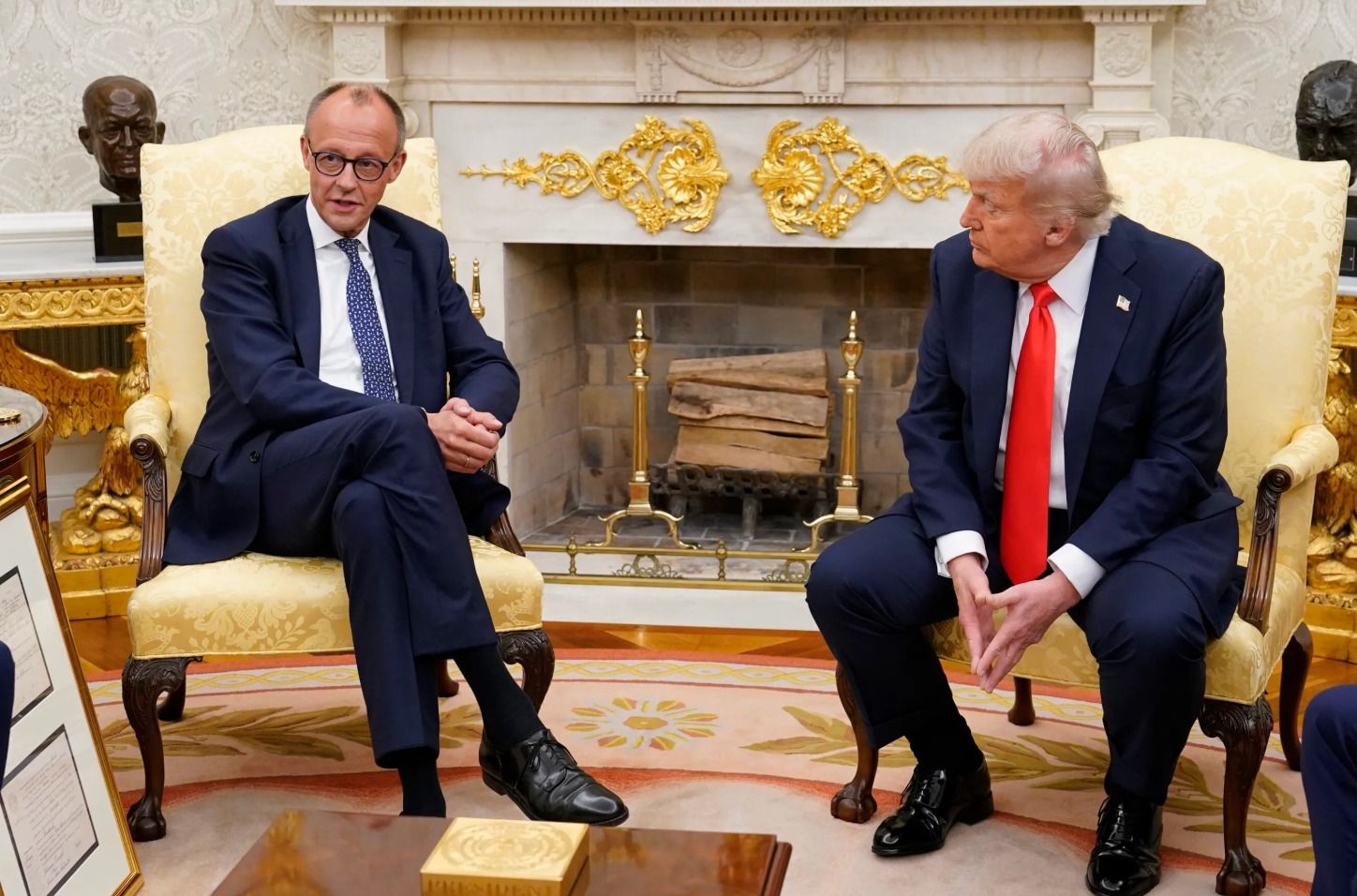
German Chancellor Friedrich Merz is demanding that Brussels sign a trade deal with the US within days.
Bringing the issue to the agenda of today’s EU leaders’ summit, Merz described the European Commission’s negotiating strategy this week as “too complex.”
Calling for greater urgency and focus in negotiations with the US president, Merz said he would convey this demand to other EU leaders, alongside Emmanuel Macron and Giorgia Meloni.
The leaders are eagerly awaiting an update from the EU’s executive body during dinner on its talks with the Trump administration.
Concerns are growing that if Brussels and Washington fail to reach an agreement, “reciprocal” 50% tariffs will be imposed on all goods starting July 9.
The bloc, which had previously dismissed the recent UK-US trade deal—a pact that imposed a 10% baseline tariff while offering some relief for car and steel exports—is now coming to terms with the reality that securing a better outcome will be challenging.
“I still hope that a trading power like the EU, with its 450 million people, will have more leverage than the UK,” a senior EU diplomat said on Wednesday.
The German chancellor stated that the priority must be to protect Europe’s key industries—particularly Germany’s automotive, manufacturing, semiconductor, pharmaceutical, steel, and aluminum sectors—from the sector-specific tariffs that Trump has either imposed or threatened to impose.
However, Trump is heavily reliant on these tariffs, having implemented the highest rates since the Great Depression of the 1930s to compel manufacturers to move production to the US and close the nation’s trillion-dollar trade deficit.
The US trade deficit with the 27 EU member states reached a total of $232 billion in 2025, accounting for approximately 19% of the total figure.
Underpinning Merz’s demands is a persistent concern that Brussels might establish a broad framework centered on a flat 10% tariff for most common goods, rather than isolating sectoral tariffs on items like cars, which he argues harms German exporters.
Another EU diplomat noted that keeping a broad-based tariff in place was “not a task we gave the European Commission,” adding, “We hope the Commission will try to find a solution for the most at-risk sectors.”
Merz’s call to “get the job done” faces two primary obstacles. First, the EU negotiating team has warned that Washington will likely offer only minor concessions, such as limited tariff reductions tied to restrictive quotas, after which full tariff rates would apply.
This is a far cry from the zero-tariff agreement Merz had initially hoped to achieve and closely resembles the UK deal, the only one struck with Trump so far.
Meanwhile, negotiations with the US on Germany’s biggest demand—automobiles—are proving particularly difficult.
Merz and German automakers are pushing for a mechanism that would allow them to offset their vehicle imports into the US with models they export from their American production facilities.
Economy Minister Katharina Reiche presented such a proposal during her visit to the US earlier this month. Both BMW and Mercedes-Benz operate large factories in the US that produce certain models for global export. However, considering the EU exports over 750,000 vehicles to the US annually, it remains unclear how much relief a limited quota agreement would provide to car manufacturers if Trump rejects this proposal.
Brussels, on the other hand, is hopeful that Trump’s long-standing desire for the EU to align with US automotive regulations will serve as a strong enough bargaining chip to ease the pressure on the auto sector.
In a scoping paper sent to member states in May, the Commission revealed it had offered to align with US regulations on autonomous vehicles. This is seen as a major concession, especially after similar discussions on automotive reciprocity led to the collapse of a transatlantic trade deal a decade ago.








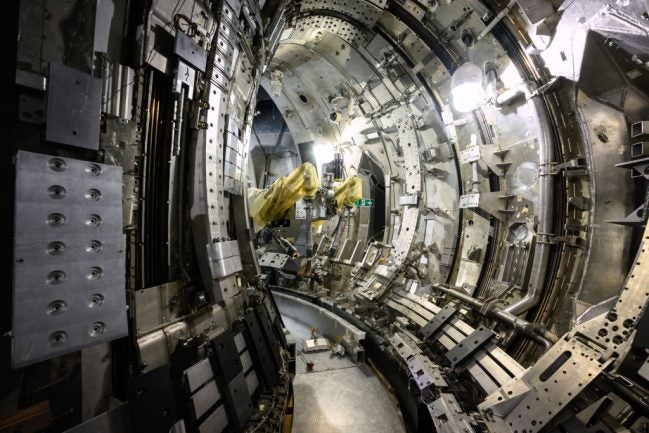
Despite European Union sanctions and deteriorating relations with Brussels, Russia continues to take part in ITER, the world’s largest nuclear fusion experiment.
According to a report by Euronews television, this situation represents a rare example of cooperation in the ongoing crisis between Moscow and the West.
Following the war in Ukraine, the EU decided to reduce its dependence on Russian energy resources. Accordingly, Russian state institutions were excluded from various scientific programmes, and the provision of Russian funding to European scientific bodies was prohibited.
In contrast, ITER rules do not permit the expulsion of participating states from the project.
Owing to this legal structure, Moscow retains its 9.1% share in the venture. The Russian government continues to provide specialist personnel and technological support, while Russian engineers work alongside their European counterparts at the reactor site.
More than 30 countries, including Russia, are partners in the International Thermonuclear Experimental Reactor (ITER) initiative, where construction began in southern France in 2010. In this massive project, estimated to cost approximately 19 billion euros, critical technical assignments remain entrusted to Russian specialists.
Russian scientists and engineers are responsible for manufacturing complex components, including switchgear equipment, busbar systems, energy-absorbing resistors for power supply, and protection systems for the reactor’s superconducting magnetic assembly.
To manufacture these reactor components, a new industrial facility with an annual production capacity of 30 tonnes of superconductors was established at Rosatom’s site in the city of Glazov.
Moscow’s continued participation in the project is causing unease among some EU officials. In 2025, Members of the European Parliament approached the European Commission to enquire about ways to eliminate dependence on Russia within ITER.
EU Commissioner for Energy Dan Jørgensen replied that a participating state can leave the project only of its own volition.
The European Commission had previously announced plans to ban Russian nuclear fuel and technology, though the adoption of the measure was subsequently delayed.
Certain member states continue to import Russian fuel, with Hungary, for instance, building new nuclear power plants of Rosatom design.
World Nuclear Association data show that Rosatom alone accounts for approximately 44% of global uranium enrichment capacity.
According to a Financial Times report published in January, executives from energy companies Urenco and Orano called on the EU to draft a plan for the phased cessation of enriched uranium imports from Russia.
The companies argued that continuing these supplies creates long-term dependence on Moscow.
A report published in the summer by Sprott Asset Management indicates that, despite EU efforts to diversify sources, European dependence on Russian uranium is increasing.
According to Eurostat data, EU countries purchased 172.6 million euros worth of Russian nuclear fuel during the January to April period of 2026. Imports rose from 253.2 tonnes to 280.9 tonnes compared with the same period of the previous year, when purchases stood at 31.9 million euros.
Total EU imports of Russian nuclear fuel, including uranium, plutonium, and their compounds, reached 347.9 million euros across the whole of 2025. The Netherlands and France accounted for more than 90% of these purchases.
Commenting on the developments, Urenco Chief Executive Officer Boris Schucht noted that European producers are struggling to attract investment for enrichment capacity due to uncertainty over the future of imports from Russia.
Schucht stated that making new investment decisions remains difficult because Russia possesses significant idle capacity that could return to the market.
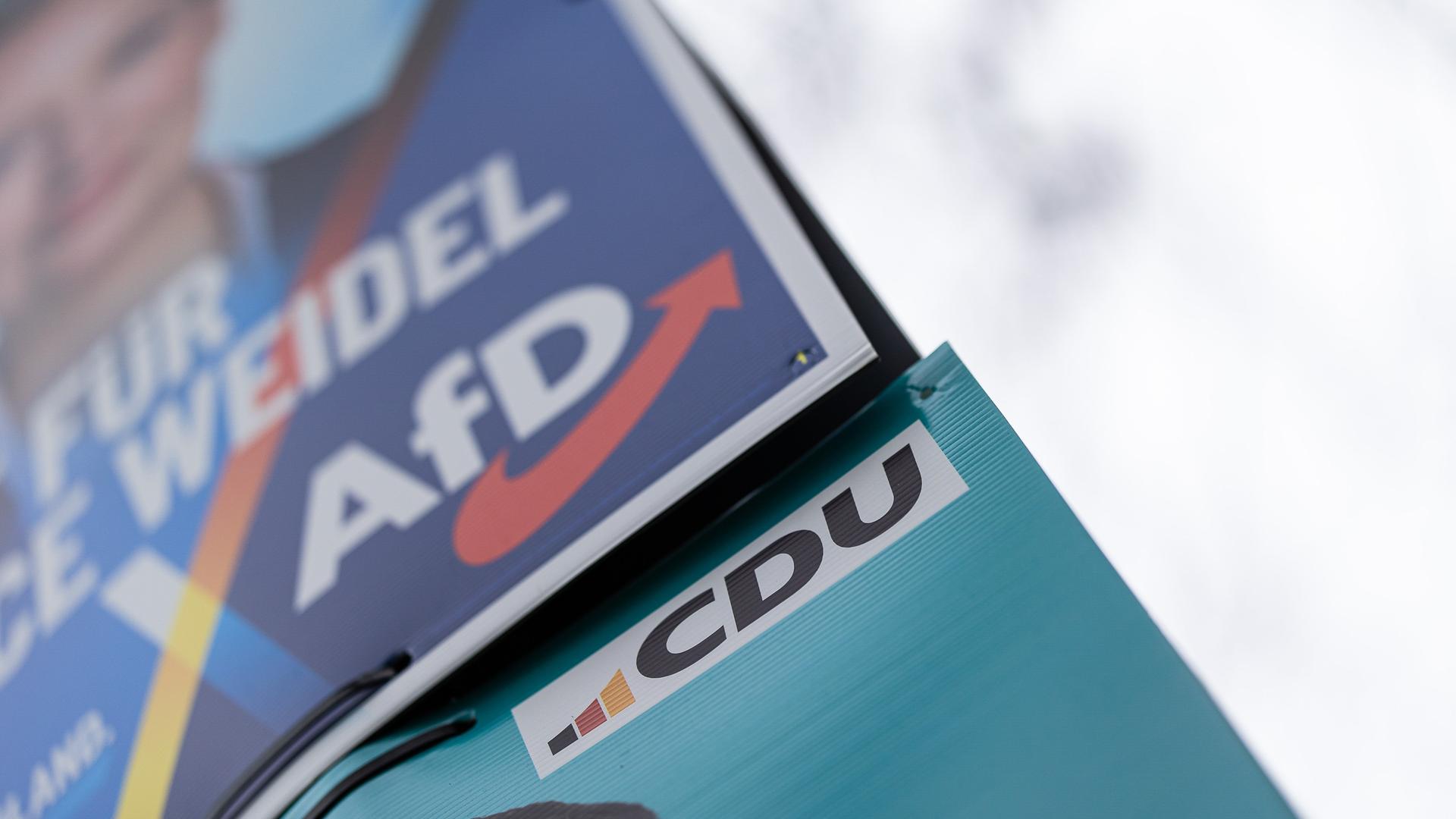
Following the state election in Saxony-Anhalt, the Christian Democratic Union and Christian Social Union (CDU/CSU) are seeking a strategy against the victorious Alternative for Germany (AfD).
Hendrik Wuest, the Minister-President of North Rhine-Westphalia whose name is mentioned for the CDU leadership, proposes examining the possibility of banning the party.
The Hessian CDU and its Bavarian sister party, the CSU, reject the idea, arguing that the outcome would be uncertain and that the process would take too long.
Wuest’s push to establish a federal and state-level working group on the constitutional handling of the AfD is met with scepticism even among influential CDU colleagues.
“I still believe that the AfD must be politically marginalised,” said Hessian Minister-President Boris Rhein.
Rhein added that, in principle, everyone should have the freedom to discuss any subject, but warned against believing that a quick solution is possible.
In this context, the CDU politician referenced his experiences with the last ban proceedings against the NPD (National Democratic Party), which lasted several years and proved inconclusive.
Speaking on the sidelines of an event at the Representation of the State of Hesse in Brussels, he noted that this should always be kept in mind.
At the time, the judges of the Federal Constitutional Court ultimately concluded that the NPD was indeed pursuing unconstitutional aims.
However, according to their assessment, the party lacked the potential to successfully achieve those aims, and they therefore rejected the ban application.
CSU leader and Bavarian Minister-President Markus Soeder had previously expressed a view similar to Rhein’s.
“I completely understand that one might prefer the AfD not to exist, but the reality is that a ban under constitutional law is practically unenforceable,” Soeder said following a cabinet meeting in Munich.
In addition to years of legal proceedings, he stated that there is also a risk of the AfD gaining “martyr” status. Soeder argued that the AfD must be confronted on the substance of its policies.
Following the AfD’s election victory in Saxony-Anhalt, Wuest had earlier called for the party to be examined by a group consisting of federal and state experts, constitutional scholars, and officials from the Federal Office for the Protection of the Constitution.
“The real question is how the state, under constitutional law, should handle a party that pursues unconstitutional aims in at least some states,” the CDU politician explained.
According to him, the inquiry should be open-ended and not automatically lead to proceedings to ban the party.
Speaking in Brussels, Rhein said that following the elections in Saxony-Anhalt, the Union’s goal must be to “bring people out from behind the firewall and build bridges to the political centre.”
This means talking to people, taking their concerns seriously, and then translating these into very concrete policies.
One of the most critical statements regarding the AfD came from former CDU Chancellor Angela Merkel.
Saying that “as a CDU member, her heart bleeds,” Merkel noted that she views the Saxony-Anhalt election results as a turning point in the history of the Federal Republic of Germany.
Merkel also took a clear stance on how her party should deal with the AfD. She implied that she is not very fond of the “firewall” (Brandmauer) policy used by the CDU and Chancellor Friedrich Merz against the AfD.
“I did not invent it, nor do I particularly like it,” the former Chancellor said, noting that they cannot convince anyone with this slogan and that “democratic parties” must stop obsessing over the AfD and instead explain their own projects.
Merkel advised political parties to adopt a different communication style. Recommending that “democratic parties” seek greater contact with the public, the CDU politician argued that the absence of a shared information pool due to “personalised feeds” on social networks makes this more difficult.
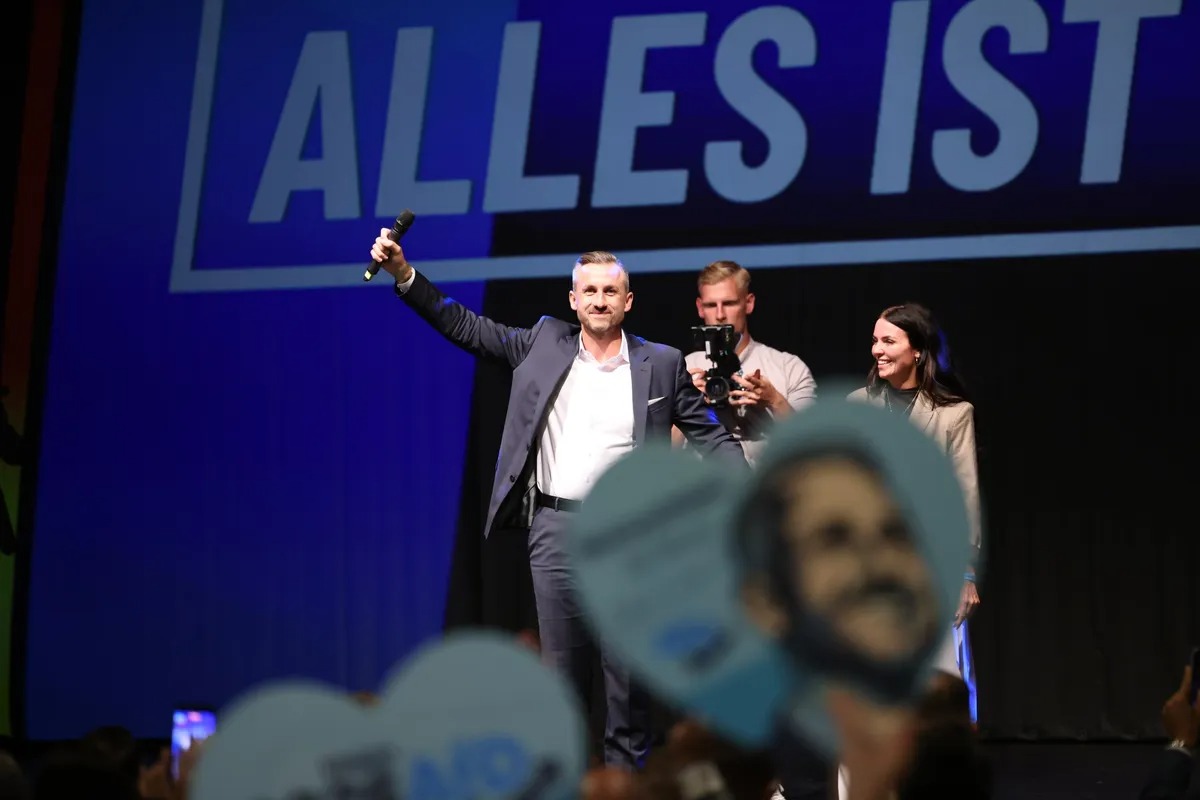
Germany’s small and medium-sized enterprise sector, known as the “Mittelstand”, has urged the federal government to implement “reform” following the Alternative for Germany’s (AfD) clear victory in Saxony-Anhalt.
Representing the group that forms the backbone of Europe’s largest economy, Christoph Ahlhaus, head of the German Federal Association of the Mittelstand, told Bloomberg that an urgent change in policy is needed to restore confidence in Germany’s economic future and to curb support for “populist” parties.
In an interview on Monday, Ahlhaus stated that the AfD’s victory in Saxony-Anhalt was “a clear signal for all people in Berlin and for Chancellor Merz,” adding, “The disappointment is very, very big.”
Germany’s traditional industrial sectors, ranging from automotive to chemicals and engineering manufacturers, are under intense pressure to adapt to a rapidly shifting competitive landscape.
High energy prices, bloated bureaucracy, and fierce price competition from Chinese rivals are eroding profits and triggering sweeping restructurings, fuelling anxieties over the economic future among industrial workers.
Ahlhaus noted that the vast majority of companies do not support the AfD’s policy aimed at reducing economic integration in Europe, arguing that crackdowns on immigrants could become a “major problem” for small and medium-sized enterprises.
Martin Lück, chief capital markets strategist at Franklin Templeton, said in a note: “The extremely strong performance of the AfD is, above all, an important political signal, but not yet an acute development for the capital market.” He continued:
“From an investor’s perspective, this creates problems if doubts arise regarding the state’s European integration, fiscal reliability, openness to international skilled labour, or the continuity of its energy and industrial policies.”
Lück added: “Saxony-Anhalt, which is particularly reliant on fresh investment and skilled labour, can hardly afford such doubts.”
Speaking to Bloomberg ahead of Sunday’s elections, the AfD’s lead candidate, Ulrich Siegmund, rejected the criticism and insisted that the party’s policies would actually help attract investment.
“Many companies want to invest in Saxony-Anhalt because they view it as a competitive edge, and having an administration that provides planning certainty once again is seen as an asset for the region,” Siegmund said.
According to Siegmund, the business community wants “to eliminate ideology entirely from economic development support and, in general, grant freedom back to companies.”
Saxony-Anhalt has the lowest per-capita GDP among Germany’s 16 federal states.
Since national reunification, Saxony-Anhalt has suffered a sharper demographic decline than any other region; between 1990 and 2024, its population fell by more than a quarter.
Marcel Fratzscher, president of the Berlin-based German Institute for Economic Research (DIW), contended that the election result was “an economic disaster as well,” saying: “Whoever forms the next government will struggle to implement reforms. Yet Germany needs very tough reforms.”
Speaking to Bloomberg, the former European Central Bank official warned that the “far-right” party’s platform could lead to catastrophe:
“If you look at the consequences of what the AfD wants, there will be a massive drop in GDP and a massive rise in unemployment. Germany is very export-dependent. Almost half of Germany’s GDP comes from exports, and the AfD will ruin [its] economic model; that will have terrible, as well as economic, repercussions.”
Major cutbacks across core sectors such as the chemical and automotive industries have heightened anxiety among workers regarding their economic future.
Far-reaching reorganisations, such as Volkswagen’s restructuring programme approved late on Thursday, will generate a domino effect across various regions of Germany, including Saxony-Anhalt.

Russia stays in ITER nuclear fusion project despite EU sanctions

German Christian Democrats clash over proposed AfD party ban

Over half of Latino voters back Democrats in key US House races

Researcher quits Anthropic and warns AI firms gamble with lives

Valdai Forum debates superpower survival amid global anarchy
-
 Europe2 days ago
Germany’s CDU drafts tougher citizenship rules to counter AfD
-
 Russia2 weeks ago
Putin circle weighs tactical nuclear risk as Ukraine talks stall
-
 Russia1 week ago
What to know about Russia’s upcoming State Duma elections?
-

 America2 weeks ago
Pentagon to fully purge Anthropic AI from systems by end of September
-
 Russia2 weeks ago
CIA Director John Ratcliffe travels to Moscow for official talks
-
 Europe1 week ago
Marine Le Pen leads all 2027 French presidential scenarios, poll shows
-
 Middle East2 weeks ago
Mazlum Abdi announces dissolution of Syrian Democratic Forces
-
 Asia2 weeks ago
China-Nepal border flood leaves at least 160 dead, over 1,000 missing
