
Middle East
British soldiers received training in Israel during Gaza conflict

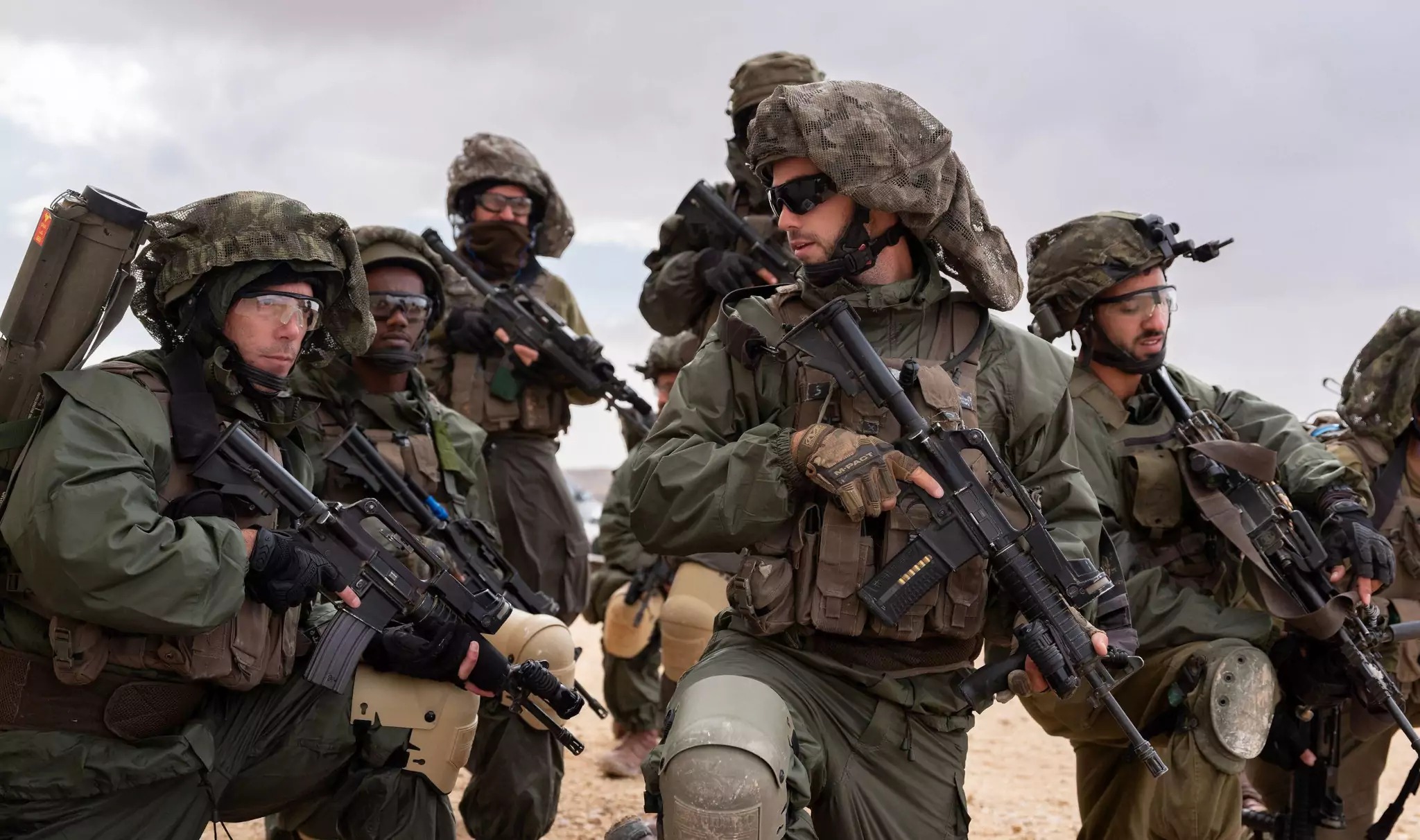
It has been revealed that British military personnel have been training in Israel during the Gaza conflict.
This information came to light following a parliamentary question from MP Zarah Sultana.
According to a report in Declassified, on November 18, Sultana asked the Ministry of Defence: “Have any British armed forces officers received education or training at Israeli military schools since October 2023?”
In his response yesterday, Defence Minister Al Carns stated, “Since October 2023, fewer than five British Armed Forces personnel have attended training staff courses in Israel.”
It remains unclear where the soldiers were trained or from which military branches they came.
However, this disclosure reveals a new dimension of cooperation between the British military and Israel amidst events that a UN commission of inquiry has described as genocide.
Retired British army general Charlie Herbert told Declassified, “The idea that British military personnel have been receiving military training or attending courses in Israel for the past two years is absolutely extraordinary. Given the credibility of war crimes allegations against the political and military leadership of the IDF [Israel Defense Forces], all such exchanges should have been immediately halted.”
Herbert argued that associating the British army with the IDF, “given their conduct in Gaza since late 2023,” causes “great harm to the armed forces” and that “the thought of training in Israel further strengthens accusations that the UK is complicit in this genocide.”
The information about British officers training in Israel follows a revelation by Declassified that Israeli soldiers have been training in the UK for the past two years.
In response to a freedom of information request, the Ministry of Defence acknowledged in September that fewer than five IDF soldiers had trained at the prestigious Royal College of Defence Studies (RCDS) in London in 2023 and 2024.
One of these soldiers, Yeftah Norkin, completed his course in July 2024 and went on to head the army’s “Bang” division during Israel’s invasion of Lebanon.
Another Israeli army officer, believed to be Elad Edri, graduated in July 2025.
Founded in 1927 as the Imperial Defence College, the RCDS in Belgravia is one of Britain’s most respected military academies.
In recent years, at least 32 Israeli officers have trained at the RCDS, including Colonel Yaniv Asor, the head of the IDF’s southern command, which oversees military operations in Gaza.
According to a post published on LinkedIn, the RCDS also hosted “senior personnel” from the Israel National Defence College (INDC) earlier this year.
The INDC prepares IDF officers, as well as defence and government officials, for senior command and management positions.
The visit to the RCDS focused on “exchanging ideas, exploring best practices in strategic education, and identifying opportunities for future collaboration between the two institutions.”
In July, the INDC celebrated the graduation of its 52nd class, which it described as “a significant milestone in developing Israel’s future strategic leadership.”
The following month, the UK’s Ambassador to Israel, Simon Walters, attended a “special International Reception in honour of the international students” of the 53rd class.
The INDC stated it was “particularly honoured” by Walters’s attendance, noting that “his commitment to strengthening UK-Israel relations and his inspiring words left a strong impression on all participants.”
The Ministry of Defence was asked to clarify whether the INDC was the institution that hosted the British military personnel.
The Ministry of Defence announced in October 2025 that Israeli officers would no longer be admitted to training courses in the UK.
Lord Coaker, Under-Secretary of State for Defence, had stated, “The Israeli government’s decision to further escalate its military operation in Gaza is wrong. A diplomatic solution must be found to end this war… Therefore, we have suspended Israel’s participation in courses organized by the UK.”
However, Israeli officers already training in the country were allowed to complete their courses, and four IDF soldiers are still in the UK.
This month, it was reported that the Ministry of Defence confirmed it would not send British personnel to an Israeli military conference held last week where “lessons learned from the war in Gaza” were to be shared.
France, Germany, and Canada apparently sent officers to the conference.













Iran has resumed ballistic missile production in underground facilities, despite statements by Israeli and US authorities asserting that this capacity had been completely eliminated.
According to a report by The Wall Street Journal citing US and Middle Eastern officials, the Tehran administration is utilizing pre-stockpiled components in the manufacturing process.
Officials report that despite strikes on missile sites and industrial installations at the beginning of the war, Iran continues the assembly of both solid- and liquid-fuelled missiles.
Intelligence data indicates activity at numerous underground centres, including the Khojir complex in the southeast of the country, along with efforts to establish additional underground assembly points to protect against new air strikes.
Current assembly operations are being maintained at lower volumes compared with pre-war levels, as US and Israeli operations destroyed several facilities and a naval blockade has impeded the import of components and solid-fuel ingredients.
Assessing the process, Tal Inbar, a senior analyst at the US-based Missile Defense Advocacy Alliance, stressed that damaged infrastructure can be repaired during periods when facilities are not targeted, and parts procured from other countries can be stored there.
Inbar noted that it would be naive to believe Iran is not rebuilding its missile production capacity.
Arguing that the facilities were destroyed and Tehran has suffered severe losses, the official stated that Iran remains weaker than ever before, and US President Donald Trump will never permit the country to acquire nuclear weapons.
Pentagon spokesman Sean Parnell stated that the US has destroyed up to 90% of Iran’s drone, ballistic missile, and naval industrial infrastructure, severely degrading Tehran’s ability to launch missiles and unmanned aerial vehicles.
Another US government official pointed out that the Tehran administration may have revived production, albeit on a low scale, following preliminary talks conducted in mid-June with the Trump administration regarding the opening of the Strait of Hormuz and ending the war. The official noted that existing stockpiles are sufficient to assemble at least two hundred missiles.
A CNN report in late May indicated that the Tehran administration was attempting to reopen underground missile shelters, struck by the US and Israel with costly munitions, using bulldozers and dump trucks.
Excavation activities accelerated after the April ceasefire decision; out of 69 tunnel entrances struck across 18 distinct locations, 50 have been made accessible again.
Experts stressed that it is impossible to destroy missile power solely by bombing tunnel entrances, underlining the limitations of such bombardments.
US Secretary of War Pete Hegseth claimed in April that they had effectively ended Iran’s missile programme. However, an NBC News report noted that Tehran utilized the ceasefire period to reconstitute its military strength.

Saudi Crown Prince Mohammed bin Salman has requested that US President Donald Trump launch air strikes against the Houthis in Yemen.
According to two US officials who spoke to Axios, Trump rejected the request, and US officials emphasised that the administration has no plans for direct intervention against the Houthis for now.
Oil prices surged on Thursday after the resistance led by Houthi militias (Ansarallah) seized the strategic coastal city of Mokha in Yemen.
This development brought the Yemeni resistance one step closer to the Bab el-Mandeb Strait, which is vital for global trade and Saudi oil exports.
With Iran already disrupting traffic in the Strait of Hormuz, Houthi control over Bab el-Mandeb could provide Tehran with powerful new leverage over the US and its Gulf allies.
On Thursday, as Houthi forces advanced towards the coastal city of Mokha and Saudi-backed Yemeni forces retreated, bin Salman telephoned Trump to brief him on the deteriorating situation.
A few hours later, the prince called again to request that Trump carry out US air strikes against the Houthis.
Trump declined, but a US official stated that the administration would provide Saudi Arabia with intelligence and targeting data on the Houthis.
The official noted that approximately 200 US military personnel are currently stationed in Saudi Arabia, providing non-military support.
A senior Trump administration official indicated that Washington’s priority is keeping the Red Sea open, while leaving the broader fight to regional partners.
“We are in continuous dialogue with Saudi Arabia and the Government of the Republic of Yemen regarding regional stability,” the official said.
The official continued:
“The US remains focused on protecting our core national security interests, such as ensuring freedom of navigation in the Red Sea, while empowering our regional partners to take the lead in managing and resolving regional security challenges.”
The US is concerned by the rapidly escalating conflict in Yemen and is seeking to avoid direct military intervention while increasing its support for Saudi Arabia.
According to two sources familiar with the matter, Admiral Brad Cooper, Commander of US Central Command (CENTCOM), travelled to Saudi Arabia on Thursday for urgent coordination meetings.
The conflict between Saudi Arabia and Yemeni resistance forces reignited in July after Riyadh blocked an Iranian aircraft carrying senior Houthi officials from landing in Sanaa following their return from Ali Khamenei’s funeral.
Bin Salman requested Trump’s political support to strike Sanaa airport, but made clear that Saudi Arabia did not require US military assistance. Trump granted his support.
The Houthis subsequently retaliated by attacking Saudi tankers in the Red Sea. These strikes threatened a route crucial to the kingdom’s oil exports, and the group later expanded its attacks to Saudi energy facilities.
Saudi Arabia and its Yemeni allies responded with air strikes and ground operations against Houthi positions.
Saudi Arabia’s request for direct US military intervention marks a sharp reversal from July, when Riyadh informed Washington that it could manage the Houthis on its own.
As clashes intensified, the Saudis began seeking progressively greater support from the US.
Sources close to the discussions noted that in recent weeks, US military and civilian officials informed their Saudi counterparts that Trump’s directive is to keep American forces focused on Iran and the Strait of Hormuz, and to avoid opening a new front.
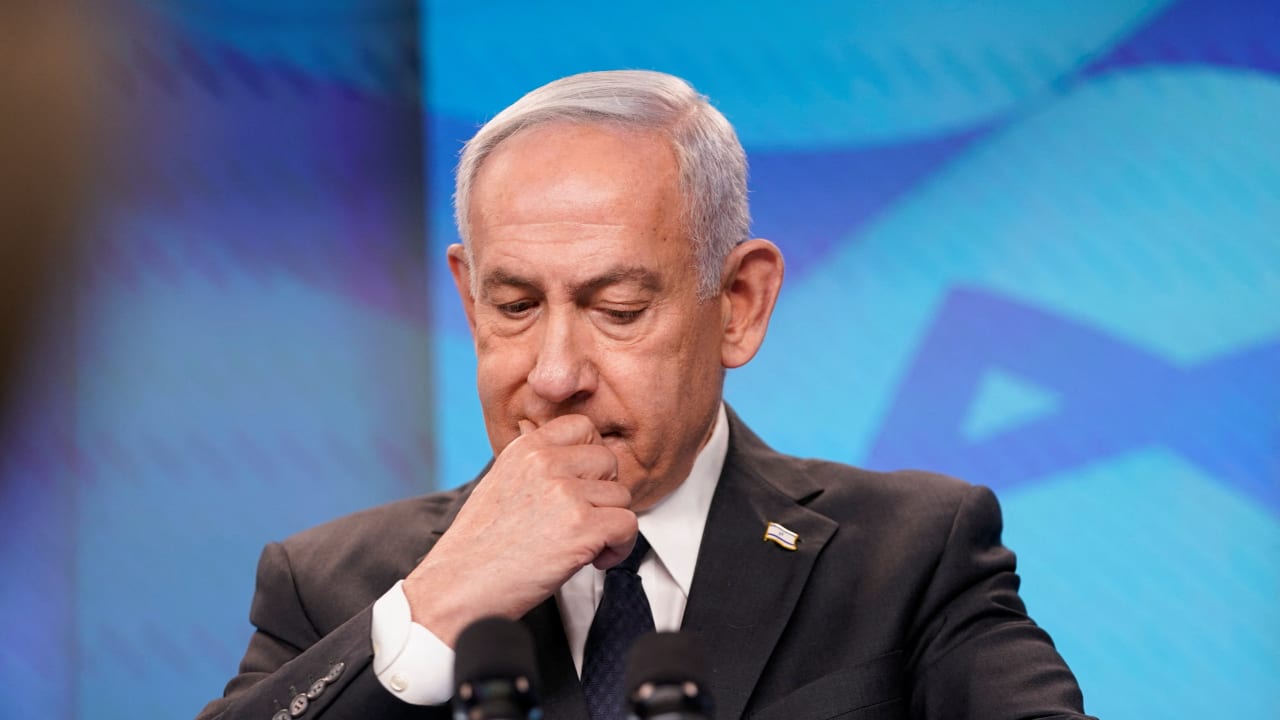
Israeli Prime Minister Benjamin Netanyahu reportedly ignored a direct warning from UAE President Sheikh Mohamed bin Zayed Al Nahyan in the run-up to 7 October 2023, according to an investigation by the Israeli newspaper Haaretz.
The report states that the UAE leader, widely known as MBZ, was convinced in September 2023 that an explosion was imminent in the region, particularly given the escalating tensions in the West Bank.
Israeli President Isaac Herzog, who maintains close ties with bin Zayed, recounted: “In the months leading up to the war, he spoke with me about this issue frequently. He consistently conveyed the message that the situation needed to be de-escalated. He even dispatched a special envoy to Israel who met with the prime minister. The emir appeared to sense that the region was on the verge of erupting.”
MBZ also engaged in direct discussions with Netanyahu. These exchanges followed a standard operational protocol: a representative from the United Arab Emirates embassy would arrive at the prime minister’s office equipped with a specialised, secure telephone device to ensure confidentiality.
However, according to the newspaper, the call initiated by bin Zayed on this occasion was extraordinary in nature.
A week and a half before 7 October 2023, the UAE ruler placed a call to Netanyahu from the Presidential Palace in Abu Dhabi, and the two leaders spoke for 45 minutes.
During this conversation, bin Zayed warned that Yahya Sinwar, the Hamas leader in Gaza, was planning a major operation against Israel.
Bin Zayed voiced deep concern that such an event would not only lead to significant bloodshed, but would also destabilise the entire region and undermine the Abraham Accords.
Haaretz reported that three senior foreign sources possess direct knowledge of the call’s contents, marking the first public disclosure of the conversation’s existence.
A close Palestinian adviser to bin Zayed, who had emigrated from Gaza to Abu Dhabi years earlier and maintained extensive connections across the Gaza Strip, was also present during the exchange.
According to the adviser, the UAE ruler stressed to Netanyahu that Israel needed to prepare for this specific threat.
The adviser stated:
“The emir explained that, according to his assessment, Sinwar was preparing for a major event. He told Netanyahu that Israel had to be prepared. At the same time, he proposed working towards an economic solution for the Gaza Strip to prevent escalation, alongside calming the situation in the West Bank.”
Bin Zayed urged Netanyahu to take the matter seriously. Yet, to the emir’s surprise, the prime minister reacted with relative calm.
Netanyahu told bin Zayed that, in his own assessment, Hamas was planning to operate in the West Bank area. Reassuring the Emirati leader, Netanyahu insisted that Israel was prepared for any scenario.
The UAE leader later recounted his conversation with Netanyahu and his subsequent warning to CIA Director William J. Burns.
Bin Zayed shared with Burns the intuitive alarm he had sought to convey to Netanyahu—that “something over there is about to blow”—and noted the Israeli prime minister’s conviction that the unstable theatre was in fact the West Bank.
“The emir hoped that, despite Netanyahu’s reserved reaction, he would take the message seriously and take action,” the adviser said.
However, neither anticipated that the prime minister would hear the warning without briefing the heads of his defence and security establishments: neither the director of the Shin Bet, nor the director of the Mossad, nor the chief of staff of the Israel Defence Forces was informed of MBZ’s warning.
Haaretz noted that Gaza-related negotiations between Israel and Hamas had been proceeding smoothly in early 2023, providing the context in which the Emirati ruler’s concerns emerged.
The report received swift corroboration from the Israeli political opposition. Former prime minister and leader of the B’Yachad party, Naftali Bennett, stated that he knew the warning issued by UAE leader Mohamed bin Zayed to Netanyahu concerning Hamas’s plans prior to 7 October was genuine.
Speaking to 103FM, Bennett said: “I am telling you: I know this to be true.”
Bennett continued:
“Mohamed bin Zayed of the UAE warned Netanyahu that Sinwar was planning an operation. The head of the Egyptian General Intelligence Directorate, Abbas Kamel, also notified Netanyahu a few days before the massacre that a major operation was being planned. I do not wish to discuss my sources with anyone. I am telling you: I know this fact to be true.”
Contending that Netanyahu had led Israel “blindly into this horrific disaster,” the opposition figure asserted: “He was so deeply captive to the conception that Hamas was an asset that, despite receiving explicit warnings, he did nothing.”
Bennett maintained that Netanyahu bears direct responsibility for 7 October, not merely by virtue of being prime minister, but because “he spent 15 years strengthening Hamas and doing nothing.”

AfD’s Siegmund links German rearmament to remigration plans

Chinese carmakers expand European share as Stellantis loses ground

Iran resumes ballistic missile assembly using stockpiled parts

Analysts warn new surge in Chinese exports threatens global markets

Anthropic uncovers Claude use by Iranian, Houthi, and Russian units
-

 Europe5 days ago
Germany’s CDU drafts tougher citizenship rules to counter AfD
-
 Russia2 weeks ago
What to know about Russia’s upcoming State Duma elections?
-

 Europe2 weeks ago
Marine Le Pen leads all 2027 French presidential scenarios, poll shows
-

 Middle East2 weeks ago
Iran expands deterrence as Gulf strikes expose US munitions limits, analysts say
-
 Diplomacy1 week ago
Geoffrey Roberts sees Ukraine war concluding within coming months
-

 Europe1 week ago
German industrial bosses push for return to 40-hour working week
-
 Russia2 weeks ago
Russia warns NATO over Arctic militarisation and conflict risks
-

 Asia2 weeks ago
BOJ faces critical rate decision as US presses for faster hikes
