
Europe
EU sanctions retired Swiss colonel and oil traders for aiding Russia

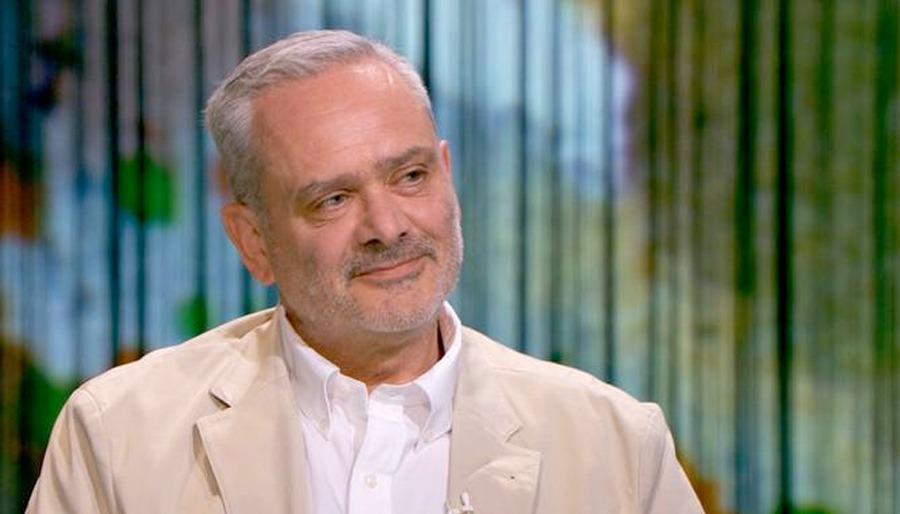
The EU has added a former Swiss army colonel to its sanctions list. According to the EU, the 70-year-old Jacques Baud spread conspiracy theories about the war in Ukraine and acted as a spokesperson for pro-Russian propaganda.
According to the EU executive order published on Monday, the “strategic analyst” is a “regular” guest on pro-Russian television and radio programs. Baud claimed, for example, that Ukraine triggered its own invasion to join NATO.
“Baud helps to undermine or threaten the stability and security of Ukraine through information manipulation and influence operations,” Brussels added. The EU Council, where the 27 member states are represented, adopted the proposal from the European External Action Service (EEAS) on Monday.
Baud, a Swiss citizen, has also been subjected to an asset freeze. In addition, EU citizens and companies are prohibited from providing him with funds, financial assets, or economic resources. He is also subject to a travel ban, prohibiting him from entering or transiting through the EU.
The State Secretariat for Economic Affairs (Seco) in Bern announced that it was aware of the EU’s decision and thus the sanctions against Baud.
However, Seco stated to the Keystone-SDA news agency that Switzerland has not adopted the latest sanctions list. This is because Switzerland did not join the sanctions regime that the EU adopted in October of last year concerning “Russia’s hybrid threats.”
According to the statement, in addition to Baud, the EU imposed sanctions on Monday on eleven other individuals, a Russian military unit, and a propaganda group for their “destabilizing activities.” The regulation currently lists 59 individuals and 17 entities for “Russia’s destabilizing activities.”
According to a report in Reuters, the European Union has adopted new sanctions against Russian oil interests. These sanctions target traders Murtaza Lakhani and Etibar Eyyub on the grounds that they “helped Moscow circumvent Western sanctions on its crude oil exports, which help finance its war in Ukraine.”
The EU’s latest sanctions prohibit the bloc’s citizens from doing business with the listed companies and individuals, restricting their access to shipping and insurance providers.
The EU Council and the Official Journal of the European Union announced that Brussels is targeting nine individuals and organizations supporting Russia’s shadow oil tanker fleet. The statement referred to businessmen connected with oil companies Rosneft and Lukoil, as well as shipping companies that own and operate the tankers.
Canadian-Pakistani oil trader Murtaza Lakhani is the CEO of the trading company Mercantile & Maritime.
The listing in the Official Journal of the European Union states, “Through his companies, he enables the shipment and export of Russian oil, particularly from the Russian state oil company Rosneft. Murtaza Lakhani controls vessels that transport crude oil or petroleum products of Russian origin or exported from Russia.”
The 63-year-old Lakhani manages the medium-sized trading company Mercantile & Maritime Group, which has offices in Singapore and London.
Lakhani began his career at the global trading company Glencore, where he worked on Iraqi oil exports during the Saddam Hussein era, and later moved to the Kurdistan region of Iraq. There, he acted as an intermediary between the oil ministry and international companies, selling oil independently from Baghdad.
During this period, he helped the state-controlled energy giant Rosneft sign oil and gas deals in the Kurdistan Regional Government of Iraq and worked closely with Rosneft CEO Igor Sechin, including at signing ceremonies held at the economic forum in St. Petersburg.
Building on this relationship, Lakhani partnered with the leading oil trader Vitol to invest a 5% stake in Vostok Oil in the Arctic, Rosneft’s largest oil project in recent decades.
In an interview with the program SolovievLive at the St. Petersburg Forum in June, Lakhani said, “This country (Russia) is the world’s largest resource country. Blocking it is a very short-term effect, not a long-term goal for anyone. They will always need Russia.”
The EU also added Valeri Kildiyarov to the list, who is a director of the sanctioned Lukoil trading subsidiary Litasco Middle East DMCC and a manager at Alghaf Marine, another Lukoil trading company in Dubai.
The EU Council announced that the listing of Eyyub, along with Anar Madatli and Talat Safarov, was related to their ties with the trading company Coral Energy, which was renamed 2Rivers Group.
Coral Energy became one of Russia’s largest oil traders. 2Rivers, which was renamed after a management buyout in 2024, claimed that the company had largely ceased its Russian oil trading in 2023 and terminated its last contract at the beginning of 2024.
Following UK and EU sanctions, the company announced in June that it had ceased all trading activities before dissolving its operations in August.






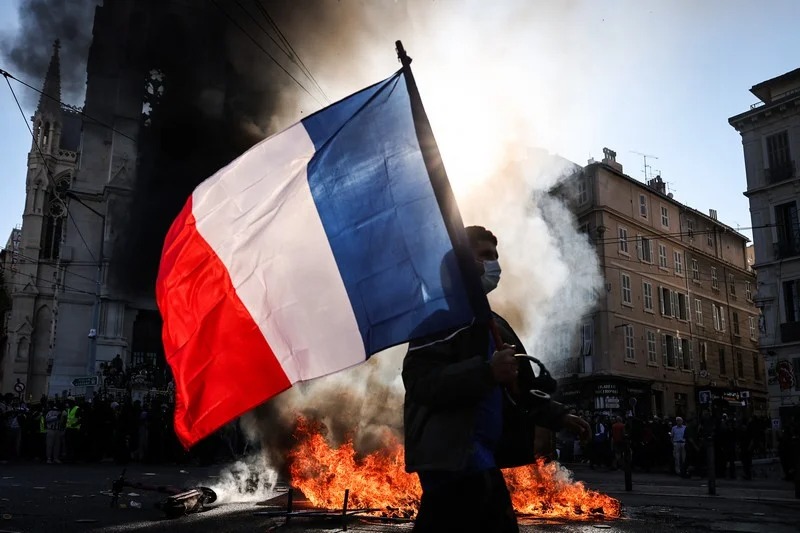
French Interior Minister Laurent Nuñez tendered his resignation amid some of the country’s most violent street unrest in recent years. President Emmanuel Macron rejected the resignation.
According to a statement from the Elysée Palace, Macron made the decision because law enforcement required uninterrupted command under current conditions. Macron instructed Nuñez to roll out new methods on the ground as quickly as possible.
The president also demanded that all necessary measures be taken to ensure transparency regarding the lapses in intelligence and foresight that led to the violence.
How many people were on the streets during Saturday’s protests?
The demonstrations were organised on 17 October over the rising cost of living and discontent with the government’s social policies. According to the Interior Ministry, approximately 550,000 people took part, while trade unions put the figure at 800,000.
Hundreds of thousands marched peacefully on Saturday. However, clashes with law enforcement broke out in Paris, Lyon, Marseille, and other cities, where shops were looted and buildings set on fire.
In Marseille, protesters stormed the city hall. As they forced their way in, they shouted, “This is a revolution, we are taking the Bastille!”, and went on to loot numerous stores.
In Lyon, the office of a tourism company housed in a 19th-century building was vandalised and torched. In Limoges, a 19th-century city hall was set ablaze.
Damage incurred by French businesses is reportedly estimated in the hundreds of millions of euros.
Citing Nuñez reported approximately 1,800 detentions and more than 500 injuries among police officers, gendarmes, and firefighters. Reuters reported that Nuñez stated 2,400 people had been detained nationwide and around 1,000 security personnel injured.
During the demonstrations in Paris, one person suffered a fatal heart attack while being detained.
Macron: We feel anger and shame
In a televised address, Macron said that nothing could justify the events. “There is nothing that can justify, explain, or excuse this. Tonight, we all feel anger and shame,” he said.
In the same speech, he stressed that peaceful demonstrators had legitimate grievances and should not be equated with those resorting to violence. He also noted that the protesters’ voices must be heard and that the government had already begun efforts to address them.
Macron said that legitimate demands must not be conflated with violence, and that violence should not prevent those demands from being heard.
Right demands state of emergency, Macron holds off
Right-wing politicians demanded the declaration of a state of emergency.
Macron declined to do so, stating that the government could allow local authorities to ban protests if necessary to protect public buildings and businesses.
Marine Le Pen, who is expected to run as the candidate for the far-right National Rally in next year’s presidential election, called for restraint. Le Pen said the situation in the country must not be treated as normal.
Meanwhile, Jean-Luc Mélenchon, leader of the far-left France Unbowed, stated that Macron must meet the demands of high school students staging demonstrations.
Macron’s term in office ends in 2027.
Throughout his nearly decade-long presidency, the country has frequently witnessed widespread protests, alongside persistent criticism over economic weakness and mounting public debt.
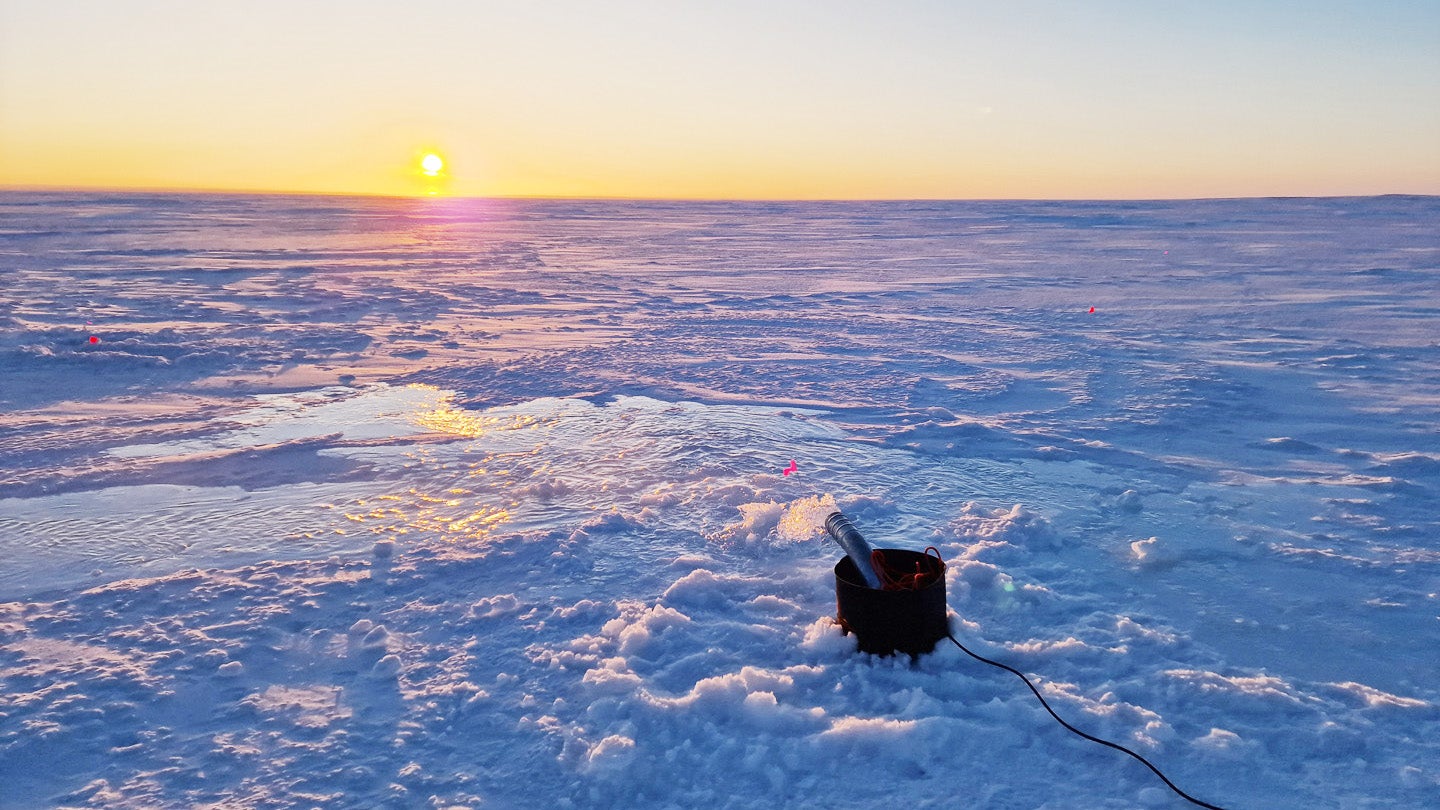
The European Union will launch a surveillance programme in the Arctic in 2027. The programme forms part of the bloc’s new strategy for the region.
The strategy document was obtained by Bloomberg and will be published this week.
A pilot initiative will extend the EU’s Copernicus and Galileo satellite systems to the Arctic. The systems will be deployed to detect land and maritime threats in the region.
“Arctic Cable Hub” to protect undersea cables
The EU will also establish an “Arctic Cable Hub”. The hub’s mission is to safeguard undersea cables carrying critical digital services. In other regions, such cables have become targets of sabotage attempts linked to Moscow.
The updated strategy reflects the EU’s new security-first stance. This transformation began when Russia launched its military intervention in Ukraine in 2022 and gathered pace with Donald Trump’s return to the US presidency in 2025. By contrast, the previous strategy, drafted in 2021, focused on cooperation, climate action, and indigenous peoples.
The Arctic has become an arena for global influence
Climate change has opened new maritime shipping lanes. The region is drawing the attention of Russia, the US, and China.
The document warns: “Increased Arctic shipping in an inherently harsh and poorly charted environment significantly raises the risks of fatal accidents, severe marine pollution, and hybrid interference.”
Russia and China: Military presence and partnership expanding
The document notes that Russia is “steadily rebuilding” its military presence in the region and using the area to transport fuel subject to sanctions.
It offers a similar assessment of China, noting that Beijing’s ambitions in the European Arctic are growing and its partnership with Russia is deepening.
Trump’s Greenland push shook the alliance
Trump also has his eyes set on the Arctic. Earlier this year, he repeatedly threatened to take control of Greenland, an autonomous territory of EU member Denmark. The move deeply shook the transatlantic alliance.
Trump ultimately backed down, and an agreement was reached that expands the US local military presence.
The document does not criticise the US. The text notes only that “a predictable partnership is central to European and transatlantic security”.
The EU has been reinforcing its regional presence in recent years. European Commission President Ursula von der Leyen has visited Greenland twice since 2024. During those visits, she opened a local EU office and announced a 200 million euro ($225 million) investment.
Under the new strategy, the EU will commit to hosting regular Arctic summits and pursuing co-financed projects with partners across the region.
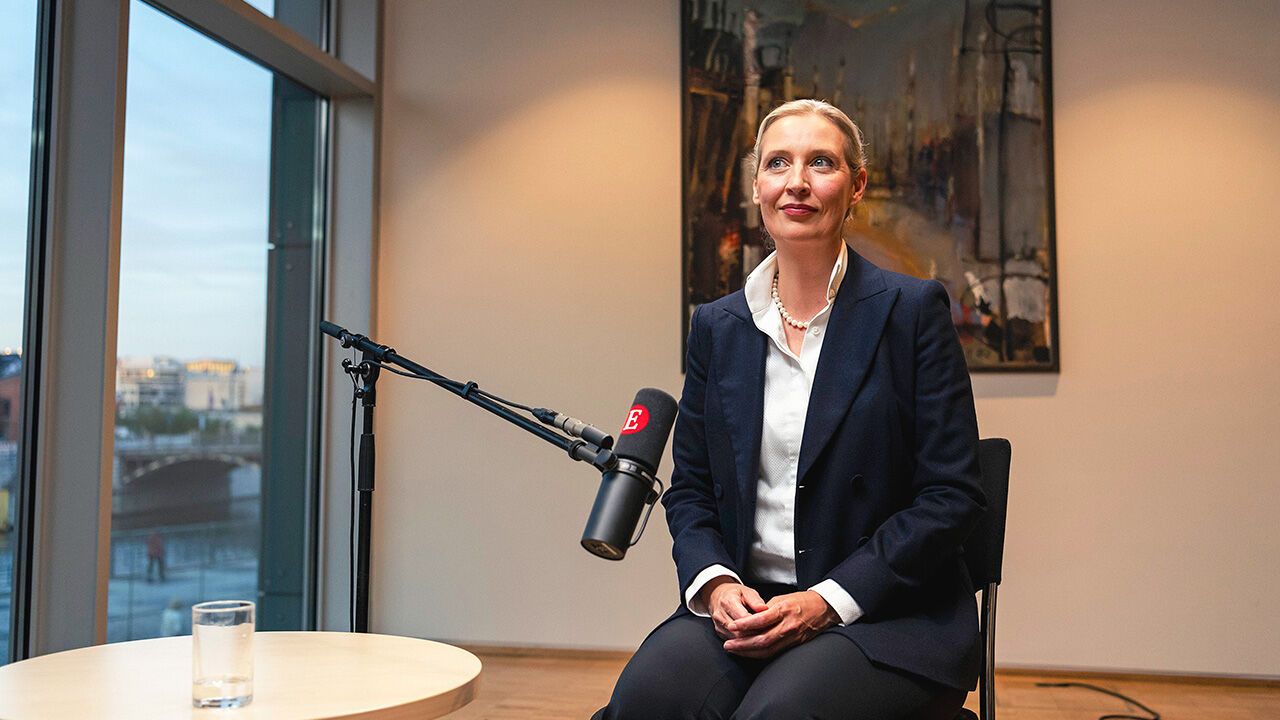
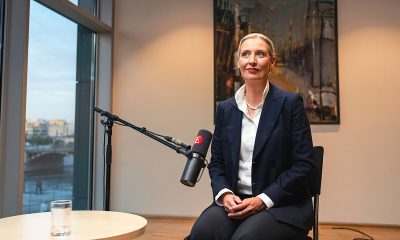
Alice Weidel, co-leader of the Alternative for Germany party and co-chair of its Bundestag parliamentary group, answered questions from Zanny Minton Beddoes, editor-in-chief of the weekly news magazine The Economist.
In the interview, Weidel offered broad evaluations spanning Germany’s energy crisis, the war in Ukraine, the fiscal balances and debt crisis of the European Union, and the country’s asylum and immigration policies.
Openly criticizing the Berlin government’s current foreign and security posture, Weidel stated that Germany is pursuing a policy that does not directly protect its interests, creating a situation that inflicts immense damage on the national economy.
“Foreign policy must serve our national interest”
During the interview, Weidel was asked whether Russia crossing Ukraine’s borders poses a threat to European nations and members of the North Atlantic Treaty Organization.
Stating that framing the issue through a threat dichotomy is incorrect, Weidel said, “I do not think it is a question of whether there is a threat or not. I believe German foreign policy should be judged by the criterion of whether it serves our national interest.”
Saying that the German Federal Government’s current actions have created a grave situation, Weidel remarked, “Acting the way our government is acting right now produces a very damaging outcome for us.”
Addressing the economic curbs in place, Weidel remarked, “I have not even mentioned the sanctions yet. While we implement sanction packages one after another, Donald Trump is talking with Vladimir Putin about more diesel deliveries.”
Pointing out that major powers act pragmatically, Weidel continued, “At the same time, they are also talking about oil and natural gas, aren’t they? We would want the same for Germany.”
Weidel was asked whether it is a legitimate imperative for Germany and other Western European countries to back a democratic country defending itself against overt aggression.
Taking direct aim at Ukraine’s governing structure, Weidel said, “As democratic as it gets. They are no longer holding elections for a new president.”
Referring to the perspective in Washington, Weidel said, “That is precisely why the American president insists on new presidential elections, because he thinks Zelensky is not the right person at the right time.”
When reminded that elections cannot be held in Ukraine due to the state of war and martial law, Weidel criticized how the narrative is constructed and recalled that they had previously condemned Russia’s attack.
Addressing the legal framework at the onset of the conflict, Weidel stated, “When we speak about an aggressor and a non-aggressor, we also criticized Russia’s attack on Ukraine, because Ukraine is a sovereign country. Full stop. There can be no debate about this.”
“Wrong to finance a lost war”
Emphasizing the need to focus on the current impasse dragging the continent down, Weidel stated that the prevailing balance is unsustainable.
“However, we are now in the current status quo. And this status quo is terrible,” Weidel said.
Drawing attention to the scale of devastation, Weidel said, “Not only because of people dying, families losing their sons, the destruction of infrastructure and refineries, and soaring diesel prices. There is an incredibly high security risk for all countries, primarily European nations.”
Saying this trajectory must be halted, Weidel stated, “Therefore, we must put an end to this. This is in our interest, because I am a German politician.”
Noting that she must place Germany’s priorities at the centre, Weidel asked, “I have to evaluate every German foreign policy: Is it in our national interest, or is it not?”
Sharply criticizing Berlin’s current measures, Weidel said, “This prolongation and the measures the German government is currently taking pose an enormous risk to our country.”
Expressing that Ukraine cannot achieve a military victory, Weidel assessed, “We find it wrong, I find it wrong, to continue prolonging and financing a war that is already lost.”
Pointing to the disparity in capacity between the two countries, Weidel stated, “Unfortunately, you can truly say that Ukraine is too small. It is impossible for Ukraine to defeat Russia.”
Weidel summarized the point reached by saying, “So what do we do now? There is a lost war.”
In response to the objection that Russian President Vladimir Putin is not interested in peace and continued to strike Ukrainian cities throughout the winter, Weidel noted that the same question must be directed to the other side.
Touching on the search for evidence to halt the conflict, Weidel said, “Can you show me a single piece of evidence that Vladimir Putin is interested in peace? And can you show me a single piece of evidence that Zelensky is interested in peace?”
When presented with reports that the Ukrainian side is ready for talks on a ceasefire and a halt to strikes on energy infrastructure, Weidel highlighted the financial burden borne by Germany.
Asked whether Germany should cut aid, Weidel replied, “We have already spent more than 100 billion. No other country has spent this much, and we have run heavily into debt.”
Summarizing her political stance in clear terms, Weidel said, “Yes, I put my country’s interests first. Germany comes first.”
Stating that the current conflict poses a direct threat, Weidel remarked, “This war is not in our interest, and it is very, very dangerous for our national security.”
Noting that a security architecture must be built impartially to achieve a lasting compromise, Weidel said, “To reach peace in Ukraine, we must take into account not only Ukraine’s security interests, but also Russia’s security interests.”
Criticizing past Western policies, Weidel assessed, “That was the great mistake made in the past and over the last two decades: failing to recognize Russia’s security concerns.”
“We will definitely have a bond market crisis”
In the interview, it was recalled that Marine Le Pen, parliamentary group leader of the National Rally party leading French opinion polls, wants infrastructure projects financed with European Central Bank resources.
Asked about scenarios regarding Europe’s future leadership structure, Weidel stated that Le Pen acts in line with French interests.
Pointing to the fiscal transfer dynamics within the European Union, Weidel said, “Germany is the main financier of the European Union, and France gets the money. Just like other countries.”
Expressing understanding for Le Pen’s approach, Weidel said, “Of course, from her perspective, I would do the same. She wants to do the best for her country.”
Touching on the vulnerability in France’s fiscal structure, Weidel remarked, “Even while France is already in a massive debt crisis with roof-hitting interest rates, it wants debt forgiveness without compensation.”
Emphasizing market uncertainty, Weidel said, “I do not know what they will do in the capital markets, do they? But Germany is in almost the same situation.”
Drawing attention to Berlin’s debt burden, Weidel observed, “Our public debt is climbing rapidly.”
Weidel responded decisively when asked whether a sovereign bond crisis could emerge in Europe if financial markets price in these statements.
Pointing to potential turmoil, Weidel stated, “Definitely. We will definitely have a bond market crisis.”
Noting that the debt burden is not confined to a few countries, Weidel said, “With such high public debt, this applies not only to France, but also to Italy, Spain, Portugal, and Germany.”
Criticizing the federal government’s new borrowing decisions, Weidel said, “With this new debt programme of Germany, our interest rates on the capital market are already rising. We too are now a debtor country.”
“Syrian and Afghan nationals must return home”
During the interview, concerns felt by millions of people of migrant background living in Germany regarding the policies of the party, described as far right, were raised.
Asked whether Syrian and Afghan asylum seekers with legal status could remain in the country, Weidel responded through existing legislation.
Arguing that the legal grounds have ceased to exist, Weidel stated, “To be honest, our laws, our asylum law clearly states: the moment the reason for coming to our country disappears, they must leave.”
Pointing to Syrians as an example, Weidel said, “Especially for Syrians, since you mentioned them, let us take that example: the justification that they are refugees, asylum seekers here and need protection has now ended.”
Criticizing financial support, Weidel said, “They receive mountains of money from the state here, but that does not matter right now. They must return to their own countries. They need to leave our country.”
Saying that the German administrative apparatus must enforce the rules, Weidel said, “Law enforcement in Germany is very clear.”
Arguing that all Syrians should be sent back, Weidel assessed, “Because the war in Syria has ended, 100% of Syrian citizens must return to their countries.”
Targeting the Federal Government’s Afghanistan policy as well, Weidel said, “Just like the Afghans whom our government virtually decided to bring to our country by plane.”
Sharply criticizing these evacuation decisions, Weidel remarked, “I do not know how you arrive at this unacceptable policy of flying Afghans in from Afghanistan.”
Addressing rising security statistics, Weidel said, “Since the borders were opened in 2015, our crime rates have gone through the roof.”
Pointing to serious crime categories, Weidel said, “Syrians and Afghans constitute the main group for the most serious crimes, such as rape, homicide, and violent offences.”
Saying security measures must be implemented immediately, Weidel stated, “We must send these people back, and detain criminals and extremist religious leaders. We do not want a caliphate in our country.”
Touching on the situation of Ukrainian refugees, Weidel noted that they oppose permanent settlement.
Pointing to a return timetable for people fleeing the war, Weidel said, “I have not even mentioned Ukrainians yet. When this war ends, Ukrainians must also leave our country.”
Giving a figure for the total population that must depart, Weidel said, “In total, this means millions of people; it reaches roughly four to five million, and they must leave our country.”

Macron rejects interior minister’s resignation over violent unrest

EU Arctic strategy targets Russia and China while sparing US

Egypt delays parliamentary vote on deploying troops to Saudi Arabia

AfD leader Weidel calls funding lost Ukraine war a grave mistake

Sally Rooney UK book shipments halted over Palestine Action terror ban
-
 Europe2 weeks ago
Le Pen proposes German-style debt rule to soothe French bond market
-
 Europe2 weeks ago
France and Germany urge EU market kill switch against trade threats
-
 Russia2 weeks ago
US and Russia hold multi-billion-dollar talks on Lukoil foreign assets
-
 America2 weeks ago
US AI spending needs 9% of GDP by 2032 to justify capital boom
-
 Europe2 weeks ago
Bill to drop NATO membership goal submitted to Ukrainian parliament
-
 America2 weeks ago
Flavio Bolsonaro leads Lula as Brazil election heads to run-off
-
 Europe2 weeks ago
Over 500 former European diplomats urge EU sanctions on Israel
-
 Europe2 weeks ago
Marine Le Pen unveils fiscal programme pledging French budget cuts
