
Europe
German defence firm count expands nearly sixfold in five years

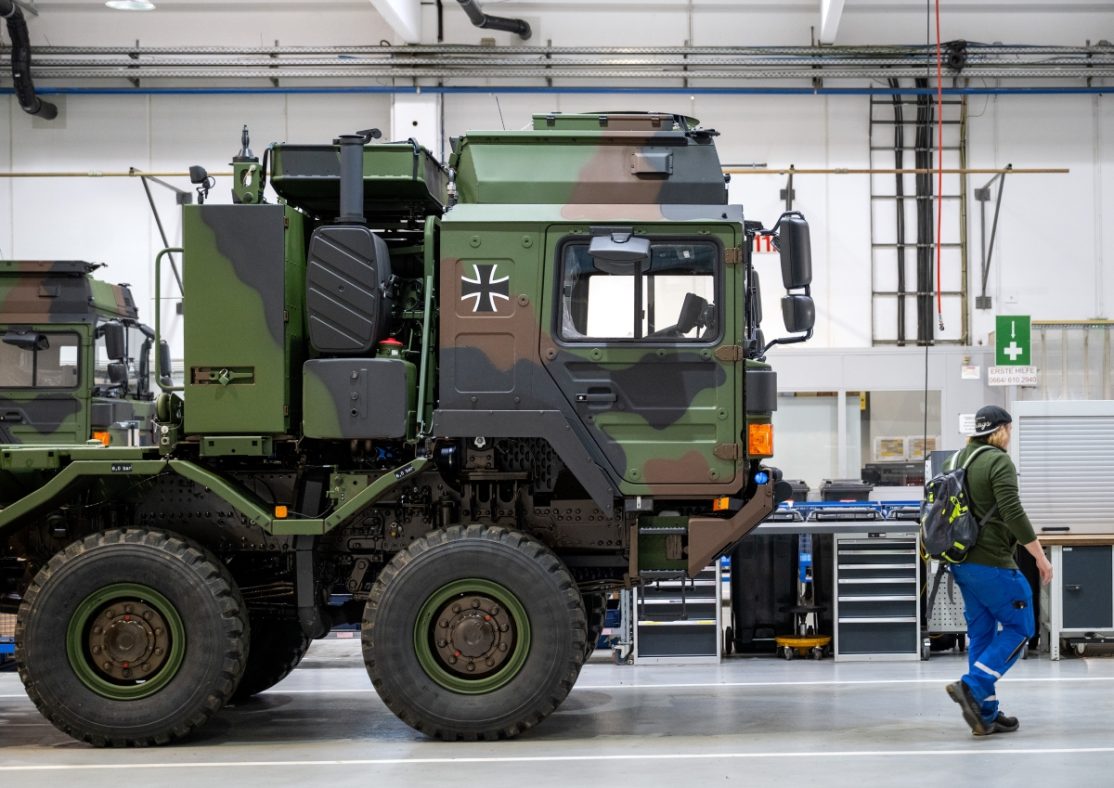
The Federation of German Security and Defence Industries (BDSV) represented 602 companies as of July, marking a 50% increase compared with November 2025.
According to figures obtained by Euractiv, this figure corresponds to a nearly sixfold increase compared with 2021, prior to the outbreak of the war in Ukraine.
At that time, the Federation had only 111 registered members.
One third of the members are registered in Bavaria. A strong industrial cluster has also been established in North Rhine-Westphalia, whilst Berlin is rapidly closing the gap in this field.
The German government aims to allocate 3.5% of its GDP to defence by 2029.
Germany’s defence expenditure is expected to reach approximately 140 billion euros in 2027. No other European country comes close to this figure.
As a result, the defence sector in Germany is benefiting from these developments and expanding rapidly.
The country’s target of building Europe’s most powerful army, alongside its efforts to restructure the defence sector by setting aside more than 500 billion euros for defence investments over the next few years, is already reflected in the industry’s profits.
Four German companies are included in the top 100 global arms companies index produced by the Stockholm International Peace Research Institute (SIPRI).
According to the institute, the combined defence revenues of these companies increased by 36% to reach approximately 13 billion euros.
However, these major players do not constitute the majority of the sector represented by the BDSV.
Instead, new defence startups and manufacturers exploring the dual-use aspect of the sector account for the majority of new members.


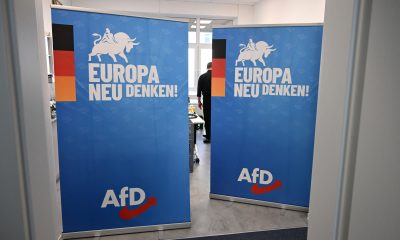





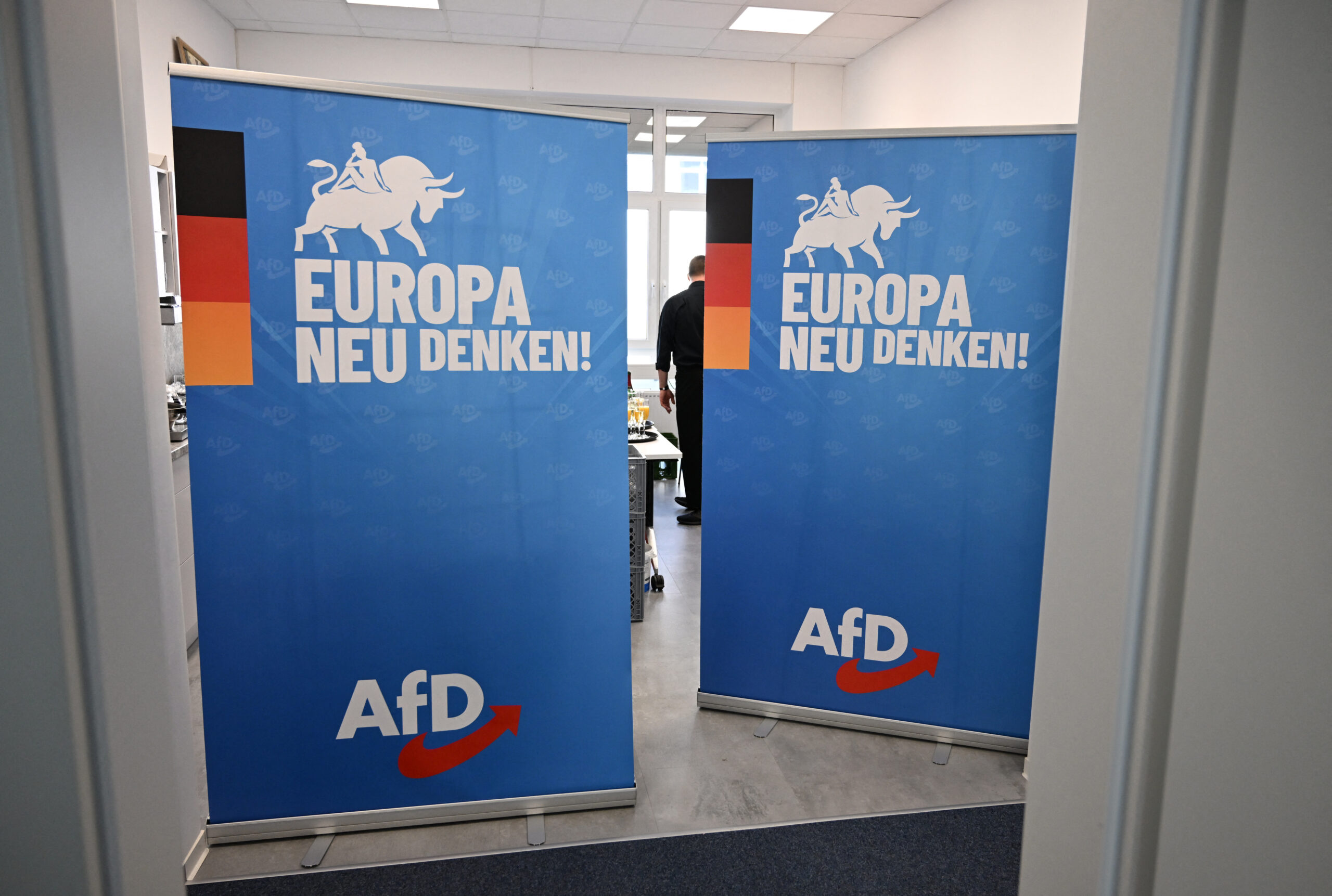
Alternative for Germany (AfD) has published a new strategy paper on Europe, updating its stance on both a possible German exit from the European Union (“Dexit”) and the single market.
In the document, the AfD embraces core demands of German business, advocates for a German-dominated EU attaining global power status, and urges the bloc to focus on measures that reinforce its position amid ongoing international power struggles.
Among the document’s central points are the party’s shift away from the idea of leaving the EU and its explicit commitment to the EU single market, which accounts for the vast majority of German corporate exports.
The AfD also appears to intend to preserve the euro, while insisting on the strict enforcement of the Maastricht criteria to prevent crises without any fiscal transfers to other eurozone countries.
The party relies on a unified EU approach in the development of advanced technologies, such as artificial intelligence, and particularly in the defence sector. In both areas, the EU, essentially led by Germany, must become independent of both China and the US in order to act as a global power.
In other policy domains, the party advocates a large-scale devolution of powers from Brussels back to national capitals.
An identitarian appeal to right-wing conservative and, in some respects, ethno-nationalist ideals is intended to serve as the ideological bond.
AfD echoes German capital: The imperative of the single market
The AfD’s shelving of a potential EU exit and its recognition of the European single market, even from its own perspective, as a central component of European-level cooperation carry major significance.
The single market is viewed as indispensable to the German economy. Although its share of exports no longer matches the record highs reached during the 1990s and 2000s, when it occasionally constituted nearly two thirds of total exports, the single market’s share is rising once again because of slowing exports to the US and China.
This share grew from 54% in 2024 to 56% in 2025, figures that exclude the United Kingdom, which was still factored into data during the 1990s and 2000s.
Brexit indirectly illustrates the benefits the German economy draws from the EU single market: following the UK’s departure from the EU, German exports to Britain declined from 89 billion euros in 2015, the year preceding the Brexit referendum, to approximately 73.5 billion euros.
In periods of global crisis like today, the single market is proving to be a lifeline for Germany’s export sector. It represents something that virtually no entrepreneur would genuinely want to abandon.
Preserving the single market is also among the consistent demands of small and medium-sized enterprises (SMEs), some of which sympathise with the AfD.
The euro’s place in German exports
The situation surrounding the euro is less clear-cut. As reported by German Foreign Policy, citing a 2019 study by the Centre for European Policy (CEP), Germany benefited more from the introduction of the single currency than any other eurozone member. Between 1999 and 2017, the euro yielded Germany a cumulative net benefit of roughly 1.9 trillion euros.
According to the CEP, France sustained a loss of 3.6 trillion euros over the same period due to currency effects, while Italy suffered a shortfall of 4.3 trillion euros.
Even so, the German economy is not existentially reliant on the common currency. This is demonstrated by Poland, Hungary, and the Czech Republic, which consistently rank among Germany’s most important business locations and primary trading partners despite having retained their national currencies.
The fact that the German economy as a whole has relied on the euro so far is also tied to the euro being weaker than a standalone German mark, which has consequently boosted exports.
Against that, particularly during periods of crisis, an economic collapse in even a single country, as seen in Greece from 2009 onwards, can destabilise the entire currency.
Such a scenario could readily recur; for instance, warnings are periodically voiced at present regarding a potentially looming severe financial crisis in heavily indebted France.
The party seeks clear German hegemony in the EU
The AfD states that it currently intends in principle to adhere to the euro.
However, the party demands strict adherence to the Maastricht criteria, specifically the requirements that public debt must not exceed 60% of gross domestic product (GDP) and the budget deficit must remain below 3% of GDP, with those rules to be enforced by compulsion if necessary.
This would entail an austerity drive harsher than the rollback of the welfare state already taking place across Europe.
The AfD wants the European Central Bank (ECB) to concentrate strictly on price stability and abandon all forms of compensatory state financing.
That step would eliminate the EU’s ability to assist crisis-hit countries to underpin the single currency.
The AfD also demands a revision of voting rights within the ECB Governing Council.
These rights are currently distributed unevenly, with smaller states in particular having lost significant influence.
The AfD seeks the allocation to Germany of “voting rights corresponding to its economic weight” in the future, “taking into account its economic and financial standing”.
This would establish clear German dominance inside the Frankfurt am Main-based central bank, particularly in the event of a financial crisis erupting in a eurozone state such as France.
The strategy paper rejects the EU’s current trajectory towards collective borrowing and automatic redistribution, arguing that individual responsibility and liability must be reunited.
The strategy also opposes jointly guaranteed EU bonds and the mutualisation of liabilities under the banking union.
The party’s demands additionally include a requirement to reduce and settle TARGET2 balances within the Eurosystem annually, using safe assets and high-value collateral such as gold or Bitcoin.
No to debt, yes to capital market deregulation
The document opposes the creation of debt-financed funds by Brussels to direct industrial policy, contending that such mechanisms mask the underlying causes of capital flight from Europe.
Rather than channelling funds into “unproductive green financial products”, the document advocates liberalising capital markets so that investment can be steered toward industry and technology.
The paper asserts that Europe’s weakness in global technological and industrial competition stems from a severe deficit in private equity and venture capital.
Instead of centralised spending, the AfD proposes that the EU act merely as an administrative coordinator for intergovernmental investment consortia financed directly and sovereignly by member states.
“Decentralised cryptocurrencies” such as Bitcoin are endorsed as instruments of financial sovereignty, alongside calls to avoid restrictive regulatory frameworks such as MiCA.
MiCA (Markets in Crypto-Assets) is the EU’s comprehensive regulatory framework established to oversee crypto-asset markets.
“Strategic autonomy” for Europe; a leadership role for Germany
In key economic sectors where European countries are threatened by, or already experiencing, dependency on the US and China, the AfD actively advocates a unified EU approach to achieve “strategic autonomy”.
To this end, the party seeks to pool Europe’s technological assets, ranging from space exploration to artificial intelligence models: “Europe must be a centre of excellence that secures its freedom through technological breakthroughs.”
At the same time, the party resolutely urges closer cooperation within the European defence industry.
In critical areas such as unmanned aerial vehicles or military applications of artificial intelligence, it calls for launching the “joint development” of military hardware.
Regarding procurement, the party argues that Europe should primarily rely on defence equipment manufactured within the EU to assemble a “common arsenal of nations”.
Only cooperation, in this view, can secure technological autonomy and the necessary industrial economies of scale.
The AfD expressly rejects only the creation of an EU army. Deciding matters of war and peace must, in its view, remain permanently in the hands of European nation-states.
Call for a return to national sovereignty
In most other policy fields, the AfD demands a sharp curtailment of EU activities and a focus strictly on measures that strengthen the bloc against global power rivalries.
For example, external borders should be closed even more tightly than before against “unwanted migrants” who could tie down resources.
The party states that all redistribution within the EU must be reduced to a minimum and welfare-state measures at the EU level brought to an end.
The AfD’s strategy paper calls for a significant transfer of powers from Brussels back to national capitals.
To that end, it proposes:
Dissolving superfluous EU institutions and Directorates-General, while confining the European Commission to core administrative tasks.
Imposing an expenditure ceiling on the Multiannual Financial Framework.
Introducing a national right of veto whenever EU actions violate the principle of subsidiarity.
Under this framework, the European Commission’s authority would be largely restricted to administrative functions, and Members of the European Parliament would no longer be directly elected, being appointed instead by national parliaments.
Whenever the EU refuses to devolve powers, Berlin should pursue an “opt-out” and work to strengthen nation-states.
Through amendments to Articles 4 and 5 of the Treaty on European Union (TEU), the supremacy of national constitutions should be guaranteed outside core European tasks, while uniform EU law would be preserved in foundational areas such as the single market.
The Court of Justice of the European Union (CJEU) would be replaced by an intergovernmental European Arbitration Court, with authority restricted to adjudicating treaty disputes within its explicitly assigned remit.
The party also calls for permanently incorporating a debt brake and a spending brake into EU treaties, as well as establishing irrevocable opt-out protocols modelled on the Danish and Irish precedents that the Commission could not unilaterally suspend or revoke.
Referring here to a “federation of European nations”, the AfD also favours an ideological alignment rooted in right-wing conservatism and, in part, ethno-nationalism.
According to the party, the continent’s “Christian and Western heritage” must be reinforced and the heterosexual-patriarchal family structure reaffirmed.
The “ultimate goal”, the party states, is “the preservation of the cultural identity of European peoples”.
The AfD designates 2029 as the starting point for implementing its European programme.
Elections for both the German Bundestag and the European Parliament will take place that year, with the AfD hoping to secure a right-wing majority in both assemblies.
The Dutch government has begun examining the potential national security impact of US sanctions amid growing friction between allies.
A thematic report prepared by the National Security Analysts Network (ANV) at the request of the National Coordinator for Security and Counterterrorism (NCTV) evaluates a scenario in which the Washington administration imposes restrictions on its allies.
The authors of the report link this possibility to escalating friction between the US and its European allies, as well as the use of economic ties as an instrument of political leverage.
Analysts argue that Washington could resort to restrictive measures against allies by prioritising its own interests.
The document assesses the potential consequences of sanctions across the Dutch economy, defence, energy, and digital infrastructure. It states that restrictions could particularly affect financial transactions, liquefied natural gas (LNG) shipments, military equipment procurement, pharmaceuticals and other essential consumer goods, as well as access to the services of American technology companies.
According to the report, Dutch reliance on American technologies, the US military presence in Europe, and energy imports leaves the country vulnerable to external pressure. Analysts stress that if other states join potential restrictions, the outlook could deteriorate significantly, particularly through disruptions in the supply of critical goods and services.
Proposal for a common EU line and independent capacity
Among the prospective measures, the report suggests developing domestic capacity in energy, digital technologies, and defence.
It also notes that coordination within the EU must be strengthened to prevent individual member states from being isolated.
The experts note that this assessment does not constitute a definitive forecast of sanctions, but serves merely as an evaluation of a hypothetical scenario.
Donald Trump uses trade tariffs and economic restrictions as instruments of political leverage against other countries. Having introduced “reciprocal” tariffs with a baseline rate of 10% against more than 180 countries in April 2025, Trump imposed far higher tariffs on certain nations, with these rates shifting repeatedly during negotiations and trade agreement talks.
Within this framework, separate trade crises emerged with China, Canada, and Mexico. Citing the fight against illegal migration and drug trafficking, the US introduced additional tariffs on goods from these three countries in early 2025, prompting Canada to respond with retaliatory tariffs.
In the dispute with China, duties escalated to as high as 145%, to which Beijing responded with a 125% tariff. Although the parties agreed to lower tariffs temporarily in May, tensions flared up again in the autumn due to export restrictions imposed by Beijing on rare earth elements.
In January 2026, Trump threatened eight European countries, including the Netherlands, with additional tariffs if they did not accept the “complete and final purchase” of Greenland by the US.
Against these tariffs, initially announced at 10% and projected to increase to 25% in June, the EU began discussing retaliatory steps, including duties on American goods and restrictions on US companies, according to reporting by Spiegel. The European Parliament also halted the ratification process for the trade agreement with Washington.
Sanctions targeting international institutions have served as another instrument of leverage. Trump signed an executive order in February 2025 imposing sanctions on the International Criminal Court (ICC). The US administration subsequently announced new restrictions against the court, which is located in The Hague. The Dutch government announced that it continues to support the Hague-based ICC.
Early results from Serbia’s snap parliamentary election initially showed the governing coalition ahead, but the opposition widened the gap as the vote count progressed and won the race.
Former President Aleksandar Vucic conceded that his Serbian Progressive Party had lost the election.
According to Vucic, initial figures from the ballot boxes showed his party in the lead, but the opposition Student List subsequently moved ahead.
According to official data released by the Republic Electoral Commission of Serbia at 04:40 local time on 26 October, 7,428 out of 8,392 ballot boxes had been opened. With the proportion of counted ballot boxes reaching 88.51%, the distribution of votes stood as follows:
The “Student List – Students Win” reached 51.20% with 1,849,104 votes. The “Aleksandar Vucic – United Serbia” coalition remained at 40.16% with 1,450,528 votes. The “Ivica Dacic – Stability Factor” list received 82,085 votes, or 2.27%, while other parties remained below 1%.
According to a joint projection by Ipsos and the Centre for Free Elections and Democracy (CeSID) based on 96% of ballot boxes, the Student List is expected to win 140 seats in the 250-seat parliament with 52.9% of the vote. The research organizations forecast that Vucic’s coalition will secure 38.8% of the vote and 103 seats, with estimated turnout calculated at 69.3%.
Vucic conceded defeat and alleged foreign interference
Addressing supporters at party headquarters after voting concluded, in remarks reported by Novosti and Srbija Danas, Vucic conceded defeat based on stratified sample data. “We do not have final results yet, but looking at the stratified sample, it is clear that we have lost this election,” Vucic said.
Noting that only two lists had entered parliament, Vucic said: “The Student Bloc list won; they will have 135 to 140 seats, and we will have around 105. No one else was able to enter parliament.”
Vucic emphasized that they would not lodge legal challenges against the election results. “We will not bother with filing lawsuits, appeals, or challenging this before the administrative court; let them consider this an accepted election result,” Vucic said, adding: “I am not going to run away, I am in Serbia in any case; here is your acceptance of the election.”
Leveling allegations of outside interference in his statement, Vucic said: “We have been humiliated; I want people to know that this was confirmation of the revolution they carried out with the direct support of various European countries and the American ‘deep state’ (meaning the structure opposing President Trump).”
Targeting the opposition’s policy toward Moscow, Vucic claimed: “Sanctions against the Russian Federation will be enacted by March or April; they will do everything they did not want to talk about, everything they lied about.” However, the student movement had denied in a September statement that it had any such plan should it take power.
Continuing his speech, Vucic addressed both his base and his opponents: “I know tonight has been difficult for many people, and I know how happy some are. I wish them success. I congratulate them, even though they are merely subcontractors, just subcontractors of dirty work designed by someone else to bring down a sovereign state.”
Stating that he would continue his political struggle, Vucic added to the Student List: “You achieved this for a moment. For how long? We will see. I wish them the best, and we will fight. Starting this evening we will begin preparations, and we will defeat them. Long live Serbia!”
European leaders send congratulations
As the election outcome became clear, the first messages of congratulation were shared across the international arena.
European Commission President Ursula von der Leyen and European Council President António Costa congratulated the Student List on winning Serbia’s snap general election in a joint statement published on their X accounts.
“We are ready to support reforms in the rule of law, media freedom, the fight against corruption, and the consolidation of strong democratic institutions, and to build Serbia’s future in the European Union together,” the two leaders said in their statement.
EU Enlargement Commissioner Marta Kos also noted on X that record turnout had been achieved following protests lasting nearly two years. Kos assessed: “A new era can begin for Serbia. The EU’s door is open, and we are ready to move forward together.”
Hungarian President Péter Magyar stated that he spoke by telephone with leaders of the Student List to convey his congratulations. On his X account, Magyar posted: “I conveyed Hungary’s support to them. I was pleased to hear how much strength our April victory gave them in this difficult struggle.”
Montenegro’s Deputy Prime Minister Momo Koprivica congratulated the opposition on its success, saying, “Arise Serbia, and raise the Serbs!” and noted that the result marked the rebirth of Serb identity and the beginning of a healthy patriotic renaissance. Former Republika Srpska president Milorad Dodik, who supported Vucic ahead of the election, also recognized the opposition’s victory, writing on X: “The voice of the people is the voice of God. The citizens of Republika Srpska and Serbia have spoken. We move forward together.”
Celebrations held in streets as tent camp set ablaze
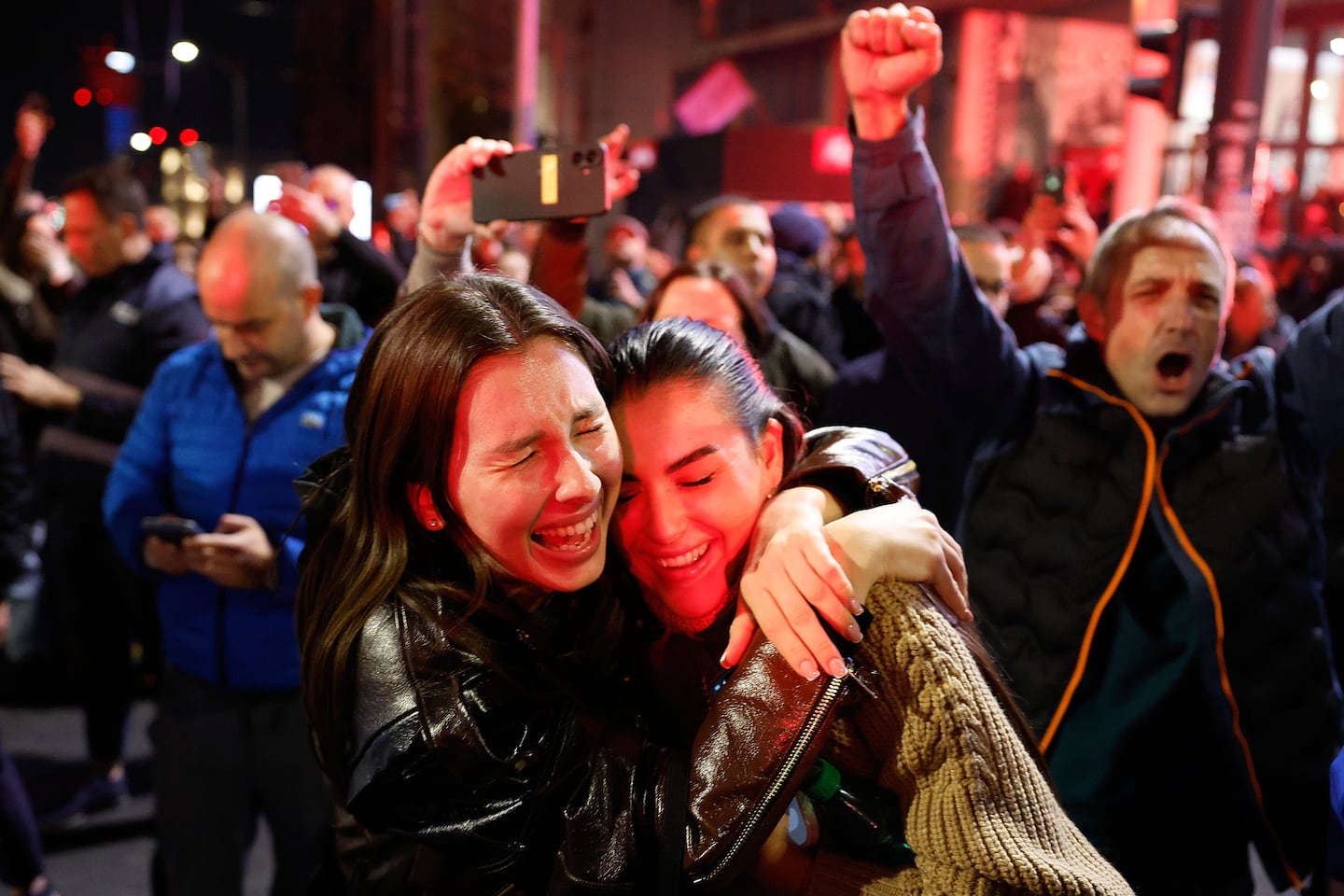
Following the announcement of the election results, people took to the streets across numerous Serbian cities to celebrate the opposition’s victory.
According to RTS, crowds filling the streets sang, chanted slogans, and celebrated with fireworks and vuvuzelas.
In Belgrade, certain groups dismantled the tent camp located in Pionirski Park, known as “Cacilend”. Opposition supporters breached the barriers surrounding the park and set fire to the tents inside. The tent camp had been set up on 6 March 2025 during massive anti-government demonstrations and was characterized by Vucic as a “symbol of freedom and resistance”.

US mission hosts anti-Cuba figures with terror links at UN event

AfD drops Dexit to back single market in new Europe strategy

Pentagon prepares US bases for 90-day siege in global war plan

Netherlands reviews national security risks from potential US sanctions

Lula defeats Flavio Bolsonaro to seal historic Brazilian comeback
-

 America2 weeks ago
Trump weighs presidential memorandum to cut surging US diesel prices
-
 Diplomacy2 weeks ago
SWP urges backing for Gulf trade routes bypassing Strait of Hormuz
-
 Russia2 weeks ago
Russia relaxes diesel export curbs after talks with Trump
-

 Europe2 weeks ago
LSE study finds post-bailout Greece turned into a cafe economy
-
 America1 week ago
How Elon Musk fuses private empire with state power, Ben Tarnoff explains
-
 Diplomacy2 weeks ago
EU and China reach preliminary deal to curb hybrid car imports
-
 Europe1 week ago
AfD leader Weidel calls funding lost Ukraine war a grave mistake
-
 Middle East1 week ago
Egypt delays parliamentary vote on deploying troops to Saudi Arabia
