Russia
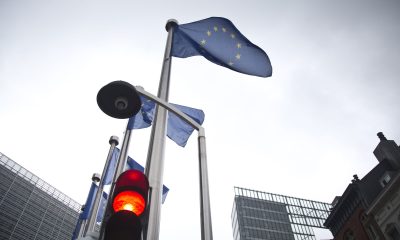
European Council opens limited contacts with Russia, Politico reports
Contacts between the European Council and Russia have begun, according to Politico, although the recent exchanges were brief and did not cover “substantive issues.”
A member of European Council President António Costa’s team who participated in the discussions told the newspaper that the contacts reflected the reality that the European Union has “concrete interests that need to be protected.”
“For that reason, it is important to establish diplomatic channels with Russia,” the official said.
The same official added that Costa is acting in close coordination with European leaders regarding possible contacts with Russia and the issues that could be addressed at an appropriate time.
The official also stressed that the European Union is not acting as a “mediator” between Ukraine and Russia.
Another EU diplomat interviewed by Politico said the European Council does not have “a mandate” to conduct such contacts.
Representatives of the European Council, spokespeople for German Chancellor Friedrich Merz and a French official did not respond to Politico’s requests for comment.
Two sources cited by Politico said the question of Europe’s role in peace talks on Ukraine could be discussed at the European Union leaders’ summit in Brussels on Thursday. However, the sources said no decision is expected on who would conduct such contacts.
A day earlier, Bloomberg reported that Costa’s team was seeking to establish an informal communication channel with the Kremlin for a possible dialogue with Russian President Vladimir Putin on Ukraine.
Sources cited by the agency claimed that Costa’s chief adviser had held at least two phone calls with his Russian counterpart to lay the groundwork for broader discussions in the future.
Speaking in May, Costa said European Union member states had the “potential” to engage in negotiations with Putin. He added that he had discussed the details of any future contact with the Russian leader with the heads of government of the EU’s 27 member states.
At the same time, Costa said the European Union did not want to obstruct talks being conducted by the United States and that they had seen no indication that Moscow was ready for dialogue with Brussels.
During the same month, Putin said Russia remained open to talks with Europe. He suggested that former German Chancellor Gerhard Schröder could be one of the interlocutors acceptable from Russia’s perspective.
European Union High Representative for Foreign Affairs and Security Policy Kaja Kallas said last week that the time was not yet right for negotiations between Russia and the European Union.
Kallas said the EU was preparing its 21st sanctions package in an effort to bring Moscow to the negotiating table.
Shortly before that, Finnish President Alexander Stubb had also called for Europe to take the initiative in launching discussions with Russia on a settlement process for Ukraine.
The issue of Ukraine was also discussed at the G7 summit held in France from June 15 to 17. In addition to the G7 countries, leaders from Ukraine, Egypt, Saudi Arabia, Qatar, the United Arab Emirates, India, South Korea, Kenya and Brazil attended the gathering. Participants discussed developing a common approach to ending the war in Ukraine.
Russia
Ukraine launches largest drone attack on Moscow since start of war, Russian officials say
Ukraine’s armed forces launched a major drone attack on Moscow during the night of June 18, with Moscow Mayor Sergey Sobyanin saying that a total of 194 unmanned aerial vehicles (UAVs) approaching the capital were shot down.
According to figures released by Russian authorities, the attack was the largest drone assault on Moscow since the start of Russia’s military campaign against Ukraine.
The previous highest number of drones directed at Moscow in a single night was recorded on March 11, when officials said 74 UAVs had been intercepted and destroyed.
In addition, authorities reported on May 17 that air defence systems had intercepted and shot down more than 120 drones heading toward the capital over the course of a single day.
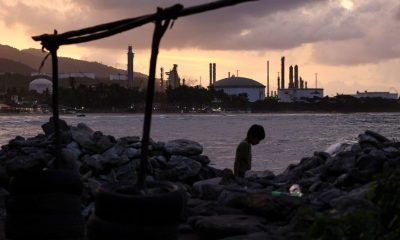
One of the targets of the overnight attack was reportedly the Moscow Oil Refinery (MNPZ) in the Kapotnya district. The facility had also come under attack two days earlier and subsequently suspended operations.
The latest strike on the refinery was reported to have triggered a major fire. According to calculations by the Ukrainian monitoring channel Exilenova+, a total of seven separate fire locations were observed within the facility’s grounds.
Some drone debris also fell in the area of the Sadovod shopping centre. One of the buildings at the complex was damaged and caught fire.
Drone fragments were also reported to have damaged the roof of the Belaya Dacha shopping centre. Moscow Region Governor Andrey Vorobyov said: “A fire broke out. Information regarding the size of the fire and possible casualties is being clarified.”
Residential high-rise buildings in the Novyye Kotelniki district of Moscow were also damaged during the attacks. Apartment buildings in Zhukovsky and Lyubertsy likewise sustained damage.
Detached houses in the village of Stepanovo near Elektrostal were reported damaged. Homes in the village of Masnovo-Zhukovo were also affected.
Private residences in Kryukovo and Pavlovsky Posad were also reported to have suffered damage as a result of the attacks.
Authorities said one woman was injured in the incidents.
Due to the scale of the attack, Russia’s Federal Air Transport Agency (Rosaviatsiya) imposed restrictions at all airports in Moscow.
Passengers were reportedly evacuated from Sheremetyevo Airport. The evacuations were said to include passengers already on board aircraft.
Aeroflot urged passengers on cancelled flights not to travel to the airport. The airline recommended that ticket refunds and rebooking procedures be completed remotely.
According to information cited by the Ostorozhno, Novosti channel, approximately 250 arriving and departing flights at Moscow airports were affected by delays.
Russia’s Interior Ministry also announced that several roads around the Moscow Oil Refinery had been closed to traffic.
Authorities further reported restrictions on traffic in both directions along a section of the Moscow Ring Road (MKAD) between Novoryazanskoye Highway (Volgogradsky Prospekt) and Kashirskoye Highway.
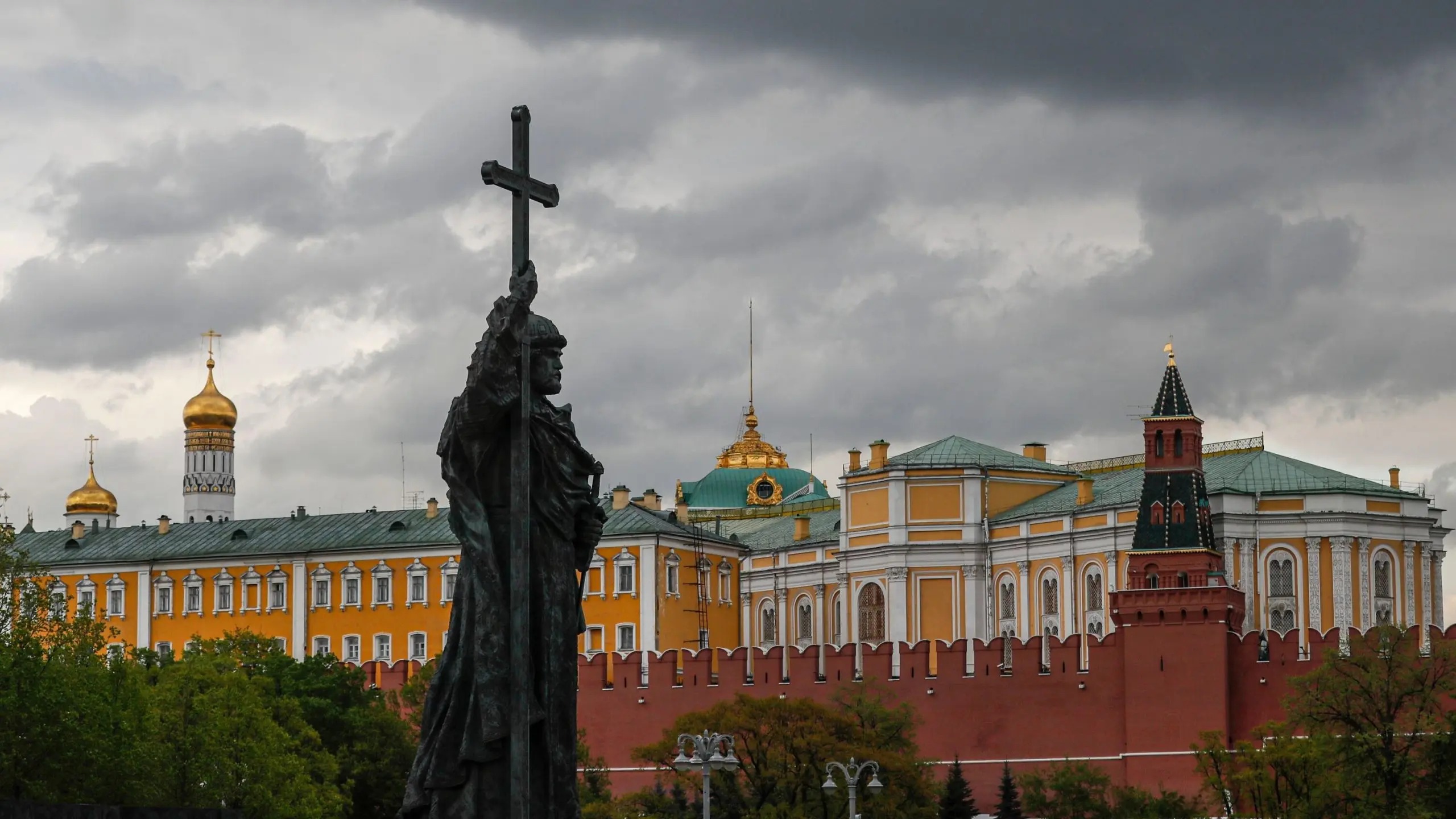
According to information published by VChK-OGPU, authorities also closed Red Square.
The same source reported that armed security personnel equipped with machine guns were stationed around the Kremlin’s towers and walls, as well as near Lenin’s Mausoleum.
According to the Russian Defence Ministry’s overnight summary, air defence units intercepted and destroyed a total of 555 Ukrainian drones across various regions of Russia.
The ministry said the drones were detected in the airspace of 17 different regions.
The same statement added that drone activity was also recorded over Crimea and in the airspace above the Sea of Azov.
Russia
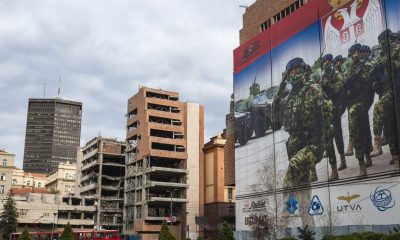
Patrushev urges assertive Russian naval presence to counter NATO encirclement strategy
Nikolai Patrushev, Assistant to the President of the Russian Federation and Chairman of the Maritime Board, has outlined a sweeping strategic vision for Russia’s global naval power while issuing sharp warnings to NATO, the Baltic states, and European governments.
In an extensive interview with Ivan Yegorov of the state-run newspaper Rossiyskaya Gazeta, the former Director of the Federal Security Service (FSB) also disclosed previously classified operational details from his tenure heading the domestic intelligence agency and shared personal family histories from World War II.
Speaking ahead of the 85th anniversary of the beginning of the Great Patriotic War, Patrushev emphasized the geopolitical imperative of preserving historical memory as a geopolitical shield.
“The Great Patriotic War is the cornerstone of our national historical memory and an inseparable part of our culture,” Patrushev said. “In Russia, regardless of nationality, it is impossible to imagine a normal citizen who does not hold the memory of the war sacred. Fighting uncompromisingly to preserve this memory is everyone’s duty. This is the most effective antidote against the new wars being fomented on earth today.”
Patrushev criticized Western societies for what he characterized as a profound ignorance of history. “If people in the West knew the history of the Second World War deeply enough and learned the full truth about the atrocities of Hitlerism, they would shrink back in horror from their governments, which today support neo-Nazism,” he said.
He asserted that during World War II, the proportion of Nazi collaborators in Europe far outnumbered those in active resistance movements, describing this as an established historical fact.
“This is not an assertion, but a fact accepted by European historians,” Patrushev said. “In France, with a population of 40 million, approximately 3.5 million people served the occupiers. I emphasize: they did not merely sympathize; they directly and actively served. In contrast, the number of participants in the French Resistance was around 250,000. These figures are not even comparable. Indeed, the last defenders of the Reichstag were French SS soldiers.”
Evaluating France’s post-war status, Patrushev added: “Nevertheless, France was included among the victorious allied nations and obtained a seat on the United Nations Security Council due to the anti-fascist movement of the Allies and the personal respect that Joseph Stalin himself held for General Charles de Gaulle.”
“Descendants of those who besieged Leningrad are now aiding Kyiv”
Turning to the German occupation of the British Channel Islands, Patrushev stated: “There, such an agreement was reached between the British and the Germans that British police patrolled alongside German soldiers. However, many ordinary residents of the islands acted more courageously than the British authorities, hiding Soviet prisoners of war, whom the Germans had brought for forced labor, in their homes.”
Patrushev emphasized that, in his view, the whole of Europe consciously waged war against the Soviet Union.
“Nearly half of the SS divisions were formed from elements coming from Italy, Romania, Hungary, Finland, Slovakia, France, Croatia, Spain, Denmark, the Netherlands, and other countries,” he said. “Eleven states participated in the siege of my hometown, Leningrad. Alongside Germans and Finns, Italians, Norwegians, Spaniards, Romanians, Belgians, Dutch, and those from the Baltic countries attempted to destroy the people of Leningrad. Now, their descendants are hypocritically aiding Kyiv in attacking St. Petersburg with unmanned aerial vehicles.”
He dismissed the historical neutrality of certain European states as “merely formal.”
“The Swedes provided strategic raw materials and industrial products to the Germans; the Portuguese sold tungsten,” Patrushev said. “The neutrality of Switzerland is an entirely different matter. Gold bars melted down from the jewelry and gold teeth of prisoners murdered in concentration camps are still stored in the vaults of Swiss banks. Meanwhile, Irish Prime Minister Eamon de Valera went to the German embassy in May 1945 to offer his condolences following the death of Hitler.”
Patrushev characterized the decisions of Finnish leader Carl Gustaf Emil Mannerheim and King Michael I of Romania to withdraw their countries from the Axis alliance as strictly pragmatic, forced steps.
“Mannerheim and Michael made forced decisions to switch to the side of the Soviet Union when Soviet troops reached the borders of their countries,” Patrushev said. “On our territory, the Finns acted in a more bloodthirsty manner than the Germans. Despite this, the Soviet Union showed magnanimity; the political regime in Finland was preserved, and the King of Romania was honored with the Order of Victory, the highest military decoration of the Soviet Union. Of course, the steps of these leaders were not sincere repentance, but pragmatic decisions. Yet, it must be acknowledged that they chose the path of saving their countries from complete destruction. Today’s Europeans need to learn at least common sense from them.”
“Watching Baltic states pull the whiskers of a cat with nuclear claws”
When asked whether similar pragmatic leaders would emerge in contemporary Europe, Patrushev warned of potential catastrophe.
“Either these leaders will be found, or Europe will be dragged into a disaster,” he replied. “For now, events are developing according to the second scenario, and some European countries are practically unable to sit still. It may be a somewhat crude expression, but when I watch the mice in the Baltic states pulling the whiskers of a cat that has nuclear claws, this is precisely the impression I get.”
Patrushev described aggressive statements from Lithuanian officials regarding the Russian exclave of Kaliningrad as the work of “pathologically troubled people.”
“It is clear that Lithuanian politicians want to drag the whole of Europe into this adventure,” Patrushev warned. “However, they cannot fail to understand that in the event of an attack, Lithuania’s peaceful, carefree life and sovereignty will come to an end first. Nevertheless, the Vilnius administration is deliberately pouring oil on the fire.”
Patrushev noted that he maintains contact with several childhood friends living in Lithuania. “I meet with my friends, and they all say with one voice that their own government does not represent national interests, but is instead rapidly turning the country into a colony of Brussels.”
Asserting that ordinary Europeans do not harbor hatred toward Russia, Patrushev urged the Baltic populations to study their own history.
“Europeans, especially the British, are the founders of racism,” Patrushev said. “The first racists did not consider the Baltic peoples to be human beings and practiced hatred against them. Do you think something has changed today? A graduate of Eton College in Britain will never view an Estonian or a Latvian as an equal.”
“Rescuing our brothers under neo-Nazi occupation in Ukraine”
Patrushev accused modern Europe of participating in the destruction of the Slavic population by backing Ukrainian forces, whom he characterized as neo-Nazis. “In fact, European neo-Nazis are making every effort to create a kind of Fourth Reich out of the European Union,” he said, adding that the deaths of children in Ukraine under the current administration remain a stain on the conscience of their Western supporters.
Describing the humanitarian situation in Ukraine as critical, Patrushev said:
“As part of the special military operation, we are also fighting for the future of the Ukrainian people. The Ukrainian population has literally been brought to the brink of survival. Half of the country has been turned into a massive barracks, and the other half into a concentration camp. The population has fallen from 52 million to 22 million. The majority of Ukrainians do not want to fight and do not view Russia as an enemy, but they have no right to make their voices heard. Neo-Nazi groups supported by London and Brussels keep the population in fear and completely control Zelenskyy. Today, we are fulfilling the mission of saving our brothers who have come under neo-Nazi occupation in Ukraine. Of course, the heirs of Goebbels habitually turn everything upside down, telling tales that Moscow has supposedly occupied Ukraine.”
Patrushev rejected historical assertions that the Soviet Union occupied Eastern Europe, arguing instead that the USSR brought peace and stability to the region. He claimed that many countries within the socialist bloc enjoyed higher living standards than the Soviet Union itself and built modern industries with Soviet assistance.
Addressing Western criticism of Soviet military interventions in Hungary in 1956 and Czechoslovakia in 1968, Patrushev said: “The Soviet Union resorted to force only in response to terror. In Hungary, angry crowds were tearing their own citizens apart in the streets. In Czechoslovakia, any loss of life among the civilian population was prevented. By contrast, I have not heard a single word of thanks from the West for the fact that the Soviet Union voluntarily permitted the reunification of Germany without bloodshed and without demanding any reparations.”
“We must be under the enemy’s nose without waiting for NATO ships”
Turning to Russia’s geopolitical position in a multipolar world, Patrushev emphasized maritime strength as a prerequisite for great-power status.
“In the world, there will be as many poles as there are great maritime powers,” Patrushev said. “If we want Russia to remain a great power and a true center of power, we must strengthen our positions on the seas. The experience of recent years shows that the security of maritime trade and our maritime borders is a primary condition for our country’s prosperity and stability. I believe that Russia will always be a great maritime power.”
Patrushev highlighted Russia’s unique geography as a critical asset. “Russia is the largest country in the world by surface area. However, we cannot develop and protect these vast territories without securing strong positions on the seas, developing distant maritime routes, and ensuring robust cabotage and inland waterway transport. Russia simultaneously faces the Atlantic, the Arctic, and the Pacific Oceans. We also open up to the Indian Ocean via the Caspian Sea and the North-South corridor, which is currently being developed. No other country in the world possesses this unique geography. Therefore, we can and must be a bridge in maritime trade between four oceans.”
He recalled that during World War II, the Soviet Baltic and Black Sea fleets were blockaded, but argued that strategic defeat was averted due to the sacrifices of Soviet sailors.
To prevent the Baltic Fleet from facing a similar containment strategy today, Patrushev called for an active maritime posture.
“Western strategists have analyzed the experience of world wars well and hope to pin our fleet back to its bases again, blockading it and forcing it to break through this blockade at the cost of heavy losses. This must not be allowed to happen again. The Baltic and Black Seas carry the main volume of our maritime trade. We have indications that the West is working not only on blockade scenarios but also on preemptive strike scenarios against our bases. Therefore, it is extremely important for the navy to be combat-ready and capable of combating threats such as mines, unmanned vehicles, and cyberattacks. We are detecting and neutralizing magnetic mines placed under some merchant ships arriving at our ports. We suspect these mines were attached in European ports.”
Patrushev advocated for an assertive naval doctrine based on historical precedents.
“Our navy, through its training and determination, must seize the initiative and impose its will on adversaries on opposing shores,” Patrushev said. “Remember the famous testament of Admiral Ushakov: ‘Close range to the enemy is the best tactical method.’ We must not wait for NATO ships, aircraft, and unmanned vehicles to arrive at our borders. On the contrary, we ourselves must be located right under the potential enemy’s nose. A good example of this was when our navy escorted merchant ships in the English Channel, off the coast of Britain. At that time, no British ship or aircraft dared to obstruct our convoy.”
To project Russia’s historical maritime role globally, Patrushev announced that the Maritime Humanitarian Research Center had been established within the Russian State University for the Humanities by presidential decree.
He described the Northern Sea Route as the product of a century of national effort, while acknowledging the contributions of foreign sailors who delivered aid to the Soviet Union via Arctic convoys.
“In 2017, when a monument in memory of the Arctic convoy sailors was unveiled in Iceland, our family was invited,” Patrushev said. “My brother Viktor and his wife Tatyana traveled to the capital, Reykjavik, where they were received with great respect. A few kilometers north of the Icelandic capital, in Hvalfjörður, where the allies formed their convoys, stands a monument called the Hope of Peace.”
Patrushev shared that World War II left deep scars on his own family. During the siege of Leningrad, his infant sister, Larisa, died of starvation.
His mother, Antonina Nikolayevna, served as a nurse during the Soviet-Finnish War and World War II, treating wounded soldiers in the hospitals of the 23rd Army, for which she was awarded the Order of the Patriotic War, Second Class, and four medals.
His father, Platon Ignatyevich, served as an officer on destroyers and warships in the Baltic and Northern fleets, participating in convoy escorts. He was awarded the Order of the Patriotic War, First Class, and two Orders of the Red Star.
His father, who retired with the rank of Captain First Class, miraculously survived the sinking of the destroyer Deyatelny, which was torpedoed by a German submarine near the end of the war. Patrushev noted that his own decision to study shipbuilding engineering was heavily influenced by these family ties and his father’s career.
After graduating from the Leningrad Shipbuilding Institute, which Patrushev described as offering world-class instruction, he worked in a specialized design bureau developing projects for Soviet military intelligence.
“In the nineties, Russia was indeed on the verge of collapse”
Reflecting on his career in Soviet and Russian intelligence, particularly during the 1990s, Patrushev described the post-Soviet transition as exceptionally perilous.
“The West was preparing to feast on the ruins of our country,” Patrushev said. “They believed that following the collapse of the Soviet Union, Russia would also disintegrate. They decided to achieve this using the forces of international terrorism. In all the positions I held, I had to fight this threat first and foremost.”
Patrushev accused Western intelligence services of systematic interference in Russian internal affairs during that era.
“They financed thousands of non-governmental organizations, media outlets, provocateurs, and outright traitors; they rewrote history and attempted to pit brotherly peoples, especially Slavs, against one another,” he said. “They aimed to divide and destroy not just the country, but the entire Russian world. We had to exert truly colossal efforts to preserve Russia. In the nineties, Russia was indeed on the verge of collapse.”
Regarding his decoration as a Hero of the Russian Federation by President Boris Yeltsin in 1999, Patrushev remarked: “I view this high award as an acknowledgment of the massive contribution made by thousands of my colleagues to preserve the existence, state structure, and territorial integrity of our country.”
Patrushev recalled that the counter-terrorism campaign in the North Caucasus entered its active phase in 1999, asserting that Western powers backed militants seeking to fragment Russia.
As Director of the FSB, Patrushev said he received real-time intelligence reports identifying the locations of militant training camps, their financial pipelines, and the names of dozens of European intelligence officers supplying weapons to the insurgents.
By 2001, coordination of the counter-terrorism operations in the region was fully transferred to the FSB.
Citing the operation to clear Gudermes of militants, Patrushev said: “Military officials at the time proposed a direct assault on the city, but in the end, our plan was accepted. The city was cleared of terrorists without a single shot being fired, preventing heavy casualties and saving the city from destruction.”
He stated that intelligence operations and negotiation efforts led several key figures, including the Yamadayev brothers, to lay down their arms and join the federal forces. Patrushev praised the role of the late Mufti of Chechnya, Akhmad Kadyrov, in ending the conflict, adding that Kadyrov had raised his son, Ramzan Kadyrov, to be a patriot.
Patrushev also highlighted the role of the FSB Special Purpose Center in operations that neutralized high-profile militant commanders, including Aslan Maskhadov, Arbi Barayev, Shamil Basayev, and Khattab, as well as the capture of Salman Raduyev.
Addressing criticisms surrounding the response to the 2002 Moscow theater hostage crisis, Patrushev said:
“Yes, there should have been no loss of life. Of course, the situation was extremely complex. The terrorists had penetrated almost to the center of our country; they were well-armed and had received instructions from their Western handlers to carry out maximum acts of terror to create instability and execute a coup in Russia. We immediately established an operational headquarters, and I reported every step to the President. We located a building in Moscow with a layout similar to the theater building and conducted hostage rescue rehearsals there with Special Purpose Center units. Following these preparations, the operation was launched. The operation was successfully executed, and the terrorists were neutralized before they could detonate any bombs. However, lives were lost. While the FSB units worked with extreme professionalism, there was a lack of similar coordination among other agencies. After the terrorists were neutralized, the rescue teams tasked with assisting the hostages failed to coordinate as they entered the hall. Consequently, panic ensued, and the antidote could not be administered to everyone in time, while some hostages received a double dose. This is why the casualties occurred.”
Patrushev added that necessary lessons were drawn from the tragedy, noting that the Ministry of Emergency Situations, currently led by Aleksandr Kurenkov, operates with significantly higher professionalism today.
Concluding the interview, Patrushev summarized his core personal philosophy: “In every post, I believe one must be useful to one’s country and people. We must preserve the memory of our great history and look to the future. In building the future, we must care for the new generations and pass on our experience to them. The greatest happiness is for young people to choose maritime professions and, through this path, acquire love for the motherland. The greatest spiritual value of the Russian person has always been love for the motherland.”
Russia
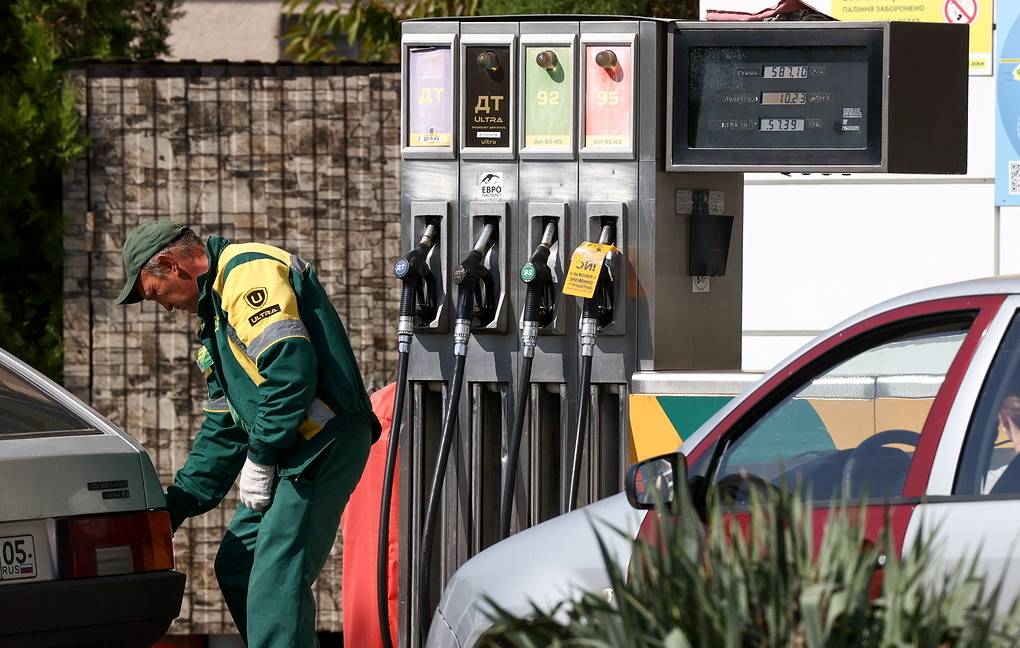
Russian regional budget deficits nearly double to 294 billion rubles in Q1
According to an activity report published by the Russian Accounts Chamber, the number of regions running a budget deficit in the first quarter of 2026 rose to 56, up from 46 in the same period of the previous year.
The report noted that the combined budget deficit of these regions nearly doubled, increasing from 153.9 billion rubles to 294 billion rubles.
The rise in the number of deficit-running regions was driven primarily by those experiencing deep fiscal imbalances. The number of regions where the budget deficit exceeded 10% of their tax and non-tax revenues climbed to 35, up from 23 in the first quarter of 2025. Conversely, the number of low-deficit regions—where the deficit remained below the 10% threshold—slipped from 23 to 21.
The report ranked the highest ratios of budget deficit relative to regional tax and non-tax revenues as follows: the Jewish Autonomous Oblast (50.5%), Kemerovo Oblast (50%), Vologda Oblast (32.9%), and the Komi Republic (32.7%).
Among the deficit-running regions, 12 saw simultaneous declines in both revenues and expenditures, while expenditures outpaced revenues in 27. According to the Accounts Chamber, a budget deficit was recorded for the second consecutive year in 39 regions, and for the third consecutive year in 11 regions.
In absolute terms, Kemerovo Oblast recorded the highest deficit at 21.3 billion rubles. This was followed by the Khanty-Mansi Autonomous Okrug at 20.3 billion rubles, Krasnodar Krai at 19.9 billion rubles, Irkutsk Oblast at 17.4 billion rubles, and Moscow Oblast at 15.2 billion rubles.
On the other hand, of the 34 regions that posted a budget surplus, the surplus did not exceed 5 billion rubles in 23 regions, while it ranged between 5 billion and 33 billion rubles in 10 regions.
Moscow was the sole exception to this trend, posting a budget surplus of 276.9 billion rubles. Moscow Mayor Sobyanin had previously described deficits in the capital’s budget as non-critical.
Outlining the overall financial condition of the regions, the report stated:
“Regional revenues amounted to 5.5144 trillion rubles, representing 20.7% of the projected volume for the year, while expenditures reached 5.3744 trillion rubles, or 18.4% of the annual target. Excluding Moscow, revenue growth stood at 0.2%, while expenditure growth reached 5.2%.”
A decline in revenues affected 29 regions, while 19 regions registered a drop in expenditures. During this period, 15 federal subjects recorded a simultaneous drop in both revenues and expenditures, whereas 14 regions faced rising expenditures despite falling revenues.
In 20 of the 29 regions with declining revenues, both corporate tax receipts and unrequited federal budget transfers fell simultaneously; in nine of these regions, revenues have contracted for the second consecutive year.
Federal budget deficit exceeds projections
Russian Finance Minister Anton Siluanov announced in June that the country’s 2026 federal budget would undergo revisions, and that the budget deficit would run slightly above the planned 3.786 trillion rubles, which represents 1.6% of GDP.
Discussing funding mechanisms to cover the gap, Minister Siluanov noted that several alternatives were available, including the utilization of budget balances and asset sales.
Although the statutory budget deficit for 2026 was set at 3.8 trillion rubles (1.6% of GDP), the deficit for the January-April period has already reached approximately 6 trillion rubles (2.5% of GDP).
According to Finance Ministry estimates from early May, federal budget revenues for the January-April 2026 period fell 4.5% year-on-year to 11.7 trillion rubles.
Oil and gas revenues plunged 38.3% to 2.3 trillion rubles, dragged down by earlier declines in oil prices.
Conversely, non-oil and gas revenues rose 10.2% to 9.4 trillion rubles, driven by a 20.2% surge in value-added tax (VAT) collections, which reached 5.3 trillion rubles.
Budget expenditures rose 15.7% compared to the previous year to reach 17.5 trillion rubles, fueled by accelerated procurement processes and advance payments.
For the full year of 2025, federal budget revenues stood at 37.2 trillion rubles against expenditures of 42.9 trillion rubles, resulting in a deficit of 5.6 trillion rubles, or 2.6% of GDP.
-
Diplomacy1 week agoEU authorizes Mediterranean naval mission to intercept suspected Russian shadow fleet tankers
-
Russia2 weeks agoRussia and US to sign agreement on Bering Strait tunnel design at St. Petersburg forum
-
Russia2 weeks agoRussia signs trillions of rubles in industrial and infrastructure deals at St. Petersburg forum
-
Diplomacy1 week agoTrump administration weighs purchasing Chagos Islands from Mauritius to secure Diego Garcia base
-
America1 week agoUS raises Israeli espionage threat to critical level amid surveillance concerns
-
Diplomacy1 week agoArmenia election: Pashinyan claims victory with near-majority as opposition alleges power usurpation
-
Europe2 weeks agoRheinmetall sells automotive supply division to Aequita for 350 million euros to focus on defense
-
Europe1 week agoUK underwater deterrent facing scrutiny as all active Astute-class submarines remain in port