
America
US Supreme Court bolsters Trump’s executive power over agencies but blocks swift removal of Fed governor

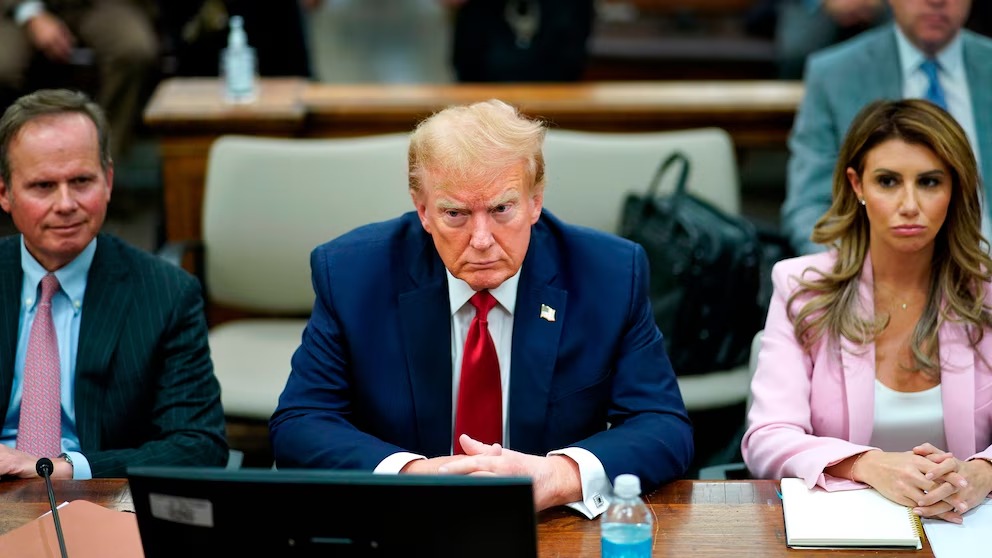
The US Supreme Court on Monday delivered a mixed set of rulings for President Donald Trump, simultaneously bolstering his executive control over independent federal agencies while rejecting a key pillar of his political agenda aimed at restricting mail-in voting.
The justices ruled that the heads of independent agencies can be removed by the president, significantly strengthening executive authority over the federal bureaucracy. However, the court also ruled that Federal Reserve Governor Lisa Cook must be afforded due process rights before she can be removed from her post, and rejected the president’s appeal in a separate civil lawsuit.
Major expansion of presidential authority
In a 6-3 decision, the court cleared the way for Trump to remove Federal Trade Commission (FTC) Commissioner Rebecca Slaughter, triggering a major expansion of the president’s removal powers.
The ruling sweeps aside 91 years of judicial precedent that had guaranteed a degree of independence from the White House for certain regulatory agencies, achieving a long-sought goal of conservative legal scholars.
Trump characterized the decision as the “largest increase” in presidential powers seen in a century.
The conservative majority framed the ruling as restoring the presidency to its constitutionally intended form.
Chief Justice John Roberts wrote that Trump’s expanded removal power is inherent to the constitutional system:
“When authority is exercised well, the public knows whom to thank; when it is exercised poorly, they know whom to blame and whom to remove. This is the very foundation of our system of government.”
The ruling enables the president to dismiss officials across numerous agencies beyond the FTC.
More than a dozen other agencies across the executive branch enjoy similar protections. These bodies oversee critical sectors, including nuclear energy, aircraft accident investigations, product safety recalls, and credit unions.
The court’s liberal justices dissented, arguing that the decision grants Trump a level of authority “unknown even to the British Crown.”
“Today, the Court casts aside this democratic regime in favor of one that distorts the structure of government to fit the majority’s theory of unitary and absolute executive control,” Justice Sonia Sotomayor wrote. “The result is a president who emerges with greater power than ever before.”
Justice Neil Gorsuch suggested that Congress retains the power to remedy the balance:
“The power to define new regulatory infractions remains, but the pen is now ultimately in the president’s hand. The ability to adjudicate disputes within the house continues, but that house is now white.”
Acknowledging that the decision concentrates presidential power, Gorsuch argued that the remedy lies with the legislative branch, which could make the agencies less powerful by stripping away their broad authority to regulate American life.
Roberts rules both for and against Trump in a single day
While Roberts led his conservative colleagues in greenlighting the president’s authority to remove certain independent agency heads without cause, the court stopped short of extending that same immediate authority to the Federal Reserve.
In a 5-4 decision also authored by the Chief Justice, the majority found that Trump failed to provide adequate due process to Federal Reserve Board Governor Lisa Cook before attempting to remove her over allegations of mortgage fraud.
Roberts argued that bypassing this step would allow a president to dismiss a Federal Reserve Board member “at any time, for any reason, without prior notice, and without subsequent judicial review.”
The decision capped a contradictory day for Trump’s executive powers, with Roberts positioned at the center of the rulings.
Roberts is widely known for attempting to keep the court out of partisan political battles. However, Trump’s agenda has continued to dominate the docket at a time when public approval of the court has fallen to record lows.
In the Federal Reserve case, Roberts went out of his way to emphasize that the ruling against Trump was narrow in scope.
He stressed that the decision did not resolve the ultimate question of whether Cook could eventually be removed.
This qualification allowed Trump to maintain a confident posture. Pressing for Cook’s removal shortly after the ruling was announced, Trump took to Truth Social to emphasize that the decision was merely “purely procedural.”
Trump suffers defeat on mail-in ballots
In another significant setback for Trump, the Supreme Court ruled 5-4 to uphold a Mississippi law that allows mail-in ballots arriving up to five days after Election Day to be counted.
Writing for the majority, Justice Amy Coney Barrett ruled that the Mississippi statute does not conflict with federal election law, defeating an effort by the Republican National Committee to halt the post-Election Day ballot-counting practice.
Quoting from the Federalist Papers, Barrett wrote:
“The Framers recognized the difficulty of drafting election laws ‘applicable to every possible change in the state of the country.’ For that reason, rather than constitutionalizing election law, they decided that ‘a discretionary power’ over elections ‘must exist somewhere.’ Suffice it to say, that power was not given to this court.”
Justice Samuel Alito led the dissent alongside the court’s three other conservative justices.
“In this day and age, not all voting occurs in person on Election Day. Both mail-in voting and early voting have proliferated, and the respondents do not contest the legality of these modern practices. Neither do I. But the adoption of these practices cannot alter the fact that, under federal law, the collective choice of the electorate must still be authoritatively expressed on Election Day,” Alito wrote.
Reacting to the defeat, Trump renewed his push for Congress to pass the “American Voter Eligibility Protection Act.”
Hours later, however, he conceded that the bill was unlikely to pass, stating: “Because we have four, maybe five Republican senators who absolutely will not vote for it. It’s crazy.”
Trump appointees cast decisive swing votes
Two of the conservative justices appointed by Trump cast decisive votes against him in the separate cases, developments that could leave Justices Brett Kavanaugh and Barrett open to criticism from the president.
During his tenure and post-presidency, Trump has frequently expressed dissatisfaction with Supreme Court rulings that go against him, particularly when those decisions involve his own appointees.
Barrett, the most junior conservative on the bench, authored the majority opinion on the mail-in voting case. She and Roberts joined the court’s three liberal justices to form the majority, leaving the other four conservative justices in dissent.
The ruling deals a blow to the Trump administration’s systematic campaign against mail-in voting, a practice the president has repeatedly claimed contributes to widespread fraud, despite a lack of supporting evidence.
Meanwhile, Kavanaugh joined the 5-4 majority that ruled against Trump in the Federal Reserve case, voting alongside Roberts and the three liberal justices.
In a brief concurring opinion, Kavanaugh highlighted the unique position of the central bank and urged the court to formally protect its independence.
“Even temporary uncertainty regarding the status of the Federal Reserve—including confusion over whether the president can summarily dismiss multiple board members at will—could trigger political turmoil and cause upheaval in the US and global economies. I would not embark on that road,” Kavanaugh wrote.











The US Congress is unlikely to approve the Donald Trump administration’s record $1.5 trillion defence budget request for the 2027 fiscal year.
According to a report by The Washington Post citing congressional sources, budget negotiations have stalled due to cross-party disagreements.
Roughly 30 US lawmakers interviewed by the newspaper said that defence policy and spending bills had reached an “impasse” following the total collapse of bipartisan consensus and personal friction between members of Congress and US Defence Secretary Pete Hegseth.
The Trump administration aims to divide the requested funding into two tranches, seeking support from a portion of Democrats for an initial $1.15 trillion package while pushing through a second $350 billion portion solely with Republican votes.
According to the report, Republicans have failed to secure even internal consensus to pass this second $350 billion package.
The US defence budget for 2026 stands at approximately $1 trillion, which includes a one-off allocation of $150 billion approved by Congress last year for priority objectives ranging from the development of advanced weapons systems to incentivising the American defence industry.
The new budget requested by the administration foresees a 40% increase in defence spending, covering funding for new weaponry and replenishing stocks of precision-guided missiles expended during the war with Iran.
Defence Secretary Hegseth also asked Congress to allocate an additional $67 billion for military operations, including the conflict with Iran.
The Washington Post noted that lawmakers have very limited time to resolve the crisis, as only 20 working days remain for Congress before the end of the year.
Bill for Middle East military operations mounts
The US proposed that defence spending be taken into account when allocating privileges within NATO.
According to a report by The Hill based on a US Central Command (CENTCOM) assessment, Washington’s expenditure on military operations targeting Iran has risen by more than $3 billion over the past month, reaching $47 billion.
The CENTCOM document indicates that munitions procurement constitutes the largest share of military spending at $29 billion.
Additional costs tied directly to conducting combat operations amount to roughly $12 billion, while $6.1 billion is needed to replace lost military equipment and hardware.
Expenditures for supporting personnel deployed to the region, air transport, communications, and logistical transit in the theatre of operations are calculated at $7.6 billion.
Expenses required to repair and rebuild US military bases in the Middle East were not included in this official cost breakdown.
In July, the House of Representatives narrowly passed a $1.15 trillion defence budget bill by a margin of just 216 votes to 212.
Six Democratic lawmakers voted in favour of the bill, while seven Republican lawmakers voted against their own party.
The Washington Post had previously reported that the Pentagon faced a severe funding shortfall.
The White House had requested an urgent $67 billion from Congress to cover military spending.
The newspaper noted that if lawmakers failed to act, the military would soon be forced to make far more painful concessions.
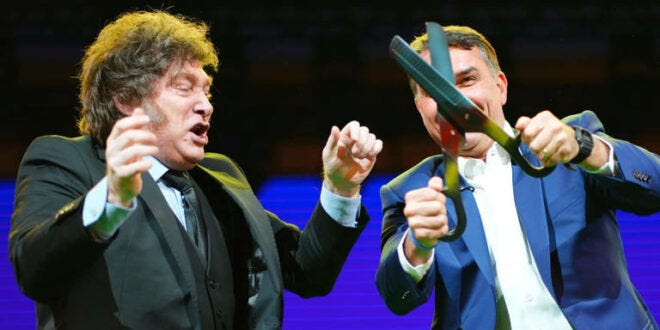
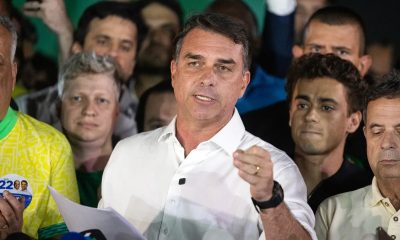
Flávio Bolsonaro fled Brazil on a plane belonging to the fleet of Argentine company Baires Fly, a firm linked to a businessman associated with a convicted drug trafficking conspirator, according to allegations.
The company, tied to an entrepreneur with business links to Federico “Fred” Machado, who faced drug trafficking charges in the US, is also named in a corruption investigation involving disability agency funds under the administration of Javier Milei.
Fórum Investiga, the investigative unit of Revista Fórum, uncovered these connections through court documents and public records in Argentina and the United States.
Sergio Daniel Mastropietro, a commercial broker for Baires Fly, was a business partner of Machado and currently faces money laundering and illicit association charges in connection with the scandal at Argentina’s National Disability Agency (ANDIS).
The company’s role drew scrutiny after the Argentine government confirmed early Wednesday that Bolsonaro entered the country with his wife and two daughters and boarded a private Baires Fly aircraft bound for Guayaquil, Ecuador.
According to Argentina’s National Directorate of Migration, the family crossed the border via the Tancredo Neves International Bridge between Foz do Iguaçu and Puerto Iguazú on Tuesday at 22:50.
The family boarded the plane at 23:30, and the Gulfstream G400, registered as LV-JQW, took off at 00:22 on Wednesday.
The journey followed an order by Federal Supreme Court Justice Alexandre de Moraes seizing Bolsonaro’s passports and barring him from leaving Brazil.
The drug trafficking link traces back to Argentine aviation businessman Federico Andrés Machado, known as Fred Machado, who was accused in the US of participating in an international ring tied to cocaine trafficking and money laundering.
Machado was a partner with Sergio Mastropietro in SO VAIN S.A., a company formed in 2010 for aviation-related ventures. Argentine investigations also documented shared travels, commercial ties, and common Buenos Aires addresses between the two men.
In February 2021, the US Department of Justice unsealed indictments against eight individuals for their roles in an international conspiracy involving narcotics trafficking, money laundering, and financial fraud.
Machado was among those indicted and was identified as an operator engaged in the purchase and sale of aircraft through his firm, South Aviation.
The investigation encompassed a network utilizing US-registered aircraft, several of which were seized in other nations while carrying large shipments of cocaine.
Machado was extradited from Argentina in November 2025 and subsequently reached a plea agreement with US prosecutors.
In August 2026, a federal court in Texas convicted him of conspiracy to commit money laundering and wire fraud.
The initial drug trafficking charge was dismissed as part of that plea agreement.
Machado’s commercial connection is with Mastropietro rather than directly with Baires Fly. The official owner of the company is Luis Grande, who has operated in Argentina’s private aviation sector for decades.
The other scandal involving Baires Fly centres on ANDIS, the agency responsible for providing assistance to people with disabilities in Argentina.
That inquiry examines allegations of contract steering, overbilling, kickbacks, and money laundering in questionable tenders during the Milei administration.
According to documents from the investigation led by federal prosecutor Franco Picardi, two ANDIS providers, Prolite Orthopedics and Probock, transferred 95.06 million Argentine pesos into a Baires Fly bank account on 10 September 2025. That sum represents approximately $62,000 based on exchange rates from 28 October 2026.
The payments occurred after Mastropietro sent the firm’s banking details to Miguel Ángel Calvete, who was identified as one of the figures behind the fraudulent scheme under investigation.
Following those transfers, invoices were issued for the advance purchase of flight hours on company aircraft.
Investigators suspect these commercial transactions were used to lend an appearance of legality to funds derived from irregular public contracts.
Financial tracking uncovered even larger sums. Documents reviewed by Argentine courts show Baires Fly billed five companies tied to the investigated contracts approximately 1.097 billion pesos, or around $720,000, between 2023 and 2025.
This figure reflects registered commercial transactions; it represents a fully confirmed amount of embezzled funds.
On 16 October, federal judge Ariel Lijo ordered formal charges against Mastropietro on suspicion of aggravated money laundering and illicit association.
The ruling also expanded charges against former ANDIS director and former Milei ally Diego Spagnuolo, alongside others allegedly involved in the conspiracy.
Argentina’s Federal Prosecutor’s Office stated that the probe revealed suspected fraud in contracts for medication, prosthetics, and equipment intended for assistance programme beneficiaries.
The airline maintains business relationships with figures across Argentine politics. In November 2023, days after winning the presidential election, Javier Milei used a Baires Fly plane to travel to the US. Luis Grande, the company’s owner, piloted the flight.
In the ANDIS investigation, Mastropietro denied managing Baires Fly or being formally part of the company, saying he acted only as an intermediary arranging aviation services.
The company maintains that it has no connection to the money laundering allegations.
The documents do not show that Bolsonaro was involved in the ANDIS scheme or in any drug trafficking activity.
There is also no evidence that Fred Machado played any role in arranging the flight.
In the United States, the Trump administration has unveiled its plan to support electoral reforms in Venezuela and lead the country toward presidential elections.
US Secretary of State Marco Rubio told international journalists during a press conference on Monday that Venezuela’s current electoral infrastructure was “designed to rig elections”.
As the chief architect of the administration’s Venezuela policy, Rubio argued that this system must be overhauled quickly to enable a valid vote.
According to Rubio, talks between the government of Interim President Delcy Rodríguez and opposition factions led by Dinorah Figuera are moving toward a concrete timetable.
The sides are preparing to appoint a new Supreme Tribunal of Justice (TSJ) before the end of the year, followed immediately by the renewal of the National Electoral Council (CNE).
“We obviously need to use our leverage over the interim Venezuelan authorities to ensure that the process moves forward responsibly. Our goal is to hold elections,” Rubio said, welcoming what he described as “serious progress” in that direction.
The US secretary issued a warning, saying, “Whoever tries to derail the process will do serious damage to Venezuela.”
Speaking at a separate press briefing, an unnamed senior US Department of State official outlined the step to follow institutional renewal, according to a report by the Venezuelanalysis portal.
According to the official, once both the TSJ and the CNE are reconstituted, the Venezuelan presidency will be declared permanently vacant, triggering a constitutional six-month window to conduct elections under “competitive conditions”.
The same official stressed that political guarantees must be provided and media access rules regulated during this phase.
Advocating the inclusion of pro-government factions in the “transitional period”, the official said peaceful democratic transitions often require the cooperation of outgoing groups, citing Spain and Portugal as precedents.
Electoral timetable and judicial work accelerate
Asked about a definite election date, Rubio said the Rodríguez administration had complied with US timelines so far.
Emphasising that they would not wait two years for an election, Rubio said: “That is not going to happen. In the best-case scenario, I have two years and two months left in this job.”
Rubio’s remarks coincided with statements by Dinorah Figuera, who heads the opposition delegation in the negotiations with government representatives.
Figuera had predicted that presidential elections would take place in late 2027 or early 2028.
Meanwhile, during the third round of political dialogue in Venezuela, the parties agreed to review four pieces of legislation governing political participation, pluralism, and the autonomy of political organisations, including the Law on Political Parties, Public Meetings, and Demonstrations.
The discussions also addressed disqualifications from public office and the examination of legal frameworks governing political rights.
In parallel, Venezuela’s National Assembly officially initiated the process to renew all 32 justices of the Supreme Tribunal of Justice.
Applications from legal professionals seeking seats on the court will be accepted from Wednesday, 28 October until Wednesday, 11 November. The fourth round of dialogue is scheduled for 11 to 15 November.
Rodríguez and other senior Venezuelan officials have not yet commented on the US Department of State’s statements.
Machado’s return and convoy controversy
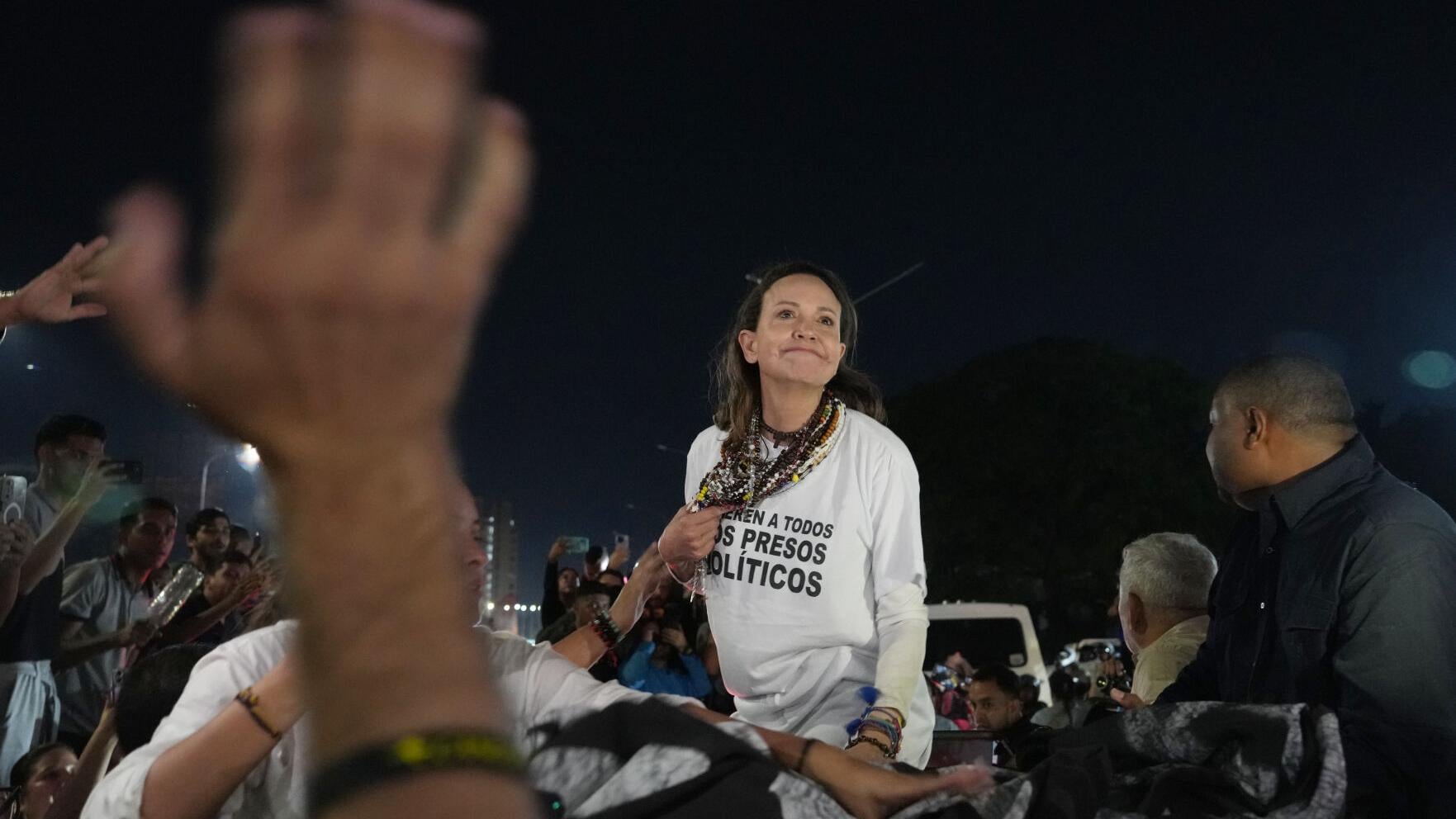
The White House’s assertions regarding Venezuelan reforms and elections coincided with the return of far-right opposition leader María Corina Machado to the country on Sunday.
Supporters of Machado, who had lived abroad for more than a year, called for their leader to be included in the ongoing negotiations.
Responding to questions about Machado’s return, Rubio said he had told the Rodríguez government “weeks ago” that she should be allowed to return to the country unhindered.
Denying claims that Washington obstructed Machado’s return, the Secretary of State said the opposition leader had merely been advised not to travel immediately following the twin earthquakes on 24 June.
Interim President Rodríguez, however, criticised the manner of the opposition politician’s return.
Characterising it as a “show” that could have been avoided, Rodríguez addressed Machado’s journey to Caracas at the head of a vehicular convoy covering 400 kilometres, following her appearance at a church in Lara state amid chants of “freedom” and calls for immediate presidential elections.
“The airports are right there. Let us stop putting on a show. Many people who benefited from this process aimed at peaceful coexistence and from the amnesty law were able to enter the country through the airport’s new transit structures,” Rodríguez said.
The interim president declined to reveal which route Machado had used to re-enter Venezuela.
Machado, who in recent years backed economic sanctions against Venezuela as well as foreign military intervention, left the country in December 2024 to travel to Oslo to receive the Nobel Peace Prize, which she subsequently dedicated as a gift to Trump.
While Machado and her party maintain that the government had previously barred her from returning seven times, Venezuelan authorities deny the allegation.
Asked whether the judiciary would act against Machado, Rodríguez said she hoped to see “remorse and a change of direction” from the opposition figure, adding that the opposition leader could make “some contribution to the country”.

North Korean hackers blamed for record $6.3bn Binance theft

CDU youth wing urges military deployment against student protests

Canada pursues closer EU partnership as summit opens

Ukraine economy set to shrink for first time since 2022, bank says

Congress poised to block Trump team’s $1.5 trillion defence budget bid
-
 America2 weeks ago
How Elon Musk fuses private empire with state power, Ben Tarnoff explains
-

 Europe2 weeks ago
AfD leader Weidel calls funding lost Ukraine war a grave mistake
-

 Middle East2 weeks ago
Egypt delays parliamentary vote on deploying troops to Saudi Arabia
-

 America1 week ago
US wealthy demolish multimillion-dollar mansions for land
-

 Europe2 weeks ago
EU rejects US proposal to resume Russian gas flows through Ukraine
-

 America2 weeks ago
At least 47 major US data centre projects halted or cancelled
-

 Middle East2 weeks ago
Netanyahu unveils security doctrine and regional alliance map
-
 Middle East1 week ago
Netanyahu trails Eisenkot in Israeli polls despite Trump backing
