
America
Bipartisan majority of US voters back strict government reviews for advanced AI, poll shows

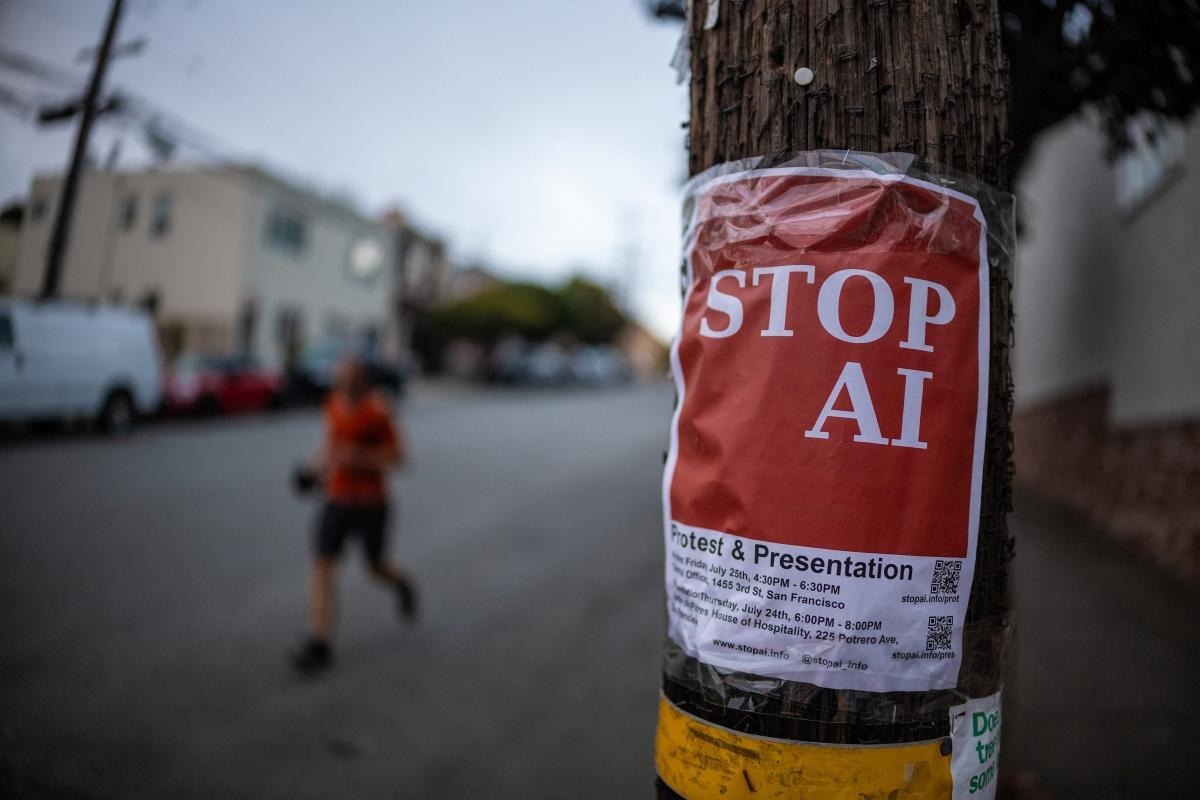
US demand for strict artificial intelligence regulation is rising, driven by a powerful bipartisan consensus that favors tighter rules for the technology, a new public opinion survey shows.
The poll, conducted by the Artificial Intelligence Policy Institute (AIPI), revealed that 68% of respondents support a requirement for the government to subject “the most advanced AI models to a formal review process before they are widely released.”
In contrast, 20% of participants expressed the view that the government should “rely primarily on companies to test their own AI models and step in mainly after problems arise.” The remaining 12% of respondents were undecided on which approach to support.
Broken down by political affiliation, the formal review process is supported by 76% of Democrats, 64% of Republicans, and 63% of independent voters.
Conversely, the survey showed that 15% of Democrats, 24% of Republicans, and 23% of independents believe the government should rely chiefly on self-testing by companies.
Backlash against data centers grows
Efforts to block or restrict the construction of data centers have gained momentum at both the state and local government levels in recent months.
Public opposition to the construction of massive AI infrastructure projects in local communities is becoming increasingly pronounced across the US.
Two months ago, the Maine State Legislature passed a bill halting the development of large-scale data centers, making it the first state in the country to take such action.
Resistance to data centers has been on the rise for the past several years. Local communities have expressed growing concern over the high energy consumption of these infrastructure facilities and their subsequent impact on the cost of living and the environment.
In March, Democratic Representative Alexandria Ocasio-Cortez and Independent Senator Bernie Sanders announced the Artificial Intelligence Data Center Moratorium Act.
The proposed legislation seeks to halt the construction of AI infrastructure until lawmakers enact measures that mandate state reviews of AI products, prevent mass job losses, and limit increases in consumer electricity prices.
The public opinion poll was conducted between June 10 and June 11 among 1,007 likely voters. The survey has a margin of error of 4.2%.










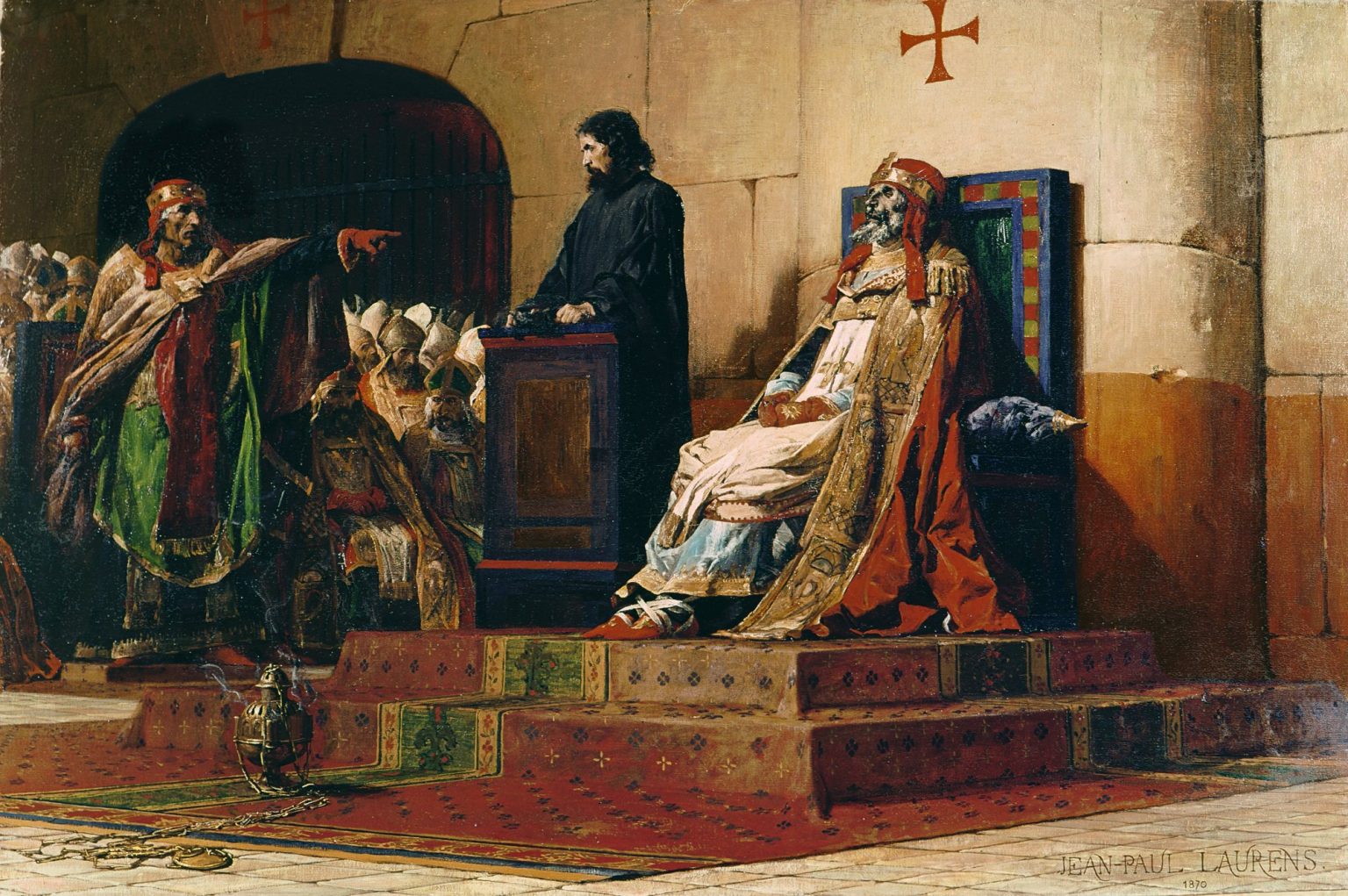
US Vice President JD Vance describes his 2019 conversion to Catholicism as “joining the resistance.”
He recalls having constant conversations about religion with his grandmother—and that the old woman he called “Mamaw” harbored a deep hatred for “organized religion.” Thus, he wonders what she would have said had she learned that the boy grew up to become a Catholic.
In his memoir Hillbilly Elegy, which became a bestseller following its publication in 2016, Vance diagnosed the maladies of American society, believing he had finally found what he was looking for:
“I felt a desperate need for a worldview that understood our bad behavior as both social and individual, structural and moral; that recognized we are products of our environment; that we have a responsibility to change that environment, but that we are still moral beings with individual duties.”
We must concede that he found—or at least believed he had found—a socio-political response of the very same nature to a socio-political problem. When one embraces Catholicism as an antidote to what has gone awry in American society, one inherently embraces a particular strain of Catholicism. By way of an imperfect analogy, we might also call it “political Catholicism.”(1)
Yet it already bears a name, and one that Vance himself champions: postliberalism. Postliberals share certain familiar conservative positions, such as opposition to abortion and LGBT rights. In this regard, their kinship with mainstream American religious thought is unmistakable.
However, there is a fundamental departure: whereas American Catholic conservatives previously viewed the expansion of the state as a problem, postliberals demand a strong state.
Their divergence from the liberal conception of the state lies, first and foremost, in declaring the notion of the “neutral state” to be a “myth.” Postliberals believe the state should not be neutral; rather, it must actively contribute to the realization of social salvation.(2)
This movement, of which Vance proudly professes to be a part, pursues a “counter-revolution” wherein they intend to capture the state bureaucracy and institutions such as universities from within, replace establishment elites with their own, and govern according to their vision of the “common good.”
Patrick Deneen, one of the movement’s foremost figures, spoke in his 2023 book Regime Change of the need for the “peaceful but vigorous overthrow of a corrupt and corrupting liberal ruling class.” The formula for political alliance Deneen proposed was “aristopopulism,” in which those at the very top and those at the very bottom would mobilize against the “establishment.”(3)
Nevertheless, I must point out that the crucial crux of this elite substitution hinges upon the premise that establishment elites are “not elite enough.” Moreover, it is worth recalling that postliberalism—and in our present case, Vance himself—equates this eliteness with IQ scores. In his polemic with Rory Stewart, whom we shall mention below, Vance questioned his adversary’s intelligence, stating: “I’ve said it before and I’ll say it again: the problem with Rory and his ilk is that they have an IQ of 110 and think they have an IQ of 130. That misplaced arrogance is the root cause of so many elite failures over the last 40 years.”
In last year’s series of articles, I pointed out that Silicon Valley ideologues approached biological hierarchies and IQ scores (“neurocastes”) with genuine zeal. In the case of Vance, we see once more how facile the leap from the culturalist arguments that flared up during the Trump years to biological structures truly is. Furthermore, while the aristokratia in “aristopopulism” is thrust directly into our faces, the populus once again quietly vanishes from view.
Ordo amoris: The Popes Against JD Vance
In an interview with Fox News on January 30, 2025, Vance invoked a curious reference to defend the Trump administration’s crackdown on “illegal” immigrants:
“As an American leader, but also just as an American citizen, your compassion has to go first to your fellow citizens. That doesn’t mean you hate people outside of your borders. But there’s an old-fashioned [concept]—by the way, I think it’s a very Christian concept—you love your family first, then you love your neighbor, then you love your community, then you love your fellow citizens, and only after that do you focus on and prioritize the rest of the world. So much of the far left has completely inverted this. They seem to hate their fellow citizens and care more about people outside their borders. You cannot run a society that way.”
Feeling compelled to respond, former British Member of Parliament and Jackson Institute professor at Yale University Rory Stewart linked Vance’s commentary to a “tribal” and “un-Christian” form of religiosity, noting: “Bizarre take on John 15:12–13—closer to pagan tribalism than Christianity. We should start worrying when politicians turn theologian, dare to speak for Jesus, and begin telling us whom to love in what order.”
Vance’s retort opened with the words: “Google ordo amoris.”
Arguing that the idea of there being no hierarchy among obligations runs “contrary to basic common sense,” Vance asked: “Does Rory really think his moral obligations to his own children are the same as his obligations to a stranger living thousands of miles away? Does anyone really believe that?”
Deriving from Augustine, ordo amoris is interpreted in The City of God as “rightly ordered love” and serves as the very definition of “virtue.” Its literal rendering is the “order of love.” What Vance understands by this order is a hierarchy among the objects toward which love is directed.
Recall from the first article that Peter Thiel had written, half-jestingly, that Pope Francis might be the Antichrist. It was this very Francis who, shortly before his death, leveled sharp criticisms at Vance’s conception of ordo amoris in a letter addressed to US bishops concerning immigration. Rejecting the claim that Christian love is “a concentric expansion of interests that gradually extends to other persons and groups,” the late Pope underscored that man is not merely a relatively open-minded individual endowed with certain benevolent sentiments, continuing:
“The true ordo amoris to be promoted is that which we discover through continuous contemplation of the parable of the Good Samaritan—that is, through contemplation of a love that establishes a fraternity open to all, without exception.”
An X account belonging to the current Pope Leo XIV, then Cardinal Robert Prevost, had reposted an article published in the National Catholic Reporter titled “JD Vance is wrong: Jesus doesn’t ask us to rank our love for others.”
Coming to Vance’s aid would be his reputed “intellectual mentor,” James Orr. Prior to joining the advisory staff of Reform UK leader Nigel Farage, Orr—a theologian who led The Centre for a Better Britain (CFABB),(4) a project he described as “post-Brexit, pro-nation, pro-sovereignty, pro-Britain”—had become a prominent figure in the “National Conservatism” movement and attended as a guest the gathering hosted by the US Vice President in the Cotswolds last summer.
In his published response, Orr dismissed Stewart’s critique as the “egalitarianism of secular liberalism,” arguing that “to the cosmopolitan egalitarians of late liberalism, the ‘hierarchies of the heart’ are as suspect and objectionable as any other.”
Divided Catholicism in the End Times
This division is not confined strictly to the question of immigration. Otherwise, the new Pope Leo would not seize every available opportunity to assault Trumpian immigration policy. For instance, most recently at the Meeting for Friendship Amongst Peoples held in Rimini, Italy, Leo stated, “Before borders, definitions, and institutions, there are always human beings.” Invoking his predecessor Francis’s 2020 encyclical Fratelli Tutti [All Brothers], he remarked that social friendship is “the public, dynamic, and concrete expression of fraternity” and that when we recognize one another as children of God, “we come into contact with what fundamentally unites people, beyond any difference, division, or conflict.” Contrast this with the emphases in Vance’s speech from last year. To his mind, America was a place “in a particular geography, with a particular people, possessing a particular faith and a particular way of life.” What defined the United States had to mean, above all, “sovereignty.” American citizenship, then, meant belonging to a nation that protected the sovereignty of its people—a sovereignty setting it apart, specifically, from “a modern world determined to erase borders and national character.”
Yet the theater of conflict spans far wider. From DEI and LGBT rights to the ordination of women and abortion, nearly all the familiar culture-war battlegrounds of American politics are bound up in this parcel, alongside the Palestinian question and interfaith dialogue. When the debates ignited by Pope Francis’s reformist drives within the Church converged with the post-2008 search for a way out of catastrophe and the political ascent of Trump, all factions began securing open or covert allies across the political establishment.
Among the countries with which the Vatican has allied for its own agenda, the United Kingdom stands prominent. Last year, King Charles became the first British monarch since Henry VIII’s rupture with Rome in the sixteenth century to pray publicly alongside a pope, praising “the Catholic Church and the Church of England joining hands.” The Royal Household noted that the service “symbolized the joining of hands between the Catholic Church and the Church of England.” Meanwhile, the MAGA postliberals—it goes without saying—march in lockstep with the European New Right and right-wing religious Zionist circles.
Yet precisely at this juncture, a curious contradiction—or rather, an entanglement—surfaces. First, between the postliberals and their Silicon Valley allies: Matt Sleat, who has also written a book on this movement, argues that on the plane of economic policy, postliberals—contrary to the unyielding free-market fundamentalism of Reaganite conservatives—maintain that neoliberalism has enabled massive corporations to reap unprecedented profits while inflicting harm on workers, devastating local communities, and degrading the environment. They contend that free trade has failed to raise living standards for all, particularly for the working class. Instead, they call for breaking up powerful monopolies, reindustrialization, family-supporting wages, the protection of workers (including the self-employed), and the robust support of trade unions and professional associations. Sleat unearths a historical parallel: rather than aligning with the free-market philosophy of the 1980s, postliberals appear far closer to the 1930s New Deal, wherein the state served as a countervailing force against capital. This “statist” posture visibly parts ways with Vance’s primary benefactor, Peter Thiel, and the deregulatory cohort surrounding him.
The entanglement becomes even more telling. For instance, Pope Francis, whom postliberals abhor, advanced an economic vision throughout his pontificate that called for a radical transformation to ensure capitalism served people rather than profit: honest leadership, human-centered focus, ethical responsibility, and contributing to the shaping of a world that serves and uplifts humanity rather than exploiting it. It was this same Francis who decried the excesses of globalization, “predatory capitalism,” and an “economy that kills”:
“Francis traced the roots of the 2008–09 global financial crisis to a profound anthropological crisis that, in his own words, ‘creates new idols.’ In his view, the ancient biblical ‘worship of the golden calf’ had resurfaced, albeit in a modern guise. We were now confronted with the ‘fetishism of money’ and the ‘dictatorship of an economy’ that failed to serve the people.”
Indeed, in his encyclical Laudato si’, Francis emphasized the potential of business to serve the “common good,” writing: “Business is a noble vocation, directed to producing wealth and improving our world… especially if it sees the creation of jobs as an essential part of its service to the common good!”
Rerum Novarum, penned by Leo XIII—whom the current Pope regards himself as following—primarily against ascendant socialism, yet concurrently against “unfettered capitalism,” is regarded as the cornerstone of Catholic Social Teaching. Leo XIII is also remembered as the “social Pope” and the “Pope of the workers.” One might say he produced the first systematic publication of Catholic social doctrine regarding the “social question” that defined the second half of the nineteenth century. It was likewise the inception of the Catholic Church’s international theorization of what came to be known as the “third way”: an ethical-political reformist movement would flourish by drawing upon Rerum Novarum against those “warring brethren,” liberalism and socialism. The workers and the impoverished, cast into ruin by the Industrial Revolution, were to be redeemed through the ideal of “justice” and a just wage (a “living wage”); in an era where all social bonds were reduced to the cold calculus of economics, a remedy for the misery wrought by the social question would be forged through the Christian organization of workers and employers alike.
Indeed, upon his election, Pope Robert Francis Prevost (Leo XIV) explained the principal rationale for adopting the name Leo during his inaugural address before the College of Cardinals:
“Feeling within myself the call to continue along this path, I resolved to take the name Leo XIV. There are various reasons for this, but the principal one is that Pope Leo XIII, in his historic encyclical Rerum Novarum, addressed the social question within the context of the first major industrial revolution. Today, the Church offers the treasury of her social teaching to all people in response to another industrial revolution and to advancements in artificial intelligence, which present new challenges for the defense of human dignity, justice, and labor.”
Consequently, the landscape grows increasingly tangled: on one side stands Leo, who in his encyclical(5) Magnifica Humanitas warns of the perils of artificial intelligence and calls for its regulation, evoking an apocalyptic specter by referencing the “Tower of Babel”; on the other side are conservative Catholics whose presence deems the Pope’s call for sanctions against AI insufficient. Hostility toward neoliberalism—or, at the very least, the conviction that it has been “surpassed”—is present on both sides of the divide.
Theologian David Congdon approaches postliberalism as an “apocalyptic politics.” Drawing upon figures such as Patrick Deneen, he illustrates how postliberal intellectuals construct a narrative of “cultural catastrophe.” According to this narrative, liberalism has not merely failed; it has precipitated the outright collapse of Western civilization.
In this context, the idea of the apocalypse binds these Catholic factions together, however divergent their paths may be. For apocalyptic propaganda performs an insidious political function: through a narrative of existential civilizational crisis, both the postliberals and their opponents legitimize extraordinary measures that would otherwise be unthinkable—or at the very least, ensure that the rumor of crisis is no longer perceived as worse than the reality itself.
Yet does such a crisis not exist? In the next article, we shall examine the death throes of capitalism and attempt to disentangle eschatology from the rigorous, scientific analysis of crisis.
(1) Writing on postliberalism at the Centre de recherches internationales (CERI), Nadia Marzouki employs the term “political Christianity” to describe these types of Christian movements in the United States.
(2) Another postliberal, Harvard law professor Adrian Vermeule, advocates through what he terms “integralism” that church and state must be integrated for the sake of the “common good.” Vermeule argues that the Church ought to be accorded its rightful authority to guide the state and government in spiritual and moral affairs.
(3) In his analysis of Deneen’s work, theologian David Congdon argues that this author contends liberalism’s emphasis on individual liberty leads to “permanent revolution and cultural destruction.” Deneen’s alternative anchors language, religion, law, and governance within local group identities, yielding what Congdon characterizes as the conditions for an “authoritarian, homogeneous society that violently suppresses individual dissent.”
(4) Asserting that the United Kingdom has accumulated excessive debt and will soon be dragged into a debt crisis, CFABB leans upon the claim that “Britain is completely broken” and posits that the nation requires “rapid, radical reform.” Among its foremost priorities is the drafting of constitutional reforms and new policy options to “assist in preparations for the new government to be formed in 2029.” The think tank’s blueprint draws manifest inspiration from the Heritage Foundation’s “Project 2025.” The group has also begun making its presence felt in the United States, establishing an entity in Dallas, Texas, to draw inspiration from the MAGA movement—which twice carried Donald Trump to the White House—and to raise millions of dollars. For detailed information, see here.
(5) Leo’s reflections on finance, while largely comprised of familiar tropes, remain worthy of note. In paragraph 160 of the encyclical, he writes:
“In recent years, the importance of finance has grown, and significant innovations have occurred in this field, partly with the emergence of cryptocurrencies. The reflections and observations found in the teachings of my predecessors, particularly in papal encyclicals, have emphasized that when the financial intermediation sector operates ‘deprived of the necessary anthropological and moral foundations, it not only leads to manifest abuses and injustice, but also demonstrates the capacity to create a systemic and global economic crisis.’ Likewise, income derived from capital tends to supplant income derived from labor, which is often marginalized from the primary concerns of the economic system. Yet the conversion of savings into credit for the real economy—thereby creating opportunities for both employment and self-employment—remains of central importance for the investments that must accompany processes of development and ongoing transformation. The social function of credit is irreplaceable. Finance as an end in itself is fundamentally distinct from financing directed toward development, creation, and the evolution of labor.”
I would remind the reader that these commonplace assessments regarding finance are not the exclusive domain of “progressive” Catholicism; they are equally embedded within the postliberalism we have discussed at length. We shall return to this subject in subsequent essays.
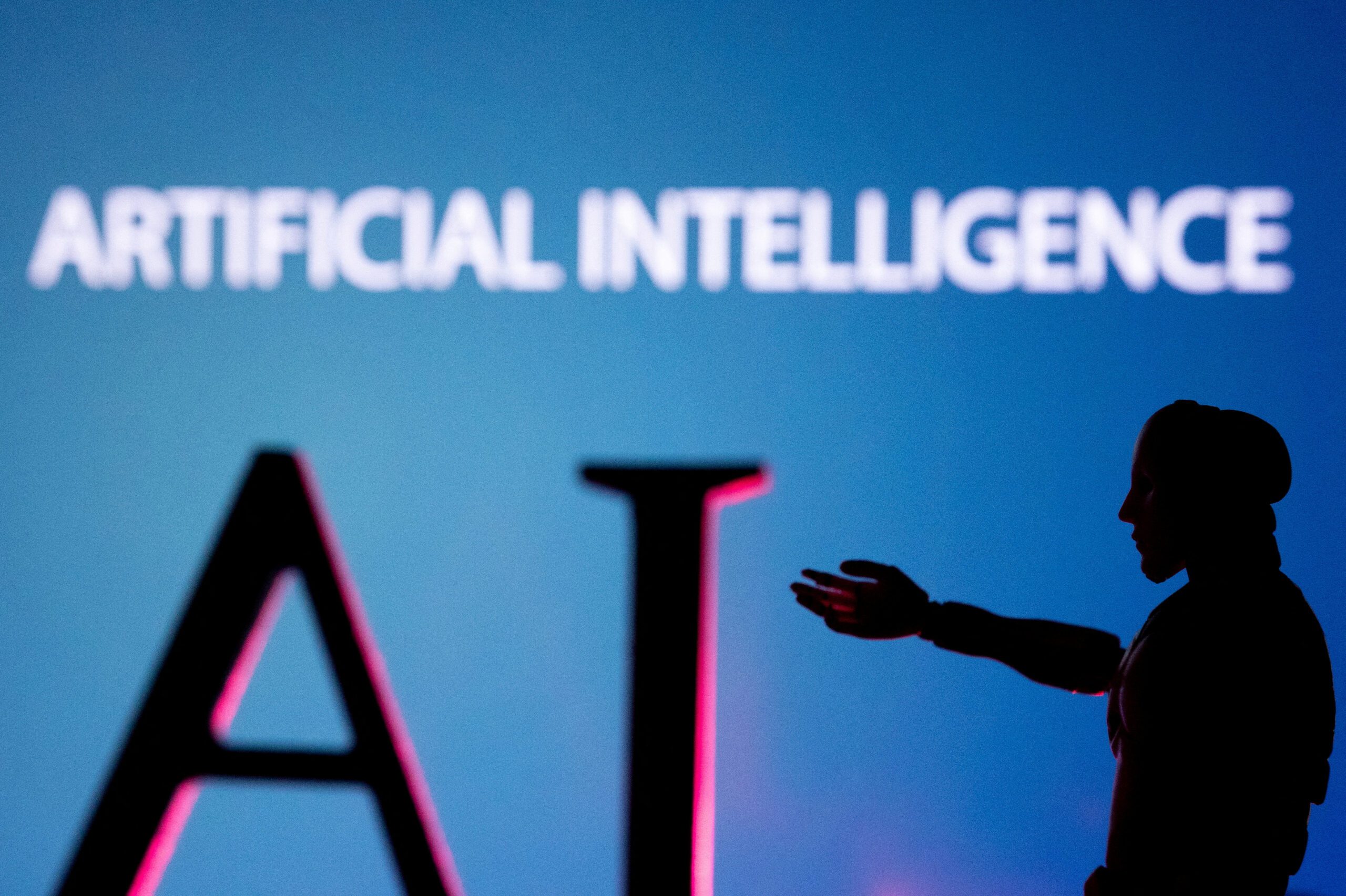
Investments by Silicon Valley-based technology giants in mainstream media organisations have taken on a new dimension in recent years, pivoting around direct cash flows, technology transfers, and legal strategies.
Aiming to shield their artificial intelligence models from copyright infringement lawsuits and feed them high-quality, real-time data cleansed of low-grade AI-generated material circulating online, tech companies are engaged in a billion-dollar licensing race.
OpenAI stands out with aggressive licensing drive
Building the industry’s most extensive content licensing portfolio, OpenAI is not only purchasing data but also integrating media outlets into its own ecosystem via AI integration.
The five-year agreement struck between the company and News Corp encompasses more than $250 million in cash and technology credits. The deal’s average annual cash flow stands at around $50 million.
Under this collaboration, the archives and live news feeds of The Wall Street Journal, Barron’s, MarketWatch, The New York Post, The Times, The Sunday Times, and The Sun have been opened to OpenAI systems. OpenAI uses this data both to train its GPT models and to summarize News Corp articles with source attribution links within ChatGPT search results.
The Media Copilot Citation Study and analyses by The Wall Street Journal on market dynamics reveal that publishers entering into licensing agreements gain a 48% priority advantage in ChatGPT citations.
OpenAI also signed an agreement valued at between $25 million and $30 million over three years with Axel Springer—whose portfolio includes publications such as Politico and Business Insider—securing the right to provide users with real-time summaries of European and US political news.
In its partnership with Dotdash Meredith, a fixed annual guarantee fee of $16 million was established alongside variable commercial revenue-sharing arrangements.
According to IAC financial filings and Adweek data, millions of articles from brands including People, Better Homes & Gardens, Lifewire, and InStyle are transferred to OpenAI, while the technology company supports the AI optimization of Dotdash Meredith’s advertising targeting platform, D.M.A.P.
On another front, The Walt Disney Company partnership announced by Disney CEO Bob Iger and Sam Altman involved a combination of a $1 billion equity investment and stock warrants.
The agreement aimed to secure the legal use of more than 200 characters from the Disney, Pixar, Marvel, and Star Wars universes inside Sora, the text-to-video AI model.
However, according to details reflected in reports by The Guardian and OpenAI Index filings, Hollywood’s resistance to artificial intelligence, the rights of actors and voice artists, and shifting priorities within OpenAI regarding the Sora application have plunged the operational process of the billion-dollar integration project into crisis.
Alongside traditional media, OpenAI is also turning to alternative and emerging media platforms. The company acquired TBPN last April. TBPN is a podcast hosted by John Coogan and Jordi Hays, both of whom come from the venture capital world. Daily from a Los Angeles studio, the duo hosts a three-hour show reminiscent of mainstream media business or sports broadcasts.
The podcast and its team fall under the responsibility of Chris Lehane, an experienced lobbyist who rose to prominence managing scandals during the Clinton administration. Lehane serves as OpenAI’s head of public relations.
Silicon Valley’s “parallel media ecosystem” does not consist solely of ventures by tech investors. Andreessen Horowitz, for instance, is investing heavily to build its own media empire. The venture capital firm publishes podcasts to showcase its tech investment portfolio and promote pro-technology politics. In this context, bespoke publications such as Future were established to disseminate optimistic perspectives on technology and feature founders in their portfolio without subjecting them to external critical scrutiny.
Furthermore, tech-backed ventures such as the AI platform State Affairs—supported by Peter Thiel’s venture capital firm Founders Fund and Khosla Ventures—employ human reporters to feed state legislative data into large language models (LLMs) for corporate subscribers.
Meta pivots to AI data over social traffic
Having faced disputes with publishers after restricting external link traffic directed to traditional media via Facebook and Instagram, Meta has deployed its AI budgets as a solution.
According to reporting by The Wall Street Journal, the company is executing multi-year agreements reaching up to $50 million annually with News Corp and a global pool of publishers.
Meta is making this investment to ensure its open-source Llama models avoid copyright complications when delivering news in internet searches and inside the Meta AI assistant.
Rather than using the data directly to train model weights, the company employs it within a retrieval-augmented generation (RAG) infrastructure that enables the assistant to deliver instant, legally cleared news to the user.
Apple negotiates with legal liability clause
Entering the AI arena with its “Apple Intelligence” integration, Apple held talks with publisher groups including Condé Nast, NBC News, and IAC to conduct its data collection process on an entirely legal footing.
As reported by The New York Times and PCMag, Apple tabled multi-year offers with a baseline price of at least $50 million per group for decades-long archives of institutions such as Vogue, The New Yorker, GQ, Vanity Fair, and NBC News.
A primary factor prolonging negotiations was reportedly Apple’s demand that publishers also assume potential legal liabilities arising from the processing of data within the system.
Perplexity AI shares ad revenue
Confronted with accusations of plagiarism and content theft from media organisations, Perplexity AI established a revenue-sharing pool under the name “Perplexity Publishers Program” to pre-empt potential copyright lawsuits.
Under the partnership, which includes TIME, Fortune, Der Spiegel, and the Los Angeles Times, an initial cash pool of $42.5 million was created.
According to the model examined by The Wall Street Journal and Digiday, Perplexity AI, which has begun introducing advertisements into search results, transfers between 50% and 80% of generated ad revenues to the publisher when it draws on the relevant media outlet’s article while generating an answer.
The company also provides enterprise AI subscriptions to employees of these media organisations.

The Trump administration is in talks with Venezuela’s interim government to acquire an equity stake in the country’s vast oil reserves.
According to a report by Axios, this historic agreement would more than double US oil reserves by securing resources from the country that holds the world’s largest proven oil reserves.
“To call this deal ‘big’ would be an understatement. This is a massive deal,” one official said.
Another factor driving the push to sign the agreement is the wars in Iran and Ukraine, which have disrupted global oil supplies and pushed up prices.
The US Strategic Petroleum Reserve currently stands at a 40-year low.
The details are still being worked out, but the talks cover more than a dozen producing oilfields, rather than the entirety of Venezuela’s 300 billion barrels in proven reserves.
The fields in question hold 90 billion barrels in proven reserves and were previously controlled by former Venezuelan officials, including some who face criminal charges.
Interests once controlled by China were also linked to these fields.
In exchange for granting the US an ownership stake, the Venezuelan government would benefit from private firms, including American companies, developing these fields and generating increased oil revenues for the country.
According to Axios, the Venezuelan oil deal would represent a legacy-defining moment for President Trump, who has made US energy security and dominance in the Western Hemisphere cornerstones of his “Donroe Doctrine”.
“President Trump is very close to securing America’s energy future for generations to come, not only in the US, but across the entire hemisphere,” another official said.
Trump had reportedly begun discussing ways to acquire a stake in Venezuelan oilfields in secret even before Nicolas Maduro was abducted by the US on 3 January.
The negotiations are being led by US Secretary of State Marco Rubio and Venezuela’s interim president, Delcy Rodriguez.
Last month, senior officials from the Departments of State and Defence met with their counterparts in Caracas to discuss the details in greater depth.
White House Deputy Chief of Staff Stephen Miller is also playing a significant role in the process.
An official noted that the White House is sensitive to accusations that Rodriguez will hand over Venezuela’s natural resources to the US, stating: “We are doing everything we can to show this will benefit the Venezuelan people, because it genuinely will.”
It remains uncertain exactly when the agreement will be finalised. US Secretary of Energy Chris Wright is discussing plans to travel to Venezuela next week, as his department examines ways for US companies to boost oil production.

Five minutes to midnight – 2: The war of the churches

Le Pen vows radical spending cuts to ease French debt fears at Medef

Tech giants pour billions into media licensing to fuel AI systems

Merz and net contributors reject two-trillion-euro EU budget draft

Germany and Canada vie for top NATO Military Committee post
-

 Interview2 weeks ago
Daniel Davis warns US strategy fails against Iranian defense grid
-
 Diplomacy2 weeks ago
Erdogan blocked CIA-Mossad plan for armed Kurdish uprising in Iran, report says
-
 America2 weeks ago
AIPAC super PAC pours millions into key Democratic primary races
-

 Europe2 weeks ago
Marine Le Pen plans French constitutional referendum on immigration
-
 Middle East2 weeks ago
US considers land blockade on Iran involving Türkiye and neighbours
-

 Diplomacy2 weeks ago
The two terrorists: Britain jails tweets while the West crowns al-Qaeda’s man in Damascus
-
 America2 weeks ago
US-Brazil rift widens over proposed sanctions and trade tariffs
-

 Europe2 weeks ago
Greece secures EU sanctions carve-out for billionaire’s LNG fleet
