
Diplomacy
Trump prepared to offer Türkiye path back to F-35 program at NATO summit

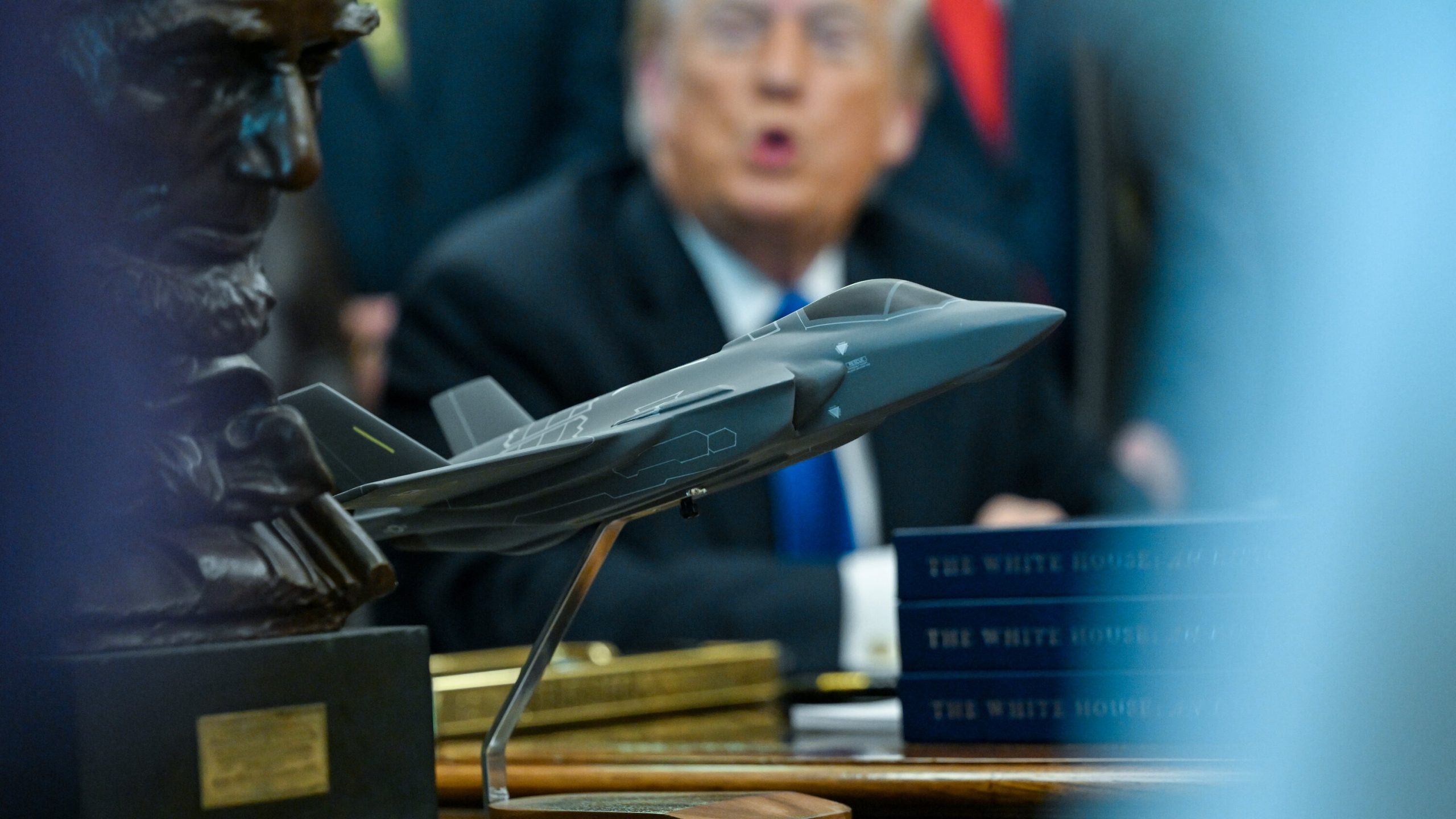
US President Donald Trump is expected to inform Turkish President Recep Tayyip Erdogan that he is prepared to allow Türkiye to rejoin the F-35 fighter jet program when the two leaders meet at the upcoming NATO summit.
According to a report by the New York Times, which cited four senior administration officials, a declaration of intent to this effect is set to be presented during the bilateral meeting.
Trump, who is preparing to travel to Ankara to attend the NATO summit scheduled to begin on Tuesday evening, will hold a face-to-face meeting with Erdogan on the sidelines of the event.
In reports emerging ahead of the summit, sources within the US administration indicated that officials hold differing views on how Trump will bypass the legal restrictions and sanctions imposed by Congress.
Officials noted that to overcome these restrictions and initiate the process, the two leaders could exchange formal letters addressing the matter.
Türkiye’s purchase of the S-400 air defense system from Russia in 2019 triggered significant strain in relations with Washington and eroded congressional support for Ankara. Following these developments, the US administration imposed sanctions on Türkiye and removed the country from the F-35 joint fighter strike program.
Congress subsequently passed legislation prohibiting any F-35 sales to Ankara as long as Türkiye possesses the S-400 system, arguing that the Russian air defense platform poses a security risk to the US-made fighter jets.
Despite the pursuit of closer relations between the two countries during the Trump presidency, the F-35 dispute remains one of the most prominent points of contention in bilateral relations.
Separately, President Trump has reiterated his call for Congress, upon its return to session, to pass the “Reconciliation 3.0” budget package—which includes $350 billion in funding for defense spending—as well as the SAVE America Act, which aims to introduce stricter rules for voting and voter registration processes.
Addressing the leadership of both the House of Representatives and the Senate, Trump demanded that these two legislative measures be treated as the highest priorities.
The US President requested that the $350 billion defense allocation under Reconciliation 3.0 be cleared by the Budget Committee as quickly as possible once Congress resumes its legislative work.






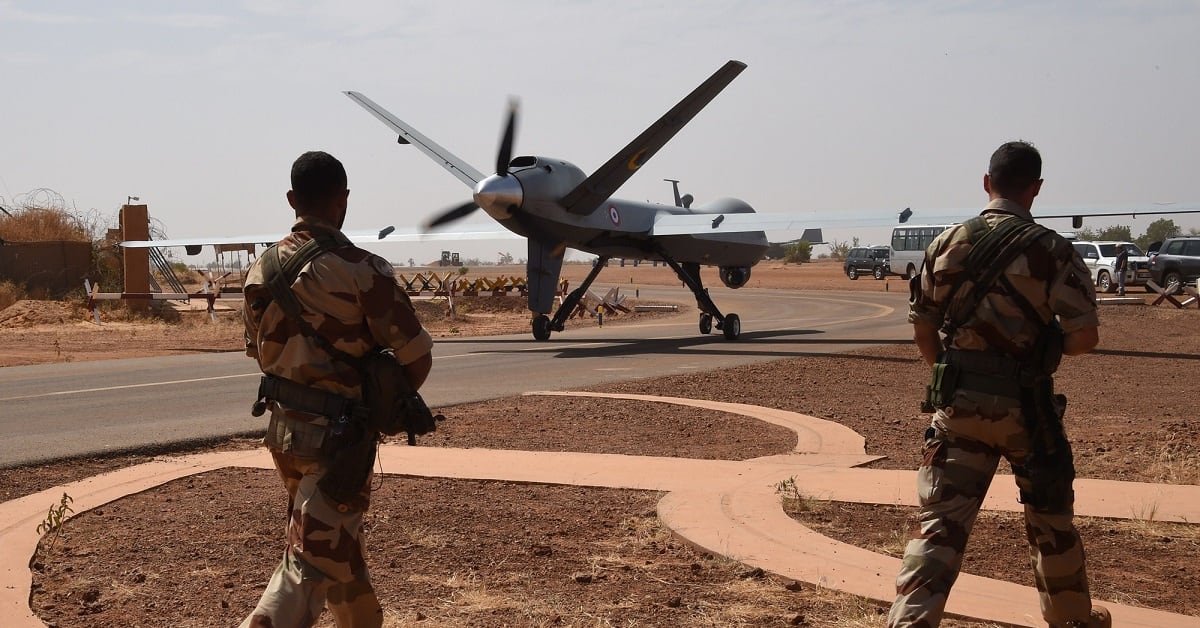
US military drones commenced reconnaissance flights over the Al-Miskad mountains in Somalia’s semi-autonomous Puntland region shortly after sunset on 3 September.
Speaking to news outlet Drop Site, Puntland security officials said surveillance targeted the Togga Miraale and Togga Baalade areas, identified by local authorities as strongholds of Islamic State militants.
Officials reported that the drones identified suspected Islamic State fighters travelling by donkey cart in the Togga Baalade area, prompting airstrikes at around 20:30.
Conducted concurrently with reconnaissance operations over the Al-Madow mountains in the Sanaag region, where Al-Shabaab maintains a presence, the operation concluded a period of relative calm in US strikes across Somalia.
US Africa Command (AFRICOM), which oversees US military operations in Somalia, did not respond to requests for comment. However, Puntland security officials noted that they expect US air operations in the country to intensify further in the foreseeable future.
At the centre of this military expansion lies a new US military base planned for the Gulf of Aden port city of Bosaso, which was announced last month.
While local officials maintain that US air support is indispensable in combatting the Islamic State, American operations across the region have drawn criticism over the deaths and displacement of thousands of civilians.
Situated on the Gulf of Aden, through which roughly 25% of global maritime traffic passes, Bosaso has a population of 1 million and serves as a critical human smuggling corridor for East African migrants moving towards Yemen and the Arabian Peninsula.
The area is emerging as the focal point of a US initiative to militarise one of the world’s most strategic maritime routes. On land, intense combat between US-backed Puntland regional forces and Islamic State militants has continued in the Al-Miskad mountains for nearly two years.
The US administration characterises the arid, mountainous terrain of northern Somalia as the central hub from which the Islamic State directs its global operations.
Security sources in Puntland stated that Washington is de facto expanding its military footprint by constructing a new base in Bosaso, which will be utilised directly for combat, reconnaissance, and maritime security operations.
Officials emphasised that the Central Intelligence Agency (CIA) would also expand its regional footprint.
Agreement signed behind closed doors
An AFRICOM delegation headed by special operations commander Major General Claude Tudor met Puntland President Said Abdullahi Deni in Bosaso on 2 August.
Following the meeting, the presidency of the semi-autonomous region, which is nominally subordinate to the central government in Mogadishu, announced in an official communiqué that a new memorandum of understanding had been reached.
The statement noted that the US would expand its military base in Bosaso to enhance counter-terrorism operations and safeguard maritime security.
However, five separate Puntland security officials who spoke to Drop Site argued that the official announcement distorted the true nature of the agreement.
Noting that the US had never previously possessed a military base in Bosaso, officials stated that the existing presence consisted solely of an “office” operated as an intelligence centre by AFRICOM and the CIA. Under the new project, a military installation will be established in the region from scratch.
Under current arrangements, AFRICOM personnel stationed at the Bosaso office provide liaison between Puntland ground forces and the command’s primary headquarters in neighbouring Djibouti whenever air support is required.
Officials noted that once the new base being built on the grounds of Bosaso Airport is completed, the US will conduct airstrikes and combat sorties directly from the city.
Security sources said most Somali delegation members photographed at the 2 August signing ceremony were unaware of the agreement’s details, explaining that the outline of the accord had been finalised during a secret meeting between Deni and the AFRICOM delegation in the Ethiopian capital, Addis Ababa, on 27 July.
“The Americans walked into the room, pulled out the draft, and the text was signed by Deni. Everything had already been cooked up in Addis Ababa,” one official said.
The CIA as “Big Brother” and covert transfers
US airstrikes in Somalia reached record levels under Donald Trump. Having ordered an operation against a senior Islamic State target in Somalia shortly after taking office, the Trump administration conducted 205 airstrikes in the country, according to data compiled by think tank New America. Direct hits on Islamic State targets accounted for 53% of those operations.
The Islamic State network in Somalia was formed in 2015 when British-Somali cleric Abdiqadir Mumin and affiliated militants broke away from Al-Shabaab to pledge allegiance to the group.
After holding the Gulf of Aden coastal town of Qandala for 38 days in 2016, the group retreated into the Al-Miskad mountains. Over time, it evolved into an organisation in which foreign fighters, primarily from Ethiopia and other regional states, formed the majority.
Puntland security officials stated that CIA personnel in Bosaso interrogate captured high-ranking foreign Islamic State operatives and exert unquestioned authority over decisions, acting like a “big brother”.
Officials said Abdiweli Mohamed Yusuf (Abdiweli Walalac), the financial chief of the group’s Somali wing who was placed under sanctions by the US Department of the Treasury in 2019, was interrogated at this office following his capture and covertly transferred to Djibouti the next day.
Concealing himself among local Bedouins in the rural Xumbeys area of the Bari region, Abdiweli was captured on 25 July last year in a helicopter raid conducted by the Puntland Intelligence and Security Agency (PISA) alongside US elements.
Officials stressed that the operation, previously presented to the public as “US-backed”, was directly controlled on the ground by American forces, with air cover also provided personally by the US.
New local strike force under formation
It has emerged that the Bosaso agreement is not limited to air operations, but also provides for the US to establish a new local strike force to conduct counter-terrorism missions in the region.
Although troop numbers have not yet been finalised, the force’s salaries, equipment, and military training will be entirely funded by the US.
Washington has pursued similar military structures in Somalia in the past. Established after 11 September, the Puntland Security Force (PSF), which saw US support cut in 2020, faced accusations of involvement in civilian casualties and clashes within populated settlements. Under Barack Obama, “Danab” (Lightning), an elite unit established to fight Al-Shabaab across southern and central Somalia, was equipped directly by the US.
During an 18-month offensive across the Al-Miskad mountains in Bari province, the group was reportedly pushed back significantly, with at least two-thirds of slain militants killed directly in US airstrikes.
Nevertheless, local sources reported that Islamic State pockets persist in the rugged mountain terrain, which they compared to Afghanistan’s “Tora Bora”, while displaced civilians remain unable to return to their villages because of bombings and looting.
Base construction in Bosaso also raises grave constitutional disputes under Somali law. Under the Somali constitution, the authority to conclude military agreements with foreign states rests exclusively with the federal central government in Mogadishu.
The Somali Ministry of Defence and Ministry of Information did not respond to questions regarding whether they were briefed in advance on the military accord signed between the Puntland administration and the US.
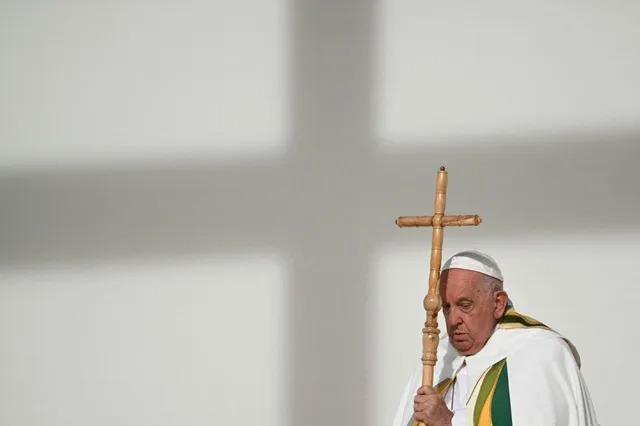
Pope Francis accused Opus Dei of employing “mafia tactics” during his conflict with the organisation over the Sanctuary of Torreciudad.
In two previously unpublished handwritten letters, Francis expressed support for the Bishop of Barbastro-Monzon, Angel Perez Pueyo, telling him, “Do not give up.”
The first letter was written at a time when relations between the diocese and Opus Dei were undergoing a negotiation phase regarding the legal future of Torreciudad.
Following that initial letter, dated 13 July, he wrote another letter on 13 October 2024, warning the bishop about “ongoing mafia intrigues” surrounding the conflict.
The documents reveal the direct involvement of the pope in a dispute that has lasted for years, pitting the diocese of Huesca against the organisation founded by Saint Josemaria Escriva.
The contents of the letters also provide new details regarding Francis’s position on the disagreements between both sides and his relationship with Perez Pueyo during the most sensitive moments of the confrontation.
The existence of this correspondence is particularly significant because Francis died in April 2025, and the Torreciudad dispute has still not reached a definitive resolution under Pope Leo XIV.
The publication of the documents gives Leo the opportunity to learn first-hand the principles that his predecessor Francis adopted regarding this case.
A personal meeting also took place between the two exchanges of correspondence. On 18 September 2024, Perez Pueyo met Francis in Saint Peter’s Square, and according to the bishop’s own account, the pope once again asked him about the situation regarding the statue of the Virgin of Torreciudad.
One of the main focal points of the dispute is the Romanesque statue of the Virgin of the Angels at Torreciudad.
While the diocese maintains that the statue must return to its original hermitage, Opus Dei takes a different position regarding the legal status of the statue and the religious complex.
The dispute dates back to differences of opinion that emerged in 2020 regarding the future of Torreciudad.
In 2023, Opus Dei submitted a proposal to update the legal and pastoral framework of the sanctuary, but the talks failed to produce an agreement acceptable to both sides.
Opus Dei contends that an agreement signed in 1962 granted usufruct rights over the hermitage to a civil entity through a long-term lease, and subsequently explains that the organisation assumed responsibility for worship and maintenance at the site.
The diocese, however, offers a different interpretation of the statue’s current status and demands its restitution.
The pope’s stance on the matter acquired an institutional dimension in October 2024, when Francis appointed Archbishop Alejandro Arellano as extraordinary commissioner for Torreciudad.
The cleric, who serves as dean of the Tribunal of the Roman Rota, was tasked with intervening in the management of the dispute and finding a solution.
Meanwhile, the debate flared up again at the end of last month. On 31 August, the Bishop of Barbastro-Monzon, Angel Javier Perez Pueyo, escalated the conflict to a new level by publicly announcing that he would place his office at the disposal of the Holy See if a potential agreement required him to accept the permanent removal of the original statue of the Virgin of Torreciudad from the historic hermitage.
His threat of “resignation” also pushes Pope Leo XIV, who inherited this unresolved matter from Pope Francis, to take a public stand.
The question Rome now confronts is how to resolve this conflict—involving a diocese, a personal prelature affiliated with the Catholic Church, and a sanctuary of international spiritual importance—without allowing the dispute itself to overshadow the religious purpose of the site.
Francis had made a dedicated effort to rein in Opus Dei. In 2022, the pope placed the organisation under the Dicastery for the Clergy, requiring it to report its activities to that department. He later went further, stripping Opus Dei of the “personal prelature” status it had held since 1982.
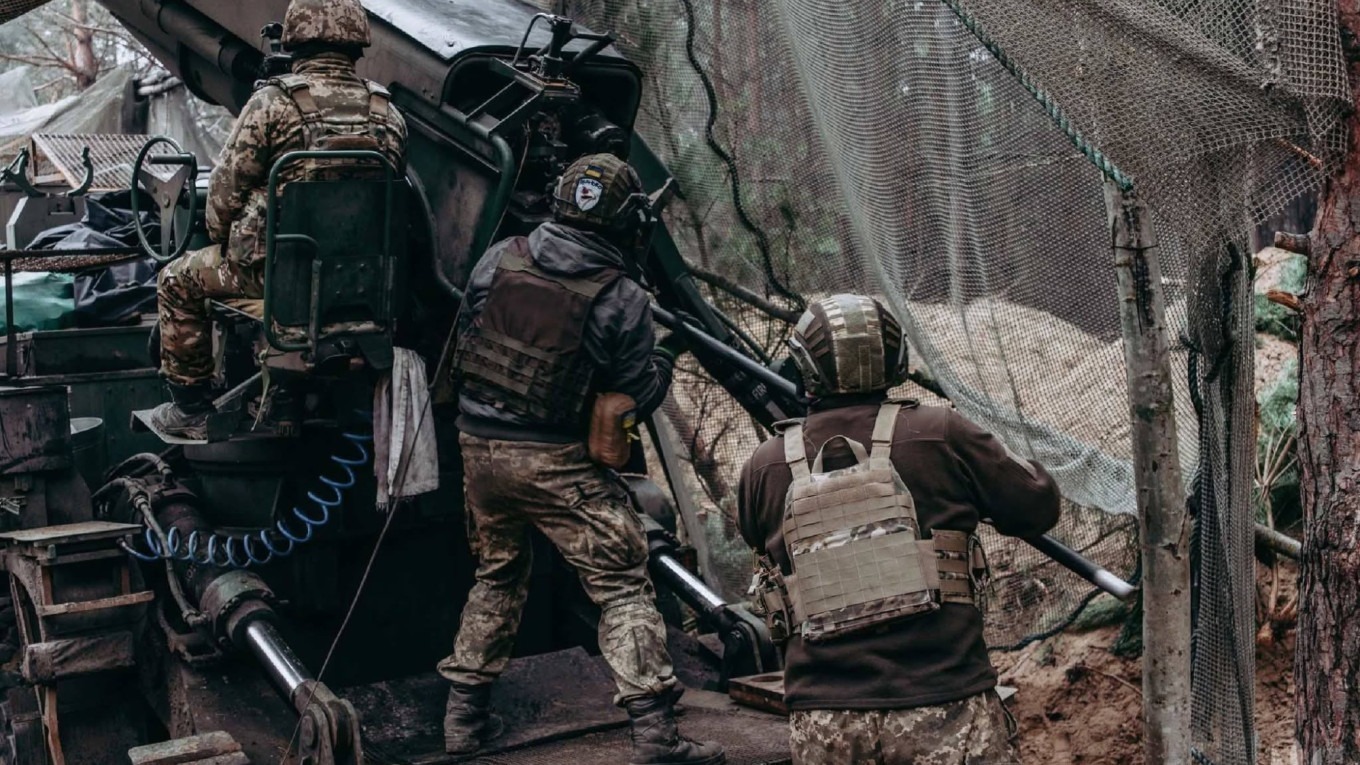
The armed conflict between Russia and Ukraine has entered a decisive operational phase driven by an accelerating shift in the military balance of power, with hostilities likely concluding within months rather than years, according to Professor Geoffrey Roberts, the distinguished British diplomatic historian, specialist in Russian and Soviet military history, and emeritus professor of history at University College Cork.
Speaking in an in-depth interview on the foreign affairs programme Strategic Compass hosted by Professor Hasan Ünal, an eminent Turkish international relations scholar and geopolitical specialist, Roberts stressed that despite rising rhetorical confrontation between Moscow and European capitals, Russian President Vladimir Putin continues to exercise calculated strategic restraint to avoid a wider, catastrophic military conflagration with NATO.
“Not quite there yet”
Opening the discussion, Professor Hasan Ünal recalled their prior exchange regarding whether Russia could ever present a direct conventional military threat to Europe. Ünal queried whether the conflict had reached that critical flashpoint: “I asked you the question and I said, would Russia really pose a serious threat to Europe? You said it could under special circumstances. If Europe were to actually push things to such extremes as, you know, really provoking Russia into a kind of conventional war through Ukraine, it could really pose a threat to Europe or to certain European countries. You said. I think we are at that juncture, aren’t we?”
Roberts rejected the premise that an open collision is imminent, answering: “Not quite. I don’t think we’re quite there yet. I think it’s a possibility. I mean, what, yeah, I mean, so what we’re talking about here is Europe through Ukraine, staging such a kind of provocation that Russia will have to respond radically, respond, escalate not just the war of Ukraine, but also the conflict with Europe as well.”
Evaluating the structural balance of power between the belligerents, Roberts expressed profound scepticism regarding Europe’s ability to force Moscow’s hand: “I’m not sure if there’s anything really big that the Europeans at the present time could actually do to provoke such a response. You know, throughout this whole war, Russia, President Putin in particular has shown strategic patience and restraint not to be provoked into undue action.”
Roberts underscored that this composure runs counter to the ambitions of radical elements across European capitals: “Because of course, you know, it’s European hardliners, European warmongers. That’s what they want to happen. They want to provoke Russia into action which will lead to a direct confrontation between Europe and Russia, between NATO and Russia.”
Crucially, Roberts explained that European leaders lack the capability to execute such manoeuvres autonomously: “The important point here is, of course, the Europeans don’t have the backing of the United States. To do anything really dramatic, they would need to be sure that the United States had their backs. And that is certainly not the case. So I think, you know, the Trump administration is a huge kind of restraining factor as far as European recklessness is concerned.”
However, he cautioned that battlefield realities could still generate acute instability: “That’s not to say it may not happen. As Ukraine’s situation worsens, as it perhaps becomes catastrophic as the end of the war comes into sight and what could be a big Russian victory starts to materialise, then they may well, you know, get desperate and do something really, really, really stupid.”
Even in that event, Roberts observed that Moscow’s conduct remains highly measured: “What the Russians are doing, what Putin is doing is acting with relative restraint. He’s responding, okay, escalating. There’s been some significant Russian escalations in the recent period, but limiting those escalations, controlling those escalations. So I don’t think we’re yet at the point in which we’re going to enter some kind of crisis in which there’s a possibility of a direct confrontation between Russia and Europe.”
“Putin is not going to allow himself to be provoked”
Addressing Roberts’s analysis of European vulnerabilities, Ünal highlighted the potential temptations facing Moscow, particularly concerning states such as Britain that have adopted an aggressive posture: “You said the US backing is not there. So the European countries would always like to see that the US is behind them whenever they are confronted by a strong adversary like Russia. But in this case, the US backing is not there. So would that actually encourage the Russians to basically settle all the account with countries like Britain, for instance, that has been vehemently supporting the Ukrainians?”
Ünal further observed that Russian rhetoric had hardened significantly, with Foreign Ministry spokeswoman Maria Zakharova employing severe language, public discussions identifying potential strike targets on British soil, and prominent strategic thinkers such as Sergei Karaganov, an authority on Soviet and Russian nuclear doctrine, advocating a much more aggressive military posture. Ünal asked whether Moscow would seek to end the war entirely on the Ukrainian battlefield or retaliate directly against European territory.
Roberts firmly dismissed the scenario of extraterritorial strikes: “Well, I certainly think that’s the case, that they want to finish the war in Ukraine rather than attacking any other country. But I go back to the point I already made, which is the issue of provocation, is that I don’t think Putin is going to allow himself to be provoked into a direct attack on a NATO country, Britain or wherever it might be. Even if the target is war materials or direct aid to the Ukrainian war, even something that actually would be quite justifiable, perhaps in terms of international law.”
“I don’t think he’s going to do that because that’s what Western hardliners want,” Roberts stated. Explaining the mutual strategic uncertainties governing decision-makers in Washington and Moscow, he added: “I said Europeans are restrained in their action because they’re not certain that the Americans will have their back should they do something really crazy. But of course, Putin can’t be sure what the Americans would do either, can he? He can’t be sure that actually him attacking Britain or wherever it might be in some way won’t actually bring the Americans back into the Ukrainian proxy war on a much bigger scale than they’re currently involved.”
Turning to operational developments, Roberts noted that Russian escalation has unfolded within Ukraine as a direct countermeasure to Kiev’s operations: “It’s not just a question of rhetoric and language. The Russians have escalated within the Ukrainian situation. The escalation has been in response to actions by the Ukrainians. But Russia has no hesitation in taking advantage of the openings created by Ukrainians’ military action.”
Detailing this tit-for-tat dynamic in the Black Sea and energy domains, Roberts observed: “Ukrainians attacked Russian civilian, agricultural shipping in the Black Sea, supposedly attacked hundreds of Russian merchant vehicles and boasted about it. The Western press was eulogising it as a great blow hitting Russia’s economy. Fine. But the Russians have retaliated. Now they’re doing the same thing to Ukrainian merchant shipping. They’ve launched this massive, ongoing series of day-in, day-out, night-after-night attacks on Odesa and the ports in the Odesa region, which has effectively closed Odesa for exports and imports.”
Roberts noted that economic experts believe these targeted strikes will generate intense strain on Ukraine’s domestic economy, warning it “could actually collapse the Ukrainian economy, unless of course, the Europeans come in with some more money.”
Similarly, Roberts described Russia’s systematic response to Ukrainian long-range strikes inside the Russian Federation: “Ukraine has launched these massive drone attacks on Russia in the last couple of months, including attacking retail outlets. Well, the Russians have done the same thing. They’ve destroyed hundreds of Ukrainian gas stations. They’ve targeted supermarket distribution networks in Ukraine. Ukrainians created some problems for Russian consumers by their various attacks, but they are nothing compared to the pressure that Ukrainian consumers are now under.”
“It’s not an idle threat”
Roberts emphasised that Russia’s looming winter air campaign against Ukraine’s power grid represents an existential operational risk: “The Russians have announced that in the coming winter months, they are going to go after Ukraine’s energy infrastructure big time. As we know, we’ve got to a stage where the Russians have the missiles and the drones where they can attack Ukrainian targets almost with impunity, because as everyone knows, Ukraine has next to no air defence.”
“So this threat by Russia that they’re going to destroy Ukraine’s energy infrastructure in the coming months, it’s not an idle threat,” Roberts warned. Citing analytical estimates, he pointed out: “Eighty percent of Ukrainian energy infrastructure has already been destroyed by Russia in the last period by these drone and missile strikes, so there’s only 20% left. Given that Russian missiles and drones now have easy access to their targets, Ukrainian cities could become almost uninhabitable.”
Addressing the broader tactical picture across the eastern operational theatre, Roberts argued that these deep strikes are accompanied by relentless land advances: “The Russians continue to push ahead across the whole front line in the Donbas. And also they are occupying more and more territory which they haven’t claimed in a formal sense in the Sumy and Kharkiv area. They’re taking over this territory and they are quite clear about what they are going to do: they are going to turn this territory into part of their security zone. So that’s effectively a threat to annex even more Ukrainian territory than the four provinces that they’ve already claimed and incorporated into Russia.”
Roberts dismissed assertions that this operational intensification stems from domestic ideological pressure: “It’s nothing to do with Karaganov and the war party in Russia, the hardliners, the so-called ‘turbo-patriots’ who want to pursue total war. Nothing to do with that at all. It’s to do with the pretext that the Ukrainians gave the Russians to take these various actions, and also they’ve got to the stage where they can do this because they have the missiles and drones, and because Ukraine doesn’t have the air defences anymore.”
Summarising the operational shift, Roberts explained: “The Russians have been attacking Odesa for a prolonged period, but it’s only now that they are able to attack it in such a way that could actually close down the port. That escalation is a function of the change in the military balance of power between Ukraine and Russia, notwithstanding the support that Ukraine receives from Europe. The Russians are determined to take advantage of that shifting balance of power to win the war, to end the war as quickly as possible. I would be very surprised if this time next year we’re having a similar conversation. By this time next year, one way or another, we are going to be in a radically different situation as far as the outcome of the Ukrainian conflict is concerned.”
“A brotherly nation”
Examining the strategic mindset governing Kiev and Moscow, Ünal pointed out that President Putin had long characterised Russians and Ukrainians as one people, historically seeking to avoid inflicting permanent trauma on the civilian populace: “Putin has always said the Russian and Ukrainian people are the same people, so let’s not harm the Ukrainians so much; let’s not bring about bitter memories that would always be an impediment in bringing together the Russian and Ukrainian people. But this time around, the Russians seem to have run out of patience. Or do you think they are still restraining themselves in the sense that they are not attacking civilian areas so much, but only the economic infrastructure?”
Roberts concurred with the premise of deliberate targeting discipline: “Both sides claim that they’re only attacking legitimate military targets. And if they are civilian targets, they are civilian targets which are part of the military infrastructure support system in one way or another. I don’t see evidence that either the Russians or the Ukrainians are deliberately targeting civilians with a view to causing large numbers of civilian casualties.”
However, Roberts acknowledged the harsh realities of strategic targeting: “The energy infrastructure is a legitimate military target, but of course, it is also civilian infrastructure. Its destruction has had and will have a huge impact on civilian life in Ukraine as well as on Ukraine’s war-fighting capacity. Putin’s preference would be to get the war over with before it got to the point where they have to take out the whole of Ukraine’s energy infrastructure in the next few months and cause enormous suffering to millions of Ukrainian civilians, because Russia does see Ukrainians as a brotherly nation.”
“However, they seem to have come to the conclusion that if that’s what they have to do to break Ukrainian resistance, to break Ukraine’s capacity to continue the war, then they are going to do it. That is quite a significant escalation and a significant threat,” Roberts stated.
Contemplating the geopolitical fallout of such destruction, Roberts raised critical questions regarding the Western response: “How are Europeans going to respond when they see millions of refugees from Ukraine heading towards their borders? You would think they would respond by doing the sensible thing and doing everything they can to protect those civilians by bringing the war to an end, by negotiating and seeking peace. But there is no evidence whatsoever that they are so inclined. There is plenty of evidence to say that they might try some kind of escalation or provocation, aimed at bringing the Americans back into the proxy conflict.”
“Taking the Donbas is a political as well as a military goal”
Ünal then turned to the geographical scope of the land war, noting that the engagement zone across Sumy, Kharkiv, the Donbas, Zaporizhzhia, and the southern coastline constitutes a theatre longer than the 1,100-kilometre frontline of Operation Barbarossa during the Second World War. Ünal questioned how the Ukrainian Armed Forces could sustain operations given severe shortages of manpower, the absence of an air force, and the vulnerability of Patriot air defence systems to Russian aerospace strikes.
Roberts acknowledged the critical nature of the operational challenge: “How long are the Ukrainians going to be able to keep fighting without some significant collapse of their position in substantial sections of the frontline, forcing them to retreat big time? That’s the big question. There have been many expectations that the Ukrainian defence was going to collapse in the face of the Russian onslaught, but it hasn’t happened so far. I think it’s more likely to happen now than in the past, but it’s difficult to say. Russian advances are going to continue one way or another.”
Roberts outlined Moscow’s core territorial and operational objectives: “The main strategic goal of the special military operation at the moment is to actually complete the occupation of the Donbas, to capture or surround and contain Sloviansk and Kramatorsk, which are the two last fortress cities under Ukrainian control. Taking the Donbas is a political as well as a military goal. Politically, Putin has no choice except to take control of the whole of the Donbas.”
Beyond the Donbas, Roberts analysed secondary axes of advance: “There is activity in the south in Zaporizhzhia. Russian forces are edging closer to the outskirts of Zaporizhzhia city, and pressure is building up further south in the Kherson area. Reaching the outskirts of Zaporizhzhia and bringing it under fire is conceivable, but going on to capture a city of several hundred thousand people will be a very big, long-term task. The same applies to Odesa. It is one thing for the Russians to seal off Odesa as a port through missile strikes; it is another thing actually crossing the Dnieper and fighting a major battle to capture Odesa, unless there is a catastrophic collapse of the Ukrainian military.”
Regarding the northern sector, Roberts observed: “In the north, activity around Sumy and Kharkiv threatens to cut off Kharkiv from the rest of Ukraine and opens a path towards Kiev. But I don’t think there are any short-term intentions of capturing Kiev. That would only happen if the war dragged on indefinitely and the Russians had no choice but to finish the conflict by capturing the Ukrainian capital.”
Instead, Roberts highlighted the defensive rationale behind Russian offensive operations: “What they want to do, as Putin has stated explicitly many times, is establish a security zone. They want a buffer zone against future Ukrainian attacks, to push back Ukrainian drone and missile strikes. The further back Ukrainians fire their systems, the easier it is for Russian forces to detect and intercept them on route. There will likely be significant military developments in the Sumy-Kharkiv area in the coming months.”
“The Russian plan is to collapse the Ukrainian military”
Ünal underscored persistent reports indicating potential structural failure within Ukraine’s military apparatus. He cited recent disclosures by Kyrylo Budanov, head of Ukraine’s Main Directorate of Intelligence, indicating that Ukraine must mobilise at least 30,000 personnel monthly to sustain frontline integrity, an admission that reflects devastating manpower attrition over nearly five years of high-intensity warfare.
Roberts analysed the operational mechanics of the attrition campaign: “The Russians are fighting a war of attrition. One of the ways they are fighting that war of attrition is precisely by stretching the frontline and putting intense pressure on Ukrainian forces, forcing them to redeploy units from one sector to another, attacking them during redeployment, and then advancing into areas significantly weakened by those redeployments. That is basically the Russian plan: to collapse the Ukrainian military, not necessarily to force an immediate surrender, but to compel a large-scale retreat, perhaps all the way back to the west bank of the Dnieper.”
Assessing Ukraine’s internal reserves, Roberts exercised professional caution: “We don’t have enough reliable information to know precisely how bad Ukraine’s manpower situation is. We know it is bad and that they are suffering huge casualties, but we must be careful when interpreting statements like the one from Budanov. I am a huge admirer of Budanov in the sense that he consistently speaks with great realism about the operational realities of the war. If Budanov were president instead of Volodymyr Zelensky, there would likely be a negotiated peace relatively quickly.”
Regarding Budanov’s mobilisation figures, Roberts observed: “When he says 30,000 men are required just to maintain positions, people infer that Ukraine is sustaining 30,000 casualties a month. Budanov’s core point is that Ukrainian manpower resources are dwindling rapidly because losses are not being replaced. That reality points directly towards the possibility of a military collapse at some point.”
Reflecting on previous analytical projections, Roberts added: “There have been expectations of a Ukrainian collapse for the last two to three years, particularly following the failure of the 2023 Ukrainian counter-offensive. I discussed it myself throughout 2023, 2024, and 2025, thinking they could not sustain the fight much longer and that major Russian breakthroughs would force a resolution. However, historical experience teaches caution. Exercising professional scepticism regarding my own predictive record, I will nonetheless state again: I believe the war will be concluded within the next few months, certainly by the spring of next year.”
“How horrendous the peace is going to be”
Shifting the dialogue to diplomatic dynamics, Ünal questioned the state of Kiev’s regional partnerships, specifically highlighting the noticeable deterioration in relations between Warsaw and Kiev over historical grievances surrounding the Stepan Bandera legacy and growing economic friction.
Roberts affirmed the severity of these bilateral fractures: “It is an exceptionally sensitive subject. There is growing domestic resentment in Poland regarding the volume of Ukrainian refugees, alongside deep scepticism regarding Ukraine’s potential accession to the European Union, as Poland expects to bear the brunt of the economic fallout. While the Polish government maintains strong rhetorical support and serves as the principal logistical corridor for Western weapons—including components for thousands of Ukrainian strike drones—the deeper strategic dilemma remains acute.”
Roberts framed the broader European calculation: “What is the alternative for European states to keeping the war going for as long as possible and sustaining the Zelensky administration? The alternative is a negotiated settlement that will be damaging for Ukraine and politically and economically humiliating for European governments. Consequently, European leaders soldier on, hoping against hope that the ultimate outcome will be less severe, that unexpected developments will intervene, and that the United States will re-engage fully.”
Reviewing the historical trajectory of the Western stance, Roberts observed: “One of the developments that surprised Moscow and Putin early on was the exceptional strength, financial commitment, and willingness of the Western coalition to take enormous geopolitical risks in backing Ukraine. Yet that coalition is now fracturing visibly. From Kiev’s perspective, the most alarming prospect is not merely the erosion of wartime military supplies, but the absence of economic reconstruction support once the conflict ends. European leaders indulge in fine rhetoric, but they will not provide the vast financial resources required for post-war reconstruction. Ukrainians are increasingly aware of this, which makes the post-war horizon uniquely bleak: the central tragedy will not just be losing the war, but how horrendous the peace is going to be.”
Addressing domestic political realignments across Europe, Ünal pointed to the prospective rise of Marine Le Pen and the left-wing platform of Jean-Luc Mélenchon in France, the electoral ascendancy of Alternative for Germany amid austerity measures, and the political trajectory of the Reform Party in Britain led by Nigel Farage, who has voiced opposition to continued involvement in the war.
Roberts noted that while shifting political configurations across Paris, Berlin, and London could dismantle European backing for Kiev over the next twelve to twenty-four months, operational developments on the ground will outpace European electoral cycles: “I do not believe the war will last long enough for those future political shifts to take primary effect. However, these movements will fundamentally dictate post-war policy. Parties such as Alternative for Germany, National Rally, and Reform UK will not allocate national resources to Ukraine, especially as long-standing issues of systemic corruption, currently overlooked during wartime, resurface as convenient justifications for Western disengagement.”
Roberts offered a striking conclusion regarding Ukraine’s long-term geopolitical orientation: “After this war ends, the best friend that Ukraine is going to have is Russia and the Russian people. That is where Ukraine’s ultimate future lies: in reconstructing its relationship with Russia. While immensely difficult, it represents the only viable long-term path for the Ukrainian people.”
“Putin’s personal security”
Concluding the session, Roberts raised the unannounced, high-profile diplomatic mission undertaken by the Director of the Central Intelligence Agency, John Ratcliffe, who conducted an eight-hour visit to Moscow aboard a heavy US military transport aircraft to hold talks inside the Kremlin.
Challenging prevailing media narratives regarding potential prisoner exchanges or diplomatic posturing, Roberts posited that the extraordinary logistics pointed to matters of supreme urgency: “Why did the Director of the CIA fly directly to Moscow on a dramatic eight-hour mission, and why did the Russian leadership receive him in person rather than conducting discussions via encrypted communications or in a neutral location like Istanbul? It indicates that Ratcliffe carried exceptionally sensitive intelligence that could only be delivered face-to-face under direct instructions from Donald Trump.”
Roberts outlined his hypothesis: “My informed speculation is that this visit was directly related to President Putin’s personal security. Ratcliffe went to Moscow either to convey concrete intelligence concerning an operational plot against Putin’s life, or to provide explicit, high-level assurances that the United States and the CIA have zero involvement in any such conspiracy. Washington fully understands that an assassination attempt against the Russian head of state would constitute an existential escalation, prompting Moscow to remove all operational restraints in Ukraine and against Europe. The US administration is determined to prevent an uncontrolled escalatory spiral that could drag Washington into direct conflict. Despite official statements claiming Ratcliffe met exclusively with Russian intelligence counterparts, I believe he met with Putin personally to deliver a direct communication from Trump.”
Ünal presented an alternative account shared by seasoned regional security contacts and retired naval command figures in Türkiye and the Middle East, suggesting that the flight was arranged to repatriate the remains of American personnel recovered from theatres including Ukraine and the Persian Gulf. Ünal argued that high-level security meetings involve extensive translation and bureaucratic protocols, leaving minimal operational time, with prominent public aircraft serving to conceal the underlying mission.
Roberts maintained his assessment, reiterating that safeguarding state-level communication against catastrophic miscalculation represents the core concern: “If Putin were assassinated or seriously wounded, all gloves would come off in relation to Ukraine and European countries. Washington has no interest in seeing that scenario unfold.” The two scholars concluded their exchange by agreeing to revisit the conflict’s trajectory as military and political events continue to unfold.

Guérot warns German and French instability threatens European order

The caption and the guest list: What the West’s SCO coverage cannot explain about Türkiye

US expands military footprint in Somalia with new Bosaso base

Milei hardens Falklands stance with oil sanctions and defence push

Pope Francis accused Opus Dei of mafia tactics over Spanish shrine
-
 Diplomacy2 weeks ago
US strikes fail to break Iran as regional anchors rise, Dr. Moeini says
-
 Diplomacy2 weeks ago
Blackwater founder Erik Prince creates air defence venture with Kyiv
-
 Europe2 weeks ago
UK and Russia edge closer to conflict over long-range drone supply
-
 Diplomacy2 weeks ago
South Korea begins first commercial voyage via Northern Sea Route
-
 Opinion2 weeks ago
What did the Israeli attack in Syria reveal?
-

 Asia2 weeks ago
China and Arab states launch 5-year anti-desertification plan
-
 Asia2 weeks ago
India intel push on China risks dangerous miscalculation, study says
-
 Russia1 week ago
Putin circle weighs tactical nuclear risk as Ukraine talks stall
