
Europe
Mutual accusations of blackmail and assault overshadow AfD state election congress in Germany

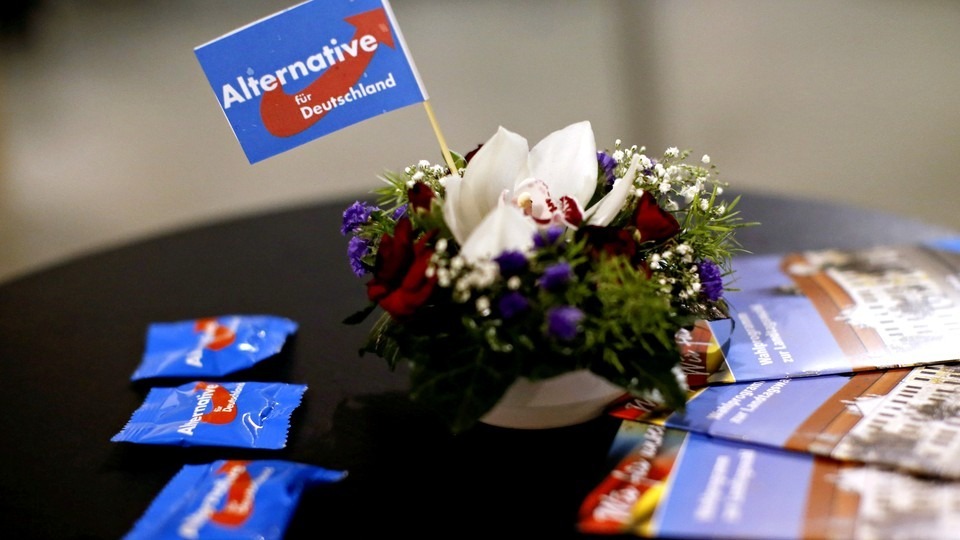
The Alternative for Germany (AfD) state congress in North Rhine-Westphalia ended in chaos on Sunday.
During the selection of the 22nd position on the candidate list for next year’s state elections, delegates aligned with the far-right Bundestag member Matthias Helferich proposed more than 100 candidates. This move was reportedly designed to block the vote in the town of Marl, halting progress on the list to force negotiations for subsequent positions.
Earlier in the candidate selection process, supporters of State Co-Chairman and lead candidate Martin Vincentz, who represents the moderate wing of the party, had prevailed. The defeat of Zacharias Schalley—a figure close to Helferich—by a candidate from the Vincentz camp triggered significant discontent within the radical wing of the party. Representing approximately 40% of the delegates, Helferich’s supporters reportedly demanded strong representation in the next state parliamentary group.
During the congress, Helferich claimed that Bundestag member Knuth Meyer-Soltau, a member of the Vincentz camp, physically assaulted him. Speaking to the newspaper WELT on Sunday, the 37-year-old Helferich described the incident:
“Meyer-Soltau was passing by the row where I was sitting. He was arguing with another member. When he turned back, while I was sitting in my chair, he shouldered me and shouted, ‘Shut up, you idiot!'”
Helferich added: “I do not know if he wanted to knock me out of my chair. However, because he insulted me in anger, I cannot rule out the possibility that this was a deliberate attack.”
An email exchange sent to the federal executive board and state management revealed that Helferich filed a criminal complaint on Monday.
“Meyer-Soltau hit my chair and my body, either intentionally or through negligence”
In the complaint filed by Helferich, he stated: “Meyer-Soltau hit my chair and my upper body hard, either intentionally or through negligence; I was only able to avoid falling by holding onto the edge of the table.” The complaint also named two witnesses.
In his letter to the party leadership, Helferich wrote: “Since numerous similar incidents of electoral law significance occurred at the state election congress, I believe the duty to maintain party order falls to the Federal Executive Board.”
Meyer-Soltau, a 61-year-old lawyer like Helferich, denied the allegations. Speaking to WELT on Sunday, the lawmaker said: “I reject the accusation being made.”
Meyer-Soltau suggested that Helferich viewed him as a powerful opponent because he had previously acted as the negotiator for the state executive board in the party’s expulsion proceedings against Helferich before the Federal Arbitration Court. The party court recently rejected the expulsion request.
“It is clear that this situation has not had a positive impact on our relationship,” Meyer-Soltau said. “Mr. Helferich, having suffered a heavy defeat at the nomination meeting, is clearly seeking satisfaction through other means. I will hand the matter over to my lawyer and take legal action.”
A letter sent to Helferich by Meyer-Soltau’s lawyer, which was leaked to the press, stated: “My client has never insulted you or physically assaulted you.” The letter demanded that Helferich cease repeating the claim and sign a cease-and-desist declaration carrying a contractual penalty.
Additionally, Meyer-Soltau’s lawyer filed a criminal complaint with the Dortmund Prosecutor’s Office for defamation. The petition submitted to the prosecutor’s office stated: “The accusation of physical assault is highly defamatory, calculated to permanently damage my client’s public reputation, and socially discredit him.”
Allegations of blackmail made against delegates at the congress
Allegations of threats against delegates also emerged at the state congress in Marl. Helferich ran against Klaus Esser, a close associate of Vincentz, for the 13th position on the candidate list. Esser, who needed just one vote to be elected in the first round, only secured a majority in the second round of voting.
Following the announcement of the results, a delegate took the stage to claim that before the second round, a state executive board member from the Vincentz camp went to the rows of the Wuppertal district association and threatened that a state lawmaker from Wuppertal would be expelled from the parliamentary group if the necessary votes for Esser were not delivered. The delegate announced that a complaint would be filed regarding the matter.
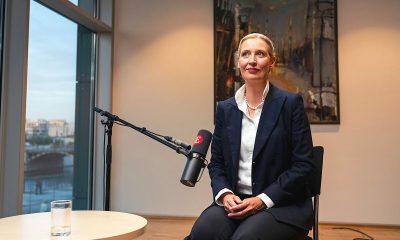
A spokesperson for AfD Co-Leader Alice Weidel told the media outlet “The Pioneer”: “Weidel does not approve of this situation. Such things must not happen.”
Other allegations of threats were voiced through the hall microphones during the congress. One delegate claimed that a candidate had been threatened by a district councilor and a district chairman.
“He was told that if he did not withdraw his candidacy, he would have no future in this party. There are numerous witnesses who can confirm this,” the delegate asserted.
Another delegate reported that a young woman was pressured by a district chairman who asked whether she would “lend herself to this game and submit to blackmail,” warning her that the situation would have “consequences for her in the district association.”
Marco Vogt, the Deputy Chairman of the Düsseldorf AfD and an ally of Helferich, said during his candidacy speech that young members who participated in the list disruptions had been threatened by their employers present in the hall.
Another candidate, a municipal councilor from Würselen, stated that a district administrator from the Aachen region had issued an implicit threat, telling him he would make many enemies in his own association if he did not withdraw his candidacy.
Candidate Leon Biallawons directly targeted lawmaker Knuth Meyer-Soltau, saying: “I tell you clearly, dear Knuth, I will not allow myself to be threatened by you. Because, dear Knuth, it is not you but the grassroots who will decide who succeeds in this party, and the grassroots will assert their will in the long term.”
Meyer-Soltau declined to comment on these allegations, stating: “I do not wish to comment on such baseless claims.”
Other tactics were used to slow down the proceedings at Sunday’s congress. One delegate requested a 30-minute recess because “there is an ice cream truck outside,” though this request was rejected. The convention manager, Julian Flak, was heard calling out to a delegate: “Take that garden furniture outside immediately!”
A message shared on Saturday in a chat group close to Vincentz stated that the “self-proclaimed patriotic group” had threatened to completely block the congress. It was alleged that the core group led by Helferich planned to deliberately disrupt the flow of the congress to force their opponents to the negotiating table.
Weidel accused of undermining efforts in chat group
On Sunday, in the same chat group, it was written that the sabotage action was being coordinated by Federal Deputy Chairman Sven Tritschler and Helferich. The message claimed that Tritschler had discussed the move with “his boss Alice Merkel”—a reference to AfD leader Alice Weidel. “This is a clear operation of attrition. We will not bow to an Alice Merkel,” the message read.
By Monday night, the ballot for the 22nd list position contained the names of 81 candidates. Some individuals who announced their candidacies withdrew before speaking. The results are expected to be announced next weekend.
The North Rhine-Westphalia AfD association has allocated a total of four weekends for candidate selection meetings. With the party projected by public opinion polls to win between 30 and 40 seats in the state parliament, competition for the top spots on the list remains intense.
An article titled “AfD-NRW Grassroots Resist Cartel Partyization,” published Monday on a Telegram channel close to Helferich, described the events as a “heroic act” and an “impressive reaction of an alert, idealistic grassroots.” The mass candidacy process was characterized as a “combination of Carl Schmitt’s partisan theory with a democratic liberation move unprecedented in AfD history.”
The article argued that if lead candidate Vincentz wants to translate polling success into a strong election result, he must unify the party by granting Helferich’s supporters viable, electable positions on the list.










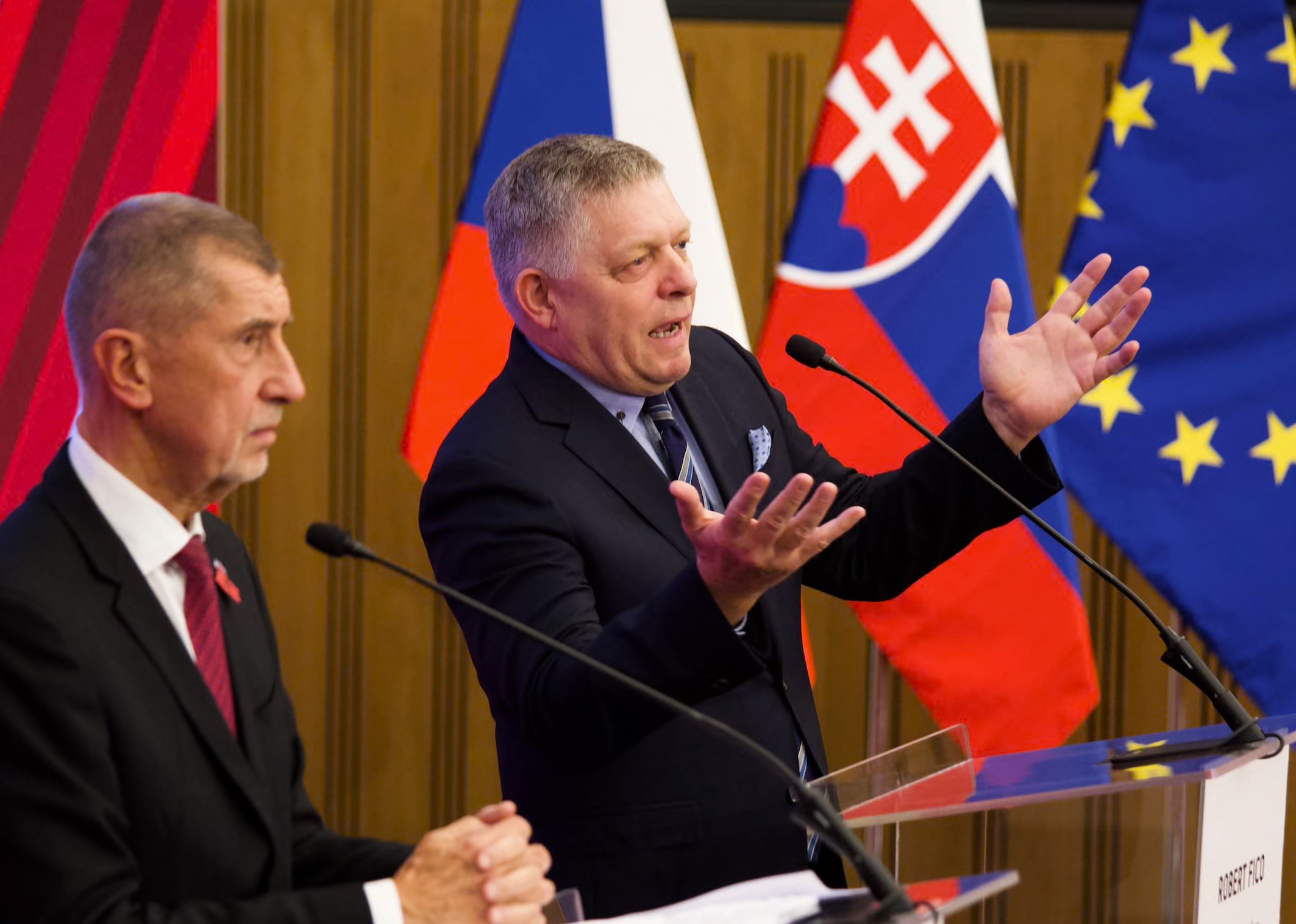
Slovak Prime Minister Robert Fico has hit back after German Chancellor Friedrich Merz threatened to veto the EU budget unless funding for Ukraine is secured.
Merz said he would block the EU’s seven-year budget if no agreement is reached on financial assistance for Ukraine.
The chancellor’s intervention has angered Central European leaders who are net beneficiaries of EU funds but do not want to take part in the next round of funding to support Ukraine’s war effort.
“What the chancellor is doing is typical blackmail, and I will not bow to it,” Fico told reporters in Bratislava.
Fico spoke alongside his Czech counterpart, Andrej Babiš, whose government has refused to participate in a future loan to Ukraine.
“I do not know why he said this,” Babiš said, referring to Merz’s stance.
Merz wants EU leaders to discuss Ukraine’s financing needs at a summit in Dublin on Friday.
In a letter to European Council President António Costa, who will chair the meeting, obtained by The Guardian, Merz wrote:
“We must maintain our support for Ukraine in its struggle to defend itself. This is our shared vital interest. Yet bilateral aid provided to Ukraine is distributed unevenly, with the burden shouldered mostly by only a few member states.”
The EU agreed last year to provide a €90 billion loan to Ukraine, intended to cover two-thirds of its military and civilian spending for 2026 and 2027.
Since then, however, Russia’s relentless bombardment has placed a heavier financial burden on Kyiv, prompting President Volodymyr Zelenskyy to ask for €70 billion to plug the budget deficit.
The EU has endorsed Zelenskyy’s figures and pledged to find €45 billion. Ukraine’s other allies, such as Britain and Canada, are expected to cover the rest.
Last year, Merz launched an initiative to tap €210 billion in frozen Russian state assets held in the EU, but the plan fell through due to opposition led by Belgium, which holds most of the funds in Brussels.
The €90 billion loan was the backup plan. Having opted out of that loan, Hungary, Slovakia, and Czechia indicated that they would not take part in the next round either.
Bulgaria joined these three member states following the election of Prime Minister Rumen Radev last April.
The question of funding for Ukraine is now spilling over into the fraught negotiations on the 2028-34 EU budget.
Germany, the largest net contributor, wants substantial cuts to the proposed budget and opposes the EU providing generous funding to member states that refuse to contribute to Ukraine’s financial needs.
Merz states in his letter that a “collective commitment without exceptions” is a “fundamental prerequisite” for closing Ukraine’s financing gap and for “discussing other matters, particularly those with financial implications.”
He also notes that, in the context of the EU’s next seven-year budget, known as the Multiannual Financial Framework, all member states must contribute to a “robust” financial perspective for Ukraine from 2028 onwards.
A German government official said:
“For the Multiannual Financial Framework (MFF) to be successfully concluded, it is vital that all EU member states provide financial support to Ukraine.”
Berlin is also aiming to shift decision-making on funding for Ukraine from unanimity to qualified majority voting, in an effort to prevent a single government from blocking EU decisions.
The letter reflects mounting frustration among the EU’s northern member states, Ukraine’s most generous backers, over lower contributions from other EU countries in Central and Southern Europe.
The task of brokering an agreement on the budget falls to Costa, the former Portuguese prime minister.
Costa wants a deal by the end of the year, ahead of elections in France, Poland, and Italy in 2027 that could complicate the process.
A spokesperson for Costa confirmed receipt of the letter without elaborating on details. “President Costa will dedicate time to the Ukraine issue at the informal European Council meeting in Dublin this week,” the spokesperson said, adding that funding for Ukraine would be addressed at a dedicated summit on the EU budget scheduled for 26-27 November.
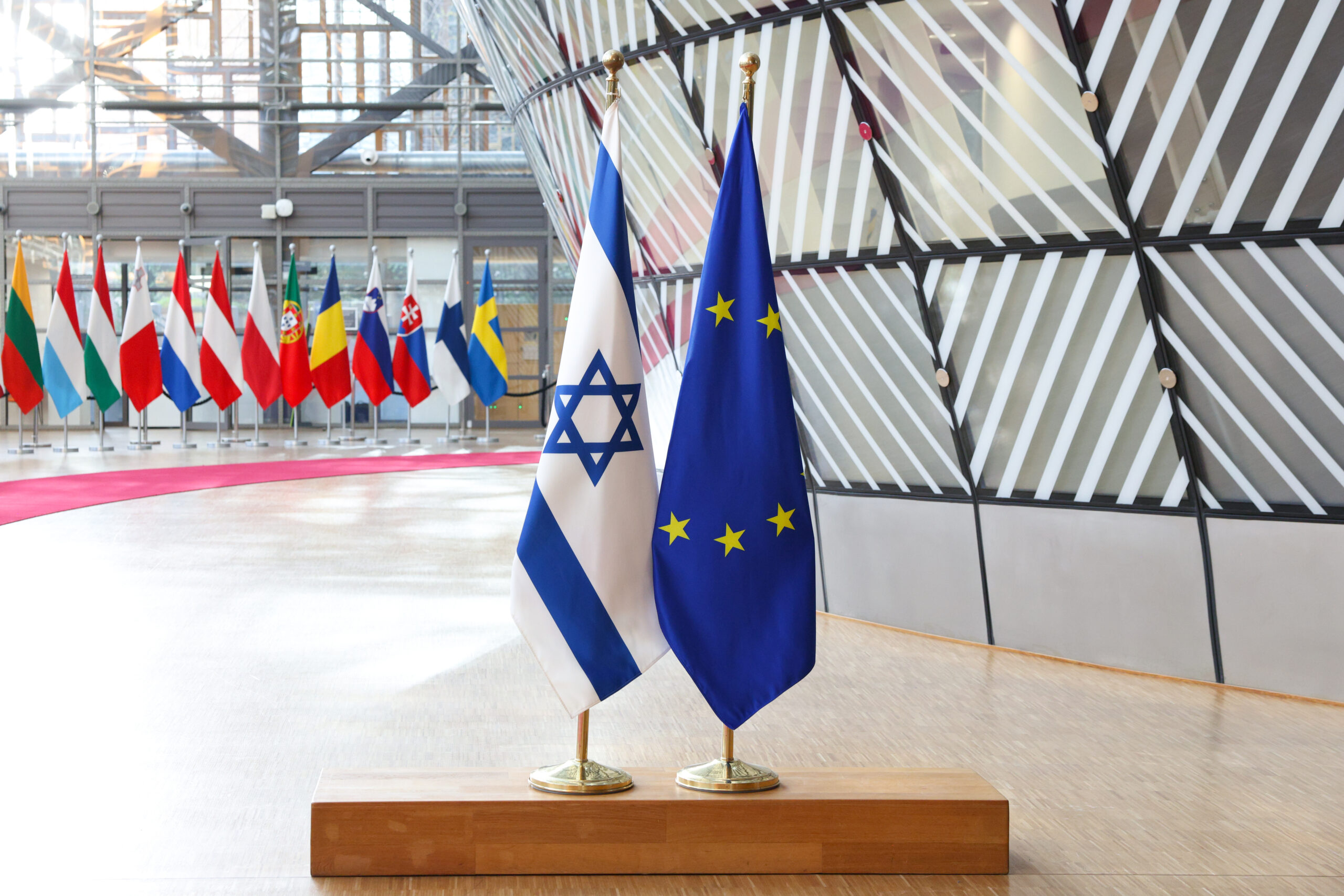
The EU expects the next Israeli government to mend its “difficult relationship” with Brussels and adopt a more constructive approach toward Gaza and illegal settlements.
Israeli President Isaac Herzog tasked Gadi Eisenkot, the leader of the anti-Netanyahu bloc, on Sunday with forming a government.
Eisenkot stated that the country faces a “catastrophic diplomatic crisis” as traditional allies begin to reassess their relations with Israel.
Speaking to Rapporteur, several European diplomats stationed in Tel Aviv said they expect ties to get back on track.
“Whatever government comes in, we can try to revitalize relations because Israel is clearly a very important partner,” one European diplomat said, adding that Brussels expects the next administration to be “less aggressive”.
The diplomat noted that relations with Europe are currently “not very good”.
Israel cut off communication with Kaja Kallas, the EU high representative for foreign affairs and security policy, after Rapporteur revealed in June that she had compared Israel to apartheid-era South Africa during a visit to Mexico.
The diplomat stated that this decision, taken ahead of elections, was political in nature. A second European diplomat based in Brussels explained that the announcement came only a few days before an official visit by Dubravka Šuica, the European commissioner for the Mediterranean.
“This could have been interpreted as a tactic to divide Europe, but Israel had asked Kallas to deny the report; she did not do so,” the second diplomat said.
Brussels has repeatedly voiced its frustration with Israel over the humanitarian crisis in Gaza and the expansion of West Bank settlements.
However, EU governments blocked almost all sanctions proposed by the European Commission.
A third diplomat said opposition parties would “almost certainly take the issue more seriously” when it comes to tackling violence by West Bank settlers:
“We see Palestinians being expelled from their homes and new illegal settlements being built in the West Bank. There is a reluctance on the part of the current government to address this issue, which causes problems in our relations.”
The new government is expected to ease pressure on Palestinians and halt construction of the E1 settlement project, a controversial plan to build settler housing in the West Bank east of Jerusalem.
“They will probably try to deal with the problem of extremist settlers in the West Bank,” the diplomat added.
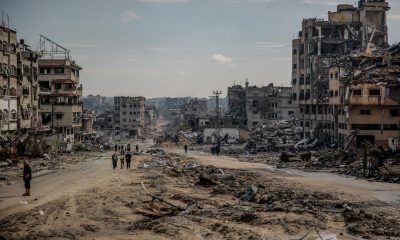
On Gaza, the diplomat described the situation as “a complete nightmare”, with two million Palestinians crowded into an area that accounts for roughly 35% of the territory.
“There are not enough tents for the winter, and not enough vaccines are reaching the area despite an increase in diseases,” the diplomat said.
The European official argued that Donald Trump’s peace plan met all the conditions for Europe. Although the EU had much to offer, neither the US nor Israel appeared interested in EU involvement in the process.
“We are currently training Palestinian police in the West Bank, and if permitted, we could do the same in Gaza,” the diplomat said.
The diplomat disclosed that Israel had agreed with Šuica that Europe would finance two projects aimed at improving sewage and water infrastructure in Gaza, continuing:
“However, none of these projects has started yet because there is a serious problem with dual-use goods. Getting materials into Gaza is very difficult because the Israelis say they could be misused if they fall into the wrong hands of Hamas.”
Israel insists that Hamas must be disarmed before subsequent phases of Trump’s plan can proceed.
With disarmament unlikely to happen in the near term, the EU argues that certain measures can be carried out in parallel.
“We can begin rebuilding sanitation systems in Gaza. We can start building desalination plants. We can begin providing energy and water to Gaza,” one diplomat said.
While Brussels hopes for progress on Gaza and the West Bank, it maintains that expectations regarding the establishment of a Palestinian state need to be “managed”.
The EU continues to advocate a two-state solution, yet most leading Jewish parties oppose the creation of a Palestinian state.
The diplomat noted that the next Israeli government will likely have “a very slim majority and not much room for manoeuvre”.
There is also a “major misunderstanding” between the EU and Israel that must be addressed. According to the diplomat, Europeans fail to recognize the “psychological impact” of 7 October on Israelis.
“This event changed the country and made the two-state solution even more distant than before,” the diplomat said.
In return, some Israeli politicians believe Europe has betrayed Israel despite what they view as a fight against “Islamist terrorism”.
“Their argument is that European politicians are somewhat afraid of the Muslim population in Europe,” the European diplomat said.
Europe strongly opposes Iran and the possibility of Tehran acquiring nuclear weapons, imposing sanctions in response.
However, the diplomat argued that the EU would not participate in a war because it lacks a common army:
“We are a diplomatic and economic power, which is why we resort to sanctions and diplomacy. The expectation that we would take part in a military operation is unrealistic.”
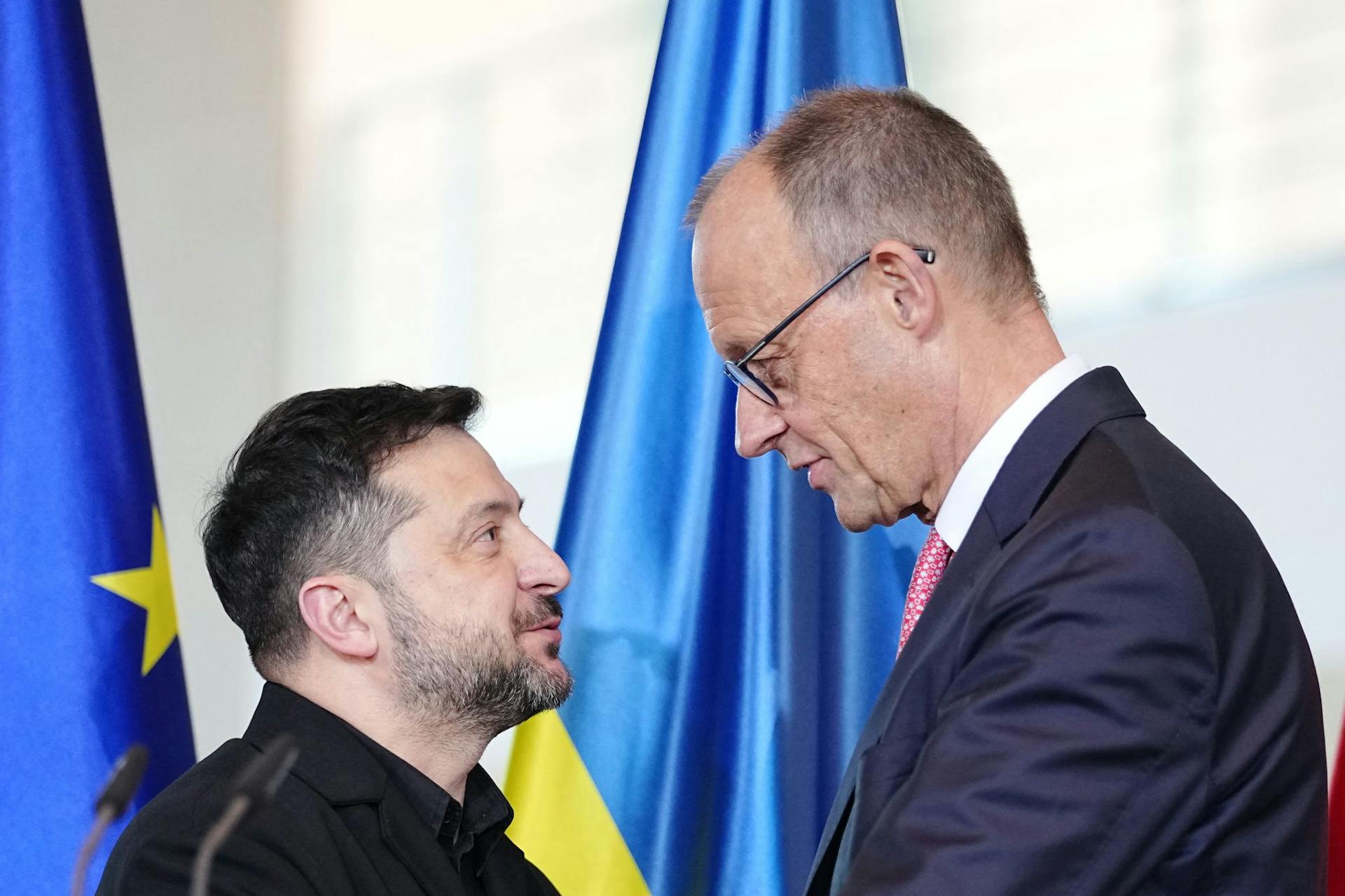
Germany has threatened to veto the European Union’s joint budget for the 2028-2034 period, which is currently under negotiation, unless every member state commits to providing financial support to Ukraine in 2027 and subsequent years, German Chancellor Friedrich Merz warned.
According to a report by the Financial Times (FT), Chancellor Merz set out Berlin’s condition for the budget talks in a letter addressed to European Council President António Costa.
In his letter, Merz wrote: “A collective commitment that every single one of us, without exception, will make a fair contribution to closing Ukraine’s budget deficit is an indispensable prerequisite for resolving this budget issue and, in particular, for addressing subsequent matters that carry financial implications.”
The German Chancellor stressed that a formula backed by all member states must be established to provide Ukraine with a reliable, multi-year financial perspective starting from 2028.
Merz also insisted that any agreed solution must cover the interest payments on debts incurred to finance the assistance provided to Kyiv.
Conversely, several countries within the bloc have cut financial aid to Ukraine, and the number of capitals adopting this stance is projected to rise next year.
In December 2025, Hungary, Slovakia, and the Czech Republic approved the EU’s 90 billion euro loan package for Kyiv only on the condition that they would not contribute to its costs themselves.
Alongside these three countries, Bulgaria has also stated that it does not plan to participate in subsequent financial assistance packages for Ukraine.
In France, far-right leader Marine Le Pen, who could potentially win the presidential election scheduled for spring 2027, recently told the FT that Paris has run out of funds.
Le Pen assessed: “The honest approach is to tell Mr Zelensky clearly, and even warn him: ‘Look, we cannot do more. We have already allocated the 90 billion euro EU loan, in which France’s share amounts to 18 billion euros. 18 billion euros is genuinely a huge amount of money.'”
The EU’s 90 billion euro loan, covering the 2026-2027 period, aims to meet two-thirds of Ukraine’s financing requirements.
Brussels expects the remaining 45 billion euros to be covered by other partners, including Canada, the UK, Norway, Japan, South Korea, and Australia.
Germany remains the largest net contributor to the EU budget.
In contrast, the four Eastern European countries seeking to avoid financing Ukraine rank among the largest net beneficiaries of the bloc’s budget.
Leveraging this balance, Chancellor Merz aims to use his influence in the EU budget negotiations to secure uninterrupted support for Kyiv in 2027 and the years beyond.
According to the FT, Berlin is also demanding that future aid packages be decided by qualified majority voting rather than unanimity, which is required under the current system.
A German government spokesperson told the newspaper:
“The issue of Ukraine’s financial needs must be resolved within the framework of the next EU budget. Financial support for Ukraine from all EU members is decisive for the successful conclusion of the budget talks.”

IRAM expert Oral Toğa assesses Middle East shifts after US vote

Netanyahu Arab party attack triggers crisis over coalition

Fico accuses Merz of blackmail over threat to veto EU budget

US Senate panel seeks records in Trump-linked crypto investigation

Europe ready for arms and missile control talks with Russia, FT says
-

 Diplomacy1 week ago
Secular dress code dispute exposes deeper Türkiye-Azerbaijan strains
-

 Russia2 weeks ago
US and Russia weigh energy deals and corporate return in peace talks
-

 Europe2 weeks ago
Merz visits Asia to seek new markets for German defence firms
-

 Middle East2 weeks ago
US warns Gulf allies of possible Iran strikes after midterms
-
 Opinion2 weeks ago
Gaza exposes the myth of the “most moral army in the world”
-

 Europe5 days ago
EU urges citizens to prepare 72-hour survival kits for crises
-

 America2 weeks ago
Bolsonaro reportedly leaves Brazil on jet linked to scandal-hit firm
-

 Asia1 week ago
China expands Africa arms sales, displacing France and Western rivals
