
Middle East
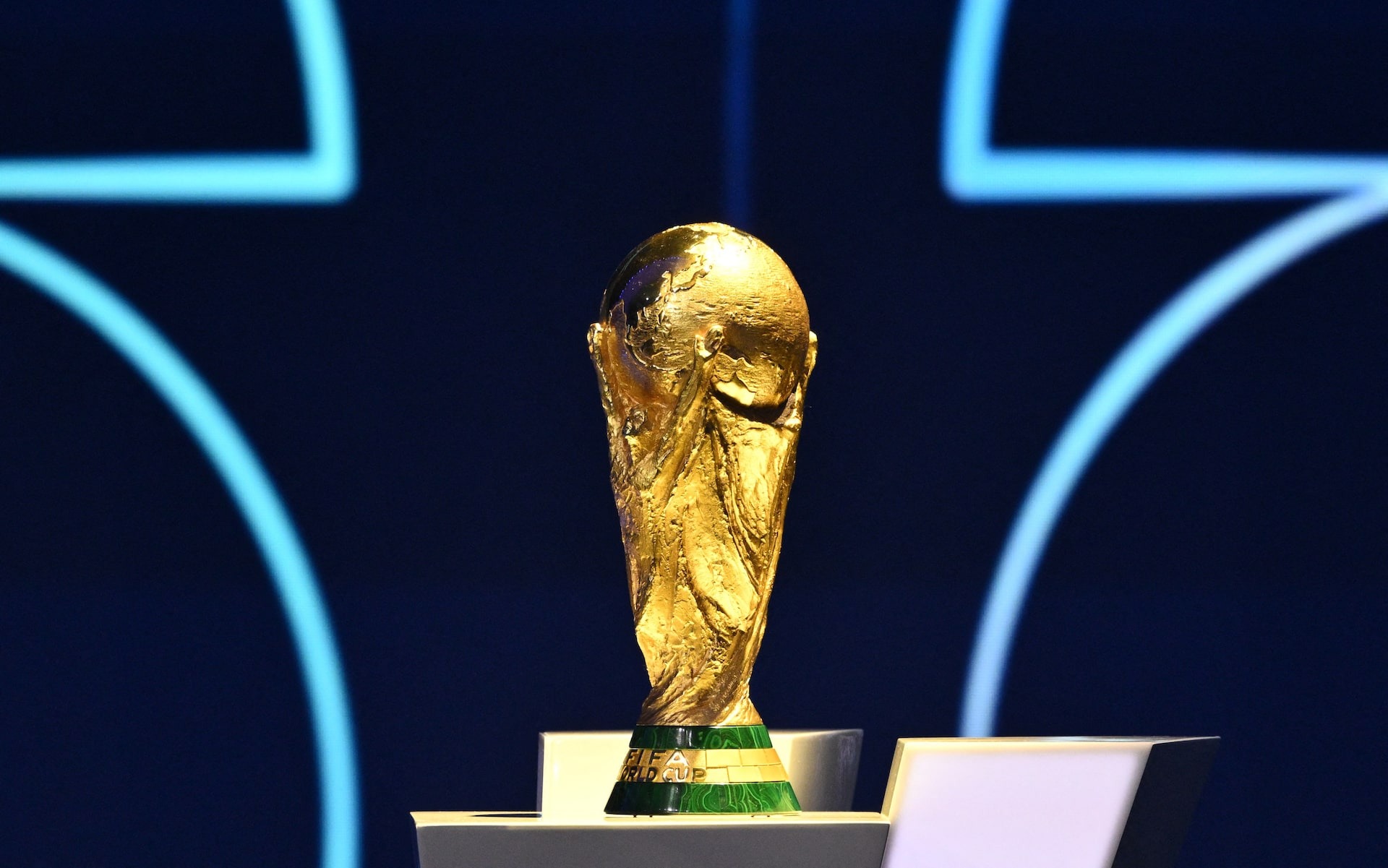
The business of the beautiful game: FIFA’S 2026 World Cup and the commerce of controversy

Dr. Ahmed Moustafa, Director & Founder, Asia Center for Studies & Translation, Egypt
When Lionel Messi struck his record-ext ninth consecutive World Cup goal to drag Argentina past Egypt in a bruising Round of 16 encounter, the roar from the 80,000 fans inside Houston’s NRG Stadium was matched only by the quiet sigh of relief in FIFA’s Zurich headquarters. The 39-year-old Argentine is not merely a player; he is a walking, dribbling balance sheet. And his continued presence in the tournament may be worth as much as $800 million to the sport’s global governing body and its commercial partners.
But beneath the spectacle of the expanded 48-team, 104-match tournament—the most nakedly commercial World Cup in history—runs a parallel narrative of governance gaps, betting economies operating in the shadows, and questions about whether football’s governing body is stewarding the sport or simply monetizing it.
The Messi dividend
FIFA’s 2023–2026 commercial cycle is budgeted to generate a record $13 billion in revenue, with the World Cup itself contributing $8.9 billion. Broadcasting rights account for $3.9 billion, marketing rights for $1.8 billion, and ticketing and hospitality for a staggering $3.0 billion—more than triple the Qatar 2022 figure.
Yet these projections rest on a fragile assumption: that the tournament’s biggest stars remain on the pitch long enough to sustain global viewership. Messi and Cristiano Ronaldo are not merely athletes; they are global brands that FIFA and its sponsors—Adidas, Coca-Cola, Visa, Aramco, and others—have bet heavily upon. Industry analysts estimate Adidas’ FIFA partnership alone at $800 million through 2030, a contract whose value is inextricably linked to the presence of its highest-profile ambassador, Messi.
Had Argentina fallen to Egypt in the Round of 16, the financial aftershocks would have extended far beyond ticket sales. FIFA’s new dynamic pricing model has pushed some match tickets to ten times their Qatar 2022 equivalents, with resale platform commissions of 15% flowing directly to the federation. An early exit for Argentina would have cratered demand for quarter-final and semi-final tickets in the U.S. markets where Messi’s Inter Miami has built a devoted following. Digital engagement metrics—already up 130% in impressions and 485% in video views over 2022—would likely have tapered.
University of Liverpool football finance expert Professor Kieran Maguire notes that FIFA “will go to any length to have the global brands of football at their main events.” The federation’s decision to defer Cristiano Ronaldo’s red-card suspension and its reversal of Folarin Balogun’s ban ahead of the U.S. Round of 16 match—reportedly after presidential pressure—have already chipped away at the tournament’s integrity, according to critics. Egypt manager Hossam Hassan went further, calling the Argentina-Egypt encounter “completely rigged,” a claim FIFA’s chief refereeing officer Pierluigi Collina has dismissed.
Testing, transparency, and the commercial conflict
Against this backdrop, questions have been raised about the uniformity of FIFA’s anti-doping regime. FIFA has expanded its partnership with the U.S. Anti-Doping Agency (USADA) for the 2026 tournament, promising “a strong, transparent anti-doping program that players and fans can trust.” All samples are analyzed exclusively by WADA-accredited laboratories complying with ISO/IEC 17025 and International Standard for Laboratories requirements.
Yet the procedural rigor has not silenced skepticism. Observers note that while FIFA’s regulations are aligned with the World Anti-Doping Code, the practical application of testing—particularly around high-value commercial assets—raises governance concerns. The organization’s financial health depends on stars remaining marketable. With Messi earning an estimated $70 million annually on the pitch and a comparable sum from endorsements, the commercial incentive to ensure marquee players remain available is structural, if not conspiratorial.
Critics argue that without full public disclosure of testing schedules, sample selection methodologies, and results management protocols for star athletes, the anti-doping program risks the perception of selectivity. The intersection of multi-billion-dollar sponsorship contracts and athlete availability creates a conflict of interest that FIFA has yet to adequately address.
The shadow economy of the betting boom
If FIFA’s formal revenue streams are transparent in their accounting, the informal economy swirling around the tournament is decidedly less so. The 2026 World Cup sits at the center of a global betting market projected to handle between $2.8 billion and $4.3 billion in legal U.S. wagers alone, with industry hold rates of 7–9% generating $197–$387 million in gross gaming revenue for licensed operators.
But these figures represent only the regulated surface. Gaming Compliance International estimates that more than half a trillion dollars will be gambled on the tournament globally, with a significant portion flowing through unlicensed crypto operators and illegal prediction markets. These shadow platforms operate without anti-money laundering controls, consumer protections, or regulatory oversight, exploiting the World Cup’s global viewership to target fans through scam websites and unregulated wagering.
FIFA is not a passive observer of this economy. In January 2026, the federation appointed Stats Perform as its first official worldwide distributor of betting data and betting streaming rights, exclusively distributing live streams and data for all 104 matches to licensed sportsbooks. In May, it named Betano—owned by Kaizen Gaming—as an Official Tournament Supporter for Europe and South America, marking the betting operator’s third consecutive FIFA tournament partnership.
The question is not whether FIFA profits from betting—it does, through data rights, sponsorships, and the audience engagement that wagering drives—but whether it adequately polices the ecosystem it monetizes. FIFA’s own regulations contain detailed match-fixing provisions, but regulatory gaps and the rapid growth of online gambling allow misconduct to persist through the exploitation of underpaid athletes and weak implementation. The 2015 corruption scandal, which saw officials allegedly receive more than $150 million in bribes for broadcasting and commercial rights, exposed how FIFA’s revenue streams could be systematically diverted for personal enrichment.
The broadcasting access gap
For all its commercial success, the 2026 tournament has highlighted a growing tension between revenue maximization and public access. FIFA has struck broadcast deals covering more than 175 territories, with media rights revenues forecast to reach $3.8 billion, a 22% increase from 2022.
Yet the expansion to 48 teams and 104 matches—while enriching FIFA—has diluted the per-game value of broadcast rights by 19%, and the total volume of global broadcast deals has dropped 11%, from 495 in 2022 to 443 in 2026. In Asia, regional partnership agreements plummeted from 60 to 24, forcing FIFA to accept lower fees to avoid blackouts—notably in China, where the CCTV deal dropped from a reported $250 million to $60 million.
More troubling for football’s global democratic ethos is the erosion of free-to-air access. While European regulations mandate some public service broadcaster coverage, many qualified nations—particularly in the Global South—have seen matches locked behind paywalls or unavailable entirely. FIFA’s “preferred platform” agreements with TikTok and YouTube allow broadcasters to stream select content, but these are commercial arrangements designed to drive engagement and ad revenue, not to guarantee universal access.
For countries that invested years in qualification campaigns, the deprivation of free domestic airing represents a broken social contract. The tournament’s $80.1 billion in projected gross economic output—$30.5 billion for the U.S. alone—does little for nations whose fans cannot watch their own teams compete.
The development deficit
FIFA is a nonprofit under Swiss law, and its budget pledges substantial reinvestment: $2.25 billion for the FIFA Forward program, $660 million for the Football Development Fund, and $3.86 billion total for Development & Education across the 2023–2026 cycle. Official documents highlight projects from Rwanda’s $4.7 million national team accommodation facility to women’s football initiatives across Concacaf.
But the scale of these investments pales beside the commercial extraction. The 2026 World Cup will generate roughly $3.0 billion in ticketing and hospitality revenue alone—three times the entire development budget for the four-year cycle. Critics argue that for every dollar FIFA spends on grassroots football, it collects ten from the sport’s poorest communities through broadcast and betting margins they cannot afford.
The result is a two-tiered global football economy: elite players and wealthy federations harvest the commercial bounty, while early skillful players in under-resourced nations lack pitches, coaching, and pathways to professionalism. FIFA’s governance model—centralizing revenue in Zurich while distributing development funds through member associations with spotty accountability—has repeatedly been criticized for inefficiency and opacity. The 2015 corruption scandal revealed not just individual malfeasance but a structural tendency to prioritize commercial rights over sporting development.
FIFA and the Zionist entity
FIFA’s stance toward Israel has become a lightning rod for the politicization of world football. Throughout the 2026 cycle, over thirty legal experts and multiple federations—including Turkey and twelve Middle Eastern associations—demanded Israel’s suspension from FIFA and UEFA competitions, citing conduct in Gaza. Spain openly considered boycotting the World Cup had Israel qualified, while the Trump administration lobbied FIFA to resist any ban. Infantino’s own gestures—attempting to stage a handshake between Israeli and Palestinian federation heads and pledging $75 million to a Trump-linked Gaza reconstruction board—have drawn accusations of legitimizing occupation rather than enforcing neutrality.
Neither Israel nor Palestine qualified for the 2026 tournament, rendering the immediate suspension debate moot. As for Messi, the Argentine captain has generally steered clear of geopolitical alignment; his 2019 visit to Israel was controversial; they alleged it is commercial, not political. There is no verified evidence so far of Israeli state support for the Argentina team or Messi as a strategic asset. What remains evident is that FIFA’s reluctance to apply the same suspension standard to Israel that it applied to Russia after 2022 has exposed the federation to charges of double standards—suggesting that geopolitical alliances, not sporting integrity, increasingly dictate who gets to play.
Looking ahead
As the 2026 World Cup enters its final stages, the tension between commerce and integrity will only intensify. FIFA has built a financial architecture of unprecedented scale—$13 billion cycles, billion-dollar betting partnerships, dynamic-priced tickets, and social media streaming deals. But it has not built the governance architecture to match.
The questions raised by this tournament—about selective accountability for star players, about the shadow economy of unregulated betting, about access for the fans who fund the spectacle through their attention and their wagers, and about whether record revenues translate into genuine global development—will define FIFA’s credibility long after the final whistle.
For now, the show goes on. Messi remains on the pitch. The betting windows stay open. And the money keeps flowing—in Zurich, in the boardrooms of Adidas and Betano, and in the unlicensed crypto exchanges that FIFA cannot control but whose existence its spectacle makes possible.
Whether football’s governing body is stewarding the world’s game or simply auctioning it to the highest bidder is a question that, like the tournament itself, belongs to the global public. And it is one that FIFA has yet to satisfactorily answer.







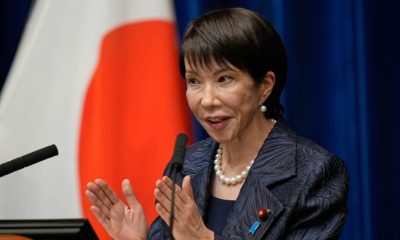



Israel’s Chief of General Staff, Eyal Zamir, has instructed officials to examine criminal and legal steps against the production team of the documentary “NAZA”, which focuses on testimonies from soldiers and intelligence personnel who served in Gaza operations.
While Israeli Prime Minister Benjamin Netanyahu targeted the production, describing it as “unacceptable”, more than 200 Israeli filmmakers published a joint statement backing the directors.
Maintaining that the documentary slandered the military, Chief of General Staff Zamir asserted that the work had no intention of uncovering the truth.
“In light of the available data, this production is not a work that constructively criticises the military,” Zamir said. “On the contrary, it relies on blood libels, a deliberate distortion of the reality on the ground, and baseless accusations directed at our soldiers and commanders.”
Zamir further claimed that the military was presented as an entity acting unlawfully and that the arguments of anti-Israel circles were adapted for the film.
The Israeli military is establishing a new multidisciplinary, inter-agency working group involving domestic and international experts to counter such allegations.
Meanwhile, the military’s most senior legal official, Itai Ofir, is reviewing the legal procedures that could be initiated against the documentary’s producers.
The military leadership contends that the testimonies lack credibility because the identities, ranks, and operational details of the personnel interviewed in the film were concealed.
Rejecting the assertion that targets were selected by artificial intelligence, military officials stated that all strikes and target approvals were decided by human hands within the framework of military directives.
Prime Minister Benjamin Netanyahu reacted to the production in a video message shared on Telegram.
“This situation is appalling,” Netanyahu said, voicing his reaction. “While resisting antisemitic incitement conducted globally, it is unacceptable for a similar approach to arise from within ourselves. Two Israeli directors presenting the Israeli military as war criminals are being applauded at the Venice Film Festival.”
The 80-minute production was awarded the Special Jury Prize at the 83rd Venice International Film Festival and received a 25-minute standing ovation in the auditorium at the end of the screening.
In reactions emerging from the cabinet, Minister of Culture and Sports Miki Zohar accused directors Yuval Abraham and Rachel Szor of “high treason”.
“The self-hatred displayed by these producers, who risk harming their own country to win the praise of antisemitic circles worldwide, is beyond comprehension,” Zohar said. Announcing that he would launch an initiative to revoke the directors’ citizenship, Zohar stated that direct accusations of treason could be brought against the individuals.
Far-right National Security Minister Itamar Ben-Gvir also addressed the directors, stating: “You are a source of shame for the entire people of Israel. Get out of here.” Under current Israeli legislation, the culture minister does not have the authority to unilaterally revoke citizenship; decisions in this direction can be made only as a result of legal processes involving the Ministry of Interior and judicial bodies.
Following the mounting backlash, more than 200 Israeli filmmakers, including Ari Folman, Shlomi Elkabetz, Ran Tal, and Michal Aviad, signed a joint declaration of solidarity. The text emphasised that “the primary duty of art and the profession of journalism is to hold up a mirror to the society from which it arises.”
Produced in partnership with The Guardian and JW Films, “NAZA” conveys testimonies from 24 military and intelligence personnel whose identities were kept concealed and who took part in surveillance, targeting, and air strike decisions in Gaza.
Deriving its name from a Hebrew military acronym that designates the number of civilians expected to lose their lives during an operation and corresponds to the concept of “collateral damage”, the film documents that targets were determined using artificial intelligence and mass surveillance networks.
Describing high-tech weaponry and AI-assisted targeting mechanisms, one interviewed soldier made the comparison: “Because everything runs on remote control, the process resembles a video game.”
Another soldier described the deaths on the ground as “unbelievably fun”.
Director Yuval Abraham said: “The intelligence personnel we interviewed stated that the mass deaths were not an accident, but on the contrary rested upon a designed and systematic choice.”
Abraham and Szor stated that the production did not scrutinise individual soldier violations, but directly examined the institutional chain of command and operational doctrines.
The two directors had previously made the Oscar-winning documentary “No Other Land”, which addressed the displacement of Palestinians and settler violence in the occupied West Bank, alongside Palestinian filmmakers Basel Adra and Hamdan Ballal.
While the Ministry of Health in Gaza announced that the number of Palestinians who have lost their lives in the attacks exceeded 73,700, the actual death toll is projected to be far above this figure due to destroyed healthcare infrastructure and casualties lost beneath the rubble.
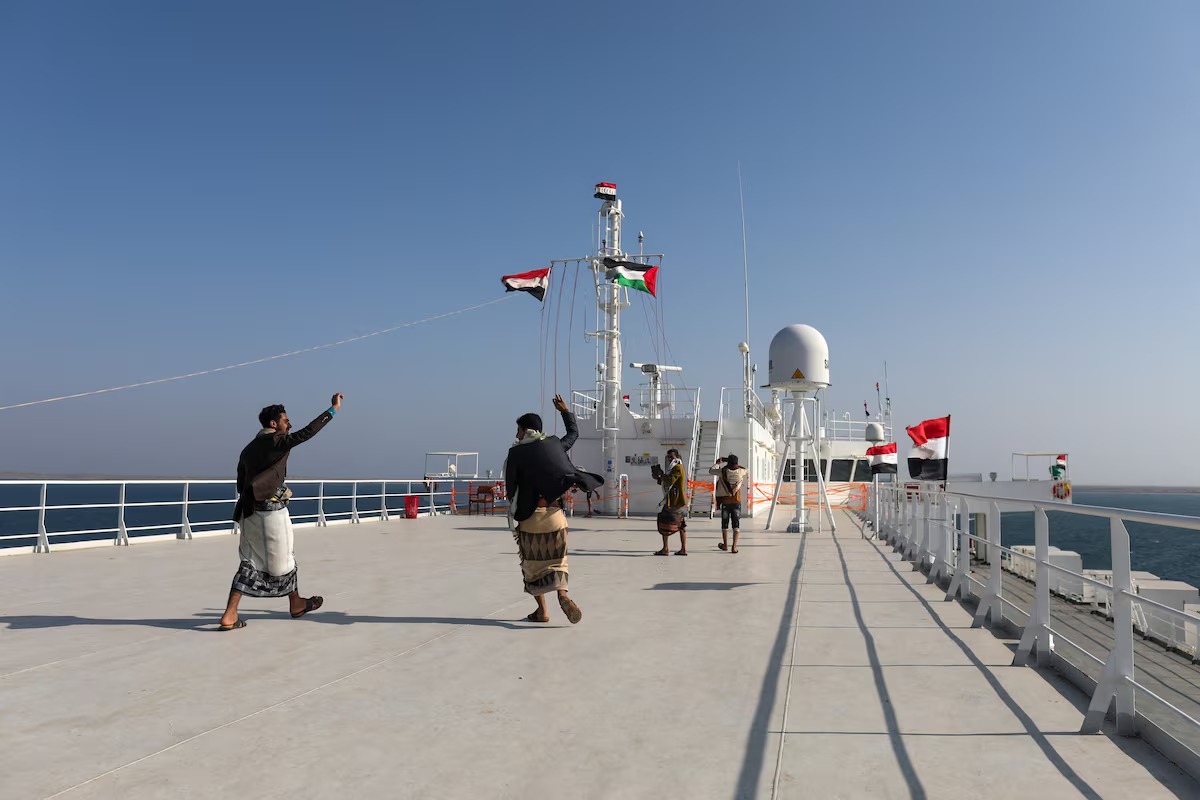
British Prime Minister Andy Burnham is considering responding to requests for military assistance directed at Yemen from the Saudi Arabian government.
According to sources speaking to Bloomberg, the prime minister has received various requests for diplomatic and military support from Saudi Arabia.
The sources stated that Saudi Arabia’s requests include providing operational support to its military to repel the advance of Ansarullah (the Houthis) along Yemen’s Red Sea coast towards the strategically vital Bab el-Mandeb Strait, as well as assistance in defending against attacks on oil infrastructure.
Under pressure to take action because of the economic difficulties generated by the war with Iran, Burnham is also concerned about creating the impression that he supports Donald Trump’s war against Iran, given that the UK public overwhelmingly opposes the war.
Reports had emerged that Saudi Crown Prince Mohammed bin Salman asked Donald Trump to conduct air strikes against the Yemeni resistance.
At present, the UK has approved the deployment of only British military advisers to Saudi Arabia.
This comes despite Saudi Arabia’s request for operational support to halt operations carried out by Yemeni forces along the coastline.
Former UK prime ministers Rishi Sunak and Keir Starmer had provided more comprehensive support to Saudi Arabia against the Yemeni resistance.
The prime minister was also warned by UK officials that the Bab el-Mandeb Strait is of vital importance to global maritime transport and the economy, and that the capture of this strait by the Houthis must be prevented.
Earlier on Monday, Bloomberg reported that Saudi Arabia was seeking to increase the volume of oil shipments transiting the Strait of Hormuz after shutting down its East-West crude pipeline.
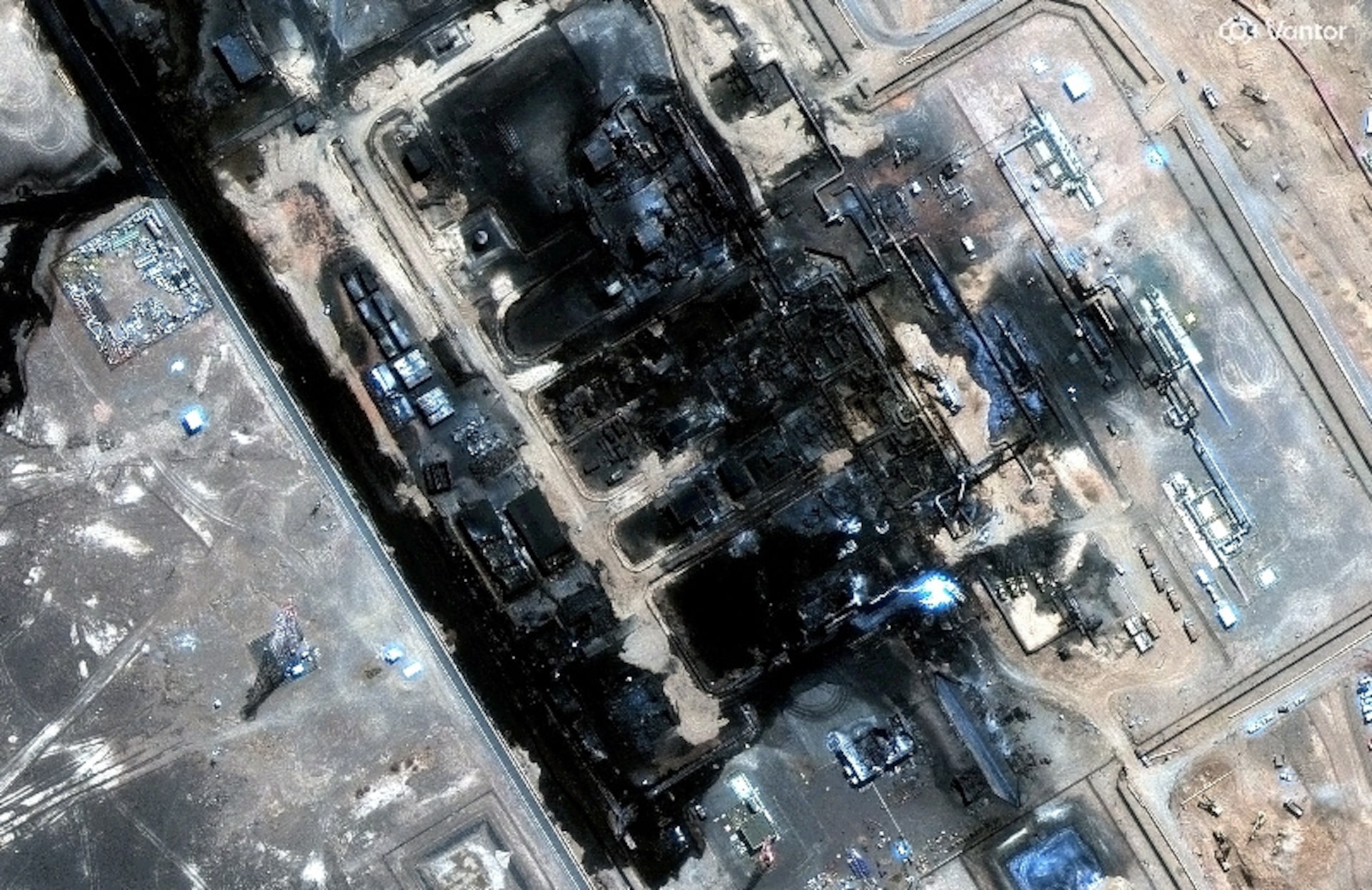
Saudi Arabia risks exhausting its exportable crude stockpiles if the East-West pipeline to the Red Sea fails to resume operations, according to reports.
Citing companies purchasing Saudi crude as well as market traders, the Reuters news agency reported that such an outcome could trigger a severe contraction in global oil supply.
Oil flows through the pipeline were halted following drone strikes. The government in Riyadh has not yet issued an official statement regarding the extent of the damage or the expected duration of repair works.
Sources familiar with the matter have offered differing estimates regarding the repair timetable.
One source speaking to Reuters noted that works could take five to six weeks, while another source stated that the damage could be repaired more quickly and that partial oil flows could be restored before repairs are entirely completed.
Stocks at Yanbu port reach critical threshold
Traversing the Arabian Peninsula to the Red Sea port of Yanbu, the pipeline carries approximately 4 million barrels of oil per day. This volume represents roughly 4% of global oil supply.
The line previously provided Saudi Arabia with an alternative export route, bypassing the Strait of Hormuz where maritime traffic has faced disruptions due to regional conflict in the Middle East.
Three sources closely tracking shipment schedules indicated that, following the stoppage, oil reserves at Yanbu port would suffice to sustain exports for only five to seven days.
A fourth source stated that additional reserves held in Egypt at the Red Sea port of Ain Sokhna and the Mediterranean terminal of Sidi Kerir afford buyers shipments for several more days.
Storage capacities stand at approximately 35 million barrels at Yanbu, 18 million barrels at Ain Sokhna, and 20 million barrels at Sidi Kerir.
However, sources stressed that these facilities are not currently filled to maximum capacity and warned that these inventories will be entirely depleted if the pipeline is not brought back online.
Output at lowest level in 30 years
According to International Energy Agency data, disruptions in the Strait of Hormuz and Red Sea transit corridors pushed Saudi oil supply in August to its lowest level in 30 years.
Data submitted by the Riyadh government to OPEC show that the kingdom’s crude production fell from 10.9 million barrels per day in February to 6.2 million barrels per day in August.
In July, the Houthis in Yemen announced the launch of a naval blockade against Saudi Arabia. On 8 September, the Saudi Ministry of Energy announced that operations had been suspended at several energy facilities in the southern part of the country.
On the same day, the Saudi Ministry of Foreign Affairs issued an official statement condemning Houthi strikes targeting facilities in the cities of Abha, Khamis Mushait, Jizan, and Najran.
Riyadh authorities reported that 73 civilians, including women and children, were injured in the attacks. US President Donald Trump stated that Iran might be behind this attack on Saudi Arabia.
In oil markets, Brent crude futures recorded their sharpest single-day gain since late July on Thursday, 10 September.
The price of November Brent crude contracts rose by 6.3% to reach $107.6 per barrel. Prices retreated below the $105 mark the following day.

Big Tech profits from AI extinction hype, Ken Klippenstein says

Israel military weighs legal steps against Gaza documentary makers

Finkelstein says US campus clampdown has surpassed McCarthyism

DeepSeek engineer warns AI will lead to communism or Cyberpunk

Israel pledges full Greek control over Achilles’ Shield source code
-
 Europe1 week ago
Germany’s CDU drafts tougher citizenship rules to counter AfD
-
 Russia2 weeks ago
What to know about Russia’s upcoming State Duma elections?
-
 Diplomacy2 weeks ago
Geoffrey Roberts sees Ukraine war concluding within coming months
-
 Middle East2 weeks ago
Iran expands deterrence as Gulf strikes expose US munitions limits, analysts say
-

 Europe2 weeks ago
German industrial bosses push for return to 40-hour working week
-
 Asia2 weeks ago
BOJ faces critical rate decision as US presses for faster hikes
-
 Middle East2 weeks ago
Israel sees Türkiye as competitor rather than enemy, diplomat says
-

 Diplomacy2 weeks ago
Pope Francis accused Opus Dei of mafia tactics over Spanish shrine
