
Diplomacy
Prof. Doster rules out direct Türkiye-Israel war despite Syria tensions

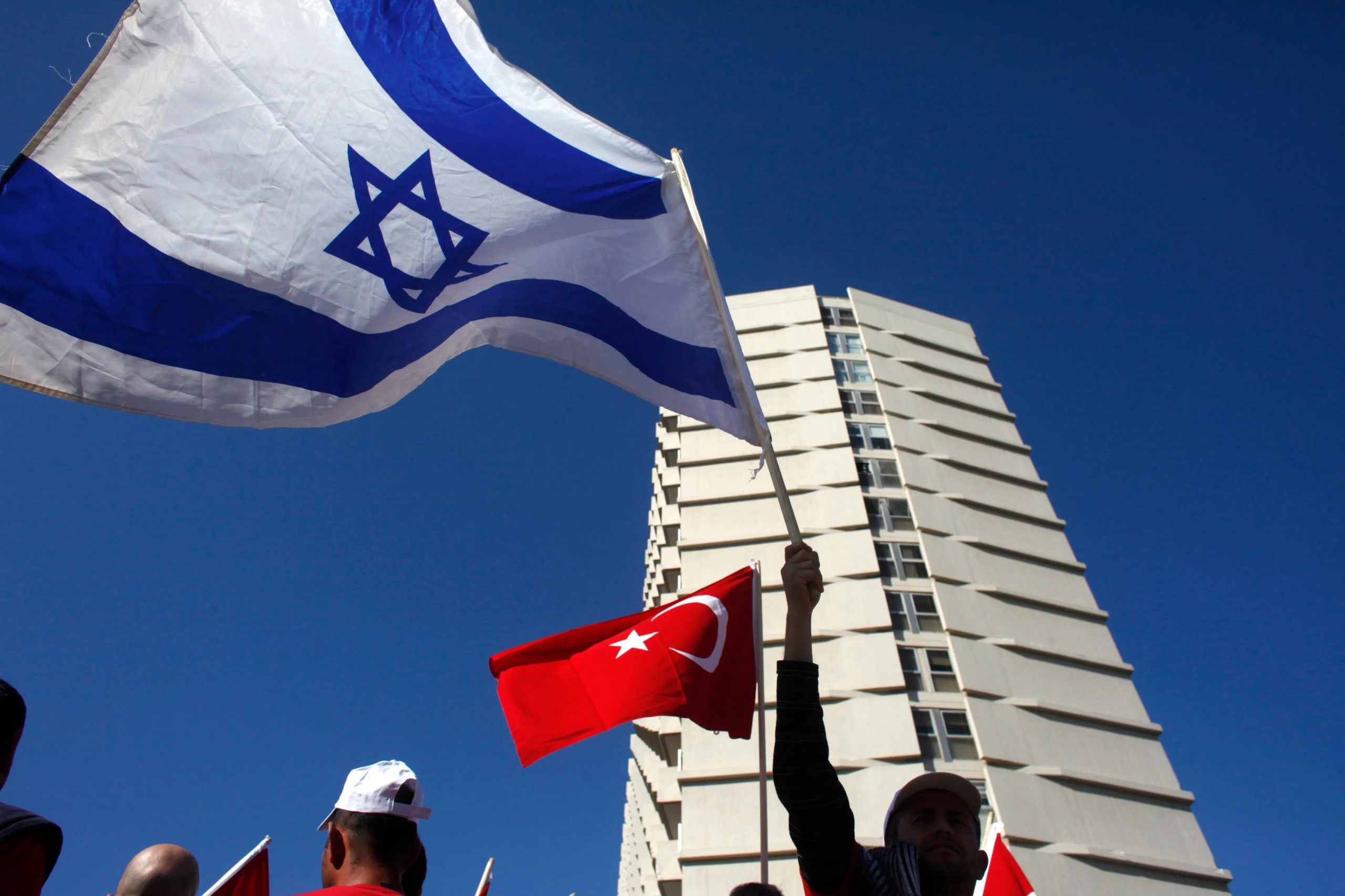
Assessing the escalating friction across the Middle East, Marmara University Faculty Member Prof. Dr. Barış Doster shared comprehensive geopolitical evaluations in an interview conducted by international relations scholar Dr. Elif İlhamoğlu on the Harici digital broadcast programme. The discussion focused on Israel’s recent strikes on the Abu al-Zuhur airbase in northern Syria, proposals for tripartite security mechanisms, regional defence agreements, and the confrontation involving the US, Israel, and Iran.
“Türkiye and Israel will not clash directly”
Opening the broadcast, Dr. Elif İlhamoğlu Akkoç recalled that Israel’s air assault targeting the Abu al-Zuhur military airbase in Idlib, northern Syria, had generated extensive international condemnation. The strikes drew severe reactions across Türkiye and Gulf states, as well as critical statements from US Special Envoy for Syria and Ambassador to Ankara Tom Barrack. The airbase, situated approximately 70 kilometres east of the Turkish border, had reportedly remained out of operational service since 2013. Following the attack, Israeli Prime Minister Benjamin Netanyahu acknowledged responsibility while explicitly citing Türkiye’s military footprint in Syria among the justifications for the operation, bringing Ankara and West Jerusalem into renewed indirect confrontation.
Asked whether this indirect friction could transform into an active military conflict, Prof. Dr. Barış Doster dismissed the prospect of direct hostilities between Ankara and West Jerusalem. Doster stated: “I do not anticipate any physical contact, hot conflict, or direct military confrontation between the two countries. When one evaluates the historical ties, political bonds, diplomatic relations, and commercial links between both states, alongside their separate, overarching strategic engagements with the US, Türkiye and Israel will not clash directly.”
Emphasising the underlying dynamics of this bilateral dynamic, Doster explained that competition would persist through unconventional channels: “This rivalry will continue sharply across various regional theatres through indirect instruments and proxy forces. We are all well aware of the support Israel has extended to the PKK, PYD, and YPG terror groups for years, which it continues to maintain today.”
“Israel wants to see Syria divided into four parts”
Addressing Israel’s broader regional operations, Prof. Dr. Barış Doster noted that West Jerusalem’s aggressive posture is backed by major Western powers. Doster remarked: “Israel, which is committing genocide, ethnic cleansing, and barbaric acts in Gaza while showing absolute disregard for international law, the laws of war, and the legal frameworks governing armed conflict, enjoys the unlimited, unconditional, and frictionless backing of the US and Europe’s leading trio: France, Germany, and the UK. This audacity and aggressiveness are not new. We know what happened in Gaza; we know what happened in Palestine; and we are familiar with the actions taken alongside the US against Iran in the recent past.”
Underlining the limitations of international rhetoric, Doster stated: “We must and do register the strongest possible reaction against these moves. Yet we should not express astonishment. Israeli tanks have previously advanced to within 20 kilometres of Damascus. United Nations resolutions have repeatedly affirmed that the Golan Heights constitute sovereign Syrian territory. Nonetheless, Israel acts as an occupying and annexing force. During his initial presidential term, Donald Trump formally recognised this annexation. Following Israel’s declaration of Jerusalem as its capital, Washington relocated its diplomatic mission there, defying objections from Türkiye and the broader Islamic world. Past American presidents had avoided putting that relocation into practical effect, but Trump brushed those reservations aside. During all these developments, did a single deterrent measure or concrete sanction emerge from the Islamic or Arab worlds beyond verbal condemnation? No. Therefore, while vocal opposition is imperative, we must recognise that verbal condemnations lack deterrence against Israel.”
Doster linked the recent strikes in northern Syria directly to West Jerusalem’s long-term strategic objectives for the Syrian state: “From the beginning, Israel has explicitly sought a Syria partitioned into four distinct entities: Kurds, Arabs, Alawites, and Druze. Israel serves as the primary patron and backer of two of these groups: the Kurds and the Druze. When the PKK, PYD, and YPG terrorist apparatus was heavily battered on the ground by the Damascus administration in recent months, it was rescued directly by the US and Israel. While Washington and West Jerusalem did not grant the group everything it sought, they prevented its complete liquidation. They confined it to a smaller geographic pocket, preserved its political, military, administrative, and resource footprint, and kept it in reserve for future operational needs. Thus, responding to Israeli aggression is necessary, but being surprised by it is entirely unwarranted.”
“How can you establish a red telephone line with Israel?”
Responding to remarks by US envoy Tom Barrack—who argued after the Idlib strikes that a permanent security dialogue and cooperation mechanism should be established among Türkiye, Syria, and Israel—Prof. Dr. Barış Doster characterised such an architecture as entirely unviable under current geopolitical conditions. Doster asserted: “Such a mechanism is unequivocally impossible. First, Israel openly seeks the partition of Syria. Second, the degree of control and long-term durability of the Damascus administration remains uncertain. Although the current Syrian leadership receives support from Arab capitals and Ankara, American officials themselves concede that lasting stability in Damascus is far from guaranteed, even raising the prospect of coup attempts against Ahmed al-Sharaa.”
Evaluating the regional power balance in Damascus, Doster continued: “The influence of the US and Israel over Syria has peaked over the past two years. Ahmed al-Sharaa does not claim rights over the Golan Heights and has offered assurances to Washington that Damascus will not present a security threat to Israel, promising to restrain any attempts by Iran, Hamas, or Lebanese Hezbollah to do so. Concurrently, the historical clout of Iran and Russia in Syria has plummeted toward near-total marginalisation, with Moscow’s functional influence waning even within its military bases. Under circumstances where Israel does not take the Syrian administration seriously and actively seeks its partition, how can you establish a red telephone line or a trilateral security architecture? Furthermore, as long as profound political competition persists and Israeli military violence continues, establishing a functional crisis hotline or security mechanism between Türkiye and Israel is equally unattainable.”
Addressing Tom Barrack’s earlier diplomatic proposals promoting an energy and security corridor connecting the Caspian Sea to the Eastern Mediterranean via Türkiye and Israel, Doster dismissed the initiative as strategically unrealistic: “We will not allow Tom Barrack to insult our intelligence. A corridor of that nature is envisioned primarily between Türkiye, Azerbaijan, and Israel. Ankara and Baku share exceptional historical, cultural, economic, and strategic links under the framework of ‘one nation, two states’. However, having completed my doctoral dissertation on the Caucasus, Eurasia, and the Turkic world, I state emphatically that relations between Israel and Azerbaijan are no less deep, intensive, or comprehensive than relations between Türkiye and Azerbaijan.”
Doster observed that broader systemic opposition would block such an axis: “Regardless of how strong Baku’s ties with Tel Aviv and Ankara are, establishing this line is exceptionally difficult. At the regional level, actors such as Iran will fundamentally object. Globally, because such an axis seeks to sever China’s long-standing, capital-intensive Belt and Road initiative, Beijing will actively oppose it behind the lines. Finally, Moscow will vigorously resist any configuration that expands American strategic hegemony across the Caucasus and the Eastern Mediterranean.”
“When needs change, alliances change”
Evaluating the trilateral Mecca Agreement concluded between Saudi Arabia, Türkiye, and Pakistan—which contains collective defence clauses compared by Turkish Foreign Minister Hakan Fidan to NATO’s Article 5—Prof. Dr. Barış Doster analysed the functional foundations of the pact. Doster remarked: “As I frequently observe, when needs change, alliances change, and every alliance inevitably generates an opposing counter-alliance.”
Interrogating the strategic rationale of the pact, Doster asked: “Against whom was this alliance formed? Was it created against the Houthis? Was it directed at India, Pakistan’s primary adversary? Was it designed to counter the US, or perhaps Qatar, given Riyadh’s fluctuating ties with Doha and Abu Dhabi? In reality, this alliance is positioned squarely against Iran. An alliance that implicitly targets Iran raises critical questions regarding its durability and its potential to deepen fragmentation across the Islamic world. The pact brings together Sunni Arab leadership represented by Saudi Arabia alongside two major non-Arab powers, Türkiye and Pakistan. Saudi Arabia possesses vast capital reserves and leads the Arab world alongside Egypt; Türkiye represents the pre-eminent military power in the Turkic sphere; and Pakistan is a nuclear-armed state maintaining operational energy cooperation and historically balanced ties with Tehran despite its existential rivalry with India over Kashmir.”
Doster elaborated on the structural vulnerabilities of the arrangement: “To attain institutional permanence, an alliance must be grounded in shared political values, compatible state regimes, uniform threat perceptions, and unified strategic interests. None of these elements align across these three states. While Riyadh views Tehran as an existential threat, Ankara maintains a historical, calibrated rivalry with Iran and does not define it as a mortal enemy. Similarly, Islamabad does not perceive Tehran as an existential peril. Therefore, whether this pact represents a premature birth or a stillborn initiative remains an open debate, but its anti-Iranian orientation is unmistakable.”
Noting the geopolitical reactions to the pact, Doster observed: “This formation inherently pleases Washington, which has already extended its formal congratulations. Despite Türkiye’s participation, it also serves Israeli strategic interests by containing Iran, even if West Jerusalem approaches Ankara’s inclusion with tactical caution. Despite the media commentary surrounding the Mecca Agreement, history shows that such ad-hoc initiatives rarely achieve enduring operational deterrence. The 57-member Organisation of Islamic Cooperation and the 22-member Arab League—originally founded in response to Israeli expansionism in Palestine—have demonstrated virtually no concrete effectiveness. Without a clearly defined architecture of shared threats and mutual strategic goals, this pact will be perceived across the region exclusively as an anti-Shia, anti-Persian alignment. Even if Iran’s regional resistance axis has experienced severe attrition, Tehran’s demographic and geopolitical weight ensures that a exclusionary pact of this nature cannot achieve long-term viability.”
Commenting on proposals to incorporate Egypt or Iran into the mechanism, Doster described the inclusion of Tehran as strategically impossible: “Inviting Iran into this pact would be equivalent to the Shanghai Cooperation Organisation offering membership to the US, or Washington inviting Russia to join NATO. Regarding Egypt, Saudi Arabia’s strategic agenda includes structural competition with Cairo. Despite Egypt’s severe economic vulnerabilities, its historical, political, and cultural gravitas within the Arab world means that Riyadh will not endorse Egyptian entry, as it would dilute Saudi primacy within the bloc regardless of Turkish diplomatic lobbying.”
“The US and Israel will not launch a wide air campaign”
Turning to the confrontation between the US, Israel, and Iran following the expiration of ceasefire understandings, Prof. Dr. Barış Doster assessed the military balance and the leadership posture of Donald Trump. Doster remarked: “By completely discarding classical diplomatic protocols, Trump has proven himself an unpredictable and unreliable political actor. One need only recall the assurances given during the NATO summit regarding CAATSA sanctions, the delivery of F-35 fighter aircraft, and engine procurement for Türkiye’s national combat aircraft KAAN. When dealing with an actor whose positions shift constantly, long-range diplomatic projections become exceedingly difficult.”
Analysing the battlefield dynamic between Washington, West Jerusalem, and Tehran, Doster concluded: “Despite sustaining severe losses across its administrative, military, and command cadres due to American and Israeli strikes, Iran currently maintains psychological ascendancy within its domestic public and broader international opinion. It is evident that the US administration has failed to secure its primary objectives through coercive rhetoric. Moving forward, the US and Israel will not launch a wide air campaign characterised by relentless, high-intensity strategic bombing. A ground offensive remains entirely out of the question, as I have maintained from the outset. While localised, low-intensity air strikes against specific Iranian targets may occur, a protracted, maximum-scale aerial assault conducted jointly by the US and Israel remains improbable.”








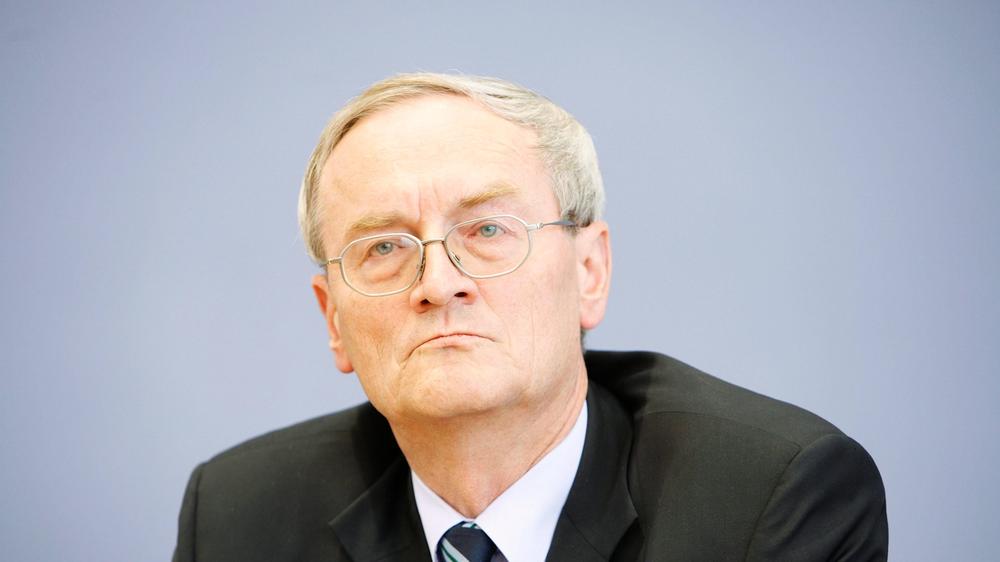
August Hanning, who led Germany’s Federal Intelligence Service (BND) between 1998 and 2005, was arrested on 6 October on allegations that he obtained roughly 2,000 classified agency documents and used them during contacts with intelligence officers from a foreign state.
Accused of high treason and espionage on behalf of a foreign intelligence agency, the former spy chief is alleged to have procured the documents from former BND employee Manfred D.
Prosecutors stated that the leaked records included internal briefing notes presented to senior German officials, though the Berlin government has not yet publicly disclosed which country received the classified data.
According to an exclusive report by Jake Green for The Cradle, seized email exchanges revealed extensive ties between the arrested Hanning and former Mossad director Danny Yatom.
The correspondence shows that the two former intelligence directors built an ongoing network of contacts following their public service, combining commercial ventures, efforts to secure political influence, and intelligence links.
This dynamic has triggered debate that using personal connections and official access for private gain has left Germany’s intelligence apparatus vulnerable.
Intelligence notes for 10,000 euros and campaign proposals
According to the reviewed emails, Hanning told Yatom in a 2018 message that he could prepare an “overall assessment based on information obtained from senior German officials and intelligence agencies” concerning an unidentified candidate.
The former BND head committed to completing the report by 13 July in exchange for 10,000 euros.
Contacts between the two men subsequently expanded to cover domestic political processes in Germany. Ahead of the September 2021 federal election, Yatom asked Hanning to approach leading candidates.
Describing CIY Global as a “political campaign company”, the former Mossad chief noted that he aimed to introduce its capabilities to German politicians, and he mentioned his intention in the same exchange to transfer documents concerning a cybersecurity firm.
Cybersecurity partnership and surveillance operations across Europe
The partnership between Yatom and Hanning reached beyond political lobbying initiatives into the cybersecurity sector.
Hanning reportedly served as a consultant for World Health Energy Holdings, a cybersecurity company linked to Yatom.
Firms of this type, established or managed by former intelligence personnel, provide commercial platforms on the international market for Israeli-origin surveillance, cyber intelligence, and political influence capabilities.
The operational presence of private Israeli-based surveillance technologies across Europe has recently entered judicial records through scandals in Poland, Spain, and Greece.
Polish prosecutors announced on 12 October that data collected under the previous government via Pegasus spyware against political opponents had been transferred out of the country, adding that manufacturer NSO Group maintained access to the technical infrastructure.
In Spain, the 2022 CatalanGate investigation established that at least 65 people, including politicians, lawyers, and civil society representatives, were targeted using Pegasus or Candiru software, with Citizen Lab researchers publishing strong evidence linking the operation to Spanish authorities.
In Greece, the surveillance operation targeting journalist Thanasis Koukakis and Member of the European Parliament Nikos Androulakis was determined to have used Predator software, linked to Intellexa, a company founded by former Israeli intelligence officer Tal Dilian.
In the German espionage investigation, the traffic between Hanning and Yatom involving paid reporting, contacts with electoral candidates, and commercial partnerships does not yet provide conclusive legal evidence regarding the final destination of the roughly 2,000 classified documents.
Nevertheless, the disclosed correspondence gives German investigators a concrete line of inquiry to assess whether classified state secrets reached commercial networks tied to Israeli intelligence.

US President Donald Trump has dismissed Kimberly Guilfoyle, the US ambassador in Athens, following serious press reports concerning her conduct.
White House Press Secretary Katie Zacharia told reporters during her first briefing that Guilfoyle had been asked to resign.
“She was doing a good job, but we didn’t like what we read in the press,” Trump said. “She was not a member of my family. I think she dated my son a long time ago.”
In a social media post, Guilfoyle stated: “These claims are unfounded, and I will resolutely defend my name, reputation, and integrity.” She added that she was particularly proud of the embassy’s work.
According to Kathimerini, her removal came as no surprise in Washington. Days of successive disclosures and vigorous exploitation of the matter by Democrats had been inflicting political damage on the White House ahead of the sensitive midterm elections.
The US State Department was instructed not to comment, with crisis management transferred entirely to the White House.
Reports indicate that most of the president’s team swiftly favoured Guilfoyle’s dismissal, while Secretary of State Marco Rubio was reportedly uneasy with the demonstratively warm public welcome she had staged for him.
Democrats on the House Foreign Affairs Committee have called for an investigation.
“Her resignation does not absolve her of responsibility,” the lawmakers wrote, adding: “While American families struggled to make ends meet, she used her position as a Trump administration official to enrich herself.”
Chargé d’Affaires Josh Huck will assume ambassadorial duties until a successor is chosen.
Meanwhile, Guilfoyle’s departure is expected to cause delays in agreements between Greece and the US.
These include the so-called “Rubio package”, comprising approximately $4 billion in arms deals finalised only days before the secretary of state’s arrival.
Several procedural steps still remain before the contracts can be signed.
In Athens, opposition parties are demanding answers. Dimitris Mantzos of PASOK called for a detailed briefing on the agreements reached during Rubio’s visit.
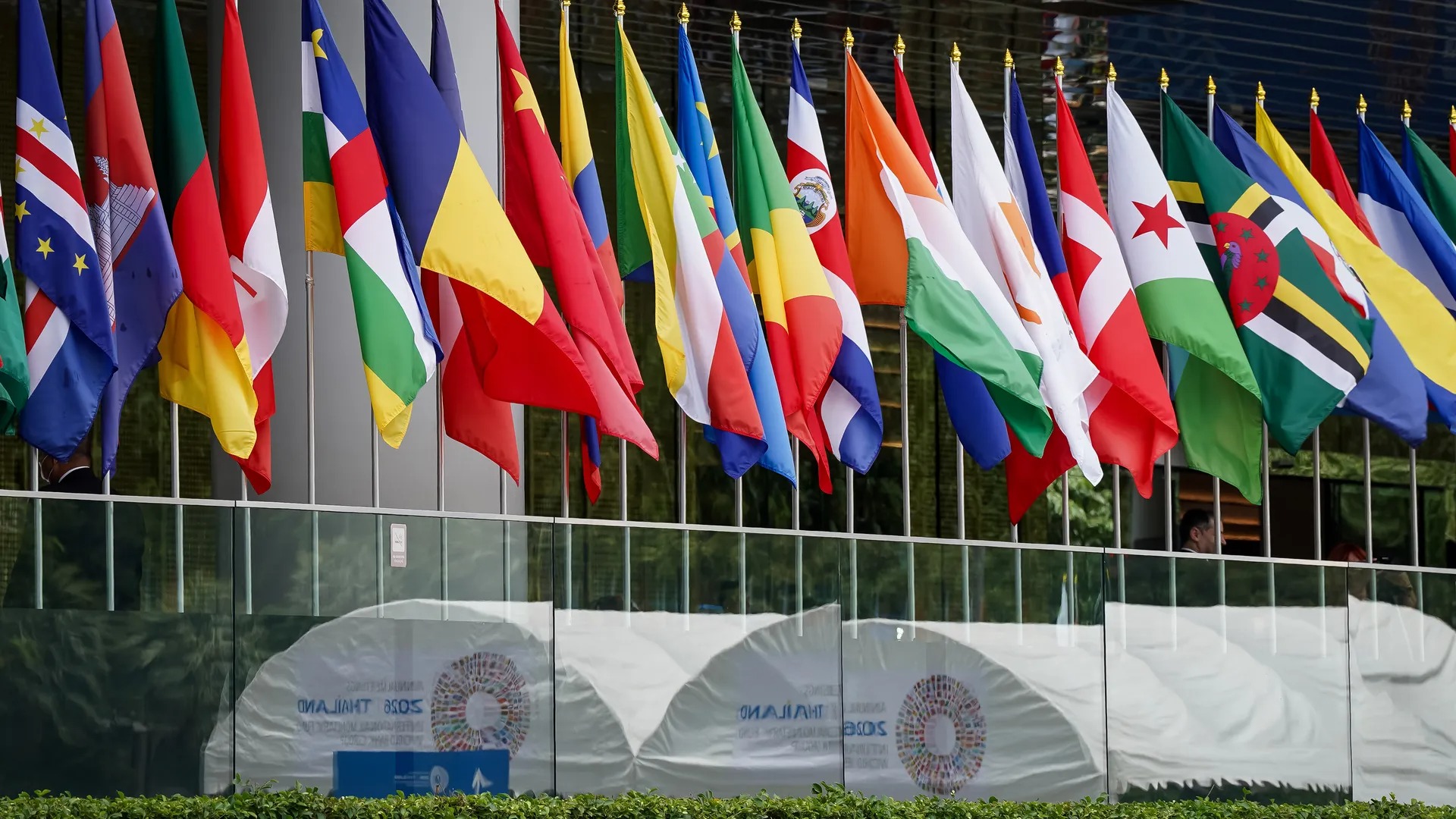
The International Monetary Fund (IMF) has warned that the global economy’s capacity to withstand fresh shocks is coming under strain.
Worldwide growth has exceeded expectations and maintained stability despite the war in the Middle East and surging oil prices.
However, some policymakers worry that dwindling energy reserves, rising debt burdens, and a growing reliance on the artificial intelligence boom will leave the world increasingly vulnerable.
In a blog post, IMF economic counsellor Silvana Tenreyro wrote: “Without strengthening supply capacity and rebuilding policy buffers, the global economy may soon test the limits of its resilience.”
Tenreyro added:
“While tech-related investments are an important advantage against the energy shock, they concentrate risks, making global growth excessively dependent on a small number of companies, sectors, and economies.”
The artificial intelligence (AI) boom has helped offset the economic fallout of the war.
Yet a sharp reversal could leave global GDP 1.1% below the IMF’s baseline forecast by 2028.
US GDP could take an even larger hit of 1.8%.
This scenario assumes that the productivity gains promised by AI fail to materialise, triggering a pullback in investment and a correction in financial markets.
Continued investment in artificial intelligence could also fuel inflation, leading to renewed interest rate increases.
Conversely, a stronger AI investment boom coupled with faster productivity gains could lift global GDP 0.6% above the baseline forecast by 2029.
The IMF largely maintained its global growth projections despite prolonged energy disruptions stemming from the Middle East war.
However, it now expects higher inflation both this year and next year.
The IMF projects global growth of 3.1% in 2026, unchanged from its April forecast, and anticipates 3.4% in 2027, representing a 0.2 percentage point upward revision.
The fund projects that the US economy will expand by 2.3% in both years, marking the fastest growth among G7 economies. The 2027 forecast was revised upwards by 0.2 percentage points.
Global inflation is expected to reach 4.7% in 2026 before easing to 4.1% in 2027.
Driven by the adverse impact of surging energy and food prices, both inflation projections were revised upwards compared with April.
The world had managed the energy shock partly by drawing down oil reserves and rerouting supply sources.
According to the IMF, global oil inventories are declining by approximately 2.7 million barrels per day, elevating the risk of a sharp price spike.
These projections provide the backdrop for global finance officials and central bankers gathering in Bangkok this week for the annual meetings of the IMF and the World Bank.
The IMF underestimated global growth projections for three consecutive years, raising questions over whether economies have become better at weathering shocks.

Ex-BND head Hanning tied to former Mossad chief amid spy inquiry

Iran war costs US economy $265 billion as household burden mounts

Trump dismisses US envoy to Greece Kimberly Guilfoyle

Most EU citizens reject fast-track Ukraine accession, poll finds

Ex-US official says air defences fail against Yemeni airport strike
-

 Europe2 weeks ago
German interior ministers drop unanimity rule to counter AfD veto
-
 Europe2 weeks ago
Key European allies excluded from US-led NATO meeting in Poland
-

 Diplomacy2 weeks ago
While the West breeds crises, Eurasia weaves peace and development, says Prof. Zhang Weiwei
-
 Middle East2 weeks ago
Netanyahu holds secret UAE talks with Saudi Arabia and Arab officials
-

 Diplomacy2 weeks ago
The European Union’s peace project has collapsed, MEP von der Schulenburg says
-
 Opinion2 weeks ago
A new world in the East, old dogmas in the West
-
 America2 weeks ago
Musk appointed co-director of Pentagon future warfare initiative
-
 Asia2 weeks ago
South Korea plans $120B spend on eight US nuclear power plants
