
Europe
Iceland rejects resumption of EU membership talks in referendum

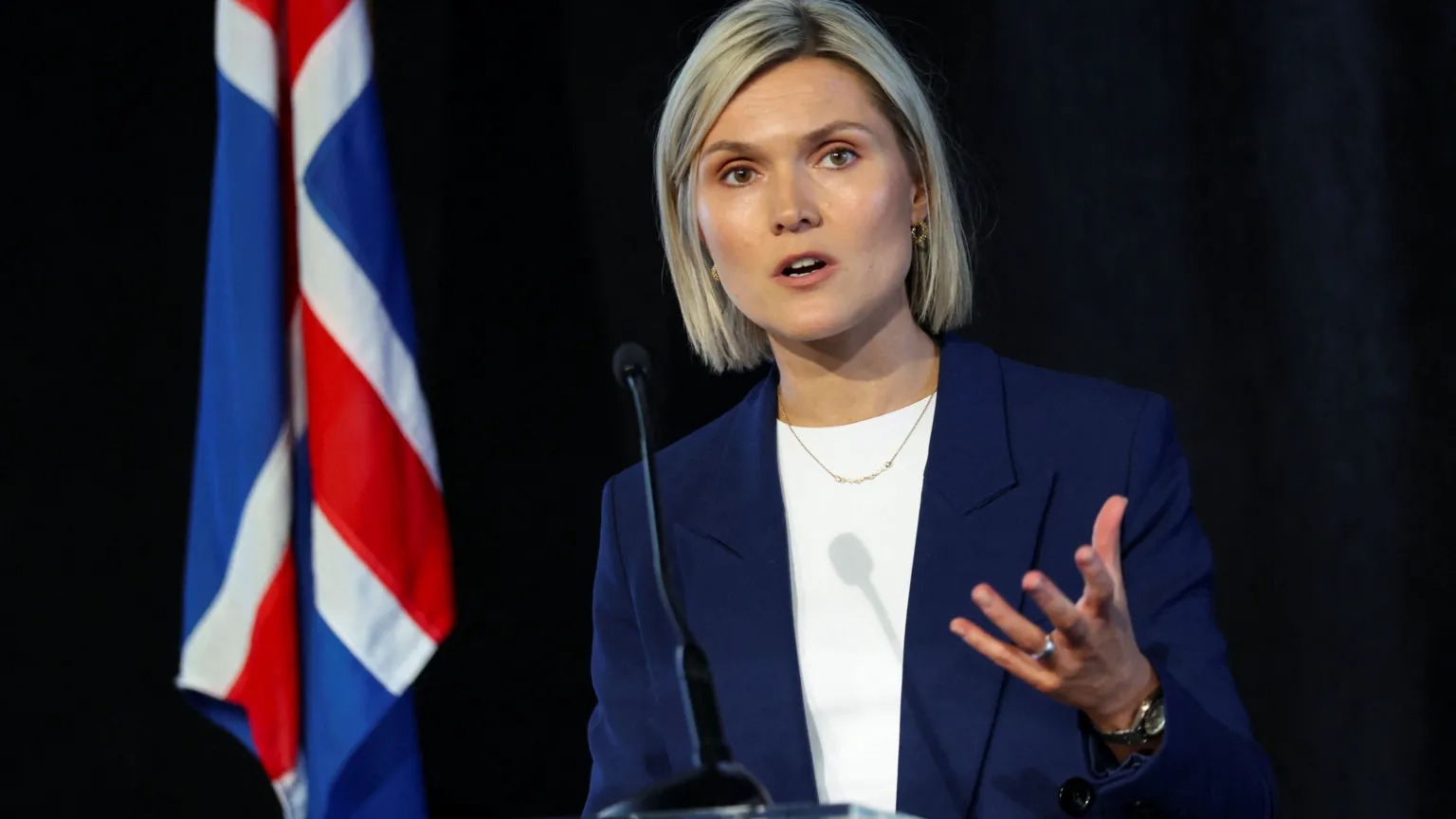
Iceland has voted against restarting accession talks with the European Union, 13 years after negotiations were suspended.
According to public broadcaster RUV, 52.8% of the more than 225,000 people who cast ballots rejected the government’s proposal, while 47.2% supported it. The margin between the two sides was approximately 12,600 votes.
The centre-left government led by Prime Minister Kristrún Frostadóttir had pledged to hold a referendum by 2027, but brought the vote forward due to international tensions, including US President Donald Trump’s threats regarding Greenland.
However, debate across the island nation of roughly 400,000 residents centred on the fisheries sector rather than security concerns.
RUV reported that turnout reached 82.5% among the approximately 270,000 eligible voters, marking the highest participation rate in any Icelandic election since 2009.
Already part of the EU single market and the Schengen border-free zone, full EU membership would bring Iceland into the customs union and ultimately the eurozone monetary union.
Iceland launched its EU accession process in 2009 in the wake of the 2008 financial crisis and the collapse of the Icelandic banking system.
While the accession process was well advanced, an anti-EU government took power in 2013 and suspended negotiations.
At the time, fishing rights were the principal obstacle to Icelandic EU membership, and the situation remains unchanged today.
Shortly after gaining independence from Denmark, Iceland fought successfully during the Cod Wars with the United Kingdom in the 1970s to protect its fishing grounds from foreign fishermen, and the country’s fishing and maritime sectors still account for nearly 40% of its exports.
Many who voted “No” fear that EU membership would entail losing part of the country’s control over these profitable fishing grounds under policies that determine how much member states are permitted to catch.
Eirikur Bergmann, a politics professor at Bifröst University, told the BBC: “The No side was far more adept at appealing to Iceland’s political national identity, which emphasizes formal independence achieved after a long struggle for independence from Denmark. In doing so, they managed to tap into people’s most fundamental emotions.”
Conversely, according to Bergmann, the “Yes” campaign ran an “overtly technical campaign and never fully explained the purpose or the passion behind Iceland joining the EU.”
After casting her ballot in the capital on Saturday, Kristrún said the referendum campaign had ignited debate over Iceland’s place in the world.
At a press conference on Sunday afternoon, she stated that the question of EU membership would not be revisited as long as her government remains in office.
One of her ministers pointed to the high turnout and argued that the outcome did not represent a setback for the government.
There was a notable geographical divide in voting patterns. The capital, Reykjavík, supported EU accession talks, whereas rural areas were largely opposed.
The question on the ballot paper asked: “Should Iceland resume accession talks with the European Union?”
A “Yes” vote would not have represented a final decision to join the EU, but rather a step toward an accession treaty. That agreement would then have required approval in a second referendum.
Similarly, the “No” vote does not rule out the possibility that Iceland could resume negotiations at some point in the future.
While economic concerns dominated the referendum campaigns, security matters were also on the agenda.
Iceland is a founding member of NATO but has no standing military of its own and relies on allies for defence. Joining the EU would have provided the country with full access to the bloc’s common defence architecture.
The country supports Ukraine, and officials are also concerned by Russia’s increasing naval manoeuvres near the island.
However, Trump’s explicit interest in absorbing Greenland, another Arctic island, into the US has heightened anxieties in recent times.
Icelandic Foreign Minister Katrín Gunnarsdóttir told a press conference on Sunday that, following the referendum, the country would seek to bolster defence ties with other nations.
Jacob Funk Kirkegaard, senior fellow at the European think tank Bruegel, told RUV that the EU had failed to “sell itself”, even as it “clearly aspires to be seen as a security actor, particularly in the Arctic.”
Kirkegaard said the result would be seen as “a missed opportunity for both Iceland and the EU.”
An EU diplomat speaking on condition of anonymity appeared to share that assessment, telling Reuters that the result was “a clear setback for Brussels”, while noting that fisheries and independence issues had proved decisive.
The victory for the “No” camp drew applause from Eurosceptics elsewhere.
Nigel Farage, leader of Reform UK and a leading proponent of Britain’s departure from the EU, said Icelanders had voted to “preserve their independence.”
Marine Le Pen of France’s National Rally (RN) said the outcome pointed to an “obvious truth”, namely that “European Union membership is not a natural horizon for every European democracy.”









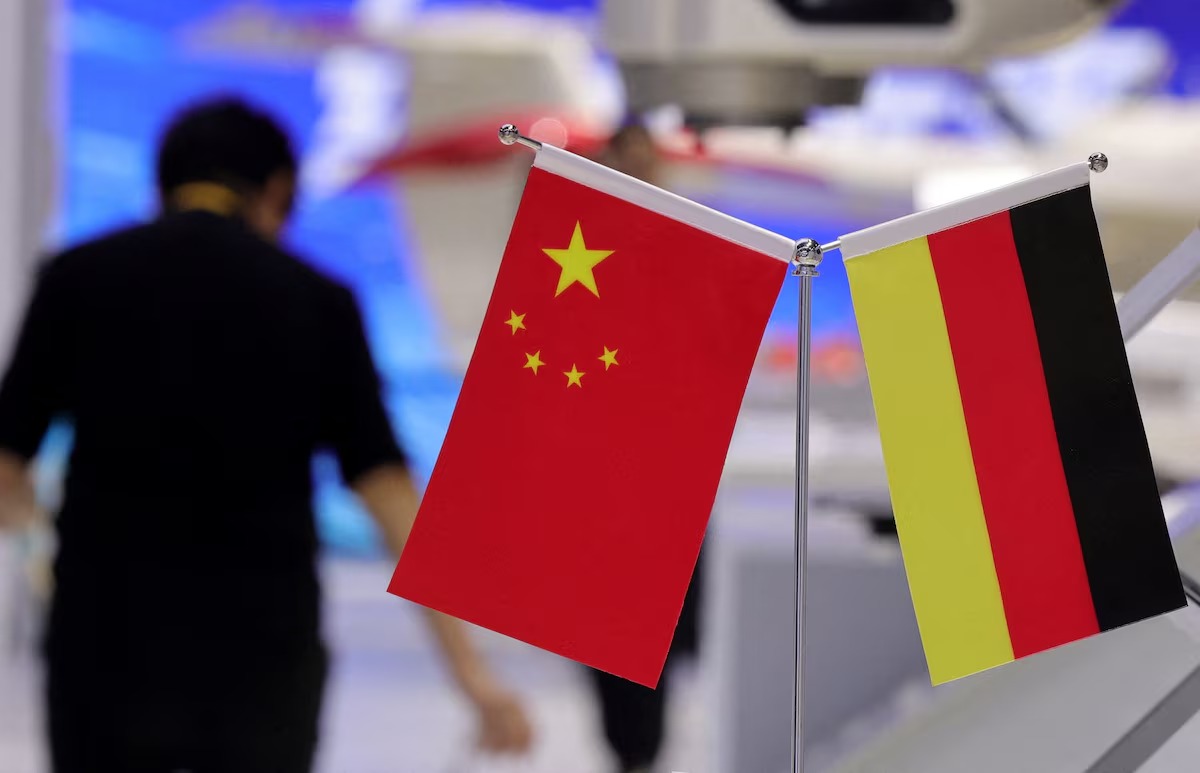
Parliamentary groups of Germany’s ruling CDU-SPD coalition have called for stronger European protection against “unfair competition” and concrete measures to support car manufacturers.
According to Reuters, parliamentary sources indicated that these proposals primarily target China’s “overcapacity”, although China was not explicitly mentioned in the document obtained by Reuters.
The document called for a “decisive” response against “market-distorting practices and unfair competition”, including a faster and broader deployment of anti-dumping and anti-subsidy measures at the EU level.
This development comes as German industry steps up pressure on Chancellor Friedrich Merz to take a harder line against Beijing.
This also marks a shift in a country that has long resisted trade barriers for fear of Chinese retaliation.
According to one demand, once the German government develops local content criteria that comply with EU law and can be harmonised across the bloc, these criteria should be incorporated into Germany’s existing electric vehicle subsidy scheme, addressing concerns that taxpayer-funded German incentives are also supporting imported Chinese electric cars.
To support the country’s automotive industry, the parliamentary groups asked the European Commission to allow plug-in hybrids, range-extender electric vehicles, and highly efficient internal combustion engine vehicles alongside battery-electric vehicles beyond 2035.
The parties also called on Brussels to suspend plans to tighten the so-called “utility factor” metric used in calculating plug-in hybrid emissions from early 2027.
Under current plans, carmakers will need to sell significantly more electric vehicles starting in 2027 to meet mandatory fleet CO2 targets.
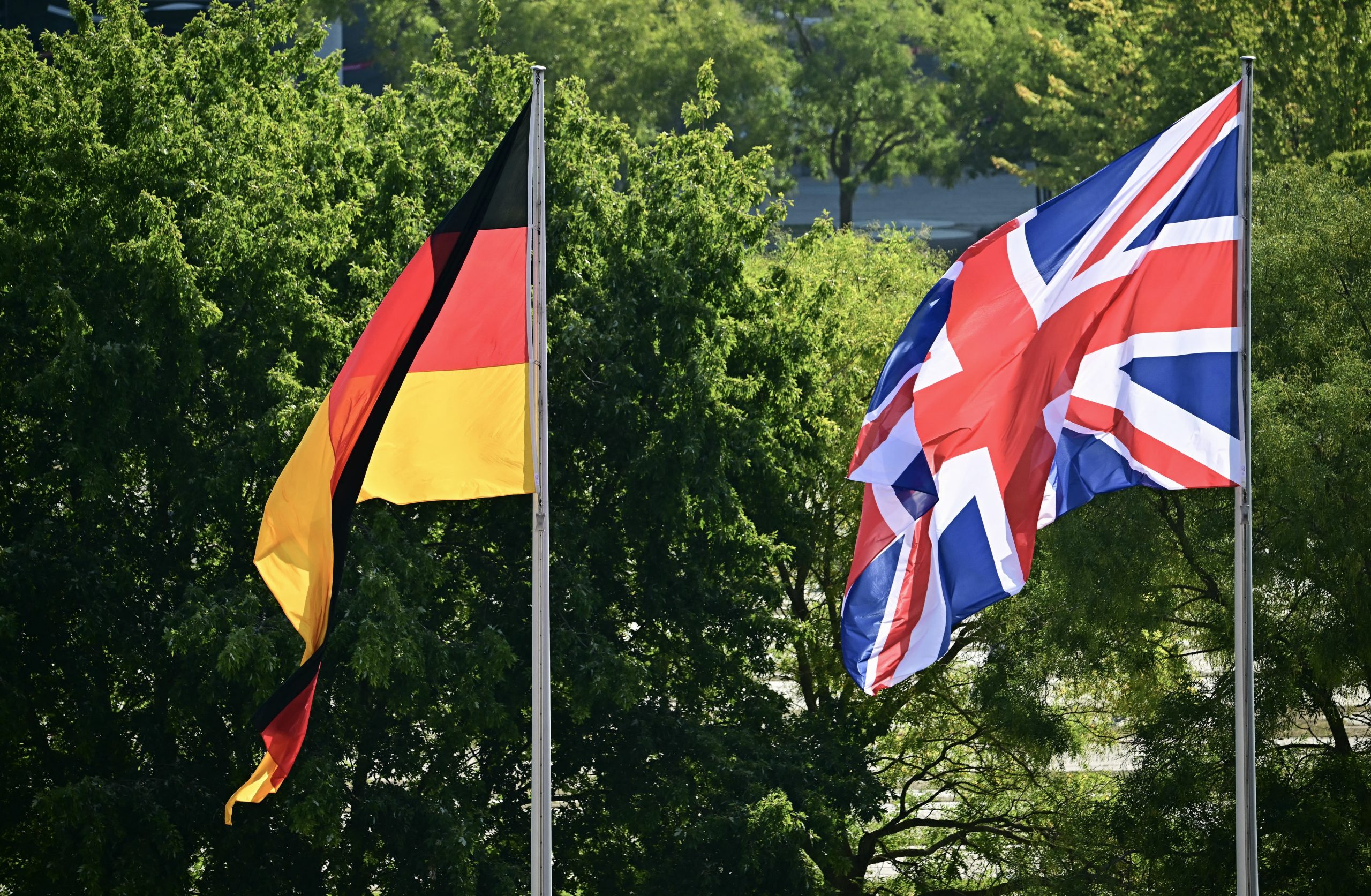
Talks on cooperation regarding nuclear forces are under way in Berlin between Germany and the United Kingdom.
This situation could grant Germany influence and perhaps even a voice in the potential use of nuclear weapons.
According to a report in The Telegraph, discussions are taking place on providing non-nuclear support for the United Kingdom’s nuclear forces as a first step.
Potential support measures include the deployment of Patriot air defence batteries to the Faslane submarine base in Scotland, where nuclear-armed submarines are stationed.
Furthermore, over the long term, US-origin components of British nuclear forces, such as Trident missiles, could be replaced with German-British weapons systems.
These deliberations build on the expansion of German-British defence cooperation, which has accelerated significantly since last year and includes extensive investments in the United Kingdom by German defence industry firms ranging from Rheinmetall to Helsing.
Defence circles speak of a “golden era” of German-British cooperation in the production of all types of weapons systems, from tanks to artificial intelligence-controlled unmanned aerial vehicles.
Rapidly developing German-British defence cooperation
According to an analysis in German Foreign Policy, the foundations of the current boom in German-British defence cooperation were laid shortly after the United Kingdom left the EU on 31 January 2020.
Following preparatory work, the foreign ministers of both countries initially signed the Joint Declaration of Intent on German-British Foreign Policy Cooperation on 30 June 2021.
Following statements between Chancellor Olaf Scholz and Prime Minister Rishi Sunak on 24 April 2024, and by the defence ministers of both countries on 24 July 2024—which likewise focused on significantly strengthening defence cooperation—the Trinity House Agreement was signed on 23 October 2024 as the first accord listing “concrete key projects for joint capability development in all dimensions”.
This series of bilateral agreements culminated in the Kensington Treaty of Friendship and Bilateral Cooperation on 17 July 2025.
The treaty encompassed a wide range of cooperation objectives in areas such as the economy, research, and education, while at least touching upon foreign and military policy issues.
German defence investments on the British Isles rise
The expansion of defence cooperation currently consists primarily of investments by German defence industry firms in the United Kingdom, and these investments have gained tremendous momentum since last year.
Rheinmetall, for example, produces Boxer infantry fighting vehicles in the United Kingdom and opened a “UK Gun Hall” in Telford, where artillery systems and tank gun barrels are manufactured.
German drone start-ups are also establishing factories in the United Kingdom.
Stark Defense, for instance, manufactures all kinds of unmanned aerial vehicles at its new facility in Swindon, including those capable of diving onto and destroying enemy tanks from a distance of 100 kilometres.
According to the company, this method is cheaper than conventional missiles.
Helsing, currently Europe’s most valuable defence start-up with an €18 billion valuation, has also begun investing in the United Kingdom.
In Plymouth, Helsing produces underwater drones controlled using artificial intelligence that are capable of detecting enemy submarines.
According to reports, one of the main plans is to deploy these drones in large numbers to establish a type of underwater defence chain.
The aim is to make it possible to protect waters against intrusions by hostile submarines and vessels.
Russia targeted in long-range precision strike weapons
Among the most significant German-British defence projects to date are initiatives aimed at developing and manufacturing long-range precision weapons (Deep Precision Strike, DPS) designed to strike targets deep inside enemy territory.
At present, the focus is placed particularly on preparations to hit targets deep within Russia.
In line with the provisions of the Trinity House Agreement, Germany and the United Kingdom have begun developing various missiles with a range of more than 2,000 kilometres, including hypersonic missiles.
These missiles are expected to become operational around 2034.
Additional programmes have been launched since then. On the sidelines of the NATO summit in Ankara, London launched a new initiative involving a total of twelve NATO member countries, including Germany.
The objective here is likewise to develop long-range precision weapons, with mentions of a cruise missile and another hypersonic missile.
Experts assume that Germany will play a significant role within this programme as well.
In this case too, the transition to operational readiness is anticipated in the early 2030s.
By that time, Germany is expected to have freed itself from dependence on US long-range weapons.
A voice for Berlin on nuclear matters
As The Telegraph reports, talks are continuing in Berlin to expand the increasingly close bilateral defence cooperation to cover nuclear weapons as well.
Specifically, discussions are reportedly ongoing regarding the provision of a contribution to British nuclear forces.
This could include, for example, the deployment of Bundeswehr (German Armed Forces) units equipped with Patriot air defence batteries to the Faslane submarine base in Scotland.
British submarines equipped with Trident missiles capable of carrying nuclear warheads are stationed at this base.
The plan to provide conventional support to Britain’s nuclear forces broadly corresponds to the initiative currently under way to supply non-nuclear support to French nuclear forces with Bundeswehr troops.
The officially stated rationale is to strengthen European nuclear powers to ensure they can act independently in the event of a further escalation in conflict with the US.
Yet German plans regarding British nuclear forces go even further. These forces have thus far depended on the US: Trident missiles are manufactured and maintained there, and the new British Astraea warhead is being developed jointly with the US W93 warhead programme.
According to The Telegraph, this situation causes concern in Berlin. Ultimately, the country cannot free itself from its dependence on the US under these conditions.
For this reason, consideration is being given in the German capital to providing financial contributions to the British nuclear programme, thereby financing new weapons systems.
It is noted, for instance, that the German shipyard TKMS builds submarines capable of being fitted with nuclear weapons for Israel.
Furthermore, Germany and the United Kingdom are reportedly already jointly developing long-range missiles, including hypersonic systems.
This points to a future plan for the production of nuclear-capable missiles in order to eliminate reliance on US Trident missiles.
From the perspective of the German government, one of the most important advantages of this initiative would be to grant Germany direct influence, and consequently a voice, over nuclear forces and their deployment.
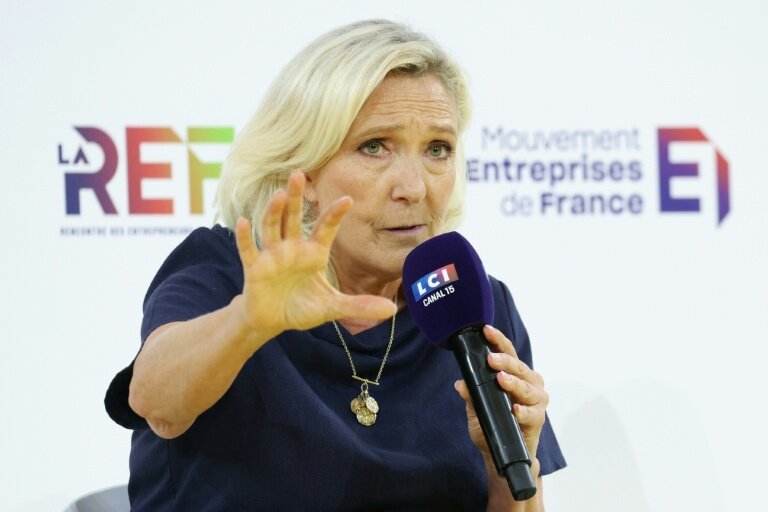
Marine Le Pen, the parliamentary party leader of France’s far-right National Rally (RN), is projected to win the country’s 2027 presidential election under every tested scenario.
The findings of the poll, conducted by opinion research firm Elabe for BFM and La Tribune Dimanche, showed that Le Pen has maintained her voter support despite her conviction for the misuse of public funds.
According to the results, Le Pen secures between 34% and 35.5% of voter support in the first round, depending on the varying scenarios.
A total of 1,501 people aged 18 and over took part in the online poll conducted by Elabe between 26 and 28 August. Registered voters accounted for 1,378 of the participants in the survey, with the margin of error reported to be between 1.4% and 3.1%.
Maintains lead across second-round scenarios
In the first-round contest, Jean-Luc Melenchon, the founder of the France Unbowed (LFI) movement, ranks second with 14% to 14.5% of the vote.
Raphael Glucksmann, leader of the centre-left Place Publique, secures between 11.5% and 14% of support, depending on the scenario.
Le Pen is also shown maintaining her advantage in every second-round possibility. The widest vote margin emerges in a run-off against Melenchon, where Le Pen reaches 69.5% against 30.5%.
The far-right leader also secures clear victories against Glucksmann and former prime minister Gabriel Attal by 57% to 43%.
The narrowest margin is observed in a race against former prime minister Edouard Philippe; in this scenario, Le Pen takes 52.5% against Philippe’s 47.5%.
French President Emmanuel Macron is serving his second consecutive term, which expires on 14 May 2027. Under French law, an individual cannot serve more than two consecutive terms as president.
The first round of France’s presidential election is scheduled to be held on 18 April 2027, with the second round set for 2 May.
Alongside Le Pen, former interior minister Bruno Retailleau, Jean-Luc Melenchon, Gabriel Attal, former French president Francois Hollande, Edouard Philippe, and Raphael Glucksmann have also declared their intention to run in the presidential race.
Marine Le Pen confirmed in July that she would contest the presidential election. Earlier that same day, the Paris Court of Appeal delivered its final judgment regarding Le Pen, finding her guilty of misappropriating European Parliament funds, without any element of personal enrichment.
The court sentenced Le Pen to a fine of 100,000 euros, a three-year prison sentence with two years suspended, and a 45-month ban on running for public office, with 30 months suspended. Because the period of ineligibility is calculated from 31 March 2025, Le Pen remains officially eligible to stand as a candidate in the 2027 presidential election.

Russia warns NATO over Arctic militarisation and conflict risks

German ruling parties urge EU to act against Chinese overcapacity

India faces mounting hurdles to reach developed economy status by 2047

Iceland rejects resumption of EU membership talks in referendum

Germany and Britain hold talks on nuclear force cooperation
-

 Interview2 weeks ago
Daniel Davis warns US strategy fails against Iranian defense grid
-
 Diplomacy2 weeks ago
Erdogan blocked CIA-Mossad plan for armed Kurdish uprising in Iran, report says
-

 America2 weeks ago
AIPAC super PAC pours millions into key Democratic primary races
-

 Europe2 weeks ago
Marine Le Pen plans French constitutional referendum on immigration
-

 Middle East2 weeks ago
US considers land blockade on Iran involving Türkiye and neighbours
-

 America2 weeks ago
US-Brazil rift widens over proposed sanctions and trade tariffs
-

 Diplomacy2 weeks ago
The two terrorists: Britain jails tweets while the West crowns al-Qaeda’s man in Damascus
-

 Europe2 weeks ago
Greece secures EU sanctions carve-out for billionaire’s LNG fleet
