
Russia
What to know about Russia’s upcoming State Duma elections?

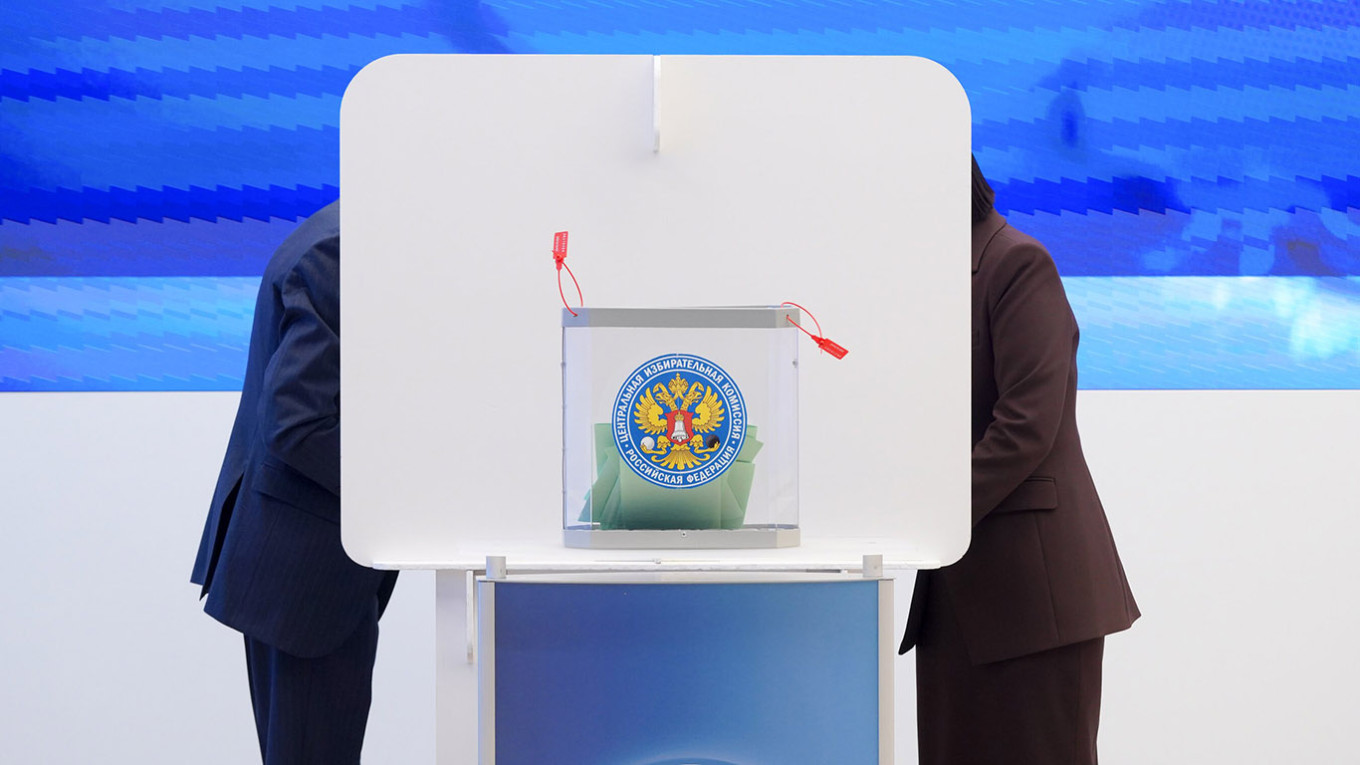
The State Duma of the Federal Assembly of the Russian Federation forms one of the two chambers of the Russian parliament. Operating alongside the Federation Council, the other chamber, the Duma is conventionally referred to in everyday parlance as parliament’s lower house, although no such distinction exists in law.
Under a decree signed by President Vladimir Putin on 16 June, regular elections for deputies to the State Duma will take place on 20 September 2026. The Central Election Commission (CEC) of Russia approved a three-day voting period spanning 18 to 20 September by a decision adopted on 17 June. Consequently, citizens may cast ballots on any of these three days, though 20 September is designated as the official election day, known as the Single Voting Day (EDG).
Legislation governing deputy elections is rooted in the Constitution of Russia and comprises basic guarantees of electoral rights and laws on parliamentary elections.
Who calls the State Duma elections?
State Duma elections are called by presidential decree, which officially launches the election campaign upon signing. The law establishes strict deadlines for setting the voting day: the decision must be taken between 90 and 110 days prior to the election date. If the president fails to publish the decree within this timeframe, the authority to call the election transfers to the Central Election Commission. In all circumstances, the voting date falls on the third Sunday of the month in which the term of the previous convocation expires.
The powers of the sitting convocation of the lower house terminate the moment the new convocation convenes.
How often are Duma deputies elected?
The composition of the Duma is elected every five years. The chamber’s term of office was four years until 2008, when a constitutional amendment extended it to five years. The Duma was first elected for a five-year term in 2011. The current eighth convocation of the State Duma was elected in 2021. Accordingly, the ninth convocation will be elected in September 2026.
The Constitution outlines several scenarios under which the State Duma may (though is not required to) be dissolved and snap elections called. These include the three-time rejection of candidates for prime minister, the three-time rejection of candidates for deputy prime ministers and federal ministers (provided that one-third of government posts remain vacant), and two votes of no confidence in the government within three months. In the event of dissolution, the president schedules a new election date.
In practice, the constitutional provisions concerning dissolution have never been applied since the State Duma was first elected in 1993.
When were the last State Duma elections held?
The eighth convocation of the State Duma concluded its work on 27 July 2026. This legislature was formed on the basis of the 2021 election results. Voting lasted three days, from 17 to 19 September. Compared with the preceding convocation, the number of parties represented in parliament increased from four to five: alongside United Russia, the Communist Party of the Russian Federation (CPRF), the Liberal Democratic Party of Russia (LDPR), and A Just Russia, the New People party—established roughly eighteen months before the vote—entered the lower house. United Russia retained a constitutional majority with 324 seats. The CPRF secured 57 seats, A Just Russia 27, the LDPR 21, and New People 13. All of these political forces formed their own parliamentary factions. Additionally, five independent candidates and three representatives from other parties entered parliament, most of whom subsequently joined party factions.
How do State Duma elections work?
The State Duma comprises 450 deputies. Over the course of a parliamentary term, this figure may decrease due to deputies transferring to other posts, passing away, or facing early termination of their mandates. Depending on how a deputy was elected, the seat may be reassigned to another person on the list or filled via a by-election.
Duma deputies are elected under a mixed proportional-majoritarian system: 225 deputies from party lists and 225 from single-member constituencies.
Each party’s federal list consists of a general federal section and regional groups covering one or more regions. The entire list must contain between 200 and 400 candidates.
A maximum of 15 individuals may be included in the general federal section. Parties typically place their leaders and most recognisable, high-profile figures in this section to maximise voter turnout. Following the elections, candidates on the list can renounce their acquired mandates and transfer them to other party colleagues (the “locomotive” tactic). In practice, the general federal section may consist of as few as three candidates (as on the New People party list for the September elections) or be filled to the statutory maximum (as with the CPRF).
The regional section must comprise at least 35 groups covering all regions of Russia.
Because top rankings in the general federal section and regional groups provide an almost certain guarantee of election, parties seek to position their highest-priority candidates in these slots.
The remaining 225 deputies are elected from single-member constituencies, into which the country’s entire territory is divided. Each constituency elects one deputy. The boundary drawing of constituencies depends on regional populations and registered voter numbers. New constituency boundaries were approved in the spring of 2025. This adjustment was necessitated by demographic shifts and the enactment of laws on the accession of the Donetsk People’s Republic (DPR), Lugansk People’s Republic (LPR), Kherson, and Zaporozhye regions to Russia.
Consequently, certain regions, such as Moscow and Moscow Oblast, gained an additional constituency, while others lost one. Furthermore, the four new regions participating in Duma elections for the first time were divided into constituencies. A candidate may concurrently run on a party list and contest a single-member constituency.
Voters receive two ballots: one containing party lists, where the vote is cast for a party as a whole, and another listing individual candidates in their single-member constituency, where they must select one candidate. The order of party emblems on the ballot is decided by a CEC draw. Constituency candidates appear on the ballot in alphabetical order.
To secure representation in the State Duma, a party must obtain at least 5% of the total votes cast.
How are seats allocated in the State Duma?
Deputies in single-member constituencies are elected by a simple majority, with the candidate winning the highest number of votes entering the State Duma.
The remaining 225 seats are distributed proportionally following the counting of party list votes. To determine this, the total vote count for all parties clearing the 5% threshold is divided by 225. The result represents the electoral quota—the number of votes required to win a single seat. Each party’s vote total is then divided by this quota. Consequently, the more votes a party’s list receives, the more seats it obtains in addition to its single-member constituency victories. Each seat corresponds to one parliamentary mandate.
Which parties can contest the elections?
The Ministry of Justice registered 20 political parties this year, 17 of which hold the right to contest the State Duma elections: 11 without the requirement to collect voter signatures to nominate candidates, and six subject to mandatory signature collection.
Official registration is a mandatory prerequisite for a party to conduct full-scale legal operations. Upon registration, the party is recorded in the Unified State Register of Legal Entities (EGRYUL). However, this does not automatically confer the right to run in State Duma elections. To qualify, parties must hold seats in the Duma or regional parliaments, have secured at least 3% of the vote in the preceding Duma elections, or collect at least 200,000 voter signatures supporting their nomination (with a cap of 7,000 from any single region).
The parties qualifying for ballot access without collecting signatures and the legal grounds for their exemption are:
United Russia (holds seats in the Duma)
CPRF (holds seats in the Duma)
LDPR (holds seats in the Duma)
A Just Russia (holds seats in the Duma)
New People (holds seats in the Duma)
Party of Pensioners (holds seats in a regional parliament)
The Greens (holds seats in a regional parliament)
Rodina (holds seats in a regional parliament)
Communists of Russia (holds seats in a regional parliament)
Yabloko (holds seats in a regional parliament)
Party of Direct Democracy (holds seats in a regional parliament)
None of the six parties required to collect signatures submitted the documentation required to register candidate lists to the CEC within the statutory deadline. These parties are: Democratic Party of Russia, Cossack Party of the Russian Federation, Party of Russia’s Rebirth, Party of Progress, Party for Justice!, and Russian Party of Freedom and Justice.
Among the remaining three parties ineligible to participate, Green Alternative adopted a formal liquidation decision and will effectively merge with The Greens, the other party with an ecological platform. The activities of the Civic Platform party were suspended by a Supreme Court ruling. In June, a court accepted an administrative lawsuit from the Ministry of Justice seeking the liquidation of the Social Security Party.
How does the candidate nomination process work?
Any Russian citizen aged 21 or older who resides permanently in the country is eligible to run for the State Duma. Individuals stripped of legal capacity by a court, those serving prison sentences, holders of foreign citizenship or residence permits, and persons convicted of specific crimes are ineligible.
A candidate may be nominated by a political party or run as an independent, though independents may contest only single-member constituencies.
Parties finalise their nominations prior to the formal campaign launch. The nomination phase, during which parties formally approved list compositions and single-member candidates, took place at party congresses in June and July. Balloting on candidates was conducted by secret vote. Under the timetable approved by the CEC, candidate nominations were permitted up to and including 11 July.
United Russia nominated more than 600 candidates for the upcoming elections. Five individuals were named to its general federal section: Foreign Minister Sergey Lavrov, Moscow Mayor Sergey Sobyanin, Presidential Commissioner for Children’s Rights Maria Lvova-Belova, war correspondent Yevgeny Poddubny, and head of the Yunarmia main headquarters Vladislav Golovin.
The CPRF list is led by party chairman Gennady Zyuganov. The top five also includes State Duma deputies and CPRF Central Committee Presidium members Yury Afonin, Dmitry Novikov, and Ivan Melnikov, alongside Head of Khakassia Valentin Konovalov.
The LDPR top five consists of party chairman Leonid Slutsky, volunteer brigade commander Aleksey Vereshchagin, former chairwoman of the State Duma Youth Parliament Maria Voropayeva, deputy Andrey Lugovoy, and businessman Viktor Bout, who served a prison sentence in the US on illegal arms trafficking charges.
A Just Russia placed four figures in its general federal section: party leader Sergey Mironov, State Duma Deputy Chairman Aleksandr Babakov, deputy and television presenter Marina Kim, and military operation participant Oleg Chernyshev.
The New People party federal list contains three names: party chairman Aleksey Nechayev, Duma Deputy Chairman Vladislav Davankov, and deputy Sardana Avksentyeva.
Yabloko party registration and disqualification
On 29 July, the Central Election Commission registered Yabloko’s federal list. The list was headed by Yaroslav Shcherbakov, leader of the party’s Chelyabinsk branch. The top seven also included St. Petersburg legislative assembly deputy Dmitry Anisimov and Moscow Yabloko chairman Kirill Goncharov.
The party entered the State Duma race under the slogan “For peace and freedom! For a life without fear!” Its core platform focused on securing a ceasefire and peace.
Following a ballot draw on 5 August, the CEC approved the placement order of registered parties, with Yabloko drawing the second position.
On 7 August, the Rodina party filed a lawsuit with the Supreme Court seeking the cancellation of Yabloko’s registration. Rodina Chairman, State Duma deputy, and LDPR faction member Aleksey Zhuravlev argued three potential grounds existed to disqualify their rivals: campaign financing on social networks, copyright infringement in campaign visuals, and extremism in the party’s pre-election appeals for peace and an end to military hostilities.
On 10 August, the Supreme Court revoked Yabloko’s registration for the State Duma elections. The party appealed, but the Supreme Court Appeals Board rejected the challenge on 17 August.
In June, former State Duma deputy Boris Nadezhdin declared his intention to contest the Mytishchi single-member constituency. On 10 July, the Ministry of Justice added him to the register of foreign agents. Amendments to electoral legislation enacted in 2024 bar individuals designated as foreign agents from running in elections at any level. One week later, the Dolgoprudny City Court convicted Nadezhdin of displaying extremist symbols, imposing a fine of 1,000 roubles.
Final decisions regarding candidate registration or rejection are due by 16 August, after which definitive ballot lists will be compiled.
Relevant information will be published by the CEC, regional election commissions, and the parties.
Which slogans are parties campaigning on?
United Russia relies on what it terms the “people’s programme” and enters the race with the stated goal of “continuing work to implement the national development agenda.”
The LDPR outlined programmatic targets including easing the tax burden on families with multiple children, indexing pensions and social benefits by at least 20% annually, raising student stipends to the minimum wage, and introducing a 3% “People’s Mortgage” programme for young specialists, public sector employees, and families requiring improved housing.
The Party of Direct Democracy presented 12 theses centred on human dignity, a fair society, a strong state, and an open world.
The Greens’ programme features seven core steps: public ecological oversight, state regulation of energy prices, affordable housing, fair tax policy, modern technology-driven healthcare accessible to all, support for Russian agriculture, and strict monitoring of food quality.
A Just Russia set 10 programmatic goals: “Protecting defenders”, “Passing Russian culture to future generations”, “Halting price increases”, “Raising salaries, making retirement dignified”, “Protecting Russian families”, “Accessible housing, freezing utility and communal tariffs”, “Returning free and accessible healthcare to the people”, “High-quality, free modern education”, “Strict control over migration”, and “Guaranteeing citizens’ digital rights”.
Rodina’s platform contains 12 points emphasising the primacy of the state-forming people, strict migration controls, economic sovereignty, eradicating poverty among workers, promoting the family and large households, and the reunification of Transnistria with Russia.
The CPRF campaigns on slogans such as “End price, debt, and tariff hikes”, “Healthcare for the people”, “Tribute-free education”, “Returning national wealth to the people”, “Putting the banking system at the service of the country”, “Shifting the tax burden to the wealthy”, and “Clean politics”. According to Zyuganov, the party’s entire platform is oriented towards reconstructing socialism.
The Party of Pensioners campaigns on its Programme for a Normal Life, leading with three proposals: a basic pension income, free quality prosthetics, and a legislative measure restricting a deputy’s tenure in the State Duma to a single term. Its main priorities span healthcare, pensions and the economy, families, education, youth policy, ensuring governmental accountability, and supporting veterans and service personnel.
Communists of Russia defines its strategic objective as “building communism as the future of humanity.” To this end, the party calls for “revolutionary transformations” after liberating the country from the influence of transnational capital and removing oligarchs and “the bureaucracy fused with them” from power.
New People outlined 12 steps towards a “normal Russia,” phrased in its manifesto as: “Trust and dignity are the country’s main capital”, “Internet regulation should be smart, not broad”, “AI court – justice at the speed of technology”, “The self-employed, freelancers, entrepreneurs: you are the economy”, “Strong regions make a strong country”, “Housing is not a luxury, but a starting point”, “Education means skills, not diplomas”, “Family is about people, not demographics”, “Social assistance must be prompt and free of humiliation”, “Prices – competition instead of monopolies”, “Stable rules form the foundation of development”, and “A Russia one wants to live in”.
Who is eligible to vote?
The right to vote is termed active suffrage, while the right to stand for election is passive suffrage. All Russian citizens who are at least 18 years old, have not been stripped of legal capacity by a court, and are not serving prison sentences are eligible to exercise active voting rights in the Duma elections.
All Russian citizens may vote for federal party lists, whereas only voters registered within a specific constituency may cast ballots for single-member constituency candidates.
Voting via paper ballots and DEG
Multiple voting options are available for the 2026 State Duma elections. One is the traditional in-person visit to a polling station. Voters must confirm their assigned polling station address beforehand (via the CEC website or their Gosuslugi public services account) and present their passport during opening hours, which run from 8:00 to 20:00. Balloting is also permitted at any convenient polling station at one’s actual location, provided an application is submitted in advance via Gosuslugi, Multifunctional Public Services Centres (MFC), or an election commission.
Under specific circumstances (such as illness or caring for an ailing relative), home voting is available upon request through the Precinct Election Commission (UIK) or Gosuslugi. Election officials then visit the voter’s residence with ballots and requisite voting materials.
Early voting will be arranged for residents in remote areas, with commission members travelling to collect ballots prior to the official polling window. Polling stations will also be established abroad for citizens residing outside Russia.
Remote Electronic Voting (DEG) will be accessible in 33 regions this year. According to CEC Chairwoman Ella Pamfilova, DEG was approved only for regions where it had previously been used, in order “not to escalate the situation.” These include Moscow and Moscow Oblast. However, DEG will not be deployed in St. Petersburg or Leningrad Oblast.
The availability of DEG does not restrict traditional paper voting. CEC Deputy Chairman Nikolay Bulayev emphasised on 13 August that the right to vote using paper ballots is guaranteed by federal law. “Within the boundaries of their electoral district, voters may receive their ballot in paper format,” Bulayev said.
In Moscow (unlike the 2024 Moscow City Duma elections where paper ballots required prior application), paper voting will be available without additional procedures. Moscow City Election Commission Chairwoman Olga Kirillova stated: “There is no need for any application or prior submission. We have provided for a 100% print run of paper ballots.”
Election Commission outlines legal details of vote
A “large-scale” campaign is anticipated on the 2026 Single Voting Day (EDG), with 20,700 mandates to be contested. Direct gubernatorial elections will take place in eight regions, though CEC Chairwoman Ella Pamfilova indicated in meetings with party representatives that this number could increase by late June.
According to Pamfilova, State Duma elections will be called between 1 and 21 June, regional elections between 11 and 21 June, and local government elections between 21 June and 1 July. Pamfilova noted that voting will most likely span three days (18-20 September), citing voter “demand”.
What is new?
Oleg Lisitsin, head of the CEC Legal Department, outlined changes awaiting candidates. Under legislative revisions, campaign materials are explicitly prohibited from using an individual’s image (including deceased or fictional persons) or AI-generated voice likenesses.
Ballot delivery deadlines have also been shifted by one day; previously delivered to polling stations on Wednesdays for Friday voting, ballots must now arrive by Thursday. Lisitsin explained: “Undoubtedly, this innovation is tied first and foremost to the difficult situation our country currently faces. You are aware of the heavy burden on law enforcement agencies and police, whose duties include securing ballots transported under guard to commissions.”
Mandatory publication of financial reports on paper was also abolished this year. The CEC representative noted that internet users significantly outnumber newspaper subscribers.
Parties also raised questions regarding digital signature collection via Gosuslugi and whether it could be used in federal elections. CEC Deputy Chairman Nikolay Bulayev stated that since the option was introduced in 2020, only three candidates had fully utilised it, all of whom were incumbent governors running as independents.
Pamfilova explained that online signature collection has not yet been rolled out for federal elections: “Let me explain why. We are waiting for regional lawmakers across all regions to adopt [the relevant amendments]; we will analyse the experience, and only then proceed with a draft law for federal implementation.”
New software
Another agenda item was the introduction of specialised software designed to assist parties, constituency candidates, and independent contenders in preparing nomination filings. Following the presentation, CEC member Yevgeny Kolyushin asked whether the program identifies erroneous or deliberately falsified data entered by candidates, such as failing to input Russian citizenship. A debate ensued.
Pamfilova remarked that she sensed an underlying motive: “I am grateful to you for asking, but right now I see not just Yevgeny Ivanovich’s question, but—pardon me—a series of scenarios where we could be worn down.” Warning that such a mechanism could be used for provocations, she added: “A person holds single citizenship, such as Russian, but enters citizenship of ‘404’ countries for certain purposes. The software automatically filters out this option. That person then files a complaint against us [alleging improper rejection]. Imagine, colleagues: let us not receive a slap in the face for our efforts to help parties.”
Kolyushin insisted the issue was not provocation, but whether the software flags the field as erroneous. Pamfilova replied: “It should only display it, not filter it out. Because this could be a pure provocation that works against us later.”
CEC member Yevgeny Shevchenko joined the discussion: “Yevgeny Ivanovich, I would like to refer you to the law on State Duma deputy elections.” The Communist member retorted: “There is no need to refer me to the law!”
Shevchenko recounted an incident where a candidate with a criminal record for “hooliganism” mistakenly entered “sabotage” in the relevant box, stressing the need for complete accuracy when completing documents.
Pamfilova said: “We calculate and [try to anticipate] how blows could be struck against us during elections to discredit and derail the process. But we hope our law-abiding parties will not participate in this.”
Pamfilova recalled that on 27 May, the CEC decided to decommission 2010-model electronic ballot processing systems (KOIB) due to an inability to procure technical components following sanctions. Reiterating that this was a source of “great regret” and occurred through no fault of the commission, she noted that 2017-model KOIBs are next in line for testing. If functional, the CEC will redeploy them. In this context, Pamfilova urged parties to take the deployment of election observers “very seriously” to ensure the campaign remains “as clean, transparent, and legitimate as possible,” calling it a “matter of honour.”
The CEC chairwoman also announced plans to develop proprietary electronic voting terminals (similar to Moscow’s TEG terminals) and deploy them nationwide in the coming years. She clarified that this refers to in-person digital terminals at polling stations where voters press a screen button rather than using paper ballots, rather than Remote Electronic Voting (DEG). Pamfilova recalled that during the 2025 Single Voting Day, a pilot in Moscow enabled voters from regions holding gubernatorial elections to cast ballots in Moscow using TEGs.





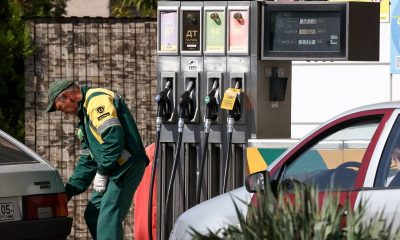







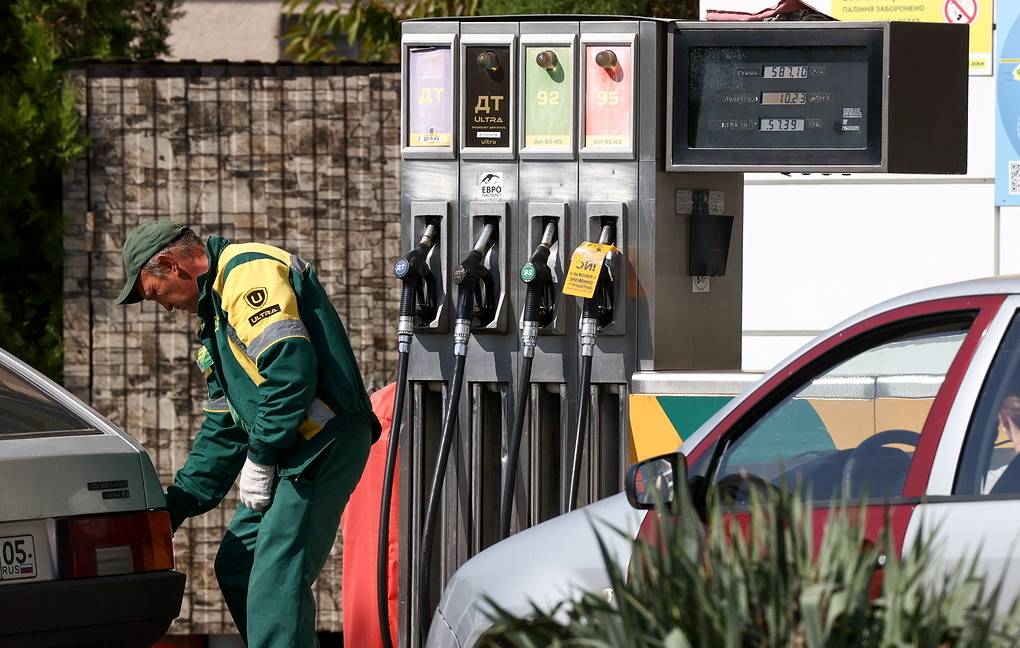
Russia has announced that it will ship 500,000 tonnes of diesel fuel to the global market under a partial lifting of its diesel export ban, enacted as part of measures concerning the Ukraine crisis and energy markets.
A statement from the Russian government said the decision was implemented in accordance with understandings reached between Russian President Vladimir Putin and US President Donald Trump.
Under the decision, which came into effect on 10 October, an initial phase of 500,000 tonnes of diesel fuel will be supplied to the global market.
“Following the rescinded decision, Russian oil companies, in coordination with the government, will immediately begin signing diesel fuel supply contracts with foreign business partners,” the government statement said.
Assessing the matter, Deputy Prime Minister Aleksandr Novak stressed that the decision would not affect the interests of Russian consumers.
Noting that diesel fuel is produced from Russian crude at domestic refineries, Novak stated that production volumes are sufficient both to meet all domestic market requirements in full and to ship the specified quantities to the global market.
The ban on diesel fuel exports in Russia was initially put into effect on 31 January 2026, covering only non-producing companies.
The government tightened the restrictions on 9 July by expanding them to include direct producers. Previously announced to remain in place until the end of October, the ban was partially relaxed in light of current developments.
Vladimir Putin and Donald Trump held a telephone conversation on 9 October. Following the call, US President Trump announced that an agreement had been reached on the supply of Russian diesel.
Trump said Russia had agreed to send more than 300,000 tonnes of fuel to American and global markets in the initial phase, 500,000 tonnes in November, and 1 million tonnes thereafter.
Trump also stated that an additional shipment of 3 million tonnes could follow at a later stage, adding that they expect this agreement to reduce diesel fuel prices rapidly.
Following the conversation, the US Department of the Treasury, on Trump’s instructions, issued a temporary general licence exempting Russian diesel fuel transactions and shipments to the US—previously prohibited under sanctions—until 7 April 2027.
Putin, in a statement after the call, confirmed Russia’s readiness to supply crude oil and petroleum products to American and global markets, noting that this would have a positive impact on the world economy.
Putin also noted that the two leaders discussed prospects for resolving the conflict in Ukraine, the situation surrounding Iran, and bilateral relations, agreeing to maintain contacts through presidential envoys, intelligence agencies, and other institutions.
A statement issued by Novak’s office after the call said Russia was prepared to ship diesel to the US within October.
Novak stated that export volumes could be increased in November and December as refineries emerge from scheduled maintenance.
Novak also conveyed that Moscow views positively Washington’s steps towards stabilising the global energy market and normalising energy trade.
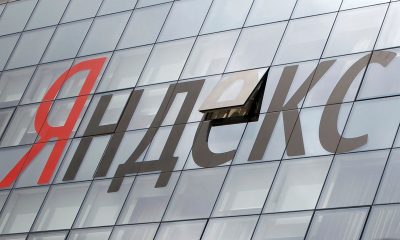
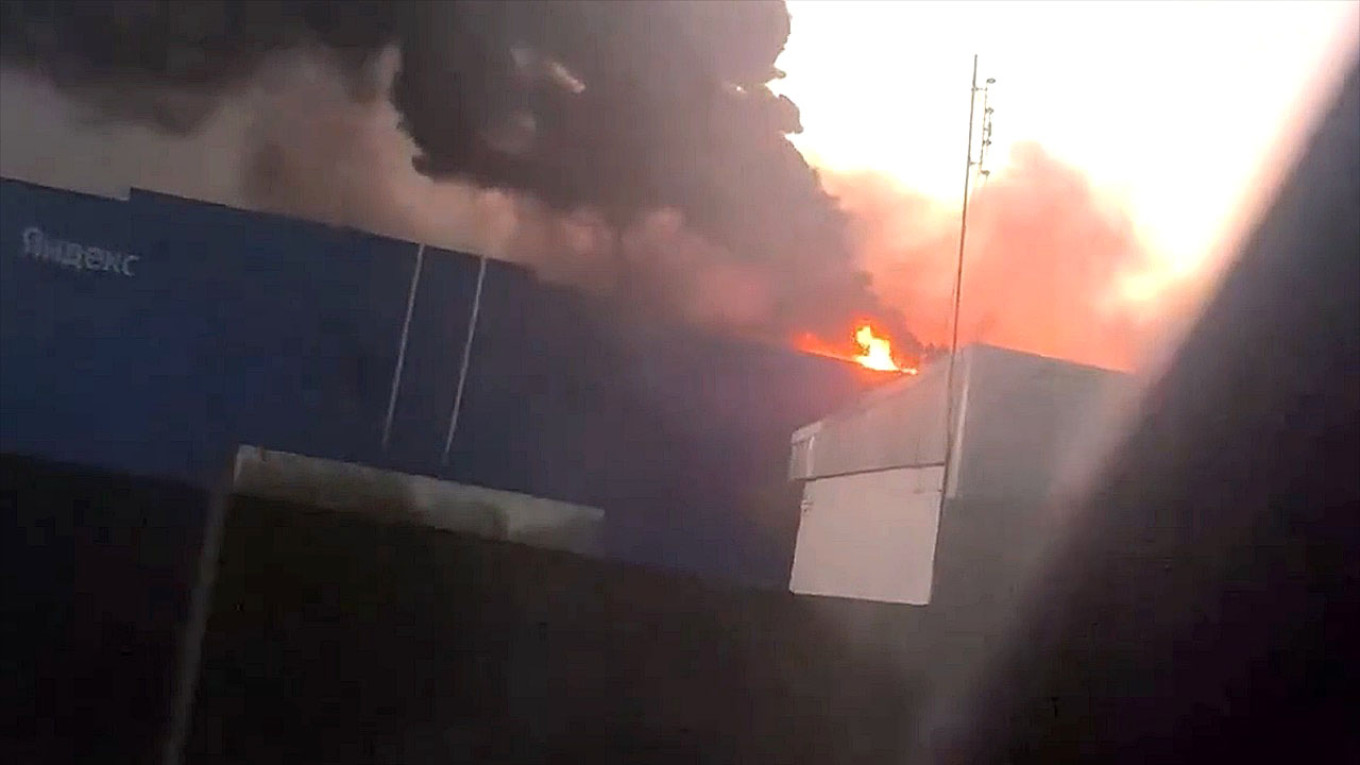
A drone strike has hit a data centre belonging to Russian internet company Yandex in the town of Sasovo, located in the Ryazan region.
The company announced that a fire triggered by the attack damaged part of the infrastructure and resulted in a complete shutdown of the facility’s operations. No casualties or injuries were reported in the incident.
In a statement, Yandex said competent authorities and relevant teams were working at the scene to remediate the damage.
Owing to the facility being knocked offline, it was noted that some of the company’s online services might temporarily become inaccessible to users.
The company provided no details regarding the financial scale of the damage or when the data centre would be brought back into service.
Shares slide, cloud infrastructure curbs introduced
Following the developments, Yandex shares fell by more than 3.4% as of 10:10 Türkiye time.
A drone threat alert was reportedly communicated to residents of the Ryazan region at 23:48 on the night of 7 October, with the alarm lifted at 02:46 on the morning of 8 October. The facility in Sasovo had commenced operations in 2014.
In an advisory issued via the Yandex Cloud Alerts channel, it was reported that power issues were occurring in the system’s “ru-central1-b” availability zone.
The company stated that efforts to transfer data workloads to other availability zones had been completed and that services in other zones continued to operate normally.
However, it was noted that temporary restrictions could be imposed on the creation of new resources within the cloud infrastructure. According to data from outage-monitoring platform Downdetector, an increase in user complaints concerning Yandex, Yandex Cloud, and the real estate platform CIAN was recorded on the morning of 8 October. Reports were observed to have originated predominantly from Moscow and surrounding regions.
Data centre targeted for first time after logistics warehouses
Whether the attack directly targeted the data centre remains unconfirmed. Nevertheless, as of 8 October, this went on record as the first drone strike directed at data centres in Russia.
Beginning in the summer months of 2026, warehouses belonging to Russia’s leading e-commerce platforms had faced drone attacks.
Fires at several warehouses owned by the company Wildberries caused hundreds of billions of roubles in losses for sellers, after which logistics centres belonging to the company Ozon were also targeted.
Both companies amended their contractual terms, shifting liability for damages arising from attacks onto sellers.
Yandex facilities had previously experienced a widespread outage on 30 March 2025 due to a transformer failure, which temporarily disabled services including Yandex Cloud, Yandex Music, and Yandex Lavka.
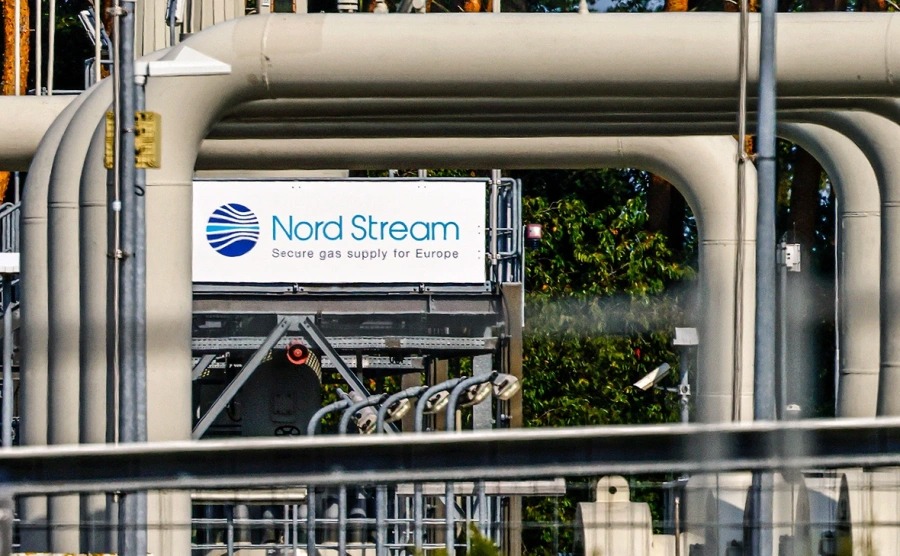
Senior officials from Russia and the US have reportedly discussed involving an American investor in the Nord Stream natural gas pipelines.
According to a report by the Reuters news agency based on five sources, those taking part in contacts included Kirill Dmitriyev, head of the Russian Direct Investment Fund (RDIF) and the Russian president’s special representative for investment and economic cooperation with foreign states, and Jared Kushner, son-in-law of the US leader.
Two sources providing information on the scope of the discussions said that while it remains unclear how detailed the consideration of the Nord Stream topic was, the matter nevertheless remains on the agenda.
Kushner reportedly views business-oriented cooperation as an instrument in initiatives aimed at ending the war in Ukraine.
A potential agreement could reportedly offer US investors an opportunity to profit from energy shipments to Europe once the war ends.
White House states no recent contacts have taken place
A White House official told Reuters that no negotiations regarding Nord Stream have been conducted recently.
The official emphasised that any agreement with Russia would require approval from the US International Development Finance Corporation (DFC) and the US Department of the Treasury, adding that such steps must yield benefits for US taxpayers and companies.
Another US official described reaching an understanding in the medium term as unlikely due to existing obstacles.
The natural gas pipelines are subject to US and European Union sanctions. A spokesperson for the German Federal Ministry for Economic Affairs and Energy stated that the approval of the German federal government is mandatory for the pipelines to be brought back into service, adding that the Berlin administration does not support such a step.
The spokesperson also recalled that Germany has secured alternative supplies to Russian gas.
The ownership structure of Nord Stream also features among the issues complicating the ground for negotiations.
In the consortium operating the project, Russian energy giant Gazprom holds a 51% stake, while the combined share of two German partners stands at 31%.
The remaining shares are held by France- and Netherlands-based companies.
A source speaking to the agency stated that the German partners wish to retain their stakes in order to preserve their influence in the project should Gazprom’s shares be sold.
What had American investor Lynch proposed?
The concept of involving a US financier in the Nord Stream projects had also surfaced in 2024.
American investor Stephen Lynch, founder of Monte Valle Partners, who conducted commercial activities in Russia for 20 years, had applied to the US administration for a licence allowing him to bid if the Nord Stream 2 pipeline were put up for auction.
Lynch described this potential move as an opportunity to keep Europe’s energy supply under control until the fossil-fuel era ends, as well as leverage against Russia in peace negotiations.
The Alternative for Germany (AfD) party described the possibility of transferring the pipeline to Lynch as an illustration of the German government’s irrational policy.
Separately, The New York Times (NYT) reported earlier this month that Ukraine-related contacts between Russia and the US were expanding to include a multi-billion-dollar oil deal covering Lukoil’s foreign assets.
The assets in question included Lukoil’s refineries in Eastern Europe as well as filling stations in the US.
NYT sources reported that discussions in this framework were also addressed during a meeting between Russian President Vladimir Putin, Steven Witkoff, and Kushner.
The sabotage of the Nord Stream pipelines took place in September 2022, with three of the four lines damaged by explosions.
One string of the Nord Stream 2 pipeline, which had not yet been commissioned at the time, remained intact.
The Federal Security Service of the Russian Federation (FSB) classified the incident as an act of international terrorism, while Putin claimed that “Anglo-Saxons” were behind the attack.
In investigations into the incident, judicial proceedings were pursued against several Ukrainian citizens, including professional diver Vladimir Juravlyov, suspected of planting explosives off the island of Bornholm, and Sergey Kuznetsov, who allegedly skippered the yacht Andromeda.

Ex-BND head Hanning tied to former Mossad chief amid spy inquiry

Iran war costs US economy $265 billion as household burden mounts

Trump dismisses US envoy to Greece Kimberly Guilfoyle

Most EU citizens reject fast-track Ukraine accession, poll finds

Ex-US official says air defences fail against Yemeni airport strike
-

 Europe2 weeks ago
German interior ministers drop unanimity rule to counter AfD veto
-

 Europe2 weeks ago
Key European allies excluded from US-led NATO meeting in Poland
-
 Diplomacy2 weeks ago
While the West breeds crises, Eurasia weaves peace and development, says Prof. Zhang Weiwei
-

 Middle East2 weeks ago
Netanyahu holds secret UAE talks with Saudi Arabia and Arab officials
-
 Diplomacy2 weeks ago
The European Union’s peace project has collapsed, MEP von der Schulenburg says
-
 Opinion2 weeks ago
A new world in the East, old dogmas in the West
-
 America2 weeks ago
Musk appointed co-director of Pentagon future warfare initiative
-
 Asia2 weeks ago
South Korea plans $120B spend on eight US nuclear power plants
