
America
Elon Musk loses $29 billion after Democratic US midterm sweep


American billionaire Elon Musk lost $29 billion following the announcement of early results from the US congressional midterm elections.
Alphaville, an analysis blog operated by the Financial Times, pointed to the night of 3 November into 4 November, when the US congressional midterms were held, describing Musk as “the real loser of a night that had a lot of losers”.
According to initial data, the Democratic Party gained the upper hand in the elections, taking control of both chambers of Congress: the House of Representatives and the Senate.
As reported by Bloomberg, shares in SpaceX, one of the companies forming the core of Musk’s wealth, fell 6.9% in pre-market trading, while Tesla shares dropped 5%.
The agency noted that the Democratic victory could deal a double blow to investors in Tesla and SpaceX.
Tesla shares had climbed 34% since late July, buoyed by interest in artificial intelligence products and the possibility of a merger with SpaceX.
Under current conditions, however, investors fear tighter regulatory oversight in the artificial intelligence sector.
It is also noted that the Democratic victory could complicate a potential merger between the two companies.
The Financial Times reported that while Democrats lack the authority to block a merger deal outright, they could subject the transaction to tighter, more detailed scrutiny.
Bloomberg pointed out that few major corporate executives have forged ties with US President Donald Trump and the Republican MAGA movement as close as Musk’s.
According to data reported by The Washington Post, Musk spent $446 million backing Republican candidates ahead of the midterms to help the party preserve its majority in Congress.
The billionaire also urged his 240 million followers on the social media platform X not to vote for Democrats.
The newspaper wrote that a significant portion of those funds went to the Senate race in Texas, the state where Musk resides.
In recent years, Musk also relocated his core assets and business operations to the state; both Tesla and SpaceX are currently headquartered in Texas.
Shares in Musk’s companies have previously experienced volatility in response to political developments.
Following Trump’s re-election as president in 2024, Tesla shares surged more than 90% in just over a month, but those gains were gradually erased amid deteriorating relations between the billionaire and the president, as well as investor fatigue surrounding his activities at DOGE.
Nevertheless, the latest market decline is seen as potentially temporary; despite their concerns, investors continue to avoid underestimating Musk’s influence.
Meanwhile, according to early results from the 3 November midterms, the Democratic Party regained control of both houses of the US Congress.
Projections shared by NBC News indicate that Democrats could win 258 seats in the 435-member House of Representatives, where 218 seats are required for a majority.
In the Senate, Democrats have secured 54 seats compared to 44 for the Republicans.
The outcomes of two Senate races, in Mississippi and Alaska, have not yet been finalized.
The scale of the Democratic sweep was characterized across US media as a “blue tsunami”. The party won Senate races in seven states previously held by Republicans.
Within that tally, a Democrat secured Senate representation in Kansas for the first time in 94 years, while in Texas the party won both the Senate and gubernatorial races for the first time in decades.













A redistricting push initiated by Republicans ahead of the 2026 US midterm elections to protect their House seats and minimize potential losses failed to deliver the intended outcome at the ballot box.
According to projections by Decision Desk HQ (DDHQ) cited by The Hill newspaper, Republicans won only two of the 15 seats they targeted through this process, while the new maps in several states left previously safe Republican lawmakers facing the risk of defeat.
Democrats, meanwhile, secured a sweeping nationwide victory by gaining dozens of seats in the House of Representatives.
Fearing a voter backlash against President Donald Trump’s policies, Republicans altered congressional maps across multiple states.
Democratic counter-efforts remained limited before election day to a single intentional redistricting measure in California.
Texas became the first state to redraw its boundaries in 2025, where Republicans aimed to flip at least five Democratic seats.
However, the party prevailed in only one of those redrawn districts. In the 32nd District, Republican Jace Yarbrough defeated Democrat Dan Barrios by roughly three points, according to DDHQ data. Trump had carried the district by approximately 20 points in 2024.
In the 9th District, which Trump won two years earlier by the same margin, Democrat Leticia Gutierrez established a comfortable lead over Republican Alex Mealer, leading by 15 points with votes still being tallied.
The Republican strategy in Texas relied on the prospect that Latino voters who backed Trump in 2024 would turn toward the party again.
The failure of that support to materialize at the ballot box contributed to the party’s defeat across three South Texas congressional districts.
In the Rio Grande Valley, Vicente Gonzalez in the 34th District and Henry Cuellar in the 28th District comfortably retained their seats, both districts having been carried by Trump by more than 10 points in the previous election.
In the state’s 35th District race, Democrat Johnny Garcia defeated Republican Carlos De La Cruz.
De La Cruz’s sister, Republican Representative Monica De La Cruz, also lost her election, trailing Democrat Bobby Pulido in the unredrawn 15th District.
Republicans also lost the open 23rd District, where Democrat Katy Padilla Stout will replace Republican Tony Gonzales.
Across Texas, Democrats offset map-driven setbacks with gains in other districts, concluding election night with a net gain of seats.
In Florida, Republicans also reworked congressional boundaries targeting four Democratic-held seats, but as of Wednesday afternoon data, they failed to win any of the four districts.
According to DDHQ projections, Democrat Kathy Castor held her seat in the 14th District by defeating Republican Mike Beltran by more than five points.
Democrat Pia Dandiya defeated Republican Casey Askar by roughly four points in the 22nd District, while in the 25th District, Democratic Representative Jared Moskowitz finished roughly five points ahead of Republican Scott Singer.
In the 9th District, where a winner has yet to be declared, Democratic Representative Darren Soto leads Republican Dan Green by half a percentage point with nearly all ballots counted.
In Ohio, Republicans were required by law to redraw congressional boundaries. During the process, the 9th District, contested by Democratic Representative Marcy Kaptur, was made more favourable to Republicans, while Greg Landsman’s 1st District was transformed into a district won by Trump.
Nevertheless, Kaptur retained her seat by 5.5 points and Landsman by 11.5 points over their rivals. Republicans suffered the losses in Ohio, conceding the 7th, 10th, and 15th congressional districts according to DDHQ projections.
In North Carolina, where Republicans already held a favourable map, they shifted boundaries further to unseat Democrat Don Davis in the 1st District.
Davis secured election by approximately three points in a district Trump won by roughly 12 points in 2024. The new map produced a heavy defeat for Republicans in the state.
According to DDHQ projections, Democrats won the 6th, 9th, 11th, 13th, and 14th districts. Democrats also remain within two points in the 3rd, 5th, 7th, 8th, and 10th districts, where outcomes remained uncalled as of Wednesday afternoon.
Among those defeated was Representative Richard Hudson, chairman of the National Republican Congressional Committee, the campaign arm of House Republicans. Hudson lost to Democrat Richard Ojeda by two points.
Following the Supreme Court’s Louisiana v. Callais ruling earlier this year, which weakened a section of the 1965 Voting Rights Act, Republicans in Alabama and Louisiana redrew maps to eliminate one majority-Black district in each state.
In Alabama, Democratic Representative Shomari Figures defended his seat in the 2nd District, leading his Republican opponent by about 7.5 points.
In Louisiana, which used a blanket primary for its House races this year, Democrat Chauna Banks and Republican Blake Miguez each secured roughly 19% of the vote, advancing to the general election scheduled for 12 December.
In California, voters approved Proposition 50 in 2025 to update boundaries and deliver five House seats to Democrats in direct response to the moves in Texas.
According to DDHQ data, Democrats swept all five redrawn districts. In the 1st District, Democrat Mike McGuire led incumbent Republican Representative James Gallagher by 14 points.
Democratic Representative Ami Bera, moving from the 6th District, defeated Republican Robb Tucker in the 3rd District by the same margin.
In the 22nd District, previously carried by Trump and targeted by Democrats for a flip, Randy Villegas ousted Republican David Valadao, opening a 33-point lead as of Wednesday afternoon.
In the 41st District, Democrat Linda Sánchez, the incumbent from the 39th District, finished roughly 30 points ahead of Republican Mitch Clemmons.
In the 42nd District, Democrat Marni von Wilpert won the race against Republican Jim Desmond by 19 points.
In Utah, congressional boundaries were established by a court ruling after a judge determined that the existing map dividing Salt Lake City into four Republican districts breached the state’s anti-gerrymandering statute.
The judge ordered the creation of a new district that Democrats could win. Former Democratic Representative Ben McAdams, who represented the 1st District between 2019 and 2021, won the open seat by defeating Republican Riley Owen with a 47-point margin.

US Vice President Vance blamed the ongoing war with Iran for the Republican Party’s heavy midterm defeat, pushing aside other issues, including the Trump administration’s immigration policies, that were viewed as costing party candidates votes.
Posting on his social media account, Vance said, “The war is the reason we lost. The President himself said this last night.”
Continuing his statement, Vance remarked: “If you want to argue that it was worth it, that it was worth losing the Senate for the next 6 years, make that argument. Argue that it was a price worth paying. Agree or disagree, that is at least honest. But everyone knows why we lost. An honest conversation about where we go from here has to start right there.”
The president’s son, Donald Trump Jr., soon backed Vance’s assessment, writing above the original post on the X platform, “Every single word of this is 100% true.”
President Donald Trump, meanwhile, had previously acknowledged that the Iran war was partly responsible for the Republicans’ overall midterm losses, though he remained defiant and said he would make the same decision again.
In an election-night interview with The Wall Street Journal, Trump said the Middle East conflict, now entering its eighth month, was “part of it.”
Asked later on Tuesday about Vance’s post and whether he had been given advance notice, Trump said: “I know how he feels about the Iran war. I think it was fine. I thought it was good.”
Speaking to reporters in the White House ballroom, where construction is under way, Trump said he knew the war would affect the vote, adding, “Affect it or not, Iran cannot have a nuclear weapon, and they never will have a nuclear weapon.”
Regarding when the war would end, Trump said, “It will end when I want it to end, but it has to be done right.”
Government officials sought to avoid blame for a defeat of a scale neither party had faced in a midterm election in the last 50 years. The election results are widely viewed as a referendum on Trump’s presidency.
Having caused sharp rises in petrol and diesel prices in the US and globally since it began in late February, the war fuelled voter backlash following Trump’s 2024 campaign pledges to end foreign wars and lower prices.
A long-time sceptic of US overseas military interventions, Vance sought to distance himself from the unpopular war ahead of a potential 2028 presidential bid.
In the early stages of the war, as Trump was weighing potential strike options against Tehran, Vance was reported to have been sceptical of and opposed to the move.
After the war began, Vance publicly defended “Operation Epic Fury”, but in recent months he took care to keep his distance from the issue.
In his post on X on Tuesday, Vance claimed that despite his party’s heavy losses, data analysts on their side showed that turnout before the election was merely acceptable in some states and exceptional in others, and in no state did it fall to catastrophic levels.
Reporting a genuine sense of optimism within their team, Vance argued that the main problem was not voter turnout.
Vance noted that many voters who backed Trump and him in the 2024 election turned to Democrats in 2026 due to anger over the Iran war, the cost of living, inflation, a lack of focus on “America First”, and current US ties with Israel.
Republican lawmakers pointed directly to Trump, arguing that the war, the administration’s tariff policies, excessive focus on personal projects such as the White House ballroom, and the backing of weak candidates in the midterms destroyed the party’s chances of retaining control of Congress.
According to projections by Decision Desk HQ (DDHQ), Republicans lost at least 7 Senate seats in this outcome.
As of Wednesday morning, two Senate races, in Mississippi and Alaska, had not yet been formally called.
DDHQ data showed that Republicans also lost 30 seats in the House of Representatives, with more than 20 districts still undecided.
Addressing the forthcoming internal party dynamics, Vance admitted: “There’s going to be a lot of recrimination and debate about what happened and why. One pollster I really respect told me our economic messaging down the stretch wasn’t sharp enough. I’m sure that’s true.”
Claiming that over the next few months establishment politicians would try to distract from the truth by arguing “amnesty is the cure for what ails us”, Vance added: “I’m open to changing enforcement, such as focusing more on businesses that employ illegal labour. But anyone calling for amnesty is lying to you.”
Stating that he retained hope for the US despite the major losses, Vance concluded:
“To those who are angry and want to say ‘I told you so’: you’re right, you did. Channel that energy into electing Republicans who share your worldview. To those who are just mad at the outcome: you have every right to be. Let’s take that anger and get back to work saving our country.”
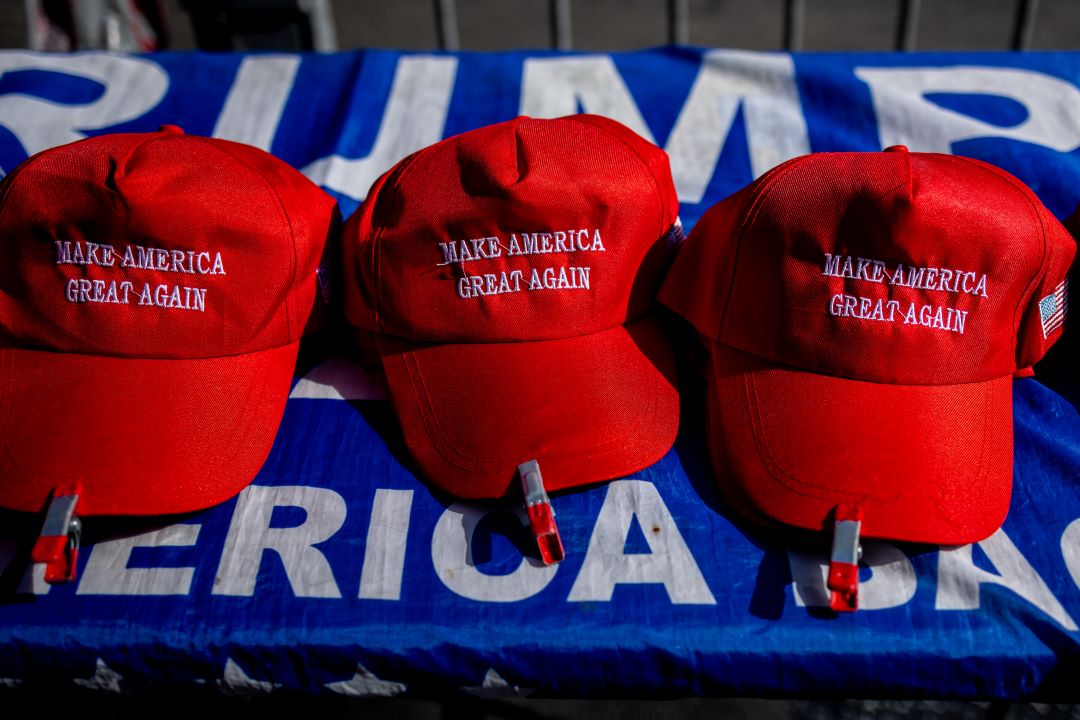
As initial midterm election results in the US indicated that Democrats were gaining the upper hand in Congress, the moderate wing of the Republican Party called for a break from Donald Trump and the MAGA (Make America Great Again) movement.
According to Fox News, the group Our Republican Legacy (ORL), representing traditional conservatives within the party, demanded following the midterm results that the party distance itself entirely from the MAGA line.
Founded by former Missouri Senator and former US Permanent Representative to the UN Jack Danforth, and chaired by former Secretary of Defence William Cohen, the group pointed to the defeat suffered by Republicans and released the following statement:
“The Republican Party suffered a crushing defeat. The American people rendered their verdict on the MAGA movement, the ‘America First’ slogan, and the policies of both the current administration and the Republican Congress.”
Debate on the post-Trump era opens within the party
Representatives of the group argued that the party must distance itself from Trump to regain a majority in Congress and retain the White House in 2028.
“Donald Trump will never again lead the Republican Party in a general election,” the statement said. “It is time to begin the debate on the future of a principled Republican Party in the post-Trump era.”
Our Republican Legacy stressed that its primary goal is to put forward a traditional candidate in the 2028 presidential election and secure their election.
The statement added: “As candidates announce their bids and launch presidential campaigns, we will seek the opportunity to back one or more leaders who share our party’s traditional founding principles.”
Chris Vance, the group’s executive director, pointed out that the 2028 campaign has already begun.
Noting that an open struggle for party control will begin soon, Vance said: “Our goal is to help select a Republican presidential nominee committed to Ronald Reagan’s legacy and ensure their election in 2028.”
Moderate conservatives focus on 2028 target
ORL was established in 2024 to prevent Donald Trump’s populist wing from gaining strength and to return the party to a traditional conservative line.
Members of the group include figures such as former Vice President Mike Pence, former Speaker of the House of Representatives John Boehner, and former Representative Adam Kinzinger.
Having recorded representation across 25 states and approximately 10,000 supporters as of April, the movement aims to consolidate the power of moderates within the party.
On the other hand, the MAGA movement that coalesced around Trump in 2016 rests on the “America First” ideology, encompassing economic nationalism, strict immigration policies, protectionist trade, and non-intervention in foreign conflicts.
Significant rifts persist within the party between traditional conservatives and radical populists.
In the midterms that began on 3 November, Americans went to the polls to decide all 435 seats in the House of Representatives, 35 Senate seats, and governorships in 36 states.
The number of early voters exceeded 50 million, surpassing the 2022 record of 45.9 million.
According to early figures from analysis portal Decision Desk HQ (DDHQ), Democrats secured 228 seats in the House of Representatives and 54 in the Senate, while Republicans remained at 139 seats in the House and 43 in the Senate.

Paris meeting between Marine Le Pen and Nigel Farage unscheduled

Armenian opposition urged to form joint front against constitution

Putin approves standard-gauge rail link on China border

Elon Musk loses $29 billion after Democratic US midterm sweep

Republican redistricting push backfires as Democrats gain House seats
-

 Diplomacy3 days ago
Secular dress code dispute exposes deeper Türkiye-Azerbaijan strains
-

 America2 weeks ago
US wealthy demolish multimillion-dollar mansions for land
-

 Middle East2 weeks ago
Netanyahu trails Eisenkot in Israeli polls despite Trump backing
-

 Europe1 week ago
Merz visits Asia to seek new markets for German defence firms
-

 Russia1 week ago
US and Russia weigh energy deals and corporate return in peace talks
-

 Europe1 week ago
AfD drops Dexit to back single market in new Europe strategy
-

 Europe1 week ago
Serbia opposition wins snap vote as Vucic concedes defeat
-

 Interview2 weeks ago
“The AfD is an expression of internal contradictions within German big capital”
