
Middle East
The British NGO behind Ahmed Shara’s suit: Inter Mediate


It has emerged that Inter Mediate is the British institution providing political consultancy services in Idlib to Ahmed al-Sharaa, referred to in reports as Syria’s interim President.
Robert Ford, the last US Ambassador to Syria, announced that he met with Ahmed al-Sharaa, also known as al-Jolani, in Idlib in 2023. Ford stated he supported the process for al-Sharaa to depart from the “terrorist world” and transition into the political sphere: “In 2023, a British non-governmental organization specializing in conflict resolution invited me to help with their efforts to get this man out of the terrorist world and into normal politics.”
According to a report by Independent Arabia, based on sources, the institution that facilitated Ford’s advisory role to al-Sharaa in Idlib is the London-based non-governmental organization Inter Mediate.
Founder of Inter Mediate is the UK’s National Security Advisor
According to Inter Mediate’s official website, the organization mediates in complex conflicts and contributes to negotiations. The institution was founded in 2011 by Jonathan Powell, who previously served as chief of staff to former British Prime Minister Tony Blair.
Jonathan Powell stepped down from the organization last December after being appointed National Security Advisor by British Prime Minister Keir Starmer. In his new role, he oversees the coordination of foreign policy, security, defense, European relations, and international economic affairs for the British Prime Minister’s Office.
Among the co-founders of Inter Mediate is British diplomat Martin Griffiths, the former UN Special Envoy for Yemen and, until July of last year, the UN Under-Secretary-General for Humanitarian Affairs and Emergency Relief Coordinator.
Specializing in conducting confidential dialogues
Asharq Al-Awsat, citing Independent Arabia, reports that the British institution aims to initiate “meaningful and confidential dialogues,” particularly in conflicts where effective communication channels are lacking. According to its official website, the organization serves as a communication platform for parties involved in conflicts worldwide. It leverages the expertise and knowledge of high-level politicians, diplomats, and specialists, sharing experiences from previous peace processes to address the specific needs of the conflicting parties.
New executive director of Palestinian and Jewish heritage
Following Powell’s departure, the institution’s board of trustees announced the appointment of Claire Hajaj as the new executive director, effective December 2, 2024. According to the institution’s website, Hajaj, who is of Palestinian and Jewish heritage, joined the organization in 2018, serving as Policy Director and subsequently as Deputy CEO.
Hajaj commenced her career in conflict resolution and negotiation in 2002 at the United Nations Security Council (UNSC) Counter-Terrorism Committee. For over two decades, she has contributed to negotiations in humanitarian, political, and security fields within conflict zones across the globe, including Lebanon, Kosovo, Iraq, Myanmar, Nigeria, Afghanistan, and Pakistan. Hajaj worked in the region with the UN Special Representative for Iraq during the peak of the insurgency following the US invasion.
According to the Inter Mediate website, the institution aims to utilize the resources of major entities, such as governments and international organizations, which annually allocate billions of dollars to manage the consequences of conflict through peacekeeping efforts and humanitarian interventions.
The Syrian Presidency, however, contended that Ford’s statements regarding his meetings with President al-Sharaa were “not true.” It was asserted that al-Sharaa had instead shared his Idlib experiences with foreign delegations in sessions he attended. The Syrian Presidency further indicated that the retired diplomat was part of a delegation from a British research and advisory organization.











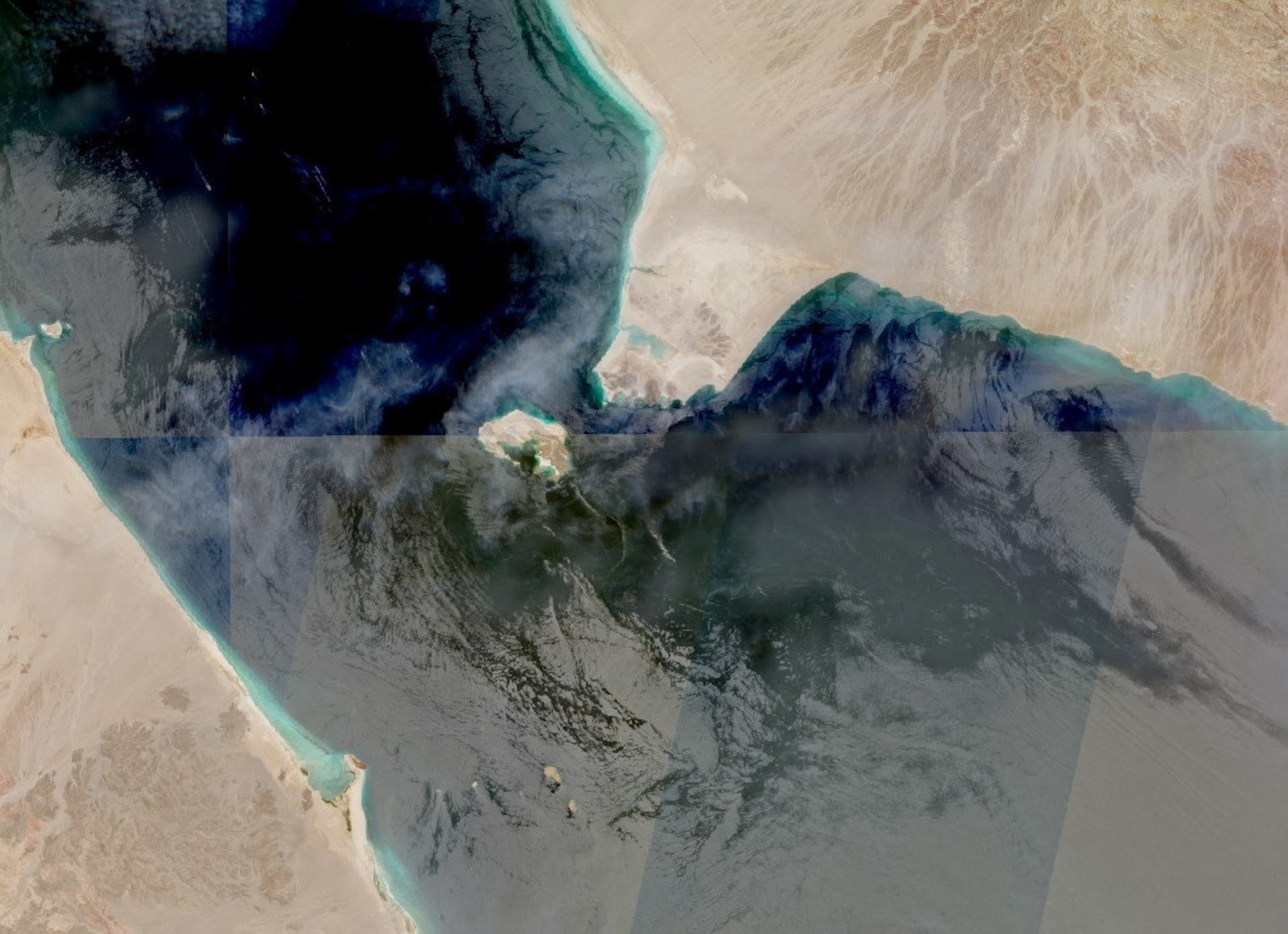
Yemen’s Houthi movement announced on Monday that it will impose a naval blockade on Saudi Arabia, a move that raises the prospect of a new front opening in the US-led war with Iran and poses fresh threats to global energy supplies and trade stretching far beyond the Gulf.
The escalation followed one of the bloodiest periods of the war for American personnel. On Monday, the Pentagon released the identities of two US service members killed in an Iranian attack on a US base in Jordan on Friday. Officials also reported that unidentified remains had been recovered, which are believed to belong to a third service member previously listed as missing in the clash. In a separate incident, a fourth American soldier was killed in northern Iraq during the “controlled demolition” of unexploded ordnance left by a downed Iranian one-way attack drone.
Following the Houthi blockade declaration, the Saudi-led coalition in Yemen announced in a statement that it would respond to the move with force. The coalition also stated that it has begun implementing measures to protect its vessels transiting the Bab al-Mandab Strait, which has become a critical export route for Saudi crude after the de facto closure of the Strait of Hormuz.
The Houthis made their announcement after mutually hostile strikes rendered a fragile temporary agreement, signed last month between Tehran and Washington, non-functional. Nevertheless, both sides also signaled an openness to negotiations. The Iranian Ministry of Foreign Affairs indicated that diplomatic contacts are continuing, noting that mediators had presented certain “proposals” to Tehran, though it did not share specific details.
Oil prices rose briefly following the Houthi announcement but subsequently fell back as investors maintained hope for a diplomatic solution. However, insurance costs for transporting goods through the Red Sea increased due to the heightened risks facing commercial shipping.
Iran had previously requested that the Houthis close the Bab al-Mandab Strait, which opens into the Red Sea, should the US continue its attacks on Iran’s energy infrastructure.
A complete closure of the strait could reduce global oil supplies by 7%, as the bulk of Saudi Arabia’s oil exports would be blocked from leaving the region. This disruption would add to the major supply contractions caused by the Gulf war, which have already disrupted shipments equivalent to 10% of global supply.
In statements issued by their armed forces, the Houthis declared that they were imposing “a naval embargo against the criminal Saudi enemy, effective immediately on an eye-for-an-eye basis,” in response to what they termed the “unjust and cruel siege” imposed on Yemen by Saudi Arabia.
Diplomatic initiatives to restore the ceasefire
A senior Iranian official told Reuters on Monday that Tehran had received a proposal from mediators for a 10-day ceasefire. The initiative is reportedly aimed at saving the temporary agreement, which was intended to pave the way for a deal that would permanently end the war that began on February 28 with US and Israeli strikes against Iran.
Neither the Iranian Foreign Ministry nor the official who spoke to Reuters provided details regarding the reported ceasefire talks under discussion.
Meanwhile, two sources in the Pakistani government said that Iranian Interior Minister Eskandar Momeni had requested that Pakistan resume its role as a mediator in the conflict. Momeni subsequently traveled to Islamabad for new talks.
The diplomatic maneuvers came after a fresh overnight round of US strikes on Iranian cities and subsequent attacks by the Islamic Revolutionary Guard Corps (IRGC) targeting American military assets in the region. US Central Command announced that it had launched a new wave of strikes against Iran on Monday afternoon, US time.
Facing mounting domestic political pressure due to rising gasoline prices—which have climbed steadily since the outbreak of the war and Iran’s de facto closure of the vital Strait of Hormuz—US President Donald Trump defended the latest strikes against Iran as retaliation for the American soldiers killed in recent Iranian attacks.
“Whenever Iran kills an American soldier, they will pay the price many times over! This instruction has been conveyed to Secretary of Defense Pete Hegseth, Chairman of the Joint Chiefs of Staff Daniel Caine, and all commanders in the military,” Trump said in a post on his Truth Social account on Monday.
Iran: Tankers exploded
The IRGC announced that two oil tankers exploded while attempting to transit the strait via an “unsafe” route. On Sunday, the Revolutionary Guards had reported that two vessels were involved in an “accident” in the same area. It remains unclear whether the two incidents are connected.
Reuters was unable to independently verify the incident. The IRGC statement did not provide details regarding the identities of the vessels or any casualties.
Separately, the United Kingdom Maritime Trade Operations (UKMTO) agency reported that a vessel was struck by an unidentified object off the coast of Oman, overlooking the Strait of Hormuz.
In Iran, explosions were reported in Tabriz, Chabahar, Konarek, Bandar Mahshahr, and Bandar Imam Khomeini. According to the state news agency IRNA, one person was killed and several others were injured southwest of Tabriz.
The Revolutionary Guards announced that they had targeted American aircraft at Jordan’s Aqaba Airport with ballistic missiles. The statement added that military assets at Camp Adiri and Ali Al Salem Air Base in Kuwait, as well as several positions in Syria, were also struck.
Sirens sounded across Bahrain throughout Monday, while the Kuwaiti military announced early Tuesday morning that its air defense systems had once again intercepted Iranian drones.
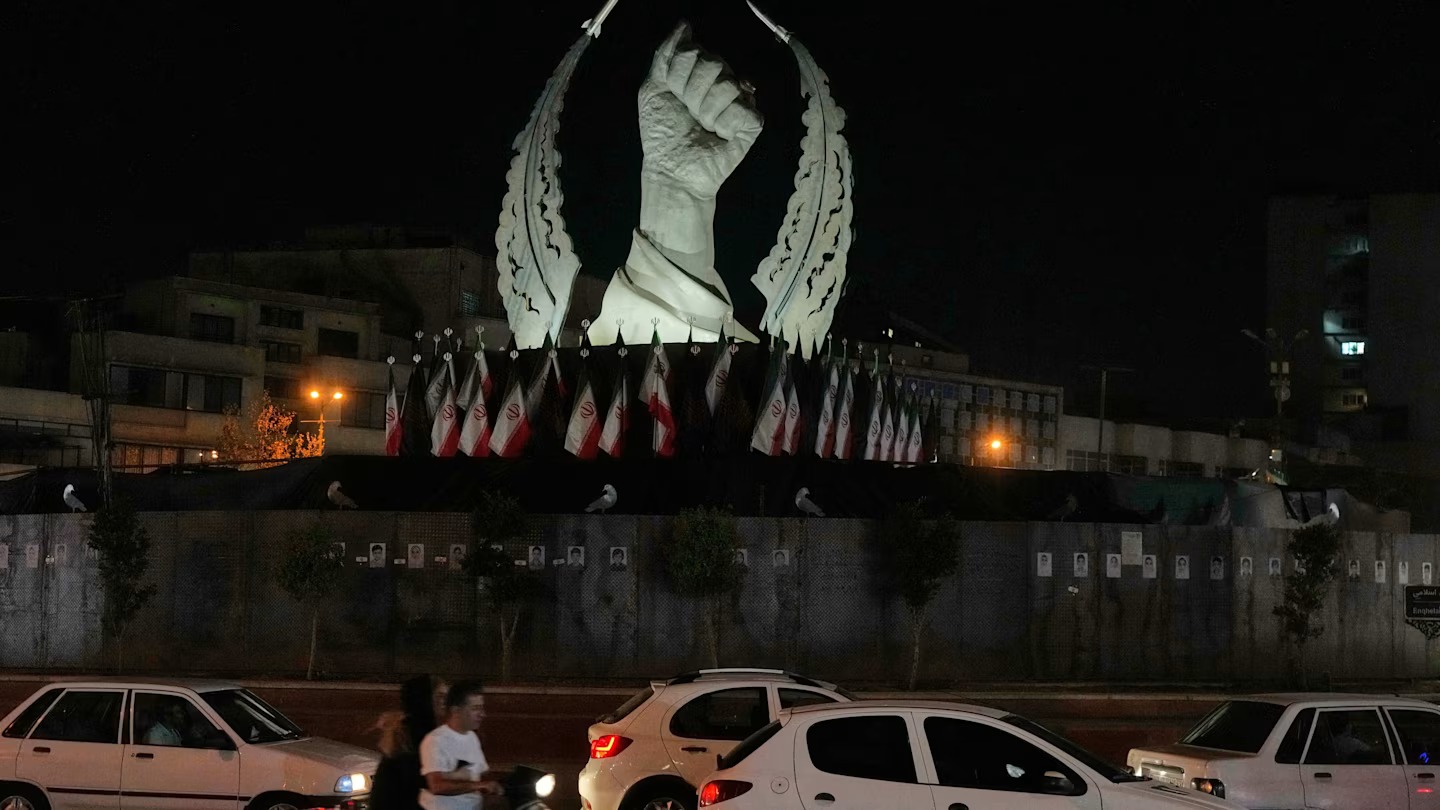
Oil prices have risen above $90 a barrel for the first time in more than a month after the United States launched a new wave of strikes against Iran and the American military death toll from the conflict increased.
Brent crude, the international benchmark, rose by 2.5% to $90.30 a barrel in early Asian trading on Monday. Prices have advanced by more than 23% this month, putting oil on track for its largest monthly increase since March, when hostilities were at their peak.
Oil last traded above $90 a barrel on 11 June.
The surge in prices follows an escalation in retaliatory strikes between the US and Iran. Washington confirmed over the weekend that it had suffered further military casualties, whilst Tehran targeted critical energy and water infrastructure in the region. At least three US service members have been killed in attacks since Friday, with officials stating that remains recovered in Jordan may belong to a fourth soldier.
In an assessment published on Monday, commodity analysts at ANZ noted that tanker traffic through the Strait of Hormuz had “collapsed” due to heightened security anxieties. The analysts added that rising production in the US has been insufficient to offset shipping disruptions in the Gulf, whilst Washington’s blockade of Iranian ports has further disrupted global energy supplies.
The US has launched strikes against Iran for a ninth consecutive night. Washington stated that the operations targeted various military facilities, coastal surveillance stations, and communications networks in an effort to degrade Tehran’s capability to attack commercial vessels in the Strait of Hormuz.
Iran’s Islamic Revolutionary Guard Corps (IRGC) reported late on Sunday that two oil tankers attempting to navigate the “unsafe” southern route of the strait had been “blown up and halted.” In a statement published on social media, the Revolutionary Guards emphasised that the US had “provoked” the attack.
“This is our territory,” the statement said, declaring that there was no “legal” basis for the intervention of the US military, which had travelled thousands of kilometres. The IRGC added that no oil, natural gas, or fertiliser would be permitted to pass through the strait as long as hostile US activities in the region continued.
In a separate statement, the Revolutionary Guards announced that they had targeted US military C-17 transport aircraft and P-8 reconnaissance aircraft at Aqaba Airport, acting on “intelligence” provided by Jordanian citizens.
British maritime authorities reported on Monday that a fire had broken out on board a vessel north of Oman. The United Kingdom Maritime Trade Operations (UKMTO) stated that “the cause of the fire cannot be confirmed at this stage,” advising vessels in the area to navigate with caution.
Markets outside of the oil sector remained relatively stable. The dollar was flat against a basket of currencies of its major trading partners, whilst the yield on the 10-year US Treasury note was unchanged at 4.55%. S&P 500 and Stoxx Europe 600 futures also traded flat, while Asian equity markets presented a mixed picture.
US officials maintained that the primary objective of the current military strikes is to secure the safe passage of energy shipments through the Strait of Hormuz.
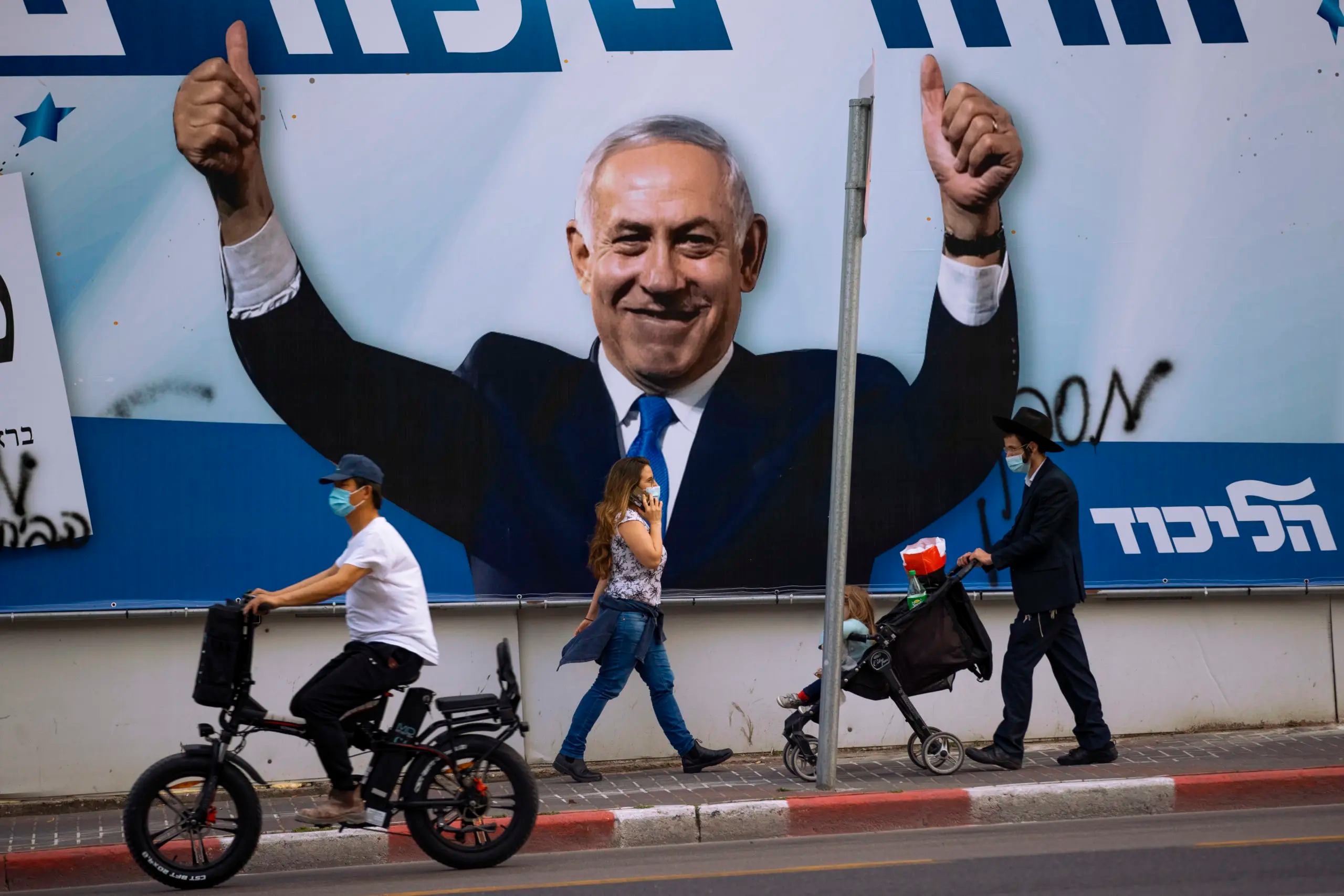
A new public opinion poll published in Israel reveals that the political balance of power has shifted against the current ruling coalition ahead of the country’s upcoming general election.
According to the poll broadcast by Channel 13 television, the anti-Netanyahu bloc, led by former Chief of General Staff Gadi Eisenkot, is projected to secure the majority required to form a government in the Knesset, Israel’s parliament.
The current governing coalition, led by Prime Minister Benjamin Netanyahu, is projected to win only 50 seats in the 120-member legislature.
The poll results indicate that the Yashar Party, led by former Chief of General Staff Eisenkot, would win 21 seats, while Netanyahu’s Likud party would retain 22 seats, remaining the largest single party in the Knesset.
However, the three parties securing the next highest number of seats behind Likud are all aligned with the anti-Netanyahu bloc.
Opposition parties secure majority to form government
The survey projects that former Prime Minister Naftali Bennett’s Birlikte (Together) Party would win 15 seats, while the left-leaning Democrats Party, led by Yair Golan, would secure 11 seats.
The Yisrael Beiteinu party, led by Avigdor Liberman, is projected to win 10 seats, while a political alliance formed by former Minister Yoaz Hendel and National Unity Party member Hili Tropper is expected to secure four seats in the Knesset.
Channel 13 reported that this projected outcome gives the anti-Netanyahu parties a “clear majority” to form a new government.
In contrast, within Netanyahu’s current ruling coalition, the ultra-Orthodox United Torah Judaism party is projected to win eight seats, while the Shas party is expected to secure seven.
National Security Minister Itamar Ben-Gvir’s Jewish Power (Otzma Yehudit) party is projected to win seven seats, and Finance Minister Bezalel Smotrich’s Religious Zionism party is expected to win six.
Commenting on the poll results, the Haaretz newspaper noted: “If the election were held today, Netanyahu’s governing coalition would win a total of only 50 seats.”
Arab parties not required for new coalition
According to the poll data, the Arab parties Ra’am and Hadash-Ta’al are projected to win five and four seats, respectively. However, the anti-Netanyahu bloc would not require their support to form a new government.
Another Arab party, along with the Blue and White party led by Benny Gantz, is projected to fall below the 3.25% electoral threshold, failing to enter the Knesset.
The general election is scheduled to take place on October 27. While this coalition of parties, referred to in Israel as the “Zionist opposition bloc,” opposes Netanyahu politically, it aligns with the current government on security policies.
These opposition parties, characterized as centrist or right-leaning, hold views similar to those of current government members on issues such as the military operations in Gaza and Lebanon, as well as military action against Iran.
61% of Israelis oppose Netanyahu candidacy
A study published last month by the Viterbi Center for Public Opinion and Policy Research at the Israel Democracy Institute also showed that a large majority of the public views Netanyahu’s political future unfavorably.
According to the study, 61% of surveyed Israelis believe Netanyahu should not run in the upcoming election.
The proportion of those supporting the prime minister’s re-candidacy remains at 35%. Netanyahu continues to stand trial on corruption and bribery charges, with hearings ongoing amid repeated delays.
Conscription crisis intensifies early election pressure
An ongoing dispute among coalition partners over mandatory military service for Haredi (ultra-Orthodox) Jews is further increasing pressure on the government.
The continued exemption of ultra-Orthodox Jews from military service has drawn sharp criticism, with opposition parties accusing the government of placing the entire burden of the war on secular reservists.
The high command of the Israel Defense Forces has warned that the reserve forces risk collapse due to the unresolved crisis.
This ongoing friction has fueled calls for the dissolution of the Knesset and the holding of early elections, which are otherwise scheduled for 2026. In an effort to establish a political alternative, former Prime Minister Naftali Bennett and Yesh Atid leader Yair Lapid decided in April to merge their parties.

EU tech chief warns AI is becoming geopolitical weapon, urges rapid push for technological sovereignty

Yemen’s Houthis declare naval blockade on Saudi Arabia, escalating global energy risks

US fiscal outlook unlikely to see major relief from AI boom, Yale model shows

Anthropic reaches historic $1.5 billion settlement with authors in landmark AI copyright lawsuit

Germany accelerates African energy diplomatic push to secure natural gas and green hydrogen
-
 Russia2 weeks ago
Greek shipowners secure $3.8 billion transporting Russian oil despite G7 sanctions pressure
-

 Europe2 weeks ago
NATO deploys Palantir AI software to track Russian troop movements on eastern flank
-

 Asia1 week ago
Ending Western reliance on China requires $23.6 trillion in investment by 2050, study shows
-
 Diplomacy2 weeks ago
The architect of NATO 3.0: Elbridge Colby
-
 Middle East2 weeks ago
US revokes Iran oil license and launches airstrikes following Strait of Hormuz tanker attacks
-

 Asia2 weeks ago
China weighs restricting foreign access to advanced AI models and tightening technology controls
-
 Diplomacy2 weeks ago
Canada selects Germany’s TKMS for landmark 12-submarine order valued at 20 billion euros
-
 Diplomacy2 weeks ago
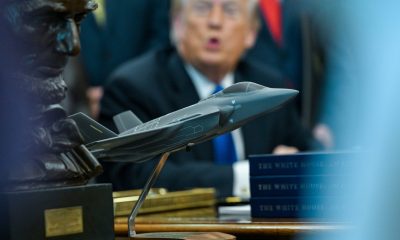
Trump prepared to offer Türkiye path back to F-35 program at NATO summit
