
Europe
Apple loses EU court appeal over Digital Markets Act gatekeeper designation


The General Court of the European Union has rejected Apple’s challenges against its “gatekeeper” status designated under the Digital Markets Act (DMA).
With this ruling, the company’s designated status for the App Store and iOS remains valid, while its applications regarding iMessage were also rejected.
Apple had argued that the five separate App Stores it operates for the iPhone, iPad, Apple Watch, Mac, and Apple TV should be evaluated as distinct, individual services.
The court rejected this argument, ruling that these stores serve a common purpose of connecting developers and users, regardless of the specific device.
The court also dismissed Apple’s defense that the DMA’s interoperability obligations violate its fundamental rights.
However, it did not conduct a substantive assessment on the legality of this obligation, stating that a direct legal link could not be established between the regulation in question and the determination of “gatekeeper” status.
Following the ruling, Apple argued that the obligations under the DMA “exceed the boundaries of legality and proportionality.” The company asserted that the new rules jeopardize the work it has carried out for years to ensure user privacy and security.
Apple retains the right to appeal the decision, though a company spokesperson did not comment on whether there are plans to do so.
Apple previously declared that DMA rules prevented the launch of the updated version of Siri in Europe, resulting in European users being unable to benefit from the service.
In force in the European Union since 2024, the DMA covers a total of 22 services and products belonging to Alphabet, Amazon, Apple, ByteDance, Meta Platforms, and Microsoft.
The regulation obliges these companies to share certain data with competitors, provide access to user-generated data, and offer verification tools to advertising partners.
Additionally, it prohibits platforms from engaging in anti-competitive practices that favor their own products. Companies failing to comply with the rules face fines of up to 10% of their global turnover, which can rise to 20% in cases of repeated violations.













Europe
Andy Burnham pledges to direct billions in defense spending to British firms to rebuild hard power

Andy Burnham has pledged to rebuild the United Kingdom’s “hard power” by ensuring that billions of pounds in additional defense spending are directed to domestic industries rather than being funneled to American or European companies.
In his first major foreign policy statement, the Labour candidate for prime minister said he wanted to be “honest” with the public about the funding required to meet the commitment of spending 3.5% of GDP on defense by 2035.
Writing in The Times, Burnham stated that he wants investments to be channeled into “reinvigorating and industrializing the country,” supporting British jobs and British workers, rather than relying on equipment purchased from other nations.
Burnham argued that the UK must reduce its foreign dependence, adding that this is “vital for both our economic and national security” and declaring that the issue would be a central priority during his premiership.
Furthermore, while committing to closer relations with European countries on defense and security—specifically France and Germany—he promised to accelerate broader negotiations with the EU on economic security and combating “illegal migration.”
Burnham indicated that his government would continue to support international law and international institutions such as the UN.
The former Mayor of Greater Manchester said that “the global picture is growing increasingly dark” and that this uncertainty is hitting ordinary households, “revealing fundamental vulnerabilities in our society and our economy.”
Burnham made the statement as outgoing Prime Minister Keir Starmer met with other NATO leaders, including Donald Trump, at a summit in Ankara.
Burnham said the UK must “go further than ever before” by implementing a defense investment plan that commits the government to raising defense spending to 3.5% of GDP by 2035, up from the current level of 2.56%.
Burnham said:
“It is a correct step to rebuild our hard power for a new era that is very different from when much of our current military equipment was first designed. Most importantly, in doing so, I want to ensure we are supporting British workers and businesses. This means we must go much further than ever before to support British resilience through the defense investment plan; we must use the sustainable increase in defense investment not only to provide the equipment our armed forces need, but also to generate economic growth and create apprenticeship programs and jobs in communities where opportunities have diminished.”
Noting that they would focus on “reducing foreign dependence, securing inward investment, and establishing new industrial partnerships with our allies,” Burnham declared that reindustrialization through defense and other sectors is “vital” for both economic and national security, “enhancing resilience everywhere,” and would be a fundamental priority for him.
Burnham stated that he wanted to be “more open” with the public regarding how defense spending is allocated, saying:
“I want to see more detailed and publicly available progress reports containing greater transparency and accountability, so that we can tackle cost overruns or delays before they spin out of control. Our increased investments must be paired with increased scrutiny.”
Burnham also confirmed that Jonathan Powell would continue in his role as national security adviser, adding that he wanted to have “the best and most experienced advisers on national security.”

NATO is transitioning to a new technological infrastructure to monitor military movements along its eastern flank and reinforce its defense strategies.
According to a report by The Times, the alliance will deploy the Maven Smart System (MSS), an artificial-intelligence-enabled software platform developed by the US technology company Palantir.
The system will track potential movements of Russian troops in real time and transmit the collected data directly to NATO command centers.
Beyond merely monitoring activity along the border, the software will analyze vulnerabilities within the alliance’s existing defense plans and offer recommendations on how future military deployments should be structured.
In an official statement released last week, NATO announced that the system had reached full technical operational readiness. However, the press release did not mention Palantir by name.
Alliance sources indicate that discomfort over becoming highly dependent on software developed by a private company backed by the CIA influenced the decision to omit the company’s name.
Furthermore, divisions exist among major European NATO members regarding the utilization of the system. France and Germany have long resisted adopting the US company’s technology, citing concerns over strategic autonomy and data security.
Conversely, the UK, Sweden, and the Netherlands have already integrated Palantir systems into their respective national military infrastructures.
Louis Mosley, Palantir’s Executive Vice President for Europe, Middle East and Africa, emphasized the significance of the system for the alliance:
“If NATO were to go to war, it would fight that war using Palantir. This system provides a comprehensive intelligence map showing not only the threats facing NATO but also the positions of the alliance’s own assets and forces. If there is a need to launch strikes against targets, that entire process is managed through Palantir.”
In the joint declaration issued by participating countries during the recent NATO summit in Ankara, member states emphasized that Russia poses a long-term threat to Euro-Atlantic security and stability.
Member nations stated they would continue to fulfill the defense commitments they undertook at the previous year’s summit in The Hague to counter this threat.
NATO Secretary General Mark Rutte also reiterated his call for member states not to be “naive” regarding the risks posed by Russia, urging them to increase their defense spending.
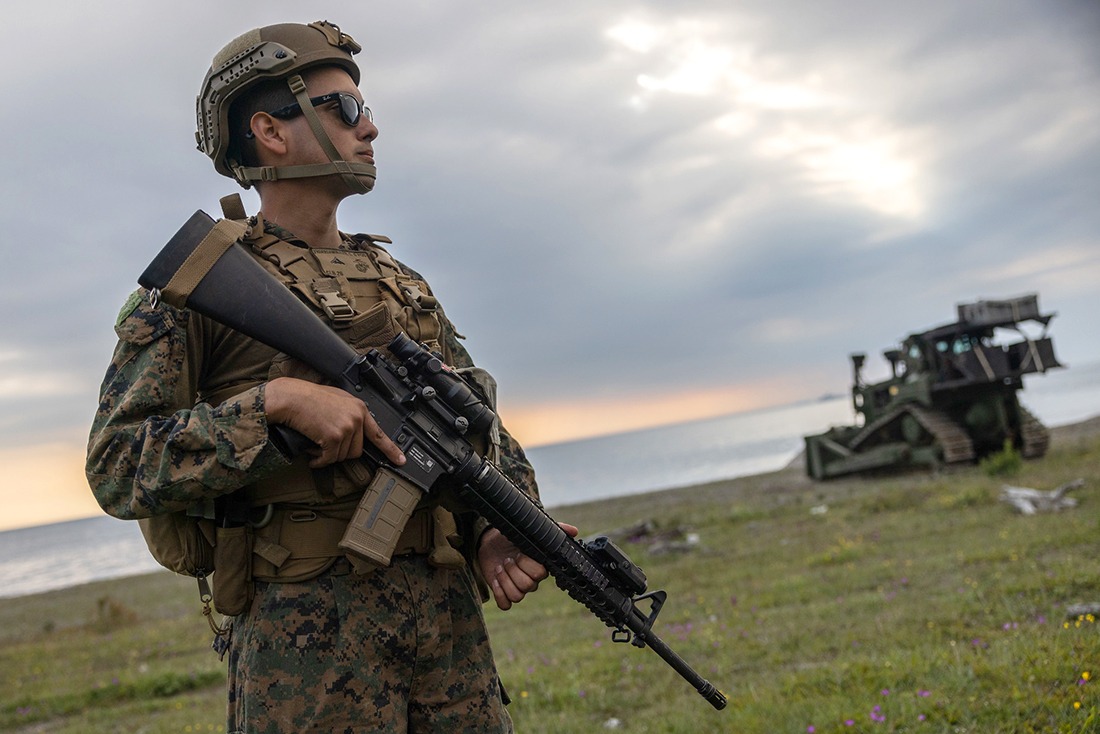
Despite mounting calls to establish a dedicated “European NATO,” politicians and military officials across multiple European nations are quietly developing sovereign military capacity options outside the structures of the North Atlantic Treaty Organization.
According to an analysis published by German Foreign Policy, these efforts are driven by deep-seated concerns that even a European-centric NATO—where European nations would provide the core command centers and weapons systems—could ultimately be blocked or paralyzed by the United States if Washington deems that the alliance’s activities do not align with its own strategic interests.
Consequently, calls for a “Plan B” have steadily intensified. In Scandinavia, defense planners increasingly view a robust Northern European defense cluster as the potential core of such an alternative strategy.
Simultaneously, the United Kingdom has been building the Joint Expeditionary Force (JEF) since 2014. Designed to be fully compatible with NATO but capable of operating entirely independently of it, the JEF maintains a comprehensive sovereign infrastructure at its headquarters in Northwood.
Recently, the ten member states of the JEF agreed to establish a joint naval force directed at countering Russia.
This restructuring comes amid growing criticism that NATO is operating under obsolete doctrines. European defense planners are now seeking to develop distinctly European methodologies of warfare, with a particular focus on drone and unmanned systems integration.
Sweden: The urgent need for a Plan B
Beyond efforts within NATO to increase reliance on European personnel and hardware—aimed at strengthening the autonomy of European member states relative to the US—discussions have shifted toward developing sovereign military capabilities completely outside the Alliance.
The primary driver of this shift is the apprehension that, in the event of an armed conflict involving European nations, Washington might not only withhold military support but could actively block NATO’s operational structures from being utilized.
Given that the US has historically dominated NATO—with key command structures organized around American leadership and built upon proprietary US technology—The Economist recently cited an insider source asking a fundamental question: “If America blocks NATO, what chain of command can be used?”
According to Luis Simón of the Vrije Universiteit Brussel, the departure of the US would inevitably lead to a fragmentation of the existing deterrence ecosystem.
Nevertheless, several European armed forces are reportedly drafting confidential contingency plans detailing how they would wage war without relying on NATO’s command infrastructure.
The Economist further quoted a Swedish government official who summarized the prevailing sentiment: “We need a Plan B.”
A joint anti-Russian force emerges in Scandinavia
This “Plan B” is actively being negotiated, particularly among the Northern European countries.
Matti Pesu, an expert at the Finnish Institute of International Affairs (FIIA), noted in November that a “strong Nordic defense cluster” could form the core of this alternative framework.
Pesu observed that while European allies cannot fully replicate or replace US military might at present, “closer Nordic integration” could deliver a credible level of deterrence and defense.
Pesu, who has chaired the FIIA’s Nordic Network since 2023, wrote that the UK—with its operational experience and maritime capacity—and France—with its independent nuclear deterrent and expeditionary forces—represent natural partners for military cooperation with the Nordic countries.
Paris has already been holding discussions with several Northern European nations regarding the potential expansion of its nuclear umbrella.
Furthermore, Pesu emphasized the necessity of “deeper Nordic-Baltic-Polish coordination in foreign and defense policy” to establish a cohesive northeastern European alliance against Russia.
Five Northern European states have maintained structured military cooperation under the framework of the Nordic Defense Cooperation (NORDEFCO) since 2009.
The UK’s anti-Russian military framework: The JEF
The British-led Joint Expeditionary Force (JEF) is frequently cited as the most mature, established, and operational alternative military structure currently available.
Established in 2014 and fully operational since 2018, the JEF is officially characterized as a force that is “not dependent on NATO but compliant with NATO.”
The force comprises ten member states: the UK, five Nordic nations, three Baltic states, and the Netherlands. Canada’s potential participation is currently under discussion.
The JEF is designed to intervene within a NATO framework, but it retains the sovereign mandate to launch independent military operations even when the broader alliance fails to reach a consensus.
To support this capability, its headquarters in Northwood, northwest of London, possesses comprehensive intelligence, planning, and logistical assets. It also utilizes secure communication networks that are entirely independent of NATO infrastructure.
Edward Arnold, an expert at the Royal United Services Institute (RUSI) in London, noted that these independent capabilities make the JEF the most established structure among all proposed alternatives.
The JEF has already been activated multiple times, primarily for military exercises, but also to conduct active naval patrols in the Baltic Sea aimed at countering Russian maritime activity.
While the force maintains rapid-reaction capabilities designed for ultra-short-notice deployments, its primary operational focus remains Northern Europe.
Supporting NATO or operating independently?
In April, JEF member states took a significant step forward by agreeing to establish a joint naval force.
While these naval assets are intended to complement NATO, they are being structured to maintain fully independent operational capabilities.
Their initial objectives include joint exercises and coordinated contingency planning for emergencies. The naval force will be headquartered alongside the main JEF command at Northwood, from where forces will be directed as required.
General Gwyn Jenkins, the First Sea Lord and Chief of the Naval Staff of the Royal Navy, emphasized that these forces are designed to be “ready to fight immediately, if necessary, with real capabilities, real war plans, and real integration.”
Jenkins explicitly identified Russia as the primary adversary for the future JEF naval force, calling Moscow “the biggest threat to our security.”
However, defense analysts point out that both the naval force and the broader JEF framework still lack participation from key European heavyweights, namely Germany, France, and Poland.
While Berlin is currently concentrating its naval activities in the Baltic Sea and the North Atlantic, observers remain highly skeptical that Germany would be willing to subordinate its forces to British command.
Obsolete NATO doctrine
In addition to developing operational forces independent of NATO like the JEF, European military commanders are beginning to fundamentally re-evaluate modern warfare doctrines, spurred by the war in Ukraine and the critical role played by unmanned aerial vehicles (UAVs) and autonomous robotic systems.
According to remarks made by General John Stringer, Deputy Commander of NATO’s Allied Joint Force Command, at a recent RUSI conference, “tactical-operational conceptual thinking” within NATO largely ground to a halt in 1991.
Military officials and policymakers increasingly acknowledge that the entirety of NATO’s core doctrine has become obsolete, and that many member states lack the advanced technologies required for contemporary high-intensity conflict.
The conflict in Ukraine has demonstrated that nations traditionally viewed as weaker can successfully mount strategic defenses against adversaries that are far superior by conventional metrics.
Consequently, European armed forces, utilizing direct insights and assistance from Ukrainian military personnel and specialists, have begun exploring entirely new approaches to combat.
The Financial Times quoted a French government official who suggested that decoupling from US military paradigms could offer unexpected advantages: “Less America means we can finally ask the question: ‘If we no longer have to fight like Americans, how will we fight?'”

Apple loses EU court appeal over Digital Markets Act gatekeeper designation

Andy Burnham pledges to direct billions in defense spending to British firms to rebuild hard power

NATO deploys Palantir AI software to track Russian troop movements on eastern flank

Europe quietly develops ‘Plan B’ military structures to bypass potential US veto within NATO

Luxembourg and Canada lead initiative to establish multilateral defense bank for NATO allies
-

 Middle East1 week ago
Qatar and Saudi Arabia acquire hundreds of millions of dollars in Israeli defense technology, report says
-

 Europe1 week ago
Buckingham Palace updates King’s official role to focus on securing faith in multi-faith Britain
-

 Asia2 weeks ago
Anthropic accuses China’s Alibaba of systematic data theft targeting Claude AI model
-
 Diplomacy2 weeks ago
NATO draft declaration pledges €70 billion to Ukraine ahead of Ankara summit
-

 Europe2 weeks ago
France launches Defence Quantum Campus to accelerate military technology integration
-

 Diplomacy2 weeks ago
White House requests $672 million from Congress to neutralize Iran nuclear program
-

 Europe1 week ago
Billionaire Peter Thiel deepens ties with German and Austrian right-wing political elite
-

 Asia1 week ago
South Korea unveils $518 billion plan for new southwestern semiconductor cluster
