
Diplomacy
NATO allies unveil multibillion-dollar defense deals in Ankara as Rutte seeks to reassure Trump

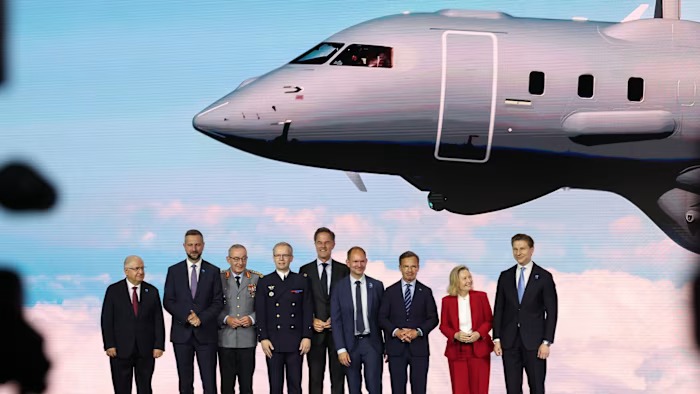
NATO allies on Tuesday announced defense industrial agreements worth tens of billions of dollars to acquire surveillance aircraft and advanced unmanned aerial vehicles.
“This is money well spent,” NATO Secretary General Mark Rutte said at the opening of a historic NATO summit held in Türkiye.
US President Donald Trump, who landed in Ankara on Tuesday afternoon for the summit, has previously characterized NATO as a “paper tiger” that could not function without US leadership and weaponry.
According to the Financial Times, Rutte announced the agreements on a stage featuring impactful videos and loud techno music, as he sought to convince Trump that European allies are serious about taking greater responsibility for the continent’s defense.
While several of the initiatives announced by Rutte involved major contracts with US companies, many were independent of them.
One of the most expensive items was an agreement to purchase up to 10 surveillance aircraft from a consortium led by Sweden’s Saab and Canada’s Bombardier.
The “GlobalEye” aircraft, which cost between $400 million and $450 million each, will replace NATO’s fleet of 14 AWACS early warning radar surveillance aircraft.
Micael Johansson, President of Saab, stated that the aircraft, early versions of which are already in service, could be delivered starting in 2030 if the agreement is finalized soon.
However, Rutte also announced that allies would purchase a maximum of five Northrop Grumman MQ-4C Triton high-altitude surveillance drones.
Norway, Finland, Germany, and Denmark signed a letter of intent to purchase these drones, which cost approximately $270 million each, according to recent procurement figures from the US Department of Defense.
“We need a transatlantic defense-industrial revolution. The hum of machinery must become a roar. The money is there, and much more is on the way. But this money needs to work… the security situation demands it,” Rutte said.
These high-profile defense industrial agreements follow Rutte’s visit to Washington late last month, which aimed to address US concerns that several European and Canadian nations were falling short of their defense spending commitments.
At the White House, Rutte presented a chart titled “The Trump Trillion,” which demonstrated that European and Canadian allies had increased their defense spending by $1.2 trillion since 2017.
However, Trump appeared largely unimpressed by Rutte’s presentation and expressed frustration that some NATO allies had refused to participate in the war with Iran. “We don’t need their money. I just want loyalty,” Trump said.
Ahead of the NATO summit, a senior US official noted that Trump had “pre-assessed the extent to which our allies are failing to meet their defense commitments, and he will deliver this message in person.”
The US official added that NATO allies must “be more capable” and “implement the Hague defense commitment as quickly as possible.”
The Hague commitment mandates allocating 5% of GDP to defense by 2035. Rutte stated on Monday that allies would be asked to present “clear, concrete, and credible plans” to achieve this target during the summit. He also warned that if there are countries that need to be persuaded, “we have our ways of doing so,” though he did not elaborate.
In addition to reassuring Trump, a senior European official said the objective behind this surge in defense agreements is to “increase our capacity, ensure interoperability among allies, and generally make progress in deterring anyone who intends to attack us.”
Nevertheless, some of the agreements highlighted the difficulties encountered in NATO’s efforts regarding the transatlantic co-production of new weapons.
German defense company Rheinmetall and US defense giant Lockheed Martin announced progress on a plan to produce rockets and missiles in Germany.
However, after months of discussions, this development fell short of the expectations expressed more than a year ago by Rheinmetall CEO Armin Papperger.
Those expectations included the licensed production of PAC-3 interceptor missiles for Patriot air defense systems, which have proven vital in protecting Ukrainian cities from Russian ballistic missile attacks.
Instead, the two companies only announced progress on ATACMS missiles, which represent a less high-tech product. The US is currently phasing out these missiles to replace them with a more technologically advanced successor.
In a separate announcement, plans were unveiled to establish a dedicated PAC-3 maintenance facility on European soil. However, the goal of producing PAC-3 interceptor missiles under license in Europe remained an elusive ambition.
Rather than offering a firm commitment, US Under Secretary of Defense Michael Duffey told reporters, “We remain open to the possibility of production outside the US.”
In a statement issued by London, the United Kingdom noted that 12 European nations, including the UK, France, and Germany, will spend more than $50 billion over the next decade to develop long-range precision weapons to strengthen NATO’s defense capabilities.
British Prime Minister Keir Starmer will announce the UK-led initiative in Ankara today, and the participating nations will issue a joint declaration containing additional details.
Turkish defense companies to cooperate with Palantir
ASELSAN, ROKETSAN, STM, and TÜBİTAK joined five major new multinational NATO programs during the 2026 NATO Summit held in Ankara.
Haluk Görgün, President of the Defense Industry Agency of Türkiye, announced that ASELSAN, ROKETSAN, STM, and TÜBİTAK will participate in the following five large-scale NATO programs:
- Strike Capabilities
- Integrated Air and Missile Defense (IAMD)
- Space and Surveillance
- Critical Materials for Defense Industry
- Unmanned Aerial Vehicle Superiority
In the strike capabilities program, Diehl of Germany and ROKETSAN of Türkiye are understood to be the primary suppliers. Participating countries in this program include Türkiye, Canada, the Czech Republic, Denmark, France, Greece, Italy, Norway, Slovakia, Sweden, and the United Kingdom.
The Integrated Air and Missile Defense (IAMD) program is viewed as a massive initiative with a budget of $26.27 billion. The IAMD program will contract ASELSAN, Raytheon, ROKETSAN, Anduril UK, Rheinmetall, Palantir, and Athea. The participating countries are Türkiye, Belgium, Denmark, Finland, Norway, Greece, and Romania.
Under the Space and Surveillance program, valued at approximately $4 billion, ASELSAN, Isar Aerospace, MLS, ROKETSAN, and TÜBİTAK have been contracted. The participants in this program are Türkiye, Canada, Denmark, Finland, Germany, the Netherlands, Norway, and Sweden.










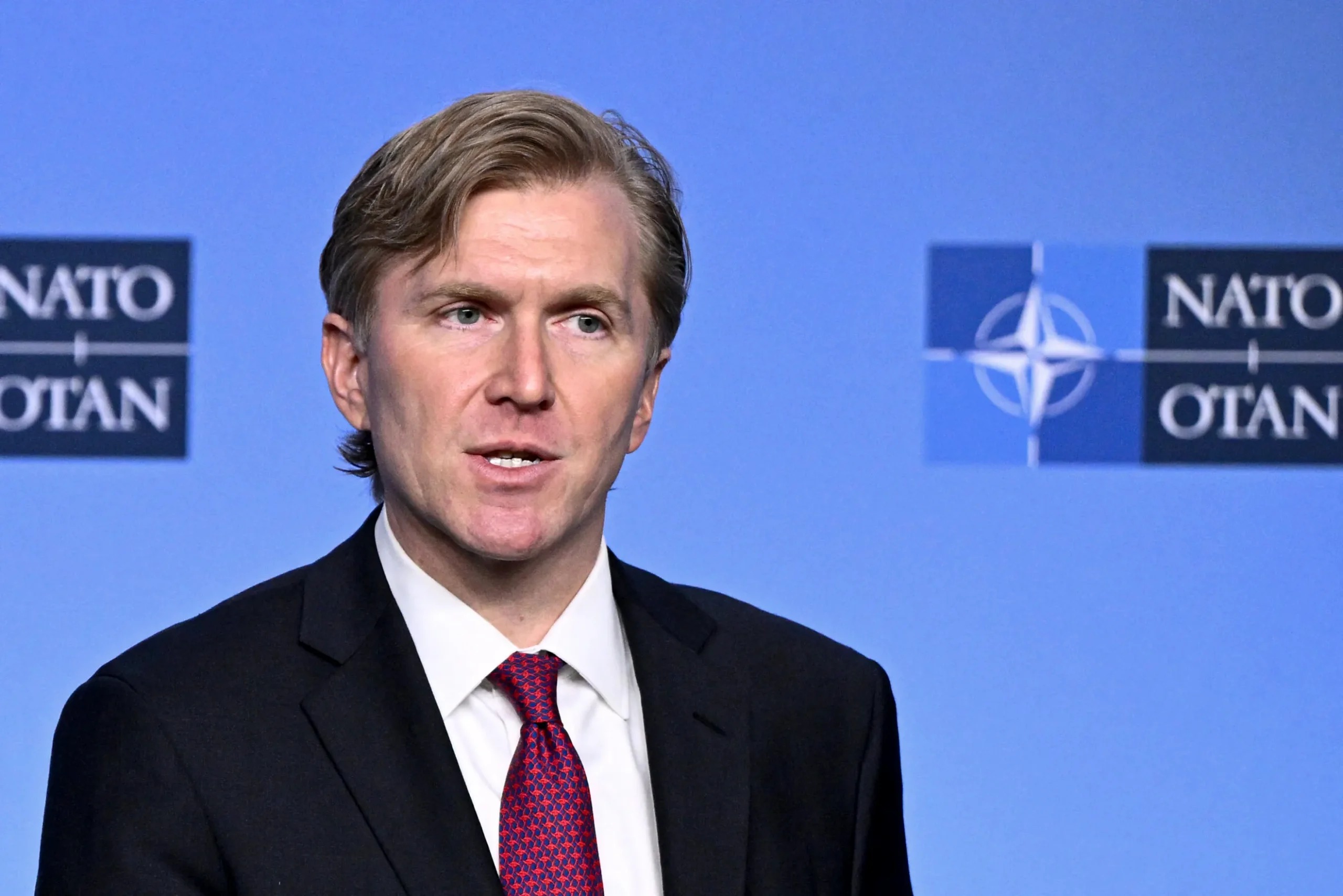
The architect of the new NATO concept (“NATO 3.0”), which is expected to be catalyzed by the Ankara summit, is Elbridge Colby, who serves as a Pentagon undersecretary.
Last February, at the NATO defense ministers’ meeting, he delivered a pivotal speech in place of Pentagon chief Pete Hegseth. The low profile of the US representation was deemed indicative of the Trump administration’s diminishing valuation of NATO; yet Colby, arriving as a “theorist”—and indeed, as the champion of a decisive shift in US military presence from Europe and the Middle East to the Asia-Pacific—had come to assign new homework to his allies.
Also known as the unofficial author of the United States’ latest National Security Strategy, Colby acknowledged in his speech that the post-Cold War “unipolar moment” had vanished, declaring the return of power politics and large-scale military force to the world stage: what was now required was realism and adaptability.
The undersecretary got straight to the heart of the matter, declaring that in light of this new reality, the US was prioritizing “the most serious threats to American interests,” specifically “the defense of the US homeland” and interests in the “Western Hemisphere,” while also reinforcing the principle of “deterrence by denial” in the Western Pacific (Colby also asserted that the Indo-Pacific region was “now the central arena of geopolitics”; we will return to Colby’s views on Asia below).
Accompanying all these priorities—or rather, the role assigned to American “allies” in this new US strategy—was to prepare “for the possibility that potential adversaries could act coordinately or opportunistically on multiple fronts simultaneously.”
The defense of Europe against the Soviet Union and communism during the Cold War (“NATO 1.0”); the shift of NATO operations outside the Continent after the dissolution of the Soviet Union, with Europe fully outsourcing its “defense” to the US (“NATO 2.0”); and now, “burden-sharing” in the era of “multipolarity” so that the US can focus on the Asia-Pacific against the rise of China (“NATO 3.0”)… This is the essence of Colby’s message: “The core strategic reality set forth by the National Security Strategy (NSS) and the National Defense Strategy (NDS),” the undersecretary stated, “is that Europe must assume primary responsibility for its own conventional defense.”
Under this framework, the US would henceforth prioritize only those theaters and challenges where American power could play a decisive role. For Colby, this did not portend a withdrawal from Europe. “On the contrary,” Colby argued, “this is an affirmation of strategic pragmatism and an acknowledgment of our allies’ undeniable capacity to step up and lead in Europe’s defense in a way that makes us all stronger and safer.”
Consequently, a strategy that “assumes the United States can indefinitely serve” as Europe’s “primary conventional defender” while simultaneously “bearing the decisive burden” everywhere else in the world was “neither sustainable nor wise.”
What, then, was to be done? Colby acknowledged the importance of the level of defense spending, stating that there was no substitute for it. Yet, in his view, what ultimately mattered was what these resources yielded: combat-ready forces, readily deployable munitions, resilient logistics, and integrated command structures operating at scale under austere conditions.
Herein lies the crux of the matter. Analogous to the “innovative” transformation within the Pentagon, Colby proposed that European NATO members also undergo a military transformation: prioritizing combat effectiveness over bureaucratic and regulatory inertia.
This meant “making hard choices regarding force structure, readiness, stockpiles, and industrial capacity” that reflected “the realities of modern conflict” rather than “peacetime politics.”
Divergence Within the Pentagon
Colby’s strong position within the Pentagon, having advocated for years to leave Europe and the Middle East to allies and focus on Asia, also delineates the fault lines in American politics.
The 12-day war with Iran last summer had further inflamed this issue. Accordingly, US Central Command (CENTCOM) stood on one side, while the “Asianists” led by Colby stood on the other. While CENTCOM Commander Michael “Erik” Kurilla advocated allocating more resources to defend Israel as Iranian retaliations escalated, Colby, championing a US military focus on China and the Indo-Pacific, opposed shifting military assets from Asia to the Middle East.
The reason for Colby’s opposition was the concern that deployments, such as the relocation of a Patriot missile battery from South Korea to the Middle East in April 2025, could compromise US readiness in future conflicts with China or the Democratic People’s Republic of Korea (DPRK).
In an interview with POLITICO last July, Colby emphasized his personal view that defending NATO’s eastern flank should only involve allocating forces in an amount that would not detract from the United States’ ability to defend Taiwan.
Colby also identified “key capabilities”—including long-range fires, logistics, command and control, and what is known as C4ISR, alongside logistics, munitions, and air defense—as areas where the United States must focus on Asia rather than Europe.
Viewing Europe “Through a China Lens”
Having previously argued that US commitments to Ukraine were overextended, Colby underscored that the most concrete challenge to his country and its interests came economically and militarily from China.
Stating that he also viewed Ukraine “through a China lens,” the strategist maintained that he was not advocating for an abrupt cutoff of all aid to Kyiv, and that while Russia’s actions were “evil,” the assistance provided by the US did not align with the concrete interests of the American people.
When asked what he would advise the US President to do if he were currently serving as an advisor, Colby responded:
“I would say: ‘I don’t want to talk about Ukraine right now. We will talk about Taiwan, China, and Asia first, and once we resolve that problem satisfactorily, we will spend time, political capital, and resources on Ukraine.’”
At the time, the Financial Times (FT) reported that Colby had told British officials that the Trump administration expected the British military to intensify its focus on the Euro-Atlantic region.
In a 2024 interview, Colby argued that the Republican voting base consists of working-class and middle-class Americans, asserting that Washington’s foreign policy fails to serve this constituency.
Noting that a maximalist foreign policy brought “disaster,” the undersecretary stated that Americans were weary of “endless wars.”
The China Obsession
Some figures in his close circle say that Colby is concerned with China “to the point of obsession.”
According to a report in Semafor last year, Colby is so focused on Asia that “he clashes with everyone else doing foreign policy, including Trump loyalists.”
According to Colby, the primary point to which the United States must direct its military and economic resources is Taiwan. Asserting that China is the “New Soviet Union,” Colby points out that NATO currently operates with a “post-Cold War” mindset where the US does everything, whereas what they actually need is a “Cold War mindset” of burden-sharing.
Stating that the US must resolutely resist any Chinese military intervention against Taiwan, Colby notes that this response should include strikes against selected targets on the Chinese mainland.
“Once a war begins, we must not drift to the marginal edge of a conventional conflict,” Colby says, emphasizing the need to prepare for a conventional war in every possible way.
In Colby’s view, a war over Taiwan is now closer due to the reduction of the US military presence in the Taiwan Strait. According to him, the US strongly resembles Britain’s bottleneck situation in the late 1930s: you can appear weak and avoid war, but all your vital interests will be compromised; if you appear strong and arm yourself, the likelihood of your adversary responding militarily increases.
Asia Strategy: Ensuring China Cannot Win
On the other hand, it is worth noting that the framework of Colby’s anti-China stance is built upon a foundation of strategic caution.
Delivering a speech at the Sejong Institute in South Korea last January, Colby outlined the cornerstones of his administration’s Asia policy.
As alluded to above, defining the Indo-Pacific region as “one of the main engines of global growth, the hub of global manufacturing—including South Korea—and the geopolitical axis of the 21st century,” Colby stated, “Consequently, as these documents clearly establish, the long-term security, prosperity, and liberties of Americans will be decisively shaped by developments in this region.”
Yet, acknowledging that “satisfactory stability” in Asia could not be achieved or maintained through “flowery rhetoric, assumed norms, or apparent goodwill,” Colby argued that this stability could only be preserved by “a durable and favorable balance of power that prevents any single state from dominating the region:”
“In this regard, the goal of America’s defense policy in Asia must be clear and reasonable to all. This goal is not conflict with China or any other nation. The objective is to establish a reasonable balance that is acceptable to Americans, our allies, and indeed the entire region. This is not a formalistic and rigid regional order, but an adaptable and evolving one. It is an order defined not by hegemony, but by a favorable balance where sovereignty is respected and peace is maintained—defined not by comforting illusions, but by clarity, strength, and resolve.”
Underscoring that this strategy was about “protecting the interests of America and its allies through stability rooted in credible deterrence and strategic balance,” the undersecretary maintained that the US was not seeking to subjugate, stifle, or humiliate China:
“What we seek—and as the President has consistently articulated—is a genuinely stable balance that works for Americans and our allies, where no single state can impose its hegemony: a favorable balance of power.”
Stating that they were not pursuing regime change in Beijing nor seeking to dominate China, Colby said, “We acknowledge and respect China’s proud history.” What the American strategist proposed was “deterrence by denial along the first island chain” in the Indo-Pacific.
According to Colby, the US was focusing on establishing a military posture along the first island chain in the Western Pacific that would ensure “aggression is impossible, escalation is unattractive, and war is truly irrational.”
This entailed a “resilient, distributed, and modernized force posture” in Japan, the Philippines, the Korean Peninsula, and elsewhere in the region—optimized to “deny swift or decisive gains” through military force, “resilient rather than fragile,” and a posture that “unites us in the pursuit of peace and stability.”
Colby continued:
“This kind of stable peace must be backed by deterrence and therefore secured by hard-power capacity, capability, and will—certainly ours, but also that of our allies.”
Consequently, it should be self-evident that Colby envisions a role for Asian allies similar to the one he and the US deem appropriate for their European counterparts. Quite apart from the invitation of Asian partners to the Ankara summit where the “NATO 3.0” concept is to be declared, Colby himself, referencing the Europeans’ commitment to allocate 3.5% of GDP for core military functions, noted in this speech: “But I must emphasize that these principles apply as much to Asia as they do to Europe.”
“Burden-Sharing” or “Burden-Shifting”?
In a recent interview with the CFR, Colby spoke very candidly about NATO 3.0: as the United States will be drawn into more conflicts, a “recalibration” within the alliance is required.
Pointing to the sheer scale of the military budget in the United States, Colby explicitly speaks of a “national mobilization”; he demands the expansion of the defense industrial base and calls for large-scale production.
The role falling to Europeans and Asians is to purchase American arms and conform to US military standards; Colby is candid on this front as well. Industrial production synchronization is the bedrock of this enterprise, and it appears that writings by figures such as Mark Rutte and Ursula von der Leyen ahead of the Ankara summit, coupled with President Recep Tayyip Erdoğan’s “from Texas to California” emphasis in his address to the NATO Parliamentary Assembly, demonstrate that the message has been received and some ground has already been covered.
This indicates that a significant threshold may have been crossed in providing industrial “fodder” to European NATO countries, which otherwise hold diverging interests on China.
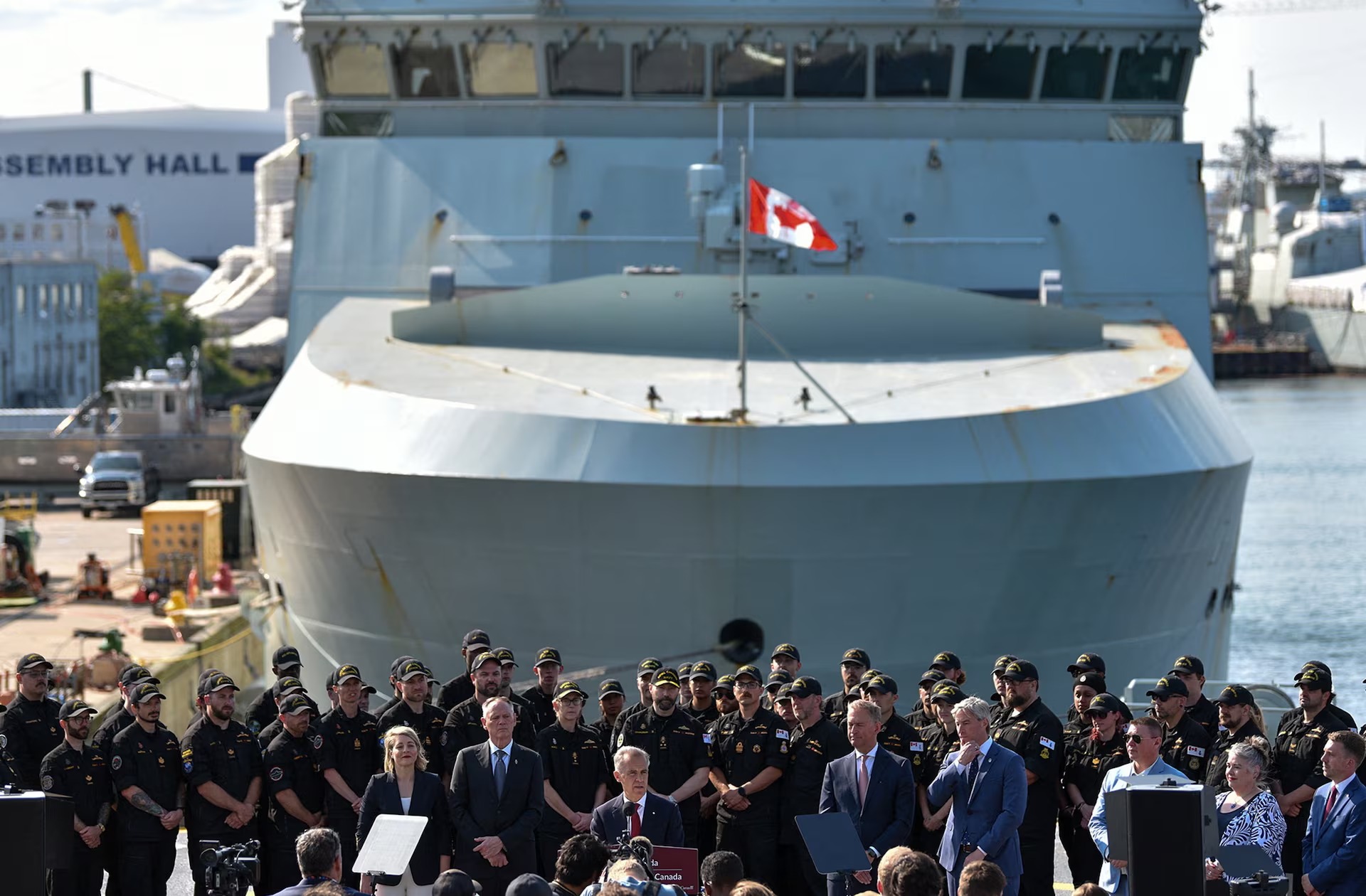
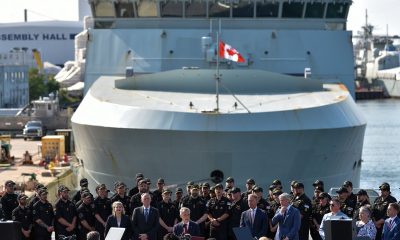
German naval manufacturer Thyssenkrupp Marine Systems (TKMS) has secured the largest contract in its corporate history, a landmark agreement to deliver 12 submarines to the Royal Canadian Navy for approximately €20 billion ($21.7 billion).
Canadian Prime Minister Mark Carney announced the decision on Monday, confirming that Ottawa has selected the TKMS Type 212 CD (Common Design) submarine over the rival KSS-III model offered by South Korea’s Hanwha Ocean, which had also been under close consideration.
As a result of the selection, the navies of Germany, Norway, and Canada will operate the identical class of vessel. The three nations will be able to field an unprecedented combined fleet of 24 Type 212 CD submarines to counter the Russian Navy in the North Atlantic and Arctic oceans.
Beyond the naval contract, TKMS is reportedly laying the groundwork for an additional sweeping bilateral package valued in the tens of billions of euros. This broader economic initiative includes German purchases of Canadian liquefied natural gas (LNG) and the construction of launch facilities in eastern Canada for German space launch vehicles.
These aerospace facilities are intended to grant Ottawa operational independence from US launch infrastructure.
TKMS is experiencing a period of significant growth, further bolstered by fresh orders from the German Navy. Among these domestic programs, the company is developing the F127 frigate, which represents the most expensive defense procurement project in the history of the German armed forces.
Ottawa selects German industrial giant over South Korean rival
Canada has decided to award its long-planned contract for the construction of up to 12 new submarines to the Kiel-based naval specialist TKMS, passing over South Korean competition.
Prime Minister Carney announced the decision on the eve of his departure for the NATO summit in Ankara. Under the terms of the agreement, Ottawa will procure the Type 212 CD submarines, which TKMS produces in joint cooperation with Norway’s Kongsberg Defence & Aerospace (KDA).
Compared to the predecessor Type 212 A class, the Type 212 CD features advanced sensor suites and has been optimized for operations in the harsh environments of the North Atlantic and the Arctic, including under-ice deployments.
In winning the tender, TKMS defeated Hanwha Ocean. The South Korean shipbuilder’s KSS-III model, which carried a significantly lower price tag, was ultimately bypassed.
The total financial volume of the Canadian acquisition is estimated at approximately €20 billion.
The first Type 212 CD submarines are scheduled for delivery in 2033. It remains undisclosed whether the Royal Canadian Navy will take immediate delivery of these initial hulls or face a longer induction timeline.
While final contractual details are still being negotiated, TKMS confirmed that the submarines will be constructed entirely at the German group’s shipyards in Kiel and Wismar. Canada’s industrial contribution to the primary construction will be limited to the supply of specialized non-magnetic steel.
Germany, Canada, and Norway form North Atlantic alliance against Russia
Canada’s selection of the TKMS platform is closely aligned with the primary operational requirements of its maritime forces.
On one front, Ottawa is increasingly focusing on potential northern deployments given its vast Arctic coastline and the ongoing reduction of polar ice cover.
On another, Canadian naval strategy is heavily oriented toward patrols in the North Atlantic. These missions aim to prevent Russian surface combatants and submarines from transiting the Arctic Ocean past Iceland to project power into the wider Atlantic.
With the primary objective of securing the strategically vital Greenland-Iceland-United Kingdom (GIUK) Gap, Germany, Norway, and Canada established a joint “North Atlantic Security Partnership” at the NATO summit in Washington in July 2024. Denmark formally joined the defense coalition in 2025.
The scope of this trilateral operational cooperation is broad. In addition to underwater assets, Germany, Norway, and Canada are acquiring Boeing P-8A Poseidon maritime patrol aircraft to conduct coordinated aerial surveillance over the North Atlantic.
Germany and Norway have already jointly ordered 12 Type 212 CD submarines.
If Canada fulfills its planned acquisition of 12 additional vessels, the three partner nations will eventually operate a highly standardized fleet of 24 identical submarines, streamlining joint operations and maintenance.
Targeting strategic independence from the US
The acquisition of the TKMS Type 212 CD is further supported by extensive industrial offset agreements negotiated between Berlin and Ottawa.
These offset packages are designed to deepen German-Canadian economic integration and industrial cooperation.
Through these initiatives, both nations aim to reduce their respective economic reliance on the United States.
As part of the offset programs, TKMS plans to establish a joint center of excellence for submarine simulation, crew training, and maintenance in partnership with Canadian technology firm CAE.
On Tuesday, German aerospace startup Isar Aerospace signed an agreement with Maritime Launch Services, a Canadian company developing a commercial spaceport near Canso, Nova Scotia.
Beginning in 2028, Isar Aerospace intends to launch its Spectrum launch vehicle from the Nova Scotia facility to deploy small and medium-sized satellites. Historically, Canada has relied entirely on US launch infrastructure for its space access.
Under parallel reciprocal investment frameworks, the German state-backed gas importer Sefe is scheduled to import 1 million metric tons of Canadian LNG annually.
This supply agreement is intended to partially reduce Germany’s reliance on US shale gas imports.
Discussions have also taken place regarding German investments in Canada’s raw materials sector, specifically focusing on securing supply chains for rare earth elements.
TKMS order book swells amid defense procurement boom
The Canadian submarine contract provides significant commercial momentum to TKMS.
As of March 31, the company reported a record-high order backlog of €20.6 billion.
In the first half of the 2025/26 fiscal year, TKMS reported a 10% increase in revenue to €1.17 billion. While this remains substantially below the volumes recorded by German defense prime Rheinmetall—which grew its revenue by approximately 8% to €1.94 billion in the first quarter of 2026 alone—it highlights the broader defense boom lifting the naval specialist.
TKMS recently rose to 61st place in the Stockholm International Peace Research Institute (SIPRI) global ranking of the world’s largest defense contractors.
The company is anticipating further export orders. In late June, TKMS celebrated the christening of the third Tamandaré-class frigate being built for the Brazilian Navy in Itajaí, Brazil.
One vessel in the class has already been delivered, a second is scheduled to begin sea trials this year, and a fourth is currently under construction.
The Brazilian government is reportedly planning to place an follow-on order for an additional four TKMS frigates.
To manage this sharp increase in naval production, TKMS has been in ongoing negotiations to acquire the adjacent German Naval Yards facility in Kiel.
However, Rheinmetall has also expressed strong interest in acquiring the same shipyard to support its newly established maritime division.
US technology remains central to defense systems
TKMS is positioned to benefit heavily from domestic procurement programs initiated by the German Navy.
Following the cancellation of the F126 frigate project, TKMS secured contracts to build new MEKO A-200 class frigates as a rapid alternative.
The initial phase of the program involves the construction of four hulls at a cost of €6.63 billion, with a follow-on option for an additional four vessels valued at €5.3 billion.
These domestic surface combatant contracts, alongside the Canadian submarine program, are not yet reflected in the record €20.6 billion backlog reported on March 31.
Concurrently, development continues on the F127 next-generation frigate program, which TKMS is executing in partnership with the Naval Vessels Lürssen shipyard (acquired from Rheinmetall).
The German Navy currently plans to procure eight F127 frigates to serve as its primary air defense combatants over the coming decades.
Total program costs are estimated to exceed €26 billion, which naval analysts note makes the F127 the most expensive procurement project in German naval history.
However, the program has faced criticism regarding its planned air defense suite, which relies on Standard Missile interceptors and the SPY-6 radar system.
Both systems are manufactured by the US defense contractor RTX (formerly Raytheon), maintaining a significant degree of technological dependence on Washington.
Defense analysts point out that there are currently no equivalent European alternatives to these US systems, and note that Germany will remain reliant on US satellite and GPS networks for the next decade.
While a transition to European systems, such as the Iris-T interceptor family manufactured by Germany’s Diehl, could eventually offer strategic independence from the US, experts estimate that this technology will not be sufficiently mature for high-end naval air defense applications until the mid-2030s.

US President Donald Trump’s outbursts against NATO allies, claiming “we spend all the money,” left a defining mark, particularly during his second presidential term.
At the 2025 summit in The Hague, member states pledged to allocate 5% of their annual GDP to defense by 2035. This marked a monumental leap from the 2% commitment made at the 2014 Wales summit.
This 5% commitment encompasses two primary categories of defense investment. The first is “core defense requirements”: allies agreed to dedicate at least 3.5% of their GDP to meeting baseline defense needs and fulfilling NATO Capability Targets, based on the agreed definition of NATO defense expenditure.
The second is “defense and security-related expenditure”: under this heading, member states will allocate up to 1.5% of their GDP to broader defense and security-related investments, such as protecting critical infrastructure, defending networks, ensuring civil preparedness and resilience, and strengthening innovation and the defense industrial base.
According to NATO’s own figures, European allies and Canada increased their defense spending by over $90 billion in 2025, representing an approximate 20% increase compared to 2024.
Official NATO reporting also indicates that European nations and Canada have steadily increased their collective defense investments over the past decade: rising from 1.4% of their total GDP in 2014 to 2.3% in 2025, culminating in a total investment of over $571 billion in defense spending this year.
According to NATO statistics, the United States consistently spends upwards of 3.5% to 4% of its GDP on defense. In absolute terms, of course, no single NATO power can match the expenditure of the American military.
Yet the issue of “burden-sharing,” which became highly visible during the Trump era, is not new. Setting aside the debates during the detente periods of the Cold War, American defense spending and public debt began to swell significantly in the late 1990s, spinning out of control in the wake of the invasions of Afghanistan and Iraq. Coupled with the rise of China and the US declaration of a military pivot to Asia, this ignited an open debate on how the “security architecture” of the Euro-Atlantic axis would transform.
Bush’s call
Attending the 2008 NATO summit in Romania, then-US President George W. Bush laid out a lengthy list of threats, primarily featuring Iraq and Afghanistan but also spanning Iran and Northeast Asia, before outlining the measures required to shield Europe from “missile threats.”
Bush stated:
“To build a strong NATO Alliance, a strong European defense capability is also essential. Therefore, at this summit, I will encourage our European partners to increase their defense investments to support both NATO and EU operations. America believes that if Europeans invest in their own defense, we will be stronger and more capable when we act together.”
Recently, an article written on behalf of the George W. Bush Presidential Center for the Ankara summit revisited the issue of “burden-sharing.” Authored by Elizabeth Kennedy Trudeau, a former State Department official, the piece references past debates, noting: “Today, it is abundantly clear that the endless debate over burden-sharing is no longer a theoretical issue, and that is also how the public perceives it.”
According to Trudeau, “Russia’s ongoing aggression against Ukraine,” “instability in the Middle East,” “China’s growing ambitions,” and emerging threat domains such as cyber threats, disinformation, and vulnerable supply chains have radically altered the geopolitical landscape. Consequently, NATO must adapt to this new reality.
Pointing out that European allies have increased their defense spending, the author welcomes the Continent’s steps toward assuming greater responsibility for “collective defense,” asserting: “This is not because the United States is pulling away from NATO; rather, a stronger Europe makes this powerful alliance even stronger.”
A sharp rebuke from Obama’s Defense Secretary Gates
However, the most scathing critique directed at the Old Continent from the US came during the presidency of Barack Obama.
In a university address, then-Defense Secretary Robert Gates argued that Europeans’ reluctance to employ military force was “limiting NATO’s ability to conduct effective military operations.”
At the time, redrafting the NATO alliance’s core strategic concept was on the agenda. In his speech, Gates called for sweeping reforms within the organization. He remarked that NATO’s success in preventing conflicts from erupting in post-WWII Europe had inadvertently fostered a new set of concerns:
“The demilitarization of Europe—where large swaths of the public and political class are opposed to military force and the risks that go with it—has gone from being a blessing in the 20th century to an obstacle to achieving real security and lasting peace in the 21st.”
Gates warned that unless NATO members maintained robust militaries and made the necessary budgetary commitments to modernize their forces, Europe would remain vulnerable to threats.
The Secretary stated, “Real or perceived weakness does not merely invite miscalculation and aggression; on a more fundamental level, the resulting funding and capability shortfalls make it difficult to act and fight together to confront common threats.”
Defining NATO as “a military alliance with real-world, life-and-death obligations,” Gates noted that the ongoing effort to “rethink and reshape” the alliance’s strategic mission came at a critical juncture.
“Currently, the alliance faces very serious, long-term, systemic problems. NATO’s budget crisis is but one example, and it is a symptom of deeper issues within NATO regarding how threat perception, requirement determination, prioritization, and resource allocation are handled.”
In a speech in Brussels the following year, Gates also criticized Germany for not participating in the NATO airstrikes aimed at toppling Muammar Gaddafi in Libya. He warned that patience was wearing thin in the US Congress toward Europeans who were reluctant to stand “on their own feet”:
“The blunt reality is that there will be dwindling appetite and patience in the U.S. Congress—and in the broader American body politic—to expend increasingly precious funds on behalf of nations that are apparently unwilling to devote the necessary resources or make the necessary changes to be serious and capable partners in their own defense.”
It is worth recalling that an NBC report at the time remarked, “This assessment could prompt Europeans to question the future of their defense relationship with the US, upon which they have relied for much of their security over the past six decades.”
Moreover, the controversy erupted immediately after the withdrawal of an American combat brigade from Europe as part of a significant reduction in US troop levels on the continent.
During the Q&A session following his address, Gates also remarked that his generation’s “emotional and historical attachment” to NATO was “fading over time.”
Without naming them, Gates delivered a sharp critique of “countries apparently willing and eager for American taxpayers to shoulder the growing security burden left by cuts in European defense budgets.”
Warnings from Hillary Clinton
A similar theme was voiced by then-Secretary of State Hillary Clinton. Clinton observed, “NATO is turning into a two-tiered alliance, where the proportion of member states willing and able to pay for and bear the burden of collective defense is steadily shrinking.”
Intriguingly, this assessment closely mirrored remarks by former NATO Secretary General Anders Fogh Rasmussen at an annual national conference in Norway, where he noted that “the United States accounts for two-thirds of NATO’s defense spending.”
In her 2010 “Future of NATO” speech, Clinton stated:
“You will also hear this from Secretary Gates: despite historical and entirely understandable reasons why European countries have not yet committed to a level of per capita defense spending—not to the level we would like to see you reach, which is our level, but higher than where most of you are now—we believe this is a subject that must be discussed honestly. Because many of the infrastructure challenges we will face in the confrontation of these new threats—such as energy security or cybersecurity—will require member states to invest more so that we can network through NATO. It will be less about NATO doing the job than about member states coordinating and collaborating with their investments.”
Divergence in Europe
The impact of the 5% spending floor set at the Hague summit varies significantly across European states.
Reuters points out that two distinct groups have emerged since the decision: the first comprises Germany and mostly Nordic and Eastern European countries, which possess the fiscal flexibility to scale up spending; the second consists of several major actors struggling to achieve the same.
Guntram Wolff, a researcher at the economic think tank Bruegel, notes of Europe’s three largest economies after Germany: “The UK, for instance, cannot manage this. Neither can France, nor Italy.”
According to a draft budget obtained by Reuters ahead of Monday’s cabinet meeting, Germany will leverage a rule change exempting defense items from strict borrowing limits, doubling its spending to over 200 billion euros ($228.38 billion) between now and 2030.
Poland, Lithuania, and Estonia—countries where the perception of the Russian threat is most acute—have already made significant strides toward meeting the new targets. Warsaw, in particular, allocated 4.3% of its GDP to defense last year.
On the other hand, this initiative faces steep political and financial hurdles. Last week, Britain announced a plan for £15 billion in additional defense spending, to be partially funded by cuts in other areas.
However, it has emerged that a third of this sum remains unfunded, presenting an early budgetary headache for the presumptive new prime minister, Andy Burnham.
Meanwhile, Italian Prime Minister Giorgia Meloni is expected to announce at the summit that Rome will increase its core and non-core defense spending to 2.8% of GDP in 2026, despite carrying one of Europe’s heaviest debt burdens.
However, because rising military expenditures are unpopular with many voters ahead of next year’s general election, most of the increase will be covered by domestic security spending, such as policing duties.
France, through detailed plans unveiled in April, aims to increase its defense spending from the current level of around 2% to 2.5% of GDP by the end of the decade, all while trying to bring its overall budget deficit into alignment with Eurozone rules. With presidential elections on the horizon, how the Macron administration will generate this surplus remains a matter of curiosity.
The Spanish government, meanwhile, is not expected to waver in its commitment to cap defense spending at no more than 2.1% of GDP. Its plan is to redirect new resources largely toward technologies with civilian applications.
Furthermore, some countries appear to inspire little confidence at NATO headquarters: NATO officials have questioned claims by the Czech Republic, Slovenia, and Albania that they have met the old alliance target of 2% of GDP, requesting that these nations revise and resubmit their spending figures.

The architect of NATO 3.0: Elbridge Colby

Senior US military officers ignored system alerts on obsolete targets, leading to strike on Iranian school

Canada selects Germany’s TKMS for landmark 12-submarine order valued at 20 billion euros

China weighs restricting foreign access to advanced AI models and tightening technology controls

NATO allies unveil multibillion-dollar defense deals in Ankara as Rutte seeks to reassure Trump
-

 Middle East1 week ago
Qatar and Saudi Arabia acquire hundreds of millions of dollars in Israeli defense technology, report says
-

 Europe1 week ago
Buckingham Palace updates King’s official role to focus on securing faith in multi-faith Britain
-

 America2 weeks ago
Venezuela prepares record $240 billion sovereign debt restructuring
-

 Asia2 weeks ago
Anthropic accuses China’s Alibaba of systematic data theft targeting Claude AI model
-
 Diplomacy2 weeks ago
NATO draft declaration pledges €70 billion to Ukraine ahead of Ankara summit
-

 Europe1 week ago
Billionaire Peter Thiel deepens ties with German and Austrian right-wing political elite
-

 Europe2 weeks ago
France launches Defence Quantum Campus to accelerate military technology integration
-

 Interview1 week ago
“Capitalism does not require a free social order”
