
Europe
Paris meeting between Marine Le Pen and Nigel Farage unscheduled

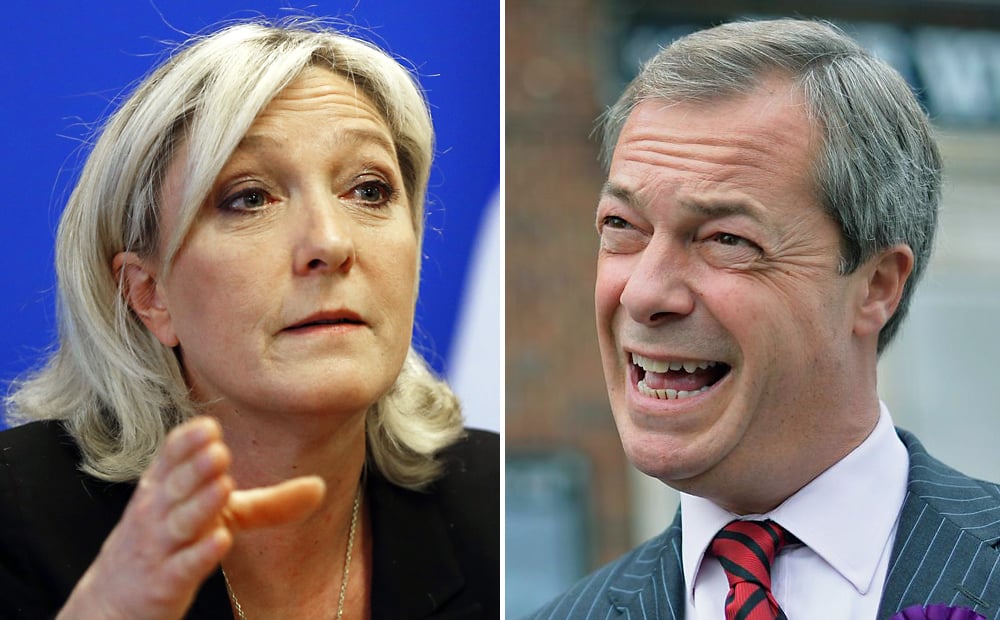
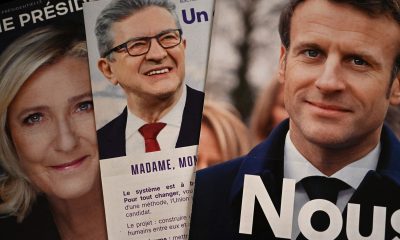
Plans for a meeting in Paris between Reform UK leader Nigel Farage and French far-right National Rally (RN) figurehead Marine Le Pen remain uncertain.
Farage’s planned visit to France, which he announced for October as part of an effort to establish ties with figures on the European right before the end of the year, has yet to be officially scheduled by Le Pen’s camp.
Speaking to Politico on condition of anonymity to discuss sensitive inter-party relations, four National Rally officials familiar with Le Pen’s schedule said no visit to the party leader had been planned.
Multiple party figures said they saw no urgency in drawing media attention to relations with Reform UK or to the migration pact signed in September.
One official noted that the “costs and benefits” of holding a meeting with Farage needed to be weighed.
Political circumstances for both parties have shifted markedly since the prospect of a meeting with Le Pen, widely viewed as the candidate most likely to win the first round of the 2027 French presidential election, was first mooted.
Jordan Bardella, the National Rally’s second-in-command, attended Reform UK’s conference in Birmingham in early September as guest of honour.
Bardella and Farage announced an agreement proposing the return to France of all migrants reaching the UK through unauthorised Channel crossings in small boats.
The proposal triggered a backlash across different political factions in France, where critics questioned why the country should accept the return of asylum seekers.
Internal problems also emerged within Reform UK during the Birmingham conference.
Reform UK, which had maintained its polling lead over the Labour Party led by Andy Burnham, who took over as prime minister from Keir Starmer, was shaken by an undercover investigation published on the eve of the conference.
The development, which raised fresh questions over the party’s financial structure, led to the resignation of Farage’s two most senior aides.
Labour subsequently recovered in the polls, while a rise in the Conservative Party’s share of the vote began to challenge Reform UK’s second-place standing.
The initial announcement that Farage would travel to France to meet Le Pen before the end of October was also made at the Birmingham conference in early September.
Referring to a trip to Paris after Bardella delivered a speech in English, Farage said: “The only downside is I think they’re going to invite me to Paris, and I will have to speak French, but never mind, we’ll get round it.”
However, no official invitation has been confirmed.
As October drew to a close and it became clear that Farage would not pay a return visit to the National Rally’s conference in Orleans, a senior Reform UK official maintained that the meeting was on the calendar for this year.
The leadership in Paris does not confirm that schedule.
The four officials familiar with Le Pen’s plans said they were unaware of any scheduled visit for Farage before Christmas. One of Le Pen’s advisers suggested that a meeting could instead be offered with Bardella, whose standing inside the party has weakened in recent months.
Questioning the merits of the party leader appearing alongside Farage, another adviser to Le Pen said: “We need a bit more time to think through the costs and benefits.”
Thibaut Francois, an official with the National Rally’s European Parliament delegation, said that “regular contacts” with Reform UK continued and that the two parties would meet “very soon”, though he did not clarify whether that would take place this year.
A senior Reform UK official said: “Reform’s primary objective is to become battle-ready for British elections; parading on the international stage right now would add nothing to the UK message.”
Charles-Henri Gallois, an economic adviser to Bardella, argued that there was no need for further contact between the two parties, asserting that the migration agreement was “ready and waiting to be implemented” should both parties come to power.
“There is no need to discuss this further,” Gallois told Politico. “Critics of the agreement do not understand migration flows. This agreement is entirely in France’s interest.”
With French voters wary of a UK-style exit, Le Pen has long distanced herself from efforts to pull France out of the European Union.
Jean-Yves Camus, a far-right specialist at the Jean-Jaures Foundation think-tank, said: “Farage still supports Brexit, whereas Le Pen abandoned the idea [of Frexit] because it was too frightening for French voters. Donald Trump’s defeat in the midterms will also reinforce Le Pen’s distrust of Trumpism and its European counterparts.”
The level of internal support within the National Rally for the migration deal signed by Bardella and Farage was a subject of debate even as it was being concluded.
Since the party conference in September, Bardella’s position has continued to weaken following antisemitism allegations, which he has firmly denied.
Before reaching the agreement with Bardella, Farage had proposed launching “the largest military operation in the Channel since the Second World War” to push small boats back to the French coast.
A figure close to Le Pen told Politico at the time: “Why would we take [them] back to France if they are not French?”






Following a consensus that Germany should remain in the EU, the AfD has now pledged active participation in NATO.
According to a position paper recently published by the leadership of the AfD parliamentary group in the Bundestag, NATO is described as “the strongest military alliance in the world”.
The party aims “to further develop this alliance together with the US and our European partners”.
The US under President Donald Trump is viewed by the AfD parliamentary group as the “most important Western partner”, as foreign policy spokesman Markus Frohnmaier emphasised.
Frohnmaier describes the US intervention in Venezuela as “understandable in terms of realpolitik” and praises the Trump administration for resolutely supporting “the conservative renaissance of the West”.
At the same time, the AfD is pushing for the normalisation of relations with Russia and, in particular, the reactivation of the Nord Stream pipelines, potentially in cooperation with US companies.
All of this is to be raised at a German-American-Russian “summit” in Abu Dhabi this spring; the AfD parliamentary group plans to organise this summit jointly with “special advisers” to the US and Russian presidents.
AfD fully backs US policy on Cuba and Venezuela
In the new position paper on transatlantic relations, the AfD parliamentary group in the Bundestag adopts a fundamentally highly favourable stance towards the policies of the Trump administration.
The AfD states that the White House is pursuing a “conservative Western renaissance” that will end “woke ideology”.
According to the party, this contributes to “preserving Europe as a Western cultural space”.
In addition, Washington’s actions aimed at securing its “global hegemony in the Western Hemisphere”, namely across the Americas, including the US invasion of Venezuela, the blockade of Cuba, and threats against Panama, are deemed legitimate. The paper states: “We welcome this reorientation in US foreign policy.”
According to the AfD, the invasion of Venezuela in particular is “understandable in terms of realpolitik, regardless of how it is assessed under international law”.
Nevertheless, the AfD wants Washington to end its “global interventionist policy” “beyond the Western Hemisphere”.
On the issue of Greenland, which is geographically considered part of the Americas and therefore of the “Western Hemisphere” but is also claimed by the EU, the AfD document states that Berlin should cooperate more closely with Washington and demand access to the island’s natural resources “within the framework of joint ventures”.
Backing for NATO and German remilitarisation
Furthermore, the AfD parliamentary group in the Bundestag explicitly commits itself to NATO in the new paper.
The document states, “NATO is the strongest military alliance in the world,” adding, “together with the US and our European neighbours, we want to further develop it as a defence alliance.”
In this context, as confirmed by Markus Frohnmaier, the foreign policy spokesman for the AfD parliamentary group, the US is described as the “most important Western partner”.
Like many other AfD politicians, Frohnmaier built close ties with the Trump administration over the past year and is currently developing these relations further.
The AfD document explicitly welcomes the withdrawal of US troops from Europe, which Trump has been gradually advancing.
At the same time, it states that it is “imperative to compensate” for this withdrawal “with an increase in the number of German soldiers”.
The AfD had already openly supported the dramatic military expansion required for this purpose in its recently presented European policy strategy paper.
The AfD’s overt support for NATO also comes at a time when the military alliance has initiated a process of “Europeanisation”.
The aim is to systematically increase the share of German and other European soldiers as well as weapons systems. This will expand the control exercised by European powers, and especially Germany, over the alliance.
AfD seeks German access to Ukrainian natural resources
On Monday, Frohnmaier and two other AfD members of the Bundestag presented a “working paper on German-Russian relations and the war in Ukraine”.
According to the document, the war is described as “a tragedy that must be ended as quickly as possible”.
Arguing that the federal government must cut material support to Ukraine to convince Kyiv to enter into serious peace negotiations with Russia, the AfD members urged the government “not to adopt Ukraine’s maximalist positions”.
According to the AfD politicians, Ukraine regaining Crimea, for example, is “entirely unrealistic”.
In addition, the AfD demands that Ukraine “must become a member of neither NATO nor the European Union”.
According to the party, Germany should advocate for “Ukraine to become a neutral state once again”.
Regarding the security guarantees sought by Kyiv, the document states that Germany should not provide them and must on no account deploy troops to Ukrainian territory.
However, the prospect of deploying UN peacekeepers to Ukraine is welcomed. Non-belligerent states, such as India, South Africa, Brazil, and Indonesia, should contribute to securing Ukrainian territory.
In return for the support provided by Berlin, Kyiv should be required to grant access to raw materials such as rare earth elements, other metals, and natural gas.
German-US partnership proposed for Nord Stream
On Russia, the AfD demands a complete policy reversal, including the lifting of all sanctions, the reintegration of Russia into the G7 to recreate the G8, and the resumption of Russian energy imports.
This applies particularly to pipeline gas. Frohnmaier said on Monday, “For us, one of the central goals of German energy sovereignty is that Nord Stream can be recommissioned as part of the system.”
The idea of reopening the Nord Stream pipelines in the long term, and even supplying gas to Europe in the short term via the legacy pipeline network traversing Ukrainian territory, was discussed between Russian and US negotiators in September.
In this context, the Trump administration plans to bring in a US company as an intermediary. Although the official rationale is to circumvent EU sanctions, in reality it is so that revenues from the gas deal can be channelled to the US, potentially to a member of the extended Trump family or an oligarch close to them.
Frohnmaier explicitly backed such an arrangement but is pushing for Germany to secure a larger share of the profits.
The AfD politician explained, for example, that a “German-American operating company” could be established instead of a purely US operating company.
AfD plans Abu Dhabi summit with US and Russia
As the next concrete step, the AfD parliamentary group in the Bundestag wants a “trilateral summit” to be organised with US and Russian representatives.
Frohnmaier said on Monday that the summit could take place in Abu Dhabi, noting that talks could be envisaged “at the level of special advisers”.
On the Russian side, Kirill Dmitriev, head of the Russian wealth fund and Vladimir Putin’s special representative for economic cooperation, has been informed of the plans; Dmitriev is ready to attend the meeting.
Frohnmaier held talks with Dmitriev in early June on the sidelines of the St. Petersburg International Economic Forum (SPIEF).
Dmitriev later shared a photograph with Frohnmaier on X, stating that he looked forward to “building a great future together with the AfD, the most popular party in Germany”.
The Russian representative suggested to Frohnmaier that they “restart the Russia-Germany-US business dialogue”.
Dmitriev is also involved in US-Russia talks on new Russian natural gas exports to the EU or the resumption of operations on the Nord Stream pipelines.
Whether the Trump administration will agree to the Abu Dhabi meeting remains unclear. Frohnmaier indicated that he hopes Dmitriev can persuade Trump to attend.
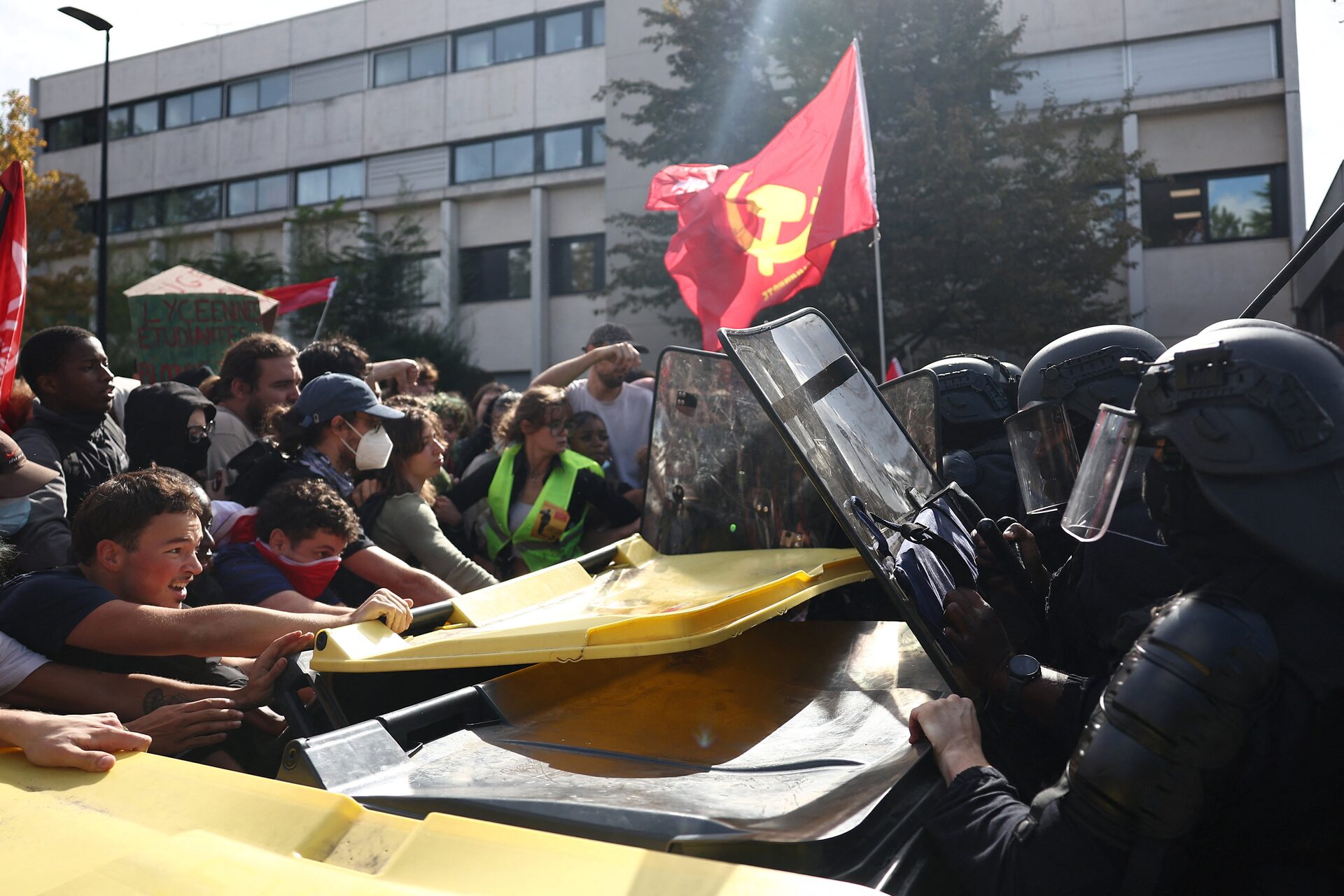
Youth protests spreading across European nations, particularly in France, are serving as an occasion for right-wing parties and governments to escalate demands for bans.
In France, for example, right-wing conservative politicians such as Senate President Gérard Larcher and presidential candidate Bruno Retailleau of The Republicans (LR) are now openly demanding that the party La France Insoumise (LFI) be banned.
Matthieu Valet, a Member of the European Parliament from Marine Le Pen’s National Rally (RN), said at the party congress held in Orléans on 24–25 October: “We will dissolve all anti-fascist organisations.”
Polls unanimously show that RN candidate Marine Le Pen leads the vote for the presidential election in April 2027.
In Spain, the rising right-wing party Vox submitted a draft bill to parliament in December 2025 aimed at dissolving organisations linked to the anti-fascist movement.
Vox is polling at 19% in recent surveys, and the party hopes to enter government by forming a coalition with the conservative Popular Party (PP) following the elections on 29 November.
In such a scenario, banning anti-fascist organisations in Spain could become possible.
Acts of violence linked to protests are currently being used increasingly to threaten left organisations with bans.
Belgium offers another example. Since last year, Interior Minister Bernard Quintin has been attempting to ban organisations that threaten “national security or the foundations of the rule of law”.
In this context, government officials cite “Antifa” as an example. Even in the autumn of 2025, Georges-Louis Bouchez, president of Quintin’s Reformist Movement (MR), openly called for the “dissolution of Antifa”.
When property damage occurred on the fringes of student protests in Liège in early October this year, Quintin once again pointed to “Antifa-type” organisations in light of plans to ban such groups.
In June, Defence Minister Theo Francken of the New Flemish Alliance (N-VA) also claimed, without providing evidence, that the opposition Workers’ Party of Belgium (PTB-PVDA) was responsible following property damage on the fringes of protests in Brussels.
PTB-PVDA supports the protests gaining momentum in Belgium against the government’s policies of militarisation and social spending cuts.
According to polls, the party is currently the second strongest in the country with 23% of the vote nationwide, and the strongest in the Brussels-Capital Region with 26%.
In Germany, the possibility of banning The Left (Die Linke) was raised by the influential mainstream newspaper Frankfurter Allgemeine Zeitung.
A recent editorial in the newspaper asked: “Why not ban Die Linke?”
Meanwhile, banning youth demonstrations is currently under discussion. As in Belgium, isolated violent incidents on the margins of peaceful protests are cited as justification, discrediting the demonstrations as a whole.
Federal Interior Minister Alexander Dobrindt is not only levelling blanket accusations against “left-wing groups” without providing evidence; he is also attributing instances of property damage to “agitators emerging from the migrant community”.
The Interior Minister of the state of Hesse, Roman Poseck, acknowledged that those detained on Saturday on assault charges were “predominantly German citizens”, but nonetheless claimed that they were “predominantly of migrant background”.
These statements therefore attribute responsibility for violence to leftists on the one hand, and to people of non-German origin on the other.
A representative from the Federal Ministry of the Interior under Dobrindt also attended a conference where White House Deputy Chief of Staff for Policy Stephen Miller equated anti-fascists (“Antifa”) broadly with terrorism and categorised them as “enemies of civilisation”.
According to an investigation by the online portal FragDenStaat, this representative was Christian Klos, head of the Public Security Directorate.
Klos reportedly appeared in Washington as part of a “morning panel” on “The Threat Landscape of Far-Left Terrorism”.
What he said there remains unclear: FragDenStaat reported that the Federal Ministry of the Interior refused to publish several preparatory documents related to the presentation, citing their classified status.
However, it is now known that the Interior Ministry took part in a preparatory workshop in the US in May with two officials at the “relevant specialist division level”.
In addition, the federal government confirmed in early October that a follow-up event to the Washington conference would be held this autumn.
The event’s focus will be the “sharing of professional experience among security and law enforcement agencies from various countries”, centring specifically on “manifestations, developments, and challenges in the field of violent left-wing extremism”.
The US Department of State had hosted a conference on 16 July with the participation of representatives from more than 60 countries across North and South America, Europe, and parts of Asia.
The focus of the conference was the “international resurgence of far-left political terrorism”.
Alongside Secretary of State Marco Rubio, Stephen Miller set the tone of the conference.
In a speech, Miller claimed that leftists were “fundamentally driven by envy, hatred, and malice”, adding that no one at anti-fascist demonstrations looked like a “normal human being”.
Federal Interior Minister Alexander Dobrindt has played a prominent role for years in crackdowns on left-wing organisations.
While serving as CSU general secretary in 2011 and 2012, his rhetoric caused astonishment even within his own party.
In August 2011, for instance, he demanded that authorities “examine whether proceedings to ban Die Linke should be initiated”.
In January 2012, he stated that he believed “in the medium term, we must make every effort to also launch proceedings to ban [the party Die Linke]”.
At the time, Gerda Hasselfeldt, then leader of the CSU parliamentary group in the Bundestag, expressed her surprise: “At present, I see no grounds for proceedings to ban Die Linke.”
Even after taking office as Federal Interior Minister, Dobrindt continued to stand out with striking rhetoric.
In June 2025, during the presentation of the Federal Office for the Protection of the Constitution report, he displayed graphs with different scales, implying that the number of “far-left extremists” in Germany exceeded that of right-wing extremists.
In December 2025, he suggested that “left-wing extremists” could engage in “espionage or sabotage” activities on behalf of foreign powers.
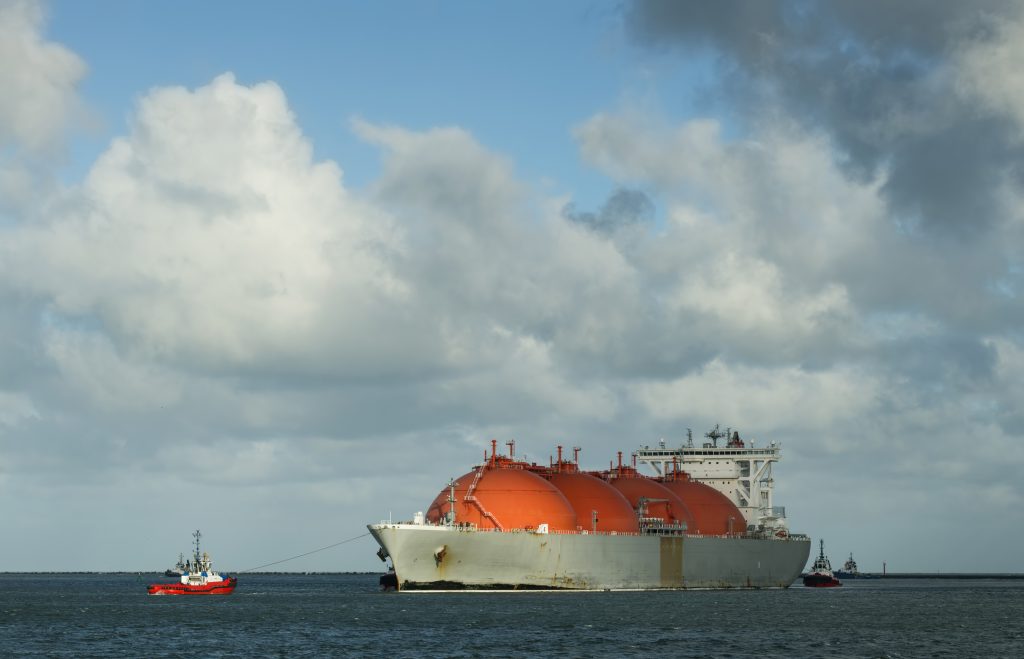
The International Energy Agency (IEA) has stated that the global gas market could remain tight “until later in 2027” as European gas storage levels stand at their lowest point in a decade ahead of the winter season.
Presenting its “Global Gas Security Review 2026” report, the IEA noted that depleted storage inventories will heighten Europe’s reliance on global liquefied natural gas (LNG) supplies to meet peak demand, particularly in the event of a colder-than-expected winter.
“Under colder-than-average weather conditions and prolonged disruptions to LNG flows through the Strait of Hormuz, EU gas storage levels could drop to below 10% of working capacity by the end of March 2027,” the report said.
Depleted stock levels could intensify competition for the limited volume of flexible LNG cargoes with countries in Asia and South America that have limited storage options, putting upward pressure on prices this winter.
The IEA noted, “Low storage levels in Europe could also significantly increase gas injection requirements to replenish stocks through the summer of 2027, potentially extending tightness in the global market well into next year.”
With the effective closure of the Strait of Hormuz cutting more than 60 billion cubic metres of supply from Qatar and the United Arab Emirates, Asian and European prices have already reached their highest levels since the 2022-23 gas supply crisis.
The report stated that an increase in LNG supply, particularly from North America, alongside more flexible trading arrangements, has helped cushion the impact of the Hormuz supply shock.
The report forecasts that global LNG supply will drop in 2026 by a record 3%, or around 20 billion cubic metres, compared with 2025.
Global gas demand is expected to fall by roughly 1.5%, or nearly 65 billion cubic metres, driven by lost demand across the Middle East, declining industrial gas consumption in Europe, and power sectors switching from gas to coal across multiple Asian countries.
The IEA said, “These findings highlight the importance of strengthening international cooperation on gas supply security, even as global markets become more flexible.”
The EU was expected to fill its underground gas storage facilities to at least 90% ahead of the winter season.
However, after that requirement was relaxed because of the ongoing crisis, the average fullness rate stood at just 74.6% as of 1 November.
This shortfall was primarily driven by lower-than-normal inventories in Germany and the Netherlands.
The IEA observed that because storage levels for this time of year are at their lowest since 2013, the EU has become uniquely dependent on LNG shipments.
In the event of an exceptionally cold winter, EU storage fullness could drop below 10% by March, leaving the bloc vulnerable to “additional cold spells, technical failures, or other supply disruptions”.
However, the Paris-based energy security agency added that these challenges could extend well beyond the winter months.LNG

Paris meeting between Marine Le Pen and Nigel Farage unscheduled

Armenian opposition urged to form joint front against constitution

Putin approves standard-gauge rail link on China border

Elon Musk loses $29 billion after Democratic US midterm sweep

Republican redistricting push backfires as Democrats gain House seats
-

 Diplomacy4 days ago
Secular dress code dispute exposes deeper Türkiye-Azerbaijan strains
-

 America2 weeks ago
US wealthy demolish multimillion-dollar mansions for land
-

 Europe1 week ago
Merz visits Asia to seek new markets for German defence firms
-
 Russia1 week ago
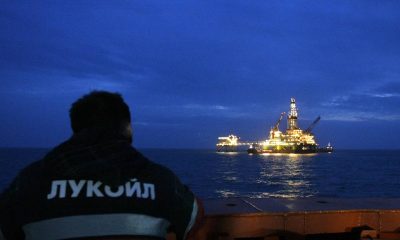
US and Russia weigh energy deals and corporate return in peace talks
-
 Europe2 weeks ago
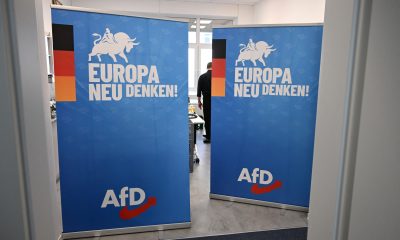
AfD drops Dexit to back single market in new Europe strategy
-

 Europe2 weeks ago
Serbia opposition wins snap vote as Vucic concedes defeat
-

 Interview2 weeks ago
“The AfD is an expression of internal contradictions within German big capital”
-

 America2 weeks ago
Pentagon prepares US bases for 90-day siege in global war plan
