
Diplomacy
The unipolar illusion is over, the multi-vector era has begun, Quincy’s Lieven says

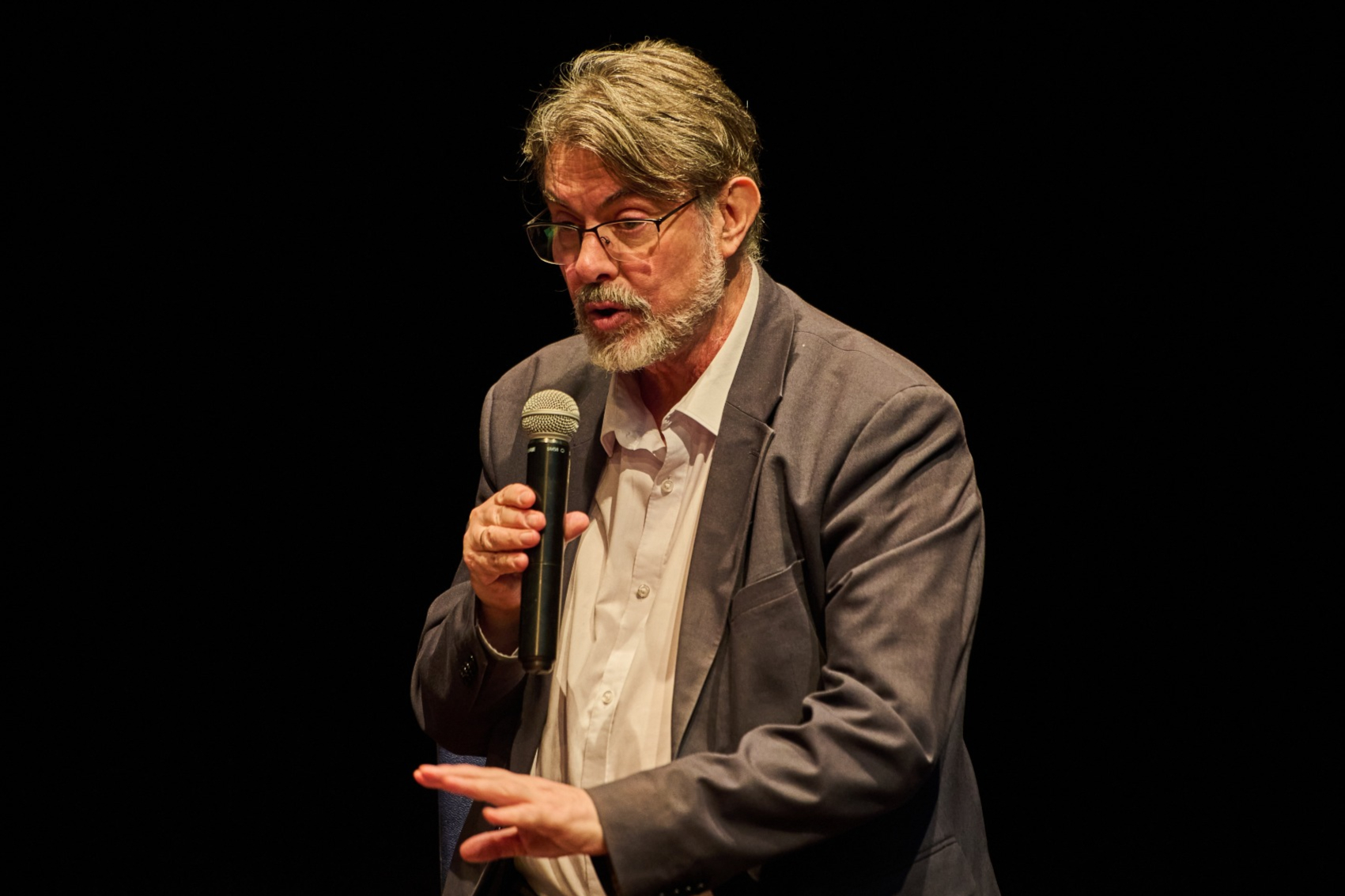
Editor’s note: Anatol Lieven, Eurasian Program Director of the Washington-based think tank Quincy Institute, made striking assessments regarding the future of the international system at the East-West Forum held in Istanbul on September 26-27. Stating that Western elites believe in the illusions they have built themselves, Lieven expressed that the “rules-based order” discourse is actually just a cover masking American hegemony. Reminding that the Cold War years were not a period of stability for the peoples of the global south, but rather experienced as a nightmare, the experienced expert emphasized that the policies pursued largely by Washington lie behind the conflicts in the Middle East and Ukraine.
***
As a Brit, I have to say I would have no objection to such a merger if it were run by King George and his descendants. The problem is that unfortunately the balance has shifted a bit since those days. Though I have to say, if you were to listen to the British establishment, you wouldn’t always realize that we live in many ways—in America above all, but in Europe too—in a weird world of illusions now. And one of the most dangerous things is that a great many people believe their own illusions. And that brings me to the infamous phrase “rules-based order,” which of course is on the one hand simply a euphemism for American global hegemony, with the Europeans as American satraps or lieutenants.
It is nonetheless a myth in which, unfortunately, a large part of the Western establishment genuinely believes; they have convinced themselves that this is true. One of the key ways in which they underpin this belief—and belief in its necessity—is to claim, and no doubt to believe, that without this American-run rules-based order (with rules made by America and broken by America whenever it sees an interest in doing so), one of two things would happen. First, that without a global ruler, the world would fall into chaos and new conflicts would break out everywhere if America were not there to suppress or mediate them. The second belief is that if the world is not ruled by the United States—once again, with Europe acting as its lieutenant—it will be ruled by China in the same way America has tried to rule the world.
If China did simply imitate America’s hegemonic policies, that would not be an advantage for anybody, including perhaps most of all the Chinese themselves. Fortunately, I see no signs that that is going to happen. Behind this also is an almost totally false picture of the supposed stability and peace preserved by the United States when it was the non-communist pole of a partially bipolar world with the Soviet Union, supposedly in what Americans—and somewhat bizarrely, Europeans too—called the “free world.” This preserved peace and stability to a considerable degree in Western Europe, but it would come as a very considerable surprise to the Koreans, the Vietnamese, the Algerians, the Arab world, Angolans, many South Americans, and so on. From their point of view, the Cold War was not a period of stability and peace; it was in many ways a nightmare. And many areas tormented by Cold War conflicts are in fact today much more peaceful and stable. Where there are really serious conflicts going on, above all in the Middle East, these are very largely the result of the policies of the United States and its local allies—and I would say that of the Ukraine War as well.
I won’t speak much about China because we have much better people to talk about that. It does seem to me undoubtedly clear that China is aiming at global economic predominance, as indeed Britain did before (though also through military means). There are no signs to me as yet that China is aiming at the kind of militarized global primacy that America has sought. And as we just heard, that is a very good thing, because if China had produced somebody like Donald Trump—or I would add, Hillary Clinton or George Bush II—the world would indeed probably have been destroyed by now. But this does not seem to be the case. Indeed, there is a case, I would say, for China playing a much more active role politically—not militarily, of course, but politically—in certain parts of the world.
Above all, I am not entirely happy with the term “multipolarity,” because if you go back to the notion of bipolarity or unipolarity, it suggests, perhaps unconsciously, that other countries have to attach themselves closely to one or other pole and have no alternative. That is still very much true in certain parts of the world, but it doesn’t seem to me that this is what most countries are aiming at, or what will be possible in the future for poles to enforce. Having spent a great deal of time in the countries of the former Soviet Union—I was in Uzbekistan in the summer—I have often heard them express their policies not in terms of multipolarity, but of a multi-vector policy: trying to maintain decent working relations with all other states, including their own neighbors.
In a unipolar, bipolar, or rigid multipolar world, subordinate countries often prioritize relations with the hegemon over their closest neighbors, sometimes even conducting regional relations through the hegemon rather than directly. That is ceasing to be the case. Countries are increasingly aiming to diversify their relations and avoid the American approach—the constant insistence that “you are with us or against us,” that you must be completely with America, and if you’re not, you are an enemy. This has been carried to grotesque extents by Donald Trump, but he is only exaggerating something we heard very often before from American leaders.
When it comes to an anarchic world—that is, a world without a ruler—it is a staple of anthropology that an anarchic system does not have to be a chaotic system. Anarchic systems can also generate their own mechanisms and traditions to resolve or minimize conflicts and pursue common aims. That is what we must hope for, not only to minimize the risk of conflict, but also because there are huge challenges that America, despite claiming to be the global hegemon for the good of humanity, has totally failed to address, and in many ways acted as an actively malignant actor—above all regarding climate change, artificial intelligence, and the protection of secure international trade.
Our anarchic system must hope for arrangements that will help us overcome this. But even if we fail, I doubt that many people around the world will look back to American primacy with much nostalgia. Thank you.









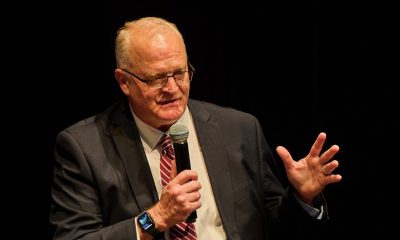

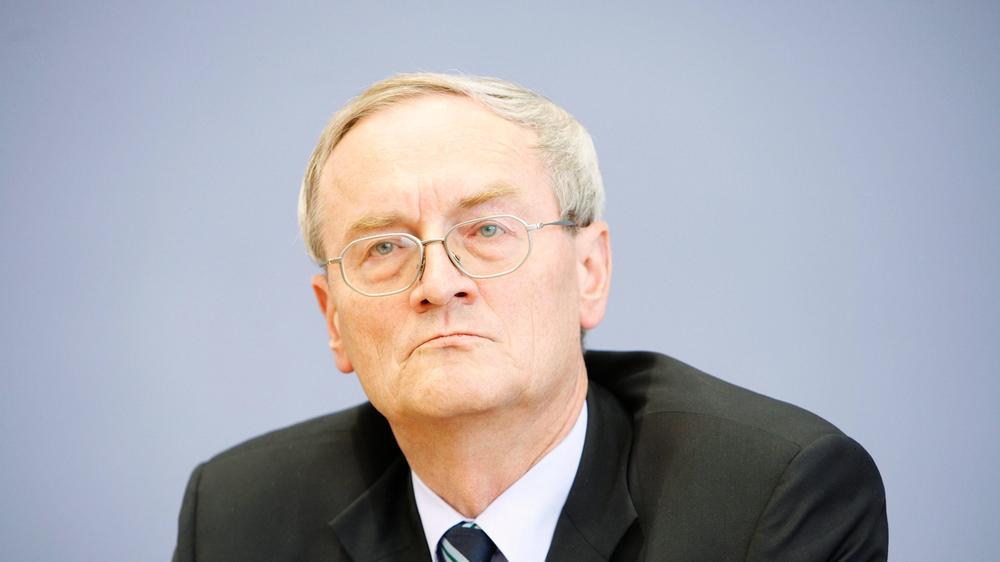
August Hanning, who led Germany’s Federal Intelligence Service (BND) between 1998 and 2005, was arrested on 6 October on allegations that he obtained roughly 2,000 classified agency documents and used them during contacts with intelligence officers from a foreign state.
Accused of high treason and espionage on behalf of a foreign intelligence agency, the former spy chief is alleged to have procured the documents from former BND employee Manfred D.
Prosecutors stated that the leaked records included internal briefing notes presented to senior German officials, though the Berlin government has not yet publicly disclosed which country received the classified data.
According to an exclusive report by Jake Green for The Cradle, seized email exchanges revealed extensive ties between the arrested Hanning and former Mossad director Danny Yatom.
The correspondence shows that the two former intelligence directors built an ongoing network of contacts following their public service, combining commercial ventures, efforts to secure political influence, and intelligence links.
This dynamic has triggered debate that using personal connections and official access for private gain has left Germany’s intelligence apparatus vulnerable.
Intelligence notes for 10,000 euros and campaign proposals
According to the reviewed emails, Hanning told Yatom in a 2018 message that he could prepare an “overall assessment based on information obtained from senior German officials and intelligence agencies” concerning an unidentified candidate.
The former BND head committed to completing the report by 13 July in exchange for 10,000 euros.
Contacts between the two men subsequently expanded to cover domestic political processes in Germany. Ahead of the September 2021 federal election, Yatom asked Hanning to approach leading candidates.
Describing CIY Global as a “political campaign company”, the former Mossad chief noted that he aimed to introduce its capabilities to German politicians, and he mentioned his intention in the same exchange to transfer documents concerning a cybersecurity firm.
Cybersecurity partnership and surveillance operations across Europe
The partnership between Yatom and Hanning reached beyond political lobbying initiatives into the cybersecurity sector.
Hanning reportedly served as a consultant for World Health Energy Holdings, a cybersecurity company linked to Yatom.
Firms of this type, established or managed by former intelligence personnel, provide commercial platforms on the international market for Israeli-origin surveillance, cyber intelligence, and political influence capabilities.
The operational presence of private Israeli-based surveillance technologies across Europe has recently entered judicial records through scandals in Poland, Spain, and Greece.
Polish prosecutors announced on 12 October that data collected under the previous government via Pegasus spyware against political opponents had been transferred out of the country, adding that manufacturer NSO Group maintained access to the technical infrastructure.
In Spain, the 2022 CatalanGate investigation established that at least 65 people, including politicians, lawyers, and civil society representatives, were targeted using Pegasus or Candiru software, with Citizen Lab researchers publishing strong evidence linking the operation to Spanish authorities.
In Greece, the surveillance operation targeting journalist Thanasis Koukakis and Member of the European Parliament Nikos Androulakis was determined to have used Predator software, linked to Intellexa, a company founded by former Israeli intelligence officer Tal Dilian.
In the German espionage investigation, the traffic between Hanning and Yatom involving paid reporting, contacts with electoral candidates, and commercial partnerships does not yet provide conclusive legal evidence regarding the final destination of the roughly 2,000 classified documents.
Nevertheless, the disclosed correspondence gives German investigators a concrete line of inquiry to assess whether classified state secrets reached commercial networks tied to Israeli intelligence.

US President Donald Trump has dismissed Kimberly Guilfoyle, the US ambassador in Athens, following serious press reports concerning her conduct.
White House Press Secretary Katie Zacharia told reporters during her first briefing that Guilfoyle had been asked to resign.
“She was doing a good job, but we didn’t like what we read in the press,” Trump said. “She was not a member of my family. I think she dated my son a long time ago.”
In a social media post, Guilfoyle stated: “These claims are unfounded, and I will resolutely defend my name, reputation, and integrity.” She added that she was particularly proud of the embassy’s work.
According to Kathimerini, her removal came as no surprise in Washington. Days of successive disclosures and vigorous exploitation of the matter by Democrats had been inflicting political damage on the White House ahead of the sensitive midterm elections.
The US State Department was instructed not to comment, with crisis management transferred entirely to the White House.
Reports indicate that most of the president’s team swiftly favoured Guilfoyle’s dismissal, while Secretary of State Marco Rubio was reportedly uneasy with the demonstratively warm public welcome she had staged for him.
Democrats on the House Foreign Affairs Committee have called for an investigation.
“Her resignation does not absolve her of responsibility,” the lawmakers wrote, adding: “While American families struggled to make ends meet, she used her position as a Trump administration official to enrich herself.”
Chargé d’Affaires Josh Huck will assume ambassadorial duties until a successor is chosen.
Meanwhile, Guilfoyle’s departure is expected to cause delays in agreements between Greece and the US.
These include the so-called “Rubio package”, comprising approximately $4 billion in arms deals finalised only days before the secretary of state’s arrival.
Several procedural steps still remain before the contracts can be signed.
In Athens, opposition parties are demanding answers. Dimitris Mantzos of PASOK called for a detailed briefing on the agreements reached during Rubio’s visit.
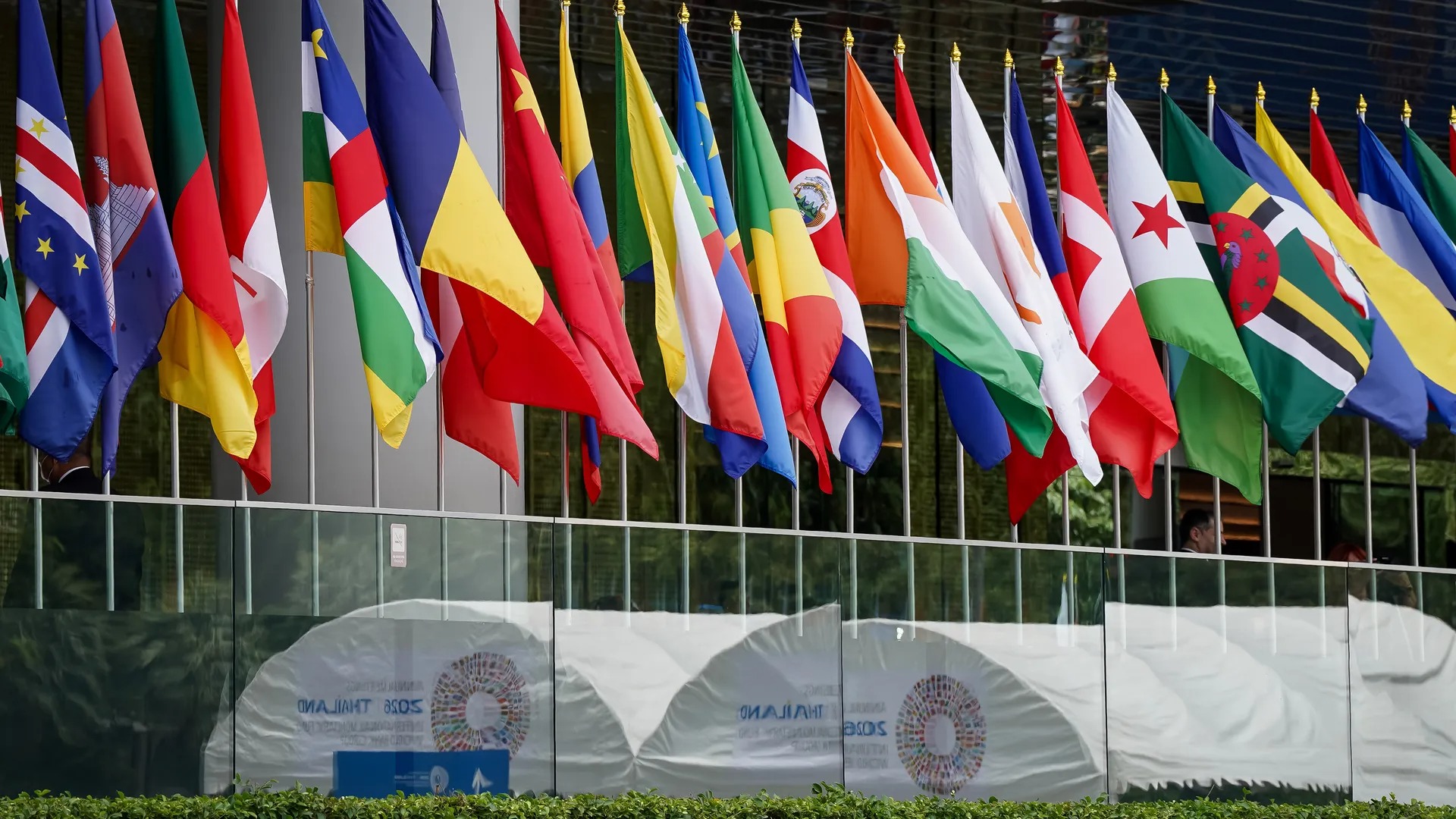
The International Monetary Fund (IMF) has warned that the global economy’s capacity to withstand fresh shocks is coming under strain.
Worldwide growth has exceeded expectations and maintained stability despite the war in the Middle East and surging oil prices.
However, some policymakers worry that dwindling energy reserves, rising debt burdens, and a growing reliance on the artificial intelligence boom will leave the world increasingly vulnerable.
In a blog post, IMF economic counsellor Silvana Tenreyro wrote: “Without strengthening supply capacity and rebuilding policy buffers, the global economy may soon test the limits of its resilience.”
Tenreyro added:
“While tech-related investments are an important advantage against the energy shock, they concentrate risks, making global growth excessively dependent on a small number of companies, sectors, and economies.”
The artificial intelligence (AI) boom has helped offset the economic fallout of the war.
Yet a sharp reversal could leave global GDP 1.1% below the IMF’s baseline forecast by 2028.
US GDP could take an even larger hit of 1.8%.
This scenario assumes that the productivity gains promised by AI fail to materialise, triggering a pullback in investment and a correction in financial markets.
Continued investment in artificial intelligence could also fuel inflation, leading to renewed interest rate increases.
Conversely, a stronger AI investment boom coupled with faster productivity gains could lift global GDP 0.6% above the baseline forecast by 2029.
The IMF largely maintained its global growth projections despite prolonged energy disruptions stemming from the Middle East war.
However, it now expects higher inflation both this year and next year.
The IMF projects global growth of 3.1% in 2026, unchanged from its April forecast, and anticipates 3.4% in 2027, representing a 0.2 percentage point upward revision.
The fund projects that the US economy will expand by 2.3% in both years, marking the fastest growth among G7 economies. The 2027 forecast was revised upwards by 0.2 percentage points.
Global inflation is expected to reach 4.7% in 2026 before easing to 4.1% in 2027.
Driven by the adverse impact of surging energy and food prices, both inflation projections were revised upwards compared with April.
The world had managed the energy shock partly by drawing down oil reserves and rerouting supply sources.
According to the IMF, global oil inventories are declining by approximately 2.7 million barrels per day, elevating the risk of a sharp price spike.
These projections provide the backdrop for global finance officials and central bankers gathering in Bangkok this week for the annual meetings of the IMF and the World Bank.
The IMF underestimated global growth projections for three consecutive years, raising questions over whether economies have become better at weathering shocks.

Macron rejects interior minister’s resignation over violent unrest

EU Arctic strategy targets Russia and China while sparing US

Egypt delays parliamentary vote on deploying troops to Saudi Arabia

AfD leader Weidel calls funding lost Ukraine war a grave mistake

Sally Rooney UK book shipments halted over Palestine Action terror ban
-
 Europe2 weeks ago
Le Pen proposes German-style debt rule to soothe French bond market
-

 America2 weeks ago
US AI spending needs 9% of GDP by 2032 to justify capital boom
-
 Europe2 weeks ago
France and Germany urge EU market kill switch against trade threats
-
 Russia2 weeks ago
US and Russia hold multi-billion-dollar talks on Lukoil foreign assets
-
 Europe2 weeks ago
Bill to drop NATO membership goal submitted to Ukrainian parliament
-

 America2 weeks ago
Flavio Bolsonaro leads Lula as Brazil election heads to run-off
-
 Europe2 weeks ago
Marine Le Pen unveils fiscal programme pledging French budget cuts
-

 Middle East2 weeks ago
CIA report warns Israel faces growing risk of civil conflict
