
Europe
Tunisian filmmaker declines ‘Most Valuable Film’ prize in protest of Gaza genocide


Tunisian filmmaker Kaouther Ben Hania has refused to accept an award for her film The Voice of Hind Rajab at an event in Berlin, accusing festival organizers of providing “political cover” for the genocide in Gaza by “smearing those who protest.”
At the Cinema for Peace gala, Ben Hania declined the “Most Valuable Film” award for her project, asserting that the death of the six-year-old Palestinian girl killed by the Israeli military was not an isolated incident but rather a component of a systematic genocide.
“Peace is not a perfume sprayed over violence so that those in power can feel refined and comfortable. What happened to Hind is not an exception. It is part of a genocide. And tonight, in Berlin, there are people providing political cover for this genocide by reframing the mass slaughter of civilians as self-defense, as complex circumstances, and by smearing those who protest. Cinema is not image-washing. If we are talking about peace, we must also talk about justice. I will not allow their deaths to be the backdrop of a polite conversation about peace—not while the structures that caused their deaths remain untouched. Therefore, I will not be taking this award home tonight. I will leave it here as a memorial. When peace is recognized as a legal and moral obligation based on the principle of accountability for genocide, I will return and accept this award with joy.”
More than 80 actors, directors, and other film industry professionals attending the Berlin International Film Festival, including Tilda Swinton and Javier Bardem, signed an open letter published Tuesday calling on organizers to take a clear stand against Israel’s war in Gaza.
“We demand that the Berlinale fulfill its moral duty and take an explicit stance against the genocide, crimes against humanity, and war crimes committed by Israel against Palestinians,” the open letter stated.
Hind Rajab was a six-year-old Palestinian girl who was killed along with her family in January 2024 following an attack by Israeli occupation forces.
During the occupation of Columbia University, American students renamed Hamilton Hall to “Hind’s Hall” in her memory.











The Trump administration pressured several countries to withdraw their support for a leading European conference on disinformation.
Canada, Lithuania, and the European External Action Service (EEAS) subsequently complied.
Held on Wednesday and Thursday, the #Disinfo2026 conference serves as the annual gathering of Europe’s anti-disinformation community, bringing together hundreds of researchers, journalists, technology specialists, and policymakers at a hotel in Vilnius, Lithuania.
The conference is organised by EU DisinfoLab, an independent non-profit organisation based in Brussels.
A few days before the conference, the logos of its main sponsors: the Lithuanian Ministry of Foreign Affairs, the European External Action Service (EEAS), and Global Affairs Canada, were removed from the website.
Photographs of the event shared with The Guardian also show white stickers affixed over these organisations’ logos printed on official conference materials.
This appears to indicate that the logos were removed from the programme in haste.
Three people familiar with the matter, including European officials, confirmed that the US Department of State contacted several governments regarding their support for the conference.
Internal US Department of State documents obtained by The Guardian also reveal that US officials thanked Lithuania for “taking US concerns seriously”.
The document notes that Washington was “grateful” that Lithuania found the organisation of a panel describing the US as a foreign information threat “reprehensible and baffling”, and welcomed its decision to limit participation in the conference.
According to information obtained by The Guardian, France was also contacted.
The panel, titled “The US as a FIMI threat: adapt, accept, counter” (where the acronym FIMI stands for “foreign information manipulation and interference”), was held on Wednesday.
The panel addressed how Europe’s disinformation community could regain resilience without Washington, and appears to mark the first time the conference raised the idea that the US could be a disinformation actor in Europe.
According to sources and internal documents, the Department of State focused specifically on this panel, which featured three American speakers, including a former CIA officer.
According to a person briefed on the discussions, the source of other correspondence appeared to be the office of Sarah B. Rogers, Under Secretary of State for Public Diplomacy and Public Affairs.
In their statements, Lithuania, Canada, and the EU noted that the conference programme did not align with their official views regarding the US role in disinformation.
Yet this programme had been drawn up months before they withdrew their support, dating back to June.
In a statement, the Lithuanian Ministry of Foreign Affairs said: “Lithuania cancelled its participation in the ‘Disinfo 2026’ conference because parts of the conference programme diverged from the government’s official position.”
Samantha Lafleur, a spokesperson for Global Affairs Canada (GAC), said: “GAC carefully reviews participation in and sponsorship of external events on a case-by-case basis. Following changes to the framing of several panel discussions, GAC decided to review its participation in those sessions at the EU DisinfoLab 2026 conference,” adding that Canadian officials still attended the conference.
An EU spokesperson confirmed that the European External Action Service decided to withdraw its support for the conference because “the organisers chose to frame some discussions in a way that did not align with official EU positions.”
According to information obtained by The Guardian, EU officials disagreed with describing the US as a disinformation actor.
Despite withdrawing its name as an official backer, the EU continues to provide funding for the conference.
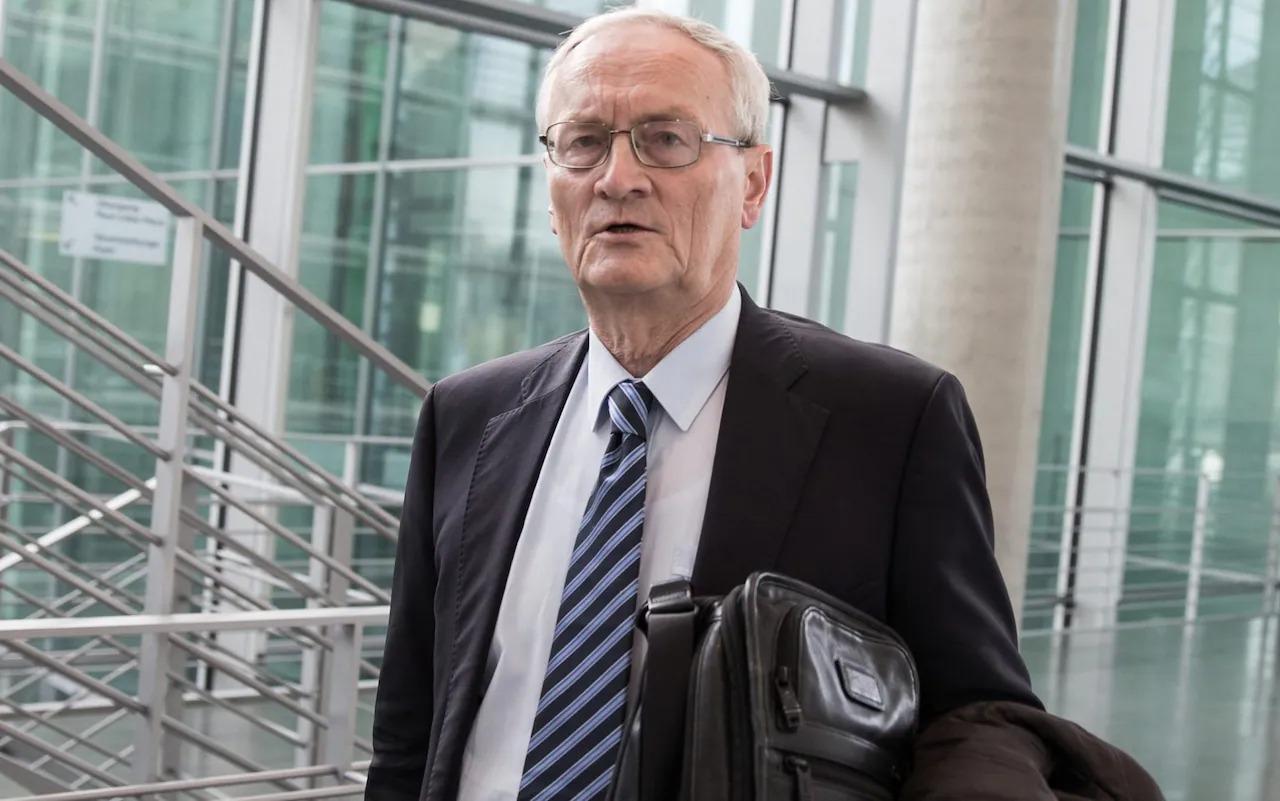
British intelligence agencies, led by MI6, are investigating whether their confidential data or spies were compromised in the biggest espionage scandal in modern German history.
August Hanning, the former head of Germany’s foreign intelligence service, the BND, along with a current senior official at the agency identified only as Manfred D, was detained on Tuesday on suspicion of espionage and treason.
Hanning faces allegations that he unlawfully amassed thousands of classified documents over a 16-year period through Manfred D and sold a portion of those secrets to a foreign power.
German security sources noted that some of the high-level information handled by the pair originated from partner intelligence agencies abroad, raising the prospect that British and American intelligence may have been leaked.
This development has brought accompanying concerns that US and British human sources operating in the field, such as active agents or informants, could have their identities exposed through the shared information.
Matthew Dunn, a former MI6 intelligence officer, said British intelligence services would meticulously review everything shared with the BND and assess the risks.
Dunn said:
“There is no doubt that there is a major internal security review going on inside MI6 right now, looking meticulously at the intelligence shared with a very trusted liaison partner and assessing whether any of that compromises MI6-related operations and people.”
Nevertheless, the former spy stated he would be “very surprised” if this situation affected the agency’s relationship with the BND, adding that he expected the two services would act cooperatively.
He explained that during intelligence sharing, the introduction of “automatic checks and balances” mechanisms, including the redaction of information relating to sources, is standard practice.
News of the scandal has shocked the Western intelligence community. Sources described the alleged breach as a major success for a foreign power, noting that it could cause serious damage to the Western intelligence-sharing alliance.
Alongside MI6 and GCHQ, multiple US agencies are also believed to be conducting a systematic internal review of all sensitive information shared with European allies during the period in question.
According to information obtained by The Telegraph, the primary focus of these agencies is understood to be protecting sources who may have been compromised due to the alleged leak.
Similar audits are likely to be conducted by all of Germany’s intelligence-sharing partners and allies.
While it remains unclear when German authorities notified their counterparts of the security breach, it is understood to have occurred prior to Tuesday’s arrests.
German media reported that the leaked information included details regarding Iran’s nuclear programme, the Russian military, and classified documents belonging to foreign partner agencies.
The statement noted that most of the documents in question contained “confidential information prepared by the federal intelligence service exclusively for internal purposes, particularly for intelligence briefings aimed at the executive branch.”
According to the prosecution, Hanning used this information in his private consulting activities.
“In one incident, Hanning used classified intelligence provided by Manfred D to prepare an analysis for an official of a foreign intelligence service,” the statement said.
Authorities have not yet determined whether this information reached its intended recipient. On Tuesday night, Der Spiegel reported that the analysis in question was prepared for the Azerbaijani intelligence service.
Azerbaijan maintains security and intelligence partnerships with Russia, Israel, Türkiye, and the US, as well as other countries.
Hanning had previously adopted a hawkish posture towards Moscow in German national security debates.
In a 2024 interview with The Telegraph, he stated that his country had been “naive” and needed to be “awakened” to the reality of a potential war:
“People don’t realise that there is a serious danger: there is sympathy for Russia, especially in East Germany and on the far left and within the far-right Alternative for Germany (AfD) party, parts of which are demanding an end to sanctions against Russia.”
According to The Insider, Hanning travelled to Russia at least seven times after leaving the BND.
The former intelligence chief made all of these trips between 2015 and 2019, frequently spending only a single day in Moscow.
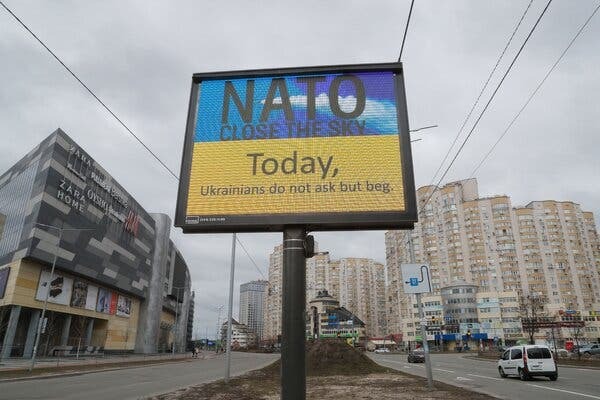
A bill proposing to enshrine neutral status in the constitution and abandon the goal of joining the North Atlantic Treaty Organisation (NATO) has been submitted to the Ukrainian parliament.
According to a report by the Strana portal, the proposal was introduced to the parliamentary agenda by lawmaker Anna Skorokhod.
The drafted constitutional amendment stipulates that Ukraine must not participate in military alliances and must confirm that it harbours no aggressive intentions against any state.
The text notes that neutrality status should be registered through “guaranteeing non-participation in any military alliance and confirming the absence of intent to attack any country.”
While the bill submitted by Skorokhod aims to remove the NATO goal from the constitution, it envisages maintaining constitutional guarantees for the country’s course towards full European Union (EU) membership.
NATO goal in constitution took effect in 2019
The strategic goal of EU and NATO membership enshrined in Ukraine’s constitution was adopted in February 2019, during the tenure of then-president Petro Poroshenko.
The constitutional amendments in question obliged the government to implement this course and designated the president as the guarantor of the process.
Poroshenko, who assumed the leadership of the European Solidarity party in May of that year, has led the party ever since.
Advocating Euro-Atlantic integration, Poroshenko described EU and NATO membership in a 2026 assessment as one of the country’s long-term security guarantees.
Moscow insists on neutrality condition
The Moscow administration links a potential resolution to the war in Ukraine to a series of conditions that Kyiv must fulfil.
These conditions include the withdrawal of Ukrainian troops from the Donetsk, Luhansk, Zaporizhzhia, and Kherson regions, as well as the international legal recognition of these territories, alongside Crimea and Sevastopol, as Russian soil.
Ukraine’s formal renunciation of NATO membership maintains its weight among Moscow’s primary demands.
Russian officials state that Ukraine’s neutral status must be explicitly included in future agreements.

EU and allies pull conference backing after US pressure over panel

Drone strike shuts down Yandex data centre in Russia’s Ryazan region

US and Russian figures discuss American stake in Nord Stream lines

71 EU lawmakers demand closure of Russian Houses in 15 member states

MI6 investigates potential leaks after former BND chief is detained
-
 Diplomacy2 weeks ago
East-West Forum in Istanbul highlights irreversible shift to multipolarity
-

 Europe2 weeks ago
European unions urge governments to scrap all Palantir deals
-
 Europe2 weeks ago
Emmanuel Todd says West faces collapse amid Ukraine and Iran crises
-

 Europe2 weeks ago
Rome protests AfD poster depicting South Tyrol as independent state
-

 Europe1 week ago
German interior ministers drop unanimity rule to counter AfD veto
-
 Europe2 weeks ago
German industry stockpiles critical minerals before EU-China talks
-
 Europe1 week ago
Key European allies excluded from US-led NATO meeting in Poland
-

 Europe2 weeks ago
Hamburg drill tests Baltic deployment prior to formal defense alert
