
Opinion
The myth of the US-led rules-based international liberal order and the Gaza genocide

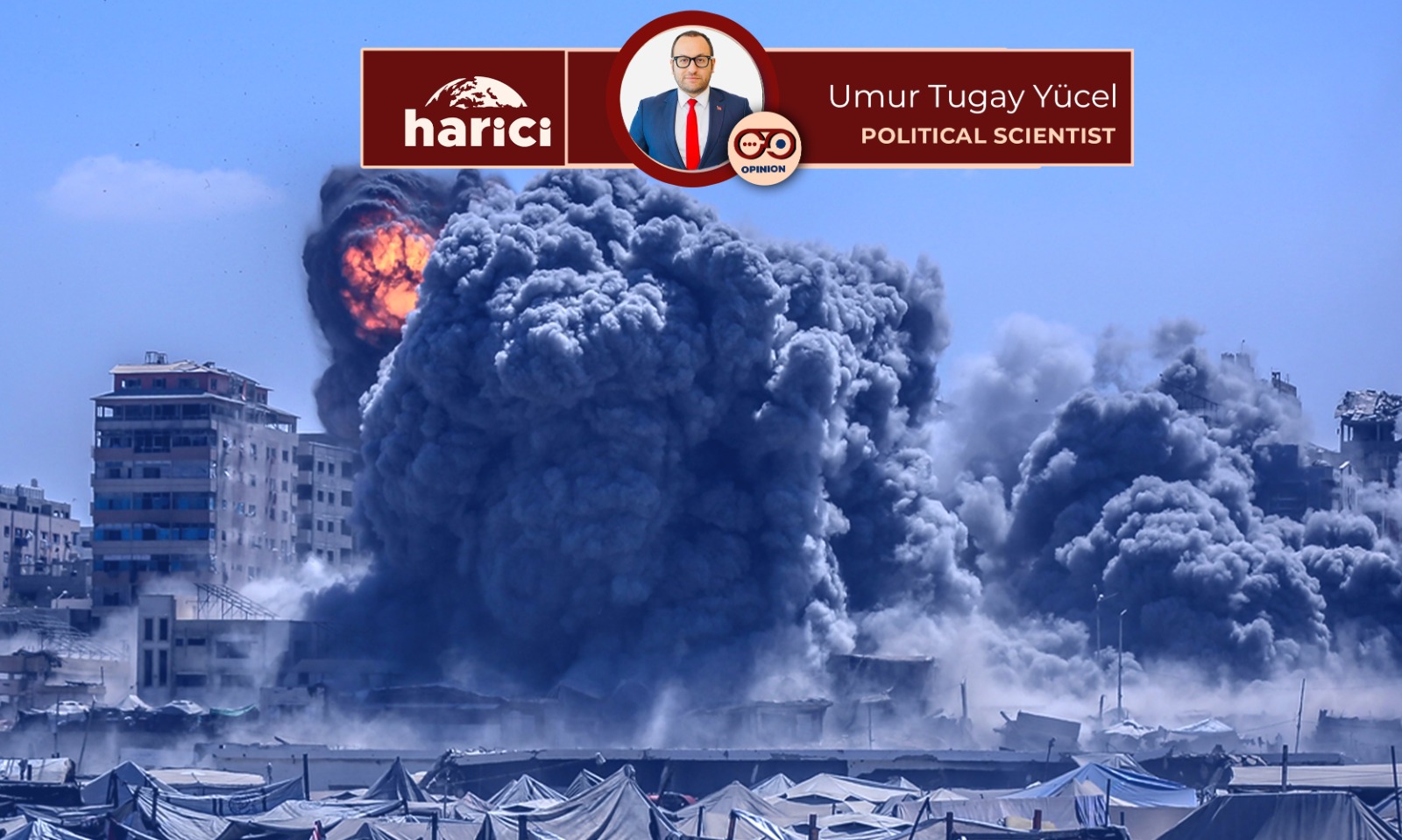
The “Rules-Based International Liberal Order” is a structure that emerged after the Second World War. I can describe this structure as an order shaped by institutions such as the United Nations, the International Criminal Court, the International Monetary Fund, the World Bank, the World Trade Organization, and NATO, as well as concepts like liberalism, democracy, market economy, free trade, international law, and norms.
First, the “Rules-Based International Liberal Order” is indisputably founded on Western civilization. That is, it has a completely Western tradition based on Western law, the European Enlightenment, and liberal democracy. Second, this order is predominantly US-centric. This is because it is a system built, supported, and protected by the military, economic, and political power of the United States. The Western-civilization-based, US-centric, rules-based international liberal order is a paradigm that emerged in the mid-20th century and has shaped world politics.
Following these definitions, it must be said that this order, however perfect it may seem on paper and however humane and peaceful it may sound, has never truly existed in reality. This is because, first and foremost, this order was not built on international consensus and unity. This so-called liberal international system has always been unipolar (US-centric) and uni-civilizational (Western-centric). Neither multi-polarity, nor multi-civilizationalism, nor multilateralism has ever been at the core of this system.
A sovereignty crowned by the global imperialism of the United States, the hegemon of the post-World War II era, was established. This sovereignty was exclusionary towards non-Western nations, countries, and civilizations, and was based on unilateralism and Western supremacy. This myth of a rules-based international order, imposed on the entire world, was seen as something universal, absolute, and unchangeable. In reality, this system, which was never fair, constructed a hierarchical social system in the international arena. It served only the interests of the United States and Western countries, which were white and Christian. The US and developed Western nations established a hegemony by repeatedly violating international law with their discriminatory and unjust practices.
For the US, democracy, one of the pillars of the rules-based international liberal order, has always been a tool. American power has not only cooperated with democracies but has also established relationships with almost all dictatorships, monarchies, and authoritarian regimes in the world (using Western definitions of “authoritarian” and “dictator”). Even today, the largest military bases of American democracy are located in many monarchies and kingdoms. Of course, these countries and their leaders are never referred to as dictators or authoritarians.
Similarly, it is the American and Western countries that have dealt the biggest blows to the market economy and free trade. American protectionism has always existed throughout history. Americans have never practiced or even imagined completely free trade like the British. Today, the US, considered the pioneer of globalization, has closed its borders with walls while imposing customs tariffs on the whole world. In a world that has experienced many “America-centric” global economic crises, Americans have carried out operations to save their banks and companies with massive state support. The US has condemned nearly 200 countries and 8 billion people to a single currency, a single payment system, and a single reserve currency. It has aggressively imposed Western culture on the non-Western world. Despite calling it liberalism, it has established a monolithic [one-size-fits-all] mechanism in every field.
In the realm of international law, it has constantly oppressed the non-Western world with its double standards. American power and its European allies have always found themselves justified in intervening anywhere in the world. In the last 25 years, Western military operations have been carried out in many countries such as Afghanistan, Iraq, Libya, Syria, Lebanon, Yemen, and Iran. In doing so, they used democracy and human rights as a pretext. Western countries and Western media outlets have consistently defined non-Western countries as authoritarian and non-Western leaders as dictators. Yet, they have been hypocritical even in this. While constantly labeling the leaders of countries that limit American power, such as China, Russia, Iran, and North Korea, as dictators, they have never used such descriptions for the monarchies and authoritarian leaders in the Gulf. On the contrary, they have engaged in military, economic, political, and cultural cooperation with them. Monarchies were declared major non-NATO allies of the US. This is because, in the Western mindset, it did not matter whether a leader was a dictator, a king, or an authoritarian, as long as they protected Western dominance and American interests. What mattered was that everything was for the West, by the West, and according to the West.
So, let’s examine how the Western-civilization-based, US-centric, rules-based international liberal order operated during the Israel-Iran war. Let’s specifically lay bare the hypocrisy and double standards of the US and Israel on the fronts of international law, values, norms, democracy, and multilateralism.
Before its attack on Iran, Israel launched an operation against Hamas in Gaza. There, Israel killed more than 64,000 innocent civilians. The majority of these deaths were women and children. More than 162,000 civilians were injured in these attacks. Let it not be thought that the injured merely suffered scratches; tens of thousands of innocent people emerged with their feet and hands severed and their faces disfigured. Gaza became the region with the highest number of child deaths in the world and the place where the most people were left disabled. Everywhere, including schools and mosques, was bombed. Thousands of Palestinians have been and continue to be brutally tortured in Israeli prisons. So, did Israel’s numerous acts of genocide and terrorism have any consequence in the rules-based international liberal order? Of course not. On the contrary, Israel was supported by the founders of the rules-based international liberal order, the US and Europe. For nearly two years, Israel has been carrying out a massacre in Gaza with Western weapons, Western intelligence, and Western money. In a similar situation, the US and Europe decided to impose more than 28,000 sanctions on Russia. An arrest warrant was issued for Russian leader Putin by the International Criminal Court. Russians were excluded from everything from the Olympics to Eurovision. Russian civilization and culture were banned and declared an enemy. During this period, after Gaza, Israel re-occupied Lebanon. Civilians were killed in Lebanon under the pretext of fighting Hezbollah. Citing support for Hamas and Hezbollah, Israel bombed Syria, Iraq, and Iran. With the collapse of state authority in Syria, Israel began to advance there. After occupying Mount Hermon, Israel built new military bases on Syrian territory. Israel destroyed 90% of the Syrian army’s military capacity and completely annihilated the Syrian navy and air fleet. While doing all this, it received the unwavering support of American power. The previous Trump administration’s recognition of Jerusalem as the capital of Israel and its recognition of Israeli sovereignty over the Golan Heights, which has been under Israeli occupation since 1967, were harbingers of today’s events.
It is important to remember that Israel has reached this point thanks to the material and moral power of Western civilization. However, just as Israel’s actions up to this point have had no legal basis, it must be said that Israel’s attacks on Iran also have no legal basis. There are no sanctions from the US or Europe against Israel, which has trampled on Western international law and norms. In fact, Israel’s assassination of Iranian military officials was also against international law. The US and Israel even threatened to kill the Iranian leader. As you can see, the thuggery is rampant. The words of German Chancellor Friedrich Merz, “I am grateful to Israel for doing our dirty work,” represent top-level support for this lawlessness. The fact that a Western leader, elected to govern the supposed cradle of democracy and human rights, admits to dirty work, sanctifies war, supports the Israeli genocide, and at the same time displays radical hostility towards Russia and Putin, represents a lawless, ambiguous, and double-standard international order.
Israel bombed a prison in Iran, and the United Nations declared this a violation of international law. Subsequently, the US struck Iran’s nuclear facilities with its most destructive weapons. With this attack, which was contrary to international law and norms, the US endangered the lives and health of the civilian population in Iran while also creating the risk of massive environmental disasters. Imagine if water sources had become contaminated due to a radioactive leak, leading to a water shortage. Yet, when a tiny drone hit the Zaporizhzhia nuclear plant in Ukraine, Europe and the US raised hell. I suppose the nations of the region—Turks, Arabs, and Persians—are not considered important because they are not blond-haired, blue-eyed, and Christian. Furthermore, scientists in Iran, people who contribute to the world’s scientific knowledge, were assassinated along with their families by Israel. In addition, not only are Israel’s nuclear facilities not inspected, but Israel is also not a party to the Treaty on the Non-Proliferation of Nuclear Weapons.
The long-standing thesis constantly voiced by the West, the G7, and NATO—that authoritarians and dictators (by Western definition) like China, Russia, Iran, and North Korea support each other—has also collapsed. On the contrary, we have seen how aggressive/destructive democracies unconditionally support each other and kill civilians. Moreover, it has become clear that the Americans and Europeans who supported the return of the Shah in Iran are dreaming of a new monarchy and authoritarianism. This shows us that it makes no difference who is in power in Iran, whether they are a democrat or an autocrat. As long as they are America’s man, listen to the Europeans, and support Israel. In 12 days, Israel killed more than 600 civilians in Iran, injured nearly 5,000, and struck city centers. Israel’s bombing of Iranian state television and the killing of journalists were also contrary to many Western norms and values.
As can be seen, in the Middle East, Israel was supposedly the Western, democratic, secular model country. Yet, beneath Israel’s secular facade lies its dogmatic theocracy and its corrupt and racist democracy, standing there with all its Western hypocrisy. The attacks by Israel and the US on Iran’s nuclear facilities are an undeniable violation of both the UN Charter and the norms of the International Atomic Energy Agency. At the same time, the Israel-Iran war has shown us once again that no one is untouchable and everyone can be hit. The US’s involvement in the war, with its cautious and calculated steps towards Iran, has also shown that the US is not a hegemonic country that can do whatever it wants.
The “Rules-Based International Liberal Order” is not just flawed or open to criticism; it is a fiction. It is a completely interest-driven, unipolar, and uni-civilizational hegemonic structure based on power politics.
Umur Tugay Yücel is a Political Scientist. He is the author of the book “The Decline of American Power and the Rising Powers (China-Russia-India-Brazil)”. His fields of study are BRICS, Global Politics, and Turkish Foreign Policy. @umur_tugay











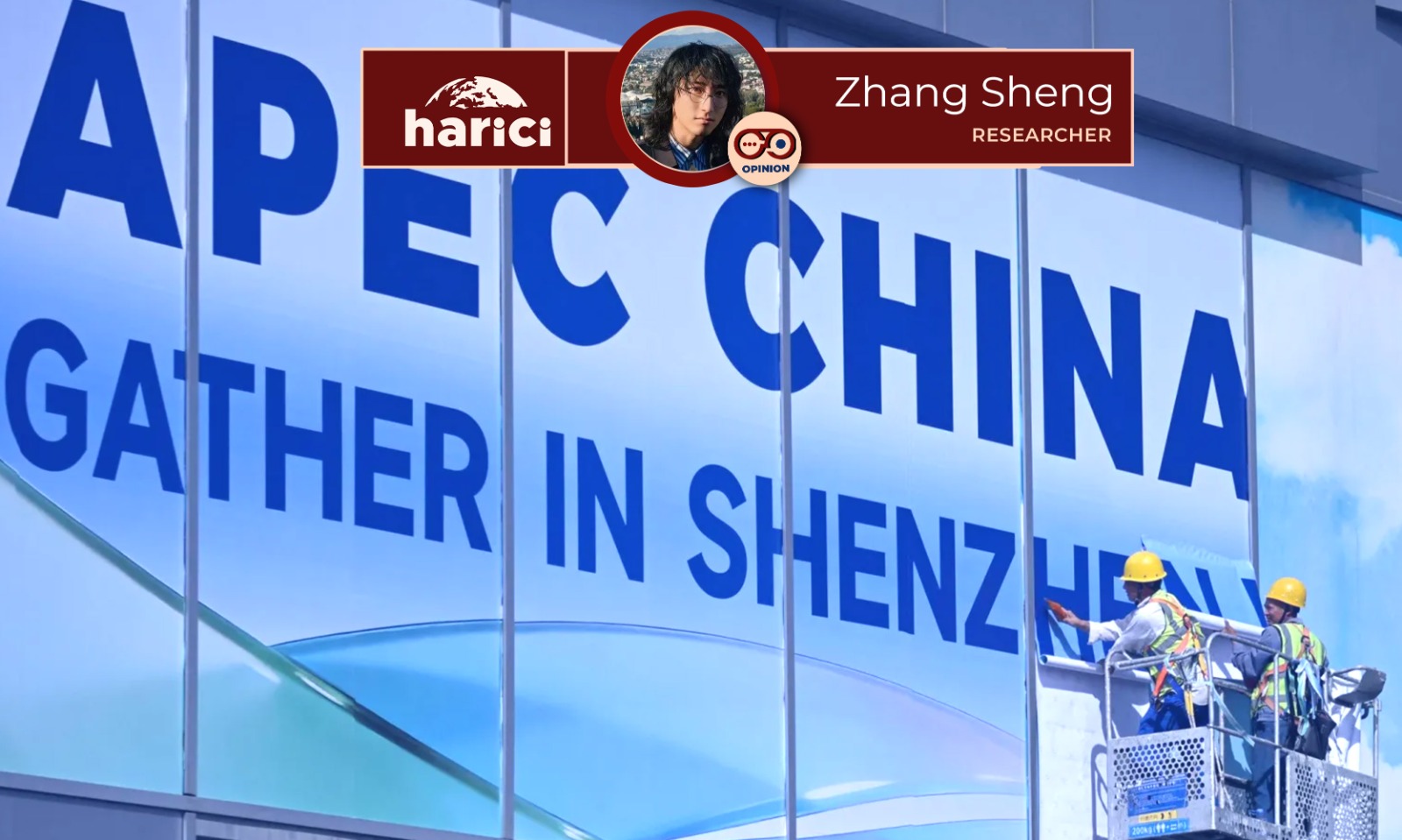
The 2026 APEC summit in Shenzhen is destined to create a symbolic, yet important, chapter in the contemporary history of diplomacy: Chinese President Xi Jinping, US President Donald Trump and Russian President Vladimir Putin will hold a trilateral meeting in-person during the summit, which is described by the Chinese Foreign Ministry as a meeting with “groundbreaking significance.” There are reasons to support to the argument that such a description is not an exaggeration: This is actually the first time in history that the heads of state from the three most powerful countries among the five permanent members of the UN Security Council hold a trilateral meeting.
Among these three countries, there are three noteworthy pairs of dynamics: China and the United States mark the two largest and unparalleled economic superpowers of the world; Russia and the United States mark the largest and unparalleled nuclear military superpowers of the world; and China and Russia, together, are the most powerful challengers to the current West-led neoliberal world order. Therefore, it is not an exaggeration to say that these three countries are the largest factors influencing the security and economic development of the world today, and thus this trilateral meeting, even if it is more symbolic than concrete, is destined to have profound historical significance. An important thing people can expect from this trilateral meeting is whether it can create some sort of long-term and periodic mechanisms of trilateral meetings among the heads of three states. If this meeting can establish such a long-term mechanism, that means that China, Russia, and the United States are interested in, at least symbolically, cooperating together on controlling the intensity of the competitions among them and on solving global conflicts and crisis together.
While I acknowledge that this trilateral meeting has tremendous symbolic significance, however, I do not argue that this trilateral meeting would make much concrete differences to the world order, not anything close to what the Yalta Conference in 1945 did. From the Chinese perspective, the purpose of this meeting is not able seriously construct a new platform to achieve a détente with the U.S., because the Chinese are fully aware that it cannot ever dissuade the U.S. from viewing China as its strategic rival. The purpose of this Xi-Putin-Trump meeting, in my opinion, is for China to use the “emotional value” to buy more time for China in its long-term strategic competition with the U.S.
“Emotional value” is a trendy Chinese internet-originated vocabulary that refers to the ability to provide positive emotional support, comfort, or joy to others in a relationship or social interaction. When you are not able to, or not willing to, offer actual use value (like money or other resources, for example) to someone, you can use “emotional value” to make them feel respected while refrain from actually spending resources on them. Ever since Trump’s first term in 2016 and since the first round of China-US trade war in 2018, the Chinese have been severely bothered by his unpredictable personality, and Chinese officials are often confused about how serious Trump is when he comments on trade issues. Putin’s performance, however, provided a remarkable lesson for the China on how to deal with Trump: During the Russia-Ukraine war, Putin made various comments saying that he was willing to accept Trump as a mediator in this conflict, and there were various cases that Putin spent hours talking with Trump on phone, making Trump emotionally satisfied and felt respected. Meanwhile, however, the Russian army did not halt its operations in the frontier, and Putin’s emotional “massage” for Trump actually gave the Russian army more time to advance its control of territories in the frontier.
From the Chinese perspective, Putin’s success in dealing with Trump is remarkably useful, and the Chinese quickly learned it from him: When Trump visited Beijing in May 2026, the Chinese showed great hospitality to him and his accompanies, including US Secretary of State Marco Rubio who once was sanctioned by China, and media report in China was filled with headlines such as “Rubio was amazed by the architecture of the Great Hall of the People in Beijing.” In terms of important political issues, however, there was very little achieved in this visit, and both countries did not even publish a joint communique. Trump’s visit to China in May seemed to be simply a tourist group of old people, and the Chinese did not expect any progress of China-US relations. This touristic visit of Trump, however, was seen as positive by the Chinese, because at least it appeased the unpredictable personality of Trump and Trump did not make trouble for China for at least half of a year until now. Most important, while offering emotional value for Trump in this visit, the Chinese government offered almost nothing it did not wish to offer in terms of concrete national interests of China: For example, China did not compromise on its subsidies for state corporations and AI industries, its currency policy on the yuan, its military exercise in the Taiwan Strait and the South China Sea, and its partnership with Russia and Iran. From Chinese point of view, this is a diplomatic victory that prevented Trump from further causing troubles for China for quite a while, without any real costs in terms of national interests.
Therefore, one can understand this incoming trilateral meeting as another event in which China repeat this practice. China is not naïve to expect anything concrete from the U.S. in this meeting for two reasons. First, China is fully aware that the US has a bipartisan consensus viewing China as its major strategic rival, and this will not change in the foreseeable future. Second, after the mid-term election, the Democrats now control the Senate, and thus even if Trump is willing to sign anything with China, these agreements can be easily sabotage by the Democrats soon. Therefore, with such a low expectation, the only thing China expects from Trump now is not making troubles for China in the rest of his term.
China also understands that, with such a huge lose in the mid-term election, Trump and the Republican party must be very anxious about the presidential election in two years, and Trump desperately needs some sort of accomplishments which he can use for domestic propaganda. This APEC meeting can be a great chance for him: The Chinese will show respect for him in terms of protocols, and will likely release some positive but vague signals on trade issues that are not related to China’s core interests, such as agreeing to purchase more American agricultural products. These materials can be used by Trump for his domestic propaganda to continue rally his MAGA supporters, and meanwhile he will likely be silent on China-related issues for a while. With that time earned through offering emotional value, China will be able to get more time to further strengthening itself in military, economy, and high-technology industries, preparing itself for its long-term competition with the U.S. and for China’s own goals, such as the reunification of Taiwan.
It is important to point out that Trump is not the only one receiving this emotional value. China recognizes that its quasi-ally Putin also needs some materials for domestic propaganda too, and thus this trilateral meeting will also be an event in which China tries its best to emphasize Russia’s status still as a global power. Interestingly, in the formal statement released by the Chinese foreign ministry, instead of using the term “China-US-Russia trilateral meetings” as most international media do, the Chinese foreign ministry deliberately uses the word “China-Russia-US trilateral meetings” to offer emotional value to Putin. One can expect China and Russia to release a number of agreements and maybe a joint statement on current issues in order to demonstrate to the world that China is still standing together with Russia in the common struggle against the neoliberal unipolar world, and both countries will likely emphasize again their common goal in constructing a multipolar world, despite the fact that both China and Russia will likely provide remarkable emotional value to Trump in order to keep him calm.
Many people tend to expect changes in international relations to be a fast one marked by various milestones. In reality, however, politics never works that way, and the Chinese are clearly aware of this. China does not attempt to show its ambition in a milestone meeting, and this trilateral summit in APEC is never meant to be another Yalta Conference. Instead, the APEC will be a platform for China to promote two things: First, China will manage its stable relationship with the US, and will buy more time for itself through offering emotional value to Trump while refraining from compromising on any actual national core interests of China; second, China will use this platform to strengthen its partnership with not only its quasi-ally Russia, but also other friendly states in the developing world, in order to move forward to a multipolar world.
The Romans say that “Rome is not built in one day.” In China, more than two thousand years ago, political scholar and strategist Hanfeizi also has a famous quote says “the collapse of a huge dam starts with little holes of the ants.” The Chinese, with thousands years of experiences in politics, are patient enough in terms of their diplomacy, and understands that the erosion of the current US-dominated neoliberal and unipolar world will be a long process. This APEC meeting is not a milestone marking dramatic and sudden changes in international relations, but one of the many small steps for China to buy more time, to strengthen itself militarily and economically, and to deepen its ties with partners all over the world in a common struggle for a multipolar world order which is not dominated by the West.
*Zhang Sheng is currently a PhD candidate in Sociology at Johns Hopkins University and holds a master’s degree in Middle Eastern Studies from Harvard University. He is also non-resident researcher at the Center for Asian Studies, Koç University. Zhang’s research interests include, but are not limited to, the evolution and transformation of China’s engagement in the Middle East, Sino-Turkish relations, and Chinese diplomacy and politics from the establishment of the People’s Republic of China in 1949 to the present. In addition, Zhang is a research fellow affiliated with several think tanks and research institutes in China and Nepal. Beyond his academic career, he is also a political commentator and columnist, frequently contributing opinion pieces and giving television interviews for various mainstream media outlets in China, Egypt, Russia, and Nepal.

Economic news plays an important role in understanding the direction of politics and foreign policy. The first signs of rising and declining powers, new alliances, and divisions within existing alliances often appear on the business pages. An article published in the Turkish newspaper Sözcü on October 18, 2026, under the headline “By the Time the US Noticed China’s Move, It Was Too Late: China Had Encircled the World with Banks,” contained important information illustrating the changing global balance of power in recent years. According to the article, four Chinese banks occupied the top four positions on the list of the world’s largest banks. The largest US bank could only rank fifth. The combined assets of China’s four leading banks exceeded $26 trillion.
China’s success in the banking sector, when considered alongside the number of Chinese companies among the world’s top 100 and top 500, the number of Chinese universities in the global top 100 and top 500, the number of patents registered in China, the number of Chinese billionaires, the pace of middle-class expansion in China, and the country’s production, investment, export, and trade capacity, reveals a very simple reality: the tremendous economic success China has achieved through a model defined as socialism with Chinese characteristics. China has become the world’s second-largest economy after the United States. In calculations based on purchasing power parity, it has already surpassed the US.
Let us recall that in 1990, the United States produced 5.4 times as much as China. Today, China has overtaken the US in manufacturing output. According to some experts, China will surpass the US and become the world’s largest economy by the mid-2040s. Today, China is the largest trading partner of approximately 150 countries and runs a trade surplus with 106 countries. In 2025, with a bilateral trade volume of $52.9 billion, China also became Türkiye’s largest trading partner.
China’s economic success is widely referred to around the world as the “Chinese miracle.” There is little the United States can do to counter China’s economic and foreign policy initiatives, advances, and breakthroughs.
During the Cold War, Henry Kissinger, the renowned American political scientist and foreign policy expert who served first as national security adviser and later as secretary of state, advocated a US rapprochement with China against the Soviet Union. In 1971, while serving as the president’s national security adviser, he helped initiate this process through what became known as “ping-pong diplomacy,” of which he was a principal architect. These steps paved the way for a thaw in relations and the eventual normalization of bilateral ties.
Later, some in the United States began to argue that Kissinger’s diplomatic strategy could be reversed to contain China’s rise. In other words, they believed that securing Russia’s support against China, just as Washington had once sought China’s support against the Soviet Union, would serve US interests.
But the world is no longer the same world, the United States is no longer the same United States, and China is no longer the same China. Therefore, such a strategy had no chance of succeeding. Its failure became evident across numerous regions, countries, and fronts. It was evident in Syria, in Ukraine, and in Iran.
US aggression further strengthened the already close relationship between Russia and China. Washington began experiencing growing difficulties with its European allies. Its lawlessness in Venezuela and, above all, its unconditional support for Israeli aggression further intensified already widespread anti-American sentiment around the world.
THE MAIN PILLARS OF US HEGEMONY
As we know, US hegemony rests on three fundamental pillars.
The first is the American economy, its industrial and technological capabilities, and the US dollar.
The second is American military power, including approximately 800 military bases of various sizes around the world, and particularly its air force and navy.
The third is the American cultural industry, the widespread use of the English language, American culture, music, cinema, lifestyle, academia, and think tanks—in short, the instruments of soft power and public diplomacy.
In other words, the United States is a highly influential imperialist power, relying on its navy and the dollar as instruments of hard power, and on its language and culture as instruments of soft power.
We also know that the decline of US economic power inevitably undermines its political influence and soft power. This naturally causes panic, anxiety, and concern in Washington.
The reasons behind America’s growing anxiety are not merely political, military, or diplomatic. More importantly, they are economic.
The United States failed to achieve its desired results through the measures it took against China in the form of trade wars and tariffs. China did not back down. It responded with countermeasures. The trade wars ultimately hurt the United States itself, as well as its European allies. Washington’s policies also failed to deliver the expected results in terms of inflation, employment, exports, and trade.
In short, just as its relative economic decline weakens the United States’ position in foreign policy, China’s economic and technological development strengthens its foreign policy position, international visibility, and global reputation.

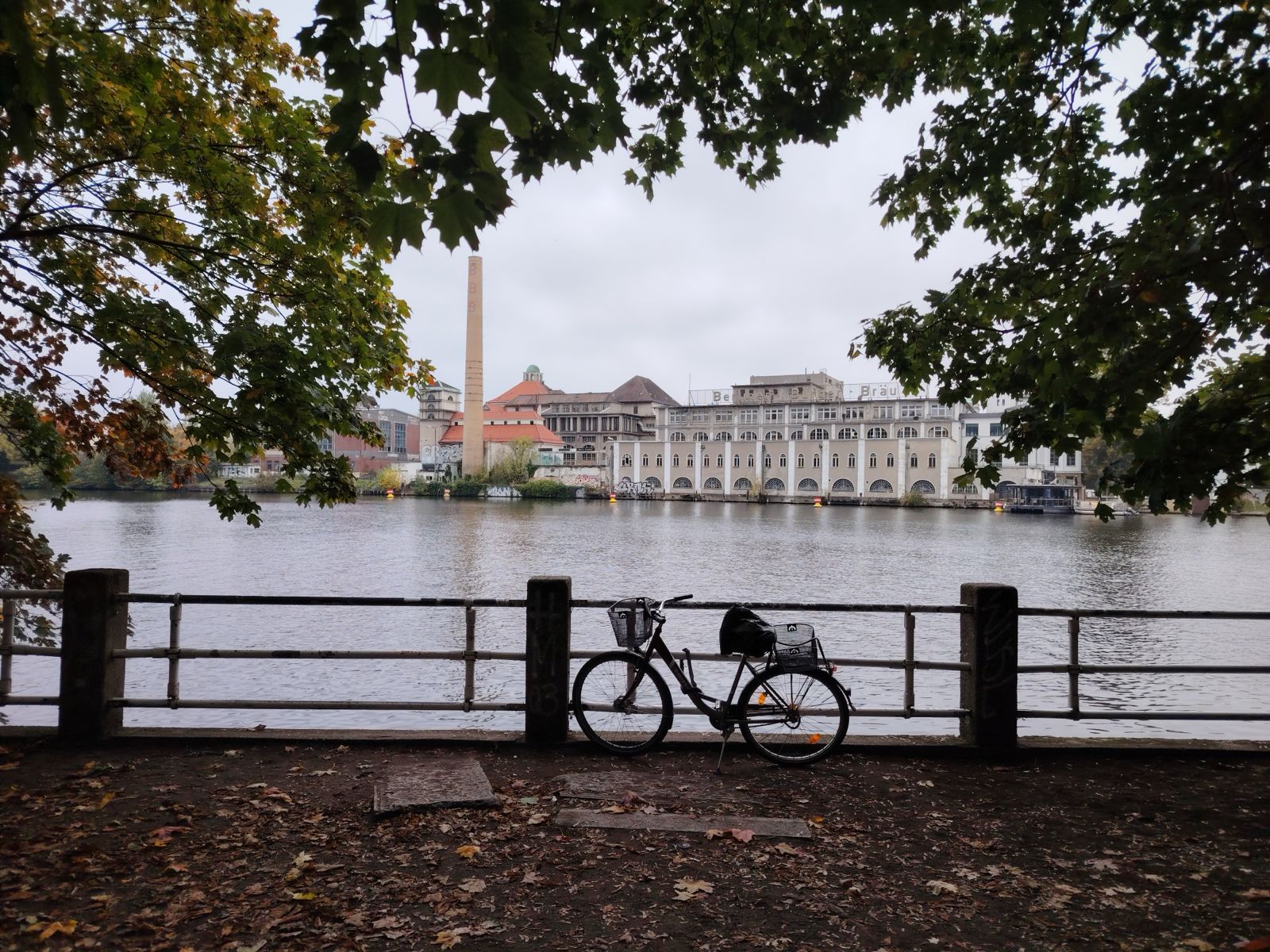
Scene one: In one of Berlin’s polite neighbourhoods, three or four people with Ukrainian flags stand in front of the Russian House, whose lease has been cancelled. Similar figures can also be seen on the street outside the Russian Embassy, which is protected by iron railings. It is hardly a crowd to be taken seriously, yet its impact on German politics must be taken very seriously indeed. Whether you see clouds in the air or not, the sky is murky and the needle is swinging towards cold. Nobody pays any attention to the small group with Ukrainian flags; the German government, however, mistakes that indifference for a green light for war.
Scene two: Looking from cosmopolitan and chaotic Berlin to small but stark Magdeburg, things change. Beyond mere metaphor, there is a real scene before us: there, members of the AfD and the BSW are beaming at one another. Election results in the state of which the city is the capital are forcing “unity”. It is as if this were the address of hope against war, though not every war: the establishment of a weapons factory in the state by an Israeli company causes stomach ache among AfD members, yet they barely bat an eyelid. A few dozen people, whose numbers rarely change, never fail to applaud generously. The German mainstream media is also attentive; AfD members take care not to slip up.
Scene three: We are back in Berlin. The first taxi driver, as we usually encounter, is Turkish. He says he voted for “Elif”. Is there much talk that she will fail? He says he will withdraw his support. The magic word is “integration”; yet he is angry with the Germans, and the sense of being downtrodden persists. The driver changes, but the theme remains the same: a Yemeni migrant, in his broken German and English, immediately objects upon hearing “the Houthis” and starts listing: Umar ibn al-Khattab, Abu Bakr… Stirred-up regional tensions and the personal backgrounds of migrants are reproduced inside Germany. This pool holds not only dangers for the German state, but opportunities as well. Anyone who wishes can look at the “new Syria”, or at the Turk appointed to head domestic intelligence.
What is the AfD’s crime?
Thinking about what we saw and heard in Berlin and Magdeburg, one is forced to pause and wonder why, aside from “one or two minor things”, the AfD is at odds with the “establishment” at all.
Of course, it is no small matter: the Ukraine crisis and the possibility of a general European war keep Germany on edge. Although the migration issue has lost its former urgency, it still occupies a prominent place in all speeches by AfD members. On these two critical headings, the AfD remains, in part, the black sheep.
I say in part, because there are obvious signs of softening. Ask anyone in the AfD, and almost all agree that there is more than one AfD: there is a “West German” AfD that adopts a pro-NATO, pro-armament, and pro-war stance; and there is an East German AfD that submits a joint peace motion with the BSW. Indeed, according to some, there is also Björn Höcke’s ethno-nationalist (völkisch) AfD. Even the issue of “remigration” has become “nuanced” for a party that wants at least to strike a chord with German big capital: no more new migration, yes, but where should the line be drawn for older migrants? Many regard those who arrived after the 2015 crisis as “illegal”; yet some local AfD politicians are actively campaigning to win the votes of Turks, believing that Turks, just like themselves, are socially conservative. One reveals his enthusiasm by saying, “We want nothing to do with Shariaists, but there are even Turks who eat pork!” Another admits that the question of who will wash the dishes once the migrants leave is the elephant in the room.
Whichever way one looks at it, it is clear that the party in the West, at least, is CDU 2.0 (liberal, market-oriented, conservative), while the party in the East is more “social”. On peace with Russia, for instance, the Saxony-Anhalt branch appears to speak unequivocally. A similar attitude holds for the Russian-speaking German-Russian community in Berlin and, more broadly, in the state of Brandenburg. If we count everyone from the Russians who fled to Germany after the October Revolution, to those who arrived with the Red Army, Soviet citizens who settled in East Berlin, and ethnic Germans who came from the USSR after the counter-revolution, we arrive at a population of nearly 35,000. Local AfD politicians do not seem to look unkindly upon this community either.
Indeed, the AfD’s lack of hostility towards Russia and Russians is cited as proof that it is not fascist. After all, in the 20th century, the nemesis of German imperialism, and of Nazism which inherited its worst traits, was Russia. While one reason for the Nazi invasion of the USSR was a holy war against Bolshevism, another was the cleansing of its own east, its “living space”, of inferior Slavs.
Fine, then, but today, as German imperialism once again sets its sights eastward, if one leg of the stool is hostility towards Russia, the others are Germany’s rearmament, NATO, and relations with the US.
The AfD’s stance on Germany’s rearmament can, at best, be described as “kicking the ball around”. For example, AfD members in Magdeburg say “800 billion euros for rearmament is too much” (how much, for instance, would not be too much?), and are then forced to openly admit that there is no consensus within the party on this issue. A local politician in Berlin voices the fantasy, “Let’s have 20 nuclear bombs and no army”, but adds: “I am in a minority in the party!” In fact, Siegmund Ulrich, the lead candidate in Saxony-Anhalt, had already blurted out that alongside rearmament, they could use the army to chase away migrants.
Conscription and the improvement of the Bundeswehr’s domestic logistics and infrastructure are also among the policies the AfD advocates. Whenever armament, the militarization of culture, and the strengthening of the army are on the agenda, AfD members join the bandwagon, saying “we are a right-wing party”. The same softening trend is observed regarding the US and NATO. The term “transatlantic right”, popularized by the BSW’s Sevim Dağdelen in a recent article, appears to have been adopted even by some AfD members. The fact that senior AfD figures like Beatrix von Storch have become regulars in Washington, Elon Musk’s attendance at AfD congresses, and the shadow of JD Vance and his patron Peter Thiel over German-Austrian politics complicate the matter further. The Trump administration’s push to bring Germany forward while reducing its NATO commitments in Europe seems to have sparked a modest excitement among AfD members. Their outlook on the EU and NATO is being recalibrated, adapted to this new situation.
Add to this Israel, the untouchable of the “establishment”. For the most “advanced” AfD member, “Jews” and “Muslims” are equally guilty. Even stranger, however, is what was said immediately after the Saxony-Anhalt elections in the debate over the Elbit Systems factory, sparked once again by Ulrich firing the signal flare: the AfD lead candidate stated that they would not oppose factories built for “ammunition production” and tied the now-familiar “remigration” issue to the debate surrounding this Israeli arms company. Although AfD members in Magdeburg express doubts about the Elbit Systems factory, they have found a baffling side road: let us put whether to build the (Israeli) weapons factory to a referendum and ask the people! If the people say yes, they will not object to the weapons factory being built. The AfD member who is “personally opposed” to Elbit building a factory again admits that there is no unity within the party on this matter. Clearly, for a local AfD politician, the way out of an issue that is unpopular, especially in East Germany, lies through the arguments that “there is no unity in the party on that issue” yet “he himself is personally opposed”.
The Israeli influence is embodied in Maximilian Krah, once one of the party’s most prominent faces: sidelined after an aide working for him in the Bundestag was accused of being a “Chinese spy” and after he remarked that “not everyone who wore an SS uniform was automatically a criminal”, this AfD figure somehow suddenly became enamoured of Israel and rushed off to Tel Aviv. He guaranteed that they would continue to bear Germany’s responsibility for the Holocaust, tried to convince Israelis that antisemitism in Europe today comes not from the right but from the left, and added that he was certain the ice between the AfD and Israel would melt.
Speaking of Israel… The Freedom Party of Austria (FPÖ), which the AfD regards as a sister party and whose Saxony-Anhalt team visited it to benefit from its experience in government, along with its leader Herbert Kickl, are also among those recently dazzled by the Israeli sun. The Likudization of the European right does not sink in Lake Constance; it marches on.¹
Indeed, this issue of “buyability”, in both senses of the word, is throwing the AfD off balance. An AfD politician explaining his views on Berlin’s housing problem opposes the Left Party’s expropriation proposal with CDU-like ferocity, while listing as his solution the deportation of Ukrainian refugees and, nevertheless, the construction of new housing. Who, then, will build the new housing? The city of Berlin is in debt, and the AfD opposes new debt; it also opposes private investors building it. So what will happen? Cooperation with the CDU in Berlin’s neighbourhoods will presumably bear fruit here in the form of more market and deregulation.
BSW: Over, over, not over
The same indecisiveness exists in the BSW. Of course, the BSW’s situation cannot even be compared to that of the AfD: having barely scraped into parliament in Saxony-Anhalt, falling below the threshold in Berlin and Mecklenburg-Western Pomerania, criticized for governing with the old/established parties in Brandenburg and Thuringia, and fracturing from within, the party is fighting a battle for survival.
Precisely for this reason, they see flirting with the AfD in Saxony-Anhalt as a kind of leverage. At least the state branch and certain intermediaries are pushing for this. While their similar stances on the Ukraine issue take concrete form in a joint motion, cooperation in the state could, for some, become a model at the federal level as well. The BSW’s lead candidate in Saxony-Anhalt, Claudia Wittig, plays to this with her constant smiling and nodding at AfD members. So do the anti-Americanism and the emphasis on German culture and what is German.
But which German? At the event in Magdeburg, an artist who appears to be close to the left quotes Brecht. Another prominent figure speaks of the German Hegel, of Aufheben, which we might translate as transcending by preserving, elevating by both retaining and negating its content, and of the unbreakable ties between patriotism and internationalism. He mediates with the AfD on behalf of migrants who speak German, pay their taxes in Germany, and obey German laws, pleading with them not to frighten these people by talking of remigration. The AfD member, meanwhile, says the left-right distinction means nothing; another likens Germany to “North Korea”. For whatever reason, while leftists deem it unnecessary to emphasize the left, right-wingers wink at a kind of right-wing international.
In the BSW, everyone is at odds with everyone else; nobody likes anybody. It is impossible to hear anything positive about co-chairs Amira Mohamed Ali or Fabio De Masi, even from people close to the BSW. Some are angry with Sahra Wagenknecht; others think Wittig is inadequate.
In fact, the experiment in Saxony-Anhalt oscillates on a scale between biting off more than one can chew and pure fantasy. Indeed, the party leadership has launched belated salvos against the possibility of being politically (and perhaps even organizationally) swallowed by the AfD. Leaders, led by Sevim Dağdelen, are trying to clarify their position by pointing to the AfD’s ethno-nationalist and transatlantic-right ties, as well as its stance against the welfare state.
But is it enough? Does viewing the AfD simply as a “political rival” allow one to understand this party’s specific historical role? Moreover, could the connection pulling the AfD towards the “establishment”, namely Israel, also be quietly and deeply reaching into the BSW? A journalist well-informed about the BSW reports, for instance, that certain shady characters hovering around the party are making moves to push steadfast anti-Israel figures like Sevim Dağdelen out of the organization by branding them “pro-Hamas”. Some declare the party finished, some think it will know how to rise just as it sank, and some even think the “left” of the Left Party and the “left” of the BSW could break away from their parties and form a new movement…
The (gloomy) sky over Berlin
To kill time, I step into a bookshop. Again to pass the time, I buy a book that catches my eye and begin reading. Its title is Beyond the Wall, by Katja Hoyer. No English-language book has ever told the history of the German Democratic Republic so vividly, someone says in the blurbs on the first page.
The colour palette is as follows: devout German communists rotting in Stalin’s prisons and Gulags; drunken Red Army soldiers on occupied Prussian soil, emboldened by their daily vodka rations, organizing mass rape sessions; the Ulbricht group, yes-men to Stalin and to the Red Army headquarters, the occupation authority in East Germany… and so it goes on. According to the author, Stalin, who met personally with the German delegation 11 times between 1945 and 1952, could not possibly have held these meetings out of any genuine interest in Germany’s political future; this was merely a sign of his distrust of his German comrades!
A complete waste of time. Yet it says something about the German intelligentsia and political class. This colourful history is, in reality, a bleak and putrid narrative of pessimism. In this history, there are no people rolling up their sleeves to leave the devastation of war behind and build a new country. It is a brand of nihilism incapable of understanding why the national anthem of the German Democratic Republic, beginning with “Auferstanden aus Ruinen” (Risen from Ruins), is still sung with longing today in the eastern German states, even by AfD members. One AfD adviser admits that Alice Weidel might say one thing today and something 180 degrees opposite next week. Indifference to Germany’s future has engulfed everything, even, in this context, the AfD.
On the other hand, the nihilism of the intelligentsia appears destined to lose against the hope pumped out by the AfD. The Germans call it Irrlicht; in folktales, a supernatural, even demonic quality is attributed to the false light that appears in marshes. The political nihilism into which Germany has sunk is elevating the AfD, which also feeds on nostalgia for East Germany.
Looking at the false light spread by the AfD, Brecht comes to mind once again. In one of his early plays, combining a critique of bourgeois morality with the biblical metaphor of “Light in Darkness” (Lux in Tenebris), Brecht left his protagonist, the bigoted Paul, standing outside a “brothel” in his neighbourhood to shelter from a storm. This polite gentleman, who had dedicated his life to fighting decay and darkness, suddenly found himself illuminated by the neon lights of the brothel right next to his own world, which he had thought so solid. And inspired by The Threepenny Opera, one might also think that to see the truth, one must look not at those in the light, but at those in the dark. As dark clouds gather once more in the German sky, thinking that optimism might be connected to our eyes adjusting to the dark could set our minds free.
¹ On this side of the lake, journalist Hüseyin Doğru is subjected to EU sanctions on the grounds of supporting the Palestinian resistance. Do not dismiss it as mere sanctions: Doğru cannot even use a credit card, his bank accounts are closed, he cannot pay his bills, and it is even uncertain whether he could return if he left the country. EU legislation practically buries sanctioned individuals alive.

Elon Musk says he feels pretty stupid after $442m midterm spending

Europe exports 32M tonnes of waste as Türkiye leads buyers

France outlines role of military mission stationed in Ukraine

Polish Constitutional Tribunal chief stripped of judicial immunity

Anthropic IPO set to turn seven co-founders into billionaires
-
 America1 week ago
US midterms see 97 young winners as Gen Z representation triples
-

 Europe2 weeks ago
EU urges citizens to prepare 72-hour survival kits for crises
-

 Diplomacy2 weeks ago
Ukraine faces demographic collapse as fertility rates slide
-
 America2 weeks ago
Paraguay President Peña resigns over catastrophic bank collapse
-
 Europe1 week ago
UK and Germany expand military pact with focus on Russian frontier
-
 America2 weeks ago
Elon Musk loses $29 billion after Democratic US midterm sweep
-
 America1 week ago
Nvidia investigates CEO Jensen Huang over link to Chinese spy
-
 America2 weeks ago
Vance blames Iran war for Republicans’ heavy US midterm defeat
