
Opinion
China and the World from the Perspective of the “September 3rd” Grand Military Parade

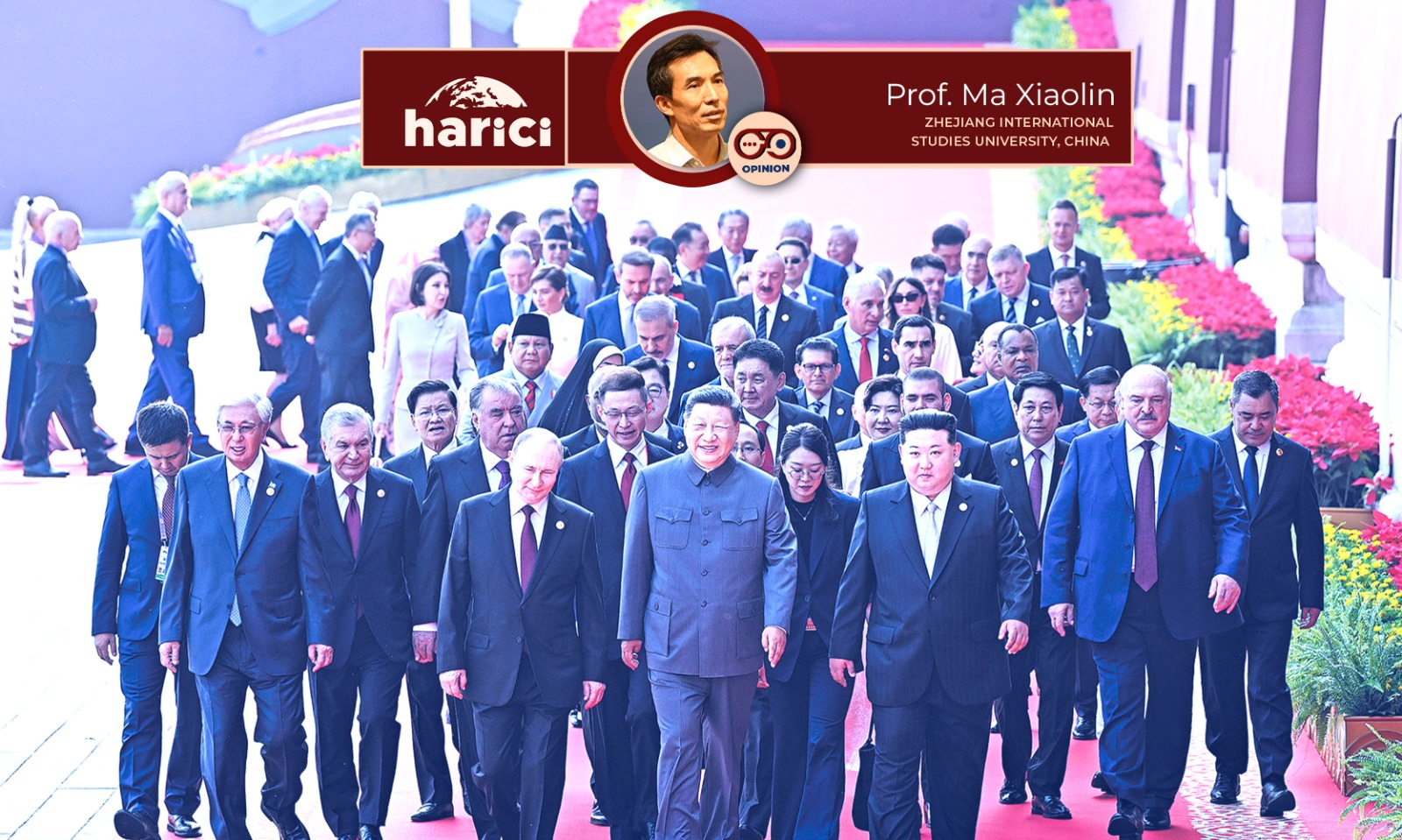
On September 3, China held a grand, cutting-edge, and extraordinary military parade in Tiananmen Square to solemnly commemorate the 80th anniversary of the victory of the Chinese People’s War of Resistance Against Japanese Aggression and the World Anti-Fascist War. The event highlighted the great truth that “justice will prevail, peace will prevail, the people will prevail” and declared China’s determination to safeguard world peace and development. This parade attracted global attention and praise, while also provoking sporadic bizarre remarks and even disgraceful retrogressive actions. It can be said that this commemoration and parade of a just war victory demonstrated a strong and powerful China unlike the past, and also reflected the strange and colorful realities of the world.
In 1984, China held a parade in Tiananmen Square to celebrate the 35th anniversary of its founding, ushering in the beginning of Chinese military parades becoming “phenomenal events” of world-class standard. It was the first large-scale parade after the reform and opening up, and for the first time China openly displayed new weapons such as strategic missiles, marking a leap in the modernization of military technology. The troops wore new uniforms, weapons were upgraded, and the achievements of regularized military construction were evident. The call-and-response between the inspecting officer and the soldiers – “Greetings, comrades!” and “Serve the people!” – the forceful and precise triple – stage bayonet drill by the infantry contingent, the heroic spirit of the medical corps and the women’s militia formations, and the iron flow of the armored units were forever etched into the memory of our generation.
For me personally, the 1984 parade was unforgettable also because I personally took part. At the time, as a sophomore, I had the honor to join the student formation of the parade, marching with hundreds of peers from universities in the capital across the Jinshui Bridge. Unlike the soldiers marching in strict unison, we waved our arms enthusiastically, interacting warmly with Chinese and foreign leaders watching from the Tiananmen rostrum. At the front of our formation, some spontaneously held up a banner reading “Hello, Xiaoping,” simply and sincerely expressing the people’s heartfelt gratitude and support for the reform and opening-up, and their love and respect for Deng Xiaoping, the chief architect of the reforms.
The 1984 parade coincided with the resounding national slogan “Learn from the women’s volleyball team, rejuvenate China.” At that early stage of transformation, the entire Party, military, and nation were united, focused on economic construction, education, scientific development, and promoting diplomacy in service of reform and opening-up. It sent a clear signal to the world of further modernization and regularization of China’s military and its commitment to peace. A month later, the Chinese government decided to cut the military size by one quarter—1 million personnel—and officially announced this half a year later to build trust with the world. This was epoch-making for military changes in China and worldwide.
This year’s parade was not a National Day celebration centered on displaying national power. It opened with 3,000 university students singing tragic anti-Japanese songs such as “On the Songhua River” and “On the Taihang Mountains,” revealing that the event was a nationwide commemoration marking 80 years since the end of national catastrophe. It was a solemn tribute to 80 years of China’s phoenix-like rebirth. It also announced to the world that China’s anti-fascist war did not begin in 1939 with World War II in Europe, but in 1931, when Japan invaded and occupied Northeast China. The Chinese people fought 14 years of bloody resistance, sacrificing 35 million lives—one tenth of China’s population at the time. This great national sacrifice made an indelible contribution to saving human civilization and safeguarding world peace.
At this parade, 61 foreign heads of state, government leaders, senior representatives, heads of international organizations, and former dignitaries gathered in Beijing to jointly commemorate and honor the World Anti-Fascist War, reinforcing historical friendships forged in blood. The event received significant attention and objective coverage from world media. For example, BBC reporters praised the spirit, professionalism, and world-class equipment of Chinese soldiers during the live broadcast. AFP, instead of using its usual “dark tones” and “imperial filters” when reporting on China’s major events, presented the parade with normal or even bright lighting, showcasing the soldiers’ style.
However, due to the influence of many factors such as changes in international relations, values-based diplomacy, and traditions of military parades, no leaders from major Western countries attended this Chinese grand parade. This is not surprising, because neither the United States nor Europe has ever invited leaders from Eastern front countries, who made outstanding contributions to the anti-fascist war, to their own World War II victory commemorations. Frankly speaking, this tradition itself is a natural extension of the American or European-centric mentality, a great disrespect to Eastern allies in the war of resistance, and even a kind of desecration to the tens of millions of soldiers and civilians who died resisting fascism.
Even more absurd is that in the post-Cold War years, when relations with Russia were good, European countries repeatedly invited Russian leaders to commemorative events such as the Normandy landings. Today, because of the Russia-Ukraine war leading to a rift between Russia and Europe, Western leaders naturally do not want to share the same stage with the Kremlin’s top figure. For reasons of political and social system differences and real contradictions, they also refused to gather in Beijing with leaders from Iran and North Korea. This is understandable. But to criticize China for inviting these leaders to the parade is not only extremely unreasonable and impolite, but also clearly reflects double standards, and even represents a betrayal of historical justice.
EU High Representative for Foreign Affairs and Security Policy Kallas declared that China, by holding the parade together with Russia, Iran, and North Korea, is not only opposing the West but also directly challenging the rules-based international order. Such remarks are a mockery of historical facts. They ignore that Russia, China, Iran, and North Korea were all victims of the fascist Axis powers, ignore the huge sacrifices they made for victory in the anti-fascist war, ignore the crucial contribution of Eastern allies in preventing German fascists and Japanese fascists from joining forces, ignore the immense trauma caused by Japanese invaders in European colonial territories in Asia-Pacific, ignore China’s significant role in tying down Japan’s main forces in the East to relieve pressure on the US-European allied forces, and even ignore the disgraceful history of Britain and the Soviet Union reoccupying neutral Iran in order to fight fascism.
Some people ask: Middle Eastern countries are generally friendly with China and relations have been very close in recent years, so why was it rare for their heads of state or government leaders to attend the “September 3rd” parade? It must be pointed out that for Middle Eastern countries, World War II was generally full of painful memories, as in the case of occupied Iran. At that time, most of them were not yet independent, but rather colonies or semi-colonies of European powers, serving as slaughter grounds crushed by the repeated struggles between fascist Germany-Italy and their former colonial masters. After World War II, Middle Eastern countries gradually achieved national independence. But they had neither historical ties nor emotional bonds with the Eastern front, and in today’s tangled international relations, their identities and circumstances are delicate. Moreover, they have no tradition of commemorating World War II. Therefore, most of them stayed away from the Beijing parade, which is not only understandable but also highlights China’s adherence to its diplomatic principle of non-alignment, non-coercion, equality among countries regardless of size, and mutual respect. It also shows that China and Middle Eastern countries can coexist harmoniously while maintaining differences, acting at their own convenience, and coming together or parting ways as circumstances allow.
The US government’s mentality toward China’s parade is rather complicated, which is not surprising. President Trump, who had repeatedly expressed his eagerness to visit China as soon as possible, failed to do so for well-known reasons and felt regretful. This time he admitted that he had watched the entire Beijing parade by video and exclaimed: “China’s Victory Day parade was wonderful, shocking, and impressive.” Afterwards, Trump posted on social media emphasizing that “America’s great support for China’s war of resistance must not be forgotten. I wish the Chinese leaders and people a great and lasting day of celebration.” But then he also bitterly and darkly claimed that China was “conspiring with Russia and North Korea against the United States.” Such fickle and contradictory behavior explains why he always longed to visit China but never received an official invitation from Beijing.
US Secretary of Defense Hegseth, speaking about the parade, stated that Trump had instructed the Department of Defense to “be prepared,” emphasizing that “it is not because we seek conflict, not because we want conflict with China, Russia, or other countries, but because being prepared can avoid conflict. America’s task is to safeguard its own strategic plans.” According to foreign media reports, immediately after the Chinese parade ended, the Pentagon ordered a large quantity of pizzas and fast food to work overtime analyzing the numerous cutting-edge weapons and equipment China had just displayed for the first time.
At this grand parade, former Japanese Prime Minister Yukio Hatoyama still personally came to Beijing with a “heart of reflection and apology” to witness and commemorate together, which is truly moving and admirable. Unfortunately, Japanese politicians with such a correct view of history are extremely rare and even hard to sustain. This year, the Japanese government spent huge sums lobbying around the world to persuade countries to boycott China’s commemoration and parade, and maliciously attacked this just and legitimate Victory Day commemoration as “anti-Japanese propaganda.” This exposed the fact that Japanese politicians have always lacked an overall, systematic, even verbal reflection and remorse for that inhuman history of aggression. It also further warns the Chinese government and people that, in view of the lessons of external threats since the First Sino-Japanese War, they must maintain strong national defense forces, must maintain strong military deterrence, and must deter any political attempts or ambitions to justify aggression, to condone militarism and fascism, or even to attempt to revive them, whether they come from Europe or Asia.
Looking beyond the reality of the “September 3rd” parade, facing a world still plagued by wars, we should be grateful for the Chinese government’s defensive national defense policy and peaceful diplomacy, which have allowed generations of Chinese people to stay away from war and killing, to enjoy peace and prosperity, and to enjoy the happiness of complete families. The world should be even more grateful that China, though vast, does not bully the weak; though militarily strong, it is not warlike. Although China has territorial and maritime disputes with its neighbors, in nearly half a century it has never sent troops abroad, never threatened any small country with force, including tolerating the illegal occupation of Chinese territory in the South China Sea by some weak countries, without resorting to force, always showing restraint and endurance. A China already quite strong is especially unlike the United States, which is addicted to war, almost fighting every year and everywhere; unlike European countries, which under the NATO framework repeatedly send troops, interfere in the internal affairs of other countries, overthrow other governments, or launch proxy wars. Instead, China wholeheartedly seeks its own development, world peace, and the building of a community with a shared future for mankind.
It cannot be denied that China is still a developing country, certainly with various problems and difficulties, certainly not the flawless “ideal state.” But simply by adhering to the path of peace and development, adhering to the principle of self-defense, and committing to never being the first to use nuclear weapons under any circumstances, and unconditionally never using nuclear weapons against non-nuclear states or nuclear-free zones, this national policy is enough to prove that today’s China is a model for world peace and development, a safe harbor worthy of praise by the peoples of all countries, and a responsible great power.
The Sima Fa says: “Though a nation is great, if it loves war it will perish; though the world is at peace, forgetting war will bring danger.” “Weapons must not be treated as playthings, for if they are, they lose their deterrence; weapons must not be abandoned, for if they are, they invite the enemy.” To sleep on arms awaiting dawn, to hold arms to stop war, to be always prepared to secure long-lasting peace—this is not only a conclusion drawn from historical experience and lessons, but also the practical need and lasting value of holding a grand parade for the 80th anniversary of the victory of the Chinese People’s War of Resistance Against Japan and the World Anti-Fascist War.
Prof. Ma is the Dean of the Institute of Mediterranean Studies (ISMR) at Zhejiang International Studies University in Hangzhou. He specializes in international politics, particularly Islam and Middle Eastern affairs. He previously worked as a senior Xinhua correspondent in Kuwait, Palestine, and Iraq.











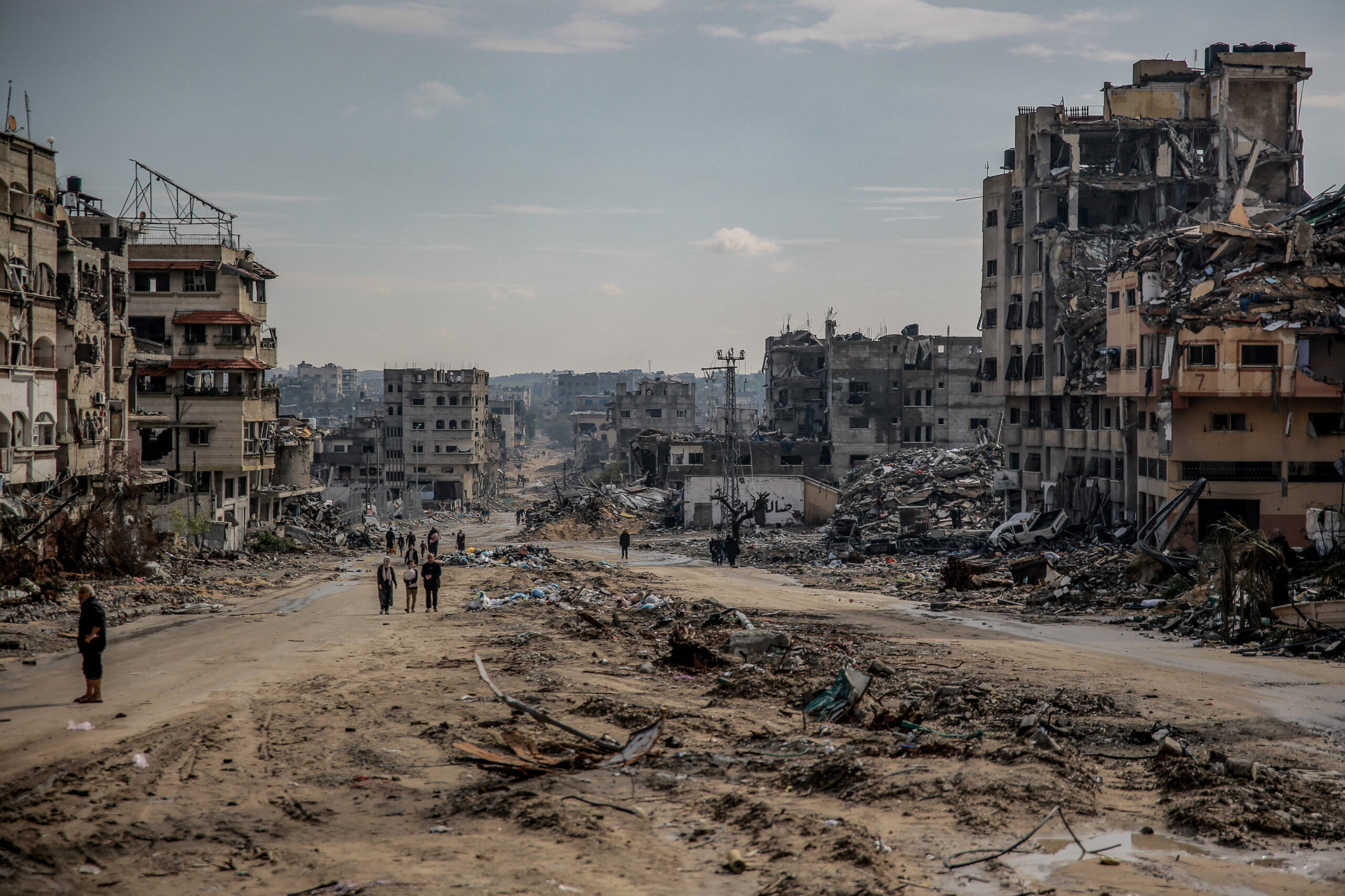
Haider Al-Aila, Gaza

Calling the Israeli military the “most moral army in the world” is a claim thoroughly shattered by the facts on the ground and the atrocities committed against the Palestinian people. What morality can an army claim when it massacres civilians, collapses homes on top of families, loots private property, and desecrates the dead—all while its leadership projects an air of moral supremacy to the world?
Morality is not measured by slogans or military technology; it is defined by how force is applied and the degree of respect shown for human life and dignity. From this perspective, Israel’s devastating war on Gaza reveals systematic, criminal practices that cannot be justified under any pretext of security or self-defense.
When killing becomes a display of power
Among the most harrowing dimensions of this war is the relentless bombardment that turns inhabited homes into mass graves, with utter disregard for women, children, and the elderly. In the densely populated Gaza Strip, widespread strikes have decimated entire neighborhoods, burying thousands of families beneath the rubble.
Equally horrifying are the reports of mass graves uncovered near Al-Shifa Hospital in Gaza City and Nasser Hospital in Khan Younis. These sites revealed the bodies of women and the elderly, some bearing signs of execution, binding, and stripped of clothing. Eyewitnesses documented similar mass graves near the Indonesian Hospital in northern Gaza. The United Nations has rightfully demanded independent, transparent investigations to establish accountability for these apparent war crimes.
The sanctity of the dead is a fundamental human right. Any violation of this principle demands rigorous investigation and prosecution—free from diplomatic cover or denial.
A single target as a pretext to level entire blocks
I do not speak here merely from reports; I speak as a firsthand witness in Gaza. I have watched entire residential blocks—housing vulnerable families—flattened under the pretext of targeting a single individual. Time and again, the Israeli military has tracked a target via reconnaissance drones, waited until he entered a crowded residential building, and then brought the entire structure down. In doing so, they have wiped out dozens of civilians who had absolutely no connection to the individual being pursued.
This reality raises a damning question: If an army possesses the surveillance technology to track a target with surgical precision, why wait to destroy the building while innocent civilians are inside? What crime did these families commit to pay with their lives?
Deliberately subjecting civilians to catastrophic harm without taking the legally required precautions cannot be excused by the presence of a target. It is a direct violation of International Humanitarian Law and constitutes unlawful collective punishment. These are not abstract statistics or fleeting screen images to me; they are the lived realities of families wiped out in an instant.
Looting at gunpoint
The degradation extends beyond killing and physical destruction. Human rights organizations and a 2024 UN Commission of Inquiry have documented widespread instances of Israeli soldiers looting Palestinian homes—stealing cash, gold, jewelry, and electronics.
Compounding the crime, soldiers have frequently posted videos on social media mocking the victims, showing off stolen goods, and celebrating the destruction of civilian property. Pillaging the belongings of displaced or deceased civilians is not military heroism; it is a war crime and an assault on human dignity.
The racism that precedes the bullet
These actions cannot be separated from a dehumanizing, racist discourse that treats Palestinians as subhuman and undeserving of life. When national supremacy is normalized and Palestinian lives are deemed worthless, military atrocities become the inevitable outcome. In the eyes of an indoctrinated soldier, a dehumanized population becomes an open target for slaughter, torture, and humiliation.
This is not a condemnation of Jewish people, who are not a monolith; rather, it is an indictment of the racist Zionist ideology, the brutal policies of the occupation, and all who enable or justify these crimes.
When killing becomes a hunting game
Among the most chilling accounts are videos and testimonies of snipers targeting young Palestinians as if hunting prey. Soldiers have been filmed stalking victims from fortified positions, then cheering and celebrating as their bullets hit their mark.
Killing here ceases to be an act of war; it becomes sport. What moral decay allows human death to become a source of entertainment? It strips the victim of their humanity, reducing someone with dreams, a future, and a family to mere target practice.
Technology without morality
The Israeli military boasts advanced surveillance, artificial intelligence, and precision weaponry. Yet technological superiority does not confer moral superiority, nor does it grant an army a blank check to use disproportionate force.
International Humanitarian Law mandates distinction, proportionality, and precaution. Technology merely amplifies the capacity for violence; it does not legitimize mass slaughter, nor does it grant immunity from accountability.
Internal dissent: “I can no longer bear the silence”
Cracks in the narrative have also emerged from within. A widely circulated account attributed to Israeli reserve Major Avdar Shailovsky, titled “I Can No Longer Bear the Silence” (published by the Jerusalem News Agency), recounts his refusal to remain silent about the horrors he witnessed in Gaza.
The account details the deliberate targeting of civilian gatherings, aid distribution points, and the sniping of women and children, alongside systemic mockery of Palestinian suffering. Shailovsky expressed profound remorse for his complicity and called for a rejection of the racist indoctrination driving the military. While such voices of conscience exist within Israeli society, they remain a marginalized minority against a prevailing culture of right-wing extremism that condones the occupation and the erasure of Palestinian rights.
What morality remains?
The rhetoric driving this war was made clear early on when former Israeli Defense Minister Yoav Gallant referred to Palestinians as “human animals.” Such language laid the ideological groundwork for the atrocities that followed.
Public relations campaigns cannot erase the reality on the ground in Gaza. Neither military power nor foreign diplomatic protection can hide the mass graves or silence the voices of the victims.
In Gaza, I have seen multistory towers turned into tombs and human beings reduced to collateral damage by an army that views their existence as worthless. How can there be any talk of moral superiority when the dead lie trapped under concrete, emergency responders are barred from reaching them, and a nation’s suffering is trivialized?
Gaza has not only shattered the myth of the “most moral army in the world”—it has placed the conscience of the entire international community on trial.

In its shortest, leanest, and simplest definition, foreign policy is the management of all manner of relations entered into with other countries. Foreign policy is a costly undertaking. It demands extensive knowledge, skill, experience, and leadership. For the price of failure is heavy, in every respect. A country’s reputation, influence, and deterrence, as well as its human resources, finances, and borders, are all directly affected by the success or failure of its foreign policy.
The program researching the costs of war at Brown University in the US (see https://costsofwar.watson.brown.edu/paper/overview) determined in its research that post-9/11 US attacks and invasions imposed an economic burden of $8 trillion and caused the direct or indirect deaths of more than 4.5 million people. The report also noted that, alongside the financial burden of these attacks and invasions, they displaced millions of people and exacerbated global environmental pollution.
Today, to understand the decline in US imperialism’s capacity for hegemony and its ecological dominance, one must first understand the burden borne by the US economy. For the US is no longer a country that accounts for more than half of global output, as it did in the aftermath of World War II. Its share of total production stands at around 20%. The social, class, and cultural fault lines within the country, as well as the divide between rich and poor, run exceptionally deep. The combined debt of the public sector, private corporations, and households has approached $200 trillion. The total debt of the federal government has exceeded $40 trillion (see: https://www.usdebtclock.org/world-debt-clock.html).
What does the US prioritize when lending?
The 3 largest creditors to the US, according to June 2026 data, are Japan ($1.117 trillion), the United Kingdom ($940 billion), and China ($633 billion). Israel is the country receiving the greatest amount of US economic and military aid in the Middle East, followed by Egypt. Ukraine, too, has received substantial economic and military aid, funds, and loans from the US. One must also not forget that the US lends money to its allies, including Ukraine, so that they will purchase US goods, weapons, and aircraft. The US dictates how they may use this debt. What is more, it has been doing this for years. During World War II, it lent substantial sums to its allies. Britain, for instance, was only able to pay off this debt in 2006; and Britain, alongside Israel, is one of the two strategic allies of the US. Rather than lending directly to countries undergoing economic crises, the US extends credit through the IMF and the World Bank. When lending, the US takes into account not only its economic priorities but also its strategic and geopolitical ones.
As an imperialist power, the US concerns itself with the entire world. It strives to remain effective and influential on a global scale. Yet just as the power of the US itself has waned, its allies no longer possess their former strength either, especially the Europeans. The European Union, an imperialist project, is not a global actor. There is no such cohesion, no such harmony within the European Union. Nor does it have such an objective. Furthermore, the European Union possesses neither the power, nor the will, nor the courage for this. Germany, the leader of the European Union, seeks merely to exert influence in its immediate neighbourhood: the Balkans, the Baltics, the Black Sea, and the Caucasus; that is all. And the extent to which it succeeds even in this remains open to debate. Moreover, there is not a single country in the world that desires or expects the European Union to step forward, take initiative, and project power globally in distant lands.
The methods used by imperialism
When reflecting on the relationship between imperialism and foreign policy, one should remember that the tools and methods employed by imperialism have evolved. In the 19th century, for example, imperialism resorted to cruder, more brutal, and more barbaric methods. Later, while continuing to turn to military methods and brute force, it systematically deployed economic and financial instruments, cultural hegemony, and sophisticated instruments and methods of governance, utilizing them with far greater frequency.
One of the lessons history teaches is this: every empire, every great power that grows too vast, expands too far, and stretches itself too thin also hastens its own demise. This condition is natural. It is inevitable. This holds true for the Roman Empire, just as it does for the Ottoman Empire, which ruled over immense territories stretching from the Caucasus to the gates of Vienna, and from the Arabian Peninsula to North Africa. For governance and rule become increasingly difficult. For the financial burden mounts. For the bureaucracy grows cumbersome. For centrifugal tendencies come to the fore, competition among local powers far from the centre sharpens, and tensions between provincial power bases escalate. For difficulties arise in implementing necessary administrative and military reforms and in taking the required steps.
In summary, when the predicament of the US is evaluated in the light of this iron law of history, the decline in US power becomes all the clearer.

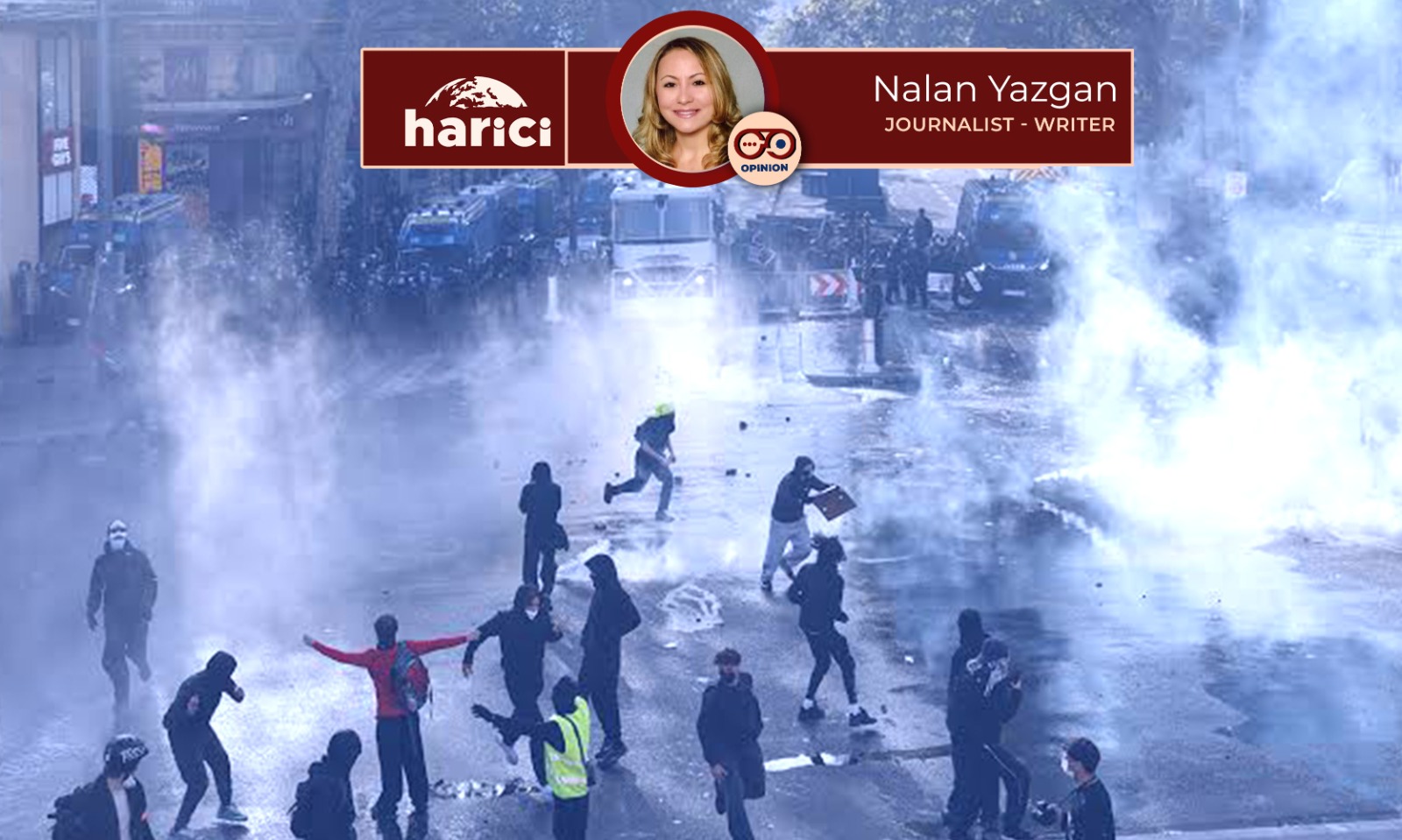
The streets of France have turned into a stage not merely for anger against the government, but for a deep-seated mistrust of the state’s approach to security. The blurring of the line between peaceful demonstrators and looters, lingering questions over police conduct, and the media’s refocusing on the immigration debate are bringing the country to the brink of a political reckoning far deeper than a routine public-order crisis.
In France, a government does not have to wait for an electoral defeat to lose its legitimacy. Sometimes, slogans chanted in a public square, tear gas fired down a boulevard, crowds penned in at the exit of a cordoned-off street, and testimonies of unhindered looting in shops only hundreds of metres away suffice to expose just how fragile the bond of trust between state and society has become.
Events in Paris on Saturday, 17 October point to precisely such a political fracture. Planned demonstrations with the participation of student unions, trade unions, and the Yellow Vests were marked throughout the day by police crackdowns, disputes over march routes, looting in the city centre, and widespread criticism of the government’s perceived inadequacy. The scene that emerged by evening suggested that France was grappling not merely with an issue of public order, but with a burgeoning crisis of confidence regarding the state’s impartiality and political motives.
Whom does the state permit to take to the streets, whom does it obstruct, and which forms of violence does it intervene against, and to what degree? The answer to this question may prove decisive in understanding France’s current political impasse.
The shadow of 17 October 1961
It is impossible to view the date of these demonstrations as a mere coincidence on the calendar. On 17 October 1961, a peaceful demonstration in Paris supporting Algerian independence was brutally crushed by the French police. Scores of people were killed, with some demonstrators drowned after being thrown into the River Seine. The event remains etched in memory as one of the darkest chapters in France’s colonial history and state-sponsored violence.
Sixty-five years later, as police interventions, youth rage, and the state’s stance on the right to protest are debated once again on the streets of Paris on 17 October, the resurgence of this historical memory was inevitable.
This memory may hold a distinct meaning, especially for French citizens of North African descent. Yet it would also be a mistake to reduce all the young people taking part in the demonstrations to a single identity, immigrant origin, or political motivation.
To what extent has the French Republic truly reckoned with the legacy of its colonial past and the relationship its security apparatus maintains with diverse segments of society?
Looters on the streets, where are the police?
Individuals dressed in black and associated in the public eye with the Black Bloc broke into shops at various locations, damaged businesses, and engaged in looting.
While peaceful demonstrators marched under a heavy police presence, fierce criticism arose that looting in certain areas had been allowed to unfold unchecked.
It is striking that while 14,000 police officers were deployed across the capital during the Pope’s visit to Paris, only 10,000 officers in total were assigned across the whole of France for the demonstrations of 17 October.
To which areas were police resources allocated? Had intelligence services assessed the risk of looting beforehand? While a robust security presence flanked the routes of peaceful marches, why was the same effectiveness not demonstrated in safeguarding commercial districts?
The deployment of elite units trained to quell urban unrest, such as CRS 8, does not resolve these questions. On the contrary, the failure to contain the incidents despite the presence of specialized units calls the quality of planning and coordination into question.
A political reckoning extending from Marseille to Limoges
The debate in Paris soon reverberated across the country’s other cities. In a televised address, the socialist mayor of Marseille stated that he had requested police reinforcements from the government, yet the units dispatched fell short given the scale and requirements of the city.
The mayor’s most striking allegation was that while looters stormed Marseille City Hall, the Hôtel de Ville, police officers stood roughly 200 metres away and failed to intervene. Stating that he possessed security camera footage, the mayor affirmed that he would await the scrutiny of a Parliamentary Commission of Inquiry and demand an explanation from the government.
The mayor of Limoges likewise issued what amounted to an ultimatum to the government, demanding the reconstruction of the torched town hall and the full reimbursement of costs. According to the mayor, the government had failed to protect a public building and neglected to provide the police with the necessary resources and backing.
These statements emerging from two distinct cities demonstrate that a new confrontation over security policy has arisen between local authorities and the central government. How security resources are allocated, which risks are prioritized, and whether the warnings of local administrations are heeded must all be brought to light.
The deepening scrutiny over the administration’s stance was compounded by President Emmanuel Macron’s refusal to accept the resignation tendered by Interior Minister Laurent Nuñez. The rejection of the resignation raises the question of whether the executive aims to preserve the chain of accountability, or fears that a political reshuffle would only exacerbate the crisis.
In either case, the government faces a crisis of trust.
An eight-minute speech and unanswered demands
Macron’s roughly eight-minute televised address failed to meet expectations regarding the political dimensions of the crisis. The president announced that he would meet with student unions and that the prime minister would engage with political parties, yet he presented neither tangible decisions nor a comprehensive political roadmap.
Education spending, police violence, the Palestinian cause, anti-fascism, and backlash against the Macron administration appear to have ceased being disparate issues in the eyes of the youth.
To be sure, the true strength of a state lies not in silencing its people and streets, but in addressing legitimate demands. It must not be forgotten that institutions unable to adapt and change are destined to break.

Gaza exposes the myth of the “most moral army in the world”

Over 3,000 Palestinians displaced as Israel’s Hebron siege hits day 5

EU and Canada to deepen defence ties from Arctic to Black Sea

Independent candidate Diane Sare decries US complicity in global wars

Merz visits Asia to seek new markets for German defence firms
-
 Diplomacy2 weeks ago
SWP urges backing for Gulf trade routes bypassing Strait of Hormuz
-

 Europe2 weeks ago
LSE study finds post-bailout Greece turned into a cafe economy
-
 America1 week ago
How Elon Musk fuses private empire with state power, Ben Tarnoff explains
-
 Europe1 week ago
AfD leader Weidel calls funding lost Ukraine war a grave mistake
-
 Middle East1 week ago
Egypt delays parliamentary vote on deploying troops to Saudi Arabia
-
 Diplomacy2 weeks ago
IMF warns global economy is nearing the limits of its resilience
-
 Europe1 week ago
EU rejects US proposal to resume Russian gas flows through Ukraine
-

 America1 week ago
At least 47 major US data centre projects halted or cancelled
