
Europe
German automakers restructure operations as Chinese rivals capture market share

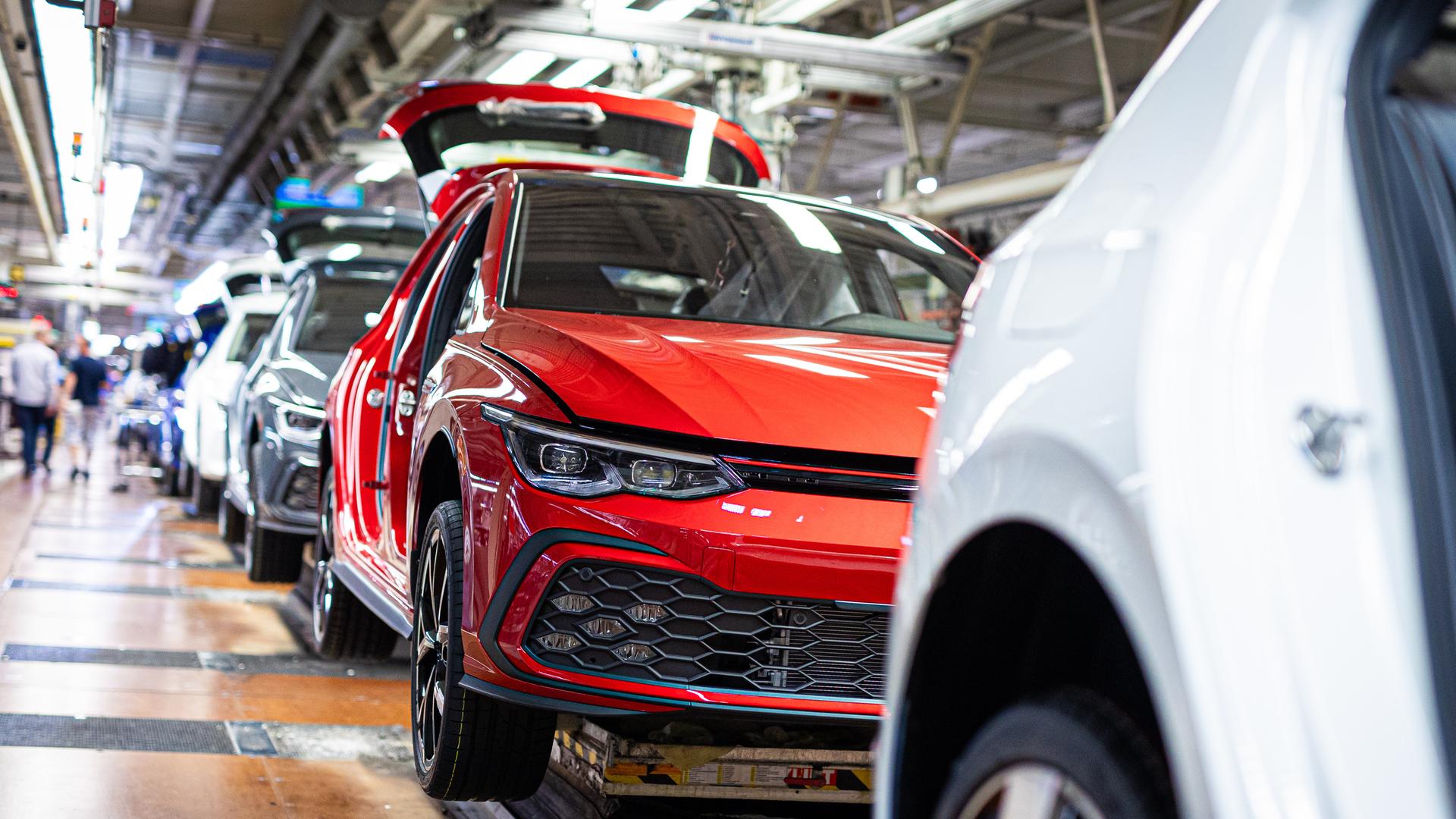
The German automotive sector is facing an unprecedented level of restructuring pressure.
As Chinese manufacturers establish dominance in the domestic market for electric and hybrid vehicles, German automakers are rapidly losing market share.
In the first half of 2026, sales figures in China for BMW, Mercedes, and Volkswagen fell by more than a quarter.
Volkswagen is undergoing the largest restructuring process in its history. Chief Executive Officer Oliver Blume is planning to halve the company’s model lineup, reduce production capacity by approximately one million vehicles, and cut up to 100,000 jobs worldwide.
Volkswagen is not limiting its strategy to radical cost-cutting measures alone. For the first time, the company is considering the possibility of introducing models developed specifically for the Chinese market to Europe, with a view toward manufacturing them in European plants over the long term.
At the same time, other European manufacturers are relying increasingly on joint ventures established with Chinese companies.
This marks the beginning of a new era: the driving force behind the modernization of the Chinese market is no longer European manufacturers; rather, China is shaping the future of the European automotive industry.
Opel is planning an SUV project in which Chinese engineers will develop the powertrain and battery, while German engineers will handle only the design and seats.
German brands lose ground in the Chinese market
According to an analysis published by German Foreign Policy, the decline in sales for German automakers in the Chinese market is worsening.
In the first half of 2026, sales for BMW, Mercedes, and VW plummeted by over 25%. BMW recorded a drop of nearly one-fifth, while VW and Mercedes fell by 26% and 28%, respectively.
In the wake of the war in Iran, gasoline prices rose in China. This accelerated demand for electric and hybrid vehicles, dealing a negative blow to sales for German automakers, which continue to sell predominantly internal combustion engine vehicles in the country.
Changes in tax regulations governing luxury automobiles are compounding the problem. The tax threshold for new vehicles (excluding VAT) was lowered from the previous level of 1.3 million yuan to 900,000 yuan (approximately €116,000).
The German Association of the Automotive Industry (VDA) assesses that this situation will yield highly negative consequences for European manufacturers, particularly German producers.
According to forecasts by the China Passenger Car Association (CPCA), demand for internal combustion engine vehicles has dropped significantly, especially in the price segment between 900,000 and 1.3 million yuan.
Consumers purchasing luxury vehicles are increasingly turning instead to Chinese-origin electric or hybrid models.
BMW, Mercedes, and VW have already been forced to significantly scale back their plug-in hybrid operations.
Tax incentives targeting partially electrified powertrains now apply exclusively to vehicles capable of traveling at least 100 kilometers on electric power alone.
This state of affairs is forcing a restructuring of model portfolios across German automakers.
Fewer models, fewer plants
VW CEO Oliver Blume intends to counter this trend.
VW management plans to reduce its model lineup by up to 50%. Product and variant diversity will be cut by 75%.
Furthermore, annual production capacity will be scaled down from the current 10 million vehicles to approximately 9 million. The vehicle model count, which currently stands at around 150, will be halved.
This development primarily affects the internal combustion engine segment in China. In China, VW management has already closed or sold five plants, reducing local capacity by approximately one million vehicles.
Over the long term, the company aims to return to annual sales of 10 million vehicles. Of the 1 million vehicles that VW plans to withdraw temporarily from the market, half are situated in European plants, specifically in Germany.
The remaining half of the excess capacity remains in China, despite the closures executed to date.
To shrink production capacity, the VW Group plans to eliminate up to 50,000 jobs globally. In Germany, the future of four plants is currently under review.
These layoffs will take place in addition to the 50,000 job cuts already planned through 2030.
Oliver Blume characterizes this as the largest transformation in the history of the VW Group: “This is not merely a cost-cutting package; it is the most comprehensive and far-reaching transformation package we have ever implemented at the Volkswagen Group.”
Plunging operating profits spur workforce cuts
VW management is consequently taking radical action to trim model counts, production capacity, and headcounts.
At the same time, the Group is not abandoning its profit targets. In the first half of 2026, the group’s operating profit dropped 11.6% to €5.93 billion.
The operating margin fell to 3.8%, meaning VW generated only €3.80 in operating profit for every €100 in revenue.
Chief Financial Officer Arno Antlitz called the results “another wake-up call to act.”
The profit contribution from Chinese operations fell by one-third to €856 million.
However, Blume views this not as a “Volkswagen crisis,” but rather as an “industry crisis.”
Alternatives: Defense production and China-specific models
Oliver Blume views potential plant closures in Emden, Zwickau, Hanover, and at Audi’s Neckarsulm facility as a “last resort.”
He also noted that utilizing these plants for defense industry manufacturing represents a distinct possibility.
Another option involves producing China-specific VW models for the European market. This refers explicitly to VW models that have hitherto been sold exclusively in China, but it does not imply opening production to other manufacturers.
Additionally, VW plans to increase exports from its Chinese factories to other markets, such as Australia, India, and Central Asian nations, in the future.
The plan to bring its own China-specific models to Europe includes both the importation of finished vehicles and, at a later stage, the manufacturing of those vehicles or their components within Europe.
According to internal sources, the VW plant in Zwickau is being evaluated as a prospective production site.
VW already imports the Cupra Tavascan from China, a model belonging to Cupra, the Spanish brand owned by the VW Group.
In Germany, the Tavascan ranks among the top ten best-selling electric cars, currently holding ninth position.
Within the VW Group, it was decided that the motor for the planned €20,000 electric vehicle, the ID. EVERY1 model, will be imported from a VW component factory in China.
Olaf Lies, the SPD Prime Minister of Lower Saxony, expressed openness to producing Chinese models in German VW plants following a trade trip to China.
European auto giants deepen partnerships with China
Other European car manufacturers are also seeking to offset falling capacity utilization by establishing joint ventures with Chinese producers.
Stellantis plans to use four of its plants in Spain, France, and Italy to assemble models for the Chinese groups Leapmotor and Dongfeng.
Stellantis brands—including Opel, Jeep, Fiat, and Peugeot—are currently utilizing only about half of their assembly capacity within the EU.
In the future, Leapmotor models will be manufactured at Stellantis plants in Madrid and Zaragoza, Spain.
Together with Dongfeng, the production of an electric car in Rennes, France, is under consideration.
A small electric vehicle belonging to Leapmotor will be produced in Pomigliano, Italy.
An Opel SUV model featuring Chinese technology will also be manufactured in Madrid.
The powertrain, battery, and software will be sourced from Leapmotor. German engineers will remain responsible solely for design, seats, and the chassis.
EU sanctions against China risk worsening auto crisis
The VW Group’s strategy to import vehicles developed entirely in China carries inherent risks.
The EU imposes a baseline tariff of 10% on Chinese-made electric vehicles, alongside additional duties termed “countervailing” tariffs.
These countervailing tariffs stand at 35% for SAIC (VW’s Chinese joint-venture partner), 17% for BYD, and slightly under 8% for Tesla.
However, countervailing tariffs affect German manufacturers as well. The Cupra Tavascan was initially subjected to a 20.7% tariff.
Following extended negotiations, the European Commission dropped the additional duty for the VW Group model.
In the US, Mercedes faces the threat of market exclusion due to proposed legislation.
The proposed bill would ban the sale of connected vehicles if more than 15% of the manufacturer’s shares are owned by Chinese shareholders.
Just under 20% of Mercedes’ shares are currently held by Chinese investors.







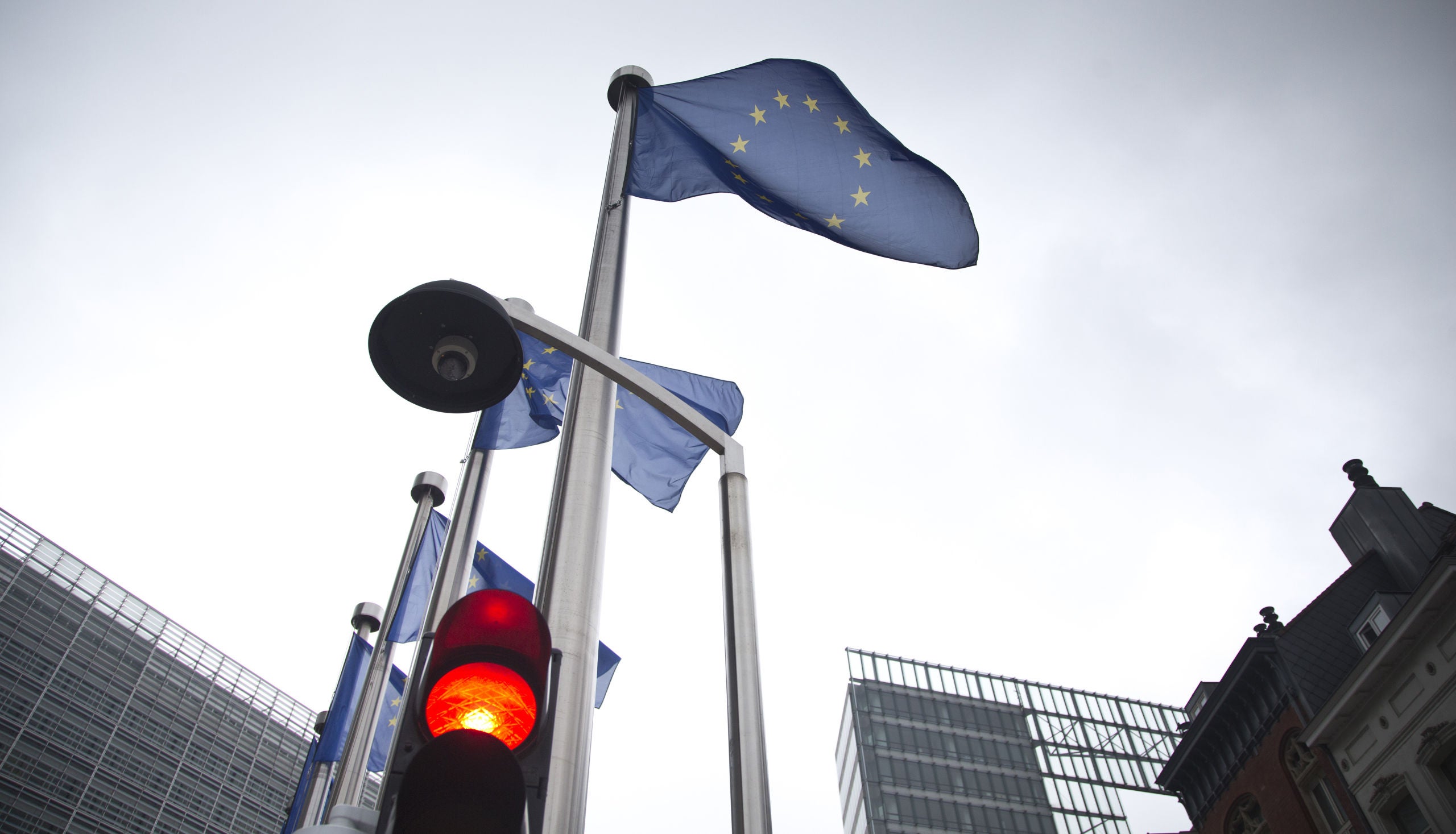
The European Commission has rejected a peace plan proposal from the US administration that entails resuming Russian natural gas purchases via Ukraine.
Commission spokesperson Paula Pinho stressed that Brussels has not changed its stance.
Pinho recalled that European Commission President Ursula von der Leyen had previously stated clearly that no restrictions on Russia would be lifted until the conflict comes to an absolute end.
The New York Times reported that the US president’s new peace proposal includes Europe returning to large-scale Russian gas purchases through Ukraine.
According to the report, Special Envoy Steve Witkoff and Jared Kushner raised the matter during talks in Kyiv last month with Ukrainian and European officials, including Ukrainian President Volodymyr Zelenskyy.
Sources contacted by the newspaper noted that some European and Ukrainian officials believe Washington would seek to secure a share of Russian gas exports.
Under this plan, the objective is to channel a share of the profits to American companies or the US government.
Russian President Vladimir Putin had said Moscow was ready to work on supplying fuel to European nations, but noted that a signal must come from the other side.
Putin stated that Moscow must evaluate the feasibility and necessity of fuel flows to the Western market, adding that they would not wait for Europe to shut the door ostentatiously on energy supplies.
Kremlin spokesperson Dmitry Peskov remarked that European nations rejecting Russian gas would make them dependent on the US and deprive them of the ability to diversify their supply sources.
Peskov noted that the US sells gas at very high prices and that if European nations pay more for energy, their industries will suffer.
The EU plans to halt liquefied natural gas imports from Russia entirely by 1 January 2027 and pipeline gas by 30 September 2027.
Von der Leyen had previously announced that the bloc would reduce Russian gas imports to zero by the end of 2027.
Russia halted gas flows to Europe via Ukraine as of 1 January 2025, when the five-year contract between Gazprom and Naftogaz of Ukraine expired.
Putin had stated that Kyiv refused to extend the transit agreement. Following the closure of the Ukrainian route, the TurkStream pipeline remained the only operational corridor carrying Russian pipeline gas to Europe.
A prosecutor investigating corruption allegations surrounding a real estate project linked to US President Donald Trump in Serbia was targeted with spyware, a new investigation has revealed.
The findings, published by the University of Toronto’s Citizen Lab alongside the Serbia-based digital rights group SHARE Foundation, showed that Rade Bajić, who served at the Prosecutor’s Office for Organized Crime, was selected as a target.
Bajić became a target of the Pegasus spyware developed by Israel-based NSO Group after he publicly spoke out about political interference and abuses of power.
The prosecutor stated that on 13 August, he received a warning alert from Apple cautioning him against state-sponsored or mercenary spyware attacks.
Project cancelled, but investigation and pressure continue
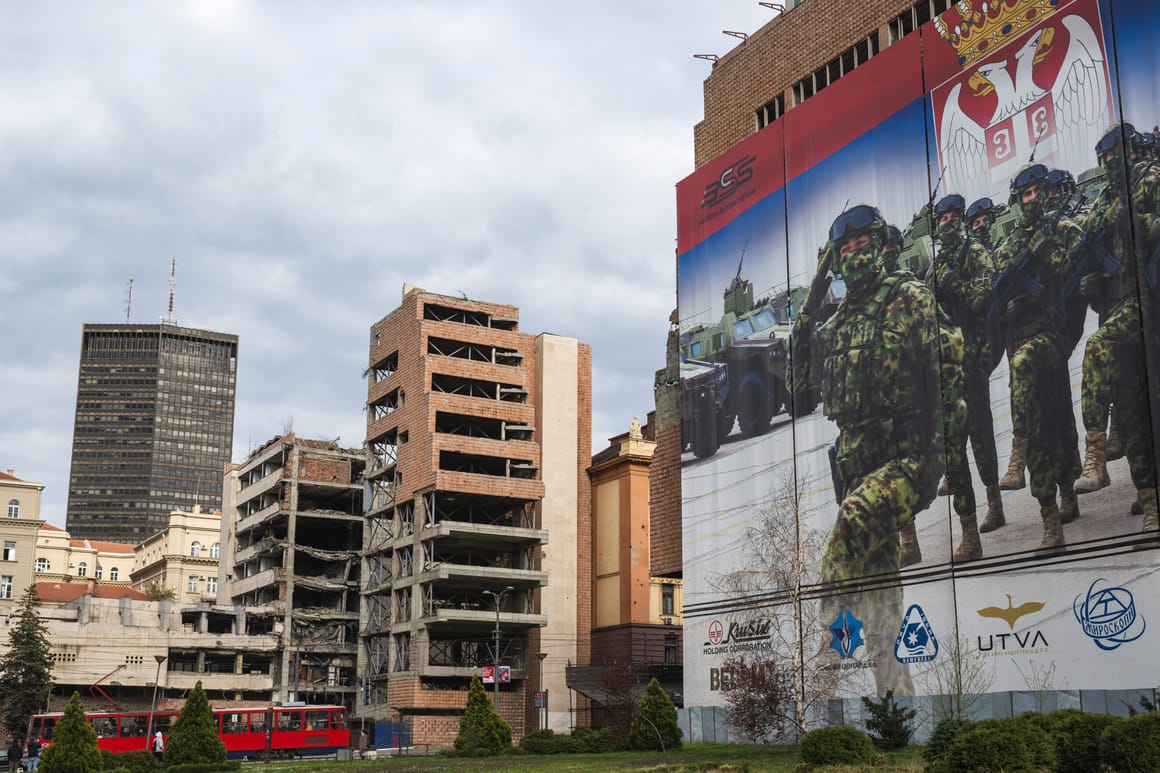
The probe centres on a plan to transform the historic complex in Belgrade that housed the former Yugoslav Ministry of Defence headquarters into a luxury Trump Tower skyscraper.
Linked to US President Trump’s son-in-law Jared Kushner, the real estate development drew fierce backlash amid political pressure disputes and allegations that the site’s protected heritage status had been unlawfully revoked.
The investment firm founded by Kushner announced late last year that it was pulling out of the project, citing respect for the Serbian public and the city of Belgrade.
Recalling his investigation into claims that senior government officials had improperly lifted the historic military complex’s protected status, former prosecutor Bajić said: “In my opinion, my role in this case was the sole reason for the illegal spyware attack.”
Target list widens to university and judicial figures
The spyware scandal in Serbia has widened, sweeping in political opposition figures, civil society, and academic circles.
It was also confirmed that an iPhone belonging to University of Belgrade Rector Vladan Đokić was infiltrated by Pegasus spyware.
Đokić, who refused to back the government’s crackdowns on student demonstrations, has become one of the prominent figures of the protest movement.
Police raided his office on 31 March, seizing his computers and servers. Đokić had also been touted as a likely leader for a student-backed opposition list ahead of early general elections scheduled for Sunday.
Shortly before the report was published, a pro-government tabloid released audio recordings allegedly capturing Đokić discussing his political ambitions, putting him directly in the crosshairs.
While the source of the recordings remained undisclosed, Đokić stressed that the breach of his phone represented a grave assault on his personal privacy, safety, and the dignity of the rector’s office, demanding that those responsible be punished.
State institutions silent on allegations
Speaking to Politico, SHARE Foundation policy advisor Andrijana Ristić noted that surveillance operations had spread from civil society and journalists to student activists, politicians, and finally to members of academia and the judiciary.
Ristić stated that the lack of state action despite formal criminal complaints has fuelled this escalation.
Citizen Lab senior researcher John Scott-Railton emphasized that technology from NSO Group, which claims to turn over a new leaf every time an abuse is uncovered, is being deployed directly for repression.
Scott-Railton pointed out that targeting individuals who defend freedom against corruption was no coincidence.
The Serbian Ministry of Internal Affairs left questions unanswered, though officials had previously denied allegations of cyber espionage.
NSO Group, which maintains that it sells its products exclusively to governments and was blacklisted by the US government in 2021 over human rights abuses, also made no comment.
Apple confirmed that it had sent mass threat notifications to users on 13 August, but provided no specific details regarding the cases of Bajić or Đokić.
In September, Citizen Lab and the SHARE Foundation disclosed that at least 14 individuals, including student activists and opposition figures, had received similar spyware alerts.
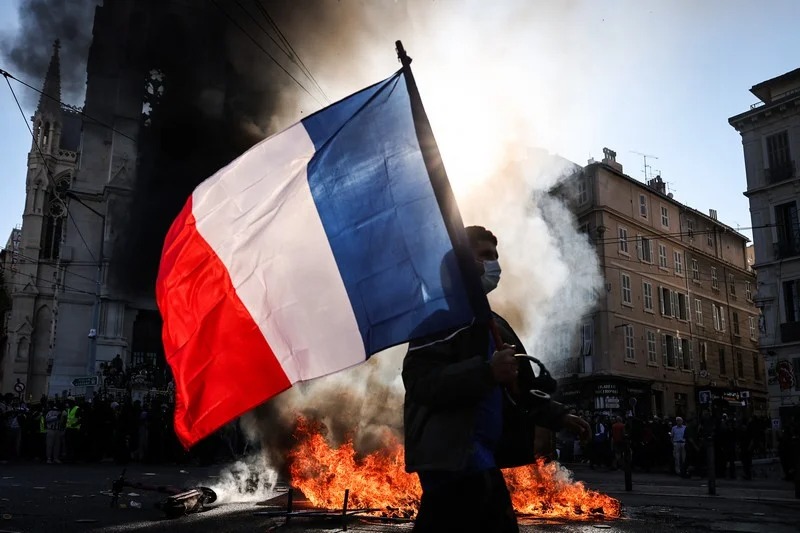
French Interior Minister Laurent Nuñez tendered his resignation amid some of the country’s most violent street unrest in recent years. President Emmanuel Macron rejected the resignation.
According to a statement from the Elysée Palace, Macron made the decision because law enforcement required uninterrupted command under current conditions. Macron instructed Nuñez to roll out new methods on the ground as quickly as possible.
The president also demanded that all necessary measures be taken to ensure transparency regarding the lapses in intelligence and foresight that led to the violence.
How many people were on the streets during Saturday’s protests?
The demonstrations were organised on 17 October over the rising cost of living and discontent with the government’s social policies. According to the Interior Ministry, approximately 550,000 people took part, while trade unions put the figure at 800,000.
Hundreds of thousands marched peacefully on Saturday. However, clashes with law enforcement broke out in Paris, Lyon, Marseille, and other cities, where shops were looted and buildings set on fire.
In Marseille, protesters stormed the city hall. As they forced their way in, they shouted, “This is a revolution, we are taking the Bastille!”, and went on to loot numerous stores.
In Lyon, the office of a tourism company housed in a 19th-century building was vandalised and torched. In Limoges, a 19th-century city hall was set ablaze.
Damage incurred by French businesses is reportedly estimated in the hundreds of millions of euros.
Citing Nuñez reported approximately 1,800 detentions and more than 500 injuries among police officers, gendarmes, and firefighters. Reuters reported that Nuñez stated 2,400 people had been detained nationwide and around 1,000 security personnel injured.
During the demonstrations in Paris, one person suffered a fatal heart attack while being detained.
Macron: We feel anger and shame
In a televised address, Macron said that nothing could justify the events. “There is nothing that can justify, explain, or excuse this. Tonight, we all feel anger and shame,” he said.
In the same speech, he stressed that peaceful demonstrators had legitimate grievances and should not be equated with those resorting to violence. He also noted that the protesters’ voices must be heard and that the government had already begun efforts to address them.
Macron said that legitimate demands must not be conflated with violence, and that violence should not prevent those demands from being heard.
Right demands state of emergency, Macron holds off
Right-wing politicians demanded the declaration of a state of emergency.
Macron declined to do so, stating that the government could allow local authorities to ban protests if necessary to protect public buildings and businesses.
Marine Le Pen, who is expected to run as the candidate for the far-right National Rally in next year’s presidential election, called for restraint. Le Pen said the situation in the country must not be treated as normal.
Meanwhile, Jean-Luc Mélenchon, leader of the far-left France Unbowed, stated that Macron must meet the demands of high school students staging demonstrations.
Macron’s term in office ends in 2027.
Throughout his nearly decade-long presidency, the country has frequently witnessed widespread protests, alongside persistent criticism over economic weakness and mounting public debt.

South Korea pulls part of embassy staff from Ukraine amid POW dispute

Netanyahu unveils security doctrine and regional alliance map

At least 47 major US data centre projects halted or cancelled

EU rejects US proposal to resume Russian gas flows through Ukraine

Serbian prosecutor in Trump Tower inquiry targeted by Israeli spyware
-
 Europe2 weeks ago
France and Germany urge EU market kill switch against trade threats
-
 Europe2 weeks ago
Bill to drop NATO membership goal submitted to Ukrainian parliament
-
 Europe2 weeks ago
Marine Le Pen unveils fiscal programme pledging French budget cuts
-
 America2 weeks ago
How will Brazil’s presidential runoff work?
-

 Europe2 weeks ago
Berlin Left Party backs Israel’s right to exist for coalition pact
-

 Middle East2 weeks ago
CIA report warns Israel faces growing risk of civil conflict
-
 Diplomacy2 weeks ago
The West is preparing for war not with Russia, but with its own people, French analyst Georges Kuzmanovic insists
-
 Europe2 weeks ago
EU seeks Chinese trade signal in Beijing as surplus widens
