
Middle East
Israel approves multi-billion dollar acquisition of F-35 and F-15IA fighter jets from US

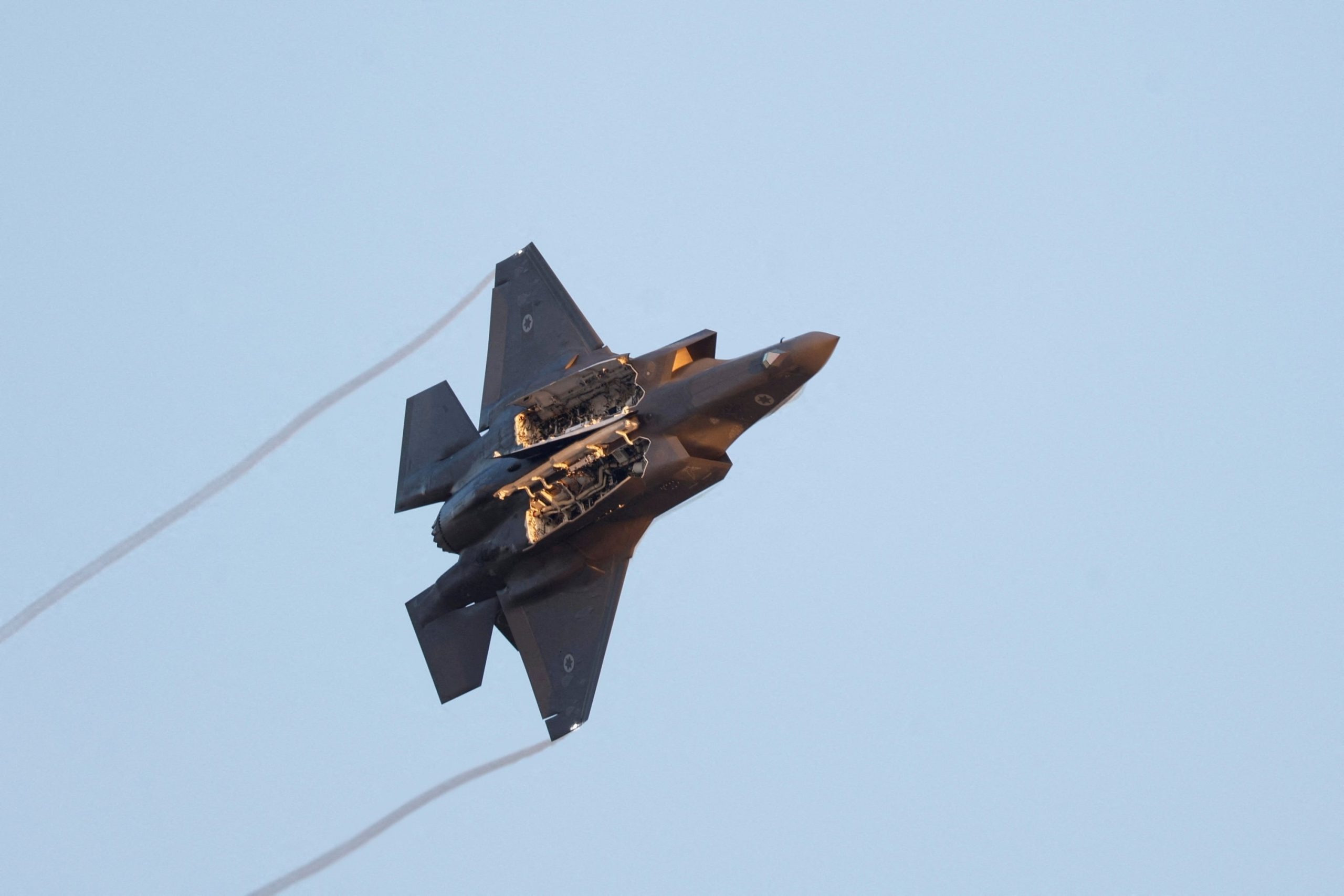
Israel’s Ministry of Defense has announced its approval of a plan to acquire new fighter jet fleets from US-based defense manufacturers Lockheed Martin and Boeing in a deal valued at tens of billions of dollars. The procurement decision involves the addition of two new fleets consisting of advanced F-35 and F-15IA aircraft to the national inventory.
The ministry stated that the agreement is intended to prepare for the coming decade, which is expected to be a challenging period for Israel’s security.
This measure is reported to be a component of a comprehensive $119 billion strategic plan aimed at strengthening the military.
Under the terms of the agreement, Israel plans to procure a fourth fleet of F-35 jets from Lockheed Martin and a second fleet of F-15IA jets from Boeing. Each fleet will reportedly consist of between 25 and 30 aircraft.
Israeli fighter jets have been conducting continuous bombardment missions across Gaza, Lebanon, Syria, and Iran since October 2023.
Prime Minister Benjamin Netanyahu stated that the ministry will allocate a significant portion of the $119 billion budget to domestic ammunition production within Israel and the development of next-generation aircraft.
Israel currently meets the majority of its ammunition requirements from the US and relies on Washington’s support to sustain its military activities in neighboring territories.
The ministry noted that the newly established fleets will assist in maintaining regional strategic air superiority, which played a critical role in the Iran war that Israel and the US launched on Feb. 28.
Amir Baram, Director General of the Ministry of Defense, stated that the recent Iran war proved the importance of the strategic relationship between the US and Israel and the indispensability of advanced air power.
Baram further emphasized that, in addition to meeting the immediate requirements of the conflict, they carry a responsibility to act in the current period to secure the Israeli military’s superiority ten years into the future and beyond.
Netanyahu expressed a similar sentiment, noting that Israel must be stronger than ever and remain superior to its enemies at all times, adding that these aircraft will consolidate the country’s air superiority.
US-made Israeli fighter jets played a primary role in the neutralization of a large portion of Palestinians during the two-year process in Gaza and the deaths of tens of thousands of civilians, the majority of whom were women and children. Israeli jets have also bombed Lebanon thousands of times as part of ongoing clashes with Hezbollah, resulting in civilian casualties.
The process for the new aircraft acquisitions is being conducted during a period in which the US continues to send military equipment to Israel in preparation for potential new waves of operations against Iran and Lebanon.
The Ministry of Defense announced that two cargo ships carrying 6,500 tons of military equipment and ammunition from Washington, along with numerous aircraft, arrived in the country on April 30.
The cargo ships, which arrived at the ports of Haifa and Ashdod, reportedly carried thousands of air and ground munitions, military trucks, and JLTV-type armored combat vehicles.
Director General Baram stated that these procurement operations will intensify and continue in the coming weeks. The ministry shared data indicating that since the start of the war with Iran on Feb. 28, a total of more than 115,600 tons of military equipment has been delivered to Israel via 403 flights and 10 sea voyages.







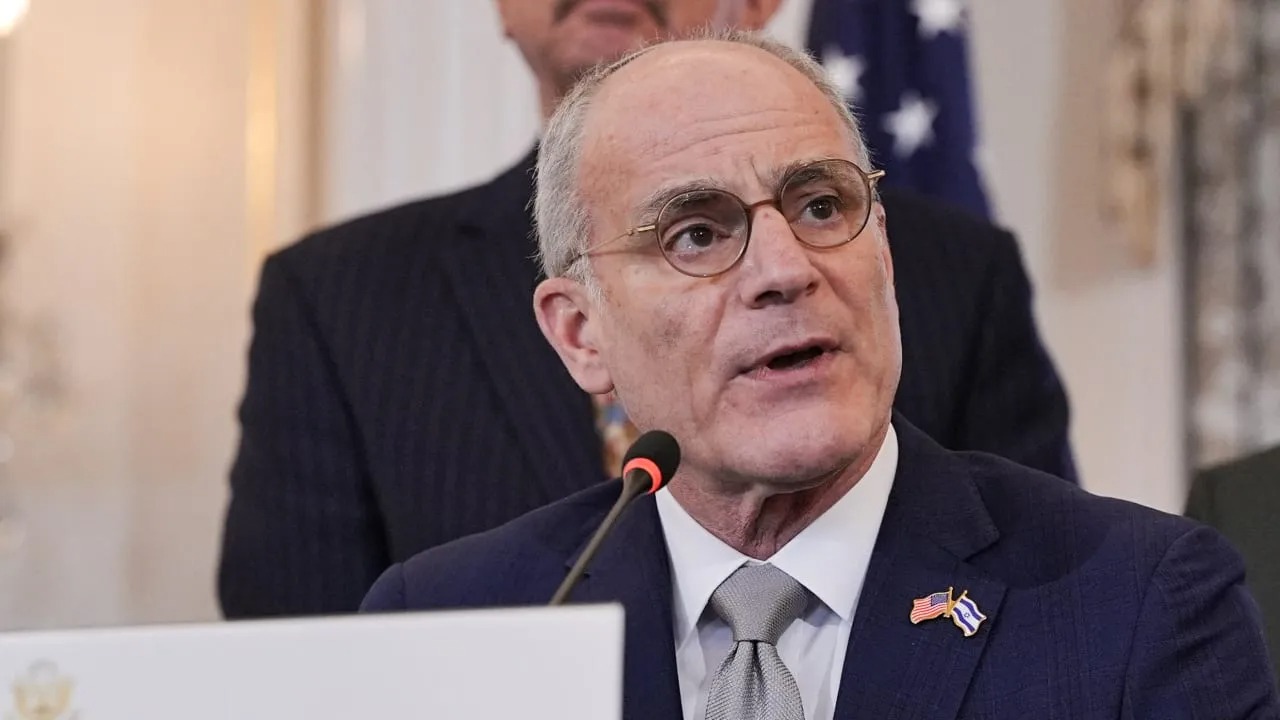
Israel’s Ambassador to the US, Yechiel Leiter, stated that Tel Aviv received clear intelligence showing Türkiye planned to expand its military presence in Syria significantly, an action Israel deemed the crossing of a “red line.”
Speaking to The Jerusalem Post, Leiter said: “We are not looking for an escalation or a war with either Türkiye or Syria. But a red line was crossed.”
His remarks follow an Israeli air strike on the Abu al-Duhur Airbase in Idlib, Syria, which drew swift criticism from both the Syrian and Turkish governments.
Leiter continued:
“This was seen as a blatant Turkish violation of the understandings. Those who needed access to the intelligence received it. Those who needed to know what was going to happen knew. We made it clear that this was contrary to our understandings, and that is why Israel acted as it did.”
According to Leiter, the failure to heed these warnings led Israel on Tuesday to strike the Abu al-Duhur airbase, where Turkish forces were allegedly expected to arrive.
Syrian officials stated that the airbase was targeted by at least eight strikes, whilst subsequently released satellite imagery revealed damage to the runways.
Leiter stated that the Turkish move contradicted understandings reached during the Biden administration between Israel and the administration of Syria’s new leader, Ahmed al-Sharaa, which “froze the existing situation” in the country.
According to Leiter, these understandings were reaffirmed during a meeting held in Paris in January 2026, attended by Syrian Foreign Minister Asaad al-Shaibani, US Special Envoy for Syria Tom Barrack, Leiter, then-National Security Council head Gil Reich, and Netanyahu’s military secretary Roman Gofman (now director of Mossad).
Leiter continued:
“This freeze means we do not act as long as the Turks do not act, and they do not force us to withdraw. It is also important to understand: whilst we maintain a security zone of only 78 square miles [approximately 202 square kilometres] in Syria, the Turks have, over the past few years, slowly annexed 3,500 square miles in northern Syria—roughly 5% of the country’s territory.”
According to The Jerusalem Post, with the exception of Tom Barrack, the US Special Envoy for Syria and Ambassador to Türkiye, senior US officials did not condemn the Israeli strike in Syria.
“The administration’s policy is that the previously agreed freeze should continue; that is why even Trump did not condemn the strike,” Leiter said.
Despite the tensions, Leiter emphasised Israel’s understanding that Syria is not seeking an escalation or war.
“It is clear to us that the Syrians do not want a confrontation with us. That is why we tell the Turks not to create conflict. There are multiple indications that the move planned by Türkiye was imposed on the Syrians,” the ambassador said.
Leiter argued that this apparent discord was also evident in the conflicting statements issued by Türkiye and Syria following the strike:
“Whilst Syrian Foreign Minister Shaibani acknowledged that a Turkish delegation was in Syria a few days before the strike, the Turks denied this. They need to resolve this matter between themselves.”
Leiter did not rule out a return to direct talks with Syria, as conducted in the past, but said conditions must be suitable.
“Negotiations can be resumed. We want to continue the face-to-face dialogue we previously conducted with the Syrians,” Leiter said.
Leiter added that Israel is not seeking a conflict with Türkiye and remains open to dialogue with Ankara.
“We are certainly open to dialogue with them, but judging by statements from senior officials in the country, they would prefer to wipe Israel off the map,” the Israeli diplomat said.
Alleging that Türkiye hosts Hamas leaders and “channels funds” to Hezbollah and Hamas, Leiter argued that it was inappropriate at this juncture for “Türkiye to begin expanding its influence in Lebanon and Syria.”
Leiter continued:
“Under current conditions, Türkiye cannot be a force that helps bring calm to the region. If only we could return to the state of relations between Jerusalem and Ankara from several decades ago. Back then, we would have been open to Türkiye’s influence in the region. But in an environment where Türkiye funds terrorist organisations, an increase in its regional influence makes no sense.”
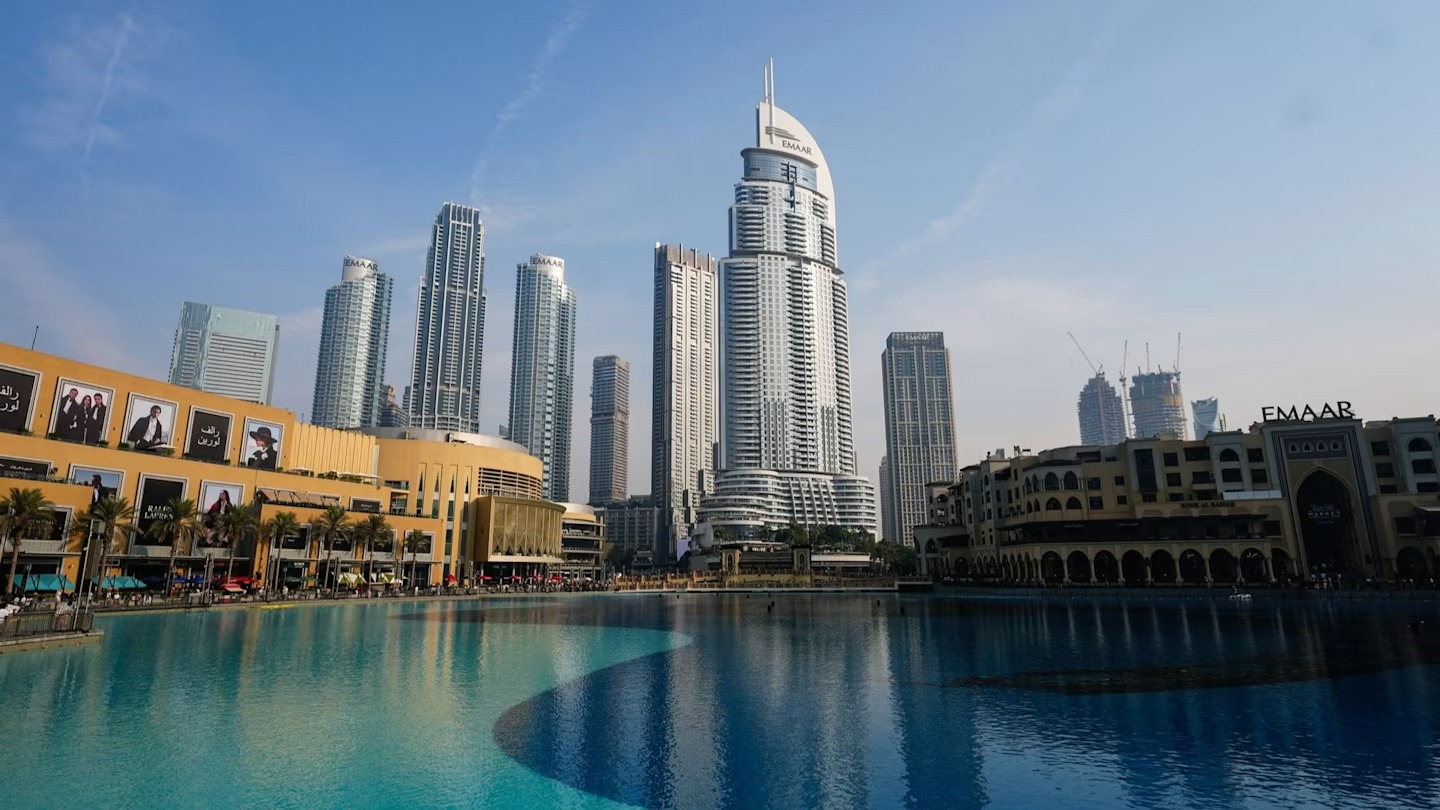
The United Arab Emirates (UAE) has suspended commercial and economic relations with Iran after announcing that Tehran launched two ballistic missiles towards the Gulf state on Tuesday.
The UAE Ministry of Defence stated that air defence systems detected two ballistic missiles launched from Iran towards its territory.
The incident is considered Tehran’s first direct attack targeting the Gulf country since May.
The event prompted emergency telephone alerts to be sent to residents across the UAE.
The Ministry of Defence stated that assessments indicated the missiles targeted maritime traffic, adding that one missile fell into the sea outside UAE territorial waters and the other landed within territorial waters.
The UAE Ministry of Foreign Affairs later announced that “in light of regional tensions that undermine regional and international peace and security, all trade, commercial relations, and financial transactions with Iran have been halted until further notice.”
Iran denied any involvement in the missile attacks. Iranian Foreign Ministry Spokesperson Esmail Baghaei said the claim “contradicts the principle of good neighbourliness and undermines ongoing efforts to strengthen trust among regional countries.”
The missile strikes occurred after a period in which the UAE and Tehran had sought to reduce tensions between the two countries.
The bulk of Tehran’s military retaliation targeted neighbouring Gulf states, which Iran accused of facilitating US-Israeli attacks.
The UAE bore the heaviest brunt of Iran’s attacks against US allies in the Gulf, sustaining nearly 3,000 missile and drone strikes.
Exhibiting the most hawkish stance against Tehran among its Gulf neighbours, the UAE responded with dozens of strikes against Iran.
However, tensions between the UAE and Iran eased following a memorandum of understanding signed between Washington and Tehran in June.
After the agreement began to unravel in early July, Iran largely redirected its attacks towards Bahrain, Kuwait, and Jordan.
In recent months, the UAE reactivated diplomatic and economic channels with Iran while simultaneously strengthening its military ties with Israel and the US.
Tuesday’s missile strikes threaten to disrupt the atmosphere of normalisation that had returned to the UAE.
While Dubai’s financial district was once again filling with bankers, certain commercial activities between the emirate and Iranian ports had resumed.
Furthermore, several Iranian flights to the UAE had quietly resumed.
UAE authorities had also begun permitting the return of approximately 20,000 Iranians holding UAE residency permits who were outside the country when the war began.
UAE officials have repeatedly emphasised that the country seeks to avoid being drawn further into a broader regional war.
Nevertheless, efforts to de-escalate tensions between the UAE and Iran have come under increasing strain in recent weeks.
This month, the UAE accused Iran of attacking vessels belonging to the Abu Dhabi National Oil Company in the Strait of Hormuz.
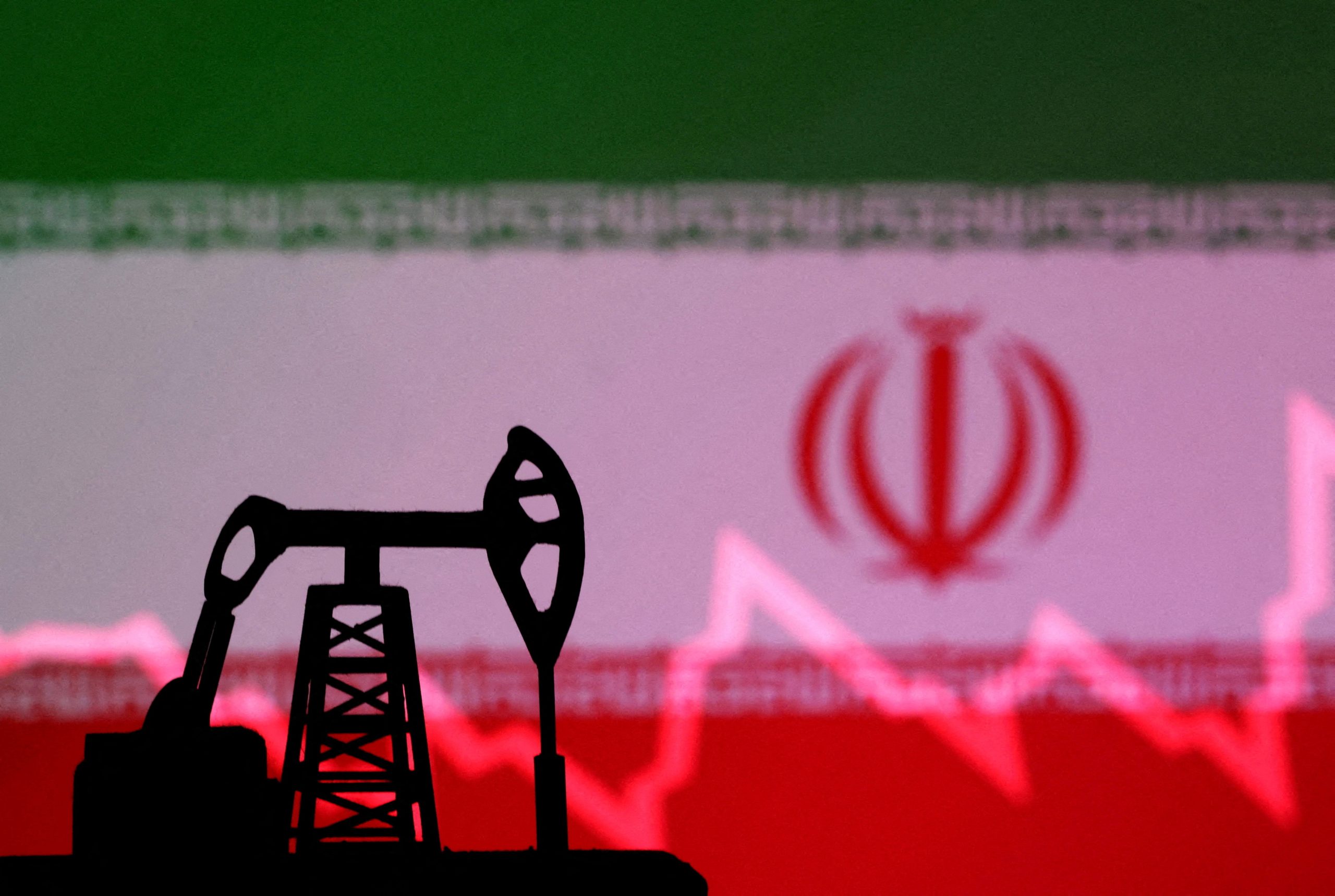
To date, the US has imposed sanctions on thousands of Iranian individuals and legal entities; however, the Tehran administration continues to bypass these restrictions by rapidly establishing new structures to replace those that have been blocked.
In an assessment citing expert opinions published by the Reuters news agency, the current situation was likened to a game of whack-a-mole.
Whack-a-mole is known as a game of agility and reflexes based on the concept of hitting plastic figures with a mallet as they pop up unexpectedly from their holes.
Speaking to the agency, experts outlined other options that Washington could deploy to increase pressure on Tehran and raise the efficacy of sanctions.
Potential measures include restrictions targeting independent Chinese refineries, known as “teapots,” which account for a quarter of China’s oil refining capacity.
China purchases more than 80% of the oil exported by Iran, and these refineries process the vast majority of those shipments. Nevertheless, these facilities have limited ties to the US financial system, rendering them partially protected against secondary sanctions.
Another option on the table is increasing pressure on major Chinese banks. The US Department of the Treasury’s Office of Foreign Assets Control (OFAC) has applied secondary sanctions to small firms based in China and Hong Kong accused of executing billions of dollars in transactions for Iranian oil.
The agency has also warned two large banks, though it has not yet included them on its sanctions list.
While taking steps against major banks could deter other financial institutions, such actions carry the risk of Beijing enacting retaliatory measures. Washington seeks to avoid such tension ahead of a potential meeting between US President Donald Trump and Xi Jinping in September.
Experts are also evaluating the possibility of enforcing a land blockade with the participation of Iran’s neighbours: Iraq, Türkiye, Pakistan, Azerbaijan, Turkmenistan, and Armenia.
The Trump administration holds various leverage mechanisms against such nations, including Pakistan, which is requesting a $10 billion swap line, and Türkiye, which seeks to rejoin the F-35 program. Analysts express, however, that implementing such a blockade on the ground and generating the expected pressure inside Iran would be difficult.
Trump has repeatedly voiced threats to impose secondary tariffs on countries that trade with Iran; however, the US Supreme Court struck down the legal basis for such measures.
On the other hand, a anti-Russia “crushing” sanctions bill passed by the Senate includes new restrictions on Iran and grants Trump tariff authority.
This bill must also pass a vote in the House of Representatives; however, the text faces opposition from both Democrats and certain Republican lawmakers.
US Treasury Secretary Scott Bessent announced in mid-August that Trump would disclose new measures designed to raise Iran’s economic isolation to an unprecedented level.
Stating that the US President had instructed the re-establishment of the maximum economic pressure policy against Tehran, Bessent said, “We have moved from Epic Fury to Economic Fury.”
Following Bessent’s statements, Bloomberg noted that Tehran has learned to manage the consequences of a naval blockade and thousands of restrictions. According to the agency’s analysts, the principal obstacle facing Washington is the close economic relationship between Iran and China; indeed, Beijing secures more than 90% of Iranian oil exports. Sanctioning the entities facilitating these purchases would directly reduce Tehran’s oil revenues, yet the US is avoiding this step for now.
Maritime traffic in the Strait of Hormuz remains restricted. On August 11, Iran conveyed its conditions for lifting the blockade in the strait to the US through intermediaries.
Tehran’s conditions included an end to threats and military actions, the lifting of the blockade and sanctions, compensation for damages, and the release of frozen assets.
On August 14, Trump claimed that following the end of the war with Iran, he would declare the Strait of Hormuz to be US territory. Responding to these statements, the Iranian Foreign Ministry warned that the Strait of Hormuz could not be seized “by a tweet, an aircraft carrier, an executive order, or a campaign speech.”

Five minutes to doomsday – 1: Thiel in search of the Antichrist

Greece warns Türkiye over maritime disputes as regional tensions rise

EU faces fury over firefighter cuts during record wildfire season

German historian Kittel blames Stalin rather than Hitler for WW2

Iran war tests Russia-UAE partnership amid expanding trade ties
-
 Interview1 week ago
Daniel Davis warns US strategy fails against Iranian defense grid
-
 Diplomacy1 week ago
Erdogan blocked CIA-Mossad plan for armed Kurdish uprising in Iran, report says
-

 America1 week ago
AIPAC super PAC pours millions into key Democratic primary races
-

 Diplomacy1 week ago
The two terrorists: Britain jails tweets while the West crowns al-Qaeda’s man in Damascus
-
 Middle East1 week ago
US considers land blockade on Iran involving Türkiye and neighbours
-
 Europe1 week ago
Ukraine uses British drones for long-range strikes deep inside Russia
-

 America1 week ago
US-Brazil rift widens over proposed sanctions and trade tariffs
-

 Europe6 days ago
Marine Le Pen plans French constitutional referendum on immigration
