
America
Trump-linked crypto ventures gained $2.3 billion as investors suffered losses


Cryptocurrency projects linked to US President Donald Trump and his family have generated roughly $2.3 billion in gains for the family since Trump’s return to the White House, while investors have collectively lost about the same amount, according to a Reuters investigation.
The review examined four major projects associated with Trump and his family: the TRUMP memecoin, World Liberty Financial, American Bitcoin and AI Financial Corp.
According to Reuters, the value of shares or assets tied to those projects has fallen by dozens of percentage points, despite the ventures following a similar operating model.
The investigation found that the Trump family provided branding, promotional support and political visibility to the projects.
Reuters reported that the family either contributed very limited capital to the ventures or, in some cases, made no investment at all.
Investors, meanwhile, committed substantial funds to the projects on the expectation that Trump’s political position and his support for the cryptocurrency industry would generate long-term returns, the report said.
However, Reuters found that while the value of the underlying assets declined sharply over time, the Trump family continued to generate income from capital supplied by investors.
Some individuals interviewed by Reuters argued that investors entered the projects voluntarily and should have been aware of the risks involved.
Wilbur Ross, who served as commerce secretary during Trump’s first administration, said: “If people are buying something speculative, they should understand the risk. If they decided to hold on in the hope of further gains, that was their choice.”
As an example of how the model operated, Reuters cited the experience of investor Fatima Elrgadawi.
Elrgadawi invested $2,000 in the TRUMP memecoin, saying she trusted the “Trump brand.” By the end of May, however, the value of her investment had fallen to just $120.
Reflecting on the experience, Elrgadawi said she believed investors had been exposed to what is commonly known as a “pump and dump” scheme, in which prices are artificially inflated before large-scale selling triggers a sharp decline.










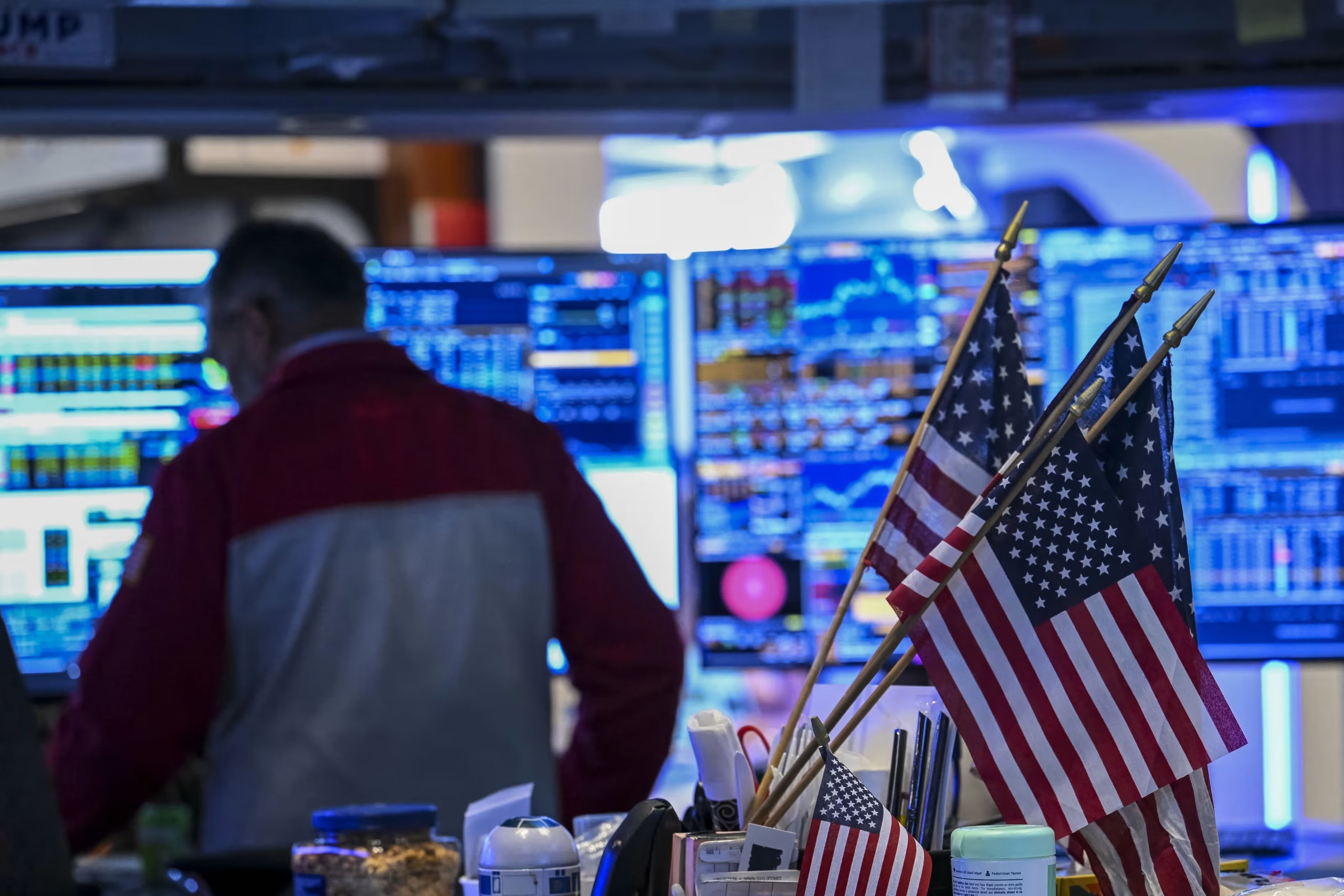
The US economy is projected to grow much faster than all other major advanced economies this year, as its domestic policies trigger difficulties across much of the globe.
According to Axios, the global economy has proved surprisingly resilient in the face of successive shocks.
The US stands out within this broader picture. A boom in artificial intelligence investment is helping the country expand far more rapidly than peer economies.
Yet this exceptional performance carries a price: more persistent inflation and interest rates that may need to stay at elevated levels for longer to rein it in.
The Organisation for Economic Co-operation and Development (OECD) projects that the US economy will expand by 2.2% this year.
That rate is roughly double the pace forecast for the eurozone, Germany, and the United Kingdom. Growth is expected to be even weaker in Japan (0.8%) and Canada (0.9%).
This growth gap is expected to persist next year. In 2027, US growth is projected to reach 2.1%, while growth across most other major advanced economies in the rest of the world is forecast to hover around 1%.
The OECD has grown more optimistic regarding the US since June, raising its growth forecast by 0.2 percentage points for 2026 and by 0.3 percentage points for 2027.
This trend contrasts with downward revisions to next year’s growth projections for the global economy overall, the eurozone, Canada, the United Kingdom, and Japan.
OECD Chief Economist Stefano Scarpetta told reporters this morning:
“The biggest risk remains the course of the conflict in the Middle East and its impact on the energy market. But there are a number of other risks, some of which appear to have become somewhat more pronounced compared to the June forecasts.”
Scarpetta highlighted rising government bond yields, the risks accompanying the AI investment boom, and the likelihood of extreme weather pushing up food prices.
According to the OECD, the boom in artificial intelligence (AI) has provided the US economy with a powerful shock absorber absent in most other economies.
Rapid growth in AI investment and manufacturing “partially offset” the economic blow dealt by the conflict in the Middle East.
Data centre and technology spending directly bolstered US growth.
The inflation outlook, meanwhile, is proving more stubborn than it appeared several months ago.
The OECD expects headline inflation in the US to fall from 3.6% this year to 2.6% next year.
However, this forecast for 2027 is half a percentage point higher than the figure projected in June.
Core inflation in the US is projected to stand at 3.3% this year, among the highest rates across leading advanced economies, before easing to 2.5% next year.
This stubborn path explains why the OECD expects the Federal Reserve to deliver one more interest-rate increase this year and anticipates rates will remain in the 4% to 4.25% range through the end of 2027.
On the other hand, the AI boom accelerating US growth is beginning to bring its own macroeconomic headwinds.
According to the OECD, long-term borrowing costs in most of these major economies are at their highest levels in at least 15 years.
The organisation argues that heavy borrowing by AI firms has contributed to pushing yields higher, which could elevate costs across the broader economy and leave markets vulnerable if AI profits fail to meet expectations.
America has contributed to making the global economic climate more challenging.
Even though its own economy has so far performed better than nearly all other countries, this resilience comes accompanied by an inflation problem that remains difficult to eliminate.
Republican backing from US President Donald Trump’s own party for the war he is waging against Iran is declining swiftly.
According to a CNN/SSRS poll published on 22 September, the proportion of Republicans who approve of Trump’s handling of the war dropped from 73% in March to 60% in September.
A majority of Republicans under the age of 45, as well as Republican voters outside the MAGA movement, no longer approve of Trump’s war policy.
Three-quarters of Americans believe that the Iran war is not worth its human and financial toll.
Regarding the war, which has been ongoing for roughly seven months, 78% of respondents stated that Trump is not making sufficient efforts to end the conflict. Approximately two out of every three people disagreed with the view that the US is winning the war.
Approval of Trump’s overall foreign policy stewardship remained at just 29%. This marked the lowest level recorded by CNN across Trump’s two presidential terms.
Share of those viewing Israel as an ‘enemy’ at record level
The proportion of respondents defining Israel as an enemy of the US rose to its highest point in CNN surveys conducted since 2000. This figure reached approximately double the level recorded in March 2025.
In a separate Reuters/Ipsos survey conducted among 1,277 adults, Trump’s overall approval rating slipped within a single week from 35% to 32%. This represented the lowest approval rating measured throughout Trump’s political career.
Discontent among Republican voters over the cost of living is also mounting. The proportion approving of Trump’s performance in this area stood at merely 17%.
While the cost of living remains the paramount issue for voters ahead of the 3 November midterm elections, the sharp surge in fuel prices since the onset of the war has exacerbated unease within the Republican base.
82% believe the war will be prolonged
Earlier this month, Trump said the war would conclude “right after” the elections. However, 82% of poll respondents believe the fighting will continue for a prolonged period.
Tehran, meanwhile, has shown no sign of backing down in the face of US military and economic pressure.
In a report published on 10 September, The Wall Street Journal revealed that US Vice-President JD Vance, Secretary of State Marco Rubio, and other senior officials had warned Trump in private discussions.
Officials reportedly said that Iran could continue resisting Washington’s military and economic pressure and withstand this coercion even beyond January 2029, when Trump’s term in office concludes.

In the debate surrounding the dangers posed by artificial intelligence, almost everyone is attempting to market a product.
While the mainstream media portrays artificial intelligence as an imminent mass extinction event, US President Donald Trump frames the issue within the context of a new Cold War with China, arguing that the US cannot afford to slow down.
In his analysis, journalist Ken Klippenstein emphasizes that Silicon Valley elites profit directly from this intense attention.
A new generation of the tech class is occupying the public mind with various doomsday scenarios, ranging from bioterrorism to machines taking over the world.
While this dynamic transforms artificial intelligence into a “national security” issue, it elevates the technology to the level of nuclear weapons and removes it from public oversight.
The intelligence community thinks the A.I. apocalypse narrative is BShttps://t.co/DpyAIXx4ob
— Ken Klippenstein (@kenklippenstein) September 15, 2026
Although not immune to the tendency to exaggerate threats, reports from US intelligence agencies paint a picture far removed from the hysterical tone in the media.
The US intelligence community assesses that artificial intelligence merely magnifies risks that already exist.
Sensational headlines run by legacy media are fueled by social media figures who spread claims of human extinction to millions of followers. In this way, fears themed around “existential risk” or “doomsday” take root in the public imagination.
On the other side of the coin are those who oppose disaster narratives while pursuing their own commercial interests.
Prominent figures in this camp include Yann LeCun, former chief AI scientist at Meta, and Andrew Ng, co-founder of Google Brain and head of AI Fund.
In October 2023, LeCun accused OpenAI chief Sam Altman, Google DeepMind chief Demis Hassabis, and Anthropic chief Dario Amodei of running a “massive lobbying effort” designed to tilt the regulatory landscape in their own favor.
LeCun warned that if these fear politics succeed, artificial intelligence will be monopolized by a small number of corporations.
Ng, for his part, described the claim that artificial intelligence would destroy humanity as “mind-bogglingly stupid”, arguing that large corporations are stoking extinction fears to avoid competing with open-source models.
Although these criticisms carry truth regarding corporate aims, the conflicting interests of both sides remain striking.
LeCun and Ng advocate open-source artificial intelligence models, whereas Anthropic and OpenAI favor proprietary models that keep their source code secret and lease access to users.
While major players producing proprietary models possess the capacity to comply with prospective federal licensing rules, open-source enterprises stand to be damaged by such statutory mandates. The common ground shared by doom-mongers and deregulation advocates is their lack of concern for the actual risks artificial intelligence generates.
The US intelligence community provides a more measured framework regarding tangible dangers.
In the Annual Threat Assessment, which catalogues China’s military strength, Russian influence operations, and drug cartels, the threats posed by artificial intelligence are summarized in just three items:
“It is essential to ensure that the use of machines and AI remains under human control.”
“These applications also carry risks that require careful human engineering to properly mitigate the risk of AI autonomy before they are widely deployed.”
“Emerging technologies such as AI and quantum computing are expected to have significant implications for national security.”
The official assessment by the 18 agencies comprising US intelligence on the perils of artificial intelligence remains limited to these statements. The reports contain no determinations concerning superintelligence, the annihilation of humanity, or an uprising of machines.
The US Department of Homeland Security Threat Assessment notes that artificial intelligence merely introduces fresh layers of complexity to existing threats. The department outlines five primary issues:
Disinformation, fabricated video or audio recordings (deepfakes), and election interference;
Cyber operations and financial crime;
The exploitation of this technology by violent extremists, alongside radicalization;
The proliferation of chemical and biological knowledge;
The circumvention of AI security controls and the poisoning of training data.
All of these risks were familiar prior to the emergence of artificial intelligence. AI-enabled disinformation permits legacy propaganda methods to be deployed with greater speed and intensity.
Cyber operations, financial crime, and elements of radicalization have likewise ranked as familiar subjects for many years.
Concerns regarding biological and chemical threats date back to the Bill Clinton administration, while the fifth item stems entirely from humans tampering with AI security controls.
The Global Catastrophic Risks Assessment report by the Pentagon-funded RAND Corporation think tank defines artificial intelligence as an “entropy source”.
The report states:
“AI can be thought of as adding entropy and chaos to thorny problems humans face. Chaos does not require the development of superintelligent or supercapable AI; it is possible with current and near-term AI capabilities.”
Another research study conducted within RAND identifies genetically engineered pathogens, geoengineering, and nuclear war as three plausible pathways to human extinction.
However, numerous physical and operational constraints prevent artificial intelligence from triggering these catastrophes.
In a follow-up report investigating whether large language models facilitate the planning of a mass biological attack, RAND Corp. researchers identified no statistically significant difference between plans formulated with AI assistance and those produced independently.
The US National Academy of Sciences similarly notes that the primary barrier to bioterrorism is not an absence of access to information.
The decisive bottleneck lies in DNA synthesis screening, hands-on laboratory skill, culturing, formulation, and aerosolization: procedures that all demand human intervention, carry high costs, and remain prone to failure.
Having no commercial product to release or corporate shares to protect, official analysts record with balanced language that artificial intelligence does nothing beyond compounding the scale and velocity of current problems.
Observing that all factions resort to exaggerated rhetoric to capture attention, Klippenstein points out that in the debate over whether a chatbot will transform into a god, the major actors turn a profit while foisting the cost onto the public.

Hamburg drill tests Baltic deployment prior to formal defense alert

EU explores cooperation with Trump-backed Peace Board for Gaza aid

Peter Thiel receives Springer award, targets Pope Leo and CCP

Emmanuel Todd says West faces collapse amid Ukraine and Iran crises

EU states weigh stricter asylum rules and third-country return hubs
-

 America2 weeks ago
Milanovic declares global neoliberalism dead, warns of plutocracy
-

 America2 weeks ago
Five minutes to doomsday – 4: American capitalism at the frontiers
-

 Asia2 weeks ago
DeepSeek engineer warns AI will lead to communism or Cyberpunk
-

 America2 weeks ago
Big Tech profits from AI extinction hype, Ken Klippenstein says
-

 Europe2 weeks ago
UK faces £258bn infrastructure gap as commission urges private funds
-
 Middle East2 weeks ago
Saudi exportable crude stocks risk depletion within a week
-

 Middle East2 weeks ago
Iran used Chinese satellite imagery in deadly US base attack: report
-

 Europe2 weeks ago
Wolfgang Streeck links German polycrisis to capitalism and AfD rise
