
Russia
Iran war tests Russia-UAE partnership amid expanding trade ties

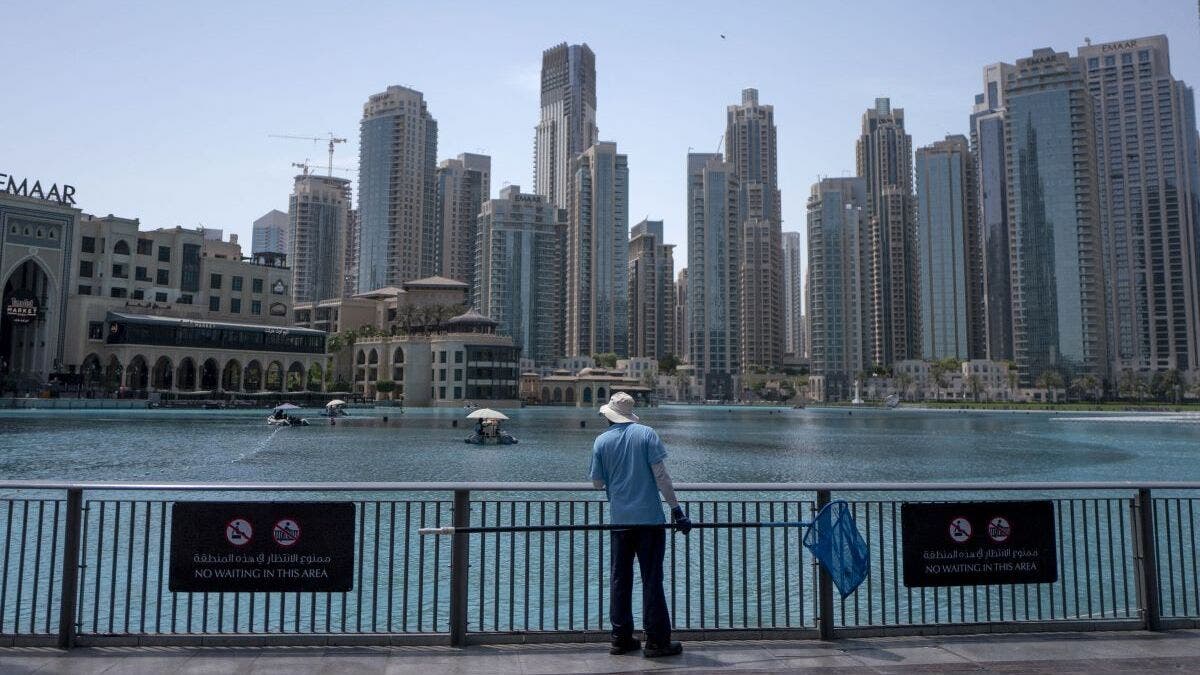
A report titled “Foreign Policy Synergy of Russia and the UAE Under Regional Crisis Conditions: Opportunities and Risks”, prepared by the Y. M. Primakov Center for Foreign Policy Cooperation, states that the war in Iran and strikes on Persian Gulf countries have tested the strategic partnership between Russia and the UAE, without shaking its economic foundations.
The author of the report, Andrey Shelkovnikov, an expert at the HSE University Centre for African Studies, assesses that under current conditions, developing alternative logistics routes and jointly participating in the post-war reconstruction of Iran could serve as promising areas of cooperation.
Factors sustaining and straining Moscow-Abu Dhabi ties
According to the author of the report, Russia-UAE relations are experiencing “one of the most dynamic periods in their fifty-year diplomatic history.” UAE President Mohammed bin Zayed visited Moscow in January 2026, marking his second visit in six months and his fifth since the beginning of 2022. Over the past year alone, the two countries signed agreements on trade in services and investment, an economic partnership between the Eurasian Economic Union (EAEU) and the UAE, and the avoidance of double taxation.
According to data from Economic Development Minister Maksim Reshetnikov, mutual investments exceeded $40 billion in 2024, comprising $17 billion invested by the Emirates in Russia and over $25 billion invested by Russia in the UAE economy. Trade volume in 2025 exceeded $12 billion, reaching roughly four times the pre-pandemic 2019 level ($3.5 billion). The sides aim to double this figure within five years. Non-oil trade grew more than fourfold, supported by exports of Russian agricultural products, technology, and services. The Emirates has also become a major hub for Russian business under sanctions conditions.
The author attributes the political closeness between the two countries to a shared orientation toward a multipolar world order. The UAE joined BRICS in January 2024, obtained dialogue partner status in the Shanghai Cooperation Organisation, and is expanding cooperation with the EAEU. The Emirates did not join Western sanctions against Russia and adopted a neutral stance on the Ukraine conflict. Having repeatedly mediated prisoner exchanges in particular, the UAE hosted trilateral security-focused talks between Russia, the US, and Ukraine in Abu Dhabi in early 2026.
However, with the outbreak of hostilities around Iran, a distinct asymmetry emerged in relations between Moscow and Abu Dhabi. The report notes: “While for the UAE, Iran constitutes a fundamental threat to national security, Russia shapes its own position from the perspective of a broader strategic balance that envisages preserving ties both with Tehran and with Arab countries that are Moscow’s strategic partners in the region.”
The US and Israel launched a war against Iran on 28 February 2026. Washington announced the objectives of the war as destroying Iran’s missile capacity and military infrastructure, weakening its naval forces, and preventing Tehran from acquiring nuclear weapons. Supreme Leader Ayatollah Ali Khamenei and numerous senior officials and military personnel were killed in the initial strikes. Tehran responded to these attacks with heavy missile and drone strikes against Israel, American facilities, and the energy infrastructure of Gulf countries, while bringing maritime traffic in the Strait of Hormuz to an effective standstill. The sides reached a temporary ceasefire in early April through Pakistani mediation and agreed on a 60-day memorandum of understanding in June. Despite this document officially expiring on 18 August, clashes flared up again in early July.
Among the countries in the Gulf region most affected by the strikes, the UAE became the target of more than 2,000 attacks in the very first month of the conflict. Tourist districts, hotels, airports, and oil facilities in Abu Dhabi, Dubai, Sharjah, and Fujairah were damaged. Amid these developments, the UAE withdrew from OPEC and the OPEC+ group as of 1 May (Abu Dhabi officially justified this decision by its long-term energy strategy). On 18 August, the UAE accused Iran of attempting to launch ballistic missiles at its territory. Following Tehran’s denial of the claims, Abu Dhabi indefinitely suspended all commercial and financial transactions with the Islamic Republic.
Differences of opinion regarding the conflict were also reflected in votes at the United Nations Security Council. While Russia and China abstained on a draft resolution condemning Iran’s attacks on Persian Gulf countries, in April they vetoed a resolution submitted by Bahrain authorising international forces to ensure the safety of navigation in the Strait of Hormuz (the Emirates had participated in drafting both documents). The report states that Arab countries received this stance with mixed feelings: although regional capitals understand Russia’s strategic interests in its relations with Iran, they expect Moscow to exert harsher pressure on Tehran. Shelkovnikov notes that Western claims alleging Russian intelligence support for Iran (which the Russian side denies) further complicate the situation.
An understanding reached between Ukraine and the UAE in the security and defence sphere, including the sharing of counter-drone operational experience, created a new friction point in bilateral ties. The expert assesses: “This rapprochement carries risks for Abu Dhabi’s mediation role between Russia and Ukraine, as it could cast a shadow over the Emirates’ neutrality.” Shelkovnikov also emphasises that Russia could supply air defence systems to Gulf countries to counter ballistic missiles and drones.
Ukrainian President Volodymyr Zelenskyy embarked on a tour of Persian Gulf countries in late March 2026, agreeing on long-term defence cooperation with Saudi Arabia, the UAE, and Qatar. A memorandum of understanding was signed with Riyadh on 27 March, followed by an intergovernmental agreement with Doha the next day. Announcing on the same day that they had reached an understanding with the Emirates on security matters, Zelenskyy stated that details were being finalised. In late April, the Ukrainian President announced the signing of ten-year agreements dubbed the “Drone Deal” with all three countries. According to Zelenskyy’s statement, these agreements encompass the transfer of experience in defending critical infrastructure against heavy attacks, as well as the joint development and production of unmanned aerial vehicles, air defence systems, and electronic warfare equipment.
What opportunities lie ahead for Russia and the UAE?
The crisis surrounding Iran has made the Collective Security Concept for the Persian Gulf Region, which Moscow has advocated since the 1990s, as necessary as it is difficult to implement. The latest version of the periodically updated document was published on the Russian Foreign Ministry’s website in July 2026. The draft envisages establishing direct military communication lines, arms control agreements including the creation of demilitarised zones, and commitments by Gulf countries not to open their territory for third parties to attack neighbours.
Heavy Iranian strikes targeting the six Gulf Cooperation Council member states and Iraq exposed the fragility of the security architecture based on bilateral defence agreements with the US. According to the author’s assessment, American bases on the territory of Arab monarchies turned into open targets for Iranian strikes rather than a protective shield. In this picture, although Russia reminds its Middle Eastern partners of its own security initiative, this approach faces various obstacles. Trust in Iran among Arab countries, with the exception of Oman, has been shattered; furthermore, any step by Russia that could be interpreted as support for Tehran is viewed with caution. Nevertheless, despite its harsh rhetoric toward Iran, the UAE does not entirely close the door to dialogue and emphasises that lasting regional security can be achieved not through temporary measures, but through a comprehensive political settlement.
According to Shelkovnikov, Moscow faces several fundamental issues to resolve: convincingly demonstrating to Arab partners that communication channels established with Tehran serve de-escalation rather than supporting military actions, adapting its security concept to changing military realities, and taking into account that the crisis of trust between Iran and Gulf monarchies could endure for decades. The report states: “It would be appropriate for Russia to firmly maintain its non-involvement stance in the conflict and focus on positioning itself as an actor facilitating a political solution.” According to the author, Russia could reinforce this mediation role through concrete steps such as contributing to the opening of humanitarian corridors, taking part in diplomatic efforts to lift the blockade in the Strait of Hormuz, and creating negotiation platforms that take into account the interests of all sides.
The author of the report views the economy as the foremost concrete area where the partnership can demonstrate growth. The crisis in the Strait of Hormuz, through which roughly 20% of global oil exports passed prior to the war, increased the importance of Russia-UAE coordination in the oil market; indeed, oil prices surged by 50% in March 2026 alone. Although it has not yet reached its full potential, logistics remains a promising domain. Shelkovnikov recalls the memorandum between Rosatom and UAE-based port operator DP World regarding port infrastructure investments, including the development of transit shipping via the Northern Sea Route. Amid the ongoing crisis in the Strait of Hormuz and tensions in the Red Sea, the expert suggests that Russia and the UAE could jointly develop transport corridors in Africa and invest in interconnected port and storage infrastructure. The expert notes: “The potential for cooperation in transport and logistics also exists in Central Asia and the Caucasus, as EAEU transport projects can be integrated with the UAE’s global logistics network.”
Another prominent and vital track is digitalisation. Russian companies, including Yandex, operate in the UAE market; however, Moscow will need to compete here with technological partnerships that the UAE has established with the US and China. Shelkovnikov says: “Expanding technological cooperation could encompass joint projects in big data processing, cybersecurity, financial technologies, and the digital infrastructure of smart cities.”
Over the longer term, following the resolution of the Middle East conflict, the author of the report suggests that Russia and the UAE jointly participate in rebuilding Iranian infrastructure. This step would not only consolidate de-escalation, but also assist in gradually restoring trust between Arab countries and Tehran, which is considered an indispensable condition for a lasting regional security architecture. The report concludes with the observation: “Cooperation in energy, logistics, technology, and humanitarian aid are the core directions capable of sustaining and developing the partnership despite all difficulties created by the current crisis.”







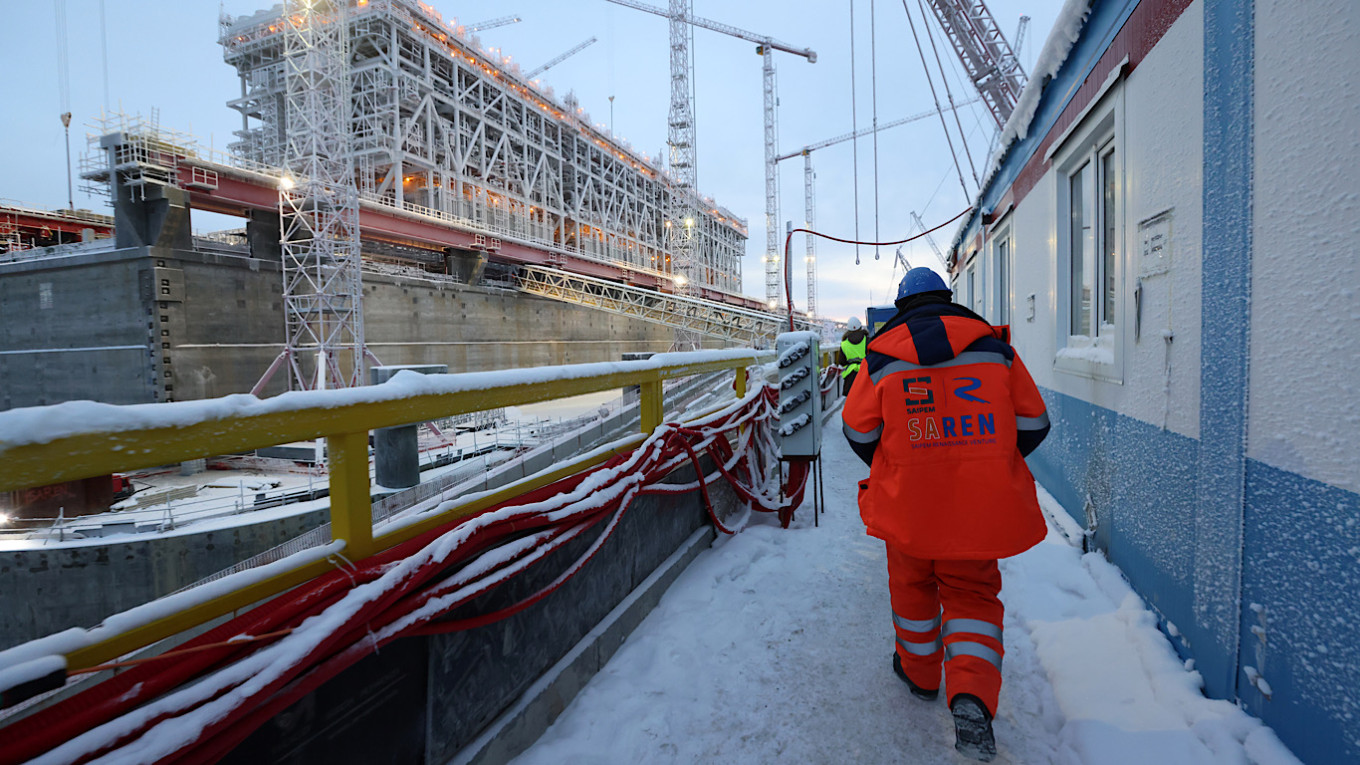
Following a diesel arrangement with the US and the prospect of expanding Russian fertiliser shipments, Moscow is offering Washington joint cooperation in the Arctic.
Russian President Vladimir Putin announced that Moscow is considering the possibility of working together with US partners in the Arctic region.
Speaking at the Gas Exporting Countries Forum (GECF) summit, Putin described the regional situation:
“We are actively working in the Arctic, which I mentioned, with many countries around the world, and we are interested in joint work. Until very recently, our European partners and our Chinese partners were working alongside us at our fields. Now we are considering the possibility of joint work with American partners.”
So, which fields could a partnership between the two countries in the Arctic encompass, and what could Moscow offer Washington in exchange for lifting sanctions on Russian gas? Liquefied natural gas (LNG) projects stand at the heart of the matter.
European companies pulled out of Russian gas projects such as Yamal LNG and Arctic LNG 2 due to sanctions imposed on Russia after 2022.
According to Igor Yushkov, an expert at the Financial University under the Government of the Russian Federation and the National Energy Security Fund (NESF) who spoke to the Vzglyad newspaper, cooperation with Chinese companies moved to a new dimension following the departure of the Europeans.
Two Chinese shareholders, CNPC and CNOOC, are involved in the Arctic LNG 2 project. Initially, both companies froze their participation out of concern over US sanctions targeting the venture.
Mikhail Vakilyan, an expert at the Institute for the Development of Fuel and Energy Complex Technologies, told Vzglyad that Beijing did not alter its policy, but rather that Chinese firms CNPC and CNOOC simply did not want to risk their access to the US dollar.
Yet, a year and a half later, the picture shifted entirely. In the second half of 2025, China began purchasing gas from the sanctioned Arctic LNG 2 facility and dedicated a standalone terminal to the project.
Furthermore, it opened a second terminal this year serving exclusively Russian LNG.
China even resumed module deliveries needed to complete the third train of Arctic LNG 2, despite having halted shipments previously.
Moscow seeks markets and turbines, offering technology for Alaska
Despite all these developments, Russia’s expectations from the US in the Arctic remain clear. Mikhail Vakilyan summarised this requirement:
“Russia needs two things: first, markets; and second, hardware. Lifting sanctions on Arctic LNG 2 and its gas carriers will bring back buyers in Japan, India, and South East Asia, eliminating the discount currently enjoyed by China as the sole customer. As for hardware, the turbines driving the liquefaction compressors at Yamal LNG and Arctic LNG 2 are manufactured by the US company Baker Hughes. Maintenance, spare parts, and modernization for these machines are blocked by US export bans.”
Igor Yushkov viewed the process through the lens of a political and economic trade-off:
“The exact same scheme seen in the diesel agreement is operating here. In exchange for easing anti-Russian sanctions and putting pressure on Ukraine, we are offering the US mutually beneficial projects and broader economic cooperation. We are showing that this cooperation can be versatile across various fields such as diesel, fertilisers, LNG, and similar sectors.”
The tangible offer Russia could present to the US in the LNG sector in exchange for sanctions relief is technological support for an LNG plant to be built in Alaska, referring to the $25 billion Polar LNG project.
Yushkov explained the card held by Russian energy company Novatek:
“Novatek possesses a technological solution applied at Arctic LNG 2 that would also suit the LNG project in Alaska. These are reinforced concrete gravity-based structures carrying liquefaction equipment; essentially floating LNG factories. Novatek has already built two such platforms alongside their equipment and established an offshore super-structure construction centre in Belokamenka. The issue is that both this centre and the Arctic LNG 2 plant itself fell under US sanctions. Therefore, in exchange for lifting sanctions at least on the super-structure construction centre, we could build such a facility for Alaska.”
According to the expert, Russia could cast the reinforced concrete platform at this centre in Belokamenka, install the LNG plant atop it, and tow it to Alaska once completed.
Because building from scratch in the Arctic itself is both costly and creates constraints regarding time and equipment transport, this method offers a much simpler solution.
Nevertheless, Yushkov warned that the plan is not finalised:
“Owing to numerous sanctions-related issues and questions surrounding the project’s economics, it is not certain this scenario will materialize; however, the Americans are still interested in our technologies for Alaska, and Russia is stating it can capitalize on this and deliver it.”
Conversely, Yushkov recalled that Russia remains the primary rival to the US, particularly in the gas sector, and that the US administration has systematically squeezed Russian gas out of the European market in recent years.
According to the expert, helping US LNG capture the market share lost by Russia is hardly a brilliant idea.
Europe’s 2027 ban, China price talks, and rare earth metals
Arctic LNG 2 is not the only Russian project that could benefit from potential cooperation with the US; a new opening could also emerge for Yamal LNG, which is unaffected by US sanctions.
The crux here is not sanctions, but the European Union’s upcoming ban on all Russian LNG shipments starting from 1 January 2027.
Vakilyan explained the approaching risk and a potential solution using figures:
“In the first half of the year, Europe took nearly the entire output of the plant, amounting to 9.89 million tonnes. In two months, these volumes will need a new route and a new buyer; a US trading company appears very well suited for this role.”
Another winner in the equation could be Gazprom, which is conducting negotiations with China for the Power of Baikal pipeline, formerly known as Power of Siberia 2.
Vakilyan said: “Cooperation with the US is Russia’s trump card in price negotiations. China has long negotiated with Gazprom assuming Russian gas has nowhere else to go; an American company in the Arctic would disrupt that calculation.”
Viewed from a wider perspective, Russia and the US share two additional points of contact: oil projects and rare earth metals.
The Vostok Oil project, which awaits the lifting of sanctions on Rosneft, is the first among them.
Vakilyan listed the other areas:
“It is impossible to make headway on the Pobeda shelf, which could not be developed since 2014, without the Americans; that site requires subsea production complexes and drilling services in icy seas, where US companies are strongest. Another issue not apparent at first glance is rare metals. The Trump administration is seeking them across the globe, and Tomtor, one of the largest rare earth metal deposits, lies in the Arctic region of Yakutia.”
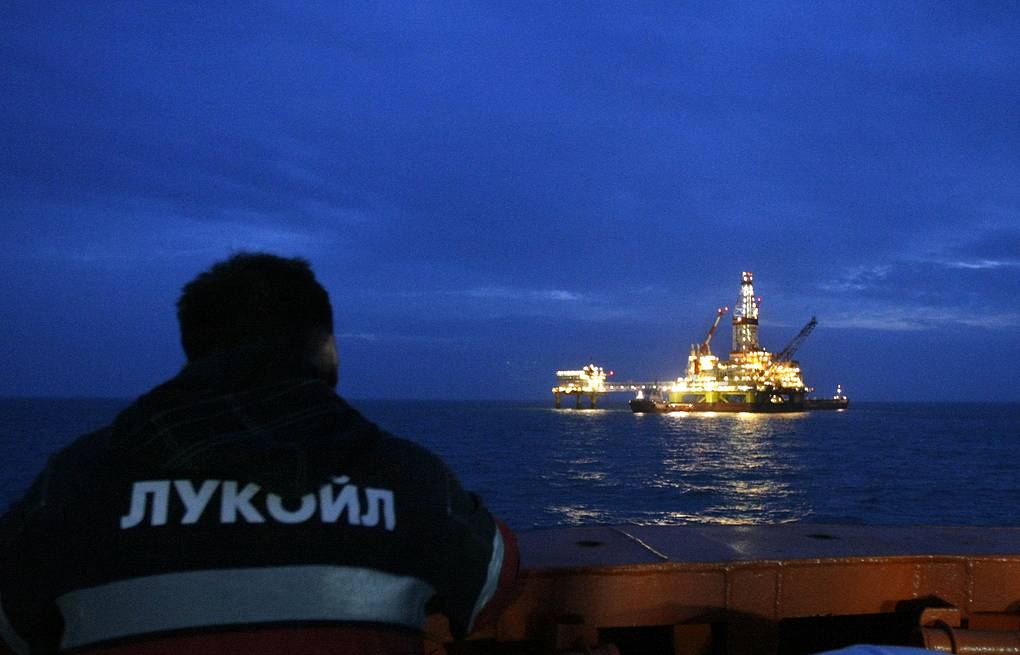
Russia and the US are discussing wide-ranging economic topics as part of efforts to find a solution to the war in Ukraine, including the return of American companies to the Russian oil sector.
According to a report in the British newspaper Financial Times, which cited sources familiar with the matter, joint energy projects and pipelines rank first among the plans projected to take effect once hostilities end.
One of the primary scenarios on the table involves American energy giants re-entering the offshore Sakhalin joint project after the war and contributing to the resumption of Russian oil deliveries to Europe via the Druzhba pipeline.
ExxonMobil was previously the only American company involved in the Sakhalin-1 project.
Objecting to the Russian authorities’ decision to transfer the company’s 30% stake in the project to state ownership, ExxonMobil announced last year that it was conducting negotiations with Russia, but stated it had no plans to resume operations in the country.
The discussions are not limited to the oil sector. Sources speaking to the Financial Times report that steps such as reopening Russian airspace to transit US flights and reviving cooperation in titanium production and supply are also under consideration.
Other striking items on the agenda include the potential sale of LUKOIL’s international assets to investors close to the White House, the participation of Russian gas producer NOVATEK in a liquefied natural gas (LNG) project in Alaska, and the restoration of gas flows to Europe via the intact line of the Nord Stream 2 pipeline.
Reuters also previously reported that the two countries were holding contacts regarding the attraction of investors to the Nord Stream pipelines.
One of the most sensitive items in the talks involves the Zaporizhzhia Nuclear Power Plant. According to the report, the parties discussed transferring the plant’s management to an American entity and sharing the generated electricity between Ukraine and Russia.
Russian President Vladimir Putin did not rule out an option in September last year under which Moscow could cooperate with Washington on the safety and operation of the Zaporizhzhia plant.
However, the Russian Foreign Ministry maintained that there is no precedent in the world for joint nuclear power plant operation, while Alexey Likhachev, the head of Russian state nuclear energy corporation Rosatom, described the idea of transferring the facility’s management to the US as a product of fantasy.
A US official speaking to the Financial Times said the Donald Trump administration is evaluating economic proposals extensively with both sides of the conflict.
The official emphasized that the negotiations cover post-war economic foundations that would create long-term growth and investment opportunities for Ukraine, as well as potential post-war economic cooperation opportunities with Russia.
Underlining that nothing has been finalized yet, the US official stated that economic agreements would be integrated into a comprehensive peace framework.
Kremlin spokesman Dmitry Peskov stated at the beginning of October that Russia and the US were negotiating a series of mutually beneficial joint projects in the economic sphere.
Vladimir Putin also stated that the two sides were considering the possibility of joint work on natural gas in the Arctic.
Kirill Dmitriev, the head of the Russian Direct Investment Fund (RDIF) and the Russian President’s special representative for investment and economic cooperation with foreign countries, noted that the energy sector and data centres are among the joint projects.
Dmitriev shared the view that cooperation between Moscow and Washington would generate significant synergy in the Arctic region, in the LNG sector, and across other energy branches.
Numerous major American companies halted their operations in Russia in 2022, when hostilities began in Ukraine.
ExxonMobil withdrew from the Sakhalin-1 project, where it held a 30% stake, while oilfield services providers Halliburton and Baker Hughes sold their commercial assets in Russia.
Putin signed a decree in August 2025 setting the conditions for foreign investors to return to the Sakhalin-1 project. Under the decree, foreign partners must spearhead the lifting of sanctions obstructing the project and secure the necessary equipment supplies. In December of the same year, the sale period for ExxonMobil’s untransferred stake was extended to 1 January 2027.
A notable tangible step in energy traffic was taken regarding diesel supplies. US President Donald Trump announced on 9 October 2026 that an agreement had been reached with Putin on supplying Russian diesel products to the American market and global markets.
Trump said Russia would deliver more than 1.8 million tonnes of fuel in several phases, after which it could send an additional 3 million tonnes.
On the same day, the US Department of the Treasury issued a special licence covering transactions involving Russian diesel products and their importation into the US.
The waiver in question remains valid until 7 April 2027.
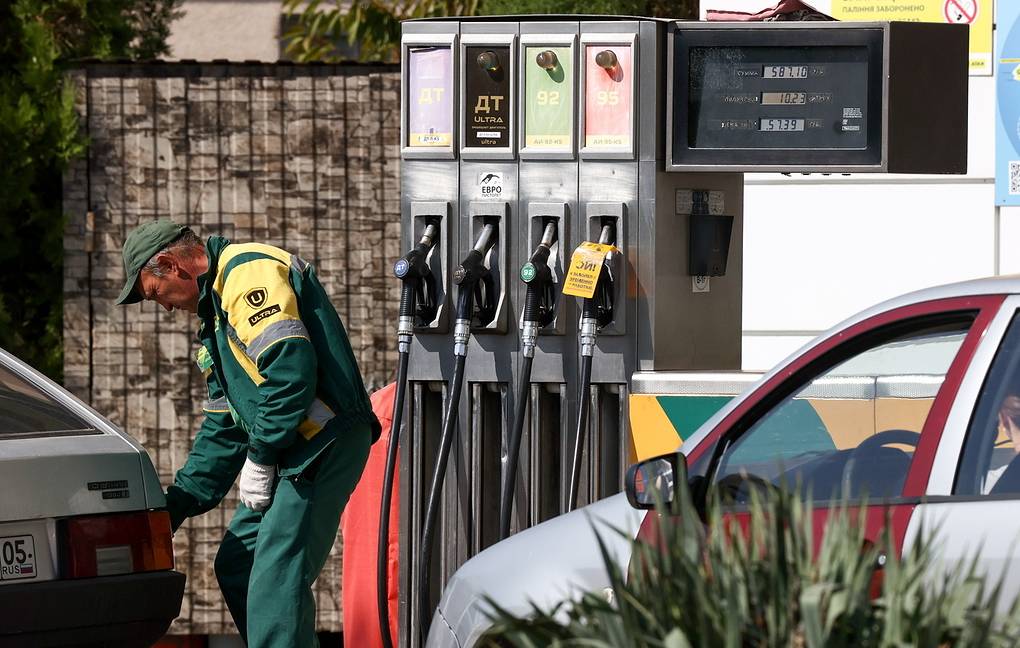
Russia has announced that it will ship 500,000 tonnes of diesel fuel to the global market under a partial lifting of its diesel export ban, enacted as part of measures concerning the Ukraine crisis and energy markets.
A statement from the Russian government said the decision was implemented in accordance with understandings reached between Russian President Vladimir Putin and US President Donald Trump.
Under the decision, which came into effect on 10 October, an initial phase of 500,000 tonnes of diesel fuel will be supplied to the global market.
“Following the rescinded decision, Russian oil companies, in coordination with the government, will immediately begin signing diesel fuel supply contracts with foreign business partners,” the government statement said.
Assessing the matter, Deputy Prime Minister Aleksandr Novak stressed that the decision would not affect the interests of Russian consumers.
Noting that diesel fuel is produced from Russian crude at domestic refineries, Novak stated that production volumes are sufficient both to meet all domestic market requirements in full and to ship the specified quantities to the global market.
The ban on diesel fuel exports in Russia was initially put into effect on 31 January 2026, covering only non-producing companies.
The government tightened the restrictions on 9 July by expanding them to include direct producers. Previously announced to remain in place until the end of October, the ban was partially relaxed in light of current developments.
Vladimir Putin and Donald Trump held a telephone conversation on 9 October. Following the call, US President Trump announced that an agreement had been reached on the supply of Russian diesel.
Trump said Russia had agreed to send more than 300,000 tonnes of fuel to American and global markets in the initial phase, 500,000 tonnes in November, and 1 million tonnes thereafter.
Trump also stated that an additional shipment of 3 million tonnes could follow at a later stage, adding that they expect this agreement to reduce diesel fuel prices rapidly.
Following the conversation, the US Department of the Treasury, on Trump’s instructions, issued a temporary general licence exempting Russian diesel fuel transactions and shipments to the US—previously prohibited under sanctions—until 7 April 2027.
Putin, in a statement after the call, confirmed Russia’s readiness to supply crude oil and petroleum products to American and global markets, noting that this would have a positive impact on the world economy.
Putin also noted that the two leaders discussed prospects for resolving the conflict in Ukraine, the situation surrounding Iran, and bilateral relations, agreeing to maintain contacts through presidential envoys, intelligence agencies, and other institutions.
A statement issued by Novak’s office after the call said Russia was prepared to ship diesel to the US within October.
Novak stated that export volumes could be increased in November and December as refineries emerge from scheduled maintenance.
Novak also conveyed that Moscow views positively Washington’s steps towards stabilising the global energy market and normalising energy trade.

Global dockers strike against war and arms transit to Palestine

Putin proposes Arctic energy cooperation to US to ease gas sanctions

Vučić scrapped plan to hold power after phone warnings, report says

EU scrambles for takers for remaining €21B in SAFE defence loans

Bolsonaro reportedly leaves Brazil on jet linked to scandal-hit firm
-

 America2 weeks ago
How Elon Musk fuses private empire with state power, Ben Tarnoff explains
-
 Europe2 weeks ago
AfD leader Weidel calls funding lost Ukraine war a grave mistake
-

 Middle East2 weeks ago
Egypt delays parliamentary vote on deploying troops to Saudi Arabia
-

 America1 week ago
US wealthy demolish multimillion-dollar mansions for land
-
 Europe1 week ago
EU rejects US proposal to resume Russian gas flows through Ukraine
-
 America1 week ago
At least 47 major US data centre projects halted or cancelled
-

 Middle East1 week ago
Netanyahu unveils security doctrine and regional alliance map
-

 Middle East1 week ago
Netanyahu trails Eisenkot in Israeli polls despite Trump backing
