
Diplomacy
Prof. Doster outlines strategic limits of US and Israeli campaigns on Iran

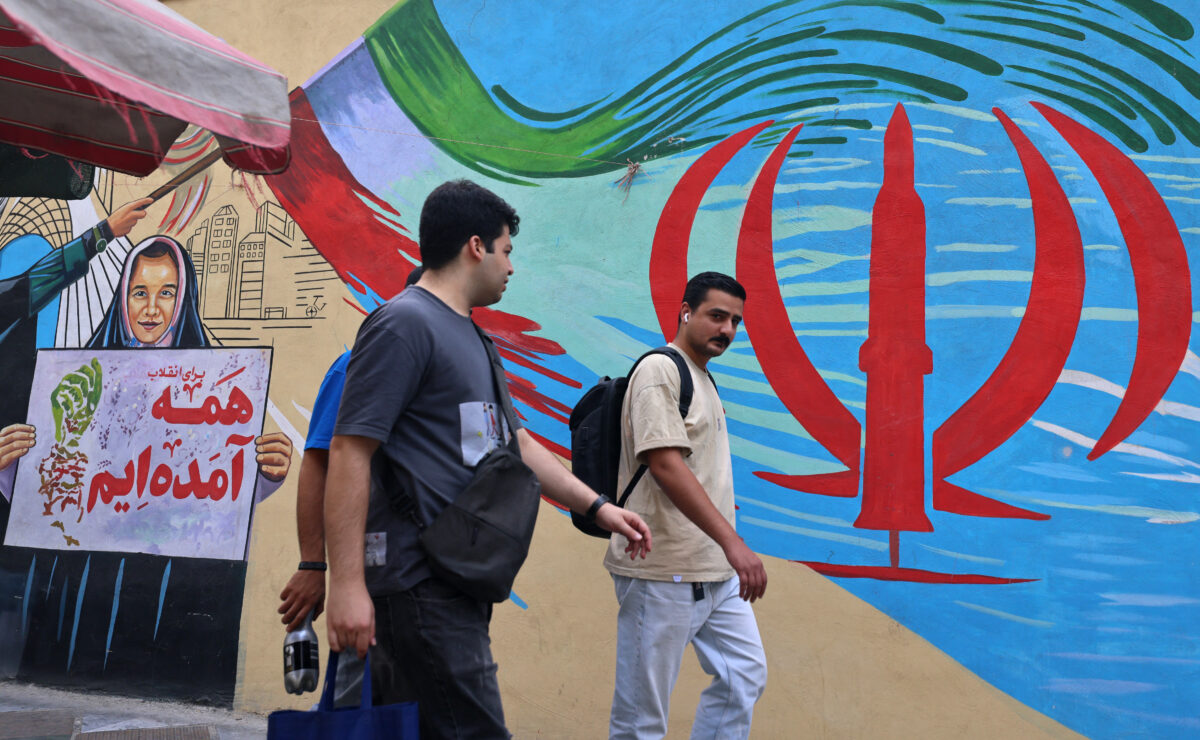
The strategic shifts within the Shanghai Cooperation Organisation (SCO), the historical balance governing Turkish-Russian relations, and the compounding geopolitical pressures confronting the US and Israeli leaderships in the Middle East formed the central themes of an extensive interview conducted by Dr Elif İlhamoğlu with Professor Dr Barış Doster, a senior academic in international relations, on the Harici digital broadcast network.
Dr İlhamoğlu opened the discussion by noting the leaders’ summit of the SCO convened in Bishkek, observing that the gathering had not received the attention it deserved in Western media despite the attendance of major global figures, including Turkish President Recep Tayyip Erdogan, Russian President Vladimir Putin, Chinese President Xi Jinping, and Indian Prime Minister Narendra Modi. Setting the context of the proceedings scheduled to run through 3 September, Dr İlhamoğlu reviewed the opening statements delivered by the leaders. President Erdogan characterised the SCO as an indispensable component of a multipolar order and issued a call for a more equitable international system. President Putin affirmed that Russia would exert every effort to eliminate elements that provoke armed conflict. President Xi urged the implementation of global initiatives, particularly promoting Chinese-led frameworks such as the Global Security Initiative to establish a just and peaceful order. Prime Minister Modi appealed for an end to endless wars. Dr İlhamoğlu then asked Prof. Doster how he evaluated the summit and what expectations should be drawn from it.
“The SCO proves its self-confidence by admitting rivals”
Prof. Doster stressed the institutional maturity and growing significance of the organisation, charting its historical trajectory:
“First of all, this summit is positive and important. If we date it from 1996, from the Shanghai Five, that makes 30 years. If we date it from its transformation into the Shanghai Cooperation Organisation in 2001, because initially it was five members—the Shanghai Five under the leadership of Russia and China, along with Kazakhstan, Kyrgyzstan, and Tajikistan—and in 2001 Uzbekistan joined, leading them to rename the Shanghai Five as a cooperation organisation, that makes 25 years from 2001. Now, whether one counts a quarter-century or 30 years from 1996, this represents an important process in terms of institutionalisation. It is an important period for taking stock, for self-criticism regarding what was achieved, how it was done, and what could not be achieved and why.”
Prof. Doster underscored the complex internal dynamics of the expanding bloc, which grew from five to six, then to eight with India and Pakistan, and subsequently to ten members with the accession of Iran and Belarus:
“Among the members, geography is expanding, but there are also differences in scale. The number of members is increasing—from five to six, from six to eight, from eight to ten. However, there are also differences in expectations, interests, threat perceptions, and priorities. Not all members enjoy sweet and harmonious relations. Among the members are states with serious mutual rivalries, such as India and Pakistan, who were admitted simultaneously. Then comes Iran, a state currently locked in struggle with the US and Israel in the Middle East.
“What does this show? It demonstrates that as the organisation institutionalises, expands, and diversifies its membership, and as large disparities in scale emerge among its members, it asserts a major ambition and seeks to demonstrate self-confidence by incorporating members that have serious disputes between them. The founders and leaders of the SCO, foremost among them Russia and China, are saying: ‘Look, who wanted India’s membership most? Russia. Who wanted Pakistan’s most? China.’ But by simultaneously admitting two nuclear-armed states that experience severe tensions, particularly the Kashmir dispute, and which have been on the verge of hot conflict, they are asserting an ambition. They are saying, ‘We can resolve the problems between these two members within the framework of the Shanghai spirit by admitting them on the exact same day; we have confidence in ourselves.’ They want to convey this message.”
Prof. Doster rejected characterisations equating the SCO to a Eurasian counterpart to NATO:
“Is this important? Naturally, it is important. Is it important for a multipolar world? Yes. Is it important for the evolution of an organisation? Yes. For instance, many of our colleagues argue that this organisation is a ‘Eurasian NATO’. I do not agree with that view. NATO is an organisation established in a different geography, under different regimes, within a different global context, and under the leadership of a different state. The Shanghai Cooperation Organisation, by contrast, is the product of another geography, other leading major powers, and a completely different international climate.
“One emerged at the onset of the Cold War; the other was established after the Cold War had ended. One is explicitly an Atlantic alliance, the North Atlantic alliance; the other is the Shanghai Cooperation, with a distinctly Eurasian weight. One is an organisation of regimes that prioritise liberal values and capitalism, such as democracy, human rights, freedom, and the rule of law, emerging from a context similar to the IMF, the World Bank, and the European Union. The other belongs to a climate and era marked by the dissolution of the Soviet Union, the collapse of the socialist and communist bloc, the relegation of the Warsaw Pact to history, and the downfall of the Eastern Bloc. Who is the founder and master of the former? The US. In the latter, Russia and China hold primacy.”
He observed that the perspectives of Moscow and Beijing within the SCO have converged over time:
“Initially, their expectations differed. While Russia viewed the Shanghai Five and subsequently the Shanghai Cooperation Organisation through the prism of separatism, extremism, crime, and border issues, China approached it more from a trade-oriented perspective. With new accessions, these perspectives multiplied, diversified, and began to harmonise. Today we see Russia moving closer to China on commercial matters, and China moving closer to Russia on security issues. The structure takes into account the concerns, threat definitions, priorities, and interests of new members. Its secretariat, its institutionalisation, and its dialogue partners have matured accordingly.”
Prof. Doster situated the SCO alongside the BRICS platform and the Belt and Road Initiative as drivers of a broader systemic shift:
“BRICS is a different structure—it is a platform rather than an institutional mechanism with a permanent secretariat in the conventional sense. If we add the Belt and Road Initiative, also spearheaded by China, this diversification is beneficial for the transition toward global multipolarity and for the Global South, or the Third World, a term I personally favour. As our great liberator and leader Gazi Mustafa Kemal Pasha, the great Ataturk, defined it, the proliferation and diversification of organisations that belong to, support, and empower oppressed nations is positive both for checking, restraining, and slowing imperialism, and for advancing multipolarity.
“This holds an added advantage for countries like Türkiye. For states defined as middle powers, as well as for smaller, less powerful nations, a multipolar system is beneficial because it expands their alternatives and strategic options.”
Dr İlhamoğlu noted the structural contrast between the two blocs, observing that if the US were removed from NATO, the alliance would face dissolution, whereas the SCO embeds multipolarity into its governance.
“NATO has operated as an instrument of US imperialism”
Prof. Doster elaborated on the structural divergences separating NATO and the SCO, reiterating his analytical critique:
“NATO has 32 members, while the Shanghai Cooperation Organisation has 10. Look at NATO’s structure when it was founded, and look at the geography across which it expanded after the collapse of the Soviet Union by rapidly absorbing former Soviet republics and former Warsaw Pact members. Are they the same? Certainly not. In the Black Sea, Türkiye joined NATO in 1952, followed later by Bulgaria and Romania. If they had the capacity, they would seek to include Ukraine and Georgia as well. The most recent two members are Sweden and Finland.
“Consider the geography of NATO’s expansion versus the geography of its founding. Look at its political economy, and examine what NATO signifies for the US arms industry. Then compare that to the founders of the Shanghai Cooperation Organisation and the states it incorporated during its expansion. There is an immense divide between them. Because of the historical context, the time frame, the domestic regimes of the member states, and their numbers, they cannot easily be compared.
“Alliances typically form around common denominators: liberal regimes sharing values like democracy, human rights, and the rule of law; shared threat perceptions; geographic proximity; and shared interests. When we look at NATO from its inception, including during the period following the September 11 terrorist attacks when its famous Article 5 was invoked, it has functioned according to the priorities of US imperialism and served as an instrument of aggression and occupation for US imperialism. Comparing NATO, founded in 1949 and now comprising 32 members, expanding despite assurances given to the Russians, with the Shanghai Cooperation Organisation shows that these structures are not comparable.”
Dr İlhamoğlu turned to bilateral diplomacy on the summit margins, highlighting the meeting between President Erdogan and President Putin. President Erdogan stated that Türkiye-Russia relations were far more advanced than ever, while President Putin described Türkiye as remaining one of Russia’s privileged partners in foreign policy and economics. Both leaders indicated that the Akkuyu Nuclear Power Plant project had reached its final stage and signalled potential new joint ventures. Dr İlhamoğlu asked Prof. Doster how he assessed bilateral ties, taking into account past tensions such as the S-400 dispute and recent developments in the Black Sea regarding attacks on Turkish commercial vessels.
“Ankara and Moscow know their ties must not be severed”
Prof. Doster framed Turkish-Russian relations within an enduring historical and institutional continuum:
“Whatever the political leaderships governing these countries or their political-economic preferences may be, relations between the two countries represent the ties of two great civilisations that are the heirs of empires, possess profound state traditions, and constitute two great nations. Whether Türkiye produces centre-right, centre-left, political Islamist, or nationalist traditions, and whether it is the era of Menderes, Demirel, Ozal, Erdogan, or Ecevit, Türkiye views the Soviet Union and its successor, Russia, through a historical lens. Moscow looks at Ankara through the exact same prism.
“The periods when bilateral relations peaked were the founding eras of both modern states. The Great Soviet Revolution, the October Revolution of 1917, overthrew the empire, bringing the Bolsheviks under Lenin to power. In Türkiye, under our great liberator Gazi Mustafa Kemal Pasha Ataturk, the National War of Independence took place, dismantling an empire as well. These two historical processes, which formed the subject of my doctoral dissertation, occurred concurrently through war and revolution following the dissolution of empires, and both possessed an anti-imperialist character, particularly against Britain. The Russians knew the Turks would not become communists, yet Lenin recognised Mustafa Kemal as a brilliant leader fighting the British and resolved to support him.”
He reviewed the long historical trajectory spanning the Ottoman and Romanov empires:
“Prior to that, two empires—the House of Osman and the Romanovs—fought, competed, and struggled. Over roughly the past century, the Russians changed their name three times and changed their regime three times: Tsarist Russia collapsed and was replaced through war and revolution by a communist regime under the Bolsheviks; the USSR collapsed in December 1991, leading to the Russian Federation with a semi-presidential system and a rapid transition to capitalism. Yet did this diminish the weight of the Russians on the world stage, their qualified human capital, their diplomatic ambition, or their historical pursuit of access to warm seas? It did not.
“The periods when our relations with Russia were strongest coincided with times when centrist political cadres governed Türkiye, such as the Demirel and Ozal eras. The Turkish construction sector carried out its successful African projects in Libya, while to the north it executed major projects across Russia, the Soviet Union, and Moscow. When this historical memory is kept in view, commercial relations, Russian tourism to Türkiye, our grain purchases—which President Erdogan also emphasised—and our defence acquisitions all fit within this perspective.”
Prof. Doster addressed acute diplomatic crises in recent years, noting how structural pragmatism prevailed:
“Under the Justice and Development Party, severe problems were experienced with Russia. We shot down their aircraft, which was a first in the history of a NATO member state. Subsequently, their ambassador was assassinated in Ankara, an incident that 300 years ago would have constituted a casus belli. Yet both states acted with great restraint.
“Naturally, there exists what we term a historical and balanced tension, a historical and balanced rivalry between them. They hold differing views on Central Asia, diverging positions on Chechnya, and disagreements over Ukraine—even as Türkiye relies on the Montreux Convention, one of the brilliant achievements of Gazi Mustafa Kemal Pasha. Disagreements persist regarding Crimea, over influence in the Caucasus, and President Putin has likely made a note of the S-400 issue.
“Nevertheless, no matter how strained relations become, both capitals understand that ties must not be broken or allowed to deteriorate into unmanageable phases. They value mutual friendship geographically, historically, politically, and economically. Russia is consistently one of Türkiye’s top three foreign trade partners, alongside Germany within the EU and China. We import grain, natural gas, and petroleum from Russia, and welcome large numbers of Russian tourists, while exporting fruits and vegetables to Russia and undertaking construction projects there.
“Taking all these factors together, Türkiye is a NATO member, and a loyal one, which Russia understands. However, Russia positions Türkiye in a distinct category. While they would not admit a NATO member to the SCO, they recognise Türkiye as a significant actor that experiences friction within NATO, and they position it accordingly.”
Dr İlhamoğlu turned to the intersection of ongoing armed conflicts and electoral politics. She pointed to the upcoming November midterm elections in the US amid the war involving Iran, where President Donald Trump has altered his rhetoric and actions to mitigate potential electoral damage. Similarly, in Israel, Prime Minister Benjamin Netanyahu faces domestic instability and risks losing partial US support, drawing criticism. Dr İlhamoğlu asked how leaders are managing the dynamic between warfare and election campaigns.
“Netanyahu cannot defeat Iran without US troops in combat”
Prof. Doster analysed the domestic political vulnerabilities confronting the US and Israeli leaderships:
“From the US perspective, oil prices driven by volatile conditions in the Strait of Hormuz represent a clear vulnerability for Trump. Having lived in the US, I know that ordinary citizens are not ideological in the way we are, but they care deeply about the price of fuel for their cars. Furthermore, the midterm elections take place in November. In US political science terminology, if a president loses, he becomes a lame duck for the remaining two years, a weak president. Therefore, ahead of November, Trump requires a foreign policy or military achievement that can be presented effectively at home and abroad.
“However, such an outcome is not achievable regarding Iran. The US has not defeated Iran militarily. Despite rhetoric claiming Iran had two, three, or twenty-four hours left, events demonstrated otherwise. In fact, stockpiles of expensive missiles and rockets produced by the US defence industry have been depleted. Politically, no objective was secured; the regime was not changed, and the combat capability and resolve of the Iranian armed forces, the Revolutionary Guard, and other armed formations were not broken. On the contrary, the Iranian nation, including opponents of the regime, set domestic opposition aside to rally behind their state. Trump did not achieve his aims in Hormuz, and there is no indication that conditions will shift to his desired scale before November.”
Turning to Israel, Prof. Doster assessed the strategic limits of its military operations against Tehran:
“What has become evident is that even with complete US backing, Israel cannot defeat Iran on the battlefield if the US itself is not fighting directly. Israel received US funds, weapons, intelligence, foreign policy backing, financial support, munitions, artillery, missiles, and radar systems. Yet if US combat aircraft are not bombing Tehran, Israel cannot defeat Iran on the battlefield alone. Furthermore, Iran demonstrated that through the range, technology, and cost efficiency of its missiles and radar systems, it could carry out highly effective counter-strikes and penetrate Israel’s defensive domes.
“This constitutes Netanyahu’s vulnerability. During periods of war and armed conflict, security-driven policies typically gain traction among electorates as concerns over physical survival rise. Netanyahu argues that Arabs and Iran are hostile and claims the public must unite behind him. Yet he and his spouse face documented charges; he is being tried for genocide at international courts and faces severe domestic corruption allegations. He attempts to suppress these issues by claiming the country faces an existential threat.
“However, he cannot convince the Israeli public as easily as before. If his primary opponent were a liberal figure, Netanyahu might find it easier to persuade the electorate on security grounds. But his strongest opponent is a former Chief of General Staff. Netanyahu cannot credibly claim that a former Chief of General Staff is an overly peaceful figure sympathetic to Arabs or Iran. On matters of security, existential threats, and armed conflict, his rival possesses professional training and military expertise far exceeding Netanyahu’s.
“This places severe pressure on Netanyahu. Israeli voters sympathetic to hardline policies who perceive Netanyahu as ineffective look toward the former military chief. Open sources indicate significant losses for the Israeli military, depletion among reserve units, and severe psychological trauma among returning soldiers. When critics argue that Netanyahu has failed to wage the war effectively, they direct their support toward a former Chief of General Staff rather than leftist or Marxist candidates.”
Dr İlhamoğlu observed that following the inability to achieve a military breakthrough against Iran, US Treasury Secretary Scott Bessent had initially signalled the implementation of unprecedented sanctions targeting Iran and third-party facilitators, including Chinese banks. However, after extensive media buildup, no sweeping measures were enacted, with Bessent citing the risk of triggering a global economic crisis. Dr İlhamoğlu noted that analysts pointed to ongoing US-China negotiations and a projected reciprocal visit by President Xi Jinping to the US in late September as factors restraining Washington, and asked Prof. Doster for his appraisal.
“US tariff measures against China have acted like a boomerang”
Prof. Doster addressed the broader efficacy of international sanctions and the structural constraints limiting US leverage:
“Having studied the history of sanctions, one sees that sanctions have rarely achieved their stated objectives globally. Since the 1979 Iranian Islamic Revolution, Iran has faced continuous sanctions, blockades, and embargoes. Iran has suffered strain, economic exhaustion, brain drain, periods lacking basic goods, and technological impediments, but it has not surrendered. Sanctions are likewise imposed on North Korea and Cuba, yet none of these states have been brought to their knees. In certain instances, countries transform sanctions into national mobilisation, achieving domestic breakthroughs in targeted sectors and technology.
“Regarding diplomacy, Trump frequently refers to foreign leaders as personal friends—including the leader of North Korea, President Putin, President Erdogan, President Xi, Egyptian President Sisi, and Ahmad al-Sharaa. He is exceptionally generous with such characterisations.
“More importantly, Iran possesses strategic depth supported principally by two major powers: Russia and China. If secondary sanctions are attempted against this rear guard, they will face defiance. Furthermore, when trade tariffs on China were raised to levels between 15% and 165%, the measures ultimately rebounded against the US itself and its European allies, without hurting China to the degree Washington intended. In accordance with the principle of reciprocity, China responded by introducing proportional tariffs and export restrictions on rare earth elements and critical minerals.
“Having taught in Australia, where the term is widely used, I view this as a boomerang: it struck the US, damaged its European allies, and failed to inflict the intended damage on China. Attempting comprehensive sanctions against the world’s second-largest economy and one of your top three trading partners inevitably causes severe domestic blowback. Consequently, despite aggressive rhetoric and high initial demands, substantive follow-through did not materialise.”
Dr İlhamoğlu concluded by asking whether the US could sustain military operations under prevailing conditions, noting renewed strikes in the Strait of Hormuz, Iranian retaliatory strikes on US bases, Trump’s assertions of harsher retaliation, and reported institutional discord within the Pentagon between Defense Secretary Pete Hegseth, military commanders, and the resignation of Secretary of the Army Dan Driscoll.
“I do not expect sustained strikes against Iranian infrastructure”
Prof. Doster dismissed the prospect of an expanded, sustained US air campaign against Iranian territory:
“To be clear, I do not expect a sustained campaign resembling the 40-day intensive strikes where US and Israeli forces targeted the Iranian mainland, Tehran, nuclear sites, infrastructure, military facilities, and energy installations. Harassment-style strikes or isolated exchanges may occur, but an intensive, uninterrupted 40-day campaign mobilising large numbers of aircraft, missiles, and radar systems against major Iranian infrastructure is unlikely.
“I rule this out not only on military grounds, but also due to economic and financial constraints, alongside depleted US inventories. This assessment is shared by prominent analysts such as John Mearsheimer, an eminent political scientist at the University of Chicago, leading international relations scholar, former military officer, and the pioneer of offensive realism. Mearsheimer articulates these precise constraints. When I make these arguments, domestic critics often attach labels, calling me a nationalist, Kemalist, or Eurasianist. But these realities are documented by leading American realist scholars who understand these military and strategic balances thoroughly.”





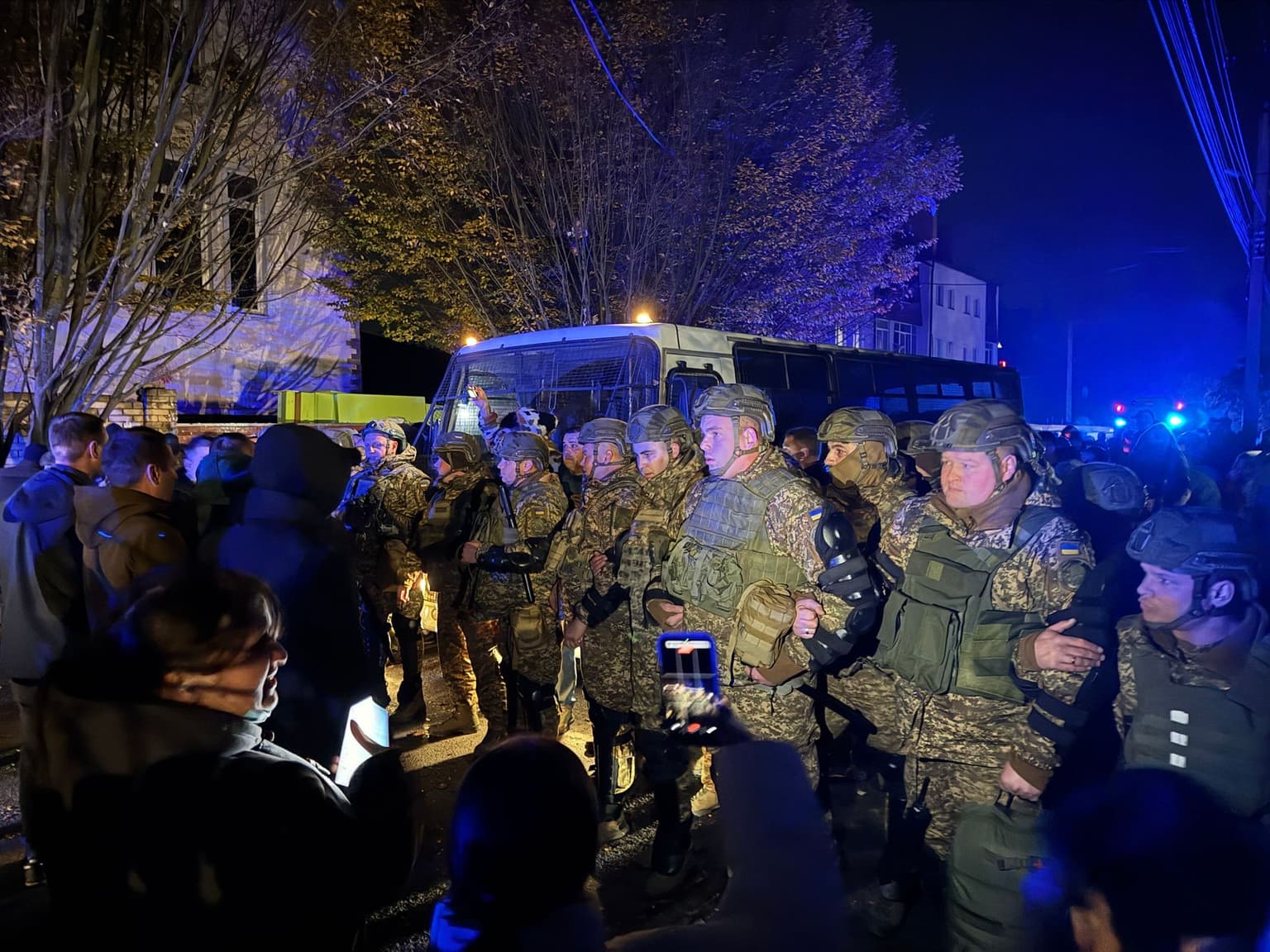
In the suburb of Petropavlovskaya Borshchagovka near the Ukrainian capital, Kyiv, protesters attempted to storm a building where mobilized conscripts and suspected deserters were allegedly being held.
The incident escalated into scuffles following allegations that soldiers were subjected to torture and denied medical assistance.
Following the developments, senior officials, including Kyrylo Budanov, Head of the Office of Ukrainian President Volodymyr Zelenskyy, went to the scene.
Footage circulated on social media and featured in Ukrainian media showed demonstrators forcing the doors of a detached house, brawling with unidentified individuals, and wounded soldiers being brought out of the premises after paramedics gained entry.
The unrest erupted when allegations spread that armed individuals were detaining around 40 people in the building basement, beating them, and barring them from contacting their families.
Initial reports claimed that at least one person had died inside, but police later denied any fatalities.
Dozens of people, including relatives of those detained, gathered outside the premises, alleging that bribes were being demanded in exchange for visitation rights.
The arrival of a private ambulance for medical intervention escalated tensions when medical personnel were initially barred from entering; police also acknowledged that the personnel were not admitted at first.
According to eyewitnesses, individuals inside sprayed gas at the crowd when demonstrators forced the doors. A female paramedic who entered alongside a police officer stated that between 25 and 30 people were inside and that four soldiers in serious condition required hospital treatment.
The four individuals, displaying bruises and wounds on their bodies, were taken for medical treatment. While one of the wounded was reported to have a severe spinal condition, the cause and extent of the injuries remained unclear.
According to on-site videos, a 14-year-old child was also allegedly among those removed from the building, though the child condition and whether they were in detention could not be confirmed.
“We do not torture, we build units”
Kyiv regional police stated that allegations of illegal detention and fatalities did not reflect the truth, urging the public to follow official statements.
Addressing the crowd, Ukrainian National Guard Commander Oleksandr Pivnenko, who arrived at the scene, argued that the facility was a temporary accommodation and reception point for mobilized personnel awaiting transfer to training centres.
Speaking to the UNIAN news agency, Pivnenko said, “We do not torture, we build units.”
Pivnenko noted that the four individuals transferred to hospital had been captured after deserting their units.
The neo-Nazi Azov Battalion within the National Guard confirmed that the facility belonged to one of its units.
Acknowledging that four soldiers had been injured, Azov officials rejected claims of systematic mistreatment and announced that necessary action would be taken should unlawful violence be detected.
Existence of similar facilities acknowledged
Kyrylo Budanov, Zelenskyy’s Head of Office and former Military Intelligence Chief, also arrived in the area and conducted inspections.
Noting that some relatives of patients were permitted inside to meet with detainees, Budanov announced that inspectors were examining the conditions.
Budanov acknowledged that “many similar facilities” exist in Ukraine, stating that an investigation into their operations would be launched.
Tensions persisted despite Budanov’s intervention. Clashes broke out when unidentified individuals in plain clothes attacked demonstrators.
A UNIAN correspondent was reportedly kicked in the stomach, and footage captured an individual with a head injury approaching Budanov, who told the injured man to report to the police. Gunfire was allegedly heard around the premises during the confrontations.
Correspondents from Hromadske reported that fights broke out around a bus brought in to evacuate soldiers.
Scuffles intensified again as authorities sought to transport the remaining soldiers. Budanov stated that 14 soldiers needed transfer to hospital, accusing demonstrators of obstructing the bus and attempting to overturn it.
Describing the demonstration as an illegal street action, Budanov called on the crowd to disperse.
The Ukrainian Ministry of Internal Affairs announced that a formal investigation into the incident had been launched, with the State Bureau of Investigation and the Military Ombudsman’s Office involved in the process.
Military Ombudsman Olha Reshetylova announced that they were conducting a joint inquiry with the National Guard Command and that the soldiers were receiving medical care.
International human rights organizations have documented secret detention centres in Ukraine since the 2014 Maidan events and the outbreak of conflict in Donbass.
A 2016 joint report by Amnesty International and Human Rights Watch highlighted cases of extrajudicial detention and torture in secret facilities run by the Security Service of Ukraine (SBU) and nationalist volunteer battalions. Authorities had denied the existence of unauthorized centres.
The latest developments took place amid intensifying debates over compulsory conscription practices and front-line desertion.
Ukrainian lawmaker Oleksandr Fedienko estimated in October that, while the exact figure of soldiers abandoning their units was unknown, it could reach up to 500,000.
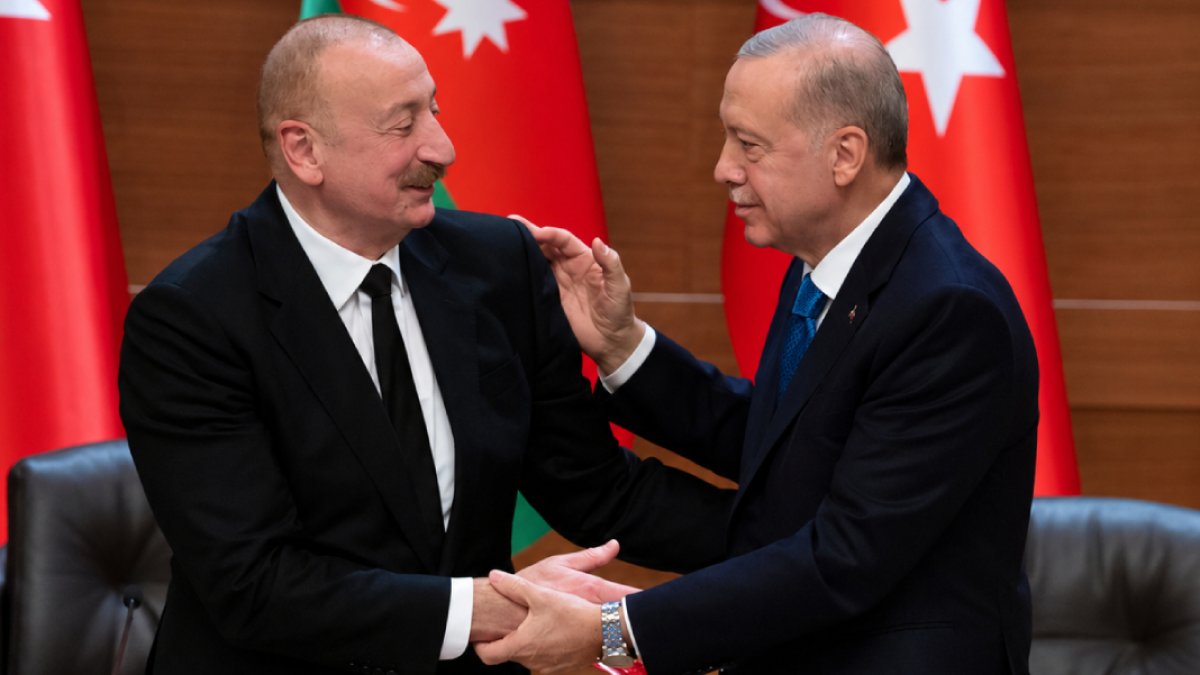
A sudden diplomatic spat between Ankara and Baku has brought latent structural contradictions to the surface, challenging the traditional motto of “two nations, one state” that has long defined relations between Türkiye and Azerbaijan. The friction, which was sparked publicly by domestic disputes over secular school dress codes in Azerbaijan and inflamed by divergent foreign policies towards Israel and Iran, represents an engineered divergence that could carry far-reaching consequences for the South Caucasus.
In an in-depth interview with the digital news channel Harici, foreign policy analyst Oğul Tuna examined the structural, domestic, and geopolitical currents driving this recent friction. Tuna argued that while the flashpoint seemed to erupt spontaneously over religious dress codes, it was rooted in institutional discrepancies, historical misunderstandings, and external geopolitical intrigues, particularly involving Israel, Iran, and the United States.
“The crisis did not actually start with the headscarf issue”
Evaluating the ostensible cause of the dispute, Tuna clarified that the row over religious garments in Azerbaijan merely triggered pre-existing structural friction.
“It is not 15 years, maybe even 40 years. Over 40 years,” Tuna said regarding the resonance of the headscarf debate within Turkish public memory. “It is an issue in Türkiye that goes back to the 1980 coup, or even before that. Of course, the other side, Azerbaijan, probably did not think this would provoke such a reaction in Türkiye, or perhaps the reactions in Türkiye were actually about Azerbaijan being a different state. Even though it is a propaganda campaign of ‘two nations, one state’, even though we speak almost the same language and share the same feelings, we are talking about a different state. Many people in Türkiye forgot this, both in politics and on social media among the public.”
Tuna noted that the current diplomatic strain can be traced directly back to events on the international stage preceding the school circular: “I think the crisis did not actually start with the headscarf issue. It is a crisis between Türkiye and Azerbaijan. It is possible to take this to the United Nations Summit in the near future, in the short term. If we recall, at the end of September, when Benjamin Netanyahu took the stage to speak at the United Nations General Assembly, many countries, including Türkiye, left the podium. The Azerbaijani delegate did not leave, and in Türkiye, especially among the Islamist community, many anonymous accounts started reacting on social media, targeting Azerbaijan-Israel relations with comments like, ‘How can this be brotherhood?'”
“And then this headscarf issue came on top of that,” Tuna stated. “A circular was issued banning girls wearing headscarves from attending certain schools, and this sparked a reaction from many religious figures, politicians, and especially ordinary Turkish citizens, both anonymously and publicly. Firstly, there is the collective memory of the headscarf issue in Türkiye, a debate that has been going on for 40 to 50 years. Secondly, Azerbaijan, a secular state, even a state that completely ignores religion, is acting as a Soviet legacy, not tolerating it, but eliminating it. And thirdly, the relationship between Azerbaijan and Israel fueled a huge fire among the public. As a result, many messages were shared regarding the Aliyev regime, the relationship between religion and politics in Azerbaijan, and of course, the war in our region.”
Tuna underlined that the backlash astonished officials in Baku. “Well, regarding the strong reactions from top political figures, well, the Azerbaijani side did not expect this either, and we ended up with a crisis that we will discuss as something that should not have happened for no reason,” he said.
“Türkiye has two Ministries of Foreign Affairs; one in Ankara and one in Baku”
The conversation turned to historical precedents of bilateral tension, particularly the 2009 “football diplomacy” era under former Turkish President Abdullah Gul, during which Ankara pursued normalization protocols with Armenia while Nagorno-Karabakh remained under Armenian military control. Tuna explained that whereas the estrangement in 2009 possessed legitimate structural foundations, the modern diplomatic discord occurs under fundamentally transformed geopolitical realities.
“Well, of course, in 2009, during Abdullah Gul’s presidency, there was a match diplomacy, where the then Armenian Prime Minister watched a match together,” Tuna recounted. “Azerbaijani flags were not allowed into the stadium. The reactions of Turkish citizens, especially Turkish nationalists, were decisive here. But of course, during this process, the gap between Ankara and Azerbaijan widened considerably. Actually, such a gap at that time is quite understandable, even legitimate. Because the Karabakh territories belong to Azerbaijan, and according to United Nations resolutions, the Karabakh territories, which are registered as belonging to Azerbaijan, were still under occupation. For this reason, Türkiye had already closed its border crossing with Armenia since the 1990s, and later, as far as we have read and learned, Armenia entered into such a process without Baku’s consent or consultation.”
“Today, however, we are going through a very different process,” Tuna pointed out. “That is, today Azerbaijan has liberated its occupied territories. Armenia has initiated and is supporting the peace process itself. And Türkiye, as we have discussed in our previous broadcasts, is conducting a normalization process with Armenia in a cooperative manner. In fact, in one of the previous episodes, I mentioned Ilber Ortayli. I quoted a saying of his that I really liked: Türkiye has two Ministries of Foreign Affairs; one in Ankara and one in Baku.”
Despite this historic institutional alignment, private grievances have surfaced regarding Ankara’s ongoing diplomacy with Yerevan. “However, in this recent period, after the headscarf crisis and the subsequent discussions in Azerbaijan and the crisis with Türkiye, we learned from various sources, journalists, and behind-the-scenes reports that Türkiye’s recent rapprochement with Armenia, the rumors of the border crossing being opened, the participation of Turkish Foreign Ministry representatives in Armenia’s founding anniversary reception, and the fact that it was held in Istanbul, has greatly disturbed Baku,” Tuna explained. “This is understandable from another perspective, because there is no peace agreement yet. The issue has not been resolved amicably.”
“The process is ongoing,” Tuna observed, adding that Baku’s discontent overlooks parallel developments. “On the other hand, let us not forget that Azerbaijan’s president, Nikol Pashinyan, posed for very nice photos at the White House last year. So, the process is actually continuing there as well. Therefore, there are things here that do not quite add up, diplomatically or logically. Because we are not in 2009 anymore. The winning side has changed this time. And there is a peace and normalization process going on in coordination with the winning side. So, it seems we need more information here. The Armenian aspect of the current crisis, because, as I said, it is a bit based on gossip.”
“Nobody in Türkiye knows Azerbaijan”
Tuna analyzed the persistent cultural and psychological barriers that hinder deeper diplomatic understanding between the two nations. In particular, he criticized the paternalistic attitudes long held by certain sectors of the Turkish political establishment and public.
“I think I discussed this in our previous Central Asia broadcast,” Tuna said. “Unfortunately, in Türkiye, for many years, what slowed down the development of relations with other Turkic states and Central Asian states was the perception, both in our political arena and among the public, that we are the big brother. We are first among equals. Yes. We are all Turks, brothers, etc., but we, the Republic of Türkiye, were independent before, etc. We are a much larger state with greater capacity. This understanding seems to have continued in certain areas after the Karabakh War. That is, a view that you could not have taken Karabakh without us.”
Tuna noted that this posture did not originate from the highest level of state governance: “Well, we have never actually heard anything like this from the President of Türkiye. The President of Türkiye, Recep Tayyip Erdogan, has always been on the moderate side regarding Azerbaijan. But it seems that, both at the state level and especially among the Turkish people, one of our biggest shortcomings, and I have observed this for many years as someone who has worked in the South Caucasus, is that nobody in Türkiye knows Azerbaijan. Unfortunately, very few people visit, and interestingly, nobody knows Azerbaijani history or language. Furthermore, the Azerbaijani language is unfortunately seen as a culture that is often ridiculed, used in comedies and jokes. But we have also seen that in this recent period, Azerbaijan does not know Türkiye very well either.”
Moving beyond social perceptions to hard commercial realities, Tuna examined the contradictory positions taken regarding Israel, pointing out the quiet cooperation that persists alongside public grandstanding.
“Secondly, it must be said openly that Azerbaijan, especially in the last few years, seems to have advanced its relations with Israel excessively,” Tuna remarked. “Well, of course, with the outbreak of this crisis, Azerbaijan’s state media directly reported that they were saying things like, ‘You are saying we are advancing relations with Israel, but actually everything is going well with Türkiye.’ This is absolutely true. After all, despite all the rhetoric, Türkiye also has a tremendous energy traffic with Israel that continues behind the scenes. This is also due to Azerbaijan transferring its natural resources to Iran and Israel. Ships are constantly operating. Most recently, the Israeli President was allowed to use Turkish airspace. Of course, this was made possible by Azerbaijan establishing its own aircraft. So, someone needs to come out and say, ‘You are brothers.’ Both Türkiye and Azerbaijan are already conducting very good relations with Israel. One side is doing it secretly. The other side is doing it openly, without any hesitation.”
“Both at the state level and especially this time in the eyes of the Turkish people, this has started to become disturbing, and reactions against Azerbaijan have increased significantly, especially after the Iran-Iraq conflict,” he added.
“I see Israeli propaganda in both”
Addressing broader regional volatility, Tuna highlighted intelligence circulating in journalistic and diplomatic circles suggesting an imminent conflict involving Iran, potentially positioning Ankara and Baku on opposing diplomatic fronts.
“And thirdly, from our sources, from different journalists, I heard this from Erdem Atay, and from various experts, it seems we are all following the situation regarding Iran,” Tuna stated. “A renewed war with Iran is expected, especially with the completion of the midterm elections in Israel and the US, within a week or two. According to rumors, Türkiye has been neutral since the beginning of the conflict, and while it is actually leaning somewhat towards Iran, there are reports that Azerbaijan will become more involved in favor of Israel this time. The Turkish Foreign Ministry is reportedly very concerned about this.”
Reflecting on whether these developments represent tactical information operations or strategic realignments, Tuna asserted: “At least, let me say this. We have not actually discussed this yet, even in the headscarf issue. I think the biggest reason for this tension between Türkiye and Azerbaijan, for this latest crisis, is the names that Israel has assigned to both sides. I think the propaganda on both sides is anti-Turkish in Azerbaijan. Here, it is anti-Azerbaijan propaganda. No matter how much it is done with an Islamic identity on one side, and a Turkish identity on the other, with the propaganda that ‘we are the real Turks in Azerbaijan, we are the secular ones, we are the ones protecting Turkish culture’, I see Israeli propaganda in both.”
“This latest issue, the idea that Azerbaijan will diverge, could of course be a kind of propaganda,” Tuna cautioned. “Ultimately, the friendship between Türkiye and Azerbaijan is an extremely important factor for both Turkish and Azerbaijani foreign policy, and for peace and tranquility in the region. This, beyond sentimentality and rhetoric, must always continue. Ultimately, these two countries are extremely important for regional cooperation and integration from the Aegean to the Caspian Sea. But, as I said, there is propaganda going on here.”
Nevertheless, concrete diplomatic alignments point to genuine shifts in regional blocs. “On the other hand, we should not forget this: in the coming weeks, delegates from Israel, the United Arab Emirates, and India will meet in Azerbaijan to form a kind of bloc that they are actually trying to build and establish,” Tuna reported. “And let us note that what brings these countries together is anti-Iran: India, the United Arab Emirates, and Israel. It is also said that Afghanistan, or the Taliban, will support this, but of course, these are rumors or, as you said, propaganda. To cut a long story short, Azerbaijan seems to be slowly moving towards such an axis. So, of course, there is propaganda, but there is also realpolitik involved.”
Tuna highlighted the friction sparked by military strikes near Azerbaijani territories, such as Nakhchivan, noting that while Iranian rhetoric subsequently softened, fundamental geopolitical risks remain. “It seems that, if the war with Iran breaks out again, this time, Türkiye and Azerbaijan might find themselves on opposing sides, and I think they are considering that possibility, and that could really be a sad and painful scenario. Of course, we are not directly referring to war here, but ultimately, even a diplomatic divergence will force us to reconsider, perhaps for the first time in history, the issue of the two Foreign Ministries, as Ilber Ortayli put it.”
“This weather forecast also has a geopolitical aspect”
Turning to Tehran’s calculations, Tuna evaluated Iran’s strategic anxiety regarding border changes and the planned Zangezur corridor, an initiative that Iranian officials have warned could sever their direct terrestrial link to Armenia.
“And Zangezur, as you said, is actually the biggest geopolitical concern for Iran, even before this war,” Tuna analyzed. “Because, traditionally, in the last 30 years, Armenia has been Iran’s only ally in the region, and the severing of this connection with Armenia, and by ‘severing this connection’, I mean, this time, in a way that strengthens Türkiye, a regional rival of Iran, is of course a very big concern. And what does the connection with Armenia mean? It means the southern, northern corridor, the connection with Russia. Of course, there is the Caspian Sea nearby, but that is the point. Even the centuries-old balance between the three regional powers, Russia, Iran, and Türkiye, has been completely disrupted in Türkiye’s favor, which, of course, has disturbed Iran in terms of its own interests.”
Beyond infrastructure and transit corridors, demographic and cultural factors deepen the competition between Tehran and Baku. “Secondly, there is actually a growing rivalry between Iran and Azerbaijan in recent years,” Tuna said. “This is especially true in terms of cultural ties and cultural identities. We all know that millions of Azerbaijani Turks live in Iran. Millions of Turks, some even say 30 million. Of course, there is no ethnic census conducted by Iran, but we see that Aliyev and the Azerbaijani side have strengthened and increased their propaganda apparatus targeting Iranian Turks in recent years.”
Illustrating how soft power manifests in daily state media, Tuna observed: “For example, while the Aliyevs, neither Aliyev’s father nor Heydar Aliyev ever dealt with such an issue before, especially after the Karabakh War, for instance, in meteorological programs, only Yerevan, the cities in Armenia, and the northern Azerbaijani territories, not officially, are mentioned. At the same time, we started to see that cities like Tabriz and Urmia, which belong to Iran but where Turks predominantly live, were also included in this meteorological data, very simple examples from daily life.”
“This weather forecast also has a geopolitical aspect,” he added, noting similar cartographic projections seen across the region. “Why, during the long years of Baba Aliyev’s and then Ilham Aliyev’s rule, was there no focus on the south, on Southern Azerbaijan, on the northern Iranian territories? Because, let us not forget, the identity of the Iranian Turks is predominantly Shiite. Since the founding of Azerbaijan, since its independence, what has it been fighting against? It has been fighting against religious identities and the dominance of religious identity in the political arena. That is why the secular state concept is very strong. That is why we are talking about the headscarf issue. So, naturally, these identities always come up in the struggle or competition between Azerbaijan and Iran.”
Tuna noted that Tehran handled the recent dress-code crisis far more circumspectly than groups in Ankara did. “For example, the headscarf issue did not provoke a huge reaction from the Iranian side. Türkiye actually gave a much stronger reaction. The reaction came from Türkiye. Iran, on the other hand, made a very diplomatic statement, saying it was an Azerbaijani affair.”
“Iran will certainly profit from this,” Tuna concluded regarding the diplomatic wedge. “In the long term, in the short term, but in this atmosphere of war, the party that will probably benefit the most is Israel. It is possible that Israel, or Israeli intelligence, was a factor in raising this headscarf issue within Azerbaijan, or in its spread, in the decisions made, and in the subsequent increase in actions. Why? Because in such a war atmosphere, they would bring out, in quotation marks, radical Islamists, Muslims within Azerbaijan. First, they would create a reaction, and then they would take note of it. Who reacted to this?”
“But of course, the Turkish side also got involved in this in a very disproportionate way,” Tuna stressed. “And I would like to call on our own institutions here. Who in our country reacted so excessively to Azerbaijan, and who caused these harsh statements between Azerbaijan and Türkiye? Perhaps these could also be looked into by foreign intelligence agencies. Because we are really talking about something very artificial, especially in the media and public opinion.”
“Returning to the foreign policy and diplomacy aspect, I think this is a completely artificial headscarf issue, an artificial crisis between Türkiye and Azerbaijan. Secondly, I think this is probably instigated by Israel, and as I said, it is a way to divide the two sides. Thirdly, of course, there is the Armenia issue, which you also raised in your question. The cup might have already reached its breaking point, but this move might have served as a good excuse.”
“There is no alternative to Ilham Aliyev”
Addressing speculation that internal political or religious factions within Azerbaijan might be organizing against the government, Tuna dismissed the notion of an organized alternative to President Ilham Aliyev.
“As far as we know, there isn’t. There is no alternative to Ilham Aliyev or his successor in Azerbaijani politics,” Tuna stated categorically. “However, this certainly does not mean there are not alternative ideas and movements within the Azerbaijani population. Well, this issue of political Islam is actually one of the active problems there, that is, one of the problems at the state level, and since the 90s, since independence, for example, in 1995, during the Heydar Aliyev era, the Azerbaijan Islamic Party… Of course, when we say Islam here, we are talking about Shia Islam, especially Iran, the Twelve Imam Shia in Iran, a kind of interpretation of Islam that goes hand in hand with that. We know that this party was shut down because of this.”
Tuna reviewed historical episodes of domestic unrest, including the 2002 demonstrations in Nardaran, roughly 25 to 30 kilometres outside Baku, which were influenced by economic dislocation following the Soviet collapse, as well as the 2015 state crackdown on the Muslim Unity Movement.
“So, there is something like this, especially within the Islamic sphere,” Tuna observed. “When we talk about Shiism, geographically it is incredibly close to Iran, and historically, the scholars here have ties to Iran. In Azerbaijan, when you talk about political Islam in general, the first thing that comes to mind is Iran. Just like in our case, political Islam, the Muslim Brotherhood movement, or at one time during Ugur Mumcu’s era, Saudi Arabia, then various sources, Qatar, etc., came to mind. So, of course, Iran is the first actor in its political system.”
Regarding rumors of institutional instability, Tuna noted: “Beyond that, of course, there is currently no open source information we can use to comment on anything. I mean, a coup attempt, something within the army, right? Of course, these things have been talked about a lot, but as far as we can see, as I said, there is nothing like that in open intelligence sources.”
“What I mean is, these things have happened in the South Caucasus, and they can happen again,” Tuna cautioned. “Especially now, Azerbaijan, due to its proximity to Iran, its geographical location, its ties with Türkiye, its fluctuating relations with Russia, its ties with Israel, and its recent close relationship with the US; it is a very intense and volatile region, so such things might be to be expected. But it is important to remember that Aliyev has truly established a system that controls everything in the country. If this exists, even if it escapes his notice, then perhaps the analysts are missing nothing.”
Tuna reflected on the institutional durability of the Azerbaijani leadership: “We have produced many great politicians in the Republic of Türkiye, shrewd, good at analyzing the people, foreign powers, and foreign states. But Heydar Aliyev and Ilham Aliyev are from very different political schools. One is Heydar Aliyev, and Ilham Aliyev comes from a similar background to Mikhail Gorbachev, who took over the leadership of the Soviet Union. Again, Azerbaijan may be a small country; its land area and population may not be large, but as we have discussed, it is a tremendous hotspot. It is directly targeted and monitored by the three major regional powers, as well as the US, and it is certainly important in terms of energy resources. So, staying afloat here is truly difficult, and if they manage to do so, a coup attempt, etc., it is quite possible. At least for now, it does not seem to be stopping.”
“Three flags on every street: Pakistan, Israel, and Türkiye”
Tuna evaluated public sentiment within Azerbaijan concerning external powers, noting the complex juxtaposition of international alignments visible on the streets of Baku since the 2020 Karabakh War.
“Since 2020, since the end of the Karabakh War, in Baku and other major cities in Azerbaijan, you could see three flags on every street and every main avenue: Pakistan, Israel, and Türkiye,” Tuna said. “These are three flags that do not usually come together, but in Azerbaijan you see them side by side. While there is a certain visibility of Israel at the state level and in the media, a significant portion of the population does not have much sympathy for Israel, especially after the 2023 genocide in Gaza. Even though relations might be close, Israel is not really well-regarded by the Azerbaijani people. Of course, there might be a group there, like in our country, that says, ‘What good have the Arabs done for us? Israel is more secular,’ and so on. We have that too.”
Concurrently, Tehran’s military posture has impacted local perceptions. “Iran has shown tremendous resistance, and considering its own capacity, at least for now, it is the leading side in the war,” Tuna stated. “This, of course, combined with Israel’s crimes in the region, may have created some sympathy among some Azerbaijanis. However, as we discussed, historically, Shiism exists there, even if not as a strong political alternative. And of course, Shiism is a kind of protest sect, religion, and we see the same thing in Bahrain, Iraq, and Lebanon. This has not happened in Azerbaijan during the Soviet era or the Alawite period, but perhaps it could happen in the future, perhaps many years from now.”
Tuna suggested that administrative measures around the headscarf ban might have served an internal vetting purpose: “At this stage, perhaps the state, as you said, wanted to take the lead. Let us see who will react to this. Let us take note. In a way, in the diaspora abroad, Azerbaijanis working abroad wrote open letters starting with ‘His Excellency the President’, saying things like, ‘Let us not suppress this; Azerbaijan is a place where religious tolerance should exist.’ Now, let us see how these people’s careers will go. We will understand based on their careers. Was this a test or not?”
“To mobilize the Turks in Iran”
Examining Israeli strategic objectives in the South Caucasus, Tuna discounted the probability that Israel could orchestrate an ethnic uprising among Iran’s Turkic population, though he warned of increased operational reliance on Azerbaijani infrastructure.
“I think their biggest intention is to influence public opinion, especially in Azerbaijan and other Caucasus countries, and create a positive image in public opinion,” Tuna said of Israel’s communication strategy. “But what Israel still has not seen is this: let alone the Caucasus, their image in the whole world is perhaps in such a bad state that it may never recover.”
“Their second goal, which they tried before the war, and which we discussed in another program, is to incite the Turks in Iran, along with other minorities in Iran, to revolt,” Tuna stated. “But this, I think, is not something that is possible in the near or distant future. Because the Turks in Iran are even more significant than other minorities, and Turks are not a minority, after all, they constitute a significant part of the country. We are talking about a people who have fully embraced their Iranian identity. When we say ‘Iranianness’, we can perhaps call it a kind of nationalism tied to the land, similar to the concept of ‘Turkishness’ that is being attempted to be established in Türkiye. We are talking about something different from being Persian. Because in the eyes of the Iranian Turks there, they are already the owners of the state; the religious leader, the president, the generals, the ulema come from them. The dynasties that ruled Iran for 1000 years also came from among these Iranian Turks. Therefore, they do not have the concern of, ‘I want to secede and establish my own independent state.’ Because the state is already us, it is already ours.”
Tuna highlighted operational access as Israel’s primary strategic asset in the area. “Thirdly, rather than mobilizing the Azerbaijani people and army, it is probably to use Azerbaijani territory openly and easily for intelligence activities and for launching, landing, and bombing aircraft,” Tuna noted. “So, of course, what was the biggest shortcoming of Israel and the US? It was about sending troops to Iran via the Kurds or Balochs, initiating armed operations. This was not possible. As I said, the Aliyevs, after all, received Soviet training; we are talking about people who are quite capable of these things. They are not the kind of people who would send their own people to the front. But Israel’s likely aim here is to further increase its intelligence and military activities in Azerbaijani territory, targeting Iran. What are these three points we mentioned? 1. To improve their public image. 2. To mobilize the Turks in Iran. 3. To be able to use Azerbaijani territory more freely or more openly.”
“This crisis has passed us by for now”
Concluding his assessment, Tuna maintained that while the acute phase of the friction has abated, the potential for future escalation remains tied to regional conflicts.
“This crisis has passed us by for now,” Tuna observed. “As I said, President Erdogan acted very moderately. The Turkic states… I guess Aliyev will attend the summit now that Erdogan has directly invited him. But Aliyev probably has some demands there. He wants some heads to roll. Names like Oktay Saral, etc., directly. Of course, he wants the Vice President, who is in the government, to be removed from his post. Will these demands be met or not? Will Aliyev come or not? Probably the Turkish side will make moves to de-escalate this crisis. But as you said, it is a close call for now. If the war with Iran flares up again, what will happen this time? Honestly, we hope we do not see such bad and artificial crises. And we hope we see that the regional states are actually on Iran’s side.”
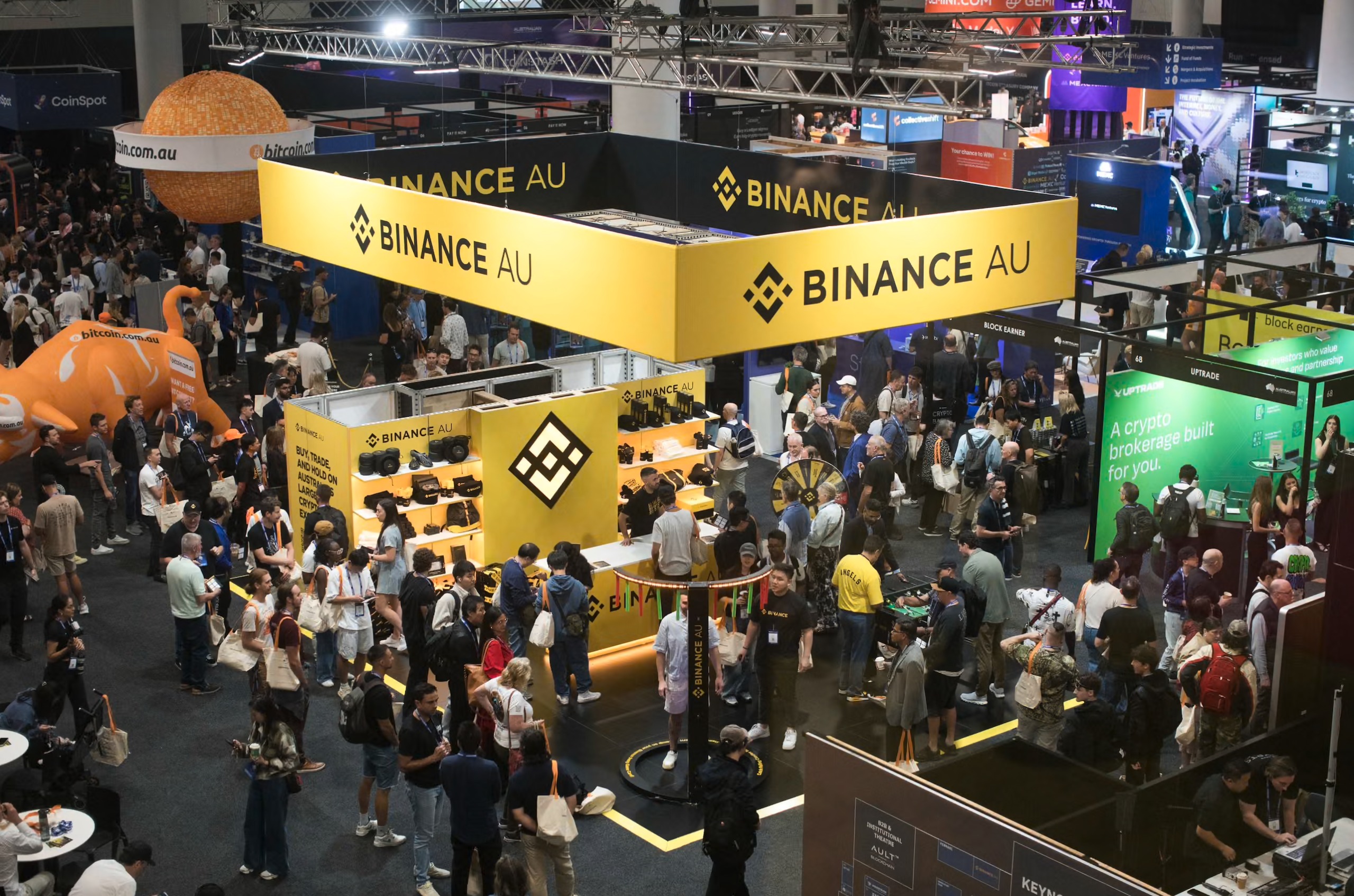
The world’s largest cryptocurrency exchange, Binance, has suffered an industry-record cyberattack amounting to $6.3 billion.
According to The Guardian, experts say the likely perpetrator is the Democratic People’s Republic of Korea (DPRK).
Binance moved urgently to freeze the affected assets, and approximately $3 billion has been identified so far.
The company has not provided any update regarding the remaining $3.3 billion.
Binance co-founder Yi He said the company would cover “all cyberattack losses.”
Analysts attributed the assault to state-sponsored hackers from the DPRK. According to The Guardian, the DPRK has a history of cryptocurrency theft and, according to the FBI, was behind the theft of approximately $1.5 billion in virtual assets from a Tokyo-based cryptocurrency exchange last year.
That incident had set the record as the largest cryptocurrency theft recorded up to that point.
Crypto analytics firm TRM attributed the attack “with high confidence” to TraderTraitor, North Korea’s elite hacking unit.
Another analytics entity, Chainalysis, also linked the heist to TraderTraitor.
Binance has not explicitly confirmed that funds were stolen. However, TRM and Chainalysis claimed that more than $6 billion had been taken. The company stated that its teams were “working around the clock” to resolve the issue.
According to Binance’s statement, initial investigation findings revealed that the security breach may have begun with a hacked laptop belonging to one of Binance’s engineers, enabling an attacker to gain access to one of the company’s systems and execute unauthorised withdrawals.
Binance, which allows users to buy, sell, and trade digital assets, has 335 million registered users worldwide, and the total value of assets under its custody was approximately $162.8 billion, according to the exchange’s 2025 annual report.
“The bottom line is that your funds are safe and we are covering all losses,” said Richard Teng, one of Binance’s co-chief executives.
In a statement, the company said:
“As a precautionary measure, all deposits and withdrawals have been temporarily suspended while our security teams, with close support from law enforcement and industry partners, conduct checks, secure wallet infrastructure, and track affected assets.”
Markets reacted immediately early in the Asian trading session on Friday, with bitcoin, by far the most popular crypto asset, dropping by more than 3% to a six-week low of $76,368.
Shares of crypto exchange Coinbase Global lost 4.8%, while shares of bitcoin buyer Strategy fell by about 6% in extended trading on US markets.
Binance was founded in 2017 by Changpeng Zhao. Zhao pleaded guilty in the US in 2023 over failures to prevent money laundering on the platform. Donald Trump pardoned him in 2025.
In a post shared on X on Thursday, Zhao said, “User funds are safe!” but added that the incident “looks like a hack on Binance.”
Stating that he no longer manages Binance, Zhao said, “As a shareholder, I expect all user funds to be fully covered.”
According to Chainalysis and other industry experts, if confirmed, this could become the world’s largest cryptocurrency theft.
“This is the biggest hack in history,” said Aravind Srinivasan, head of the systematic OTC business at major crypto market maker GSR.
Analysts noted that beyond the potential loss of assets, the security breach could have broader repercussions across the cryptocurrency market.
Indeed, the cryptocurrency market had already been under pressure recently due to interest rate increases in the US and weakening demand from exchange-traded fund buyers.
Binance operates a secure asset fund for users; as stated on the company’s website, this fund is an emergency reserve held entirely in bitcoin, intended to protect user assets in the event of security breaches.
Stablecoin issuer Tether announced that it had frozen approximately $1.57 billion in assets linked to the incident, while Circle froze more than $800 million.
World Liberty Financial, a crypto firm linked to Trump and his family, said in a statement on Thursday that it was collaborating with cryptocurrency custody provider BitGo to freeze funds stolen in what it described as the Binance attack.
Yi from Binance said $27 million in stablecoins and roughly $2 million worth of World Liberty tokens had been frozen.
This development adds to a successive series of cryptocurrency thefts. According to researchers at TRM Labs, attackers stole $2.9 billion worth of cryptocurrency across roughly 150 attacks last year.
In September, cryptocurrency exchange Bitget announced that about $350 million worth of cryptocurrency had been stolen from its platform, highlighting the industry’s vulnerability to hackers.

“Blue wave” fears at Mar-a-Lago: What will the midterms bring for the US?

What are Europe’s ignorant leaders failing to see?

Protesters storm Kyiv site holding soldiers over torture allegations

Right-wing calls to ban left parties and groups mount in Europe

Low EU gas stocks risk stoking global prices, IEA report warns
-

 America2 weeks ago
US wealthy demolish multimillion-dollar mansions for land
-
 Middle East2 weeks ago
Netanyahu unveils security doctrine and regional alliance map
-

 America2 weeks ago
At least 47 major US data centre projects halted or cancelled
-

 Europe2 weeks ago
EU rejects US proposal to resume Russian gas flows through Ukraine
-

 Diplomacy1 day ago
Secular dress code dispute exposes deeper Türkiye-Azerbaijan strains
-
 Middle East2 weeks ago
Netanyahu trails Eisenkot in Israeli polls despite Trump backing
-

 Europe1 week ago
Merz visits Asia to seek new markets for German defence firms
-
 Russia6 days ago
US and Russia weigh energy deals and corporate return in peace talks
