
Diplomacy
Geoffrey Roberts sees Ukraine war concluding within coming months

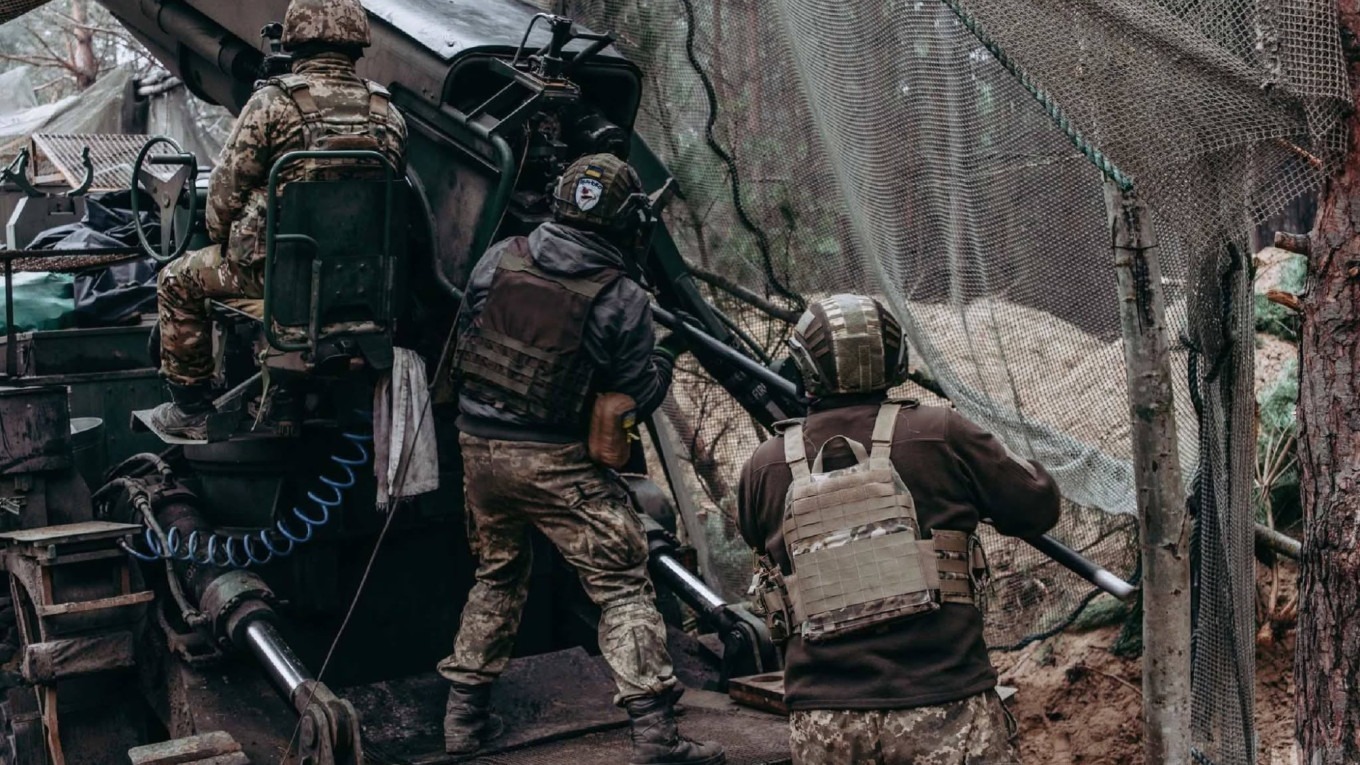
The armed conflict between Russia and Ukraine has entered a decisive operational phase driven by an accelerating shift in the military balance of power, with hostilities likely concluding within months rather than years, according to Professor Geoffrey Roberts, the distinguished British diplomatic historian, specialist in Russian and Soviet military history, and emeritus professor of history at University College Cork.
Speaking in an in-depth interview on the foreign affairs programme Strategic Compass hosted by Professor Hasan Ünal, an eminent Turkish international relations scholar and geopolitical specialist, Roberts stressed that despite rising rhetorical confrontation between Moscow and European capitals, Russian President Vladimir Putin continues to exercise calculated strategic restraint to avoid a wider, catastrophic military conflagration with NATO.
“Not quite there yet”
Opening the discussion, Professor Hasan Ünal recalled their prior exchange regarding whether Russia could ever present a direct conventional military threat to Europe. Ünal queried whether the conflict had reached that critical flashpoint: “I asked you the question and I said, would Russia really pose a serious threat to Europe? You said it could under special circumstances. If Europe were to actually push things to such extremes as, you know, really provoking Russia into a kind of conventional war through Ukraine, it could really pose a threat to Europe or to certain European countries. You said. I think we are at that juncture, aren’t we?”
Roberts rejected the premise that an open collision is imminent, answering: “Not quite. I don’t think we’re quite there yet. I think it’s a possibility. I mean, what, yeah, I mean, so what we’re talking about here is Europe through Ukraine, staging such a kind of provocation that Russia will have to respond radically, respond, escalate not just the war of Ukraine, but also the conflict with Europe as well.”
Evaluating the structural balance of power between the belligerents, Roberts expressed profound scepticism regarding Europe’s ability to force Moscow’s hand: “I’m not sure if there’s anything really big that the Europeans at the present time could actually do to provoke such a response. You know, throughout this whole war, Russia, President Putin in particular has shown strategic patience and restraint not to be provoked into undue action.”
Roberts underscored that this composure runs counter to the ambitions of radical elements across European capitals: “Because of course, you know, it’s European hardliners, European warmongers. That’s what they want to happen. They want to provoke Russia into action which will lead to a direct confrontation between Europe and Russia, between NATO and Russia.”
Crucially, Roberts explained that European leaders lack the capability to execute such manoeuvres autonomously: “The important point here is, of course, the Europeans don’t have the backing of the United States. To do anything really dramatic, they would need to be sure that the United States had their backs. And that is certainly not the case. So I think, you know, the Trump administration is a huge kind of restraining factor as far as European recklessness is concerned.”
However, he cautioned that battlefield realities could still generate acute instability: “That’s not to say it may not happen. As Ukraine’s situation worsens, as it perhaps becomes catastrophic as the end of the war comes into sight and what could be a big Russian victory starts to materialise, then they may well, you know, get desperate and do something really, really, really stupid.”
Even in that event, Roberts observed that Moscow’s conduct remains highly measured: “What the Russians are doing, what Putin is doing is acting with relative restraint. He’s responding, okay, escalating. There’s been some significant Russian escalations in the recent period, but limiting those escalations, controlling those escalations. So I don’t think we’re yet at the point in which we’re going to enter some kind of crisis in which there’s a possibility of a direct confrontation between Russia and Europe.”
“Putin is not going to allow himself to be provoked”
Addressing Roberts’s analysis of European vulnerabilities, Ünal highlighted the potential temptations facing Moscow, particularly concerning states such as Britain that have adopted an aggressive posture: “You said the US backing is not there. So the European countries would always like to see that the US is behind them whenever they are confronted by a strong adversary like Russia. But in this case, the US backing is not there. So would that actually encourage the Russians to basically settle all the account with countries like Britain, for instance, that has been vehemently supporting the Ukrainians?”
Ünal further observed that Russian rhetoric had hardened significantly, with Foreign Ministry spokeswoman Maria Zakharova employing severe language, public discussions identifying potential strike targets on British soil, and prominent strategic thinkers such as Sergei Karaganov, an authority on Soviet and Russian nuclear doctrine, advocating a much more aggressive military posture. Ünal asked whether Moscow would seek to end the war entirely on the Ukrainian battlefield or retaliate directly against European territory.
Roberts firmly dismissed the scenario of extraterritorial strikes: “Well, I certainly think that’s the case, that they want to finish the war in Ukraine rather than attacking any other country. But I go back to the point I already made, which is the issue of provocation, is that I don’t think Putin is going to allow himself to be provoked into a direct attack on a NATO country, Britain or wherever it might be. Even if the target is war materials or direct aid to the Ukrainian war, even something that actually would be quite justifiable, perhaps in terms of international law.”
“I don’t think he’s going to do that because that’s what Western hardliners want,” Roberts stated. Explaining the mutual strategic uncertainties governing decision-makers in Washington and Moscow, he added: “I said Europeans are restrained in their action because they’re not certain that the Americans will have their back should they do something really crazy. But of course, Putin can’t be sure what the Americans would do either, can he? He can’t be sure that actually him attacking Britain or wherever it might be in some way won’t actually bring the Americans back into the Ukrainian proxy war on a much bigger scale than they’re currently involved.”
Turning to operational developments, Roberts noted that Russian escalation has unfolded within Ukraine as a direct countermeasure to Kiev’s operations: “It’s not just a question of rhetoric and language. The Russians have escalated within the Ukrainian situation. The escalation has been in response to actions by the Ukrainians. But Russia has no hesitation in taking advantage of the openings created by Ukrainians’ military action.”
Detailing this tit-for-tat dynamic in the Black Sea and energy domains, Roberts observed: “Ukrainians attacked Russian civilian, agricultural shipping in the Black Sea, supposedly attacked hundreds of Russian merchant vehicles and boasted about it. The Western press was eulogising it as a great blow hitting Russia’s economy. Fine. But the Russians have retaliated. Now they’re doing the same thing to Ukrainian merchant shipping. They’ve launched this massive, ongoing series of day-in, day-out, night-after-night attacks on Odesa and the ports in the Odesa region, which has effectively closed Odesa for exports and imports.”
Roberts noted that economic experts believe these targeted strikes will generate intense strain on Ukraine’s domestic economy, warning it “could actually collapse the Ukrainian economy, unless of course, the Europeans come in with some more money.”
Similarly, Roberts described Russia’s systematic response to Ukrainian long-range strikes inside the Russian Federation: “Ukraine has launched these massive drone attacks on Russia in the last couple of months, including attacking retail outlets. Well, the Russians have done the same thing. They’ve destroyed hundreds of Ukrainian gas stations. They’ve targeted supermarket distribution networks in Ukraine. Ukrainians created some problems for Russian consumers by their various attacks, but they are nothing compared to the pressure that Ukrainian consumers are now under.”
“It’s not an idle threat”
Roberts emphasised that Russia’s looming winter air campaign against Ukraine’s power grid represents an existential operational risk: “The Russians have announced that in the coming winter months, they are going to go after Ukraine’s energy infrastructure big time. As we know, we’ve got to a stage where the Russians have the missiles and the drones where they can attack Ukrainian targets almost with impunity, because as everyone knows, Ukraine has next to no air defence.”
“So this threat by Russia that they’re going to destroy Ukraine’s energy infrastructure in the coming months, it’s not an idle threat,” Roberts warned. Citing analytical estimates, he pointed out: “Eighty percent of Ukrainian energy infrastructure has already been destroyed by Russia in the last period by these drone and missile strikes, so there’s only 20% left. Given that Russian missiles and drones now have easy access to their targets, Ukrainian cities could become almost uninhabitable.”
Addressing the broader tactical picture across the eastern operational theatre, Roberts argued that these deep strikes are accompanied by relentless land advances: “The Russians continue to push ahead across the whole front line in the Donbas. And also they are occupying more and more territory which they haven’t claimed in a formal sense in the Sumy and Kharkiv area. They’re taking over this territory and they are quite clear about what they are going to do: they are going to turn this territory into part of their security zone. So that’s effectively a threat to annex even more Ukrainian territory than the four provinces that they’ve already claimed and incorporated into Russia.”
Roberts dismissed assertions that this operational intensification stems from domestic ideological pressure: “It’s nothing to do with Karaganov and the war party in Russia, the hardliners, the so-called ‘turbo-patriots’ who want to pursue total war. Nothing to do with that at all. It’s to do with the pretext that the Ukrainians gave the Russians to take these various actions, and also they’ve got to the stage where they can do this because they have the missiles and drones, and because Ukraine doesn’t have the air defences anymore.”
Summarising the operational shift, Roberts explained: “The Russians have been attacking Odesa for a prolonged period, but it’s only now that they are able to attack it in such a way that could actually close down the port. That escalation is a function of the change in the military balance of power between Ukraine and Russia, notwithstanding the support that Ukraine receives from Europe. The Russians are determined to take advantage of that shifting balance of power to win the war, to end the war as quickly as possible. I would be very surprised if this time next year we’re having a similar conversation. By this time next year, one way or another, we are going to be in a radically different situation as far as the outcome of the Ukrainian conflict is concerned.”
“A brotherly nation”
Examining the strategic mindset governing Kiev and Moscow, Ünal pointed out that President Putin had long characterised Russians and Ukrainians as one people, historically seeking to avoid inflicting permanent trauma on the civilian populace: “Putin has always said the Russian and Ukrainian people are the same people, so let’s not harm the Ukrainians so much; let’s not bring about bitter memories that would always be an impediment in bringing together the Russian and Ukrainian people. But this time around, the Russians seem to have run out of patience. Or do you think they are still restraining themselves in the sense that they are not attacking civilian areas so much, but only the economic infrastructure?”
Roberts concurred with the premise of deliberate targeting discipline: “Both sides claim that they’re only attacking legitimate military targets. And if they are civilian targets, they are civilian targets which are part of the military infrastructure support system in one way or another. I don’t see evidence that either the Russians or the Ukrainians are deliberately targeting civilians with a view to causing large numbers of civilian casualties.”
However, Roberts acknowledged the harsh realities of strategic targeting: “The energy infrastructure is a legitimate military target, but of course, it is also civilian infrastructure. Its destruction has had and will have a huge impact on civilian life in Ukraine as well as on Ukraine’s war-fighting capacity. Putin’s preference would be to get the war over with before it got to the point where they have to take out the whole of Ukraine’s energy infrastructure in the next few months and cause enormous suffering to millions of Ukrainian civilians, because Russia does see Ukrainians as a brotherly nation.”
“However, they seem to have come to the conclusion that if that’s what they have to do to break Ukrainian resistance, to break Ukraine’s capacity to continue the war, then they are going to do it. That is quite a significant escalation and a significant threat,” Roberts stated.
Contemplating the geopolitical fallout of such destruction, Roberts raised critical questions regarding the Western response: “How are Europeans going to respond when they see millions of refugees from Ukraine heading towards their borders? You would think they would respond by doing the sensible thing and doing everything they can to protect those civilians by bringing the war to an end, by negotiating and seeking peace. But there is no evidence whatsoever that they are so inclined. There is plenty of evidence to say that they might try some kind of escalation or provocation, aimed at bringing the Americans back into the proxy conflict.”
“Taking the Donbas is a political as well as a military goal”
Ünal then turned to the geographical scope of the land war, noting that the engagement zone across Sumy, Kharkiv, the Donbas, Zaporizhzhia, and the southern coastline constitutes a theatre longer than the 1,100-kilometre frontline of Operation Barbarossa during the Second World War. Ünal questioned how the Ukrainian Armed Forces could sustain operations given severe shortages of manpower, the absence of an air force, and the vulnerability of Patriot air defence systems to Russian aerospace strikes.
Roberts acknowledged the critical nature of the operational challenge: “How long are the Ukrainians going to be able to keep fighting without some significant collapse of their position in substantial sections of the frontline, forcing them to retreat big time? That’s the big question. There have been many expectations that the Ukrainian defence was going to collapse in the face of the Russian onslaught, but it hasn’t happened so far. I think it’s more likely to happen now than in the past, but it’s difficult to say. Russian advances are going to continue one way or another.”
Roberts outlined Moscow’s core territorial and operational objectives: “The main strategic goal of the special military operation at the moment is to actually complete the occupation of the Donbas, to capture or surround and contain Sloviansk and Kramatorsk, which are the two last fortress cities under Ukrainian control. Taking the Donbas is a political as well as a military goal. Politically, Putin has no choice except to take control of the whole of the Donbas.”
Beyond the Donbas, Roberts analysed secondary axes of advance: “There is activity in the south in Zaporizhzhia. Russian forces are edging closer to the outskirts of Zaporizhzhia city, and pressure is building up further south in the Kherson area. Reaching the outskirts of Zaporizhzhia and bringing it under fire is conceivable, but going on to capture a city of several hundred thousand people will be a very big, long-term task. The same applies to Odesa. It is one thing for the Russians to seal off Odesa as a port through missile strikes; it is another thing actually crossing the Dnieper and fighting a major battle to capture Odesa, unless there is a catastrophic collapse of the Ukrainian military.”
Regarding the northern sector, Roberts observed: “In the north, activity around Sumy and Kharkiv threatens to cut off Kharkiv from the rest of Ukraine and opens a path towards Kiev. But I don’t think there are any short-term intentions of capturing Kiev. That would only happen if the war dragged on indefinitely and the Russians had no choice but to finish the conflict by capturing the Ukrainian capital.”
Instead, Roberts highlighted the defensive rationale behind Russian offensive operations: “What they want to do, as Putin has stated explicitly many times, is establish a security zone. They want a buffer zone against future Ukrainian attacks, to push back Ukrainian drone and missile strikes. The further back Ukrainians fire their systems, the easier it is for Russian forces to detect and intercept them on route. There will likely be significant military developments in the Sumy-Kharkiv area in the coming months.”
“The Russian plan is to collapse the Ukrainian military”
Ünal underscored persistent reports indicating potential structural failure within Ukraine’s military apparatus. He cited recent disclosures by Kyrylo Budanov, head of Ukraine’s Main Directorate of Intelligence, indicating that Ukraine must mobilise at least 30,000 personnel monthly to sustain frontline integrity, an admission that reflects devastating manpower attrition over nearly five years of high-intensity warfare.
Roberts analysed the operational mechanics of the attrition campaign: “The Russians are fighting a war of attrition. One of the ways they are fighting that war of attrition is precisely by stretching the frontline and putting intense pressure on Ukrainian forces, forcing them to redeploy units from one sector to another, attacking them during redeployment, and then advancing into areas significantly weakened by those redeployments. That is basically the Russian plan: to collapse the Ukrainian military, not necessarily to force an immediate surrender, but to compel a large-scale retreat, perhaps all the way back to the west bank of the Dnieper.”
Assessing Ukraine’s internal reserves, Roberts exercised professional caution: “We don’t have enough reliable information to know precisely how bad Ukraine’s manpower situation is. We know it is bad and that they are suffering huge casualties, but we must be careful when interpreting statements like the one from Budanov. I am a huge admirer of Budanov in the sense that he consistently speaks with great realism about the operational realities of the war. If Budanov were president instead of Volodymyr Zelensky, there would likely be a negotiated peace relatively quickly.”
Regarding Budanov’s mobilisation figures, Roberts observed: “When he says 30,000 men are required just to maintain positions, people infer that Ukraine is sustaining 30,000 casualties a month. Budanov’s core point is that Ukrainian manpower resources are dwindling rapidly because losses are not being replaced. That reality points directly towards the possibility of a military collapse at some point.”
Reflecting on previous analytical projections, Roberts added: “There have been expectations of a Ukrainian collapse for the last two to three years, particularly following the failure of the 2023 Ukrainian counter-offensive. I discussed it myself throughout 2023, 2024, and 2025, thinking they could not sustain the fight much longer and that major Russian breakthroughs would force a resolution. However, historical experience teaches caution. Exercising professional scepticism regarding my own predictive record, I will nonetheless state again: I believe the war will be concluded within the next few months, certainly by the spring of next year.”
“How horrendous the peace is going to be”
Shifting the dialogue to diplomatic dynamics, Ünal questioned the state of Kiev’s regional partnerships, specifically highlighting the noticeable deterioration in relations between Warsaw and Kiev over historical grievances surrounding the Stepan Bandera legacy and growing economic friction.
Roberts affirmed the severity of these bilateral fractures: “It is an exceptionally sensitive subject. There is growing domestic resentment in Poland regarding the volume of Ukrainian refugees, alongside deep scepticism regarding Ukraine’s potential accession to the European Union, as Poland expects to bear the brunt of the economic fallout. While the Polish government maintains strong rhetorical support and serves as the principal logistical corridor for Western weapons—including components for thousands of Ukrainian strike drones—the deeper strategic dilemma remains acute.”
Roberts framed the broader European calculation: “What is the alternative for European states to keeping the war going for as long as possible and sustaining the Zelensky administration? The alternative is a negotiated settlement that will be damaging for Ukraine and politically and economically humiliating for European governments. Consequently, European leaders soldier on, hoping against hope that the ultimate outcome will be less severe, that unexpected developments will intervene, and that the United States will re-engage fully.”
Reviewing the historical trajectory of the Western stance, Roberts observed: “One of the developments that surprised Moscow and Putin early on was the exceptional strength, financial commitment, and willingness of the Western coalition to take enormous geopolitical risks in backing Ukraine. Yet that coalition is now fracturing visibly. From Kiev’s perspective, the most alarming prospect is not merely the erosion of wartime military supplies, but the absence of economic reconstruction support once the conflict ends. European leaders indulge in fine rhetoric, but they will not provide the vast financial resources required for post-war reconstruction. Ukrainians are increasingly aware of this, which makes the post-war horizon uniquely bleak: the central tragedy will not just be losing the war, but how horrendous the peace is going to be.”
Addressing domestic political realignments across Europe, Ünal pointed to the prospective rise of Marine Le Pen and the left-wing platform of Jean-Luc Mélenchon in France, the electoral ascendancy of Alternative for Germany amid austerity measures, and the political trajectory of the Reform Party in Britain led by Nigel Farage, who has voiced opposition to continued involvement in the war.
Roberts noted that while shifting political configurations across Paris, Berlin, and London could dismantle European backing for Kiev over the next twelve to twenty-four months, operational developments on the ground will outpace European electoral cycles: “I do not believe the war will last long enough for those future political shifts to take primary effect. However, these movements will fundamentally dictate post-war policy. Parties such as Alternative for Germany, National Rally, and Reform UK will not allocate national resources to Ukraine, especially as long-standing issues of systemic corruption, currently overlooked during wartime, resurface as convenient justifications for Western disengagement.”
Roberts offered a striking conclusion regarding Ukraine’s long-term geopolitical orientation: “After this war ends, the best friend that Ukraine is going to have is Russia and the Russian people. That is where Ukraine’s ultimate future lies: in reconstructing its relationship with Russia. While immensely difficult, it represents the only viable long-term path for the Ukrainian people.”
“Putin’s personal security”
Concluding the session, Roberts raised the unannounced, high-profile diplomatic mission undertaken by the Director of the Central Intelligence Agency, John Ratcliffe, who conducted an eight-hour visit to Moscow aboard a heavy US military transport aircraft to hold talks inside the Kremlin.
Challenging prevailing media narratives regarding potential prisoner exchanges or diplomatic posturing, Roberts posited that the extraordinary logistics pointed to matters of supreme urgency: “Why did the Director of the CIA fly directly to Moscow on a dramatic eight-hour mission, and why did the Russian leadership receive him in person rather than conducting discussions via encrypted communications or in a neutral location like Istanbul? It indicates that Ratcliffe carried exceptionally sensitive intelligence that could only be delivered face-to-face under direct instructions from Donald Trump.”
Roberts outlined his hypothesis: “My informed speculation is that this visit was directly related to President Putin’s personal security. Ratcliffe went to Moscow either to convey concrete intelligence concerning an operational plot against Putin’s life, or to provide explicit, high-level assurances that the United States and the CIA have zero involvement in any such conspiracy. Washington fully understands that an assassination attempt against the Russian head of state would constitute an existential escalation, prompting Moscow to remove all operational restraints in Ukraine and against Europe. The US administration is determined to prevent an uncontrolled escalatory spiral that could drag Washington into direct conflict. Despite official statements claiming Ratcliffe met exclusively with Russian intelligence counterparts, I believe he met with Putin personally to deliver a direct communication from Trump.”
Ünal presented an alternative account shared by seasoned regional security contacts and retired naval command figures in Türkiye and the Middle East, suggesting that the flight was arranged to repatriate the remains of American personnel recovered from theatres including Ukraine and the Persian Gulf. Ünal argued that high-level security meetings involve extensive translation and bureaucratic protocols, leaving minimal operational time, with prominent public aircraft serving to conceal the underlying mission.
Roberts maintained his assessment, reiterating that safeguarding state-level communication against catastrophic miscalculation represents the core concern: “If Putin were assassinated or seriously wounded, all gloves would come off in relation to Ukraine and European countries. Washington has no interest in seeing that scenario unfold.” The two scholars concluded their exchange by agreeing to revisit the conflict’s trajectory as military and political events continue to unfold.





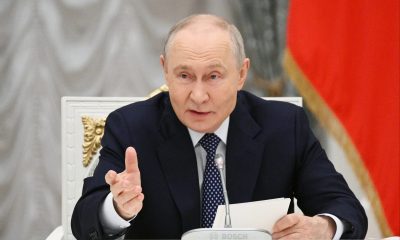


British magazine The Economist reported that mobilization, conflict casualties, and pervasive uncertainty have left Ukraine confronting the threat of demographic collapse.
According to data cited by the magazine, Ukraine’s fertility rate has declined from 1.2 children per woman in 2020 to between 0.8 and 0.9.
This rate marks a lower level than that of any major nation except South Korea.
In the first half of 2026, the number of deaths in Ukraine surpassed the number of newborn babies threefold.
The report noted that ever since independence was gained in 1991, the number of births in the country has lagged behind the number of deaths every year.
The Economist emphasized that the demographic collapse driven by the ongoing fighting constitutes an “existential threat.”
The magazine identified mass refugee migration as the principal driver of the population loss.
More than 5 million Ukrainians reside abroad, predominantly in Europe.
The proportion of those wishing to return among those who left the country is also steadily shrinking.
According to data from the Centre for Economic Strategy (CES), the share of those seeking to return dropped from 74% in 2022 to 43%.
The fact that the majority of refugees consist of Ukrainian children and women under the age of 44 further aggravates the demographic picture.
The Kyiv government decided to exempt men under the age of 25 from mobilization to alleviate the demographic decline.
The magazine reported, however, that many young people have fled the country, while those who remain do not plan to start families.
Projections cited in the report indicate that even if hostilities cease in the coming years, Ukraine can, at best, expect merely a deceleration of depopulation.
Olga Duhnich, an expert at the Ukraine-based think tank Frontier Institute, stated that the generation born in the 1990s and 2000s is the least populous in Ukraine’s modern history, meaning the country cannot expect a post-conflict baby boom.
The United Nations (UN) projects that Ukraine’s population will decline by 0.7% to 0.9% each year over the next two decades.
Under this projection, Ukraine’s population will fall to approximately 25 million by 2040.
If hostilities drag on, people are expected to abandon plans to have children, deepening the crisis even further.
Beyond exempting men under 25 from mobilization, the Kyiv government is rolling out various support packages to boost birth rates.
Under legislation enacted in the country, parents who have children receive a direct payment of 50,000 hryvnias (around $1,100).
Parents are also paid 7,000 hryvnias each month during the first year.
Other state programmes subsidize childcare costs, while Ukrainian soldiers are granted free freezing of egg and sperm cells.
Ukrainian Minister of Social Policy Denis Ulyutin said in May to the Livyi Bereh media outlet that roughly 22 to 25 million people lived in government-controlled territories.
Ulyutin characterized the prevailing picture by saying: “This is a catastrophe.”
Ella Libanova, Director of the Institute for Demography and Quality of Life Research, estimated the population at 29 million during the same period.
Libanova attributed the steep fall from a population of 30 million in 2025 to high death rates and the demographic crisis.
In a statement in October, Libanova announced that Ukraine’s population had slipped to 28.5 million.
Institute Director Libanova said: “The population is already at 28.5 million; we lost half a million people. We lost them, but thankfully this was still caused by migration rather than casualties.”
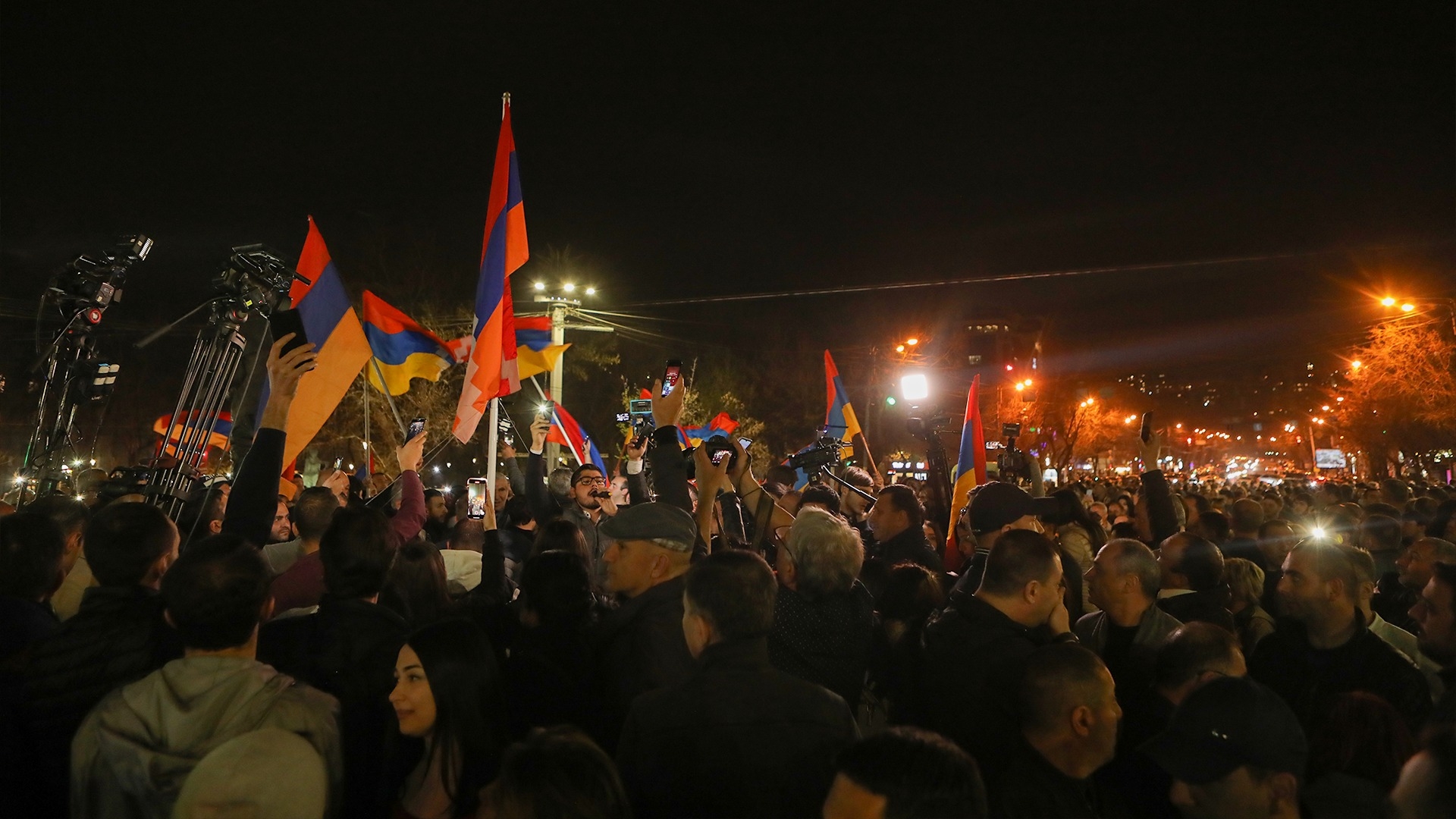
Narek Karapetyan, a lawmaker and head of the Strong Armenia faction in the Armenian parliament, has urged opposition parties to unite around four core principles set out in a joint declaration.
The key points of the declaration include resisting territorial concessions and blocking the adoption of a new constitution, which the opposition has termed the “Aliyev constitution”.
According to a report by Aysor.am, Narek Karapetyan stated that the opposition meeting was originally planned to be led by his uncle, businessman and Strong Armenia movement leader Samvel Karapetyan.
“We initiated the meeting, but the authorities took preemptive steps to prevent Samvel Karapetyan from launching the national unification process,” Narek Karapetyan said.
Noting that, despite these events, opposition representatives convened and signed a joint declaration based on four agreed articles, Narek Karapetyan invited other opposition forces and members of the public to join the alliance.
“We will not allow them to implement the Aliyev constitution in Armenia. We must unite,” Karapetyan said.
Ahead of these developments, Armenian National Security Service personnel detained Strong Armenia Party leader Samvel Karapetyan following a search of his home.
The party’s press secretary, Agavni Sukiasyan, announced that on the morning of the same day, the Investigative Committee of Armenia searched the homes of both Samvel Karapetyan and Narek Karapetyan.
In a report citing the Investigative Committee, Armenpress stated that Samvel Karapetyan was detained as part of a case involving allegations of causing large-scale financial damage to the Electric Networks of Armenia (ENA) company, embezzling entrusted property, and money laundering.
According to committee figures, the total damage inflicted on the company exceeds $179 million.
Narek Karapetyan’s home was also searched at the end of July as part of a criminal case.
On 22 July, Armenia’s Central Electoral Commission approved the Prosecutor General’s request to strip Narek Karapetyan of his parliamentary immunity, and Karapetyan was charged with large-scale money laundering.
According to information reported by Sputnik Armenia, the investigation is linked to charges brought against Strong Armenia supporter Aleksan Aleksanyan.
Investigative authorities allege that Aleksanyan received approximately $4.4 million and €230,000 from the Karapetyan-owned Tashir Foundation under the guise of gifts and loans.
Several criminal cases had previously been opened against Samvel Karapetyan.
In 2025, Karapetyan was charged with publicly calling for the violent seizure of power after backing the Armenian Apostolic Church, which had been criticized by Armenian Prime Minister Nikol Pashinyan.
In January, legal proceedings were also launched against Karapetyan on charges of large-scale tax evasion and money laundering.
Separately, in early July 2025, the Armenian parliament approved a bill enabling the nationalization of the Electric Networks of Armenia company.
In March, Armenia’s Constitutional Court ruled that the nationalization process in question complied with the law.
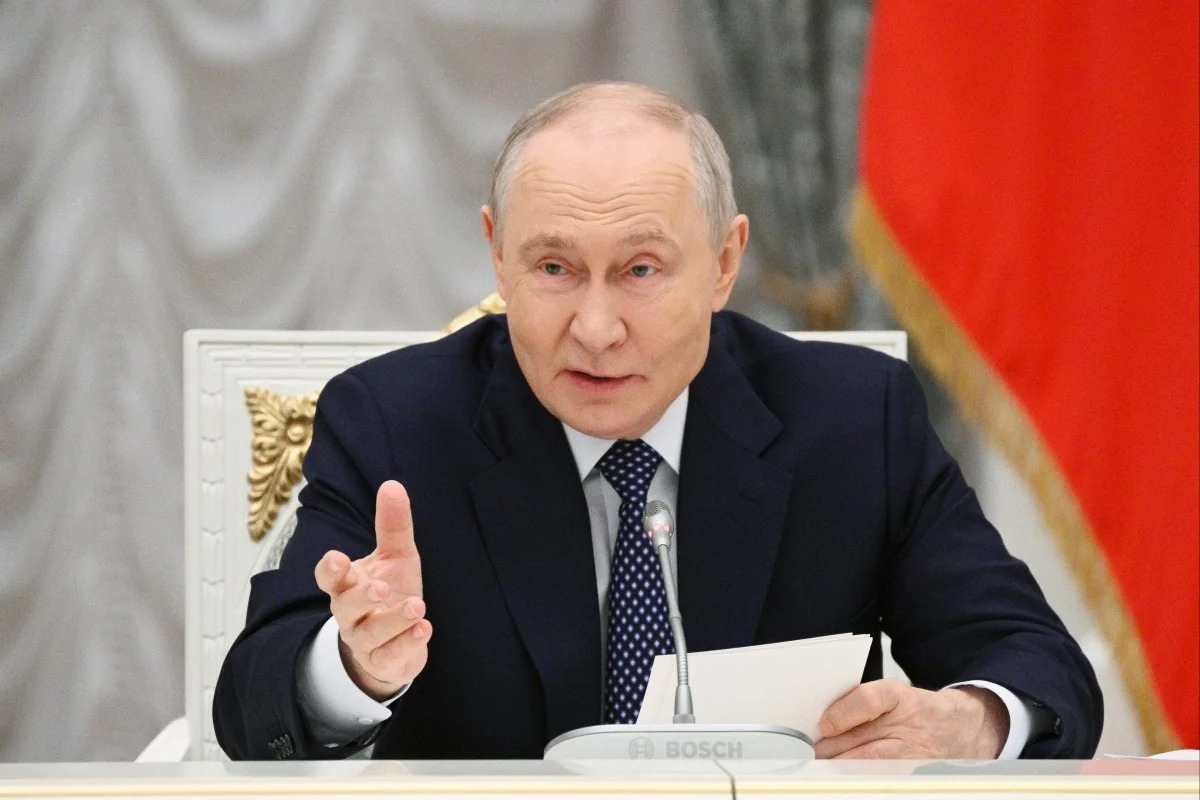
According to analysts, the use of the same standard track gauge as China on the new railway line demonstrates Moscow’s ‘pragmatic’ approach toward strengthening ties with Beijing.
Russian President Vladimir Putin has signed into law an agreement providing for the construction of a second standard-gauge railway line at a key border crossing with China. Moscow aims with this move to accelerate its eastward pivot and bolster relations with Beijing ahead of the Asia-Pacific Economic Cooperation (APEC) Summit.
According to a document published on Monday on Russia’s official legal information portal, Putin signed the law ratifying the railway agreement reached with Beijing during his visit to China in May.
The two sides agreed to jointly construct a new line along the cross-border railway connecting Zabaykalsk in southeastern Russia with the city of Manzhouli in northern China.
The defining feature of the new line is that it will use the 1,435-millimetre standard gauge, the most widely used track gauge globally and the one adopted by China, rather than the 1,520-millimetre broad gauge predominantly employed across Russia’s national rail network.
Speaking to the South China Morning Post, Li Lifan, a specialist in Russian and Central Asian affairs at the Shanghai Academy of Social Sciences, said the second standard-gauge line will help ease freight transit capacity constraints at the border crossing. This will reduce waiting times for cargo trains and enhance the speed and reliability of transport services along the eastern corridor.
Freight trains running from China to Russia currently rely on a single 1,435-millimetre gauge track at the Manzhouli-Zabaykalsk border crossing. This transit point handles more than 60% of rail freight trade between China and Russia, as well as a significant share of Europe-bound cargo traffic.
Because trains travelling in opposite directions must take turns using the same track to cross the border, bottlenecks occur periodically.
Zoey Wang, a director covering corporate, infrastructure, and project finance ratings at international credit rating agency Fitch Ratings, said the project is expected to provide more stable transport conditions for two-way shipments of commodities, machinery and electrical goods, consumer products, and cross-border e-commerce cargo.
According to Wang, the project will make corporate shipping schedules more predictable and help reduce costs arising from delays, cargo detention, and supply chain disruptions.
According to Russian media reports, Moscow expects the second line to increase annual transport capacity at the Zabaykalsk border crossing to 39 million tonnes by 2030, an increase of 11 million tonnes over current levels.
With Western sanctions curtailing its access to European markets, Russia has increasingly redirected its trade toward Asia in recent years.
However, experts caution that putting the new line into operation does not necessarily ensure a substantial increase in trade volume. In the view of analysts, the true significance of the decision lies in the strategic calculations underpinning it.
According to Li, despite Russia’s stated target, inadequacies in the country’s domestic railway infrastructure will constrain actual growth. This is because cargo will still need to be transhipped onto 1,520-millimetre gauge rolling stock to move further into Russia.
“This decision does not indicate a shift in the country’s railway gauge system. Rather, it represents a pragmatic choice made at a time when Russia’s pivot to the East is entering its implementation phase,” Li said.
In Li’s assessment, Moscow concluded that the benefits of easing bottlenecks along the trade corridor with China outweighed the costs of preserving existing procedural barriers at the border.
Li also noted that the timing of Putin’s signing was a deliberate choice. The decision came ahead of the Asia-Pacific Economic Cooperation Summit to be held later this month in Shenzhen.
According to Li, Moscow wants to “demonstrate that it can deliver on its commitments to Beijing and set an example that could be replicated elsewhere.”
Zhao Long, director of the Institute of International Strategic and Security Studies at the Shanghai Institutes for International Studies, offered the following assessment:
“Although Russia has long adhered to the broad-gauge standard, the depth that strategic trust and coordination between China and Russia have reached today leaves no real reason to resist laying standard-gauge railways on specific connecting sections, particularly across critical border segments.”
Zhao continued:
“This situation also reflects the growing influence and gravitational pull of China’s economic, trade, and transport connectivity networks, not only over Russia, but across the entire Eurasian continent.”
Wang also said the project demonstrates that China’s railway technical standards and associated services are finding increasingly broad application internationally.
However, Wang cautioned that increasing border crossing capacity does not automatically guarantee a corresponding rise in trade volume.
According to Wang, the actual impact of the project will depend on a range of factors, including freight rates, inter-customs coordination, European demand, regulatory policies, and operating conditions along the corridor.
According to Russian media reports, construction on the Russian section of the second line is already under way and is expected to be completed by the end of 2026. The section on the Chinese side is scheduled for completion in early 2027.

Ukraine faces demographic collapse as fertility rates slide

EU divisions deepen over who should negotiate with Vladimir Putin

EU urges citizens to prepare 72-hour survival kits for crises

Paraguay President Peña resigns over catastrophic bank collapse

Republican push raises prospect of House vote to impeach Hegseth
-

 Diplomacy4 days ago
Secular dress code dispute exposes deeper Türkiye-Azerbaijan strains
-

 Europe1 week ago
Merz visits Asia to seek new markets for German defence firms
-
 Russia1 week ago
US and Russia weigh energy deals and corporate return in peace talks
-
 Europe2 weeks ago
AfD drops Dexit to back single market in new Europe strategy
-
 Middle East2 weeks ago
US envoy says Syria interim leader Sharaa seeks Israel normalization
-

 Interview2 weeks ago
“The AfD is an expression of internal contradictions within German big capital”
-

 Europe2 weeks ago
Serbia opposition wins snap vote as Vucic concedes defeat
-
 America2 weeks ago
Pentagon prepares US bases for 90-day siege in global war plan
