
Opinion
Settle, deny, seal: Britain’s formula for colonial torture, from Kenya to Cyprus — 1

Thomas Karat, behavioral analyst
In January 2019 the British government announced that it would pay one million pounds to thirty-three Cypriots who said they had been tortured in British custody during the uprising of 1955 to 1959. The statement that accompanied the money contained a sentence that readers in Nairobi would have recognised. The settlement, London said, did not constitute any admission of liability and set no precedent for any future claim against the government. Five and a half years earlier, announcing compensation for Kenyans tortured during the Mau Mau Emergency, the same government had kept its denial of liability intact and declared that the payment set no precedent for any other former colony. Two territories, two populations of torture survivors, and one formula, carried from one continent to another with its wording barely altered. A sentence that travels like that belongs to a method. The method has a history that runs from colonial bonfires in the 1950s through statutes still in force today, and it ends, for the moment, at a British air base on Cyprus that is still in operation.
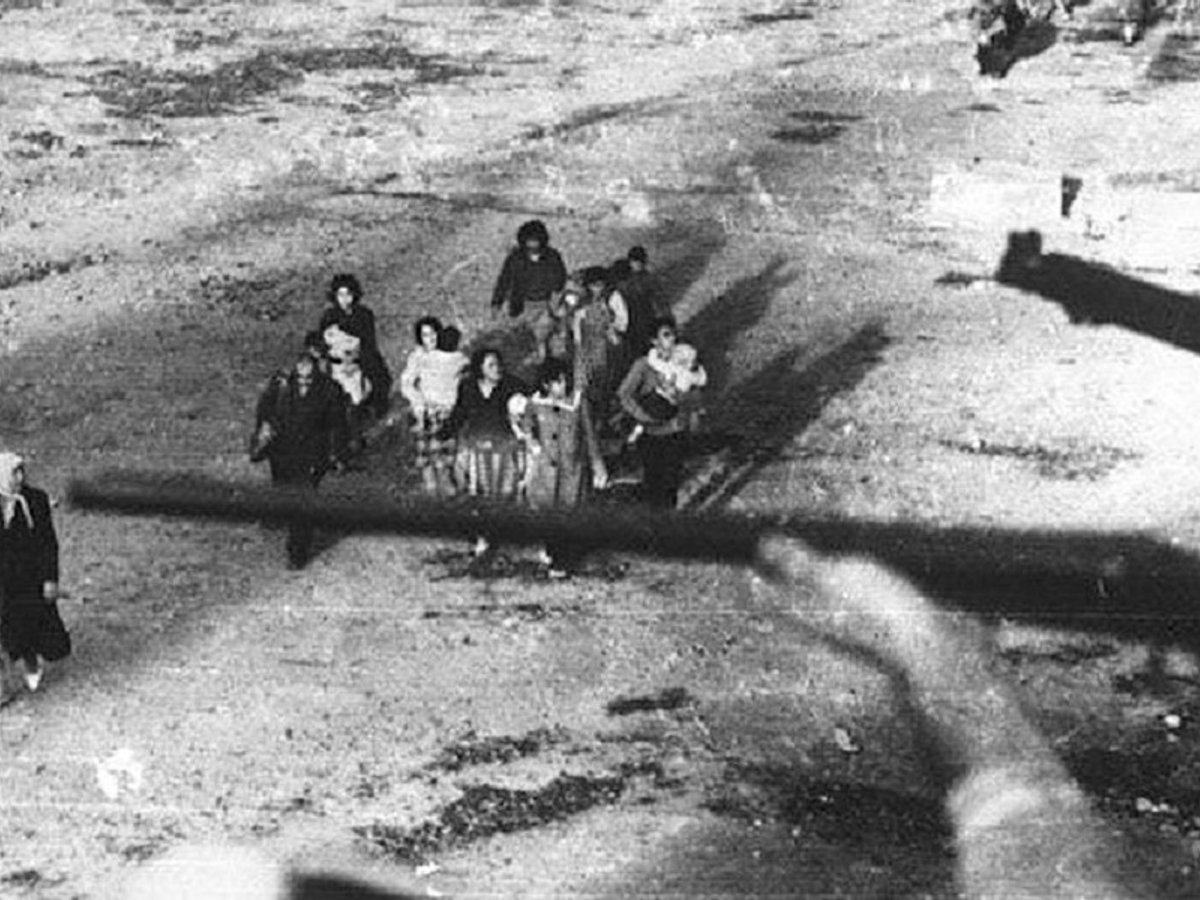
The Cyprus Emergency began in 1955, when EOKA, a Greek Cypriot organisation seeking union with Greece, opened an armed campaign against British rule, a campaign London classified as terrorism. The violence ran in more than one direction. According to figures published by a Turkish Cypriot outlet, EOKA killed 371 British servicemen between 1955 and 1959, and its victims included Turkish Cypriots, the first of them a police sergeant, Abdullah Alparslan, killed in Paphos in 1956. None of this alters the legal position of a prisoner. The prohibition on torturing people in custody protects every detainee regardless of the cause he served, and it was the treatment of detainees that the British administration worked hardest to keep from view. Allegations of abuse circulated widely at the time, and the colonial authorities dismissed them as EOKA propaganda. No British soldier or policeman was prosecuted for torture during the uprising, although two officers of the Gordon Highlanders were court-martialled and convicted of causing actual bodily harm. The EOKA veterans’ association says that fourteen Greek Cypriots died under British interrogation, two of them aged seventeen. In 2022 new evidence on those deaths was published, drawing on testimony from British veterans and Cypriot fighters, post-mortem and morgue records, and photographs from the Cyprus State Archives that appear to show mutilation of the genitals; it was the first time British forces, intelligence services included, had been accused of a campaign of extrajudicial killing during the uprising. Among the thirty-three claimants who settled in 2019 was a woman who said that, at sixteen, she had been repeatedly raped by soldiers.
For half a century the documents that could have tested those accounts were officially said not to exist. They surfaced because of a lawsuit on another continent. In the course of the Kenyan litigation the Foreign Office conceded that it held thousands of files from former colonial administrations, around 9,000 from thirty-seven of them by one early count, long thought to have been destroyed. Among them were Cyprus papers in which British police and military officers themselves described the brutal treatment of suspected EOKA fighters and of civilians. Foreign Office documents released in July 2012 set out claims of torture and abuse from the Emergency years, and in July 2015 thirty-five Cypriots filed suit. Reporting on the newly available material, the Cyprus Mail found that the top-secret files showed suspected EOKA fighters and ordinary civilians alike had been brutally tortured in the course of the Emergency. Their lawyer had to persuade the government to let him see classified material, which meant repeated visits to Hanslope Park, the secretive Foreign Office site in Buckinghamshire where the colonial archive had been held. A Labour member of parliament of Cypriot descent observed that, in a matter where torture was certainly involved, the government would rather the case never saw the light of day. When the settlement came, the minister for Europe described the period before independence as a matter of regret, and pointed to the passage of time as a reason the claims could no longer be fairly tried. The passage of time in question included the fifty years during which the government had kept the relevant files out of reach. Even the settlement did not close the archive. During a later visit by the claimants’ lawyer to Cyprus it was announced that thousands of further classified documents bearing on torture allegations from the Emergency were due for release, which meant that, years after London had paid to end the case, part of the record it concerned had still not been opened. The pace at which that material reaches the public is still set by the department that withheld it in the first place.
The disappearance of those files had been planned with the same care as any other branch of colonial administration. From 1961 the colonial secretary, Iain Macleod, directed officers across the remaining territories to identify and remove any document that might embarrass the British government or its officials, together with anything open to reading as evidence of racial prejudice or religious bias. The criterion applied was reputational: a paper went to the fire according to the harm it could do to Britain’s name, whatever its military value. Files fit to pass to an incoming government were marked legacy. Files destined for destruction or for secret shipment to London were marked watch, and the instructions required that successor governments never learn such files had existed, so that where one was withdrawn from a series a dummy file took its place. The work was reserved for officers who were British subjects of European descent. Paper was burned and the ash broken up, or packed into weighted crates and sunk in deep water far from the coast. In Belize the files went up with help from the Royal Navy and several gallons of petrol. In British Guiana two secretaries fed papers into an oil drum on the grounds of Government House until the army lent a hand. In Aden a committee of three began burning in 1966, a full year before the British withdrew. In Malaya five lorry loads were driven to the naval base in a single purge, a destruction so conspicuous that officers in Kenya were later warned against repeating it. Each completed destruction produced a signed certificate for London. The programme was called Operation Legacy.
Kenya was where the concealment finally broke. Three elderly survivors of the detention camps of the Mau Mau Emergency, who had been beaten and sexually mutilated in British custody, sued the Foreign Office. One of them described in his witness statement a period before independence in which men were castrated and women raped. The department fought the claim for three years, arguing first that liability for colonial conduct had passed to the independent Kenyan state in 1963, a position the High Court rejected. It was during that litigation, more than a decade after the case began, that the hidden archive came to light. Historians who had argued for years that the records had been removed and concealed were vindicated, after a long period in which the government had been content to let them appear mistaken rather than acknowledge what it held. The files became catalogue series FCO 141 at the National Archives, some twenty thousand files from around forty former territories. On 6 June 2013 the foreign secretary told the House of Commons that the government would pay £19.9 million) to 5,228 claimants and that it sincerely regretted the abuses, in a statement that preserved the denial of liability and the refusal of precedent that Cyprus would hear in 2019.
The formula performs a precise legal function. A payment made without admission of liability produces no finding against the state, and no court ever pronounces on what the files show. A payment declared to set no precedent obliges every other group of victims, in every other former territory, to begin from nothing, against a defendant that holds the documents and controls the pace at which they emerge. The Cypriot claimants learned from the Kenyan case that settlement was possible, and their lawyer said publicly that the government’s resistance in Cyprus had been ill advised because the Mau Mau case had already shown where such litigation led. The government nonetheless repeated the full sequence, resisting the claims, contesting access to the files and finally settling without admission. Kenya also received a memorial in Nairobi, unveiled as a symbol of reconciliation, while no comparable memorial has been offered to Cyprus. Each case is handled as an exception, which is the outcome the formula is designed to secure.
An incomplete record does not leave a neutral space behind it. It leaves room for partisan shorthand, and the shorthand settles on whichever community has the least access to the documents. When the BBC reported the 2019 settlement, its story described Turkish Cypriots as thugs, wording the broadcaster later apologised for and removed. The Emergency years shaped relations between the island’s communities, and a full account of them, drawn from the files rather than from competing memories, serves Turkish Cypriots and Greek Cypriots alike. The party that has kept that account incomplete is the former colonial power, whose officers wrote the reports and whose ministries still decide which of them may be read.
The fire was the crude instrument. The durable one is statutory and still operates. The Public Records Act provides that records selected for permanent preservation pass into public view within twenty years, a period reduced from thirty in 2010. The same section allows a department to keep records back if they are required for administrative purposes or ought to be retained for any other special reason, and in its broadest application it permits a blanket retention covering an entire class of files, reviewed once every ten years. In 2013 the Foreign Office was found to be holding a further body of material it called its special collections, estimated at the time at 1.2 million files and occupying roughly fifteen miles of shelving, held for years in breach of the Act. The justice secretary responded by signing a blanket authorisation that converted the breach into lawful retention, and a group of historians considered a legal challenge under both the Public Records Act and the Freedom of Information Act. The colonial files of Hong Kong remain closed under an order set to run until 2047. In 2015 the power to approve retention moved from the Lord Chancellor to a Secretary of State, and the authorising document was renamed from a Lord Chancellor’s Instrument to a plain Retention Instrument. The Lord Chancellor’s role had carried a measure of independent oversight of the public records system, and the change moved the decision closer to the departments that hold the records and have reasons of their own to keep them closed. Between 2017 and 2019 the British army’s headquarters in Kenya destroyed most of its physical files created before 2015, years after ministers had expressed regret in Parliament for precisely this kind of loss.
Destruction and retention govern what reaches the record. A third instrument governs what reaches the courtroom. English law has held since Lord Hewart’s judgment of 1924 that justice must manifestly be seen to be done, and the principle has long been treated as part of the rule of law itself. The Justice and Security Act of 2013 introduced closed material procedures into ordinary civil litigation for the first time. Where the government is sued over the conduct of its own agencies, it may now rely on evidence that the claimant and the claimant’s own lawyer never see. A security-cleared special advocate reads the material in their place and is then barred from discussing it with the person whose interests he represents. Special advocates themselves told Parliament the procedures were inherently unfair and contrary to the common-law tradition. The Law Society warned that the Act damaged the equality of arms on which a fair trial depends. A recently retired Law Lord described the legislation as so radical a departure from open justice that every available safeguard should be built in against its use, and the government’s own equality and human-rights watchdog judged the Bill incompatible with European human-rights requirements. Parliament passed the Act regardless of these objections. In 2014 prosecutors applied to hold an entire terrorism trial in secret, with the defendants kept anonymous. The Court of Appeal refused a complete blackout, holding that criminal trials must be public and defendants named, and recorded its grave concern at what had been attempted. The core of the trial still proceeded in private, with a small group of journalists admitted on terms that kept almost everything they heard out of print and their notebooks in the court’s custody.
The two efforts were assembled side by side. The Justice and Security Act received royal assent on 25 April 2013. Six weeks later, on 6 June, the same government expressed in the Commons its regret for colonial torture whose evidence it had withheld for fifty years and surrendered only under compulsion of a court. An apology for an old concealment and the legal machinery for future concealment came from one administration within a single parliamentary season. Six years after that, the Cyprus settlement repeated the words of the apology while the machinery remained in place.
The motive is legible in the record itself. A state that presents itself abroad as a custodian of the rule of law, and that sits as one of the guarantors of an independent Cyprus, draws much of its standing from the claim that its own conduct can withstand scrutiny. Documented torture, examined in open court, falsifies that claim and attaches names to it. The instruments differ in where they intervene, and they protect the same asset. Destruction prevents evidence from ever reaching a court. Retention keeps surviving files from historians for decades at a time, and closed procedures keep evidence from the public even after it reaches a judge. The Court of Appeal named the stakes in its 2014 judgment, describing open justice as a hallmark of the rule of law, a guarantee that the conduct of the state in its own courts can be watched by the people in whose name it acts. Each instrument described here is a way of declining that watch. Sustained over half a century, the expense involved gives some measure of the value placed on that asset. A government does not maintain a secret archive for fifty years, legalise its retention when exposed and redesign its own civil procedure in order to protect material it regards as harmless.
On Cyprus the British state retains more than archives. Under the 1960 Treaty of Establishment the island became independent with the exception of two areas at Akrotiri and at Dhekelia, which remained under British sovereignty, and under the accompanying Treaty of Guarantee, Türkiye and Greece, together with the United Kingdom, undertook to guarantee the independence of the Republic together with its territorial integrity and its security. From Akrotiri, beginning in December 2023, Royal Air Force Shadow R1 surveillance aircraft flew hundreds of missions over and around Gaza, at least 518 according to an investigation by Action on Armed Violence for Declassified UK, a figure the charity later put at 606. The Ministry of Defence has said the flights served only to help locate hostages, and has refused to say whether it shared live surveillance footage with Israel. It has confirmed, in answer to a freedom-of-information request, that it holds video of Gaza from a flight on 1 April 2024, the day Israeli strikes killed seven international aid workers, three of them British military veterans, and it has declined to release that footage on national-security grounds.
The island on which British officers once kept colonial files out of reach now hosts a British base whose record of a present war is withheld on familiar grounds. The reflex traced here through Kenya and Cyprus belongs to no single state. The second part of this series follows it to Israel, whose conduct in Gaza and the West Bank has been recorded on a scale no archive was built to contain, much of it by Israeli soldiers themselves, and whose authorities have since worked to remove that record from the platforms where it first appeared. Britain’s method assumed that evidence could be held in one place and managed over decades. What becomes of that method when the evidence exists everywhere at once is the question the second part examines.


Opinion
When the world is drawn in red and blue: Bloc politics, universal values and national autonomy through ‘Once Upon a Time in the Middle East’


Li Xinbo, Research Assistant, Center for Turkish Studies, Shanghai University
Introduction
The Chinese new film Once Upon a Time in the Middle East follows the experience of Xu Fu, who is a Chinese chef in the Middle East, shows how war intrudes into the lives of ordinary people. The protagonist Xu Fu first arrives in the region to pay off debts, but as war breaks out, he is gradually drawn into conflicts among different forces. He does business with the U.S. military while also forming ties with local residents and armed actors. He profits from the commercial opportunities the war creates, yet ultimately suffers its blowback. The film does not divide its characters neatly into good and evil; instead, it reveals the complex personal histories behind different identities.
The film not only relates to humanity in wartime, but also raises a central question in international politics: when states come into conflict, are we also prone to understanding the world through the lens of blocs? Once freedom, equality, human rights and other values regarded as universally significant enter the political competition among states, can they be assigned a particular bloc identity? And does this make it easier for states to justify intervention in the internal affairs of others in the name of defending such values?
One article published in The Economist, in its review of the film, coined the phrase “dragon-restaurant diplomacy” from Xu Fu’s dealings with various parties. In The Economist’s opinion, “dragon-restaurant diplomacy” is a diplomatic approach that prioritizes commercial interests and seeks to maintain relations with different countries, while it is also questioning whether such engagement is sufficiently deep. This interpretation of The Economist shows that the film can be viewed not only as an anti-war story but also as a window onto China’s diplomatic image and its international political implications. This article begins with bloc politics, discusses the use of universal values in international relations, and then responds to The Economist’s critique of China’s diplomatic approach in order to analyze the diplomatic principles China emphasizes.
1. From “blue on blue” to bloc politics: When identity obscures the concrete person
The term “Blue on Blue” in the film is a military expression that generally refers to friendly fire. The logic behind it is that a battlefield must distinguish friend from foe: only after determining which side a person belongs to can one judge whether that person poses a threat. Yet while this distinction is militarily necessary, it can also reduce complex individuals to a single bloc identity.
A similar logic operates in international politics. States need to assess security threats, identify allies, and decide their own positions in conflicts of interest. Especially in war and great-power competition, bloc division lowers the complexity of judgment, but it also makes it easy to understand international conflict as a struggle between two opposed wholes. In such narratives, one side is often described as defending order and justice while the other is portrayed as a threat and a source of chaos, while differences, contradictions and specific circumstances within each side may be ignored.
The film Once Upon a Time in the Middle East reflects on this logic to some degree. The film depicts violence by the U.S. military in war and the destruction it causes to local civilian life, yet it does not portray all American soldiers as identical figures. At the same time, one of the main characters Zaid is both a participant in violent conflict and a victim of war; his experience shows how an individual can gradually turn from victim into perpetrator in the cycle of trauma, hatred and violence. This is not the film excusing violence; it is the film showing that we cannot reduce a person to a stereotype based solely on the person’s bloc identity.
The problem with bloc politics is not that states should never distinguish friends from foes, but that this distinction must not become the sole explanation of reality. When a state or group is categorized wholesale as an enemy, the different voices within it, the lives of ordinary people, and the complex causes behind the conflict may all be excluded from international society’s understanding. Through the concrete interactions among people from different camps, the film reminds viewers that political identity can explain relations between people, but it should not replace specific perceptions of an individual.
2. From food to universal values: Can “non-aligned” things also be absorbed into bloc politics?
If “Blue on Blue” shows how war draws the line between friend and foe, food offers the film another way of observing the world. Food itself does not naturally belong to any political bloc. Xu Fu cooks for Arabs and for Americans; food has no camp of its own, and Americans can eat it just as Arabs can. But in war, food is also drawn into violence. Chili peppers can become an instrument of torture, and sprouted potatoes can become a means of saving lives in certain circumstances. The original meaning of objects is not entirely lost, yet it is reshaped by conflict.
This raises a question with greater significance for international politics: if something as everyday and concrete as food can be given friend or foe meanings by war, can freedom, equality, human rights, human dignity and other universal values also be assigned a bloc identity in competition among states, thereby facilitating interference in other countries?
Tocqueville noted in The Old Regime and the French Revolution that the ideas of freedom, equality and popular sovereignty advanced by the French Revolution were able to exert influence beyond French soil not because they naturally belonged to France, but because they touched on problems shared by many societies. From this we can conclude that universal values such as freedom, equality, human dignity and the right to life do not inherently belong to any one country. “universal” means that they should not fundamentally change according to nationality, ethnicity, religion or political bloc, and it does not mean that any one state has the authority to interpret “the universal.”
The problem is that when universal values are brought into competition among states, they may shift from shared normative principles into political criteria for distinguishing “us” from “them.” Once a state treats its own understanding of freedom, democracy or human rights as the only correct model and judges other states’ legitimacy on that basis, universal values may be given a particular national position and bloc identity.
The politicization of universal values does not mean that universal values themselves have lost their meaning; it means that we need to distinguish between value principles and specific political actions taken in the name of those values. A state’s claim to uphold human rights does not automatically prove that its intervention is legitimate; conversely, an emphasis on state sovereignty cannot be a sufficient reason to ignore severe humanitarian suffering. Whether external intervention is reasonable still requires examining its legal basis, the manner of action, the actual consequences, and whether the relevant states and peoples have space to express their own will. The key, then, is not to make a simple either-or choice between universal values and state sovereignty, but to prevent either side from monopolizing the authority to interpret legitimacy.
Of course, this does not mean that human rights and sovereignty must be opposed in international society. Sovereignty can provide institutional safeguards for a state to choose its own development path, while human rights remind us that state power itself should not become a reason to ignore individual suffering. The truly difficult question is how to avoid choosing on behalf of others in the name of universal values while also not equating respect for sovereignty with indifference to all internal problems.
3. From “which side are you on” to “respecting autonomy”: The principles and practical significance of China’s piplomacy
If bloc politics tends to simplify international relations into an either-or choice, respecting national autonomy offers another way of thinking. In handling Middle East issues, China emphasizes respect for the sovereignty and territorial integrity of all countries, respect for the right of the peoples of all countries to independently choose their development paths, and settlement of regional disputes through political dialogue and peaceful means. These principles are reflected in China’s Arab Policy Paper and The Global Security Initiative Concept Paper issued by China’s Ministry of Foreign Affairs. From the perspective of international politics, this position stresses that international cooperation should not be premised on acceptance of a particular political model and that differences among states should not automatically turn into confrontations in which one must take sides.
The Economist summarizes this diplomatic approach as “dragon-restaurant diplomacy,” arguing that China is able to maintain commercial relations with states in conflict and that its motive comes more from commercial interests than political ideology, while questioning whether such relations are sufficiently deep. However, setting commercial interests in opposition to political ideas cannot fully explain the actual significance of diplomacy. States certainly consider their own interests when conducting economic cooperation, but interest driven behavior does not mean that cooperation lacks political significance. For states with political differences, economic and trade exchanges can provide sustained links of interest, enabling them to maintain a degree of cooperation without having to agree on every issue.
The Economist also questions the depth of “dragon-restaurant diplomacy” by pointing to China’s cautious attitude toward security responsibilities. This criticism reflects a traditional Western assumption: must the depth of diplomacy be measured by military intervention or by becoming a regional security guarantor? Security guarantees are certainly an important issue in international politics, and economic cooperation cannot replace all security and humanitarian responsibilities. But diplomacy does not function only through military force; political dialogue, economic ties and multilateral cooperation can also create conditions for easing tensions and sustaining relations.
Conclusion
From “Blue on Blue” to a meal in a restaurant, Once Upon a Time in the Middle East presents two ways of understanding the world: one first confirms friend-or-foe identity and then judges the other side accordingly, while the other tries to see concrete people and their lives beyond political identity. Brought into international politics, this contrast reveals that bloc division also shapes how people understand universal values, evaluate war and judge diplomatic behavior.
Respecting sovereignty and autonomous choice doesn’t mean denying freedom, human rights or human dignity; emphasizing universal values does not mean that any state naturally has the right to choose on behalf of others. War can divide the world into different colors, but international politics should not therefore lose its understanding of concrete circumstances. Whatever differences exist among states, peace, life, human dignity and other universal values should not become the exclusive values of any one bloc.

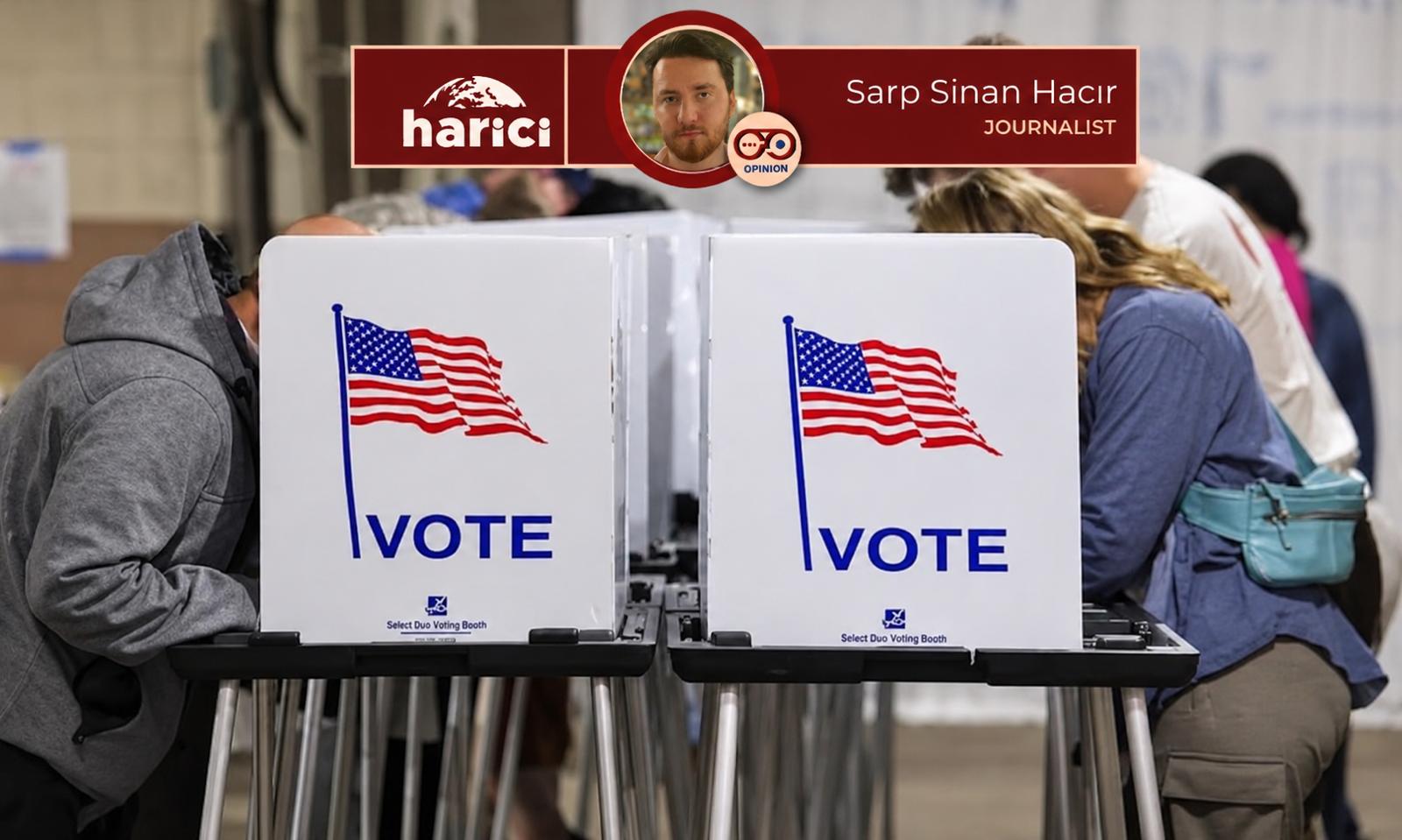
The US is heading to the midterms under the shadow of the Iran War. While the American media debates whether Trump will use nuclear weapons against Iran after the midterm elections, a more realistic tension looms over Mar-a-Lago: a blue wave.
If the Trump administration can wrap up the night having surrendered only the House of Representatives, I am certain Trump will frame this as a victory. In part, one might even say it would be. Amidst so much public discontent—economic troubles, oil and electricity prices, broken promises regarding wars—nobody could plausibly claim Trump had lost if he emerged from battle carrying the Senate on his back. In any case, it is hardly unusual for the governing party to forfeit one chamber of Congress in a midterm election.
Although expectations long pointed to the Senate either remaining red or coming down to a razor-thin outcome, the situation has turned even bleaker for the Trump administration over the past month. According to polls, Democrats are leading in every single neck-and-neck state in the Senate race.
Let me lay out the arithmetic:
Presently, Republicans hold a 53-to-47 majority in the Senate. If the Democrats pick up three states tonight without losing any of their own, they reach a 50-50 tie, which can be broken by the vice president’s vote. Consequently, the Democrats must flip four states blue. For this cycle, Alaska, Kansas, Iowa, Maine, Ohio, Texas, Michigan, and North Carolina can be considered the battleground states. Contests in Iowa and Kansas are particularly likely to be fierce. It is worth noting that Texas has not elected a Democratic senator since 1988, and Kansas has not done so since 1932.
Will the polls be wrong?
The accuracy of polling varies considerably from cycle to cycle in the US. In the 2024 elections, for instance, the forecasts proved roughly accurate. Even in 2024, however, Republican support was slightly understated in the final count. One should not automatically ascribe this to malice. While Republicans are generally strong in rural areas, urban Republicans often prefer to conceal their leanings in liberal settings. This complicates the work of pollsters.
It remains possible that the surveys are overly optimistic on behalf of Democrats. Nonetheless, the absence of Trump’s name on the midterm ballot demobilizes the Republican base. When the expected “red wave” failed to materialize in the 2022 midterms, it was claimed that Trump had lost his aura, prompting a search for new leadership. Tonight, too, Republican turnout may fall short of projections.
The road to 2028
Beyond determining the composition of Congress, this election carries another critical function: it will chart the course to 2028 for both parties. Although the Democratic Party has begun to attract interest due to Trump’s missteps, it faces formidable internal struggles, marked by both a leadership deficit and an ideological vacuum.
Following the 2024 debacle, as resentment swelled against centrist Democrats like Chuck Schumer, Kamala Harris, and the Clintons, a new current emerged on the progressive left. Spearheaded first by New York Mayor Zohran Mamdani and subsequently by Michigan Senate candidate Abdul El-Sayed, this 2026-model leftist movement dwells less on identity politics than its predecessor, striking Republicans directly at their points of vulnerability: the economy and Israel.
These two battlegrounds are the decisive factors in the 2026 midterms. Americans heading to the ballot box are squeezed by an electricity bill crisis stemming from the massive power consumption of expanding data centres following the AI boom, alongside oil prices driven by the Iran War and diesel costs tied to the Russia-Ukraine War.
In the first Trump term, an economy that performed well in its early years was derailed by the pandemic, costing him re-election. Now, however, Trump is being held accountable not for crises that developed outside his control, but for his own failures. He initiated the Iran War himself. He failed to honour his pledge to deliver peace regarding Ukraine.
El-Sayed and progressive leftists went before the public with promises to combat the cost of living and halt support for Israel, a message that resonated across the wider electorate. Yet, as in every election, what truly matters are the independents in the battleground states.
The Israel question
The Democratic Party’s mainstream establishment is uneasy with the party drifting away from Israel. Chuck Schumer, who could be regarded as the party’s leader, once even remarked, “my job is to keep the left with Israel.”
Yet centrist Democrats are currently avoiding an open confrontation with progressive leftists in light of their own recent failures. The pressure and dismissive conduct once directed at Bernie Sanders no longer seem tolerable to the party’s rank and file.
Dissenting voices persist, of course. For instance, Democratic Representative Haley Stevens of Michigan could not contain herself just days before the vote: not only did she withdraw her endorsement from El-Sayed, but she also crossed the aisle to back his Republican opponent, Mike Rogers!
Stevens faced fierce condemnation within her party, explaining her decision by claiming that “Sayed did not involve her in the campaign.” Those close to Stevens even suggested that she was pressured by her fiancé, who is Jewish, though she is not.
Radical Zionists like Stevens and Pennsylvania Senator John Fetterman are attempting to hold the line against internal party transformation.
Another major consequence of this election will be the fate of this new progressive leftist current, also characterized as “Woke 2.0.” El-Sayed is attempting to defend an already Democratic-held seat, and he looks strong in the polls. Should an upset occur and he loses, Democratic hopes of securing the Senate would require a miracle, and the progressive momentum inside the party could evaporate overnight. Ultimately, with El-Sayed, this new progressive left faces its first true test outside major metropolitan centres.
Rubio waits in the wings
This election holds significant stakes for the quiet rivalry playing out within Trump’s cabinet. If Republicans suffer a devastating defeat, Marco Rubio and JD Vance, both jockeying for the 2028 presidential nomination, may find their ambitions dampened. Entering an election weighed down by the record of an administration widely judged a failure would carry severe risks. That dynamic brought defeat to Kamala Harris, who bore the burden of Joe Biden’s missteps. Rubio is a politician who avoids unwinnable contests; because he remains well regarded by the establishment, he can afford to bide his time.
JD Vance, on the other hand, made a sudden ascent through the ranks straight to the vice presidency. While he enjoys support from Peter Thiel and his circle, his backing among the party’s senior leadership is far thinner. Because he is vice president, convention dictates that the broader party will defer to his candidacy. For that reason, 2028 remains Vance’s best opportunity despite everything.
Lame duck
In summary, while the situation heading into the midterms looks grim for Republicans, it is hardly bright for Democrats. A persistent lethargy has hung over them since 2024. They produce few compelling arguments, scarcely raising their voices against Trump as they once did. The rift between the centrist establishment and the progressive left may well generate more friction than the turmoil among Republicans. Trump exploited this fault line throughout his campaign. Conservative media and politicians did not hesitate to target El-Sayed over his Muslim faith and his ties to the controversial Turkish streamer Hasan Piker.
Should Trump truly suffer a rout tonight, the incoming Congress seated in January will curtail his room for manoeuvre on international matters. It is still too early to predict the course of the Iran War, as the political landscape that emerges in both Israel and the US will exert a direct influence on its trajectory.
Ultimately, the fate of the war also hinges on the blue wave that may crash ashore in Florida tonight.

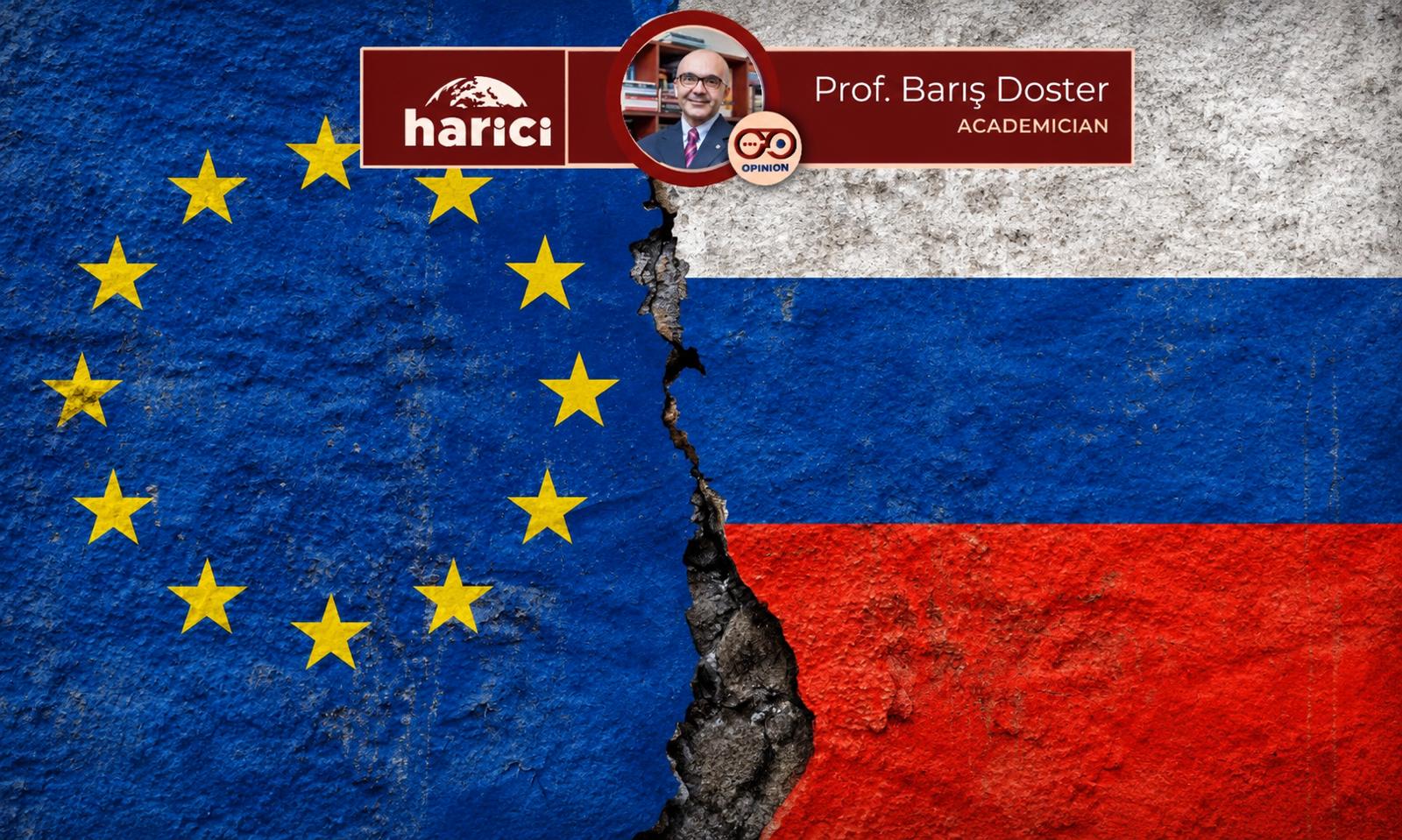
The European Union (EU) has reportedly reacted against the agreement reached between US President Donald Trump and Russian President Vladimir Putin, which temporarily lifts US sanctions on Russian diesel. While Kaja Kallas, the EU High Representative for Foreign Affairs and Security Policy, demanded that pressure on Russia be intensified to end the war, the foreign ministers of EU member states stated that sanctions targeting Moscow would continue despite the US decision.
While this report is striking for laying bare the ignorance of those governing the EU, it also demonstrates that, contrary to European perceptions, the US does not view the EU as an ally and does not care about its sensitivities. Clearly, priorities, goals, concerns, definitions of threats, and threat perceptions between the two sides of the Atlantic are starkly different.
What those who govern Europe fail to understand is this: neither is the US the old US, nor is Europe the old Europe, nor is the world the old world. Sadly, the EU’s rulers are blind to this plain truth. Clearly, the ignorance that is so deeply organized and institutionalized in academia, politics, and the bureaucracy in our own country is widespread in Europe as well.
Those who rule Europe need to be reminded of the words of my late, revered master, Attila Ilhan: “If only you had known a little political economy.”
At international summits and in bilateral meetings, European leaders unashamedly applaud US President Trump even as he insults them to their faces.
Yet this is not the first time in history that the US has scolded Europe; it has done so before. It was none other than the US that drove Europe from the American continent, declared “America for the Americans” (the Monroe Doctrine), and defined Latin America as its backyard. Indeed, they were the first to introduce the term “backyard” into political science. They maintained that there was no room for any other state in their backyard. Under the Monroe Doctrine, no European power, including Spain, had any place anywhere in Latin America. Only the US was to call the tune across the continent. And for long years, with the exception of Cuba, that was precisely the case.
The dictators, the presidents, the prime ministers, the chiefs of the general staff, and the senior bureaucrats were all appointed by the US. Coups, political assassinations, and conspiracies were executed or orchestrated by the US. To that end, a school was even established in the US in 1946 for their training: The School of the Americas.
The political influence of the US in the region opened the wealth of regional countries – be it oil, coffee, gold, or sugar – to plunder by US corporations. In the end, the peoples of Latin America were reduced to impoverished watchmen over bountiful resources. They were ruthlessly exploited by politicians elected by themselves, yet working for and on behalf of the US. For that reason, the US could never stomach the changing political climate in Latin America, nor could it accept losing in Venezuela, Bolivia, Ecuador, Nicaragua, Paraguay, El Salvador, Guatemala, or Honduras. It feared the influence of Hugo Chavez’s line across the countries of the region. It viewed China’s growing weight, trade volume, and investments in the region as a threat.
Because Europe’s current leaders view the US as an unshakeable ally, they fail to grasp what the US has done, including its actions in Latin America, and how the US actually views its own hemisphere, the world, and Europe. What is more, they are afraid. And because they are afraid, they cannot respond to the humiliating remarks about Europe made by Trump and his close associates, or to their contempt for Europe’s history, values, culture, and political understanding. They dread finding themselves in the predicament that Ukrainian leader Zelensky faced at the White House a few years ago.
Those who govern Europe do not know this: no one respects those who lack self-respect, and a leader as insolent, arrogant, egotistical, and untrustworthy as Trump will have no respect for them at all.

Settle, deny, seal: Britain’s formula for colonial torture, from Kenya to Cyprus — 1

When the world is drawn in red and blue: Bloc politics, universal values and national autonomy through ‘Once Upon a Time in the Middle East’

Blue wave, Democratic Socialism, or shades of navy blue

Ukraine faces demographic collapse as fertility rates slide

EU divisions deepen over who should negotiate with Vladimir Putin
-

 Diplomacy6 days ago
Secular dress code dispute exposes deeper Türkiye-Azerbaijan strains
-

 Russia2 weeks ago
US and Russia weigh energy deals and corporate return in peace talks
-

 Europe2 weeks ago
Merz visits Asia to seek new markets for German defence firms
-
 Europe2 weeks ago
Serbia opposition wins snap vote as Vucic concedes defeat
-

 Europe2 weeks ago
AfD drops Dexit to back single market in new Europe strategy
-
 America2 weeks ago
Pentagon prepares US bases for 90-day siege in global war plan
-

 America2 weeks ago
Lula defeats Flavio Bolsonaro to seal historic Brazilian comeback
-

 Opinion2 weeks ago
Imperialism, economic power, and foreign policy
