
America
AI and data center power demands spark a gas renaissance in North America

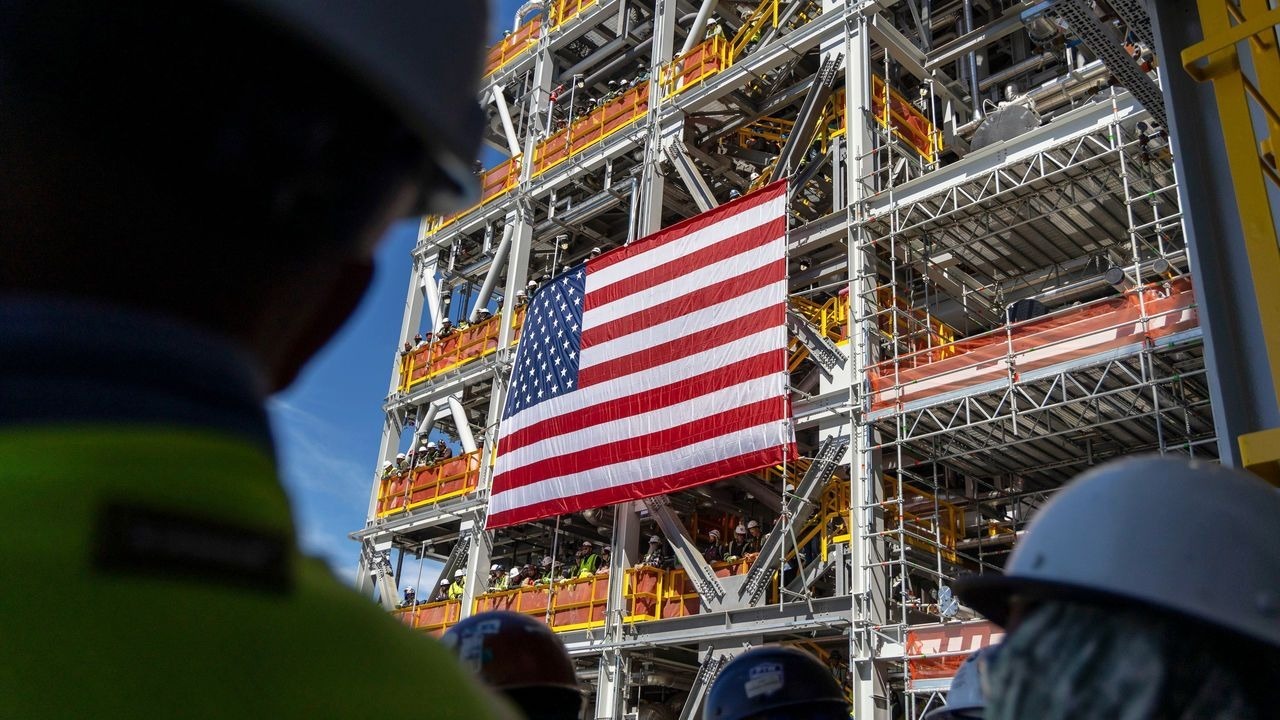
The rapid development of artificial intelligence and the swift expansion in both the number and capacity of data centers are driving a surge in electricity demand, triggering a “renaissance” in the North American natural gas market.
According to data reported by Bloomberg, the escalating demand for electrical power is pushing interest in natural gas back to peak levels.
Brandon Freiman, a partner at the leading alternative asset management firm KKR & Co., stated that the energy sector has transitioned into a new growth cycle after years of stagnant demand.
Freiman emphasized that artificial intelligence has emerged as one of the most prominent factors driving this growth.
Speaking at the Sohn Montreal Investment Conference, Freiman pointed out that investing in the energy sector has become “one of the most tangible ways to bet on AI.”
Freiman noted that investors no longer need to choose between model developers or chip manufacturers, as there is a direct and fundamental need for the energy capacity required to run computing centers.
He reported that the construction costs for new gas-fired power plants have tripled, rising from $1,000 to $3,000 per kilowatt. This capital spike has made speculative construction impossible, Freiman added, shifting projects toward a foundation of long-term planning.
Robert Horn, Global Head of Infrastructure at Blackstone Credit and Insurance, stated that the vast majority of new gas power plant projects are backed by long-term contracts with utility companies, industrial consumers, and technology giants such as Amazon.com Inc., Microsoft Corp., and Google parent Alphabet Inc.
Horn noted that this arrangement provides “predictable revenue” before construction even begins.
The report noted that due to high capital intensity, market focus has shifted from public to private markets. Large infrastructure investors are expected to finance projects secured by guaranteed demand.
Bloomberg had previously reported on June 1 that the global liquefied natural gas (LNG) market could soon face oversupply and low prices.
The completion of a “third wave” of production capacity expansions between 2026 and 2030 was cited as a major factor in this projected trend.
The agency also reported that while the threat of closure at the Strait of Hormuz temporarily supported the market, the market would adjust if peace talks between Washington and Tehran after July proved successful, triggering a long-term decline in LNG prices.
On February 28, following the start of a military operation by the US and Israel against Iran, Tehran blocked the Strait of Hormuz, a critical maritime chokepoint through which approximately 20% of global oil supply and nearly 30% of liquefied natural gas pass.
In reaction to the failure of negotiations in Islamabad, US President Donald Trump announced a blockade of Iranian ports on April 13 to halt Iranian oil exports. In late May, Trump announced the lifting of the blockade within the framework of a peace agreement being drafted with Tehran.












For the ongoing wave of artificial intelligence investment in the US to yield a financial return, businesses and consumers would need to spend approximately 9% of national income on the technology, according to calculations.
This proportion is equivalent to the entire budget the American public allocates to food, double all energy expenditures, or roughly seven times the total amount paid for telephone, internet, and digital streaming services.
A study prepared by Columbia University finance professor Stijn Van Nieuwerburgh and presented at the Brookings Institution, reported by The Wall Street Journal (WSJ), revealed that artificial intelligence infrastructure construction has become the largest investment drive in US history.
Based on current data centre construction plans, average costs, potential project cancellations, and an expected 10% unleveraged return on capital, calculations show that the sector must generate $3.5 trillion in revenue by 2032.
Under the assumption of 4% annual nominal growth, this figure corresponds to 8.8% of US gross domestic product (GDP).
Capacity expansion may lower prices
The foundation of current revenue projections rests on the assumption that artificial intelligence companies such as OpenAI and Anthropic will be able to sustain existing processing power prices into the future.
Stating that the current deficit in processing capacity is keeping profit margins high, Van Nieuwerburgh noted that companies will not be able to sustain today’s scarcity pricing in an intense competitive environment by 2032, when capacity is projected to quadruple.
Sharp price declines seen in past technology investments show that comparable crises have occurred before.
As a result of laying new lines and expanding capacity, bandwidth prices on transatlantic fibre-optic links between London and New York plunged by 96% between 1997 and 2001, a process that triggered the bankruptcy of numerous telecommunications companies.
Could falling prices boost demand?
While the processing capabilities of artificial intelligence models double every four to five months, data from Epoch AI show that the cost for a given capability level has been falling by 47% per quarter since 2023.
Optimists, drawing on the concept known in economic literature as Jevons’ Paradox, argue that expanding capacity and lower costs will multiply demand, thereby driving corporate revenues higher.
The $300 billion combined annual revenue estimate set for 2030 for OpenAI and Anthropic by an expert panel led by Ezra Karger of the Federal Reserve Bank of Chicago has already been surpassed.
The annualised combined revenue run rate of the two companies has reached approximately $180 billion and continues to post double-digit growth each quarter.
Against advocates who view the technology as a third factor of production alongside capital and labour, forecasts indicate that the growth rate will decelerate and the law of diminishing returns will take effect as the system becomes widespread.
Productivity gains do not translate directly into revenue
Following the price drops and productivity surge seen from 1966 onwards during the personal computer revolution, corporate computer expenditures flattened out at around 0.8% of GDP by approximately 1984.
A recent study conducted by Harvard University doctoral students Fiona Chen and James Stratton, examining software projects on the Jellyfish platform, pointed to a similar structural ceiling.
The researchers determined that artificial intelligence assistants increased the number of lines of code written by 12%, while autonomous software agents increased it by 30%.
Conversely, because users spent more time reviewing, interpreting, and modifying code, the ultimate contribution to completed projects remained low and was found to be “statistically insignificant”.
Experts emphasise that even if artificial intelligence boosts productivity, this outcome may not translate directly into the massive profit and revenue figures anticipated by investors.
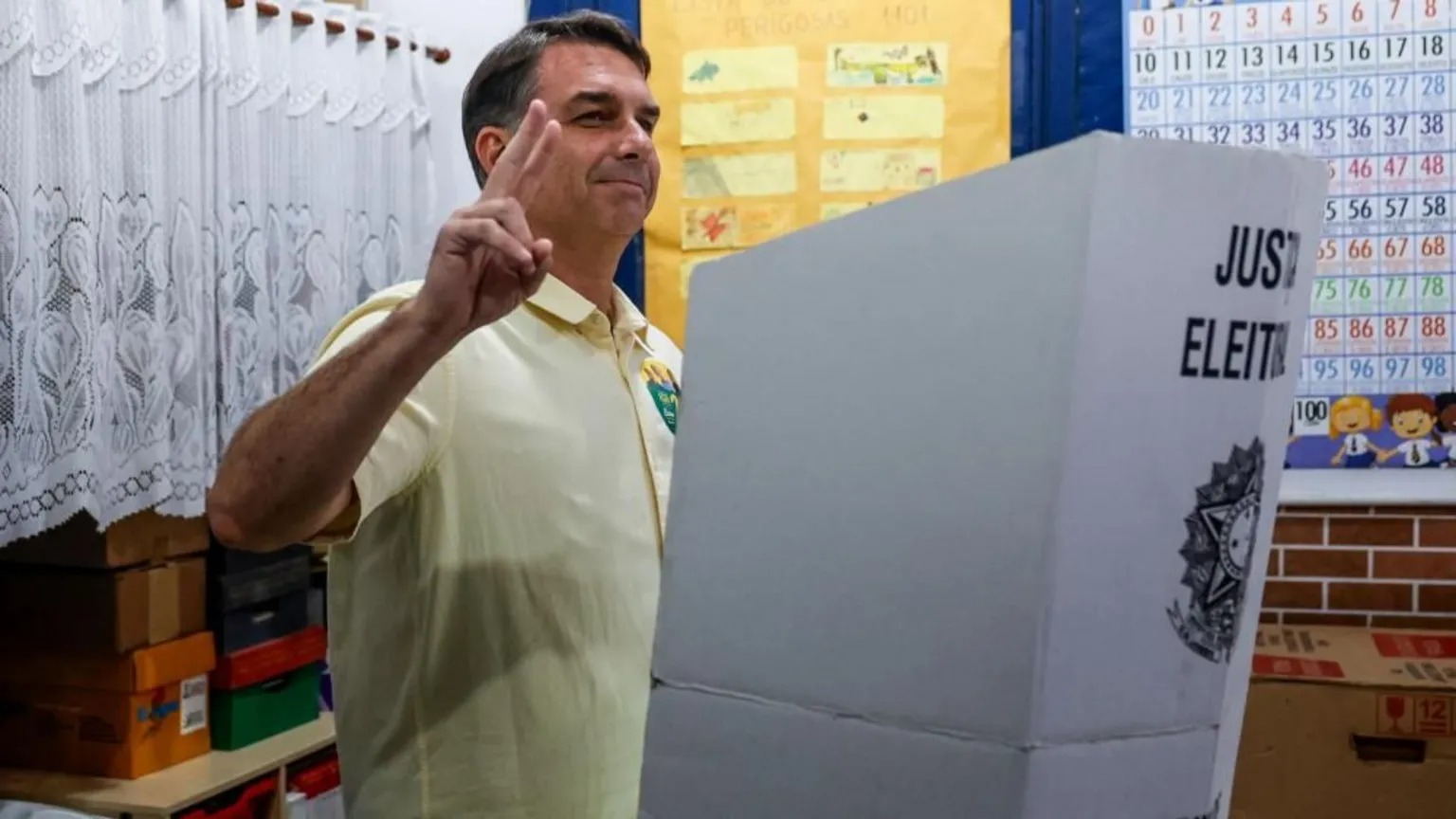
Brazil’s presidential contest between Lula and Flavio Bolsonaro is heading to a second round, as the Bolsonaro family secured a full contingent in the Senate.
Right-wing candidate Flavio Bolsonaro won the first round of the election, edging out incumbent Luiz Inacio Lula da Silva. However, he failed to secure the more than 50% of the vote required to win outright in a single round.
A run-off vote between the two candidates will take place on 25 October.
Flavio Bolsonaro is the son of former president Jair Bolsonaro, who was sentenced to 27 years in prison for plotting a failed coup attempt after losing the last election.
The race was neck and neck; during the campaign, President Lula had maintained a slight lead in the polls. With 99% of the votes counted, Bolsonaro took 47.03%, while Lula garnered 45.16%.
Bolsonaro’s result exceeded expectations, suggesting that the run-off is now within his grasp given that several other presidential candidates eliminated in the first round were right-wing alternatives.
Bolsonaro’s Liberal Party (PL) also emerged as the party securing the largest number of governors, senators, and federal deputies, according to results announced so far.
This means the party is expected to wield the greatest influence in Congress.
After casting his ballot, the 80-year-old Lula warned that the election was a choice between democracy and “barbarism”.
The 45-year-old Bolsonaro said he wanted to “liberate the Brazilian people”.
After winning election in 2002 and 2006, Lula defeated Jair Bolsonaro in 2022 by a margin of less than 2%, in what was the most closely fought presidential contest in Brazil’s history.
Following that election, on 8 January 2023, supporters of Bolsonaro ransacked government buildings.
Jair Bolsonaro was barred from running for office again even before he began serving his prison sentence; he endorsed the candidacy of his eldest son, Flavio, in his place.
Jair Bolsonaro’s wife, Michelle, was also elected to the Senate on Sunday.
Flavio Bolsonaro has pledged that, if elected, he will pardon his father and the supporters responsible for the 8 January riots.
Bolsonaro is more popular in the southern regions, among wealthier voters, and among evangelical Christians.
In a statement on Sunday, Bolsonaro said he was “very happy” to have finished ahead of Lula in the first round and expressed confidence that he would secure victory in the run-off in three weeks.
“I am very happy about the real possibility that in three weeks Brazil will give a definitive answer by electing a modern government,” the right-wing politician said.
Lula acknowledged that the election result was “unexpected” but stressed that the race was not over.
Speaking on Sunday, Lula said: “I admit I was convinced I would win in the first round. The match is about to begin. We are in extra time. In extra time, we will win the hearts of the Brazilian people.”
During the campaign, President Lula made the issue of “sovereignty” a cornerstone of his platform, periodically accusing the US of attempting to interfere in and influence Brazil’s elections.
Lula pledged to increase defence spending.
Earlier this year, Flavio Bolsonaro persuaded the US to designate Brazil’s two largest gangs as “terrorist organisations”.
In July, Brazil refused to grant visas to two US State Department officials. Brazil alleged that these officials had sought to cast doubt on the country’s voting system, a claim the US termed “unfounded”.
This development followed claims that Flavio Bolsonaro told a group of foreign diplomats that Brazil’s voting machines shared the same origin as those in Venezuela.
Last year, Donald Trump used Jair Bolsonaro’s coup trial as a pretext to impose tariffs on Brazil and sanction several senior officials and judges.
Should Flavio Bolsonaro win, Brazil is likely to join the US “Shield of the Americas” coalition against drug trafficking and pursue closer cooperation with the US.
However, Bolsonaro has pledged to maintain an “economically pragmatic” relationship with China, which has overtaken the US as Brazil’s largest trading partner and remains a vital customer for Brazilian soy and beef exports.
Corruption became a central theme of the campaign following a scandal involving Daniel Vorcaro, a now-imprisoned banker who orchestrated one of Brazil’s largest financial frauds, entangling senior figures from across the political spectrum.
Flavio Bolsonaro acknowledged that he had sought financing from Vorcaro for a biographical film about his father.
Lula was indirectly touched by the scandal after police alleged that Vorcaro sought assistance from Supreme Court Justice Alexandre de Moraes to evade arrest. Moraes denies any wrongdoing.
Although Moraes was not appointed by Lula, he is viewed as an ally of the president because he presided over Jair Bolsonaro’s coup trial.
Crime and insecurity were also among the electorate’s foremost concerns. While Brazil’s homicide rate has fallen, street offences that are highly visible to voters, such as mobile phone theft, have risen.
Violence and drug trafficking continue to be viewed as major problems.
Flavio Bolsonaro has pledged to designate Brazilian gangs as terrorists and construct maximum-security prisons modelled on those in El Salvador.
His father relaxed gun-ownership restrictions during his presidency.
While Lula criticised the US designation of Brazilian gangs as terrorist organisations, he introduced several reforms aimed at disrupting the financial networks of organised crime syndicates, improving homicide investigations, and investing in prisons.
The economy was likewise at the centre of the campaign, amid high levels of personal debt and slowing growth.
Lula built his legacy through a series of social welfare programmes, most notably the Bolsa Familia initiative, which pays families conditional on keeping children in education and ensuring they receive healthcare such as vaccinations.
He also built more universities. These programmes were credited with lifting millions of Brazilians out of poverty.
He supported increased investment in data centres and rare earth minerals, where Brazil holds rich resources, securing active state participation to ensure Brazil benefits.
He also backed oil exploration near the mouth of the Amazon River, which drew controversy among environmentalists.
However, Lula possesses a track record of tightening environmental protections and reducing the deforestation rate in the Amazon.
Deforestation increased significantly during Jair Bolsonaro’s presidency.
Flavio Bolsonaro has pledged to introduce a cap on public debt, cut government spending, revise welfare programmes, and bolster the critical minerals sector.
Brazil accounts for approximately 31% of the total gross domestic product (GDP) of Latin America and the Caribbean.
Writing on his personal blog, Michael Roberts noted that Lula’s commitment to higher public spending was facing scrutiny.
According to Roberts, Lula’s advisers are secretly weighing cuts to healthcare services as well as benefits for the elderly and disabled.
Bolsonaro, meanwhile, is openly calling for significant cuts to social spending and public investment, accompanied by the privatisation of state assets.
According to Roberts, both candidates are discussing austerity because, despite an improvement in living standards during the first three years of Lula’s mandate, those gains began to erode last year.
Economic growth has fallen below an annual rate of 2%, while the manufacturing and industrial sectors are declining rapidly.
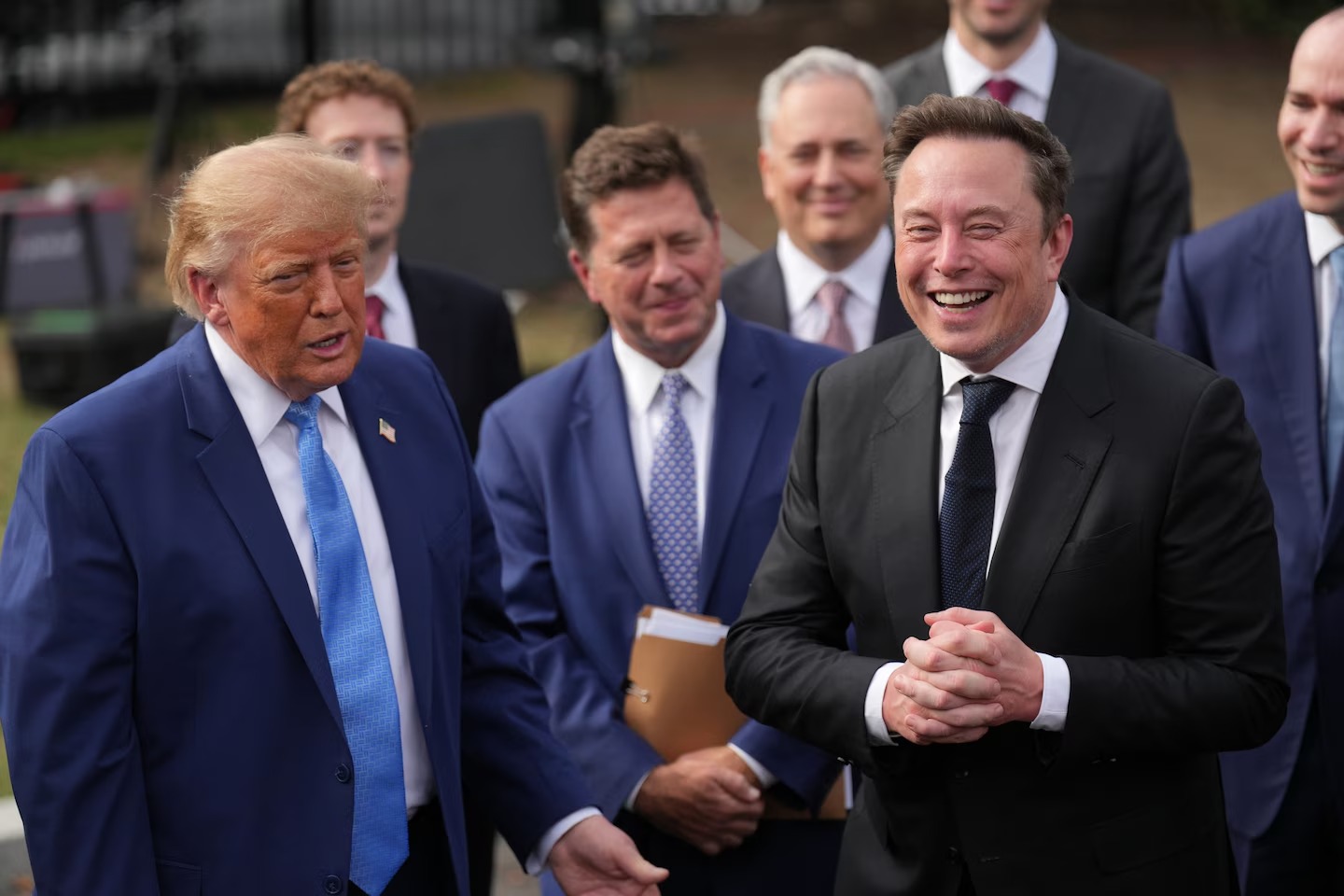
The world’s richest man, Elon Musk, has assumed the co-directorship of a Pentagon initiative focused on the future of warfare, known as “Project Meridian”.
Musk’s new role was announced by US Secretary of Defence Pete Hegseth.
Musk, who has long expressed his conviction that wars will ultimately be fought with autonomous unmanned aerial vehicles, will advise the project as co-director alongside Palmer Luckey, founder of defence start-up Anduril, and former Speaker of the House of Representatives Newt Gingrich.
In a memorandum issued at the Pentagon, Hegseth stated that the group would “examine the battlefields of the future” and “determine which weapons and technologies warfighters must employ to achieve dominance in these environments.”
During his “State of the Force” address at Marine Corps Base Quantico, Hegseth said:
“The best predictors of future conflict do not reside exclusively within the Pentagon. Obvious biases and risks arise when we task ourselves with both framing the questions and answering them.”
Hegseth stated that this initiative would commence immediately and that, following his address, he would convene with Musk, Luckey, and Gingrich at a secure location.
Project Meridian will have 120 days to “ruthlessly map the trajectory of wars, domains, and technologies”, a process that will culminate in the public disclosure of its findings alongside a classified annex.
Hegseth outlined an expansive mandate extending “from beneath the surface of the Earth to beyond the Moon.”
Rather than formulating new military strategies or policies, the panel will seek to identify “the domains we must seize and the capabilities we must master”, focusing on the effort to “discover, develop, and field” the weapons and systems that next-generation American troops may require.
The group is expected to submit a report containing recommendations to him by the end of January.
In 2024, Musk remarked: “Future wars will be entirely about drones and hypersonic missiles.” This was merely one of several similar statements he has made in recent years.
For Musk, whose oversight role at the Department of Government Efficiency (DOGE) ended in turmoil and escalated into a dispute with President Donald Trump over Trump’s spending bill, this appointment marks his formal return to government in an official capacity.
Musk and Trump ultimately reconciled, and Musk attended a meeting on artificial intelligence safety at the White House this week alongside other technology leaders.
Meridian forms part of a broader push announced by Hegseth to restructure the military around autonomous warfare and rapidly advancing technologies.
Hegseth announced the establishment of the Autonomous Warfare Command (AUTOWARCOM), a new four-star combatant command endowed with what he termed “service-like authorities” to scale autonomous and robotic capabilities across the joint force.
The Department of War will also begin phasing in new occupational frameworks across all military branches to establish specialised career tracks for what Hegseth described as “the next generation of autonomous warfighters.”
“We should have conceived an Autonomous Warfare Command a decade ago,” Hegseth said, explaining that Meridian aims to gaze far enough ahead to enable the military to anticipate the next technological shift rather than lag behind.

The era of corridor alliances in the Middle East

Bill to drop NATO membership goal submitted to Ukrainian parliament

AfD softens EU exit stance to seek reform of bloc and eurozone

Marine Le Pen unveils fiscal programme pledging French budget cuts

EU seeks Chinese trade signal in Beijing as surplus widens
-

 Diplomacy1 week ago
East-West Forum in Istanbul highlights irreversible shift to multipolarity
-

 Europe1 week ago
European unions urge governments to scrap all Palantir deals
-

 Europe2 weeks ago
Emmanuel Todd says West faces collapse amid Ukraine and Iran crises
-

 Diplomacy2 weeks ago
East-West Forum in Istanbul to debate multipolarity and global order
-

 Europe2 weeks ago
European intelligence chiefs divide over risk of Russian attack
-
 Middle East2 weeks ago
Sharaa says 7 October must not shape Israel policy on Syria
-
 America2 weeks ago
Republican support for Trump’s war with Iran drops sharply in polls
-

 Europe1 week ago
Rome protests AfD poster depicting South Tyrol as independent state
