
Russia
AmCham chief says US businesses await peace deal and sanctions relief before returning to Russia

American businesses are waiting for a peace agreement and the lifting of sanctions before committing to a broader return to the Russian market, according to Robert Agee, president and chief executive of the American Chamber of Commerce in Russia (AmCham).
In an interview with Russian business daily Vedomosti on the sidelines of the St. Petersburg International Economic Forum, Agee discussed prospects for restoring trade and economic ties between Russia and the United States.
Agee said that since February 2025, discussions have frequently focused on both a potential US mediating role in resolving the Ukraine conflict and a possible timeline for the return of American companies to Russia.
Referring to expectations that diplomatic negotiations and efforts to revive bilateral economic relations could proceed simultaneously, Agee said that despite the passage of time, neither track had produced a significant breakthrough.
The AmCham chief attributed the lack of progress to domestic and foreign policy dynamics within the United States and said American companies were now concentrating primarily on the eventual resolution of the conflict.
While describing efforts to repair economic ties as slow but steady, Agee identified the absence of a peace agreement as the principal obstacle.
“The biggest problem is that no agreement has yet been reached to resolve the conflict in Ukraine,” he said. “As a result, all US sanctions packages remain in force. We have repeatedly pushed for the removal of certain sanctions. Although I believe the new administration in Washington wants to improve relations with Russia, particularly from a trade, economic and business perspective, the continuing conflict has prevented any major breakthrough.”
‘President Trump wants to ease sanctions pressure wherever legally possible’
Addressing the future of sanctions and their impact on economic relations, Agee noted that restrictions differ according to their legal basis.
He said sanctions imposed through presidential executive orders could be eased much more quickly than those enacted through legislation.
“There are different types of sanctions. Some were introduced through presidential executive orders. Those could be removed tomorrow,” Agee said. “For example, the investment ban imposed by former US President Joe Biden. We believe that decision was entirely wrong, particularly for American business. On the other hand, there are sanctions approved by Congress, and those will be much more difficult to remove. Once the conflict ends, we know that President Donald Trump and his administration intend to reduce sanctions pressure to the maximum extent legally possible.”
Agee said the American Chamber of Commerce remained the only organisation directly advocating before US authorities for sanctions relief on behalf of American businesses.
“Companies pursue these requests exclusively through us, through the American Chamber of Commerce,” he said. “We are the only organisation trying to persuade the US government to lift certain sanctions. Our immediate priority is the removal of the investment ban. We are closely focused on sectors such as cosmetics and civil aviation. We are trying to convince the US government that sanctions in these areas can and should be eased even before the conflict is fully resolved.”
‘Russia has enormous potential to help our companies overcome global challenges’
Discussing sectors that would benefit most from renewed commercial ties, Agee said the opportunities available in Russia remained strategically important for American firms.
He pointed to Russia’s role in global supply chains and its potential contribution to addressing economic challenges.
“Russia has enormous potential to help our companies overcome many of today’s global challenges,” Agee said. “That applies both to high energy prices and to the fertiliser sector. Russia is one of the world’s largest fertiliser producers. These and similar products could easily be exported to the United States.”
He added that numerous American technology and aviation companies were closely monitoring developments.
“These are companies that previously operated here and were forced to leave. They did not want to leave. That is why they are now looking for opportunities to resume their business activities.”
Agee said future economic relations would extend beyond trade and include large-scale investment projects.
Noting that American companies had invested more than $100 billion in Russia in previous years, he said investment had traditionally formed the foundation of US economic engagement with the country.
“I think relations will develop both in terms of trade and joint projects,” he said. “But the core US approach to economic relations with Russia has always been investment. Our companies invested more than $100 billion in the Russian economy over many years.”
Some US companies chose to remain in Russia and continue operating successfully, he added, maintaining factories and employing tens of thousands of workers.
“I believe energy companies will be first in line when it comes to new investment in the Russian economy,” Agee said. “Another important area for potential cooperation and investment is the space sector. I believe there is literally trillions of dollars in potential in that field.”
‘President Trump would welcome new investment from Russia’
Asked whether the US market remained open to Russian capital, Agee said the Trump administration generally welcomed foreign investment.
Recalling previous investment projects in the aluminium and fertiliser sectors, he said opportunities for Russian investors continued to exist.
“I think the US market is open to Russian investment and would welcome it,” Agee said. “There were investment projects in aluminium and fertilisers in the past. Opportunities remain. It is difficult to judge how prepared Russian investors are given sanctions-related risks, but in general I can say that the Trump administration would welcome new investment from Russia.”
Agee said American companies were prepared to return if restrictions were eased, even if sanctions were not completely removed.
He stressed that each company would make decisions based on its own risk assessments.
“I know several companies that are ready to return to Russia and restart operations at the first opportunity,” he said. “The critical factor is ensuring that these initial returns are successful. The first companies to come back will demonstrate that everything is functioning normally, and that will encourage others to follow.”
He added that the process would not begin overnight, as technical specifications and legal documentation would first need to be prepared.
“Based on information available to me, discussions on these issues are already taking place.”
Agee also identified data centres as one of the most promising future investment areas, citing Russia’s abundant electricity supplies, cold climate and highly skilled information technology workforce.
“In my personal view, one of the most promising sectors is data centres,” he said. “These facilities require cheap electricity, which Russia has in abundance, a cold climate and a well-trained IT workforce. Russia possesses all of these advantages. I believe this sector has a very strong future, but sanctions must first be removed. After that, developments could move quickly.”
‘Commercial dialogue has become much easier under Trump’
Agee said AmCham maintained productive relations with both Russian and American authorities and continued to serve as a bridge between the two countries.
Comparing the administrations of Joe Biden and Donald Trump, he argued that maintaining commercial dialogue had become significantly easier.
“We have excellent relations with both sides,” he said. “Together with Kirill Dmitriev, head of the Russian Direct Investment Fund, we serve as the only commercial bridge between Russia and the United States. It was much more difficult to preserve that bridge under the Biden administration, but the process has become much easier under President Trump.”
According to Agee, the Trump administration has demonstrated a strong commitment to improving economic dialogue with Russia.
“Today we see two channels of dialogue functioning simultaneously, both cultural and commercial,” he said. “Maintaining communication is the most important element. Under Biden, almost no channels of communication remained open. Now we are moving in the right direction and are also conducting very active cooperation with the Russian government.”
Agee argued that the priorities of the current US administration align closely with the interests of American businesses and said broader geopolitical developments were reinforcing the logic of closer economic cooperation.
He pointed to instability in the Middle East and risks to global shipping routes as factors strengthening the case for partnership.
“The administration’s priorities and the interests of business are fully aligned,” he said. “I think recent developments in the Strait of Hormuz have once again convinced Washington that Russia and the United States are natural partners. America needs what Russia has, and the same is true in reverse. America possesses technologies and products that Russia wants to buy. This is a relationship of genuine interdependence.”
As the world watches tensions escalate in the Middle East, he added, the rationale for deeper economic cooperation between Russia and the United States has become increasingly persuasive.
Concluding the interview, Agee highlighted the importance of easing visa procedures and restoring diplomatic missions between the two countries.
He said overcoming travel barriers was essential to reviving commercial ties.
“This is an extremely relevant issue that we raise constantly,” Agee said. “In the past there was at least a common understanding that diplomatic visas should be addressed first and that consulates should resume operations. We will continue recommending in both Washington and Moscow that this issue be resolved as quickly as possible. Solving it would greatly benefit the business community. We remain hopeful.”











Russia has announced that it will ship 500,000 tonnes of diesel fuel to the global market under a partial lifting of its diesel export ban, enacted as part of measures concerning the Ukraine crisis and energy markets.
A statement from the Russian government said the decision was implemented in accordance with understandings reached between Russian President Vladimir Putin and US President Donald Trump.
Under the decision, which came into effect on 10 October, an initial phase of 500,000 tonnes of diesel fuel will be supplied to the global market.
“Following the rescinded decision, Russian oil companies, in coordination with the government, will immediately begin signing diesel fuel supply contracts with foreign business partners,” the government statement said.
Assessing the matter, Deputy Prime Minister Aleksandr Novak stressed that the decision would not affect the interests of Russian consumers.
Noting that diesel fuel is produced from Russian crude at domestic refineries, Novak stated that production volumes are sufficient both to meet all domestic market requirements in full and to ship the specified quantities to the global market.
The ban on diesel fuel exports in Russia was initially put into effect on 31 January 2026, covering only non-producing companies.
The government tightened the restrictions on 9 July by expanding them to include direct producers. Previously announced to remain in place until the end of October, the ban was partially relaxed in light of current developments.
Vladimir Putin and Donald Trump held a telephone conversation on 9 October. Following the call, US President Trump announced that an agreement had been reached on the supply of Russian diesel.
Trump said Russia had agreed to send more than 300,000 tonnes of fuel to American and global markets in the initial phase, 500,000 tonnes in November, and 1 million tonnes thereafter.
Trump also stated that an additional shipment of 3 million tonnes could follow at a later stage, adding that they expect this agreement to reduce diesel fuel prices rapidly.
Following the conversation, the US Department of the Treasury, on Trump’s instructions, issued a temporary general licence exempting Russian diesel fuel transactions and shipments to the US—previously prohibited under sanctions—until 7 April 2027.
Putin, in a statement after the call, confirmed Russia’s readiness to supply crude oil and petroleum products to American and global markets, noting that this would have a positive impact on the world economy.
Putin also noted that the two leaders discussed prospects for resolving the conflict in Ukraine, the situation surrounding Iran, and bilateral relations, agreeing to maintain contacts through presidential envoys, intelligence agencies, and other institutions.
A statement issued by Novak’s office after the call said Russia was prepared to ship diesel to the US within October.
Novak stated that export volumes could be increased in November and December as refineries emerge from scheduled maintenance.
Novak also conveyed that Moscow views positively Washington’s steps towards stabilising the global energy market and normalising energy trade.
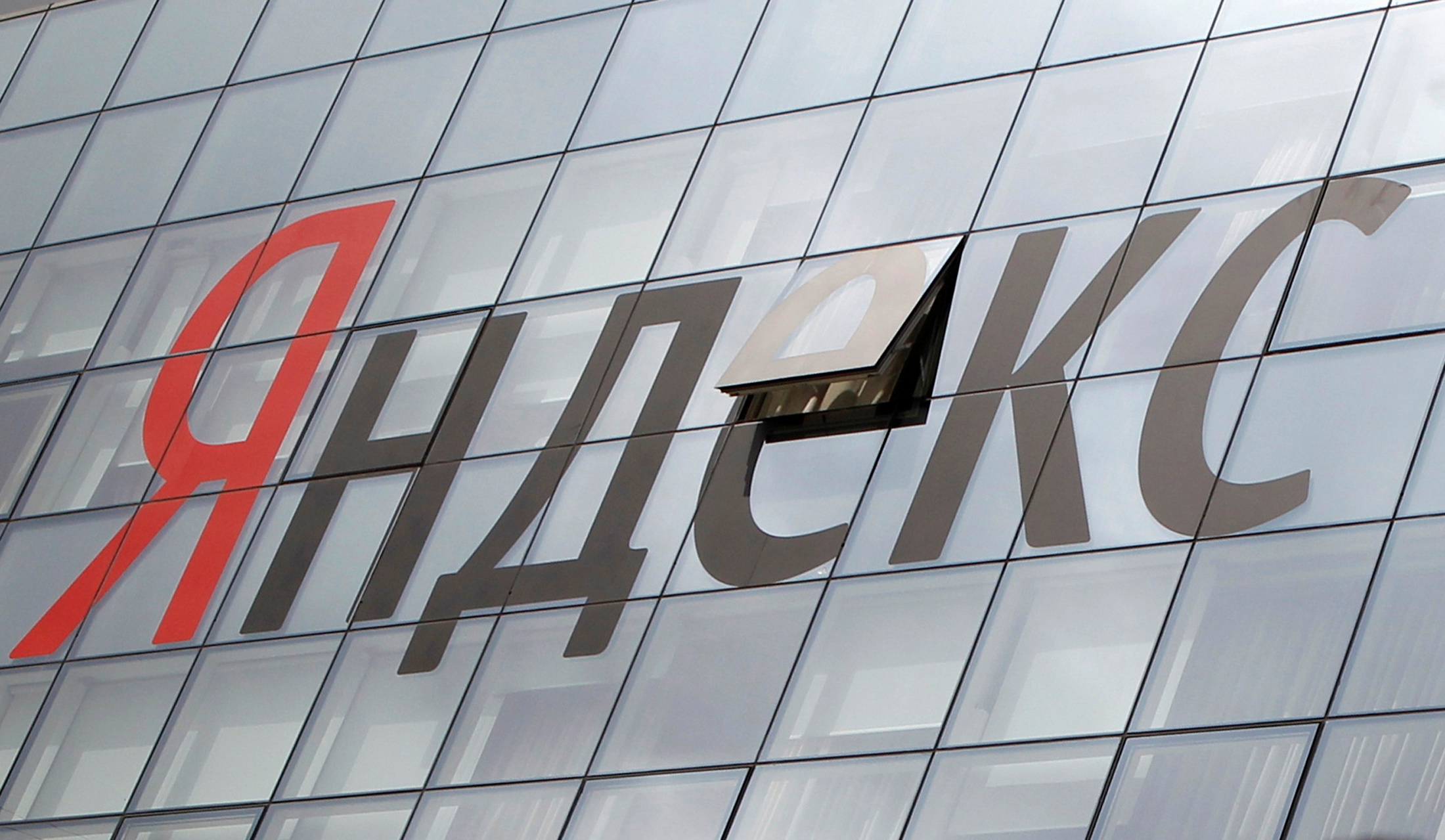
A drone strike has hit a data centre belonging to Russian internet company Yandex in the town of Sasovo, located in the Ryazan region.
The company announced that a fire triggered by the attack damaged part of the infrastructure and resulted in a complete shutdown of the facility’s operations. No casualties or injuries were reported in the incident.
In a statement, Yandex said competent authorities and relevant teams were working at the scene to remediate the damage.
Owing to the facility being knocked offline, it was noted that some of the company’s online services might temporarily become inaccessible to users.
The company provided no details regarding the financial scale of the damage or when the data centre would be brought back into service.
Shares slide, cloud infrastructure curbs introduced
Following the developments, Yandex shares fell by more than 3.4% as of 10:10 Türkiye time.
A drone threat alert was reportedly communicated to residents of the Ryazan region at 23:48 on the night of 7 October, with the alarm lifted at 02:46 on the morning of 8 October. The facility in Sasovo had commenced operations in 2014.
In an advisory issued via the Yandex Cloud Alerts channel, it was reported that power issues were occurring in the system’s “ru-central1-b” availability zone.
The company stated that efforts to transfer data workloads to other availability zones had been completed and that services in other zones continued to operate normally.
However, it was noted that temporary restrictions could be imposed on the creation of new resources within the cloud infrastructure. According to data from outage-monitoring platform Downdetector, an increase in user complaints concerning Yandex, Yandex Cloud, and the real estate platform CIAN was recorded on the morning of 8 October. Reports were observed to have originated predominantly from Moscow and surrounding regions.
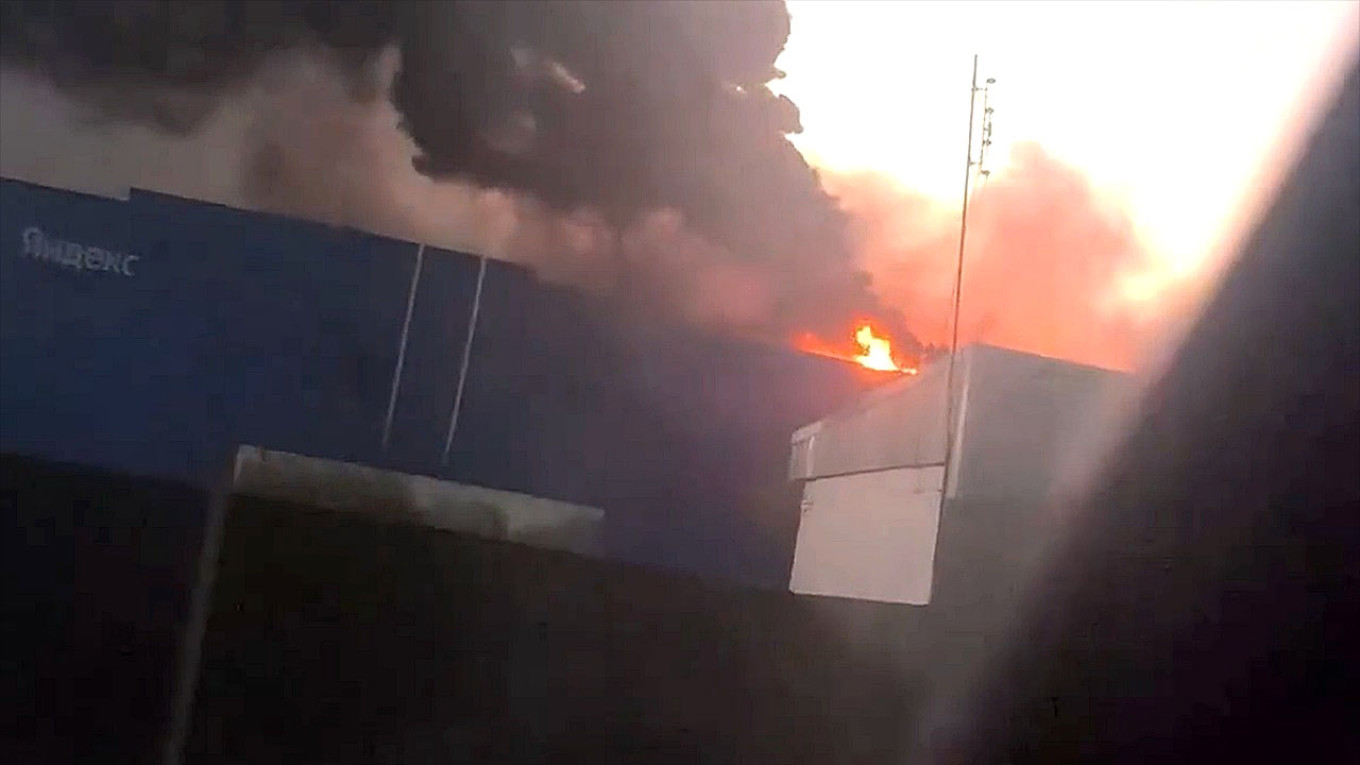
Data centre targeted for first time after logistics warehouses
Whether the attack directly targeted the data centre remains unconfirmed. Nevertheless, as of 8 October, this went on record as the first drone strike directed at data centres in Russia.
Beginning in the summer months of 2026, warehouses belonging to Russia’s leading e-commerce platforms had faced drone attacks.
Fires at several warehouses owned by the company Wildberries caused hundreds of billions of roubles in losses for sellers, after which logistics centres belonging to the company Ozon were also targeted.
Both companies amended their contractual terms, shifting liability for damages arising from attacks onto sellers.
Yandex facilities had previously experienced a widespread outage on 30 March 2025 due to a transformer failure, which temporarily disabled services including Yandex Cloud, Yandex Music, and Yandex Lavka.
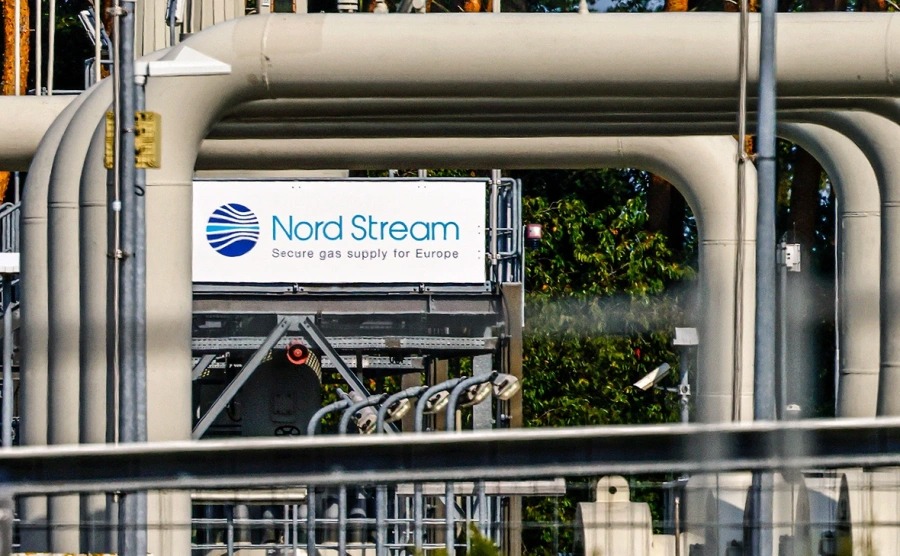
Senior officials from Russia and the US have reportedly discussed involving an American investor in the Nord Stream natural gas pipelines.
According to a report by the Reuters news agency based on five sources, those taking part in contacts included Kirill Dmitriyev, head of the Russian Direct Investment Fund (RDIF) and the Russian president’s special representative for investment and economic cooperation with foreign states, and Jared Kushner, son-in-law of the US leader.
Two sources providing information on the scope of the discussions said that while it remains unclear how detailed the consideration of the Nord Stream topic was, the matter nevertheless remains on the agenda.
Kushner reportedly views business-oriented cooperation as an instrument in initiatives aimed at ending the war in Ukraine.
A potential agreement could reportedly offer US investors an opportunity to profit from energy shipments to Europe once the war ends.
White House states no recent contacts have taken place
A White House official told Reuters that no negotiations regarding Nord Stream have been conducted recently.
The official emphasised that any agreement with Russia would require approval from the US International Development Finance Corporation (DFC) and the US Department of the Treasury, adding that such steps must yield benefits for US taxpayers and companies.
Another US official described reaching an understanding in the medium term as unlikely due to existing obstacles.
The natural gas pipelines are subject to US and European Union sanctions. A spokesperson for the German Federal Ministry for Economic Affairs and Energy stated that the approval of the German federal government is mandatory for the pipelines to be brought back into service, adding that the Berlin administration does not support such a step.
The spokesperson also recalled that Germany has secured alternative supplies to Russian gas.
The ownership structure of Nord Stream also features among the issues complicating the ground for negotiations.
In the consortium operating the project, Russian energy giant Gazprom holds a 51% stake, while the combined share of two German partners stands at 31%.
The remaining shares are held by France- and Netherlands-based companies.
A source speaking to the agency stated that the German partners wish to retain their stakes in order to preserve their influence in the project should Gazprom’s shares be sold.
What had American investor Lynch proposed?
The concept of involving a US financier in the Nord Stream projects had also surfaced in 2024.
American investor Stephen Lynch, founder of Monte Valle Partners, who conducted commercial activities in Russia for 20 years, had applied to the US administration for a licence allowing him to bid if the Nord Stream 2 pipeline were put up for auction.
Lynch described this potential move as an opportunity to keep Europe’s energy supply under control until the fossil-fuel era ends, as well as leverage against Russia in peace negotiations.
The Alternative for Germany (AfD) party described the possibility of transferring the pipeline to Lynch as an illustration of the German government’s irrational policy.
Separately, The New York Times (NYT) reported earlier this month that Ukraine-related contacts between Russia and the US were expanding to include a multi-billion-dollar oil deal covering Lukoil’s foreign assets.
The assets in question included Lukoil’s refineries in Eastern Europe as well as filling stations in the US.
NYT sources reported that discussions in this framework were also addressed during a meeting between Russian President Vladimir Putin, Steven Witkoff, and Kushner.
The sabotage of the Nord Stream pipelines took place in September 2022, with three of the four lines damaged by explosions.
One string of the Nord Stream 2 pipeline, which had not yet been commissioned at the time, remained intact.
The Federal Security Service of the Russian Federation (FSB) classified the incident as an act of international terrorism, while Putin claimed that “Anglo-Saxons” were behind the attack.
In investigations into the incident, judicial proceedings were pursued against several Ukrainian citizens, including professional diver Vladimir Juravlyov, suspected of planting explosives off the island of Bornholm, and Sergey Kuznetsov, who allegedly skippered the yacht Andromeda.

Japan plans curbs on short-term home sales to cool urban prices

Trump midterms calculus halts Israeli strike plan against Iran

EU urges Britain and Canada to help close Ukraine’s €70bn budget gap

Anthropic posts $80.7bn loss ahead of IPO as computing costs soar

Netanyahu trails Eisenkot in Israeli polls despite Trump backing
-

 Europe2 weeks ago
Bill to drop NATO membership goal submitted to Ukrainian parliament
-

 Europe2 weeks ago
Marine Le Pen unveils fiscal programme pledging French budget cuts
-

 Europe2 weeks ago
Berlin Left Party backs Israel’s right to exist for coalition pact
-

 America2 weeks ago
How will Brazil’s presidential runoff work?
-
 Europe2 weeks ago
EU seeks Chinese trade signal in Beijing as surplus widens
-

 Diplomacy2 weeks ago
The West is preparing for war not with Russia, but with its own people, French analyst Georges Kuzmanovic insists
-
 Middle East2 weeks ago
Eisenkot ties Syria pact to withdrawal of Russian and Turkish forces
-

 Diplomacy2 weeks ago
Europe has been under US occupation since World War II, Italian journalist and author Thomas Fazi says
