
Europe
Andy Burnham emerges as frontrunner for UK leadership after Keir Starmer resigns


Following the resignation of Prime Minister Keir Starmer from both his government post and the leadership of the Labour Party, Andy Burnham has emerged as the most likely figure to assume the UK’s leadership.
Burnham, the former Mayor of Greater Manchester, was elected to the House of Commons two weeks ago after winning a by-election in Makerfield by a wide margin.
Long prominent within the Labour Party as a leading rival to Starmer, Burnham has so far faced no declared challengers in the race for the party leadership.
Having expressed regret 20 years later for voting “yes” in the 2003 parliamentary division on the invasion of Iraq, Burnham built his early political career as a mid-ranking government official under Tony Blair’s Labour administration.
Burnham points to a pivotal moment in his political life when he was booed at a match at Liverpool’s famous Anfield stadium while serving as Culture and Sport Secretary in the government of Blair’s successor, Gordon Brown.
Representing the Brown administration at Anfield on the 20th anniversary of the 1989 Hillsborough disaster, in which 97 Liverpool fans lost their lives, the then 39-year-old minister’s attempt to deliver condolences was interrupted by loud, angry shouts from the stands demanding justice for the victims.
Up to that point, successive British governments had rejected demands for a public inquiry into the disaster. Burnham says that from that moment on, he decided to pursue politics “outside of London” and to become “a voice for the voiceless.”
According to a profile in The Guardian, critics have dubbed Burnham “Captain U-turn” for giving the impression of shifting his political views over the decades, while others view him as “a man who listens.”
After graduating from university, Burnham moved to London, where he briefly worked for trade publications such as Tank World and Passenger World Management before securing a role as a researcher in the parliamentary office of Labour MP Tessa Jowell.
Having also advised the Culture Secretary of the time, Chris Smith, Burnham was elected as an MP for his hometown constituency of Leigh in Greater Manchester in 2001.
He initially served as a junior minister in the Blair administration before joining the cabinet under Brown as Chief Secretary to the Treasury. He later served as Culture Secretary and subsequently Health Secretary.
In 2010, Burnham ran for the Labour leadership on a platform of “passionate socialism” but finished fourth out of five candidates, losing to Ed Miliband, who campaigned on moving the party further to the left.
Following Miliband’s defeat in the 2015 general election, Burnham ran for the leadership again, adopting a more moderate, “centrist” rhetoric aimed at highlighting a business-friendly stance.
Launching his campaign at the headquarters of professional services firm Ernst & Young, Burnham argued that entrepreneurs should be seen as “every bit as much our heroes as nurses.” He ultimately lost that contest to Jeremy Corbyn.
Burnham accepted a shadow cabinet role under Corbyn, taking on the position of Shadow Home Secretary. He was also one of the few frontbenchers who did not resign from Corbyn’s team in 2016 when the Labour leader was accused by some of failing to campaign actively enough to remain in the EU, a factor critics argued contributed to the Brexit victory.
In 2017, Burnham left Corbyn’s shadow cabinet to run for the newly created position of Mayor of Greater Manchester.
He won the election with more than 60% of the vote and was re-elected by an even larger margin in 2021.
During his tenure in Manchester, he won praise for reforming the region’s transport network by bringing bus services back under public control.
His fierce advocacy for a region that lagged economically behind much of the rest of the country earned him the moniker “King of the North.”
Upon becoming Mayor of Manchester, he pledged to eradicate rough sleeping. In the initial years, progress was made, with the number of rough sleepers nearly halved by the onset of the COVID-19 pandemic compared to 2016 levels. However, Burnham was unable to sustain this progress; by November 2025, the number of rough sleepers had returned to 2016 levels.
Should he become Prime Minister, Burnham’s primary challenge will be addressing the UK’s economic decline. According to some assertions, the prospective leader could move to reverse the privatizations that have defined the country for the past 40 years, turning instead to renationalization.
Under a new blueprint dubbed “Manchesterism,” an Andy Burnham administration could seek to reverse 40 years of privatization through a long-term plan to take over failing public utilities, issue debt-for-equity swaps, and establish competitive state-owned enterprises.
This policy paper, titled “The Productive State,” was published just as Burnham arrived in London to take his oath as MP for Makerfield.
The paper’s author, Mathew Lawrence—who is close to Burnham and worked alongside him on plans to bring public services under state control—released the document in coordination with Mainstream, a Labour group acting as a vehicle for Burnham’s leadership ambitions.
Former minister Miatta Fahnbulleh, a policy adviser to Burnham who is widely identified as the architect of his economic policies, described the paper as “an important contribution to the debate on how we solve this problem, deliver the change the public is crying out for, and begin rebuilding our broken economy.”
Lawrence stated that the paper envisions “a state that owns, invests, and provides to make life affordable; a politics that reclaims control over the essentials of a civilized life—clean water, cheap energy, warm homes, reliable transport—built and run by publicly accountable institutions.”
Subtitled “A Framework for Manchesterism,” the paper criticizes the long-standing trend toward the privatization of public services, arguing it lies at the heart of the UK’s growth and productivity crises by stripping away control over essential services and driving up the cost of living.
While neither the paper nor Burnham himself advocates for a wholesale renationalization program, they call for a framework of greater state intervention to protect the public from skyrocketing costs and the burden of bailing out failing private firms.
The Guardian previously reported that Burnham’s allies have discussed managing a 10-year project to bring large portions of England’s water and energy sectors under state control.
This process would likely begin with the struggling utility provider Thames Water.
Ultimately, Burnham’s allies want to bring energy transmission and supply companies, potentially including the electricity grid operator National Grid, under public control.
The paper outlines several pathways to achieving public control over the long term. For instance, if a company like Thames Water falls into financial distress, the government could intervene by implementing a “special administration regime.”
Burnham points to the Greater Manchester bus network as an example, where private operators bid for franchises to deliver services, but fares, timetables, and routes are controlled by local government.
For financially stable utility companies, the paper notes that the law typically requires the government to pay fair market value to acquire them.
To achieve this without a massive upfront cash expenditure, the paper suggests the state could use a “debt-for-equity swap” method, though it notes this would require primary legislation and likely face significant legal challenges.
Alternatively, the state could gradually assume control by establishing its own commercial public enterprises, though this path would potentially require large-scale borrowing.
While Burnham has stated a desire to prevent “excessive profiteering” in the sector, he has yet to detail exactly what a similar model would look like in practice for water and energy companies.
The Starmer government had already planned tighter regulation of the water sector through new legislation this autumn.
The paper has won praise from several prominent Labour figures, including Fahnbulleh and Stewart Wood, a Labour peer and former economic adviser to Ed Miliband.
Wood described the paper as “a valuable contribution to rethinking the social democratic case for a more active state that helps generate wealth and improve the quality of life across the country.”
Among the key commitments Burnham made during his Makerfield campaign was to stick to Labour’s pledge from the last election not to raise the main rates of income tax, VAT, and National Insurance.
During his campaign, he also indicated a desire to “look closely” at the possibility of raising the starting threshold for income tax, which is currently £12,570.
Burnham argues that housing policy has slipped too far down the priority list of successive governments. However, several of his signature policies—such as prioritizing development on brownfield land and restricting Right to Buy—have already been implemented by the current government.
According to the BBC, one of the biggest departures in Burnham’s advocated approach is to allocate the entirety of the 10-year, £39 billion affordable housing budget to social rent homes—the cheapest and most heavily subsidized form of publicly funded housing.
Like the Conservative administration under Rishi Sunak, Labour has reduced immigration levels by tightening visa requirements.
During his campaign in Makerfield, Burnham said that net migration “needs to come down further,” though he did not set a specific target.
On foreign policy, Burnham has expressed a desire to see the UK rejoin the EU within his lifetime, though he added that he has no wish to “re-run the 2016 referendum right now.”
His stance on relations with the EU will soon be tested. Among the legacies he would inherit from Starmer are a series of ongoing negotiations, particularly regarding youth visas, food regulations, and plans to link the UK back to the EU’s carbon pricing system.
Defence spending, which led to the resignation of Starmer’s Defence Secretary John Healey in early June, will be another key issue. While Burnham has stated he would “find more cash” than Starmer for defence spending, it remains unclear how he would achieve this.
Another significant challenge will be how Burnham manages relations with US President Donald Trump.
While Burnham has noted that the UK must seek “a good relationship” with the US, he has also stated that he would not shy away from saying “we don’t agree with them.”
At present, the selection of the new Chancellor of the Exchequer appears to be taking on particular importance. Two prominent names in contention are Wes Streeting and Ed Miliband.
Both Streeting and Burnham favor raising taxes on wealth rather than income. However, senior allies of Burnham expect Streeting—who has abandoned his own leadership ambitions—to be appointed to another senior cabinet post, amid rumors that he could become Foreign Secretary.
The Economist, emphasizing the need to tackle rising health and social care costs, adopt a pragmatic approach to the net-zero target, and cut red tape, has declared its preference: Wes Streeting.
Arguing that appointing Streeting would be “a sign of willingness to embrace growth,” the magazine is nevertheless not optimistic:
“The problem is that these policies run counter to Mr Burnham’s instincts, which are more aligned with those of Ed Miliband, another candidate for chancellor, who holds more statist views. Harnessing AI will require creative destruction; inefficient firms must be allowed to go bust, and workers must be able to move to jobs better suited to AI. Burnham seems instinctively opposed to the deregulation needed to achieve this. His allies, meanwhile, are demanding worker protections that are stronger even than those introduced by Sir Keir.”
Arguing that “such misconceptions” are visible elsewhere, The Economist contends that Burnham favors an “expensive state house-building programme” and wishes to reindustrialize the economy, which it describes as “a romantic notion that ignores the fact that Britain’s comparative advantage lies in services.”
Burnham, on the other hand, has not yet made a decision regarding the Treasury. Home Secretary Shabana Mahmood also remains in contention.
Senior members of Burnham’s team remain divided over whether to appoint Miliband to the post.
According to The Times, allies of Miliband, the Energy Secretary, argue that he is the only candidate with both the experience and the radical approach needed to transform Britain’s stagnant economy.
However, his critics, including some ministers, argue that he does not offer sufficient support to business and risks damaging market confidence.
They also point to his opposition to new oil and gas drilling licenses in the North Sea, an option Burnham has indicated he remains open to.
On the other hand, his appointment of James Purnell, a veteran of the former Tony Blair government, as his chief adviser is seen as a promising sign by The Economist and the Financial Times.
Flint Global, the advisory firm headed by Purnell, counts BP, Amazon, Jaguar Land Rover, and Uber among its clients.
Burnham is also expected to appoint Lord O’Neill, a former Goldman Sachs banker and Treasury minister, and Andy Haldane, the former chief economist of the Bank of England, to senior economic roles in his administration.
The most concise assessment of “Burnhamomics” comes from Jennifer Williams, who has closely followed Burnham for many years as the Financial Times Northern England correspondent:
“It is hard to escape the fact that when Burnham arrived in Greater Manchester, he took over a project that was already underway; he successfully sold this to loyal Labour supporters as a rejection of neoliberalism and trickle-down economics. Yet, it was never that.”









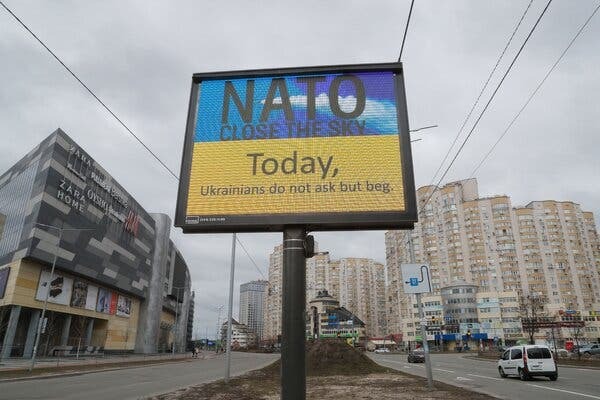
A bill proposing to enshrine neutral status in the constitution and abandon the goal of joining the North Atlantic Treaty Organisation (NATO) has been submitted to the Ukrainian parliament.
According to a report by the Strana portal, the proposal was introduced to the parliamentary agenda by lawmaker Anna Skorokhod.
The drafted constitutional amendment stipulates that Ukraine must not participate in military alliances and must confirm that it harbours no aggressive intentions against any state.
The text notes that neutrality status should be registered through “guaranteeing non-participation in any military alliance and confirming the absence of intent to attack any country.”
While the bill submitted by Skorokhod aims to remove the NATO goal from the constitution, it envisages maintaining constitutional guarantees for the country’s course towards full European Union (EU) membership.
NATO goal in constitution took effect in 2019
The strategic goal of EU and NATO membership enshrined in Ukraine’s constitution was adopted in February 2019, during the tenure of then-president Petro Poroshenko.
The constitutional amendments in question obliged the government to implement this course and designated the president as the guarantor of the process.
Poroshenko, who assumed the leadership of the European Solidarity party in May of that year, has led the party ever since.
Advocating Euro-Atlantic integration, Poroshenko described EU and NATO membership in a 2026 assessment as one of the country’s long-term security guarantees.
Moscow insists on neutrality condition
The Moscow administration links a potential resolution to the war in Ukraine to a series of conditions that Kyiv must fulfil.
These conditions include the withdrawal of Ukrainian troops from the Donetsk, Luhansk, Zaporizhzhia, and Kherson regions, as well as the international legal recognition of these territories, alongside Crimea and Sevastopol, as Russian soil.
Ukraine’s formal renunciation of NATO membership maintains its weight among Moscow’s primary demands.
Russian officials state that Ukraine’s neutral status must be explicitly included in future agreements.
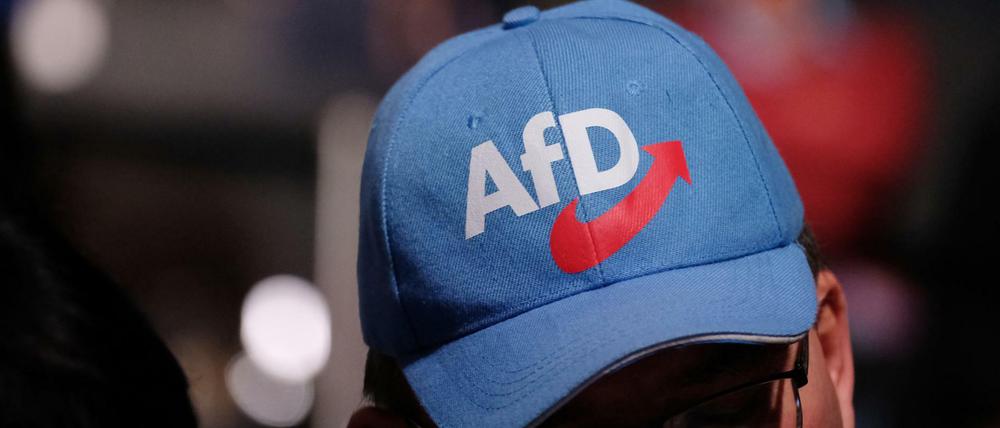
Alternative for Germany (AfD) is reportedly debating a reform of the European Union’s structure, backing away from its longstanding demand for Germany to exit the EU and the eurozone.
An internal party strategy paper obtained by the daily newspaper Die Welt and the news agency Reuters signals a new phase in the organisation’s European policy.
The document in question was drawn up by the party’s lawmakers in the European Parliament, the Bundestag, and state parliaments, and was discussed at a meeting held last month.
The drafted proposal envisages transforming the eurozone into a looser alliance of sovereign states.
Under the plan, member states would be held more accountable for their own national debts, while the intervention powers of the European Central Bank (ECB) would be curtailed.
According to Die Welt, the initiative aims to place the euro single currency on a permanent footing anchored in individual responsibility and liability.
AfD seeks structure focused on internal market and security
According to the strategy paper, AfD advocates restricting the remit of the EU primarily to the internal market, the protection of external borders, security matters, and selected technology projects.
The party also demands that member states be granted national-level opt-outs in policy areas such as migration, social services, and fiscal policy.
Rene Aust, head of AfD’s European Parliament delegation, asserted that the document demonstrates the party’s “pro-European orientation”.
Aust noted that they wish to improve cooperation with neighbouring states, protect trade and freedom of movement, and jointly defend external borders.
In contrast, AfD lawmaker Peter Boehringer stated that the paper should not be viewed as a change of course, describing it instead as an implementation plan designed to put existing principles into practice.
The text proposes that, should the envisaged reforms fail to materialise, Germany’s future European and monetary policy should be determined by the public through a referendum.
The draft further calls for abandoning the direct popular election of members of the European Parliament, proposing instead that representatives be appointed via national parliaments.
Separatist line remains in party platform
AfD had long demanded Germany’s departure from the EU (“Dexit”) in an explicit nod to Britain’s Brexit process, advocating its replacement with a newly established European community composed of independent sovereign nations.
The party’s current official platform retains the objective of quitting the bloc and establishing a new European Economic Community if fundamental reforms cannot be realised.
A draft election manifesto had similarly argued that Germany must withdraw from EU membership to liberate the country from foreign domination.
Party co-leader Alice Weidel said in late August that the euro was an unstable currency and argued that a campaign should be mounted for Germany to exit the eurozone.
Weidel claimed that Germany was in a distinctly better economic position prior to adopting the single currency, asserting that working-class populations are currently being impoverished.
Weidel also claimed that, should they come to power, they would close national borders and withdraw from the Schengen Agreement, arguing that open borders threaten domestic security.
According to a polling average compiled by Politico, AfD ranks first across Germany with a 28% share of voter support.
The Christian Democratic Union (CDU), led by Chancellor Friedrich Merz, sits in second place at 19%, while the Greens place third at 15%.
At the beginning of October, national support for the party was recorded as reaching the 30% mark for the first time, while backing for the governing CDU/CSU bloc slipped to 18%.
AfD placed first in two state parliamentary elections in September. On 7 September, the party secured first place in the state of Saxony-Anhalt with 43.8% of the vote, whereas the governing CDU recorded 17.2%, its lowest result since 1998.
AfD also finished ahead in the state election in Mecklenburg-Western Pomerania on 20 September with 38.2%.
The Social Democratic Party (SPD) took 35.5% in the state, while the CDU, which fell to 4.9%, was shut out of a state parliament for the first time in modern German history.
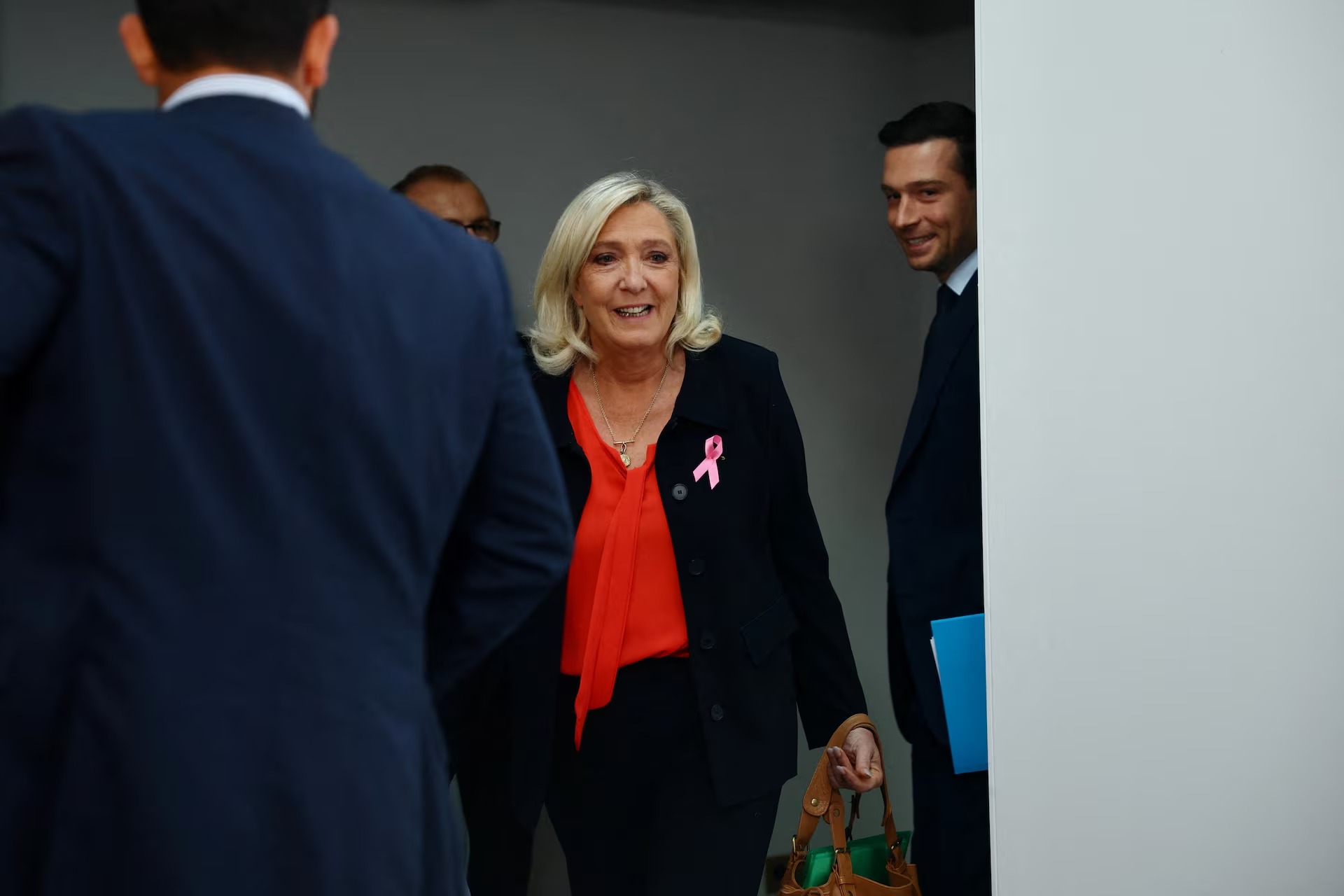
Marine Le Pen, the National Rally (RN) candidate for the French presidency, has presented her principal budget proposals ahead of next year’s elections.
Under Le Pen’s plan, a “golden rule” to be enshrined in the constitution would be approved by referendum, capping future budget deficits at levels consistent with a gradual reduction of France’s debt burden.
The French leader pledges to restore the primary budget balance within 18 months of taking office.
The proposals project reducing the public deficit to below 3% of GDP by 2030 and to below 2.5% by 2032, the final year of the next presidential term.
Public debt would be lowered from approximately 121% in 2027 to 112% of GDP by 2032.
A spending reduction programme totalling 140 billion euros would be implemented by 2032, offset by tax cuts of at least 30 billion euros.
By the end of the presidential term, public spending would be brought down to below 50% of GDP.
Le Pen said that once France regains control of its public finances, discussions should be held with the European Central Bank (ECB) to intervene in order to ease borrowing costs.
Support was proposed from the ECB to finance energy transition investments and decarbonisation projects.
The plan sets a target to achieve “carbon neutrality” before 2050 and to publish a new national low-carbon strategy.
The programme also includes a proposal for EU economies with high carbon emissions to contribute more to the EU budget through a new carbon-based contribution formula.
In addition, she called for a global initiative to tackle mounting public and private sector debt, including stronger international cooperation against tax evasion and tax fraud.
On immigration, the proposals call for tightening controls and implementing a “national preference” policy, which she stated would generate savings of 15 billion euros in the first year and 29 billion euros in a full year.
Regarding the EU, France’s annual net contribution would be reduced to 5 billion euros. There is also a proposal to finance part of the EU budget through EU-wide harmonised taxes on tobacco and alcohol.
Le Pen noted that this would also help combat cross-border fraud and smuggling.
A pension reform aimed at achieving savings of 15 billion to 20 billion euros over the long term is planned, with details of the reform to be announced in the coming weeks.
A new funded private pension scheme based on individual and collective pension savings is also under consideration, with details likewise to be announced in the coming weeks.
Multinational corporations deemed to underpay French taxes would be taxed on the revenue they generate in France, using an average profit margin to calculate taxable profit.
Corporate production taxes would also be reduced by 20 billion euros.
The Dutreil tax regime, which provides inheritance tax exemptions for family-owned businesses, will be reinforced.
A corporate tax reform for small and medium-sized enterprises will be announced later.
A 150% super tax deduction will be introduced for automation, digitalisation, and productivity-enhancing investments carried out by small businesses and farmers.
To regain investor confidence, Le Pen said she would replace the tax on substantial real estate wealth with a financial wealth tax, setting the rate at 30%.
Business owners’ shareholdings in their companies would be excluded from the scope of the new financial wealth tax.
Energy taxes would be cut, including significant value-added tax reductions on energy and essential consumer goods.
Subsidies for wind and solar power, which Le Pen described as “harmful”, would be ended.
Pledging to regain national control over electricity generation and lower electricity bills, consideration is being given to a proposal to provide zero-interest loans for “cleaner” vehicles.
The plan targets an increase in public research spending equivalent to 0.3 percentage points of GDP by 2032.
Le Pen also aims to raise France’s total research and development spending to above 3% of GDP.
A system of “VAT collection at source” will be introduced, which Le Pen said would help combat an estimated 26 billion euros in VAT fraud.
Pledging to reform public procurement rules to curb monopolies and overpricing, plans also call for setting minimum fines for economic offences above the financial damage caused.
Le Pen also proposes state reform in her programme. These pledges include:
The abolition of “almost all” state agencies and related public bodies.
A significant simplification of local government structures and France’s overlapping administrative tiers.
The abolition of more than 120 taxes.
A reduction in public sector headcount by not replacing certain retiring staff.

The era of corridor alliances in the Middle East

Bill to drop NATO membership goal submitted to Ukrainian parliament

AfD softens EU exit stance to seek reform of bloc and eurozone

Marine Le Pen unveils fiscal programme pledging French budget cuts

EU seeks Chinese trade signal in Beijing as surplus widens
-

 Diplomacy1 week ago
East-West Forum in Istanbul highlights irreversible shift to multipolarity
-

 Europe1 week ago
European unions urge governments to scrap all Palantir deals
-

 Europe2 weeks ago
Emmanuel Todd says West faces collapse amid Ukraine and Iran crises
-

 Diplomacy2 weeks ago
East-West Forum in Istanbul to debate multipolarity and global order
-

 Europe2 weeks ago
European intelligence chiefs divide over risk of Russian attack
-
 Middle East2 weeks ago
Sharaa says 7 October must not shape Israel policy on Syria
-
 America2 weeks ago
Republican support for Trump’s war with Iran drops sharply in polls
-

 Europe1 week ago
Rome protests AfD poster depicting South Tyrol as independent state
