
America
Facing Senate blockage, acting Attorney General Todd Blanche yields to key Republican demands

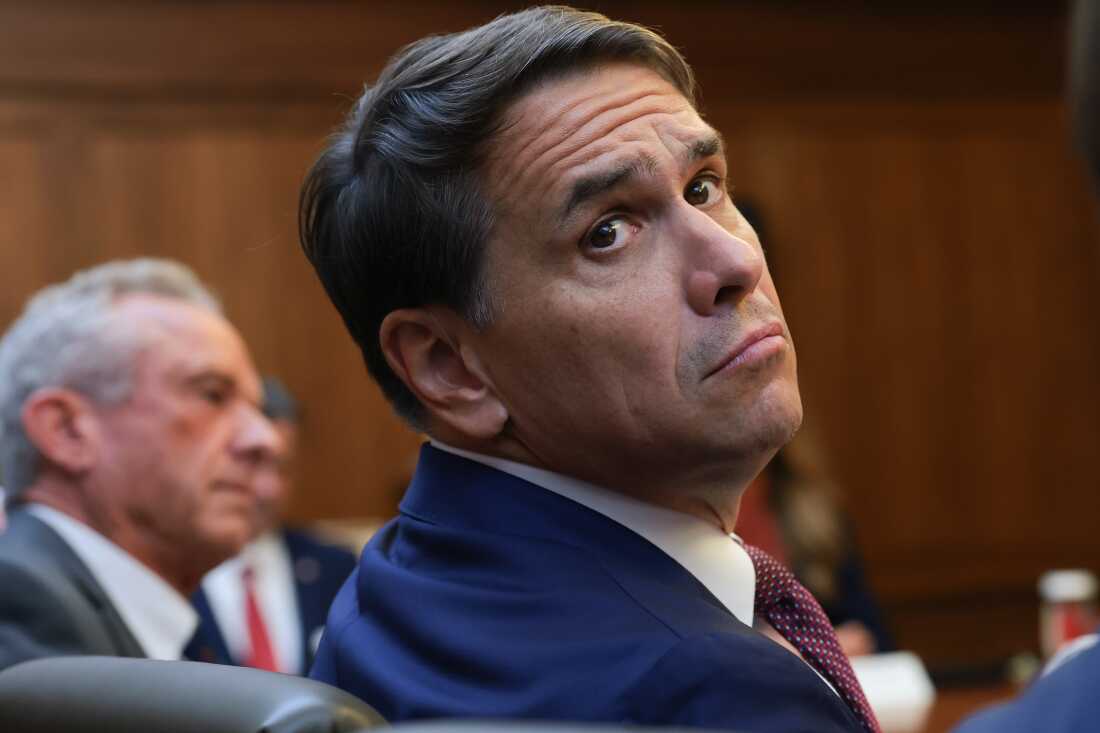
Todd Blanche, nominated to serve as US Attorney General, has capitulated to an ultimatum from key senators in a bid to break a stalemate in the Senate Judiciary Committee, issuing two formal directives to dismantle a fund meant to compensate Donald Trump’s supporters and narrow the scope of tax immunity granted to the US President and his family.
The confirmation process, which opened with two days of hearings in the Senate Judiciary Committee on July 15–16, 2026, quickly escalated into a severe political crisis. The committee vote was delayed twice, prompting President Donald Trump to threaten to temporarily withdraw and resubmit the nomination, while Blanche was forced to concede to demands he had previously resisted.
Blanche assumed the post of acting Attorney General on April 2 following Trump’s dismissal of former Attorney General Pam Bondi. Having served as deputy to Bondi for nearly a year, Blanche was officially announced by Trump as his nominee for Attorney General in June.
A central obstacle in his confirmation trajectory was the Fund Against the Weaponization of Law, established in May 2026. The fund was created as part of an out-of-court settlement dissolving a lawsuit brought against the Internal Revenue Service (IRS) over the leaking of tax returns belonging to Trump, his sons, and the Trump Organization.
Capitalized at approximately $1.8 billion, the fund was designed to pay compensation to individuals who claimed to have been “victims of the weaponization of law” under the previous US administration. Blanche had not ruled out the possibility that individuals convicted of attacking police officers during the January 6, 2021 assault on the US Capitol could receive payouts, sparking fierce backlash from Democrats and several Republicans alike.
Although Blanche announced on June 2 that he was abandoning the project, he stopped short of formalizing the commitment in writing, stating only that he was prepared to work with Congress to codify the liquidation of the fund into law.
Two senators shift the balance
Given the narrow margins in the committee, Blanche’s nomination rested in the hands of two Republican senators. According to CNN, crucial roles were played by John Cornyn, who lost his primary to a Trump-backed challenger and is set to leave the Senate, and Thom Tillis, who will retire when his term expires in January 2027. A single dissenting vote from either senator would have effectively sunk the nomination.
Ahead of a committee vote initially scheduled for July 30, Cornyn issued an ultimatum to the Department of Justice. Cornyn demanded written guarantees by July 29 confirming that the fund would be completely shuttered and that Trump’s immunity from tax audits would not extend beyond the parameters of the initial litigation or bind future administrative decisions.
The Department of Justice failed to provide those guarantees within the stipulated timeframe. Furthermore, on July 29, The New York Times reported that the Justice Department had disbursed $1 million to anti-abortion activist Paul Vaughn. Convicted in 2024 for blocking the entrance to a clinic in Tennessee, Vaughn was later pardoned by Trump and characterized by Blanche as a victim of the Biden administration. The newspaper noted that such targeted disbursements demonstrated how the fund’s objectives were being realized even without its formal operation.
That same evening, Senate Judiciary Committee Chairman Chuck Grassley announced that the vote on Blanche’s nomination had been postponed again until sufficient support could be secured.
Trump’s reaction
The postponement drew sharp fury from Trump. Describing Blanche as a “star” and “one of the greatest attorneys general in history,” Trump characterized the stance taken by Cornyn and Tillis as an effort to “block a great candidate.” In a post on Truth Social, Trump suggested he might temporarily withdraw the nomination and resubmit it after Cornyn and Tillis stepped down from office.
However, an analysis by USA Today columnist Chris Brennan noted that such a tactical maneuver carried profound political risks, given the vulnerability of the Republican Senate majority in the upcoming November midterm elections. Nevertheless, withdrawing the nomination would not require Blanche to vacate his desk; under the Vacancies Reform Act of 1997, he could remain as acting Attorney General indefinitely.
A face-to-face meeting on July 30 between Cornyn, Tillis, and Blanche produced incremental progress but ended without a final accord. Negotiations continued through the weekend. On Sunday, August 2, Trump unexpectedly made public remarks defending the concept of the fund, declaring that individuals convicted over the events of January 6 had seen “their lives ruined.”
Following these developments, late on the night of August 2, Blanche capitulated to the senators’ demands by posting two formal directives on the X social media platform. The first order revoked the founding authorization of the fund, while the second narrowed the scope of tax immunity for Trump and his family. Under the revised terms, immunity is strictly limited to claims existing at the time of the IRS settlement and explicitly excludes protection for the president against future tax audits.
In a follow-up statement, the Department of Justice emphasized that the fund had never been operational, stating: “No commission members were appointed, no funds were transferred, no application process was established, and no disbursements were made. This order confirms beyond doubt that the fund does not exist.”
The committee vote is now anticipated on August 4. Should the nomination clear the committee, it will advance to the full Senate floor for final confirmation.
Additional critiques facing Blanche
The compensation fund is not the sole concern raised by senators regarding Blanche. His close personal alignment with Trump has fueled persistent debate over the institutional independence of the Department of Justice. While the role of Attorney General has traditionally maintained an arm’s-length separation from the White House, Blanche drew criticism for remarks made at the CPAC conference in Texas in March 2026, where he stated he had “cleansed” the Department of Justice of personnel involved in past investigations into Trump.
Critical scrutiny has also targeted his deputy, Akash Singh, who reportedly told regional US Attorney offices that their “primary client is the President of the United States,” as well as Blanche’s own post-appointment statement to Trump: “I love you, sir.”
During the July hearings, when asked by Republican Senator John Kennedy whether he was a “friend of Trump,” Blanche responded, “I was his lawyer.” Democratic Senator Dick Durbin countered that Blanche had conducted himself throughout his tenure as if he were Trump’s private counsel, remarking, “This country deserves an Attorney General who loves the Constitution more than any president.”
Blanche became Trump’s personal defense attorney in the spring of 2023. Having previously represented Paul Manafort and Boris Epshteyn, Blanche served as lead counsel for Trump in the criminal trial involving payments made to adult film actress Stormy Daniels. Although a jury convicted Trump on 34 felony counts in May 2024, the presiding judge granted an unconditional discharge in January 2025, imposing neither prison time nor probation. Other high-profile cases led by Blanche—concerning classified documents stored at Mar-a-Lago and alleged interference in the 2020 election—were dismissed following Trump’s victory in the 2024 presidential election.
Democratic Senator Cory Booker faulted the Department of Justice for reopening investigations following Trump’s return to power into prominent figures and organizations, including James Comey, Letitia James, John Brennan, John Bolton, Jerome Powell, Cassidy Hutchinson, the Southern Poverty Law Center, and ActBlue. “This undermines the perception of independence,” Booker stated.
Blanche has also faced sharp condemnation over the delayed and incomplete public release of files related to the Jeffrey Epstein case, as well as the failure to redact the identities of victims in disclosed documents. While Blanche accepted responsibility for those administrative errors, his decision to facilitate the transfer of Epstein co-conspirator Ghislaine Maxwell to a lower-security prison facility drew renewed censure.
On July 16, Blanche met with victims of Epstein for the first time. Following the session, victim Annie Farmer characterized Blanche as “arrogant and dismissive,” while Liz Stein stated that the meeting was deeply disappointing. Dani Bensky observed that Blanche routinely evaded direct questions. Addressing reporters after the meeting, Blanche said: “I cannot give them the justice they want, but I want to secure justice by bringing criminal cases.”











Independent US presidential candidate and Schiller Institute associate Diane Sare has delivered a wide-ranging critique of contemporary American governance, warning that US foreign policy has been captured by an elite billionaire donor class, subservient to foreign lobbies, and dangerously disconnected from the economic realities facing ordinary citizens. Speaking in an in-depth interview with international relations specialist Professor Dr Hasan Ünal on his Strategic Compass programme, broadcast on the Harici digital platform, Sare argued that the United States is accelerating towards catastrophic regional conflicts and structural domestic decline due to a bipartisan consensus that has betrayed the electorate.
Opening the discussion, Professor Dr Ünal highlighted the glaring contradictions surrounding the administration of Donald Trump, who campaigned aggressively on a mandate to terminate endless foreign wars that have severely drained American economic resources. Ünal questioned how an administration that promised swift diplomatic resolutions to conflicts such as the Ukraine war and disengagement from Middle Eastern entanglements could instead find itself drawn into deeper confrontation, particularly with Iran. Ünal noted that Trump had assured voters he would bring public funds back home to rebuild domestic infrastructure, yet the reality on the ground has sharply diverged from those campaign commitments.
“Trump has betrayed the trust that people placed in him”
In response, Sare affirmed that a substantial contradiction defines Trump’s governance and that political support for the president is deteriorating rapidly across the country. Sare, “Well, no, obviously there is a contradiction and Trump is losing support very, very rapidly,” observed, pointing directly to grassroots electoral shifts in key swing states. “I saw a study in Michigan that six out of 10 Trump voters would vote for Abdul Sayed in the US Senate race, not the Trump-endorsed Republican candidate,” she stated, adding: “So, he has betrayed the trust that people placed in him, and I would not say it was profound trust. I think that Americans feel they have been burned repeatedly, actually. And therefore, Trump frankly faced the vulnerability that I think he was not really aware of and not the people around him, which is that the trust in him would evaporate very quickly. And that is what has happened.”
To explain how this disconnect arose, Sare cited the analytical framework of the late political figure Lyndon LaRouche, recalling conversations during Trump’s first presidential term. When supporters questioned why a candidate who campaigned on reinstating the Glass-Steagall Act would immediately appoint former Goldman Sachs partner Steven Mnuchin to head the Department of the Treasury, LaRouche provided a blunt explanation. Sare, “LaRouche said he thinks like a businessman or real wheeler-dealer,” noted. “So, the guy raised a lot of money for his campaign, so he gives him a post. And then someone who raises a lot of money says, ‘Well, you got to bring on John Bolton.’ All right, well, John Bolton was a horrible saboteur neocon who sabotaged what might have been the end of the Korean War in Trump’s first term. It looked like things were moving that way.”
According to Sare, this transactional approach has subordinated national strategy to an insular, ultra-wealthy elite that operates above traditional democratic structures. Sare, “So, I think what you have is the class of billionaires who are calling the shots,” emphasized, identifying prominent venture capitalists and financiers as key gatekeepers. “It has come to my attention that Peter Thiel, one of the notorious members of this class, was literally doing the vetting of Trump appointees for Trump to his administration,” she stated. “So, I think this is how the policy has gone so far awry. And unfortunately, when people are born into this class, they never had to work; they do not understand how things work, like how does the food get from the farm to your table, and how does the farmer get the fertilizer to grow the food? These things mean nothing to them, so their policy, frankly, has been reckless even to the point of detonating perhaps the entire transatlantic economy. That is going to be the result of the policies that Trump himself has become the purveyor of.”
“Both parties have betrayed the people”
When Professor Dr Ünal pressed further into the mechanics of the US political architecture, asking how massive campaign contributions and foreign influence groups can dictate terms under the guise of democratic elections, Sare asserted that the systemic decay has created an unprecedented political awakening. “We have seen it with the Israeli lobby, too,” she remarked, indicating that public frustration is reaching a boiling point. “I do think we are in a bit of a revolutionary period because of what I said earlier: the American voters feel very much betrayed.”
Sare pointed out that institutional complacency is blinding established political machines to this voter revolt. Recounting her recent participation in a national convention of independent candidates, she expressed astonishment that as many as seven independent candidates for the US House of Representatives and the US Senate are currently polling ahead of their major-party rivals, creating real possibilities of unseating entrenched Democrats or Republicans. Sare, “This is unheard of,” noted, rebuking the Democratic Party leadership for misjudging the popular mood. “The Democrats made a big mistake because they are very arrogant. And we remember Hillary Clinton could not imagine that she would lose the election in 2016. She thought she was so great, but voters rejected that. So, the Democrats have not learned anything. They think they can just sit there, complain about Trump, and they will be the beneficiaries of the people leaving Trump. But Americans are getting wiser.”
Sare identified current Middle East policy as a primary catalyst for this bipartisan disillusionment. “For example, over the Iran war, 70% or so of the American people are against this war,” she stated. “We do not know why we are in it. It serves no purpose. Iran never attacked us, and it is costing us a lot of money. And then others who know the kind of crimes that are being committed, like the attack on the girls’ school in Minab, know we do not want it.”
Crucially, Sare insisted that primary culpability cannot be pinned entirely on the executive branch or foreign leaders alone. Sare, “Of course, you can blame the war on Trump and Benjamin Netanyahu, but the US Congress has the power of the purse,” stressed, recalling the legislative actions that concluded past American interventions. “The Vietnam War was ended when the Congress stopped funding it. So, we know that the Democrats could have stopped the funding of this war. There was a War Powers Resolution maybe a month and a half ago, and the Democrats, Gregory Meeks and Hakeem Jeffries, would not allow the vote to go to the floor. It could have been a winning vote. So, it means that both parties have betrayed the people.”
Addressing the broader dynamics of oligarchic influence over the two-party system, Sare explained how big money hedges its bets: “Of course, if I were a billionaire and I wanted to control the outcome, I would give money to both parties. You do not put all your eggs in one basket. You want everyone who is elected to feel that they are beholden to you.” Nevertheless, she argued that the traditional monopoly is cracking: “I think Americans are wising up to this. I think what we are going to see is that candidates who are not with either party or who are considered mavericks, who in the past would not have even gotten 1% or 2% of the vote, are going to suddenly be very close to winning seats or even winning. It is a very, very different situation where everything is in flux.”
“I don’t see a third party; what I see is the same class money trying to capture the independent movement”
Responding to Ünal’s question about whether the collapse of public trust among voters, particularly disillusioned working-class Make America Great Again supporters, could coalesce into a viable third political party, Sare expressed deep scepticism towards conventional party structures. Sare, “I do not see a third party,” stated directly. “What I see is the same class money trying to capture the independent movement. Like there is Joe Manchin, this former US senator who was a Democrat that often voted with the Republicans. He is pretending to create an independent movement, but he is up in Maine campaigning for Susan Collins, a Republican senator. So, it is kind of a fraud. And I think a lot of people who are truly independent like myself, who are peace candidates, do not want to be part of this.”
Instead of adding another partisan entity to the ballot, Sare advocated transcending the party framework altogether, invoking the constitutional warnings of America’s first president. Sare, “I would much prefer really that we get rid of the party system,” asserted. “Our first president, George Washington, warned about it very much in his Farewell Address. He said when you get parties, then you are going to have tribalism: ‘my team, your team’. And suddenly everyone is more interested in the team than the principle or the good of the nation or the people. So, I do not know that a third party would actually solve anything. I think we have to really have a new system that does not rely on parties in that way.”
Addressing systemic impediments to open political discourse, including monopolistic control over communication channels, Sare highlighted corporate media and technological censorship. “It is so hard to know because we are suffering so much under censorship also here,” she remarked. “Is there anything Larry Ellison does not own? Or maybe his ownership stops where Jeff Bezos’ ownership begins?” Despite these hurdles, Sare noted that institutional reforms such as ranked-choice voting and open non-partisan primaries could allow genuine non-affiliated representatives to emerge: “Were there to be allowed to be a natural process, people are moving toward things like ranked-choice voting or open primaries where people do not vote by party and it is the top two or top three vote-getters. So, I do find it conceivable that we could get away from a party system.”
“They want to destroy sovereignty; they want to make countries ungovernable”
Examining domestic stability, Professor Dr Ünal drew parallels with widespread civil unrest and street demonstrations across Europe, notably in France, asking if comparable mass upheaval could erupt across the United States. Sare expressed doubt that unrest would manifest through identical patterns, citing American political traditions that channel dissent primarily into electoral cycles.
However, Sare expressed serious concern regarding heightened state vulnerability, political manipulation, and potential provocations designed to derail the democratic process. Citing concerns raised by international Schiller Institute leader Helga Zepp-LaRouche, Sare questioned whether an engineered domestic or foreign crisis might emerge as an October surprise. Sare, “People in this country are asking whether there would be something to create a pretext to disrupt the elections or postpone them or cancel them,” warned. “I do not think that that will occur, but I think we are in a period of great instability.”
To illustrate how deep-state institutions manage public unrest, Sare referenced admissions made by former Italian Prime Minister and interior minister Francesco Cossiga regarding the deliberate deployment of provocateurs to justify draconian police action. Sare, “We were reminded of the interview given by Cossiga in 2008, where he gave a description of what seems to be happening in France and other places,” noted. “He said what you want to do to get control of mass unrest is send in the provocateurs, let people burn everything down for about 10 days, and then you do not want to jail people, you want to beat them, basically. He said you want the ambulances to drown out the police. So, let everything get crazy, and then the population will support harsh, violent suppression of the protest, and that is how you get control, which is pretty sick.”
Sare linked these domestic tactics to broader intelligence operations aimed at eroding national independence. “We know that in France the police have been extremely brutal; young people have lost eyes and hands, and I am sure there are provocateurs as well,” she argued. “I do not doubt that the conglomerate, the blob of the CIA, MI6, and Mossad, as I call it, has a hand, because they are run by these billionaires. They want to destroy sovereignty. They want to make countries ungovernable. And I think we are seeing that unfold, and we really need a higher principle.”
“We are not supposed to be the club whereby some colonial legacy bludgeons the world into submission”
Turning to specific foreign policy trajectories, Professor Dr Ünal pressed Sare on Trump’s actions in West Asia, notably the aggression directed against Iran and total alignment with Israeli strategic objectives. Ünal pointed out that this belligerent posture stood in stark contrast to Trump’s promises of peace, questioning why Washington consistently succumbed to provocative maneuvers designed to trap the US military in catastrophic regional conflicts.
Sare did not mince words regarding Washington’s failure to exercise its diplomatic leverage over Israel. Sare, “I think that the United States is powerful enough that we could insist that Bibi Netanyahu stop the genocide in Gaza,” declared. “And we could have insisted that he not do his assassination spree against Iran and the occupation of Lebanon and all of his other adventures. But the United States chose not to do that, probably because of the influence of these networks.”
Addressing persistent public speculation regarding compromising material that may influence top officials, Sare expressed revulsion at the institutional refusal to prosecute high-level actors implicated in legal scandals. Sare, “People hypothesize that there may be something in the Epstein files about President Trump; that is definitely a possibility,” remarked. “I have to say I am a little disgusted by the idea that we have released three million of these files and nobody has been indicted. We have people like Howard Lutnick, who is a real problem, and he has not been thrown out of the administration.”
For Sare, this moral paralysis exposes a fundamental betrayal of American constitutional identity. “The United States really has to reflect on what is the mission of our republic,” she stated. “We are not fulfilling it. We are not supposed to be the tool, the club whereby some colonial legacy bludgeons the world into submission. And I think perhaps even more than this pro-Zionist element was the fatal decision when the Berlin Wall came down, where some of these neocons decided that the United States was the global hegemon. That is so opposed to the whole principle of our founding against colonialism. Once you decide that, then everything after that will be a wrong policy.”
“All 18 of the US intelligence agencies told him Iran would close the Strait of Hormuz”
As the dialogue shifted to the acute perils of direct military confrontation with Iran, Professor Dr Ünal noted that seasoned military experts had warned that Iran represented an adversary far more formidable than any the US had faced since the Second World War. Ünal queried how Washington decision-makers planned to extricate themselves from a strategic impasse of their own making.
Sare warned that rather than seeking a responsible diplomatic off-ramp, figures inside the US national security establishment are contemplating catastrophic escalation. Sare, “A friend of mine, Colonel Douglas Macgregor, just wrote a piece saying he is afraid there is a discussion of using a tactical nuclear weapon,” revealed. “We know Elbridge Colby had brought that up some months ago. And what Macgregor said is that Trump is now so boxed in. The Middle East war is not going the way he wanted; the Ukraine-Russia situation is not; the midterm elections do not look so good. Would he, in desperation, do this thing? And we hear them talking about the MOAB, the mother of all bombs, or whatever it stands for, massive ordnance.”
Dismissing delusions of easy military dominance, Sare pointed to recent American operational setbacks: “Iran has been preparing. Look, we did not win in Afghanistan. We were defeated by the Houthis not so long ago, a year ago, in Bab al-Mandab. So, the idea of defeating Iran is really sick.”
Furthermore, Sare voiced alarm over Trump’s personal capacity and susceptibility to foreign manipulation. Sare, “I also think there is a factor that Trump is aging; I think he is not sharp,” observed. “He has been making some peculiar kinds of comments lately that indicate perhaps some kind of dementia setting in. And apparently, they do not want people around him who disagree with him. He will not hear anyone who tells him, ‘No, that is not true.'”
Sare underlined that this belligerent trajectory was pursued in direct defiance of professional intelligence assessments. “Just as Joe Kent said, all 18 of the US intelligence agencies told him Iran would close the Strait of Hormuz,” she stated. “They were not building a nuclear bomb. Our intelligence agencies did not mislead President Trump, at least that is what Kent says. But some other factor, the Israelis most likely, somehow persuaded him to launch this illegal war of aggression, which is not going the way that he was told it was going to go.”
When Ünal asked how the American Israel Public Affairs Committee and associated lobby groups would navigate mounting public outrage over foreign wars, Sare indicated that their historic grip on Capitol Hill is eroding. “Now even many pro-Israel candidates do not want to accept money from AIPAC because they know it will make them look bad,” she noted. “They are losing their power. I had said that instead of the Congress being 99% controlled by AIPAC, it may go down to 82% controlled by AIPAC. They are going to take a hit. Ultimately, they are not going to be dictating the policy in the US anymore at all.”
Sare cautioned that an escalation against Iran prior to the midterm elections would be politically disastrous for the administration, explaining why reports suggest any high-risk military actions might be postponed until after voting concludes. Citing observations from former Trump attorney Robert Barnes, Sare noted that outside of hard-core bases like Florida, Trump’s personal campaign appearances are actively depressing polling numbers for his endorsed candidates: “Every time he shows up to speak, the ratings of his endorsed candidates go down. So, his travels are causing a net loss.”
“It’s worse than insider trading because you’re putting the fate of billions of people on your ability to make money”
Looking ahead to the post-midterm political landscape, Professor Dr Ünal raised the prospect of congressional investigations, impeachment proceedings, and allegations of personal financial corruption tied to military crises. Ünal noted pervasive public speculation that members of Trump’s inner circle, including family members, have profited from market volatility sparked by late-night presidential statements on military action, moving global stock indices and oil benchmarks in places like Rotterdam.
Sare confirmed that such practices constitute egregious abuses of executive authority that fully meet the constitutional standard for removal from office. Sare, “I know that some people were actually looking at the trading, because various anonymous sources seemed to be placing bets on certain political outcomes which then happened, and they would make a lot of money,” stated. “Obviously, that is an impeachable offense. It is worse than insider trading, because you are putting the fate of billions of people on your ability to make money. I think Jared Kushner is a big one to look at in this. He is a huge vulnerability to the Trump administration, and of course, Trump himself. He posts one thing on Friday night, and quickly before the markets open Monday morning, then he says something else. And absolutely, this is certainly one of the many impeachable offenses.”
However, Sare cautioned that partisan impeachment battles led by establishment Democrats often distract from deeper structural imperatives. While acknowledging that Trump has committed impeachable offenses, Sare argued that fixation on personalities obscures institutional continuity. “What concerns me again is that the thinking of people is at such a low level, because I see these Democrats who are just rabidly anti-Trump,” she said. “We have had actually a continuity of policy no matter which party was president since September 11th, 2001. We have been marching closer and closer and closer to nuclear war. It was Barack Obama who presided over the overthrow of the Ukrainian government in 2013-2014, and then Joe Biden. When people obsess about a particular individual, at this point they are avoiding their own responsibility. I am not interested in punishment or being right; I am interested in the United States dramatically changing course to make sure that the world does not plunge over an abyss from which there is no return.”
“This war really has nothing to do with principle; it’s this defense contracting Wall Street bubble making money”
Turning to the conflict in Ukraine, Professor Dr Ünal noted that while Trump frequently expressed a desire to halt hostilities, contradictory reports persist indicating that behind-the-scenes arrangements involving corporate investments in Russian energy assets are motivating executive actions. Ünal also criticized European leaders, such as Estonian Prime Minister Kaja Kallas, for adopting aggressive stances toward Moscow despite possessing negligible independent military capacity.
Sare agreed that financial motives permeate the conflict, emphasizing that rhetoric surrounding territorial integrity masks predatory economic interests. “I suspect there is a great deal of truth to what you are saying, that there are deals behind the scenes,” Sare remarked. “If Trump felt so strongly that this war would not have happened under his watch, he should have done more to end it sooner, and of course he has not. I think that perhaps the motivation for wanting it to come to an end now is that we are a bit overextended. There is a great deal of economic damage being done by the closure of the Strait of Hormuz, and frankly, getting diesel from the Russian markets does not really make a dent in that, but you can use it to build confidence, get the markets to go up, and make some money.”
Sare condemned politicians who obstruct diplomatic realism, criticizing House figures such as Gregory Meeks for attacking the relaxation of sanctions. Sare, “We really need an even-handed policy which is rooted in principles of natural law, of respect for sovereignty of other nations,” maintained. “I know President Vladimir Putin has said on multiple occasions we need an entirely new security architecture, and of course that has been Helga Zepp-LaRouche’s position and mine. At this point, there is no crisis on the planet that we are going to solve pairwise. Russia and Ukraine is not about Russia and Ukraine. Israel and Palestine is not about Israel and Palestine. Unless you come up with regional agreements where there is a mutual benefit for every nation involved, we are not going to be able to end these conflicts.”
Sare expressed deep scepticism that European officials hold any meaningful sway over the conflict’s outcome, predicting instead that Moscow will continue to determine realities on the battlefield unless Western leaders genuinely embrace negotiated settlements: “I do not think the European leaders are that relevant. I do not think the American administration has really earned the trust of anyone, because they keep flip-flopping. So, it may be the case that the war just grinds on and that Russia solves it on the battlefield, as they have been saying. Russia, if anything, has been completely consistent from prior to the beginning of the special military operation regarding what their concerns were and what their interests were.”
The commodification of the conflict, Sare noted, was epitomized by long-term procurement announcements. Sare, “When I heard that Ukraine, now several months ago, announced they were going to be buying some airplanes from Sweden that were not even going to be manufactured until 2029, then you realize this war really has nothing to do with principle,” stressed. “It is this defense contracting Wall Street bubble making money over the misery and suffering of millions of people.” Professor Dr Ünal concurred, observing that American arms manufacturers book immense backlogs of contracts from foreign states without possessing the industrial capacity to fulfill production schedules in a timely manner.
“The fact that every time it rains you have floods and power outages, it’s almost like we are the third-world country”
In the concluding segment of the broadcast, Professor Dr Ünal and Diane Sare evaluated the precipitous collapse of the United States’ international moral standing and the visible deterioration of its domestic infrastructure. Ünal noted that global respect for Washington has been on a sustained downward trajectory for decades, a decline that has visibly accelerated in recent years.
Sare observed that the moral capital accumulated by earlier visionary American leaders has been squandered. Sare, “We had a reservoir of goodwill from some of our better presidents, from Franklin Roosevelt, from John F. Kennedy, even going back to Abraham Lincoln or John Quincy Adams: ‘seek not abroad for monsters to destroy,'” reflected. “There was a principle that people admired and loved us. Sukarno at the Bandung Conference said that the whole movement against colonialism was inspired by the American War of Independence.”
That historical legacy, Sare argued, has been supplanted by complicity in atrocities broadcast worldwide: “And now everyone watches our country aiding and abetting a genocide, which is on everybody’s screen in Gaza.”
Simultaneously, Sare described a severe internal decay that disillusions visitors and citizens alike. Sare, “People have traveled here and they see the condition of our cities,” stated. “The fact that you can lose half of your car in a pothole in New York City; the fact that every time it rains you have floods and power outages, it is almost like we are the third-world country, the banana republic, in a sense.”
Sare expressed sorrow that domestic propaganda shields large sections of the American electorate from recognizing how far national conditions have fallen relative to global peers. “Too many Americans, particularly those who still support President Trump, do not know anything about the rest of the world,” she said. “They will actually tell you that our nation is the best, the standard of living here is the best, that we have freedom. Anyone who has traveled in the world is blown away by the infrastructure, the cleanliness of cities in Russia, in China, and other places, the fact that you have high-speed rail in different places.”
This blindness, Sare concluded, is reinforced by an arrogant imperial doctrine in Washington that mirrors despotic history. Sare, “If you believe that might makes right, you do not really care about how you look to people,” warned. “It does not matter to you if they think you are corrupt and rotten as long as they are scared of you. That was Caligula: ‘Let them hate me, but let them fear me.’ And I am afraid that that is more the dynamic among some in our policy-making areas.”
Closing the dialogue, Sare issued an appeal for international collaboration based on shared humanity rather than geopolitical domination. “Given the rate of the crisis, my chances are only going to increase,” Sare said of her independent presidential campaign. “I really want to extend a hand to the people of the world, because I think as human beings we have universal principles and a universal identity that really makes it much more natural for us to find areas of common interest and collaborate. I am looking forward to the day that mankind grows up, and we do a better job of that.”
Professor Dr Ünal concluded the program by wishing Sare success in her campaign, expressing hope that American voters weary of continuous domestic crises, crumbling infrastructure, and compromised two-party politics will seek principled alternatives capable of restoring foundational national ideals.

An understanding reached between US President Donald Trump and Russian President Vladimir Putin on diesel shipments has run into fierce legal and political resistance in Washington.
Leading figures in the Democratic Party have mobilised to take the deal to court and subject it to congressional investigations.
According to an official letter obtained by the news website Axios, Democrats will make scrutinising this accord with Moscow one of their primary objectives if they win a majority in one or both chambers of Congress after the elections.
The letter drafted by members of Congress stressed that bringing Russian-origin diesel into the US raises serious legal questions and could become the focus of both judicial proceedings and congressional inquiries.
Figures holding critical positions are behind the initiative. Democratic Senators Chris Coons, Elizabeth Warren, Ron Wyden, and Sheldon Whitehouse, who signed the document, are in line to assume the chairs of the Foreign Relations, Banking, Finance, and Judiciary committees, respectively, if their party wins a majority in the Senate.
Democratic Representative Gregory Meeks, a candidate to lead the House Foreign Affairs Committee, Democratic Senator Jeanne Shaheen, and Republican Senator Thom Tillis also signed the call.
The formal warning letter was sent directly to the core of the financial and logistics sectors.
The list of recipients includes six of the largest US financial institutions: JPMorgan Chase, Bank of America, Citigroup, Wells Fargo, Goldman Sachs, and Morgan Stanley. The letter was also delivered to port authorities in Houston, Beaumont, and Corpus Christi in Texas, as well as the port authorities of New York and New Jersey.
Addressing these institutions, the lawmakers asked them not to participate in the purchase, transport, importation, unloading, storage, financing, or distribution of Russian diesel within US borders.
The call also requested that they refrain from brokering the transit of Russian diesel to third markets under the latest exemption introduced to the sanctions regime.
The senators asked banks and port officials to preserve contracts, shipping records, vessel data, and all communications conducted with suppliers, intermediaries, and US government authorities.
A deadline of 28 October was set to confirm that these records of suspected or completed transactions are being retained and to share information regarding potential operations.
The authors of the letter share the view that these steps to procure Russian fuel conflict with the 2022 US federal statute banning imports of Russian oil, natural gas, and refined petroleum products.
They further argue that these shipments generate additional revenue for the Moscow government, which poses a clear threat to US national security.
White House issues licence, shipments begin
Donald Trump announced on 9 October that he had reached an agreement with Russian leader Vladimir Putin to deliver Russian diesel to the US and world markets.
The plan established a phased schedule: Russia would send more than 300,000 tonnes of fuel in the initial phase, followed by a new shipment of 500,000 tonnes in November, after which deliveries would reach 1 million tonnes.
To clear the way for the agreement, the US Department of the Treasury issued General Licence 135.
This licence brings transactions involving Russian diesel and its importation into the US under legal authorization until 7 April 2027.
The Moscow side accelerated its domestic regulatory adjustments following the agreement, with the Russian government partially lifting its ban on diesel exports.
Kremlin spokesman Dmitry Peskov said in a statement on 23 October that shipments under the arrangement with the US had effectively begun and would continue.
Russian Deputy Prime Minister Aleksandr Novak announced that his country is prepared to send any requested amount of fuel to the US from its diesel reserves allocated for export.
However, this traffic between the White House and Moscow has also unsettled some Republicans in Congress.
Indeed, on 23 October, a bill was introduced in the US Congress to revoke General Licence 135 issued by the Treasury Department and to bar similar exemptions from being granted in the future.
Republican Representative Brian Fitzpatrick, who drafted the bill, proposed restricting the Treasury Department’s authority to approve transactions involving Russian energy resources.
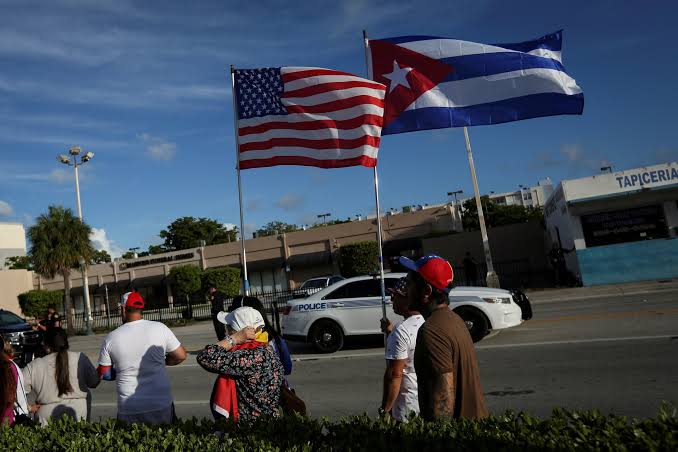
Footage circulating on social media has revealed that individuals with documented records of direct involvement in terrorist acts and violent crimes attended an event hosted by the US Permanent Mission to the United Nations.
The gathering took place just days before the United Nations General Assembly was scheduled to vote on a draft Cuban resolution demanding the lifting of the economic and financial embargo imposed by the US.
The meeting was held immediately on the eve of the vote on the draft resolution, which was planned for 29 October.
Multiple video recordings shared across social media platforms show guests at the event being confronted directly by attendees on site, who called out their individual links to acts of terrorism targeting the Cuban people.
Foremost among those documented as having attended the event was José Daniel Ferrer García.
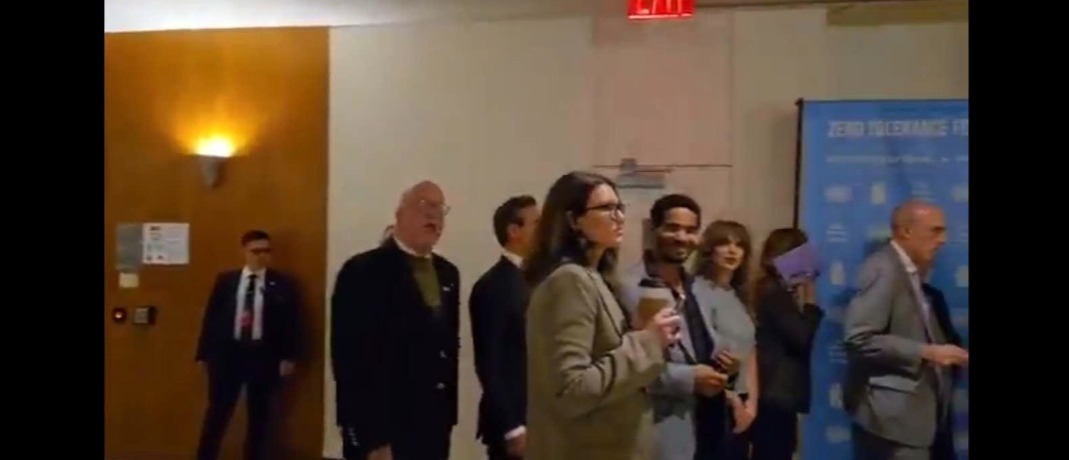
Ferrer García’s criminal record encompasses theft, gender-based violence, and physical assaults on public officials committed inside Cuban territory.
Continuing his activities after reaching US soil, Ferrer García openly incited Cubans to acts of violence from abroad and issued explicit calls for direct US military intervention on the island.
Another guest at the meeting, Orlando Gutiérrez Boronat, is known as a figure who has directly financed, encouraged, and systematically supported acts of violence inside Cuban territory.
Armando Valladares, a former US representative to the UN Commission on Human Rights, had previously accused Gutiérrez Boronat of defrauding the US government itself out of hundreds of thousands of dollars.
Like Ferrer García, Gutiérrez Boronat advocates a US military invasion of Cuba. Furthermore, he openly conducts propaganda calling for direct terrorist acts against Cuban state officials and diplomats.
Luis Manuel Otero Alcántara, who was also seen among the invited guests, is an individual who has taken part in subversive activities aimed at undermining domestic order, public security, and stability in Cuba.
While still on Cuban territory, Otero Alcántara maintained uninterrupted contact with the US and received regular funding from there; his departure from the island and resettlement in the US were organised directly by the US government.
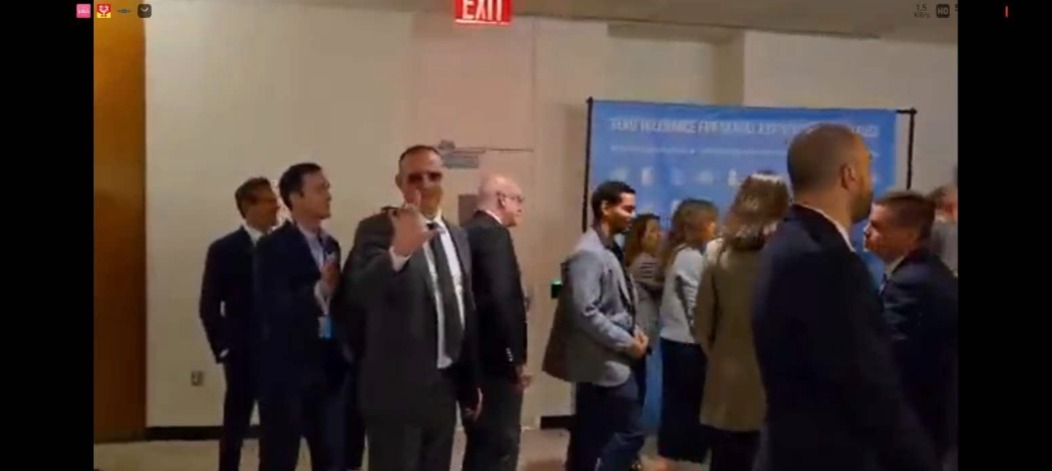
Another figure at the event was María del Carmen Cañizares Werlau, who leads a campaign directly targeting Cuba’s international health solidarity initiatives and its healthcare system.
Werlau receives direct funding from US official bodies through Archivo Cuba, the organisation she heads.
The campaign conducted by Werlau is anchored in calls for severe economic sanctions against all third countries that accept Cuban doctors, healthcare personnel, or any form of medical cooperation.
The gathering of all these individuals at the US mission took place as the international community prepared to vote on the long-standing demand to lift the decades-old embargo.
Critics of the event stated that the US hosting such figures completely invalidates the human rights rhetoric continually invoked by the Washington administration.
They emphasized that the episode unequivocally exposes the hypocrisy and contradictions embedded in US policy towards Cuba.
Cuban envoy Soberón Guzmán: “You will not break an embargoed people’s will”
Cuba’s Permanent Representative to the UN, Ernesto Soberón Guzmán, issued a statement immediately exposing the initiative organised by the US Permanent Mission inside the UN headquarters.
Soberón Guzmán announced that the US Mission had organised a fraudulent anti-Cuba event just a few metres away, entirely violating the regulations governing the use of UN premises and facilities.
The Permanent Representative noted that the gathering was a clandestine, pirate assembly that had no connection whatsoever to the official agenda of the United Nations.
He stressed in particular that, although the Cuban side had repeatedly warned the UN Secretariat about this unauthorized gathering beforehand, the Secretariat took no action to stop the scandal.
Soberón Guzmán said that Washington had attempted to conceal itself while gathering a very small, selective, and discriminatory group of member-state representatives in a room to spread falsehoods about Cuba.
He described the speakers featured in this political staging as paid pawns on the direct payroll of the US State Department.
The ambassador underlined that the individuals on the panel were either directly convicted common criminals or figures tied to bloody terrorist organisations that have inflicted death, destruction, and indescribable suffering on the Cuban people.
He noted that the sole reality behind this spectacle was an effort to obscure the fact that the US acts as an international rogue and outlaw, inflicting collective punishment on the entire population of Cuba.
Stating that the US is inflicting massive suffering on the whole population of a peaceful nation, the Permanent Representative said the most powerful state on earth is fabricating pretexts and trying to impose false narratives to justify its criminal aggression against the Cuban people. He recalled that no excuse could legitimise this criminal policy.
He said the only genuine and legitimate item before member states and the General Assembly was the devastation caused by the US economic embargo on Cuba and the imperative to end this coercive policy immediately.
He announced that the General Assembly would address this vital matter not behind closed doors, but in an open official session on 27 and 28 October with the participation of all member states.
Soberón Guzmán noted that Washington knows full well that the overwhelming majority of member states will once again fully support Cuba’s just demand.
The Permanent Representative reiterated that Cuba poses no threat to anyone, and that the only real threat is this illegitimate embargo.
Stating that the charade staged right next to them was intended to sabotage the process surrounding the legitimate resolution against the embargo, which the General Assembly will consider for the 34th time, Soberón Guzmán stressed that the puppet panelists were trying to conceal the severe devastation wrought on the public by the policy of maximum pressure and an unprecedentedly compounded embargo.
He said the US is weaponising a noble concept such as human rights to crush Cuban sovereignty and its right to self-determination.
Guzmán stated that the sole purpose of the policy of collective punishment is to break the unyielding will of the Cuban people and overthrow the constitutional order, recalling that this is an old ambition Washington has pursued for decades without success.
He noted that Cuba is not in those closed rooms but right here, and that the true representatives of the Cuban people alongside the overwhelming majority of the United Nations stand firmly with Cuba.
Soberón Guzmán concluded by stating that if anyone in the US administration believes they can break the unshakeable determination and unity of the Cuban people, they are wasting their time, their efforts, and their substantial resources:
“We will never kneel, we will never surrender; onward to victory always, homeland or death, we will overcome.”

Gaza exposes the myth of the “most moral army in the world”

Over 3,000 Palestinians displaced as Israel’s Hebron siege hits day 5

EU and Canada to deepen defence ties from Arctic to Black Sea

Independent candidate Diane Sare decries US complicity in global wars

Merz visits Asia to seek new markets for German defence firms
-
 Diplomacy2 weeks ago
SWP urges backing for Gulf trade routes bypassing Strait of Hormuz
-

 Europe2 weeks ago
LSE study finds post-bailout Greece turned into a cafe economy
-
 America1 week ago
How Elon Musk fuses private empire with state power, Ben Tarnoff explains
-
 Middle East1 week ago
Egypt delays parliamentary vote on deploying troops to Saudi Arabia
-
 Europe1 week ago
AfD leader Weidel calls funding lost Ukraine war a grave mistake
-
 Diplomacy2 weeks ago
IMF warns global economy is nearing the limits of its resilience
-
 Europe1 week ago
EU rejects US proposal to resume Russian gas flows through Ukraine
-

 America2 weeks ago
Musk boosts Republican midterm funding despite pledge to curb spending
