
Europe
Andy Burnham emerges as frontrunner for UK leadership after Keir Starmer resigns

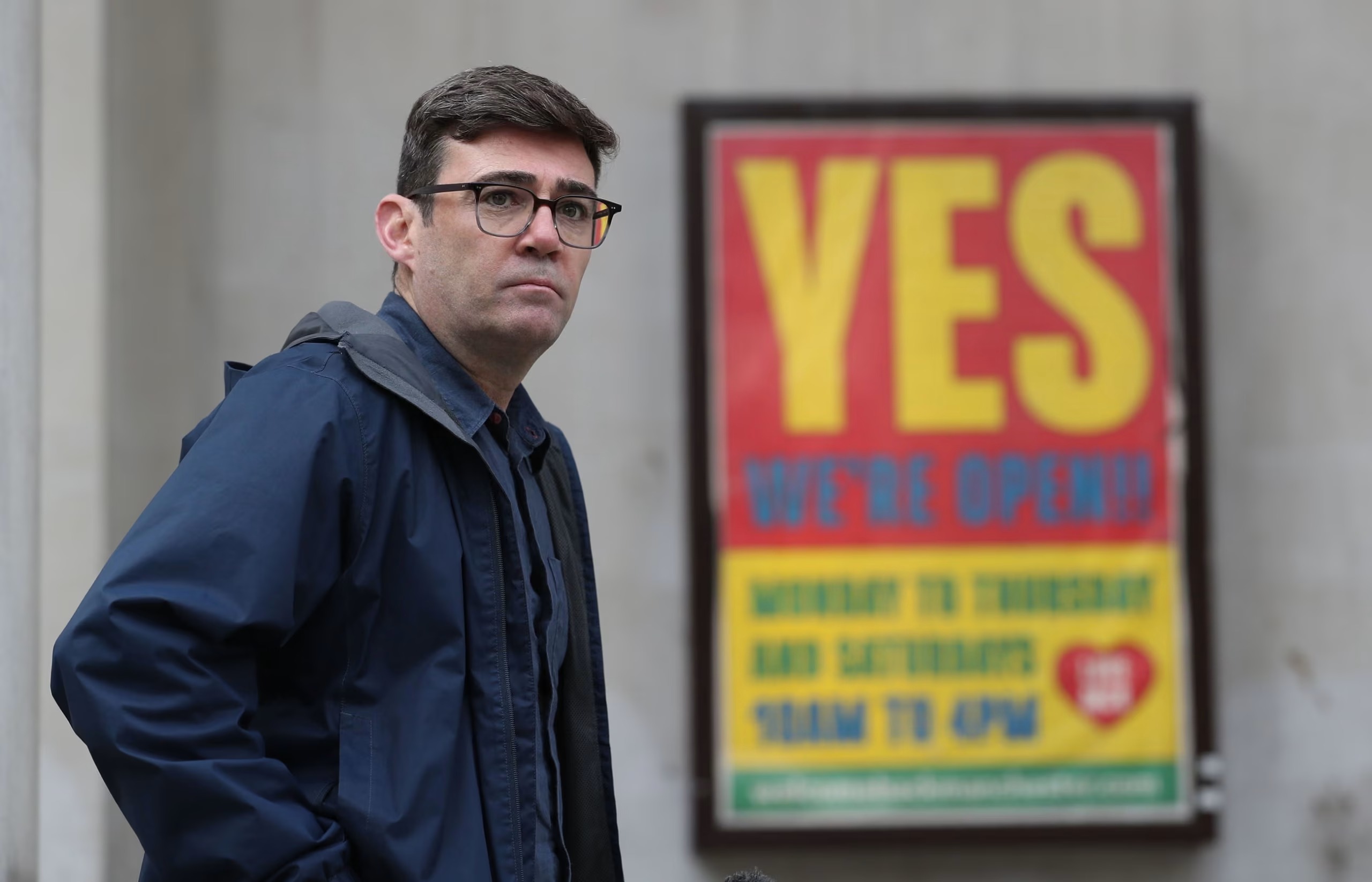
Following the resignation of Prime Minister Keir Starmer from both his government post and the leadership of the Labour Party, Andy Burnham has emerged as the most likely figure to assume the UK’s leadership.
Burnham, the former Mayor of Greater Manchester, was elected to the House of Commons two weeks ago after winning a by-election in Makerfield by a wide margin.
Long prominent within the Labour Party as a leading rival to Starmer, Burnham has so far faced no declared challengers in the race for the party leadership.
Having expressed regret 20 years later for voting “yes” in the 2003 parliamentary division on the invasion of Iraq, Burnham built his early political career as a mid-ranking government official under Tony Blair’s Labour administration.
Burnham points to a pivotal moment in his political life when he was booed at a match at Liverpool’s famous Anfield stadium while serving as Culture and Sport Secretary in the government of Blair’s successor, Gordon Brown.
Representing the Brown administration at Anfield on the 20th anniversary of the 1989 Hillsborough disaster, in which 97 Liverpool fans lost their lives, the then 39-year-old minister’s attempt to deliver condolences was interrupted by loud, angry shouts from the stands demanding justice for the victims.
Up to that point, successive British governments had rejected demands for a public inquiry into the disaster. Burnham says that from that moment on, he decided to pursue politics “outside of London” and to become “a voice for the voiceless.”
According to a profile in The Guardian, critics have dubbed Burnham “Captain U-turn” for giving the impression of shifting his political views over the decades, while others view him as “a man who listens.”
After graduating from university, Burnham moved to London, where he briefly worked for trade publications such as Tank World and Passenger World Management before securing a role as a researcher in the parliamentary office of Labour MP Tessa Jowell.
Having also advised the Culture Secretary of the time, Chris Smith, Burnham was elected as an MP for his hometown constituency of Leigh in Greater Manchester in 2001.
He initially served as a junior minister in the Blair administration before joining the cabinet under Brown as Chief Secretary to the Treasury. He later served as Culture Secretary and subsequently Health Secretary.
In 2010, Burnham ran for the Labour leadership on a platform of “passionate socialism” but finished fourth out of five candidates, losing to Ed Miliband, who campaigned on moving the party further to the left.
Following Miliband’s defeat in the 2015 general election, Burnham ran for the leadership again, adopting a more moderate, “centrist” rhetoric aimed at highlighting a business-friendly stance.
Launching his campaign at the headquarters of professional services firm Ernst & Young, Burnham argued that entrepreneurs should be seen as “every bit as much our heroes as nurses.” He ultimately lost that contest to Jeremy Corbyn.
Burnham accepted a shadow cabinet role under Corbyn, taking on the position of Shadow Home Secretary. He was also one of the few frontbenchers who did not resign from Corbyn’s team in 2016 when the Labour leader was accused by some of failing to campaign actively enough to remain in the EU, a factor critics argued contributed to the Brexit victory.
In 2017, Burnham left Corbyn’s shadow cabinet to run for the newly created position of Mayor of Greater Manchester.
He won the election with more than 60% of the vote and was re-elected by an even larger margin in 2021.
During his tenure in Manchester, he won praise for reforming the region’s transport network by bringing bus services back under public control.
His fierce advocacy for a region that lagged economically behind much of the rest of the country earned him the moniker “King of the North.”
Upon becoming Mayor of Manchester, he pledged to eradicate rough sleeping. In the initial years, progress was made, with the number of rough sleepers nearly halved by the onset of the COVID-19 pandemic compared to 2016 levels. However, Burnham was unable to sustain this progress; by November 2025, the number of rough sleepers had returned to 2016 levels.
Should he become Prime Minister, Burnham’s primary challenge will be addressing the UK’s economic decline. According to some assertions, the prospective leader could move to reverse the privatizations that have defined the country for the past 40 years, turning instead to renationalization.
Under a new blueprint dubbed “Manchesterism,” an Andy Burnham administration could seek to reverse 40 years of privatization through a long-term plan to take over failing public utilities, issue debt-for-equity swaps, and establish competitive state-owned enterprises.
This policy paper, titled “The Productive State,” was published just as Burnham arrived in London to take his oath as MP for Makerfield.
The paper’s author, Mathew Lawrence—who is close to Burnham and worked alongside him on plans to bring public services under state control—released the document in coordination with Mainstream, a Labour group acting as a vehicle for Burnham’s leadership ambitions.
Former minister Miatta Fahnbulleh, a policy adviser to Burnham who is widely identified as the architect of his economic policies, described the paper as “an important contribution to the debate on how we solve this problem, deliver the change the public is crying out for, and begin rebuilding our broken economy.”
Lawrence stated that the paper envisions “a state that owns, invests, and provides to make life affordable; a politics that reclaims control over the essentials of a civilized life—clean water, cheap energy, warm homes, reliable transport—built and run by publicly accountable institutions.”
Subtitled “A Framework for Manchesterism,” the paper criticizes the long-standing trend toward the privatization of public services, arguing it lies at the heart of the UK’s growth and productivity crises by stripping away control over essential services and driving up the cost of living.
While neither the paper nor Burnham himself advocates for a wholesale renationalization program, they call for a framework of greater state intervention to protect the public from skyrocketing costs and the burden of bailing out failing private firms.
The Guardian previously reported that Burnham’s allies have discussed managing a 10-year project to bring large portions of England’s water and energy sectors under state control.
This process would likely begin with the struggling utility provider Thames Water.
Ultimately, Burnham’s allies want to bring energy transmission and supply companies, potentially including the electricity grid operator National Grid, under public control.
The paper outlines several pathways to achieving public control over the long term. For instance, if a company like Thames Water falls into financial distress, the government could intervene by implementing a “special administration regime.”
Burnham points to the Greater Manchester bus network as an example, where private operators bid for franchises to deliver services, but fares, timetables, and routes are controlled by local government.
For financially stable utility companies, the paper notes that the law typically requires the government to pay fair market value to acquire them.
To achieve this without a massive upfront cash expenditure, the paper suggests the state could use a “debt-for-equity swap” method, though it notes this would require primary legislation and likely face significant legal challenges.
Alternatively, the state could gradually assume control by establishing its own commercial public enterprises, though this path would potentially require large-scale borrowing.
While Burnham has stated a desire to prevent “excessive profiteering” in the sector, he has yet to detail exactly what a similar model would look like in practice for water and energy companies.
The Starmer government had already planned tighter regulation of the water sector through new legislation this autumn.
The paper has won praise from several prominent Labour figures, including Fahnbulleh and Stewart Wood, a Labour peer and former economic adviser to Ed Miliband.
Wood described the paper as “a valuable contribution to rethinking the social democratic case for a more active state that helps generate wealth and improve the quality of life across the country.”
Among the key commitments Burnham made during his Makerfield campaign was to stick to Labour’s pledge from the last election not to raise the main rates of income tax, VAT, and National Insurance.
During his campaign, he also indicated a desire to “look closely” at the possibility of raising the starting threshold for income tax, which is currently £12,570.
Burnham argues that housing policy has slipped too far down the priority list of successive governments. However, several of his signature policies—such as prioritizing development on brownfield land and restricting Right to Buy—have already been implemented by the current government.
According to the BBC, one of the biggest departures in Burnham’s advocated approach is to allocate the entirety of the 10-year, £39 billion affordable housing budget to social rent homes—the cheapest and most heavily subsidized form of publicly funded housing.
Like the Conservative administration under Rishi Sunak, Labour has reduced immigration levels by tightening visa requirements.
During his campaign in Makerfield, Burnham said that net migration “needs to come down further,” though he did not set a specific target.
On foreign policy, Burnham has expressed a desire to see the UK rejoin the EU within his lifetime, though he added that he has no wish to “re-run the 2016 referendum right now.”
His stance on relations with the EU will soon be tested. Among the legacies he would inherit from Starmer are a series of ongoing negotiations, particularly regarding youth visas, food regulations, and plans to link the UK back to the EU’s carbon pricing system.
Defence spending, which led to the resignation of Starmer’s Defence Secretary John Healey in early June, will be another key issue. While Burnham has stated he would “find more cash” than Starmer for defence spending, it remains unclear how he would achieve this.
Another significant challenge will be how Burnham manages relations with US President Donald Trump.
While Burnham has noted that the UK must seek “a good relationship” with the US, he has also stated that he would not shy away from saying “we don’t agree with them.”
At present, the selection of the new Chancellor of the Exchequer appears to be taking on particular importance. Two prominent names in contention are Wes Streeting and Ed Miliband.
Both Streeting and Burnham favor raising taxes on wealth rather than income. However, senior allies of Burnham expect Streeting—who has abandoned his own leadership ambitions—to be appointed to another senior cabinet post, amid rumors that he could become Foreign Secretary.
The Economist, emphasizing the need to tackle rising health and social care costs, adopt a pragmatic approach to the net-zero target, and cut red tape, has declared its preference: Wes Streeting.
Arguing that appointing Streeting would be “a sign of willingness to embrace growth,” the magazine is nevertheless not optimistic:
“The problem is that these policies run counter to Mr Burnham’s instincts, which are more aligned with those of Ed Miliband, another candidate for chancellor, who holds more statist views. Harnessing AI will require creative destruction; inefficient firms must be allowed to go bust, and workers must be able to move to jobs better suited to AI. Burnham seems instinctively opposed to the deregulation needed to achieve this. His allies, meanwhile, are demanding worker protections that are stronger even than those introduced by Sir Keir.”
Arguing that “such misconceptions” are visible elsewhere, The Economist contends that Burnham favors an “expensive state house-building programme” and wishes to reindustrialize the economy, which it describes as “a romantic notion that ignores the fact that Britain’s comparative advantage lies in services.”
Burnham, on the other hand, has not yet made a decision regarding the Treasury. Home Secretary Shabana Mahmood also remains in contention.
Senior members of Burnham’s team remain divided over whether to appoint Miliband to the post.
According to The Times, allies of Miliband, the Energy Secretary, argue that he is the only candidate with both the experience and the radical approach needed to transform Britain’s stagnant economy.
However, his critics, including some ministers, argue that he does not offer sufficient support to business and risks damaging market confidence.
They also point to his opposition to new oil and gas drilling licenses in the North Sea, an option Burnham has indicated he remains open to.
On the other hand, his appointment of James Purnell, a veteran of the former Tony Blair government, as his chief adviser is seen as a promising sign by The Economist and the Financial Times.
Flint Global, the advisory firm headed by Purnell, counts BP, Amazon, Jaguar Land Rover, and Uber among its clients.
Burnham is also expected to appoint Lord O’Neill, a former Goldman Sachs banker and Treasury minister, and Andy Haldane, the former chief economist of the Bank of England, to senior economic roles in his administration.
The most concise assessment of “Burnhamomics” comes from Jennifer Williams, who has closely followed Burnham for many years as the Financial Times Northern England correspondent:
“It is hard to escape the fact that when Burnham arrived in Greater Manchester, he took over a project that was already underway; he successfully sold this to loyal Labour supporters as a rejection of neoliberalism and trickle-down economics. Yet, it was never that.”











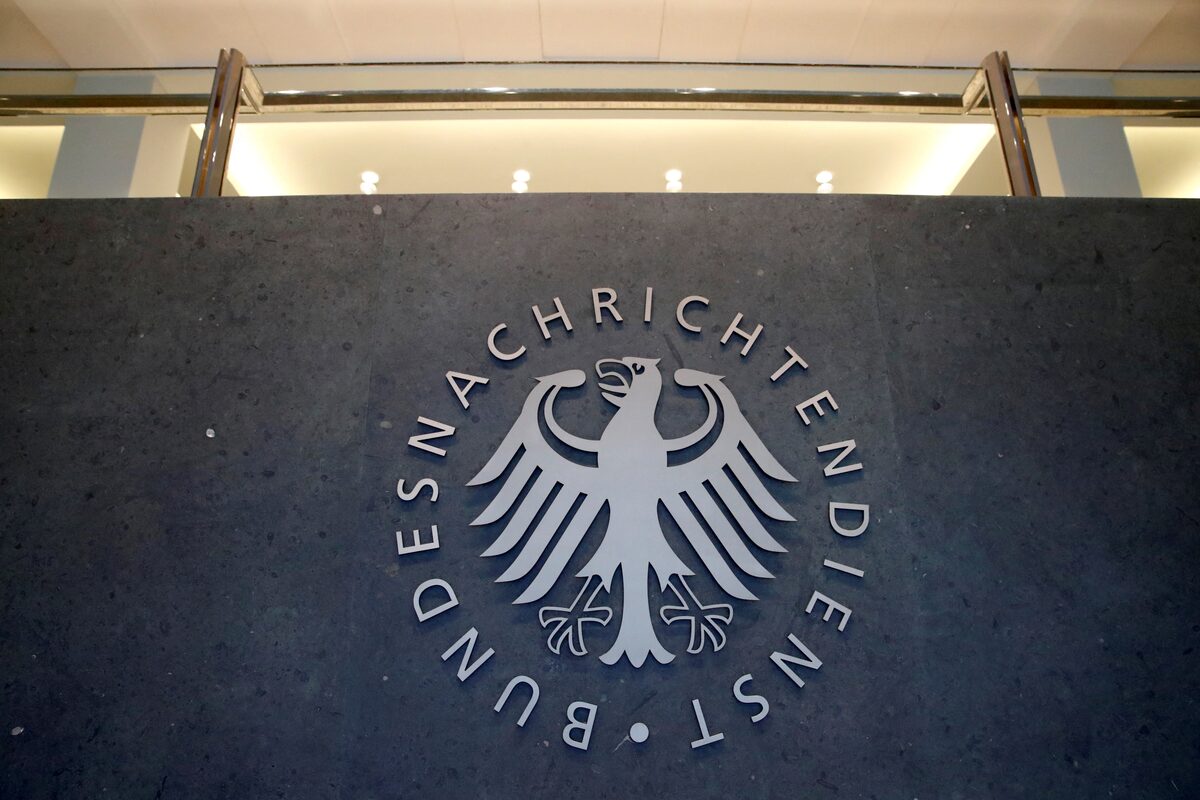
Protests are mounting against a draft law approved by the federal government to expand the powers of German intelligence agencies.
Through the new legislation, the government aims to grant German intelligence agencies sweeping new powers.
The bill seeks, among other things, to facilitate agency access to information technology systems, extend data retention periods, and automate data analysis.
Agencies will also be permitted to conduct “online searches” in the future.
According to German Foreign Policy, a major change is that, for the first time since the end of German fascism, intelligence agencies will once again possess the authority to implement “operational measures”.
Under the banner of “defence against hybrid attacks”, Berlin is further blurring the lines separating the police, intelligence agencies, and the military, while increasingly eliminating the distinction between external enemies and domestic critics.
The new intelligence law marks another step by the Federal Republic towards “strategic autonomy”.
A hefty “wish list” for intelligence services
With the draft law on the “reform of the Intelligence Service Act”, the federal government aims to systematically expand the powers of German intelligence services in almost every area.
In this context, Interior Minister Alexander Dobrindt explicitly thanked Defence Minister Boris Pistorius. Working in close cooperation, the two ministries succeeded in completely rewriting the Intelligence Services Act, doing so “quietly”.
According to the British newspaper The Guardian, the new law fulfills the “wish list of the intelligence services”.
Under these provisions, intelligence agencies will in the future be able to retain collected telecommunications data for longer periods (content data for up to six months and metadata for up to twelve months). This will enable them to analyse this data “retrospectively” as well.
The law also aims to streamline the analytical process, for instance by permitting AI-supported automated analyses and “removing administrative obstacles”.
The “use of tools for biometric comparison of image data, the application of artificial intelligence, and the further processing of data for research and development purposes”, as well as the transfer of data to “other state agencies and private entities”, will be facilitated.
According to the explanation, the overall objective is to “strengthen access to information technology systems” ranging from “smart refrigerators” to private mobile phones and CCTV cameras in public spaces.
BND granted operational powers
Under this legislation, the federal government is also granting the Federal Intelligence Service (BND) and the Federal Office for the Protection of the Constitution comprehensive powers that, in the words of Interior Minister Dobrindt, “go far beyond intelligence gathering”.
The objective is not merely for the agencies to “see and hear better” in the future, but above all to “take active measures against enemies”.
Alongside online searches, this includes permission to “tamper with” data in the future. The minister justifies this by stating, “This is our mission.”
This measure appears to represent a historical turning point. For the first time since the defeat of Nazism, German intelligence agencies are being granted permission to employ “operational powers”—namely, to take “active measures”. These powers had been reserved exclusively for the police since 1945.
The new powers explicitly encompass “tampering with instruments used in crimes […]”. They also permit “manipulating goods shipments by inserting defective components, targeted intrusion into IT systems in drone factories or chemical weapons laboratories for sabotage purposes, or shutting down or disabling servers belonging to state-sponsored cyberattack groups or disinformation actors”.
Furthermore, all of these actions may now be carried out “proactively”.
Opposition reactions
The proposed draft bill has drawn widespread criticism. For instance, Konstantin von Notz (Alliance 90/The Greens), former chairman of the Parliamentary Oversight Panel for the intelligence services, criticises the bill for failing to distinguish between police work and intelligence work.
Notz supports expanding the powers of the foreign intelligence service (BND), but considers granting the same powers to the domestic intelligence service (BfV) to be “questionable in terms of the rule of law”, as well as “poorly designed and dangerous”.
Under the new law, the domestic intelligence service will in the future be able to enter doctors’ and therapists’ practices undetected, for example.
Consequently, the National Association of Statutory Health Insurance Physicians (KBV) and the German Medical Association sharply criticised the measure on the grounds that it would “undermine medical confidentiality and violate the confidential doctor-patient relationship, which must be protected”.
The president of the Hesse State Medical Association regards the draft as “disrespectful to the medical profession”, stating that it damages the relationship of trust between doctor and patient.
Dobrindt rejected this criticism, stating, “I do not agree with this at all, because we always act appropriately.”
The German Journalists’ Association (DJV) emphasised in a statement that “very broad terms” are used in the draft bill. According to the DJV, this means that “even peaceful activities” could fall under intelligence agency surveillance.
Journalists will no longer be able to guarantee the protection of sources in the future. In addition, the “grading of intervention thresholds based on nationality and place of residence” is unconstitutional.
According to the association, contrary to what is envisaged in the bill, foreign journalists and German journalists working abroad must also be protected from the intelligence services.
Who will oversee the intelligence agencies?
Former Federal Data Protection Commissioner Louisa Specht-Riemenschneider had previously warned against centralising oversight authority over the BND within the Independent Oversight Body.
Ulrich Kelber, an honorary professor of data ethics and Specht-Riemenschneider’s predecessor, shares this criticism: intelligence agencies will themselves take the “final decision” regarding “what can be subjected to oversight”.
According to the data protection expert’s assessment, the Independent Oversight Body, which will serve as the sole oversight body in the future, will not be able to appeal against denied access.
The “state of consent” introduced in the bill grants the BND “extensive special powers” while further restricting oversight options.
Moreover, the agency will be able to do this without requiring the Bundestag to declare a state of tension or a state of defence, which had been necessary until now.
Kelber regards this as an “unconstitutional shift of power away from the elected parliament”.
The draft law, which the federal government supports partly by pointing to a purported improvement in oversight mechanisms, gives him the “impression that independent oversight of the intelligence services is being deliberately sabotaged”.
Intelligence treats incidents of unclear origin as “Russian attacks”
Dobrindt also justifies this domestic move by citing a threat emanating from Russia.
Dobrindt asserts that Germany is “the target of hybrid warfare every day”, stating that expanding the powers of the intelligence agencies is merely “a response to the current threat situation”.
During a hearing before the parliamentary oversight committee, Sinan Selen, Vice President of the Federal Office for the Protection of the Constitution, admitted that his agency also classifies incidents that cannot be clearly attributed to a specific source as Russian “hybrid attacks”.
This situation further blurs the distinction between external enemies and domestic opponents.
Consequently, under the new law, the domestic intelligence service will in the future be able to use not only real or alleged “hybrid attacks”, but also “significant unrest among broad sections of the population”, as justification for operational measures.
Berlin anticipates that the public would show resistance in the event of war, should NATO troops transit through Germany on their way to the new Eastern Front.
German “strategic autonomy” goes hand in hand with militarisation
Interior Minister Dobrindt asserts that Germany has hitherto been dependent on the support of foreign intelligence services.
Berlin hopes that strengthened German intelligence services will give it a better standing vis-a-vis Washington, Paris, and London, turning it into a serious interlocutor on “equal terms” and moving it away from being a junior partner.
The proposed draft bill aims to ensure that German intelligence agencies “no longer lag behind other European partners”.
According to the minister, this will enable Berlin to “justify its claim to a leadership role in European security policy”.
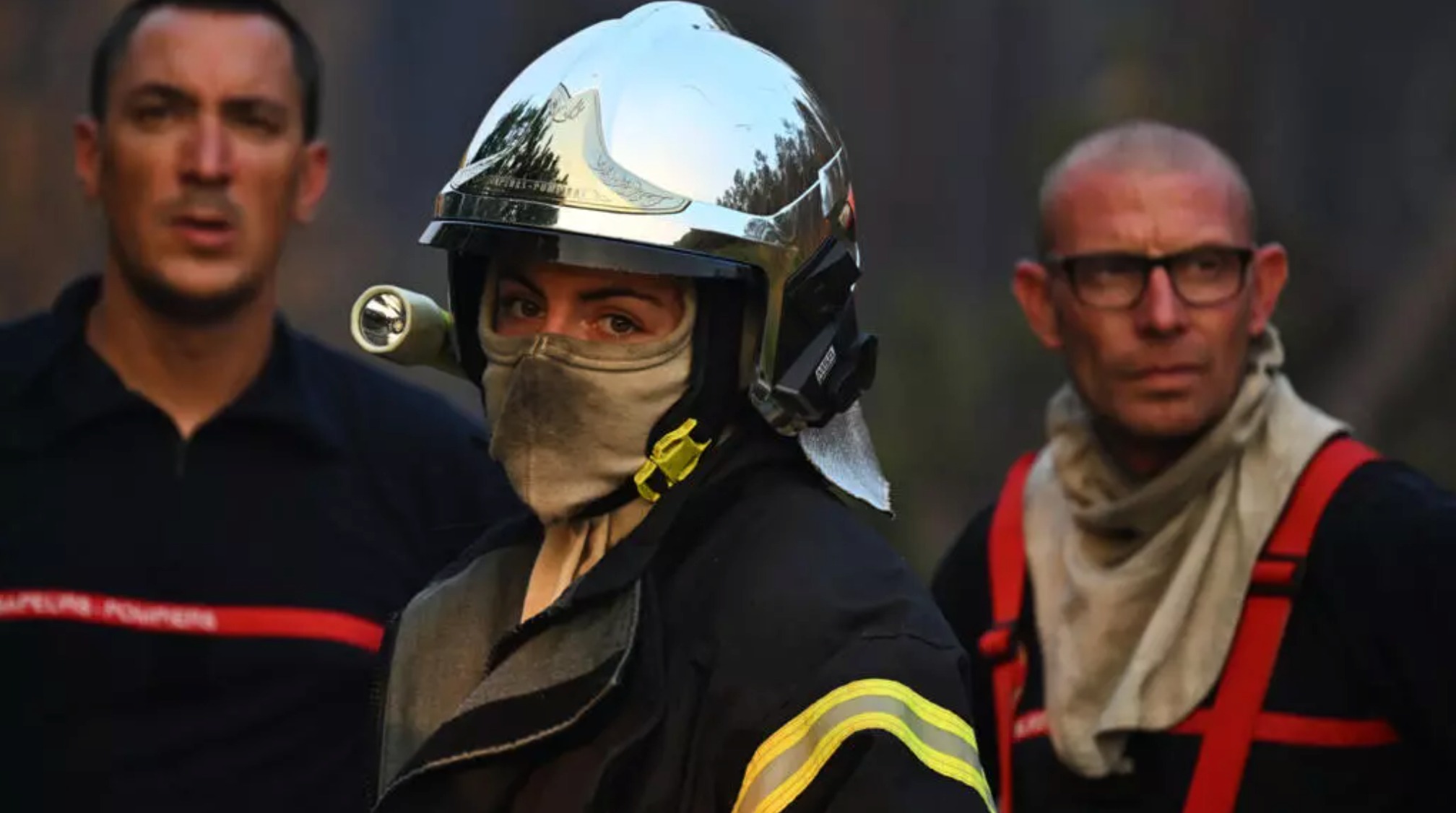
While European Union countries spend the summer months battling massive wildfires, reductions in firefighting budgets are drawing fierce criticism.
According to a report by EUobserver, firefighters have grown tired of being branded “heroes” by politicians.
“We don’t want to be called heroes; we want to be given resources,” said Ludovic Goblet, a representative of the French firefighters’ union Spasdis-CFTC.
His remarks came days after fresh EU figures revealed that the number of professional firefighters across Europe fell by 18,000 during the worst wildfire year on record.
That decline included a reduction of more than 4,000 personnel in France alone.
French firefighters set out three urgent demands
A coalition of trade unions representing France’s fire and rescue services held a meeting lasting approximately two hours with Interior Minister Laurent Nuñez last Thursday.
The coalition put forward three primary demands: additional resources to cope with the surge in emergency calls, the mass recruitment of professional firefighters, and new legislation to modernise civil protection services.
“The minister failed to meet our expectations; we received no concrete response. We have no guarantees regarding funding, funding strategy, or the content of the legislation,” said union spokesperson Xavier Boy.
Boy noted that the resources allocated to fire services have not kept pace with the rising number of interventions and multiplying crises.
Lack of resources fuels strike call for September
Unions have called for a “major mobilisation” on 29 September, a day when public sector workers are also planning to strike.
David Saquet of the UNSA firefighters’ union told AFP that professional firefighters also plan to stage a protest at Place de la Republique in Paris three days earlier.
Firefighters say they are exhausted following one of the worst wildfire seasons in French history, with provisional estimates indicating that at least 120,000 hectares have burned since the beginning of the summer.
Of the 256,400 firefighters registered with the French Interior Ministry, only 44,000—or approximately 17%—are either professional or military personnel.
In recent weeks, applications to become volunteer firefighters have doubled, and in some departments tripled.
Fire officials report that, driven in part by a wave of public gratitude, they have had to process as many applications in a few weeks as they typically receive in six months.
French interior minister plays for time
Nuñez said on Thursday that long-awaited draft legislation to reorganize the country’s civil protection services would be presented on 8 September.
Launched in mid-2024, the initiative aimed to modernise a system widely seen as on the verge of collapse by providing additional financial support. However, the process had ground to a halt since then.
The interior minister welcomed the “very frank discussions” held with unions on Thursday.
The minister stated that the proposal to be presented in September would “more clearly define the missions” of French firefighters, who “currently have to respond to personal medical emergencies just as frequently as they respond to disasters or fires.”
In a statement published on the social media platform X, Nuñez added that discussions regarding the funding of fire services remain ongoing, with additional resources expected to be allocated in the 2027 budget.
European Commission enforces fiscal austerity
Ahead of this summer, the European Commission told member states that they needed to ensure they maintained an “adequately sized and well-prepared” firefighting force.
Yet the Commission is simultaneously enforcing the EU’s strict fiscal rules, which have led to spending cuts in public services, including fire departments.
Poland, for example, recorded the largest drop in firefighter numbers last year. Alongside France, it was placed under the Excessive Deficit Procedure in 2024.
Belgium faces a similar situation: the country’s fire services are tackling wildfires with a 10% reduction in staffing in 2024 and a further loss of 200 firefighters in 2025.
This development is not only hazardous for the public and firefighters. Damage caused by wildfires this summer has already exceeded 3 billion euros.
Conversely, the same fiscal logic is not applied to defence, where massive investments are being channelled into military equipment.
According to EUobserver, in the face of mounting and increasingly complex threats, austerity policies have left Europe weaker, more divided, and less prepared in almost every respect for the challenges ahead.
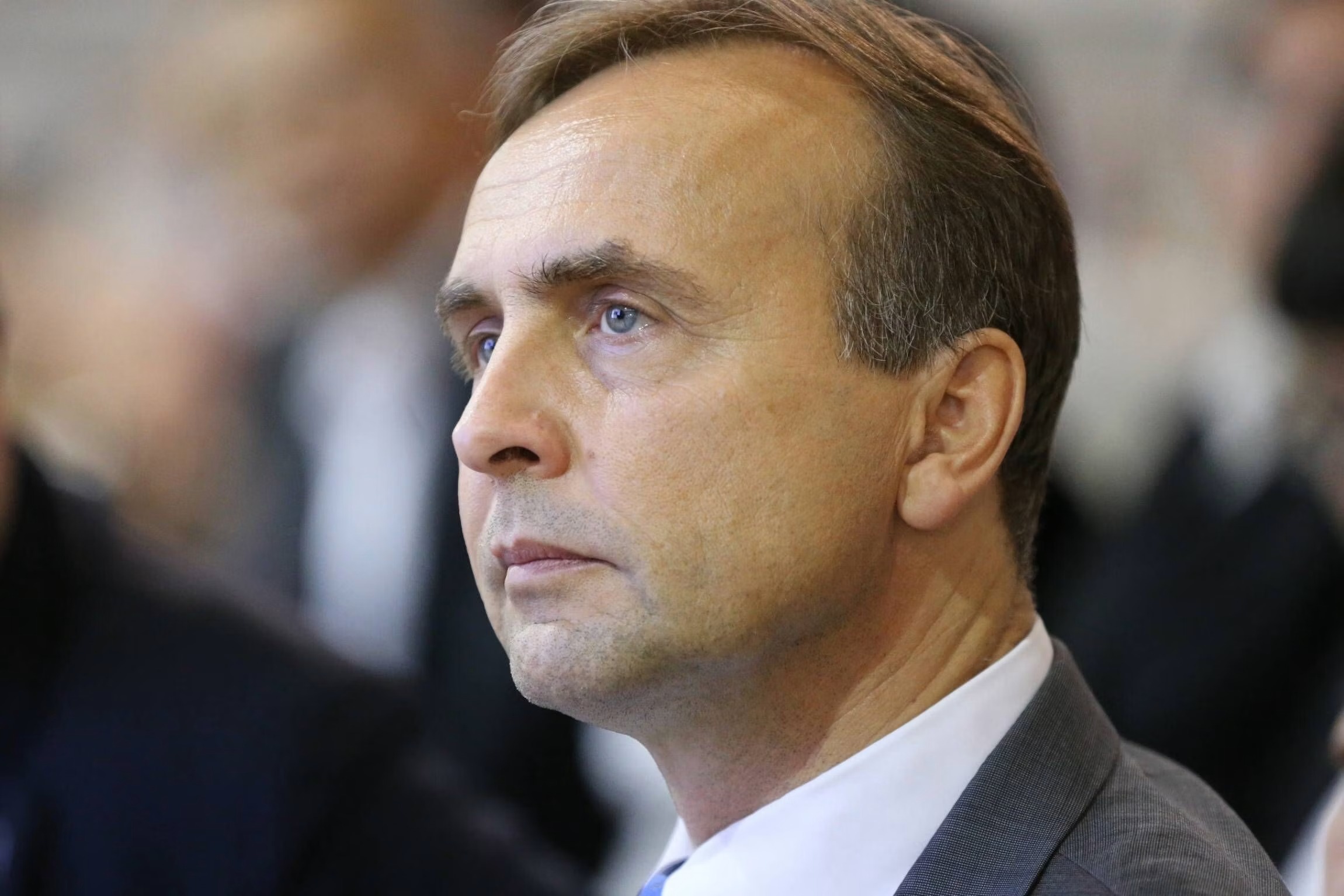
German historian Manfred Kittel has claimed that Soviet leader Josef Stalin, who gave the “green light” for Germany to invade Poland, was responsible for World War II.
Previously known for his “revisionist” views on the war, Kittel articulated these arguments in a full-page article published in the Frankfurter Allgemeine Zeitung (FAZ), one of Germany’s influential mainstream newspapers.
According to Kittel, driven by the “impetus of a need for war in Europe”, the Soviet Union gave Germany the “green light” to invade Poland by signing the German-Soviet Non-Aggression Pact on 23 August 1939.
The article argues that this made it possible for Adolf Hitler’s “almost instinctive disposition” towards war to “unfold destructively”.
Accordingly, “a deliberately acting Stalin” thus became an “accomplice” in World War II.
Manfred Kittel made headlines years ago when extreme revisionist tendencies emerged under his leadership at the Berlin-based Flight, Expulsion, Reconciliation Foundation.
At present, Kittel criticises Stalin’s “complicity” in the outbreak of the war in 1939 and attempts to demonstrate “plainly and clearly […] the fatal role of Russian imperialism”.
In 2025, Kittel also described Russia’s war against Ukraine as a “war of annihilation”.
Mainstreaming of “revisionism” continues in Germany
According to German Foreign Policy, Kittel began to gain wider public recognition from 2009 onwards.
At that time, he was appointed director of the Flight, Expulsion, Reconciliation Foundation, which had been established in late 2008 to create a documentation centre in Berlin on forced migration.
The centre’s focus was to address the resettlement of German-speaking populations from various countries across Eastern and South-Eastern Europe as a consequence of mass crimes committed by Germans during World War II.
Kittel was appointed director of the foundation despite the thematic focus of his dissertation, published in 1993.
In his thesis, the historian argued that Nazi crimes had already been sufficiently addressed during the era of Chancellor Konrad Adenauer—namely in the early years of the Federal Republic—and claimed that anyone disputing this was paving the way for a “penitence mentality”.
He contended that trying to encourage the “broad masses of the population” to “come to terms with the past” amounted to “misguided public education”.
In 2008, under Kittel’s co-ordination, a “feasibility study” on the Nazi past of officials in refugee associations was conducted at the taxpayer-funded Munich Institute of Contemporary History (IfZ).
Regarding an SS-Obersturmfuehrer involved in mass atrocities, the author claimed that it could not be determined “whether he was inwardly a National Socialist”.
Poland viewed as “occupied East Prussia”
Under Kittel’s leadership, the Flight, Expulsion, Reconciliation Foundation generated headlines on several occasions.
In the summer of 2010, it emerged that both full and alternate members of the foundation’s board held openly revisionist views.
For instance, one board member had once described a trip to north-eastern Poland (“East Prussia”) as a “journey to an occupied country”.
An alternate member suggested in a newspaper article that Poland might bear some responsibility for World War II.
The article also argued that it was Great Britain that “turned the Battle of Danzig into a global conflict”.
Exaggeration of “German suffering”
In the autumn of 2014, the foundation under Kittel’s leadership caused a final scandal by opening an exhibition at the Deutsches Historisches Museum [German Historical Museum] in Berlin.
This exhibition served as a precursor project to the planned documentation centre focused on forced migration.
The exhibition not only disregarded Nazi mass crimes as the cause for the resettlement of German-speaking populations from Eastern and South-Eastern European countries, but it also drastically exaggerated the number of victims.
For example, the exhibition claimed that “more than two million Germans died during the forced expulsions from Poland, Bohemia, and East Prussia”.
In contrast, the German Historical Museum stated that “at most 600,000” people died during the resettlement processes between 1944 and 1947, a figure supported by scientific evidence.
Post-war German expulsions labelled “genocide”
At the time, the exhibition proved to be the final straw. Following years of protests from Polish and Czech historians, as well as the Central Council of Jews, whose representatives withdrew temporarily or permanently from the foundation’s governing bodies, Kittel was forced to resign from his post in late 2014.
Nevertheless, Kittel remained a prominent figure among representatives of displaced German communities.
Among other honours, he received the Human Rights Award from the Sudeten German Homeland Association in 2015.
He has repeatedly and openly advocated for classifying the resettlement of German-speaking populations in Eastern and South-Eastern Europe as “genocide”.
For some time, the historian has also commented more frequently on the policies of the Soviet Union and Russia.
For instance, writing in April 2025, Kittel argued that the resettlement process was supported by the Kremlin because it provided an opportunity to create “an overpopulated crisis hotspot in the heart of Central Europe” in post-war Germany.
In his view, displaced Germans from the East were intended to become a “source of unrest and social decay”, which constituted the “Russian imperial context” of the events.
Kittel stated that “Great Russian imperialism” existed long before Hitler and continued “to this day, even without Hitler”, such as in the form of the “ongoing war of annihilation” against Ukraine.
“Complicity” of the Soviet Union
Last week, Kittel went so far as to attribute “complicity” in World War II to the Soviet Union, thereby denying that Nazi Germany bore sole responsibility.
In a full-page article published in the FAZ, Kittel primarily cited historian Klaus Hildebrand.
Hildebrand had been accused of making “relativising” statements about National Socialism during the “Historians’ Dispute” (Historikerstreit) of 1986 and 1987.
According to Hildebrand, Soviet policy was dictated by the “need for war in Europe”.
Kittel wrote that through the German-Soviet Non-Aggression Pact of 23 August 1939, Moscow gave the German Reich the “green light”, “supported the German war effort”, and thereby enabled Hitler’s “almost instinctive disposition” towards war to “unfold destructively”.
In his personal assessment, Kittel concluded that “a deliberately acting Stalin” had made himself an “accomplice” as early as 1939.
This claim is directed at the country that suffered by far the greatest loss of life in the German war of annihilation, with approximately 27 million dead.
Kittel consistently defends the actions of the Western powers, from condoning the annexation of parts of Czechoslovakia in the Munich Agreement to refusing to co-operate with Moscow against the Nazi Reich.
Proposal for national memorial day against pact
Ultimately, Kittel attributes an “imbalance in the culture of remembrance” to the Federal Republic.
That is, he argues there is an imbalance between the “increasingly intense focus on the crimes of Nazi annihilation imperialism” on the one hand, and the “suppressed sins of more traditional territorial imperialism of the Tsarist or Stalinist type in Russia” on the other.
Kittel considers this an imbalance “with serious political consequences”. He notes that he “struggles to understand” why then Foreign Minister Heiko Maas insisted in May 2020 that “Germany alone unleashed the war against Poland in 1939” and therefore bore responsibility for World War II.
Kittel believes it is “‘more important than ever’ to demonstrate plainly and clearly Stalin’s complicity in the outbreak of the war in 1939 and the catastrophic, ongoing role of Russian imperialism”.
To advance his aim, Kittel wants 23 August to be declared a “national day of remembrance” in Germany as the “commemoration day of the Hitler-Stalin Pact”.
The European Parliament undertook a similar initiative in September 2019. At that time, it adopted a resolution calling for 23 August to be designated EU-wide as the “European Day of Remembrance for the Victims of Totalitarian Regimes”.
The resolution asserted, among other points, that World War II “broke out as an immediate result of the notorious non-aggression treaty between the National Socialist German Reich and the Soviet Union, also known as the Hitler-Stalin Pact”.
According to the European Parliament, these two states were “totalitarian regimes (…) pursuing the goal of world conquest to an equal degree”.

Likud weighs rotation premiership between Netanyahu and Eisenkot

Russia and China narrow space race gap with US, reports indicate

German bill grants intelligence services sweeping operational powers

China-Nepal border flood leaves at least 160 dead, over 1,000 missing

Putin circle weighs tactical nuclear risk as Ukraine talks stall
-

 Interview2 weeks ago
Daniel Davis warns US strategy fails against Iranian defense grid
-
 Diplomacy2 weeks ago
Erdogan blocked CIA-Mossad plan for armed Kurdish uprising in Iran, report says
-

 America2 weeks ago
AIPAC super PAC pours millions into key Democratic primary races
-

 Diplomacy2 weeks ago
The two terrorists: Britain jails tweets while the West crowns al-Qaeda’s man in Damascus
-
 Middle East2 weeks ago
US considers land blockade on Iran involving Türkiye and neighbours
-
 Europe1 week ago
Marine Le Pen plans French constitutional referendum on immigration
-
 Europe2 weeks ago
Ukraine uses British drones for long-range strikes deep inside Russia
-
 America2 weeks ago
US-Brazil rift widens over proposed sanctions and trade tariffs
