
Asia
BOJ faces critical rate decision as US presses for faster hikes

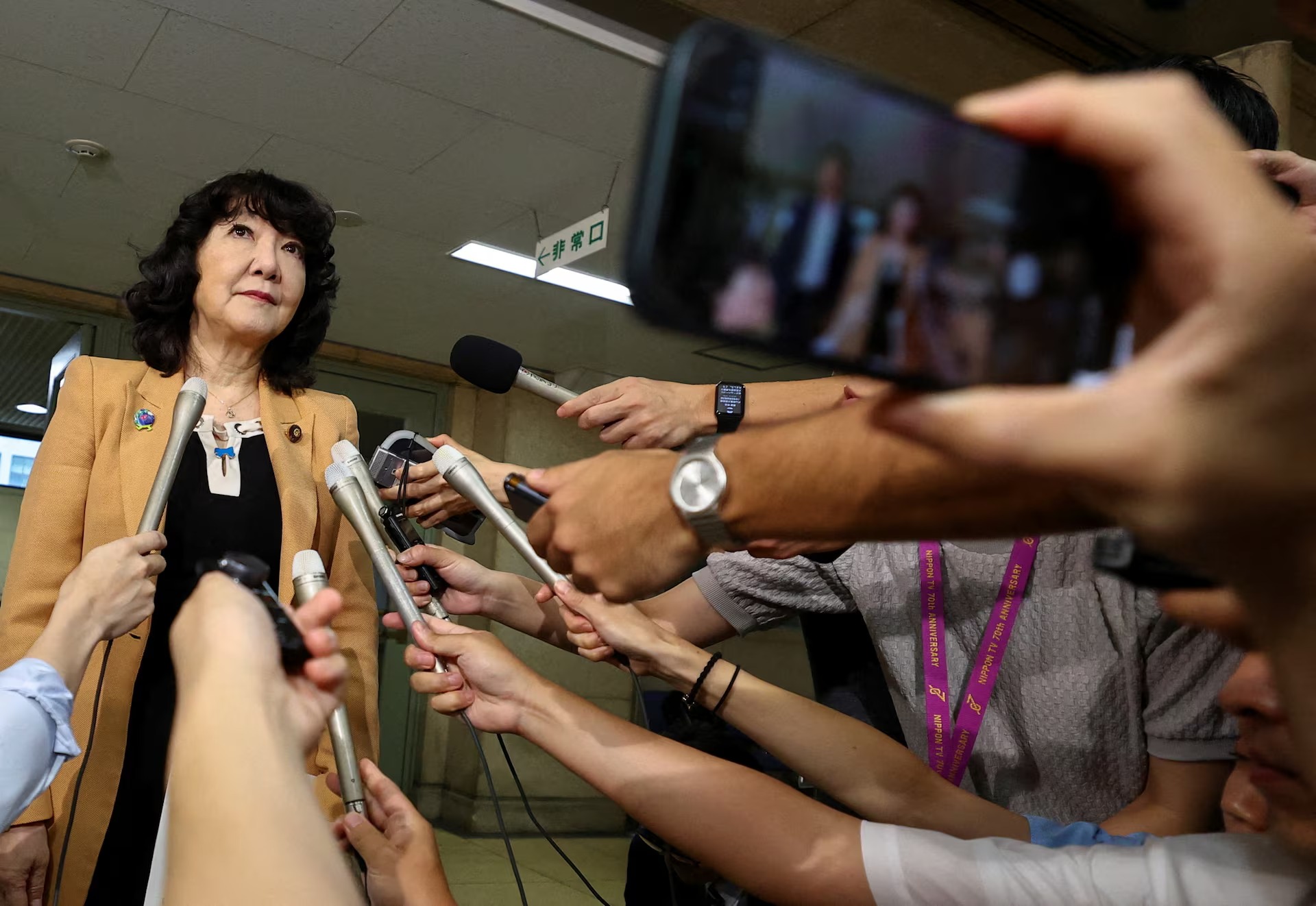
The Bank of Japan faces a critical policy showdown as US Treasury Secretary Scott Bessent declares that the era of massive stimulus is over.
When the US joined Japan’s efforts to support the yen, it did not do so unconditionally. This week, US Treasury Secretary Scott Bessent laid out the terms clearly: accelerate interest rate hikes and abandon outmoded ideas regarding massive economic stimulus.
A month after the rare joint intervention carried out by the US and Japan to bolster the yen, Bessent told Reuters that recent currency movements were not disorderly, signalling little appetite for fresh market intervention.
Instead, he expressed hope that Bank of Japan (BOJ) Governor Kazuo Ueda would “do the right thing” in monetary policy to combat the weak yen.
With inflationary pressures mounting, the BOJ was already widely expected to raise interest rates in September. However, Bessent’s remarks effectively boxed the central bank in, while increasing pressure for a faster pace of rate hikes going forward.
“The joint intervention in July was Bessent’s message to Japan that it now needs to get its act together on inflation,” said Izuru Kato, chief economist at Totan Research and a veteran BOJ watcher.
“Japan faces a currency crisis that is becoming increasingly difficult to control without US assistance. For a country in such a position, raising rates even once every three months may be too slow,” Kato said.
The weak yen has pushed up import prices and headline inflation, raising household living costs and creating a headache for Japanese policymakers.
From Washington’s perspective, a BOJ that moves too slowly on rate hikes, combined with loose fiscal policy, could trigger a sell-off in the yen and Japanese government bonds. This could disrupt financial markets with spillover effects reaching US Treasury yields—an outcome Washington wants to avoid.
Markets are focused on potential remarks by BOJ Governor Ueda following his participation in a two-day meeting of G20 finance leaders in Asheville, North Carolina, which concludes on Tuesday. A US Treasury official told Japanese public broadcaster NHK that Bessent met Ueda on Sunday and conveyed that interest rate hikes were necessary.
Even without US pressure, recent hawkish communication from the BOJ indicates it is preparing for a near-term rate hike in response to broadening inflation pressures.
“Given all the pressure coming from producer prices, consumer inflation is likely to accelerate. If that happens, the BOJ must act,” said a source familiar with the central bank’s thinking.
However, a September rate hike is already factored into market pricing. Consequently, the BOJ may need to commit to faster rate increases to alleviate downward pressure on the yen.
“Japan’s real interest rates are clearly too low. One or two more rate hikes will not be enough to reverse the yen’s downward trend,” said Naoyuki Shinohara, Japan’s former top currency diplomat.
Oxford Economics announced that it now expects the BOJ to raise rates in September and December this year, followed by a third hike in April 2027—a faster tightening cycle than the firm initially projected.
“The economic and political cost of disappointing the markets and the US has become too great for the BOJ and the government to ignore,” Shigeto Nagai, head of Japan economics at Oxford Economics, said in a report published on Monday.
For dovish Prime Minister Sanae Takaichi, the starkest message may be Bessent’s declaration that the era of Abenomics is over. Introduced in 2013 to end prolonged deflation, Abenomics combined sweeping monetary easing, heavy government spending, and a structural growth strategy.
Speaking to Reuters on the country’s fiscal policy, Bessent said Japan had defeated deflation and should now “sit back and enjoy the success of Abenomics and let it run its course.” Some analysts interpreted these remarks as a critique of Takaichi’s expansionary fiscal approach.
“This is a message to the Takaichi administration to avoid excessively loose fiscal policy,” a Japanese government official said regarding Bessent’s comments.
A senior ruling party official said: “These remarks show that the US is stepping up its demands on Japan’s policies.”
Both officials spoke on condition of anonymity due to the sensitivity of the matter.
Takaichi, an advocate of Abenomics, has laid out an ambitious spending agenda aimed at boosting investment in growth areas and easing the impact of rising living costs on households.
Following Takaichi’s pledge to remove spending caps in key growth areas, Japanese media reported that ministries and public agencies likely submitted their highest-ever initial budget requests for the upcoming fiscal year.
The focus on large-scale spending has unnerved investors, driving Japanese government bond yields to 30-year highs, which could also generate knock-on effects for US Treasury yields.
“The best way to support the yen would be for the Takaichi administration to deliver a credible message committing to fiscal reform,” said Shinohara, who also served as deputy managing director at the International Monetary Fund (IMF) following his tenure at the Ministry of Finance.
“However, the likelihood of that happening is extremely low,” Shinohara added.












China is overtaking Western suppliers, particularly France, by expanding its exports to African nations beyond small arms, armoured vehicles, trucks, and artillery to include air defence systems, combat drones, and electronic warfare assets.
According to a report by the South China Morning Post, based on researchers and military movements across the region, African buyers are gravitating towards the advantages of quality and accessibility offered by the Beijing administration.
In April, four vehicles spotted in a Malian army convoy were identified by defence intelligence company Janes as Chinese-manufactured Yitian-L air defence systems.
In September, the Presidency of Burkina Faso published footage of military equipment inspections and testing.
Observers noted that the released footage featured a mobile surveillance radar and a missile launch vehicle belonging to the Sky Dragon family produced by Chinese company Norinco.
In August, Cote d’Ivoire also showcased Wing Loong II armed unmanned aerial vehicles procured under a contract signed in June 2024 with Chinese state-owned enterprise Catic.
A distinct shift is unfolding in the weapons procurement trajectory of Sahel countries that have ended defence cooperation with France and run into US security assistance restrictions.
Mali, Burkina Faso, and Niger formed the Alliance of Sahel States in September 2023, transitioning the structure into a confederation in July 2024.
Following the transfer of power to military authorities, these nations progressively severed ties with France and turned their attention towards new partnerships.
Western bans and budget constraints pave way for Beijing
David Shinn, a former US ambassador to Burkina Faso and Ethiopia and a specialist in China-Africa relations, pointed out that the quality of Chinese military equipment has risen and that Beijing is willing to enter markets where the West hesitates.
“Unlike many Western countries, China will sell military equipment to any country so long as it is not under a United Nations sanction,” Shinn said.
Experts speaking to the newspaper stated that high-technology defence systems, previously purchased mainly from the West and accessible to only a few countries on the continent, are now being shipped more frequently to Africa by China.
Katarina Djokic, a researcher with the Arms Transfers Programme at the Stockholm International Peace Research Institute (SIPRI), said affordable pricing, including maintenance costs, plays a critical role in procurement choices.
Djokic noted that countries maintaining good relations with the West also procure weapons from China.
According to SIPRI assessments, shipments to African nations have not yet reached a volume large enough to fundamentally alter China’s overall arms export figures.
SIPRI data for the 2021-2025 period placed China as the world’s fifth-largest supplier, accounting for a 5.6% share of global arms exports.
During this timeframe, China’s largest customer was Pakistan with a 61% share, followed by Serbia at 6.8% and Thailand at 4.7%.
In SIPRI’s records for 2020-2024, Africa accounted for 14% of China’s major arms exports, ranking as its second-largest market behind Asia and Oceania’s 77% share.
Between 2020 and 2024, the Beijing administration carried out arms sales to a total of 44 countries worldwide.

The US Department of War (Pentagon) is reportedly planning to establish an extensive network of deep-cover agents to wage economic warfare against China and other adversaries of the US.
According to a report by The Washington Post citing six sources familiar with the initiative, the plan has not yet been put into effect. The newspaper reported that the initiative remains at the planning stage. The Pentagon, however, denies that any such initiative exists.
The report said the operatives would pose as entrepreneurs or private sector employees while concealing their ties to the US government. The network’s mission would be to gather economic intelligence and counter China.
The programme is led by Tom Rakusa, who spent 39 years at the CIA. Rakusa serves as a senior adviser to Deputy Secretary of Defence Steve Feinberg.
The proposed spy network is seen as part of a broader policy by the Donald Trump administration to sharpen economic competition with other countries.
The US is already resorting to tariffs, export controls, and investment in strategic sectors, alongside expanding its economic intelligence gathering.
According to The Washington Post, the new initiative demonstrates the Pentagon’s growing influence under the Trump administration. The department is currently seeking a record budget of $1.5 trillion.
Trade war flares up again with Trump’s return to the White House
The trade friction between the US and China flared up again following Donald Trump’s return to the White House. In April 2025, Washington raised tariffs on Chinese goods to as much as 145%, and Beijing retaliated with tariffs of up to 125%.
In May, US Secretary of State Marco Rubio described China as the primary geopolitical challenge facing Washington. Rubio said that to avoid war, the two sides needed to manage their conflict of interests.
In July, Chinese expert Zheng Yongnian did not simply warn that underestimating the US could prove to be a “fatal mistake”; he stated it explicitly.
According to Zheng’s assessment, the US maintains its primacy through the role of the dollar, its military superiority, and its technological advantages.
Even so, the two sides agreed in June to declare a truce and lower tariffs. In autumn 2026, the US and China extended their trade truce until 10 January 2027.
US Treasury Secretary Scott Bessent said the extension would give the parties more time to discuss economic issues.
Trade deals do not eliminate the strategic contradictions between the two countries. Financial Times columnist Rana Foroohar likened the race between the two nations for commercial, technological, and geopolitical influence to the 19th-century “Great Game” between the Russian and British empires.
Foroohar cited China’s standing in shipbuilding and commercial maritime transport, as well as its expanding footprint in overseas ports, among its key advantages.
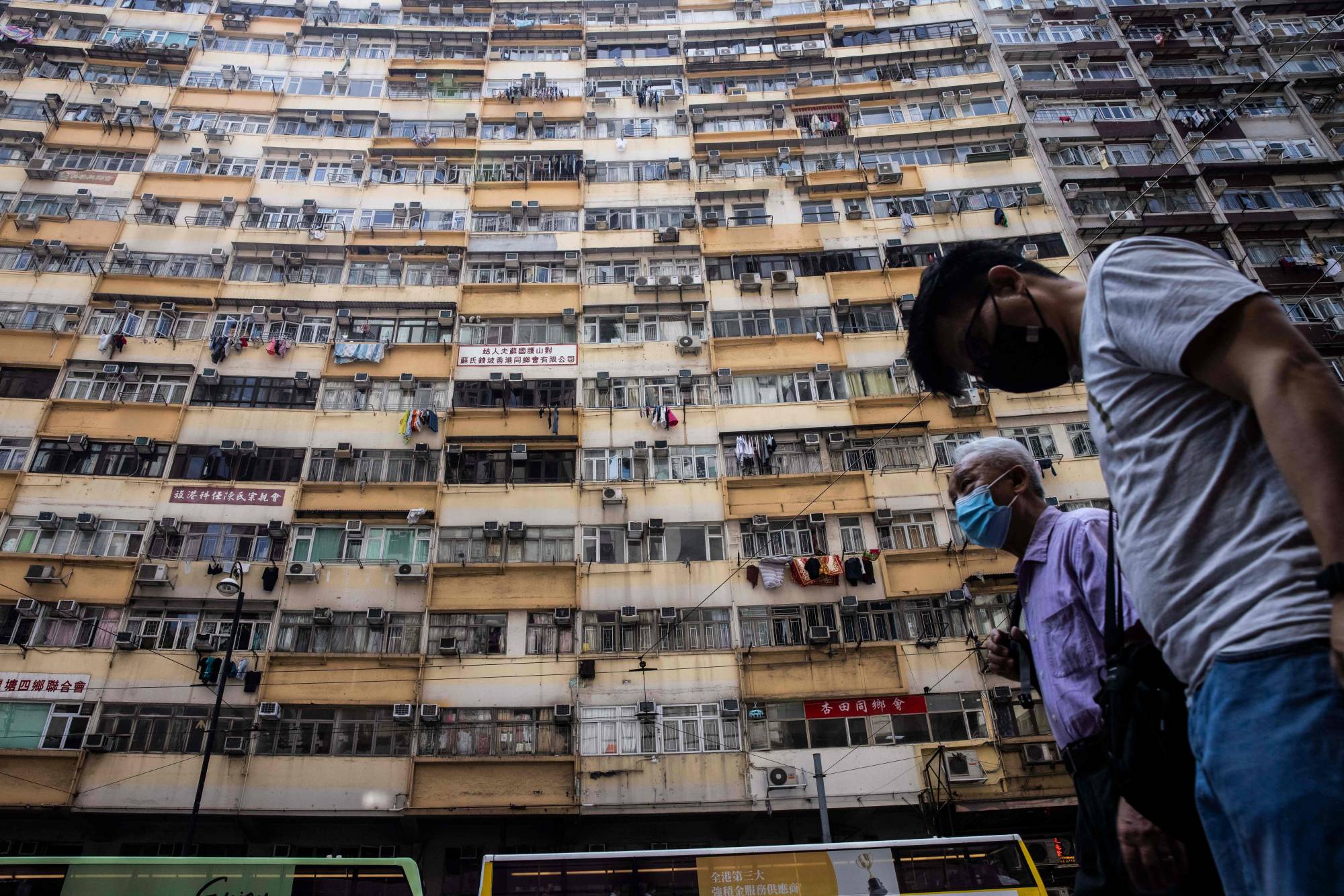
Japan’s ruling Liberal Democratic Party (LDP) plans to restrict short-term property trading to rein in surging home prices in major urban centres, particularly Tokyo.
Led by Prime Minister Sanae Takaichi, the party aims to make support for working households a core priority ahead of local elections scheduled for April next year.
The LDP’s research commission on housing and land policy met on Wednesday to discuss the issue.
According to a report by the Nikkei Asia newspaper, Commission Chair and LDP lawmaker Midori Matsushima said at the opening of the meeting: “Prices of newly built condominiums across Tokyo’s 23 wards have doubled over the past decade. We must work on measures ensuring that people who wish to live in these homes can actually afford to buy them.”
Homeownership in the capital has become virtually unattainable for broad segments of the population. According to data from the Real Estate Economic Institute, the average sale price of a newly built condominium in Tokyo’s 23 wards rose %18.5 in fiscal 2025 compared with the previous year, reaching 137.84 million yen (around $872,000).
Meanwhile, statistics from the Ministry of Labour show that the average annual income of a full-time worker in the capital remained at 6.78 million yen in fiscal 2025. This widening gap between incomes and residential property prices is directly shaping political priorities.
During its campaign for the House of Representatives election in February, the LDP pledged to curb speculative transactions across metropolitan Tokyo and other regions. Earlier this month, a party project team focused on policies concerning foreign nationals also submitted a recommendation urging the government to introduce immediate tax measures against rising home prices.
Under current legislation, profits realized from properties sold within five years of acquisition are classified as “short-term capital gains”. These returns face a tax rate approaching %40, including income tax and local inhabitant tax.
Although this rate is twice the approximately %20 levied as “long-term capital gains” tax on properties held for more than five years, several party members argue it remains insufficient to deter speculation. Calls to tighten the framework may be considered as part of the annual tax reform package to be drafted in December alongside the LDP’s coalition partner, the Japan Innovation Party.
The ruling bloc wants to present concrete housing pledges to voters heading to the polls in April across numerous urban centres, including 22 of Tokyo’s wards where local assembly terms expire.
“We need to support families with children, who are typically at the stage of purchasing a home,” a senior LDP official said.
Opposition parties are also preparing alternative proposals that target not only prospective homebuyers, but also residents forced into the rental market by high property prices and now affected by escalating rents.
Tax steps take precedence over limits on foreign buyers
Several countries seeking answers to housing affordability pressures have imposed direct restrictions on foreign purchasers. In South Korea, real estate policies played a major part in the declining public approval ratings of President Lee Jae Myung.
In August 2025, authorities in Seoul introduced an approval requirement for foreign nationals buying homes in the capital and adjacent areas, while also mandating that buyers reside in the properties for at least two years.
Canada and Australia have enacted temporary bans on foreign residential purchases, while Singapore levies a %60 additional stamp duty on foreign buyers.
The role of overseas investors in Japan’s property market also drew debate during the February election. However, restrictions aimed directly at foreign nationals are viewed as potentially conflicting with international trade and services agreements.
Consequently, rather than imposing restrictions based on the nationality of buyers, the government is discussing tax measures aimed at speculative real estate deals, such as rapid resales.
Fears that sharp market measures could shake regional banks
Concerns have also surfaced that aggressive steps to force down prices could harm the wider national economy.
A senior LDP tax official cautioned that a steep drop in land prices could weaken local financial institutions, warning: “We must consider the impact on regional banks.”
The real estate sector accounts for roughly %18 of total lending by Japanese banks. This proportion sits well above the %10 level recorded during Japan’s bubble economy of the mid-to-late 1980s.
At certain regional banks, property lending accounts for nearly half of total loan portfolios.
According to March 2025 data from the Financial Services Agency, approximately one-quarter of all loans extended by regional banks to the real estate sector are concentrated directly in Tokyo’s five central wards.
Buoyant asset valuations, supported in part by rising stock indices, have underpinned strong public approval for the Takaichi administration. Observers note that property interventions designed to cool the market could drag down equity prices and weaken the government’s standing.
A senior official on the LDP research commission stressed that decision-makers must act with caution regarding the scope and timing of any measures intended to bring price increases under control.

“Blue wave” fears at Mar-a-Lago: What will the midterms bring for the US?

What are Europe’s ignorant leaders failing to see?

Protesters storm Kyiv site holding soldiers over torture allegations

Right-wing calls to ban left parties and groups mount in Europe

Low EU gas stocks risk stoking global prices, IEA report warns
-
 America2 weeks ago
US wealthy demolish multimillion-dollar mansions for land
-

 Middle East2 weeks ago
Netanyahu unveils security doctrine and regional alliance map
-

 America2 weeks ago
At least 47 major US data centre projects halted or cancelled
-

 Diplomacy2 days ago
Secular dress code dispute exposes deeper Türkiye-Azerbaijan strains
-

 Europe2 weeks ago
EU rejects US proposal to resume Russian gas flows through Ukraine
-

 Middle East2 weeks ago
Netanyahu trails Eisenkot in Israeli polls despite Trump backing
-

 Europe1 week ago
Merz visits Asia to seek new markets for German defence firms
-

 Russia7 days ago
US and Russia weigh energy deals and corporate return in peace talks
