
Asia
China-Nepal border flood leaves at least 160 dead, over 1,000 missing

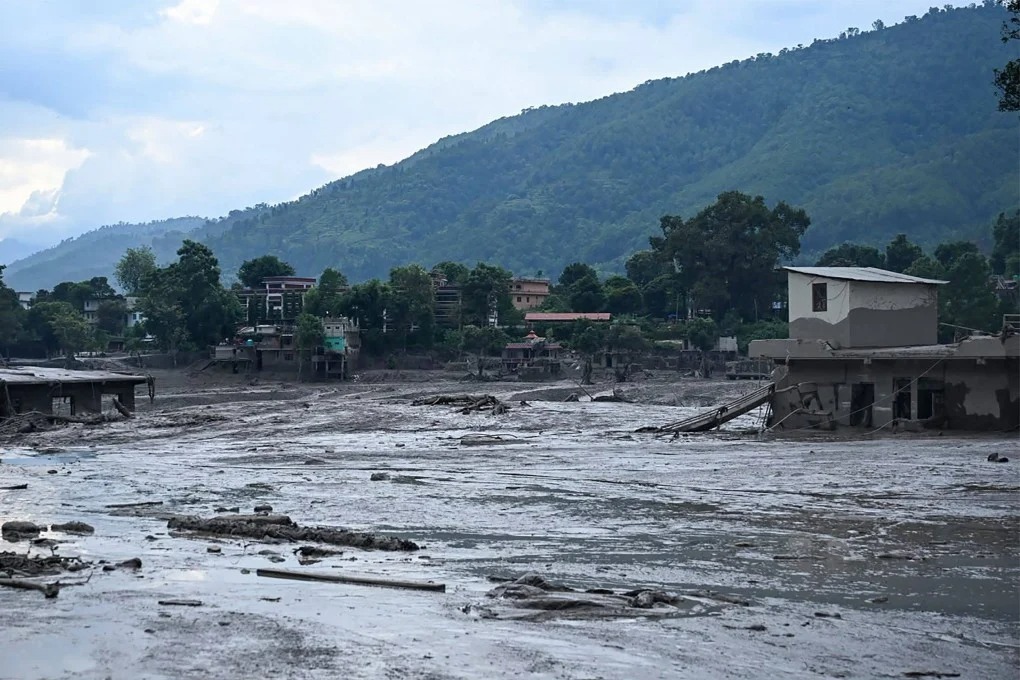
A massive mudslide and flash flood struck the Gyirong Port area along the China-Nepal border on Wednesday, leaving at least 160 people dead on both sides of the frontier and more than 1,000 others missing. Search operations have been extended across both sides of the border.
According to the latest official information released during a press conference held by the Shigatse municipal government on Thursday morning, three fatalities have been confirmed on the Chinese side, whilst 558 people remain missing.
Two individuals were rescued alive. Following the expansion of search operations, the number of missing persons was revised upwards from an earlier figure of 265.
Chinese authorities have dispatched more than 1,500 personnel to the region, including firefighters, military troops, and engineering teams. Vice Premier Zhang Guoqing has also arrived at the scene to direct operations.
According to state broadcaster CCTV, a landslide dam lake has formed near the border crossing, complicating rescue efforts.
Nepal Police reported late Wednesday that 157 bodies had been recovered.
According to the Office of the Prime Minister of Nepal, the 484 missing tourists include 391 foreign nationals from at least 26 countries. These comprise 142 citizens from India, 47 from the US, 34 from Australia, 33 from the UK, and 24 from Canada.
Nepal Tourism Board spokesperson Sunil Sharma told the Associated Press that 133 of the missing tourists were Indian pilgrims.
The disaster struck Gyirong County in the Tibetan city of Shigatse at around 10:30 on Wednesday and originated on the Nepalese side.
The region is situated along an important pilgrimage route leading to Tibet’s sacred Mount Kailash and Lake Manasarovar. Particularly during this peak period of the year, hundreds of pilgrims from India and other countries visit the area.
Initial assessments by Nepalese authorities indicated that an earthquake may have triggered a collapse in the lower section of a glacier, releasing the destructive floodwaters.










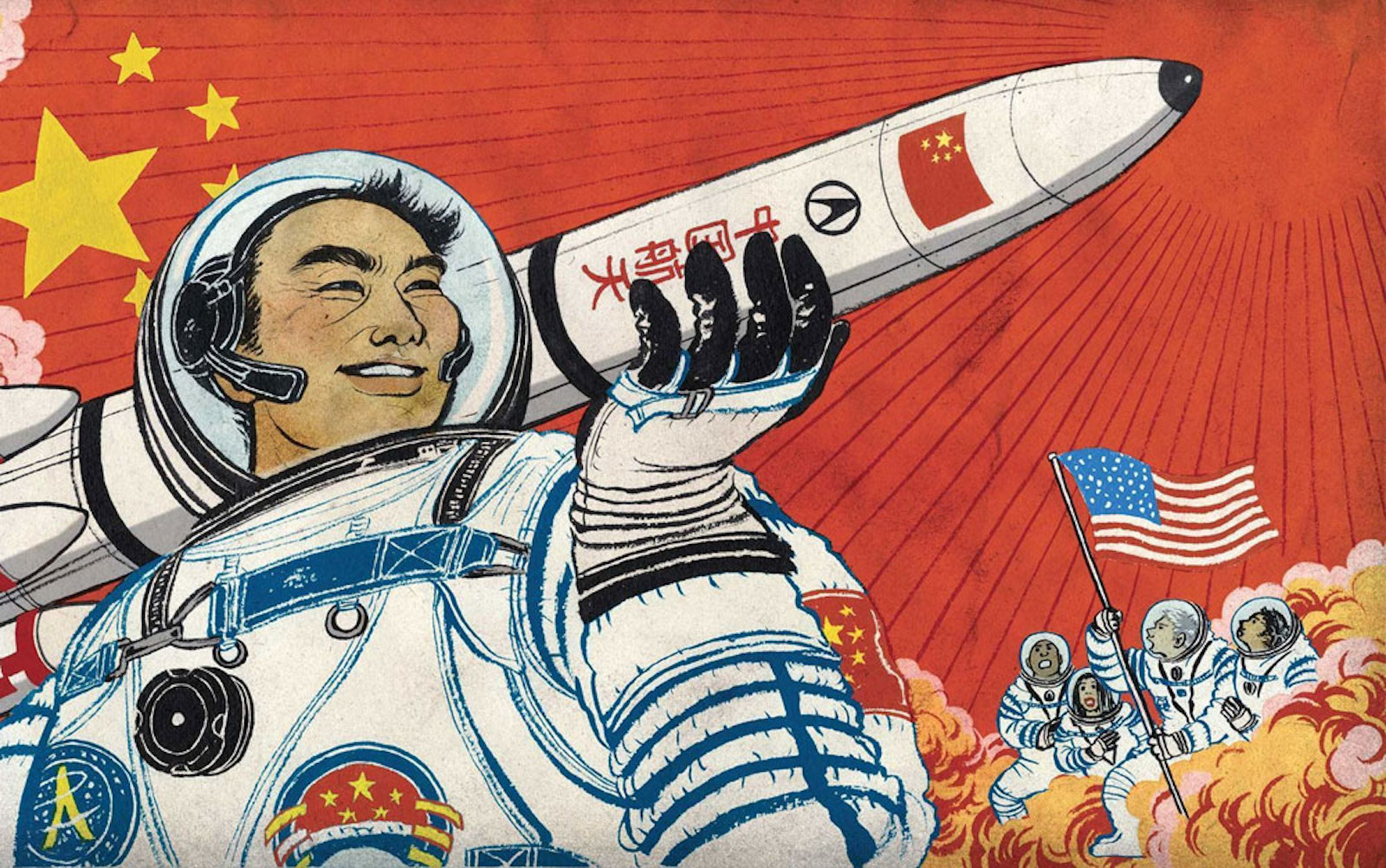
Russia and China are progressively narrowing the space gap with the US, according to an assessment by The Washington Post (WP). The newspaper reported that the technological superiority of the US in this domain is beginning to erode, noting that fresh advancements achieved by Moscow and Beijing could create risks for Washington.
The newspaper pointed to China’s recent progress as an example of this trend. In August, a Chinese aerospace company successfully landed a rocket’s first stage on Earth for the first time.
Previously, only US-based companies SpaceX and Blue Origin possessed this technology. The ability to reuse rocket stages significantly reduces launch costs.
The WP also drew attention to Russia’s Rassvet satellite system, which is planned to deliver internet connectivity from space.
The newspaper noted that this system could be utilised by the Russian military. According to the assessment in the report, the Rassvet system could provide Russia with capabilities comparable to those offered by SpaceX’s Starlink satellite network.
According to the newspaper, among the primary challenges facing the US are ageing launch pads and other space infrastructure. Modernising this infrastructure requires securing additional funding from the US Congress.
The WP further emphasised the necessity of streamlining commercial launch licensing procedures, which currently can take an extended period.
Observing that the US maintains its superiority for now thanks to a robust private space sector, the newspaper stated that Washington must increase launch frequency and invest in infrastructure renewals to preserve its leadership.
According to a May 2025 report by The Times, the US has begun sharing certain data on Russian and Chinese space operations with Britain and other members of the “Five Eyes” intelligence alliance.
This measure was taken in line with Washington’s concerns over Beijing’s advances in military space capabilities. In this context, allies were granted access to intelligence from Space Delta 9, the US Space Force unit that tracks Russian and Chinese satellites.
Russia and China, meanwhile, continue to pursue joint space projects. Russian President Vladimir Putin stated in April 2025 that Moscow and Beijing have “grand” and “magnificent” plans in this field.
In 2024, Russia ratified an agreement with China regarding the International Lunar Research Station, which is planned to be established on the lunar surface or in lunar orbit.
Former NASA Administrator Jim Bridenstine called on Russia, the US, and China in October 2025 to cooperate in space. Stating that the interests and activities of nations could intersect in space, Bridenstine said the parties could not operate alone.
Bridenstine also recalled that space cooperation between Moscow and Washington had commenced during the Cold War.
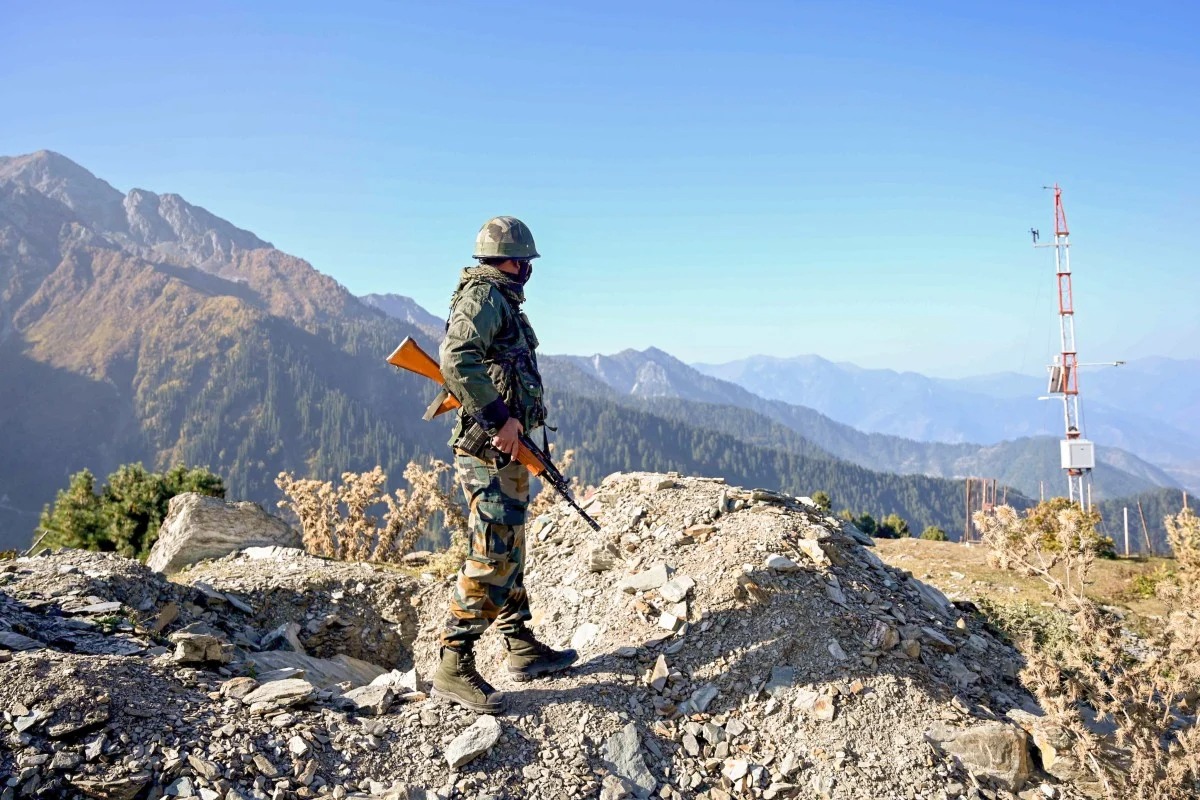
A Chinese scholar has warned that Indian intelligence agencies increasingly treating China’s routine activities as threats raises the risk that New Delhi could miscalculate and adopt “unilateral countermeasures” against Beijing.
According to Zhao Ruoxi, a researcher at the Macau University of Science and Technology, India stepped up its intelligence-gathering operations following the deterioration of relations with neighbouring China in recent years.
Zhao made the assessment in an article analysing Indian intelligence operations targeting China across the 2020–2026 period. The study was published in the 31 July issue of the Chinese-language Journal of Intelligence, issued by the Shaanxi Information Institute of Science and Technology, and reported by the South China Morning Post.
According to Zhao, China’s political and economic presence in South Asia, its emphasis on emerging technologies, and its naval activities in the Indian Ocean have been monitored more closely by India since a 2020 border clash.
In that clash in the Galwan Valley, 20 Indian and four Chinese soldiers were killed, dragging relations between the two countries to one of their lowest points in history.
Zhao noted that India has expanded its intelligence collection tools in recent years, drawing on space-based reconnaissance systems, drone surveillance, and cyber intelligence to establish a multi-agency network targeting China.
According to the article, India has also cooperated with the US and Middle Eastern nations to enhance its capacity to track Chinese naval operations in distant waters and exert informational pressure along Beijing’s maritime energy supply routes.
However, Zhao described India’s heavy reliance on foreign-sourced data as a “structural weakness”, arguing that it leaves New Delhi’s assessments of China vulnerable to the strategic agendas of third parties.
Zhao observed that while relations between Beijing and New Delhi began to improve in late 2024, India’s expanded intelligence activities directed at China have persisted.
The two countries took steps to mend ties after reaching an agreement in 2024 on resuming border patrols. Direct flights resumed after a five-year hiatus, Beijing once again permitted Indian pilgrims to visit the Tibet Autonomous Region, and India resumed issuing visas to Chinese tourists.
Last year, in another sign of easing tensions, Indian Prime Minister Narendra Modi visited China for the first time in seven years. In his meeting with Modi in Tianjin, Chinese President Xi Jinping said border issues should not define bilateral relations.
Following the reopening of the Lipulekh Pass in June, which Beijing viewed as a goodwill gesture, the two countries also resumed cross-border trade in August through the Himalayan passes of Nathu La and Shipki La.
In the article, Zhao stated that India is expected to ramp up technical surveillance in border areas, which will compel China to bolster its information security.
Zhao also warned that New Delhi could “systematically disrupt” Beijing’s diplomatic engagements with its South Asian neighbours, particularly its efforts to build regional trust and advance projects under the Belt and Road Initiative.
According to Zhao, the expansion of India’s intelligence operations against China heightens the risk of miscalculation, as routine Chinese activities are increasingly perceived as threats.
“As a result, the likelihood of triggering unilateral countermeasures increases,” Zhao assessed.
Zhao said China must make its strategic messaging more effective and reinforce communication with South Asian states and Indian Ocean littoral nations to counter this pressure.

China and Arab nations have launched a five-year action plan to combat drought, desertification, and land degradation. According to information provided by China’s National Forestry and Grassland Administration (NFGA) to the Global Times on Sunday, the plan will extend bilateral cooperation beyond traditional anti-desertification efforts to encompass technological innovation in areas including grassland conservation, watershed management, and wetland protection.
The plan was inaugurated during a meeting convened on the sidelines of the 17th session of the Conference of the Parties (COP17) to the United Nations Convention to Combat Desertification, which is currently taking place in Ulaanbaatar, the capital of Mongolia.
According to an NFGA press release sent to the Global Times, China and Arab countries will, under the action plan, deepen practical cooperation over the next five years across key areas such as the restoration of desertified and degraded land, sand and dust storm monitoring and early warning systems, grassland management, biodiversity conservation, as well as wetland protection and restoration.
The two sides will also accelerate technological innovation and the practical application of research findings by establishing platforms to share technology, data, and research outcomes, conducting interdisciplinary studies, and developing technologies such as remote sensing and intelligent assessment of land degradation. The plan further envisages the establishment of demonstration bases to support the implementation of the UN Convention to Combat Desertification.
Under the plan, the sides also aim to strengthen China-Arab cooperation networks in combating desertification, enhance mechanisms for sharing policies, technologies, and research findings, and expand partnerships within the framework of China’s proposed Belt and Road Initiative. The participation of governments, research institutions, enterprises, social organisations, and local communities will be encouraged throughout the process.
Cooperation in capacity building will also be expanded through exchange programmes for young professionals, joint research, field demonstrations, and technical training sessions.
The meeting was jointly organised by China’s National Forestry and Grassland Administration and the General Secretariat of the Arab League, while the Chinese Academy of Forestry and the China-Arab International Research Centre for Drought, Desertification and Land Degradation undertook the event’s organisation.
Cui Lijuan, vice president of the Chinese Academy of Forestry, stated that several initiatives have already begun to materialise. For example, China and Egypt are exploring the possibility of conducting a comparative study examining the Yellow River and Nile River basins to share expertise in ecological conservation and integrated watershed management.
According to Cui, the initiative in question has secured the backing of the Chinese Academy of Forestry and attracted interest from international non-governmental organisations.
Future cooperation between China and Arab countries will also focus on desertification monitoring and early warning systems, ecological technologies, as well as exchange and training programmes for young specialists.
Cui noted that the two sides also aim to broaden participation by integrating businesses, social organisations, and international institutions into the cooperation framework, which is currently led primarily by state bodies.
According to Xinhua, the China-Arab International Research Centre for Drought, Desertification and Land Degradation was inaugurated in 2023 during an international forum on combating desertification. The establishment of the centre was viewed as a demonstration of China’s commitment to sharing the expertise gained from its anti-desertification efforts in the Kubuqi Desert.
According to the NFGA, the centre has steadily strengthened regular cooperation mechanisms between China and Arab countries over the past three years. While the two sides have jointly developed Earth observation systems and intelligent decision-support tools for land degradation, China has compiled 30 practical anti-desertification technologies across six categories suitable for application in Arab countries.
The centre has also established regular communication and exchange channels with several countries, including Saudi Arabia and Egypt. In addition, it has set up an initial China-Arab anti-desertification network and expert pool to support sustainable technical cooperation and professional training in Arab nations.

Likud weighs rotation premiership between Netanyahu and Eisenkot

Russia and China narrow space race gap with US, reports indicate

German bill grants intelligence services sweeping operational powers

China-Nepal border flood leaves at least 160 dead, over 1,000 missing

Putin circle weighs tactical nuclear risk as Ukraine talks stall
-

 Interview1 week ago
Daniel Davis warns US strategy fails against Iranian defense grid
-
 Diplomacy1 week ago
Erdogan blocked CIA-Mossad plan for armed Kurdish uprising in Iran, report says
-

 America1 week ago
AIPAC super PAC pours millions into key Democratic primary races
-

 Diplomacy1 week ago
The two terrorists: Britain jails tweets while the West crowns al-Qaeda’s man in Damascus
-

 Middle East1 week ago
US considers land blockade on Iran involving Türkiye and neighbours
-

 Europe1 week ago
Marine Le Pen plans French constitutional referendum on immigration
-

 America1 week ago
US-Brazil rift widens over proposed sanctions and trade tariffs
-

 Europe1 week ago
Ukraine uses British drones for long-range strikes deep inside Russia
