
Diplomacy
Details emerge of Trump peace plan demanding Ukraine cede Donbass

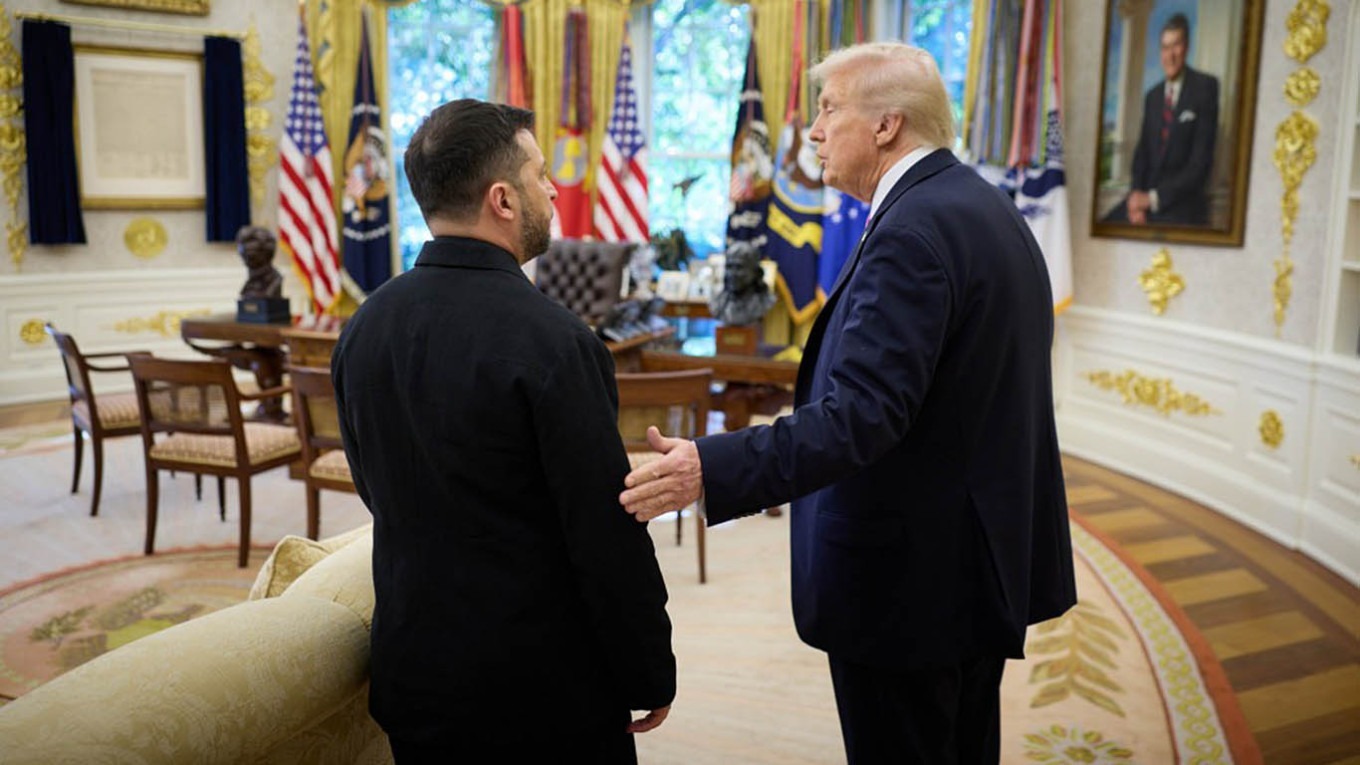
The US administration is working on a new peace plan that demands significant concessions from Kyiv to end the war in Ukraine.
According to information from sources familiar with the matter cited by the Financial Times and Axios, the draft, prepared with the participation of Steven Witkoff and Kirill Dmitriev, proposes that Ukraine cede the entire Luhansk and Donetsk regions (Donbass) to Russia and halve its military presence.
New borders on the ground
According to details published by Axios, the plan demands the withdrawal of the Ukrainian army from 14% of the Donbass territory it currently controls. The goal is to transform this area into a “demilitarized zone” where neither side will station soldiers or weapons.
In return, Moscow would freeze the front line in the Zaporizhzhia and Kherson regions and could agree to return some territories if negotiations progress successfully.
Under Trump’s plan, the US and other countries would recognize Crimea and Donbass as Russian territory.
Although Ukraine would not be formally required to recognize this situation, Kyiv would be required to accept Russian as a state language and lift restrictions on the activities of the Russian Orthodox Church.
The Financial Times reports that the plan includes banning certain types of weapons for the Ukrainian army, halting the supply of Western-made long-range missiles, and preventing the deployment of any foreign military forces on Ukrainian territory.
Kyiv is “concerned”
Financial Times correspondent Christopher Miller claims that Trump’s proposal is “tantamount to Ukraine’s surrender.”
A source speaking to Axios explained the logic of American officials: “Ukraine is going to lose Donbass anyway, so it’s in their interest to make the deal now.”
Officials in Kyiv find Trump’s proposal “unacceptable” in its current form. American officials have reportedly communicated the details of the plan to Rustem Umerov, the head of Ukraine’s National Security and Defense Council.
As part of the process, Steven Witkoff was scheduled to meet with Ukrainian President Volodymyr Zelenskyy in Ankara. However, Zelenskyy canceled this meeting.
According to a Ukrainian source who spoke to Axios, Zelenskyy wants to discuss Trump’s plan with European leaders.
An American official stated that Zelenskyy brought his own plan to Ankara, which was agreed upon with EU countries, but that this plan would never be supported by Russia.
Who are the architects of the plan?
The Wall Street Journal wrote that US Secretary of State Marco Rubio, the President’s Special Representative Steven Witkoff, and Trump’s son-in-law, businessman Jared Kushner, are working on this new plan to resolve the conflict between Moscow and Kyiv. NBC confirmed that Vice President J.D. Vance is also involved.
According to published reports, this team has held consultations with Kirill Dmitriev, the Russian President’s Special Representative for International Cooperation. Dmitriev reportedly traveled to the US at the end of last month and discussed the concept with Witkoff.
WSJ sources note that the Trump administration is following an approach similar to the Gaza resolution process: preparing a comprehensive plan and then pressuring the conflicting parties to accept it.
The newspaper states that the work began after Trump instructed his aides to prepare new proposals that “contain incentives for both sides.”
For Russia, this incentive is defined as the resumption of economic relations with the West, and for Ukraine, it is reconstruction aid.
A senior American official told NBC, “The plan aims to provide security guarantees to both sides to achieve a lasting peace. It contains elements that Ukraine wants and needs.”
The official stated that the plan has been in development for several weeks and has received Trump’s approval.
According to the FT, Kyiv is demanding substantial changes to the plan. In a statement regarding the media reports, Volodymyr Zelenskyy signaled his readiness to cooperate with Washington, stating that “only Trump and the US have enough power to finally end the war.”
Kremlin spokesman Dmitry Peskov argued that there have been no “innovations” since the meeting between Vladimir Putin and Donald Trump in Alaska.
“No, in this case, there are no innovations in addition to what we call the ‘spirit of Anchorage’,” Peskov said.








Diplomacy
We are no longer in 1992, the US has lost its military superiority, Ret. Lt. Col. Davis says
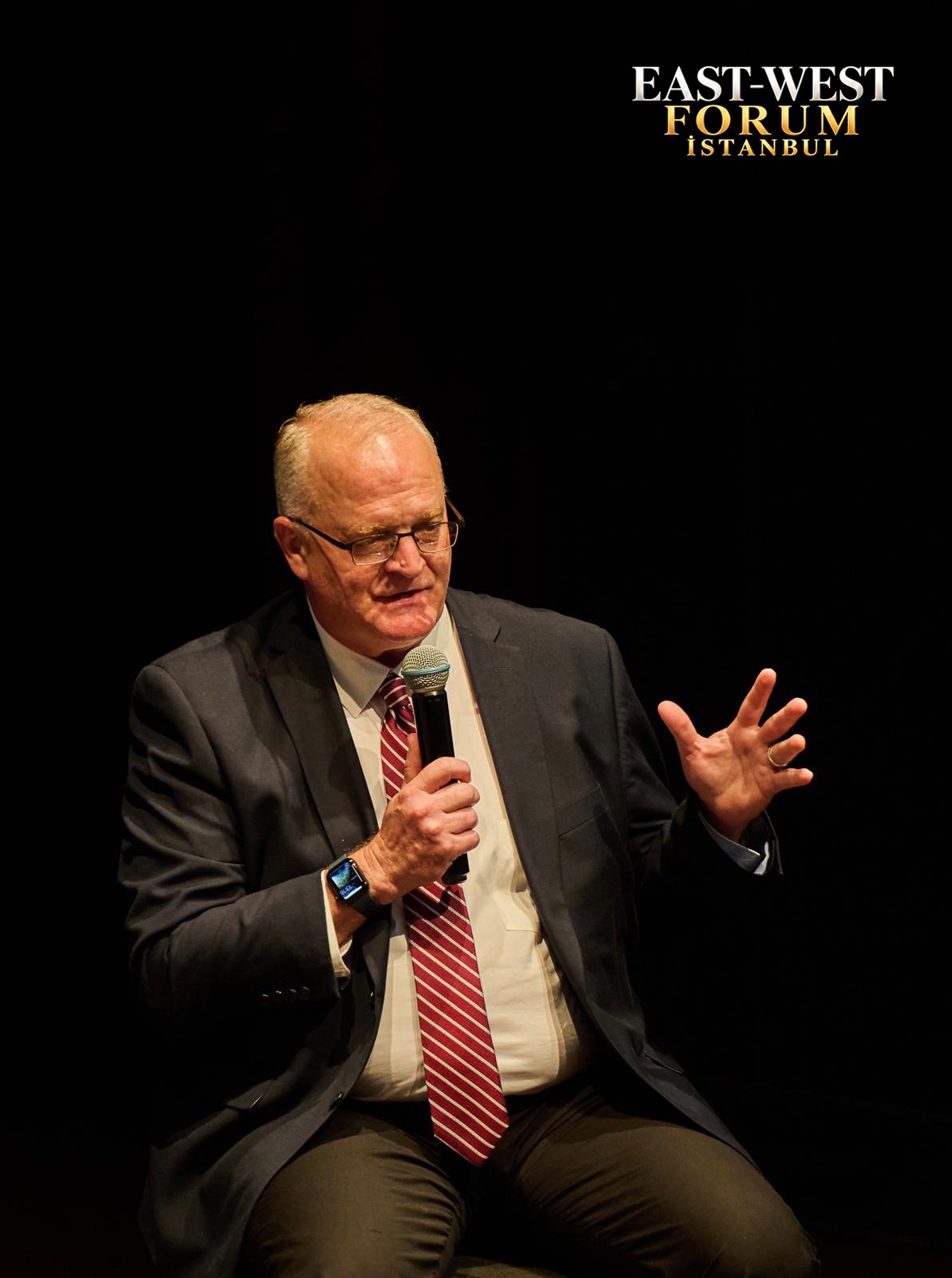
Editor’s note: In a presentation delivered at the East-West Forum in Istanbul on September 26, retired US Army Lieutenant Colonel Daniel Davis argued that Washington has lost its post-1992 unipolar military superiority. Stating that the American administration and its European allies fail to read new military realities, Davis noted that China, Russia, and Iran are fully aware of shifting balances. He stressed that UAV systems such as the Bayraktar TB2 rendered conventional armored warfare doctrines obsolete in the Karabakh War and on the Ukrainian front, while the US has fallen far behind its adversaries in the unmanned systems race. Pointing out that Iran has built a formidable line of defense with underground mountain facilities and ballistic missile capabilities, the senior officer noted the necessity of returning to realistic diplomacy rather than military impositions.
So I have some breaking news to report. It is no longer 1992. Apparently I have to break that news because there are Those in Washington D.C. and in Europe that don’t seem to know that in 1992 the United States had just finished Operation Desert Storm where it completely took down the military of Iraq in just record time with its coalition.
The Soviet Union had just disbanded, the Warsaw Pact had disbanded. The surviving Russian military was. Its navy was rusting in ports and it couldn’t do anything on any conventional level. It had its nuclear weapons, of course, but on a conventional level it was nothing. China was still basically an infantry based army.
And so up until that point, the United States was definitely the supreme military power all on the on the global stage, we could deploy power better than anybody else. We could use it conventionally. And of course, we had our nuclear weapons.
It’s not 1992 anymore. The United States acts like today. It’s still 1992, and we are still this unipower military power dominant. But China’s not confused on this point. Russia’s not confused on this point. Now Iran is not confused on this point. They know that we are no longer the most powerful military force on the planet.
And you’ve had President Trump, you’ve had Secretary of War Pete Hexth, the Speaker of our House, Johnson. They commonly and routinely say we are the most powerful military force on the planet in history. Nobody else is even close. Well, there’s a lot of people that are close, but they’re close. Like on the other side of us right now.
We’re still trying to operate in the 21st century militarily, like it’s still the 20th century. We’re behind the scales here, and that has enormous implications.
You can’t be a unit power force, and you can’t tell people what they’re going to do, and you can’t try to dominate over people unless you have a military to do it. We no longer have that military. And it’s now becoming evident to everybody except us.
And, and that is so dangerous because if our leaders believe what they’re saying, that we’re the most powerful military, we can do whatever we want.
And unfortunately, one of the worst examples of that appearing to be true was Venezuela. So President Trump had what a colleague of mine called catastrophic success. He thinks that he was told by many people there could be a lot of problems with it, and there would have been if Venezuelans had actually fought.
But, but because we had some insider information and some people cooperating on the inside, it was basically a bloodless, near bloodless coup. There was still about 80 people that got killed. So definitely wasn’t bloodless for them, but it was a big success for Trump.
And so he came to the conclusion that all the people who said, all these naysayers said it would be a problem, it would be difficult, it would turn into a new Vietnam, something like that. They’re not. They’re nuts. So now then, he thinks everything will work.
And so he’s operating on this belief that we could go into Iran, that we could maybe go into Cuba, maybe go at least up until recently, maybe Greenland. Basically, he sees there’s. There’s nothing that we can’t do.
But we have now proven graphically that that is not true. And you know, and you and I were talking about this a couple of days ago.
To me, as a, as a former tank officer, I fought in a Desert Storm. Just so you know, I fought in the biggest tank battles Since World War II up until that point, the Battle of 70 Easting, I was the second in command of an armored cavalry squadron for the U.S. 1st Armored Division in the, in the 2000s in Germany. And so I was responsible for training and getting ready for combat. And then was the modern war.
So that was after the 2003 Iraq war that we fought, which was also conventional. It’s also not 2003, by the way, because in those fights we didn’t have to worry about an enemy that had air force, drone force, ballistic missile force. We didn’t have to worry about any of that kind of stuff.
The war that I fought in in 2000, my first one in 1991 in Desert Storm, we couldn’t do that today because of the presence of missiles, as Iran has absolutely graphically shown.
But in 2020, the Armenia, Azerbaijan War and the Baktiyar 2 drone, et cetera, showed that conventional warfare had radically changed forever. I thought there’s going to be a radical transformation in the U.S. army, especially our ground forces. And I thought ground forces all over the world, I thought everybody is so.
But you can never again fight on the ground the way we did even as recently as 2003 in Baghdad. You just can’t do it anymore because now you mass formations on the ground and armor, it doesn’t matter how good your tanks are, they’re going to blow up. And same with armor, so you can’t move in mass anymore. So you’re going to have to come up with some new ways to fight.
Russia, to my surprise, didn’t get that memo because when they had their initial operations into Ukraine 2022, they were still behind the curve. Ukraine was actually ahead of them at that point. They had, in fact, they used the Bakyar 2 drones in the early phases to significant effect.
Russia came around though. They definitely figured it out. And now then they are, in my view, the global leaders. Now Ukraine is very close and they’re really good at this sort of thing. But I think Russia has overtaken them, certainly in mass and scale.
We’re way behind. We’re still in the, in the 20th century. We haven’t even caught up. We’re just to show you we’re thinking now we would like to have at the end of 2027, about 300,000 drones of various types.
Russia’s making that many in what, two weeks? Something like maybe less than that. And Ukraine as well, even with their limitations and far cheaper, way cheaper. That’s just as important. So our mentality is still like a snail’s pace. And so we don’t understand it.
Well, we can’t do this, tell everybody what they’re going to do anymore, but we’re still trying. So President Trump won’t use the leverage he has to end the Russia, Ukraine war.
And he keeps having this fiction that we can keep helping them strike deeper into Russia and to make it more difficult than with some fantasy that that’s going to cause Russia to say, all right, I tell you what. Sure, go ahead. We’ll do whatever Ukraine wants to do. We’ll end it on their terms here. It’s absurd to even say, but that’s what we’re acting like.
Even more absurd in a certain sense is our war against Iran right now. I was screaming this from the rooftops before the war started, that militarily it can’t be won.
If you look at what the Uranian defensive systems are and in their attack systems with their ballistic missiles and their drones and a lot of the technology they got from Russia, which Russia improved upon and then probably returned some of that technological capability.
So Iran has this ability, they Learned from our 2003 war, that don’t put all your factories on the ground that can be easily hit by American missiles, put them under the mountains that we can’t reach. And they did all that.
And so now they have shown that whatever they shoot, they’re going to hit whatever our defensive capabilities are with PAC 3 interceptors or THAAD interceptors. It’s not sufficient. And Iran can hit whatever they shoot.
It is. It is remarkable how much restraint Iran has shown up to this point, because they could already have burned the Middle east down, which would have catastrophically impacted all of our national security and economic security for the world. They haven’t done that yet.
But you see President Trump in his nice speech that he gave the other day at the United Nations General assembly, which you may have seen some of you, that something I published on that right afterwards.
I was humiliated as an American and angry because I think of some of the great Americans like John Kennedy and Eisenhower, who had made some great speeches about, let’s find a way to get together with people. It’s work, peace and all this.
And now that here he’s setting himself up like a godlike thing that I can either grant peace and security for Iran or annihilate their country. And of course, that almost certainly means nuclear weapons, because you can’t do it conventionally.
He didn’t say it out loud, but whatever he was thinking, he’s thinking that we can and we can’t. We can kill a lot of Iranian people, no doubt about that. But you can’t take out their military capacity or prevent them from having a catastrophic impact on everywhere else.
The United States has got. I pray to God can come to sober recognition. It’s not 1992 anymore. And we can’t just tell people what to do.
There’s still an out. There’s an out in the Russia, Ukraine war, there’s an out in the Iranian war if we’ll sober up and take it. And we don’t even have to surrender. We just have to acknowledge reality.
But if we don’t, if we keep going down and thinking that we are this, this unipower, it’s still 1992 and we can, then everybody else has to do what we tell them, then it’s going to be catastrophic for everybody.
And I’m almost surprised more at the Europeans than the Americans. I’m disgusted about what a lot of the American leaders are doing, but I’m puzzled about the Europeans because this stuff is self evident. It’s not hard to see.
They, you see what we’ve tried to do, what we failed to do. And I’m talking like through nearly five years in Russia, Russia, Ukraine, war, and then all these years in Iran and none of it is militarily working. And yet we keep claiming the next time it’s going to work.
And you know, Trump, if they don’t do this, then I will not. You can’t. And it would. You see, Saudi Arabia, they recognized that that wasn’t going to work and they begged Trump not to attack the last time because they knew they were in the crosshairs and they could be devastated. And who knows if they’re going to survive if they lose their oil capabilities.
It is time for us. And that’s why I’m so excited about this opportunity here. That’s why I didn’t hesitate to come to this, because we’ve got to get recognition that we are not this military dominant power that can do anything at once.
And that’s good, because if you think you can, too many people die because you just say, if you don’t do what I tell you, I’m going to kill you. That’s not diplomacy.
A lot of the stuff we’re doing with Iran is not diplomacy. We’re saying, if you’ll agree to our terms, we won’t kill you. That’s not diplomacy.
And now then they have the ability to resist and they’re going to. And Russia is not going to just give in to that and say, okay, yeah, sure, if you say you’re going to hit us, then yeah, we’ll just do whatever you say. They’re never going to do that. It’s an existential threat for them too.
All of these things are self evident. And I just pray to God that we can find some way to come back to sanity before it’s too late.
Because there’s too much chance for a nuclear threshold to be crossed in both the Middle east and in Europe. And that would be catastrophic for all of mankind, no matter where it comes from.
Diplomacy
Middle East faces insecurity, massacres, and genocide; Iranian diplomat Soltanieh declares
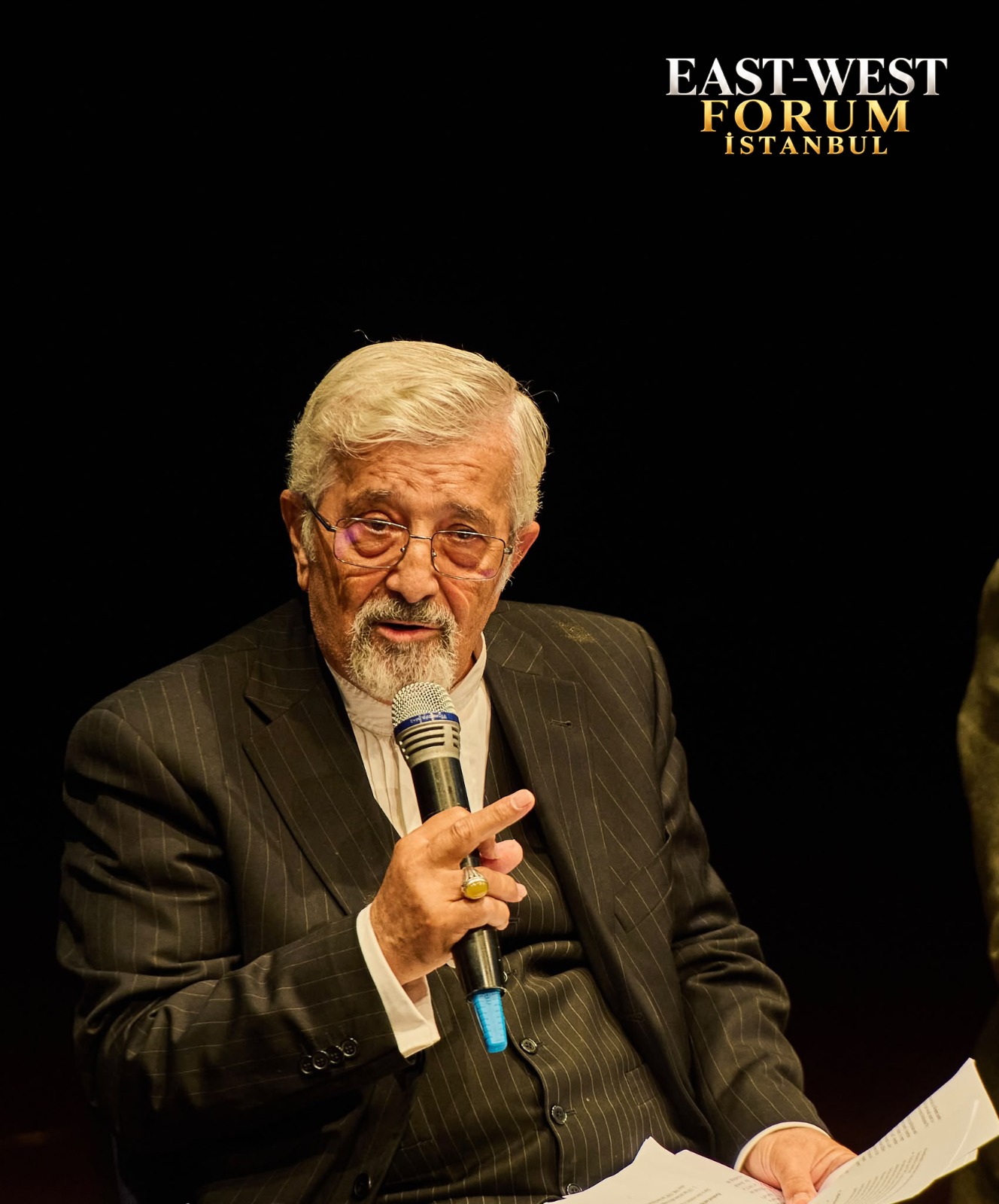
Editor’s note: In his address at the East-West Forum held in Istanbul on September 26, Ambassador Ali Asghar Soltanieh, Iran’s former representative to the IAEA, nuclear scientist, and diplomat, examined the unraveling of Western hegemony and the dynamics driving the transition toward a multipolar new world order. Drawing on more than four decades of international diplomatic experience, he shared firsthand accounts of how global bodies such as the UN, the IAEA, the CWC, and the BWC have been weaponized, particularly by the US and its Western allies. He stressed that the Middle East has been forced to pay the price for historical European crimes and antisemitism through the expulsion of Palestinians and the ongoing genocide in Palestine. Furthermore, he presented concrete instances showing how the NPT regime and international nuclear inspection mechanisms are applied with double standards favoring the West and Israel, with Israel’s acts of aggression being actively covered up by these very institutions.
In the name of God, the most gracious and the most merciful distinguished colleagues,
At the outset allow me to express my sincere appreciation to organizers, Harici and European Transcontinental Initiative, for invitation to this important conference, at this crucial historical time juncture in the fragmented world, and to wish a successful conference.
Some scholars are of the view that we are at the verge of the End of the Western Century and beginning of a Post-Hegemonic World Order.
The simple question is: How has the historical relationship between East and West evolved from Western imperial and liberal dominance toward a contested multipolar order, and how can the transition be managed without reproducing the cultural homogenization, geopolitical confrontation and technological domination associated with hegemony?
In order to make a careful analysis of the “Transition of the East–West Relations, From Western Hegemony to a Multipolar World Order”, one has to identify the main characteristics in Western domination structure that caused it to undermine itself, which in turn would point to some key features in the building block of a new Eastern-oriented Multipolar System.
The emerging multipolar order should not be understood simply as the replacement of western (mainly American) hegemony by Chinese, Russian or another national hegemony. Rather, it represents a deeper contest over the political meaning of modernity itself: whether the future international system will continue to be organized around a universalizing liberal model historically associated with the West, or whether different civilizations and political traditions will coexist within a pluralistic system of states. A peaceful transition will depend not on the restoration of unipolarity or on a new “clash of civilizations,” but on reconstructing international institutions around political equality, cultural pluralism, strategic restraint, technological governance and social solidarity.
In this paper the new world order is analyzed from the prism of West Asia, nowadays known as Middle East.
It has to be recalled that bitter fact that European Jewish communities experienced centuries of discrimination, persecution and antisemitic violence.
European antisemitism created conditions in which the search for a secure Jewish homeland became increasingly urgent. In fact, western powers decided to expel almost all Jews from Europe to the Middle East, to establish a western entity in the heart of East, West Asia, Middle East, by expelling millions of Palestinian from their homeland. Since then, Middle East is facing continuous insecurity, carnage and lastly genocide, in a nutshell Middle East is paying the Price for crimes in Europe.
Given the over 40 years of experience in multilateral diplomacy, working closely with UN and other international organizations, I was asked to focus my analysis on performance of such international institutions during so called “World Order or the Post World War-II era”. The following are part of my own memoir with well documented evidences on instrumental uses of western countries, mostly United State of international organizations. They are neither the position of Iran nor that of VIIMES:
Having in mind the inherited shortcomings of the UN Charter, statutes of such organizations, provisions of relevant treaties and conventions, one could easily notice very disappointing record of negative performance of UN and other international organizations, due to western countries manipulations and imposed obstacles.
I just try to inform distinguished participants some real events which I have personally been involved and witnessed:
Based on text of NPT, it is the most discriminatory security treaty, dividing its parties into “Haves “ , P5, and “ Have Nots”. NWSs are exempted from any inspections by the IAEA. Its article 6, calling for nuclear disarmament has no deadline, no accountability.
Countries of NAM (Non-aligned Movement) proposed a paragraph on Banning nuclear tests for the final document. US, UK, USSR, the 3 Nuclear possessors and party to NPT opposed.
Note: France and China had not joined NPT then.
After 8 hours negotiation until 4 am, at the sideline of the plenary, at the Mission of Sweden, between 3 representatives of NAM, including myself, with representatives of three NWSs, no agreement was made, due to objection of US delegation even to Chair proposal which all agreed to go along with. Therefore, the Conference could not have final document and failed.
NAM, specifically countries in the Middle East emphasized on Establishment of Nuclear Weapons Free Zone in ME. I recall Iran and then Egypt originally had proposed in 1974. Western countries, specially US agreed with condition of indefinite extension of NPT, which would have expired after 25 years. As today, US has not only not complied with the 1995 obligation, but has prevented any other attempt in this regard, to fulfilling Israeli demands, not giving up nuclear weapons and not joining NPT.
US opposed the adoption of the agenda of conference which included the tradition f item of review the implementation of decision of last Review Conference in 2000, since the conference had adopted 13 unequivocal undertakings for nuclear disarmaments. The Conference collapsed.
The first time, after intensive negotiations, the conference accepted by consensus to convene a conference on “Nuclear Weapon Free Zone in the Middle East “ in 2012. After 2 years preparation, shortly before the conference planned to be held in Helsinki, the US (Obama Administration, who has adopted the decision in 2010) unilaterally indefinitely postpend the conference, with disregards of all state parties, in order to satisfy Israel.
The Conference collapsed due to objections of US , UK and Canada to the text of Nuclear Weapon Free Zone in the Middle East.
IAEA was established after the Moto of “Atom for Peaces” by President of US, the only country used nuclear weapons in history. Since then, quantity and quality of US nuclear arsenal have been drastically increased. More countries have joined nuclear club!
IAEA Members States are 3 groups: NNWS parties to NPT subjected to IAEA Safeguards, NWSs parties to NPT (P5), and Non- party to NPT (India, Pakistan, Israel, North Korea), exempted from any inspections. Absolute discrimination
IAEA safeguards, inspections which has to be “Nuclear material-oriented Safeguards” is changed into “Intelligence information-oriented Safeguards” which in in full contravention with the spirit and letter of the IAEA Statutes.
Number of seats are 35 as was the case over 40 years ago, 10 seats called “designated seats” are permanent, and their distribution is in favor of the West. Impartial analyses shall show the murky records of its decisions/resolutions, which have politicized and polarized this so-called international technical organization. The organization expected to promote peaceful uses of nuclear energy has turned into self-styled UN Watchdog with discrimination among member states, P5 and 4 others are exempted from any inspections while others are under comprehensive safeguards, and even a couple of them such as Iran are under the most intrusive inspections much beyond the routine safeguards. The IAEA has shamefully been blocked from conducting preventive or remedial actions in cases of military attacks against peaceful nuclear facilities under its full scope safeguards. Provisions of the IAEA Statutes on structure, mandate, and authority of the Board of Governors has to be reformed by Amendment Conference.
Attacks against nuclear facilities under the IAEA safeguards:
The taboo was broken for the first time ion history by Israel, attacking Iraqi research reactor under construction by France, in 1981.
During the IAEA General Conference in 1982, the US threatened that f a resolution condemning Israel violation is passed, US shall; withdraw from Agency’s membership thus almost 25% of budget will disappear! Iran, myself as representative was sure it was a bluff since US shall not leave IAEA, it need it to put pressure on developing countries, proposed that if US leave, it will compensate financial gap, thus encouraged like minded countries, in the ME and NAM at large to support the draft resolution, even if was proposed by Iraq, Sadam regime, having war imposed on Iran. The resolution passed, US and French delegations left conference room as a protest to decision by General Conference, but continued membership!
Sadam Regime several times attacked Bushehr Nuclear Power Plant in Iran from 1984 to 1988, but neither the IAEA Board of Governors, nor the General Conference condemned, since the whole west were supporting Sadam Regime.
During General Conference in 1990, I propose a resolution which was adopted. According to the resolution 533, any attack and threat of attack against nuclear installations under IAEA Safeguards, constitute violation of UN Charter, IAEA Statute, and international law, and UNSC has to immediately act. All member states are called upon to assist the attacked country.
Israel attacked Syrian site under the pretext of constructing a research reactor, not nuclear weapons. Despite all inspections made and IAEA was not able to definitely prove the allegation, the western countries, US and EU proposed a resolution to the Board of Governors, which was marginally, with only 17 votes, approved. Rather than the aggressor, Israel, the attacked country was sent to UNSC.
Israel and US attacked all nuclear facilities under full scope safeguards in June 2025 and again after February 2026. The IAEA Board of Governors and the Director General did not passed resolution or condemned the aggressions which were in full contravention with IAEA resolution 533.
Note: In a clear double standard and hypocrisy, US and EU summitted a resolution against Rusia on Ukraine Nuclear Power Plant, based on resolution of 533 of 1990, which I proposed, and S and some EU members voted against it then.
Paradoxically, Board of Governor in its recent session decided to remove Syrian issue from agenda after almost 2 decades, under the unfounded technical allegations, since western countries has good relation with new Government. Double Standard and proof of politization of the IAEA
After Chernobyl Nuclear Accident in 1986, negotiation on drafting two conventions, “Early Notification of Nuclear Accident”, and “Emergency Assistance in Case of Nuclear Accident” was intensive held in Vienna, where I was representing on behalf of Islamic Republic of Iran.
The first week, US and Russia announce that both should be exempted from reporting any accident in their nuclear facilities. I rejected any discrimination, specifically by exemption of countries having very active nuclear activities and facilities with more probability of nuclear accidents which shall have transboundary release of radioactive material to other countries in world.
I am proud that after 3 weeks of political challenges, finally they were forced to compromise, and we sat together and prepared the text of article -1 , on scope of the convention accepted by all member states.
Sadam used chemical weapons. About 100 thousand Iranian were killed and injured. Undeniable published documents are available that western countries gave Chemical weapons to Iraq.
Islamic Republic of Iran actively participated in negotiation on Chemical Weapon Convention (CWC) in Geneva, signed and approve it. US and Russia did not destroy their huge chemical weapons, within 10 years dead line envisaged by the convention, thus asked General Conference to exceptionally extend time, bad precedent. Russia did so, but used even went beyond the dead line.
Syrian join CWC, with encouragement of Russi and Iran. It compromised its national security, since Israel has not joined the CWC, for the sake of international security. While parts of Syria were under the control of foreign forces and terrorist, it obviously could not give complete declaration. Western countries created political tension and agenda at the OPCW, to put political pressure on Assad Government. Now the agenda on Syria which involved the OPCW, under technical pretext, obviously with political motivation for over a decade, will be removed since wester countries have good relation with new government.
Almost 10 years of negation on Protocol for Biological Weapons Convention (BWC) in Geneva, aiming at establishment of an international organization, similar to the IAEA and OPCW, collapsed, by US official objection in 2002. The rolling text is now in archive. Absolute disregards for all countries genially opted for disarmament of WMD. Had the such organization been established, it could have helped the world public, facing panic with thousands of dead as the result of Covid outbreak. Being involved in that negotiation, I proposed our EU counterparts to let establish the said organization based on Rolling text, though US is absent, but they privately said that bioindustry in EU will not permit governments to do so, as long as their competitors in US are not covered by the protocol of the BWC. This is another indication that such humanitarian safety and security concerns have no place in western policy.
Due to time constraint, it suffices just to remind some factual cases:
UN has not been able to implement its resolution, on Palestine Statehood since 1948. UNSC has been blocked by US veto, and General Assembly resolutions are not legally binding! Insecurity and bloodshed in the Middle East continue.
UNSC was paralyzed during 2-year genocide in Gaza by Israel, was not even able to force a ceasefire, since US vetoed the resolutions in this regard.
US was humiliated by Israeli Ambassador, who put the Charter of United Nation in shredder machine, in the General Assembly.
ICJ and ICC ruling on Genocide in Gaza has not been implemented, as the results of defiance by most of western countries.
At the General Assembly, this week, US President officially declared the intention of his country for total annihilation of a UN member state, Iran, which is flagrant violation of UN Charter, specifically article 2. EU and other western countries kept silence.
Exceptional developments such as emergence of new multilateral institutions, the Shanghai Cooperation Organization and BRICS shall have serious impact on the process of such transition, with colorful contributions of new eastern emerging powers.
The transition from Western hegemony to multipolarity will have little historical meaning if it merely replaces one form of external domination with another. Its deeper promise lies in creating an international system in which East and West can participate as historically distinct, but coexisting in equal footing with mutual respect.
UN and other international organizations, institutes of Post World War -II so call “World Order”, have continuously instrumentally used mostly by western counties, therefore lack utility and stalemate. There is an immediate need for a fundamental reform, and establishment of a new Multipolar order is a must.
Memories of centuries of peaceful coexistence of followers of three Devine religions, Judaism, Christianity, and Islam shall be revitalized in the Middle East.
Scholars enlighten the public to stand vis-à-vis the status quo and make a new world order based on justice and equality in order to create sustainable Peace and Prosperity in the Middle East and World at large.
Thank you for your kind attention.
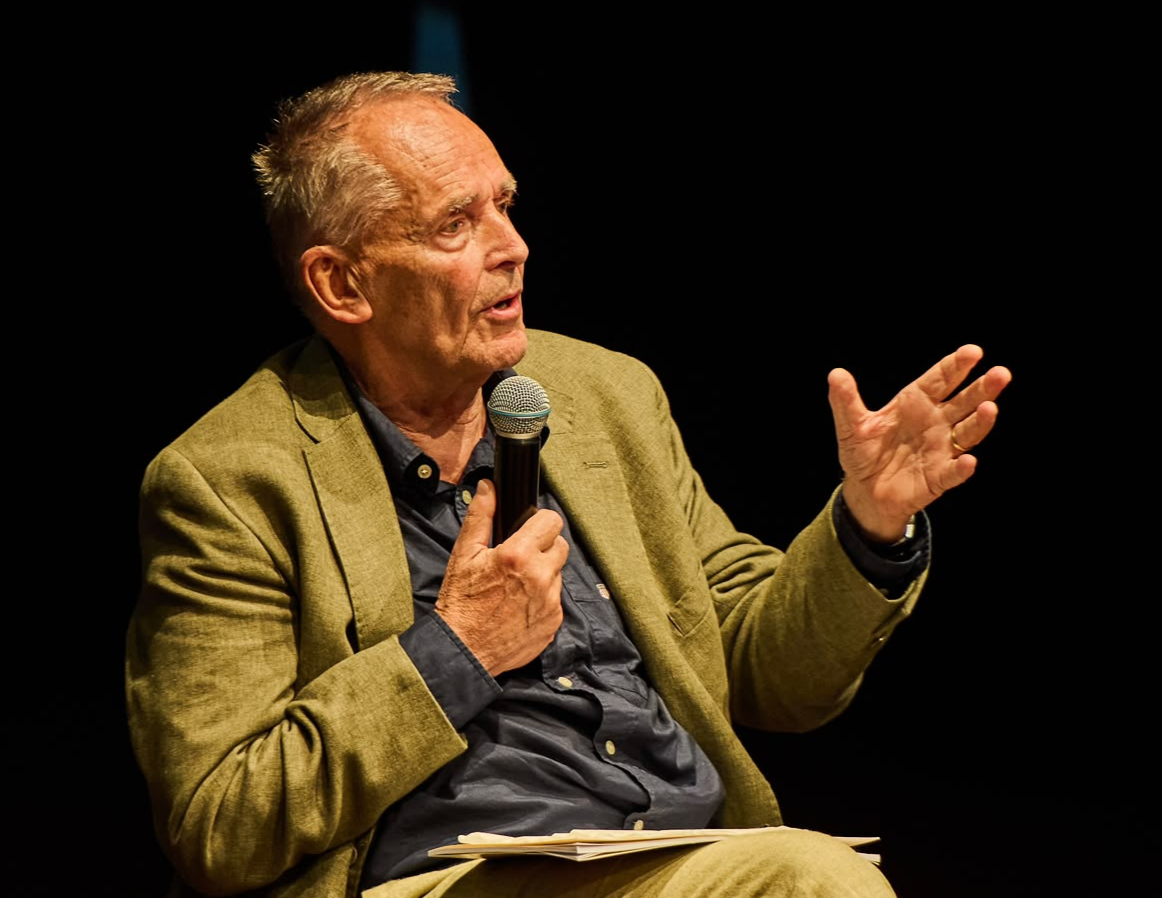
Editor’s note: Speaking at the East-West Forum held in Istanbul on September 26, Michael von der Schulenburg, Member of the European Parliament and former Assistant Secretary-General of the United Nations, offered striking assessments of the European Union’s current trajectory. Schulenburg stated that the Union, established after World War II to build peace, has now abandoned this mission and surrendered entirely to a war-driven rhetoric. He pointed out that Europe, while grappling with structural challenges such as scarce resources, high energy costs, deindustrialization, and a demographic crisis, has been left confronting a ring of active conflicts along its borders. Emphasizing that Brussels has lost its capacity for diplomacy and mediation, the senior diplomat stated that the 27 member states lack the flexibility and collective will to sit at the negotiating table with Russia.
I’m not an academic, as you said. I’m coming from the real world of wars and peace, and I spent all my life outside Europe, actually, but the last two years I spent in the European Union, and I’m quite shocked what I see there. The European Union, as you know, was founded after the Second World War as a peace project.
A peace project, not to repeat the Second World War, bring countries together in Europe, but also reflect to the outside world that there is a sort of peaceful integration where you don’t have to have war. That has completely changed. When I listen today in the Parliament or on the line, actually, war is the main theme of the debate now in the European Union.
I would now characterize the European Union as an organization that is in complete denial of reality, of complete denial of reality, and therefore is completely unable to do any policy. And when the question here in the seminar is whether there is a contribution to the new world order, it will surely not come from the European Union.
Let me just make some comparison, which is closer to my job. When you compare the European Union to the United States, China and Russia, then the European Union is surrounded by most of the wars in the world, active wars. No other of these countries have so many wars around them. And even we have the problem that the United States starts wars like the Iran war and others, and they withdraw over the Atlantic.
But the consequences of the wars will stay next to the European Union. I think about Iran, I think about the many wars Israel does, from Syria to Lebanon to West Bank, Gaza. But I think also about the war between Yemen and Saudi Arabia. And then behind them, there’s all these conflicts in Africa, Mali and so on, and of course, Sudan. And the worst, of course, for us is the Ukraine war, because it’s on our own continent.
When you compare the European Union to the other three powers, you also realize that we are probably the place which have the least natural resources. We have a huge demographic problem. We have a demographic transition in our country, which we like not to speak about, but it will have an enormous influence. We have the most expensive energy. We have lost our comparative advantage. We have deindustrialization. And of course, we now lose what actually made Europe so special in the world, our social system.
You would assume that the European Union, and with this one, I don’t mean only the institution, but also the member states who have created what they call a common foreign and security policy would have be very strong because they would have to react to what happens around them.
Oh, forgot the United States, of course gripping now Greenland because I think that the agreement they just signed is the first step of taking over full control of Greenland. I mean we should not have any. And that’s a European territory. I mean what does the European Union does they have no foreign policy, they have no security policy, at least not that I can detect. They have a lot of political statements. They’re usually full of rearm Europe that we have to finally to become a military power. And they are full of moral.
And you know, in the UN we say always who speaks about war, moral wants war and those who speak about interest look for a solution. There’s nothing speaking about interest in the I can detect in the European Union. So it’s very, very worried. You know, this whole moral. Of course somebody who always thinks that I’m the moral superior is always very close to hypocrisy. And it’s actually sometimes really painful to listen to all these arguments.
But in a sense we have no policy to something which is actually for the European Union, for its future life threatening all these conflicts around them. You cannot speak to anybody. We don’t see anywhere we sit on the table of negotiations. Nowhere we have a proposal, nowhere we try to interfere on saying maybe we can mediate or anything.
There’s nothing of the sort anymore. And despite the fact that the foreign service alone of the European Union not to speak about the member states cost $1 billion a year, $1 billion. I don’t know what they do. I’ve met them in the field. I have no clue what European diplomats do. Anyway,
the most important thing is of course Ukraine. I mean it’s in our continent. If you are in such an insecure situation as we are, I mean the first thing one should come to mind that we need peace on the European continent. Then maybe we can also deal with the others.
Having peace in the European continent means that we have to talk to Russia, we have to negotiate, we have somehow to find a solution to the conflict. But we can’t. We are so blocked in ourselves that we were unable, we would be unable to have a negotiating position with Russia because the 27 countries cannot agree on a changed policy.
They cannot agree on what person should do in negotiations and they would never agree to give this person a certain flexibility people need when they do peace negotiations. And even if you think the E3 take the lead, the interest of the E3 is so completely different that it will not that is even more dangerous because the British would hate anything which is peace with the east because they look to the Atlantic and they see this since 1850, I think, as a great danger.
Germany would be the greatest profiteer from these things, but behaves, of course, irrational, most irrational. And the British would. The French would probably also not like it because the link to Russia and things like this would be of enormous economic and political benefit for you. So we don’t have anything.
What I want to say conclude with this whole thing is that the European Union will be a factor of instability in the world for a long time to come. I think as we go along, it will have also instability within its own borders. It is very sad to say. So the peace project of the European Union has been lost. And this loss of peace, we will all have problems that will make future generations suffer. Thank you very much.
East-West Forum in Istanbul to debate multipolarity and global order

We are no longer in 1992, the US has lost its military superiority, Ret. Lt. Col. Davis says

Germany expands North Sea military ports and plans new naval base

Musk appointed co-director of Pentagon future warfare initiative

US waives human rights terms on $320m military aid to Egypt

Putin says Russia did not start war and warns of nuclear risks
-

 Europe6 days ago
European unions urge governments to scrap all Palantir deals
-
 Diplomacy6 days ago
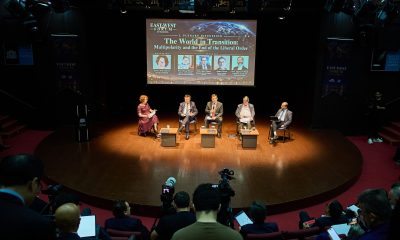
East-West Forum in Istanbul highlights irreversible shift to multipolarity
-
 Europe1 week ago
Emmanuel Todd says West faces collapse amid Ukraine and Iran crises
-
 Diplomacy1 week ago
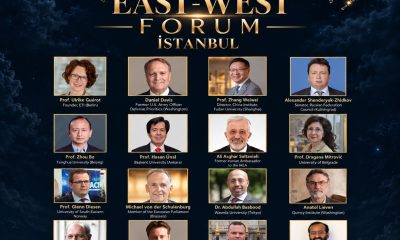
East-West Forum in Istanbul to debate multipolarity and global order
-
 Europe2 weeks ago
European intelligence chiefs divide over risk of Russian attack
-
 Middle East2 weeks ago
Sharaa says 7 October must not shape Israel policy on Syria
-
 America2 weeks ago
Republican support for Trump’s war with Iran drops sharply in polls
-
 Europe6 days ago
Rome protests AfD poster depicting South Tyrol as independent state
