
America
El-Sayed defeats Rogers to win Michigan US Senate race

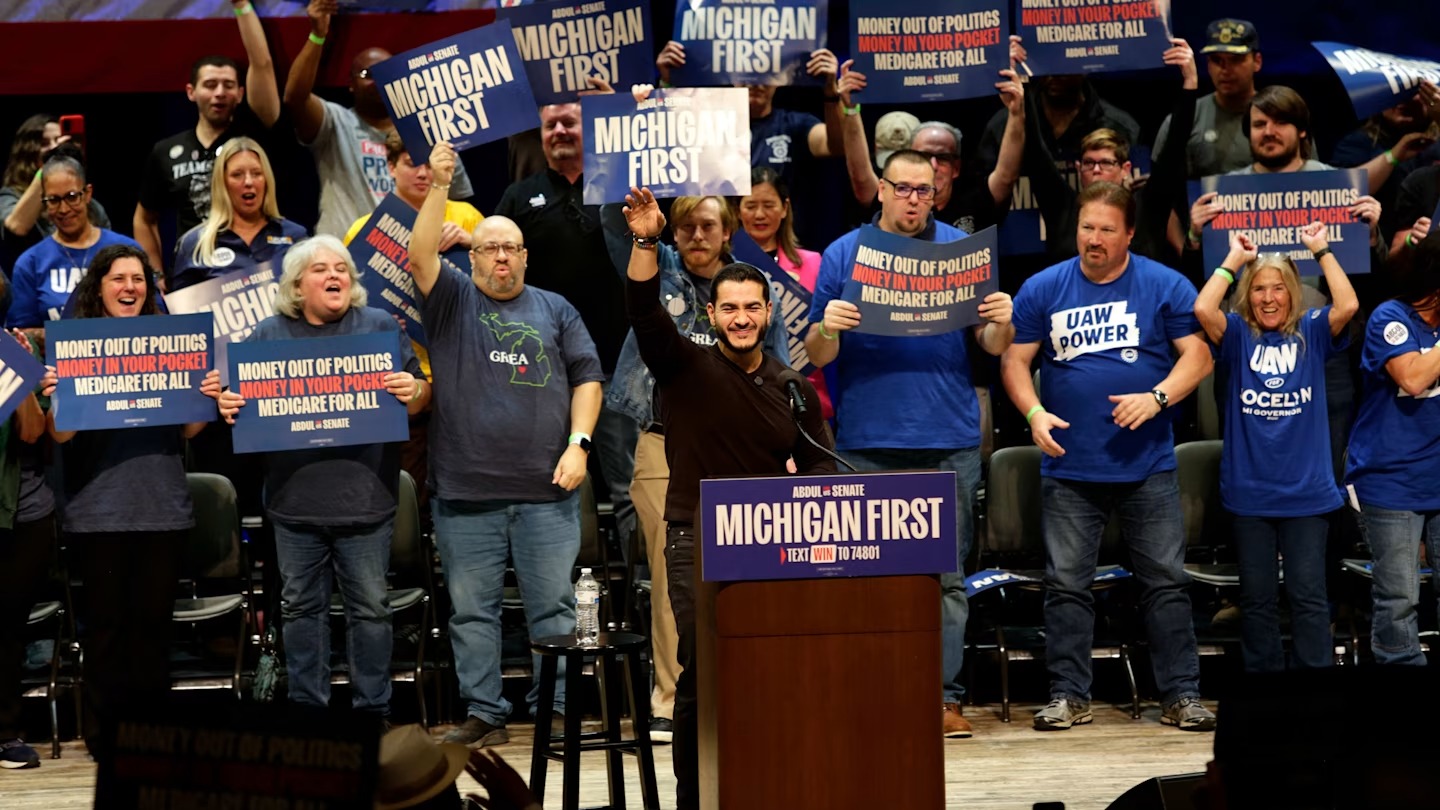
Democrat Abdul El-Sayed has defeated Republican rival Mike Rogers in the Michigan Senate race, becoming the first Muslim American elected to the upper chamber.
A physician who previously led health departments in Detroit and Wayne County, El-Sayed surpassed Rogers, a former congressman backed by Donald Trump, in a critical swing state that the president had carried narrowly in 2024.
According to ballot counts early on Wednesday morning, El-Sayed secured slightly over 50% of the vote, while Rogers garnered more than 47%.
El-Sayed’s campaign focused on healthcare and the cost of living for Michigan residents.
Democrat Representative Haley Stevens, who lost to El-Sayed in the Democratic primary this summer, had angered Democrats by making a surprise endorsement of Rogers just days before the election for the Senate seat vacated by retiring Senator Gary Peters, a Democrat.
Senior Democrats harshly condemned the “treason”, and Stevens’s staff resigned.
The Democratic member of the House of Representatives said the move was a reaction to “hate” and to El-Sayed’s ties with left-wing streamer Hasan Piker.
Stevens had previously characterized Rogers as a “rubber stamp” for President Trump’s “dangerous agenda”.
El-Sayed brushed aside Stevens’s shock endorsement, reporting that his campaign raised $1.2 million just four hours after the announcement.
Rogers, who narrowly lost the 2024 Senate race to Democratic Senator Elissa Slotkin even as Trump carried the state, sought to portray the Democratic candidate as an “extremist”.
Trump and Vice President JD Vance visited Michigan in the days leading up to the midterms as part of a final blitz across key states.
Trump went on the offensive against El-Sayed, calling the Democratic candidate a “violent terrorist” and addressing him by his middle name, “Muhammed”.
El-Sayed responded: “I don’t care how he pronounces my name. I don’t care if he even remembers my full name. Because after November, he can keep calling me ‘senator’. I’ll be Senator Muhammed to you, buddy.”
Following the backlash, El-Sayed had taken steps to distance his campaign from Piker. Meanwhile, the Democratic nominee garnered endorsements from former President Barack Obama, former Vice President Kamala Harris, and other prominent Democratic figures in the contentious race.







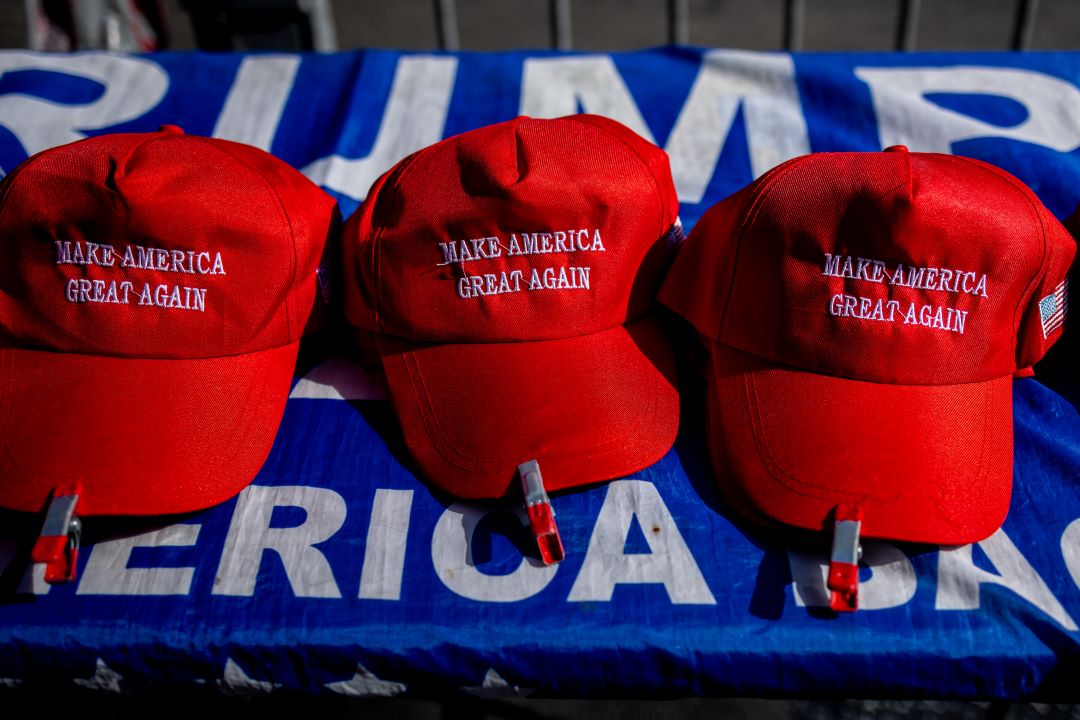
As initial midterm election results in the US indicated that Democrats were gaining the upper hand in Congress, the moderate wing of the Republican Party called for a break from Donald Trump and the MAGA (Make America Great Again) movement.
According to Fox News, the group Our Republican Legacy (ORL), representing traditional conservatives within the party, demanded following the midterm results that the party distance itself entirely from the MAGA line.
Founded by former Missouri Senator and former US Permanent Representative to the UN Jack Danforth, and chaired by former Secretary of Defence William Cohen, the group pointed to the defeat suffered by Republicans and released the following statement:
“The Republican Party suffered a crushing defeat. The American people rendered their verdict on the MAGA movement, the ‘America First’ slogan, and the policies of both the current administration and the Republican Congress.”
Debate on the post-Trump era opens within the party
Representatives of the group argued that the party must distance itself from Trump to regain a majority in Congress and retain the White House in 2028.
“Donald Trump will never again lead the Republican Party in a general election,” the statement said. “It is time to begin the debate on the future of a principled Republican Party in the post-Trump era.”
Our Republican Legacy stressed that its primary goal is to put forward a traditional candidate in the 2028 presidential election and secure their election.
The statement added: “As candidates announce their bids and launch presidential campaigns, we will seek the opportunity to back one or more leaders who share our party’s traditional founding principles.”
Chris Vance, the group’s executive director, pointed out that the 2028 campaign has already begun.
Noting that an open struggle for party control will begin soon, Vance said: “Our goal is to help select a Republican presidential nominee committed to Ronald Reagan’s legacy and ensure their election in 2028.”
Moderate conservatives focus on 2028 target
ORL was established in 2024 to prevent Donald Trump’s populist wing from gaining strength and to return the party to a traditional conservative line.
Members of the group include figures such as former Vice President Mike Pence, former Speaker of the House of Representatives John Boehner, and former Representative Adam Kinzinger.
Having recorded representation across 25 states and approximately 10,000 supporters as of April, the movement aims to consolidate the power of moderates within the party.
On the other hand, the MAGA movement that coalesced around Trump in 2016 rests on the “America First” ideology, encompassing economic nationalism, strict immigration policies, protectionist trade, and non-intervention in foreign conflicts.
Significant rifts persist within the party between traditional conservatives and radical populists.
In the midterms that began on 3 November, Americans went to the polls to decide all 435 seats in the House of Representatives, 35 Senate seats, and governorships in 36 states.
The number of early voters exceeded 50 million, surpassing the 2022 record of 45.9 million.
According to early figures from analysis portal Decision Desk HQ (DDHQ), Democrats secured 228 seats in the House of Representatives and 54 in the Senate, while Republicans remained at 139 seats in the House and 43 in the Senate.

Venezuelan armed forces reportedly attacked a National Liberation Army (ELN) camp on Friday in the Pedro Camejo area of Apure State.
According to RANE Worldview, a geopolitical and intelligence platform belonging to Stratfor, the military operation relied on US intelligence support.
Local NGO Fundaredes stated that drones and combat helicopters were used in the operation and that 19 people lost their lives, 10 of whom were identified by forensic police in the state capital of San Fernando.
Javier Garcia, Fundaredes director for Apure, claimed that the ELN used this area as a drug storage and logistics hub.
According to right-wing news portal Infobae, the strike also targeted “camouflaged drug transport aircraft” belonging to the ELN.
On Sunday, Fundaredes reported “armed clashes” involving drones in the Cedeno municipality of Bolivar State, near the operating areas of state-owned bauxite mining and processing company BAUXILUM.
According to Fundaredes, local miners were forced to leave the area and operations were temporarily suspended. However, the NGO did not specify who carried out the attacks.
At a press conference on Monday, Venezuelan Interior Minister Diosdado Cabello stated that the country’s military and security forces had been deployed along the 2,200-kilometre border with Colombia in order to “prevent” the potential fallout of escalating “clashes” in Colombia.
“We do not want any conflict that does not belong to us,” Cabello said, but he did not address reports that an operation had been conducted against the ELN.
The interior minister also rejected any foreign interference in Venezuela’s internal affairs.
Publicly available flight radar, however, confirmed the presence of US military assets over Venezuelan territory in recent days.
This included reconnaissance aircraft seen flying over border areas.
Since the US strike on 3 January and the abduction of President Nicolas Maduro, senior US military officials, including Southern Command chief General Francis Donovan and Chairman of the Joint Chiefs of Staff Dan Caine, have visited Venezuela.
In June, US forces conducted an air strike in Bolivar State, claiming to have extrajudicially executed Hector “Nino” Guerrero, the alleged leader of the Tren de Aragua gang.
Washington thanked Caracas for its “cooperation”, while the Venezuelan government issued a statement reporting a “joint operation”.
The Trump administration has not commented on the reported strikes against the Colombian armed group.
During a visit to Colombia in September, US Secretary of State Marco Rubio raised the presence of the ELN and dissident factions of the demobilised Revolutionary Armed Forces of Colombia (FARC) as an issue that “needed to be addressed” by Venezuelan authorities.
Right-wing Colombian President Abelardo de la Espriella, who took office in August, launched a “total offensive” against the ELN, which included multiple air strikes, security operations, and the militarisation of Cucuta, a key town on the Venezuelan border.
He also joined “Shield of the Americas”, a regional alliance established under Washington’s leadership and funding that sets the fight against international crime and migration as an explicit goal.
The rebel group said it would resist and condemned US intervention in the region.
The ELN is the longest-active guerrilla group in Colombia, waging a decades-long insurgency against the Colombian state.
The organisation maintained an arm’s-length relationship with the Bolivarian government under Chavez and Maduro, operating along the vast southwestern border beyond the control of either country and occasionally cooperating with Venezuelan authorities against Colombian paramilitaries and FARC elements.
The Maduro government supported former Colombian President Gustavo Petro’s efforts to negotiate a peace deal with the ELN, with several rounds of talks held in Caracas. However, attacks by both sides continued and the negotiations proved inconclusive.
Venezuelan authorities have repeatedly denied claims that Colombian armed groups maintain a permanent presence on their side of the border.
In 2021, the Venezuelan military launched an operation against dissident FARC elements in Apure State; weeks of fighting left dozens dead and displaced thousands of civilians.
According to Venezuelanalysis, there were widespread rumours that the ELN aided that operation.
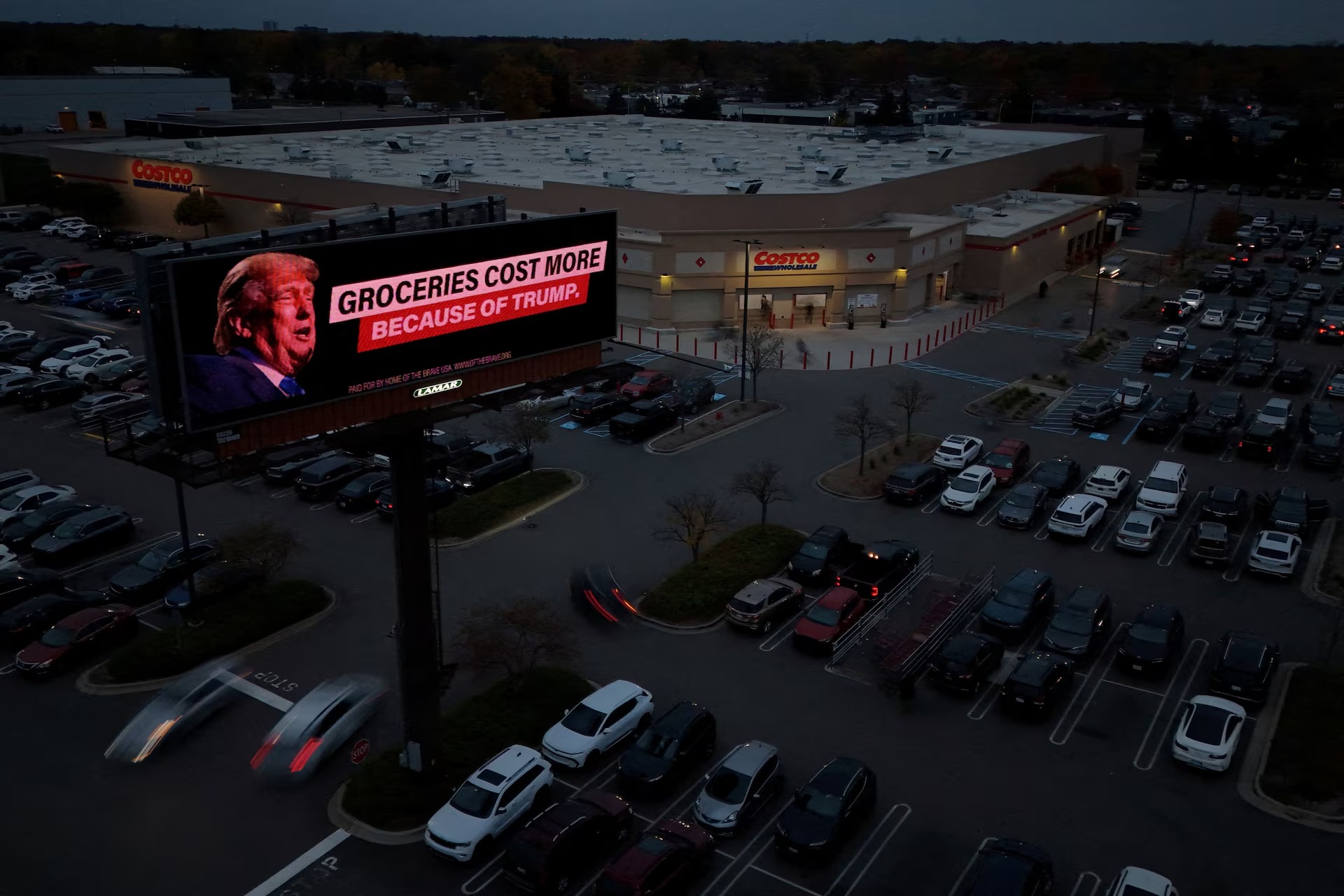
Anti-Trump anger came to the surface in the US midterm elections held yesterday (3 November), with Democrats capturing majorities in both chambers of Congress.
While Democrats were considered certain to win a majority in the House of Representatives, the situation was not the same in the Senate. Even so, the Senate majority also passed to the Democrats. Democrats currently appear to hold 51 seats.
With historic victories secured in Texas, Iowa, Kansas, and South Carolina, the party has now won the upper chamber.
In the House of Representatives, Democrats currently hold 189 seats, while Republicans hold 117. A total of 218 seats is needed for a majority, and Democrats are considered certain to reach that threshold.
The current composition of the House stands at 218 Republicans, one independent who caucuses with the Republicans, and 214 Democrats, with two seats vacant.
In American midterm elections, the entire House of Representatives is renewed, while one-third of the Senate seats are contested every two years.
In a telephone interview with CBS News, US President Donald Trump conceded defeat and congratulated Democrats on their victory in the midterms.
“My message is this: I congratulate the Democrats and look forward to working with you for the good of our country,” Trump said.
Stating that he plans to cooperate with the opposition party, the president said:
“I know a lot of Democrats, I have full veto power, and I am confident that we will be able to solve problems. I think they will want to work with me. Otherwise, I will veto everything, and they would not want that.”
The president insisted that the reason so many Republicans lost was that his own name was not on the ballot.
“I feel that I wasn’t on the ballot, and there was nothing that could be done about that. If I had been, we would have won,” Trump said.
Explaining the Republican losses, the president added:
“In some cases, they didn’t like the candidates; in other cases, those candidates weren’t friends of mine, and the base knows that better than anyone. And they didn’t give their support. In their hands… I mean, if I had been on the ballot, we would have won easily, so it’s sad in that respect. But I wasn’t on the list.”
Asked whether he felt upset, he said he had “done his best” and “left everything on the field”:
“I tried to help people get elected, but they couldn’t get elected, they couldn’t get elected. The public didn’t turn out to the polls the way they should have. If I had been a candidate, they would have turned out. But they didn’t. It’s just one of those things, you know? This is a temporary situation. It has happened many times before.”
The president also said the war in Iran would “basically be over when I say it’s over.”
Thirty-five Senate seats were contested in Tuesday’s midterms. According to CBS News projections, Democrats succeeded in picking up the four seats required to take control of the Senate, aided by three major upset victories in Texas, South Carolina, and Kansas, alongside seats won in Ohio and North Carolina. The party also held its seats in Georgia and New Hampshire.
“All the money in the world cannot stand against the people of Texas,” James Talarico told supporters at an election watch party in Austin.
“We have sent a message to every billionaire megadonor, every trillionaire megadonor in this state and across this country, and to every corrupt defender of this broken political system: power belongs to the people. To the richest man in the world, the most powerful man in the world, and the entire Washington establishment. The people of Texas were my slingshot, and tonight we defeated Goliath.”
Victory in the Senate will grant Democrats additional oversight powers, giving them a far greater say over administration and judicial appointments.
They will also set the Senate’s legislative agenda and possess new authority to summon administration officials to hearings.
The Democrats’ string of victories paves the way for Senator Chuck Schumer to return as majority leader in 2027 and sets up tough negotiations with Trump across a range of issues, including federal spending levels.
This significantly curtails Trump’s legislative authority and his ability to reshape the federal court system.
However, Democrats will still need to negotiate with the White House to secure their own legislative achievements.
Democrats needed to gain at least four seats to win a Senate majority. Yet this had appeared to be a difficult goal, given that most of the contested Republican-held seats were in states Trump had carried comfortably.
Nevertheless, high petrol prices driven by the war in Iran and broader economic concerns provided Democrats with ammunition to attack Trump and the Republicans.
Senate Democrats picked up the first seat of the night in North Carolina, where former Democratic Governor Roy Cooper defeated former Republican National Committee Chairman Michael Whatley.
Democrats secured their next major victory of election night when paediatrician Annie Andrews was projected to defeat Senator Darline Graham, who had been appointed to the seat in July following the sudden death of her brother, longtime incumbent Senator Lindsey Graham.
Another critical early result for Democrats came from Texas. There, Democratic State Representative James Talarico comfortably defeated State Attorney General Ken Paxton, whom Trump had controversially endorsed over Senator John Cornyn in the Republican Senate primary.
Trump also initiated a trade war that drove up prices, including against Canada, one of America’s oldest allies. This became an issue across numerous states, including those along the extensive Canadian border.
Democrats prevailed in border states such as Maine and Iowa, while Kansas elected a Democratic senator for the first time since the Great Depression.
At the same time, Kansas overwhelmingly passed a referendum measure requiring citizenship in order to vote.
Despite the Republican collapse, conservative ballot measures passed across the country in both blue (Democratic) and red (Republican) states. Consequently, while “Trumpist” tendencies endure, the overall results appear to be a decisive rejection of Trump.

US midterm losses will turn Trump into a lame duck, Prof. Doster says

AfD commits to NATO expansion and eyes trilateral summit with US, Russia

Moderate Republicans urge break from Trump and MAGA after midterms

El-Sayed defeats Rogers to win Michigan US Senate race

Venezuela military hits Colombian ELN camp in Apure border raid
-

 America2 weeks ago
US wealthy demolish multimillion-dollar mansions for land
-

 Diplomacy2 days ago
Secular dress code dispute exposes deeper Türkiye-Azerbaijan strains
-
 Middle East2 weeks ago
Netanyahu trails Eisenkot in Israeli polls despite Trump backing
-

 Europe1 week ago
Merz visits Asia to seek new markets for German defence firms
-

 Russia1 week ago
US and Russia weigh energy deals and corporate return in peace talks
-

 Europe1 week ago
AfD drops Dexit to back single market in new Europe strategy
-

 Interview2 weeks ago
“The AfD is an expression of internal contradictions within German big capital”
-

 Europe1 week ago
Serbia opposition wins snap vote as Vucic concedes defeat
